What Was Once an Empty Wall Is Now the Most Architectural Part of the Home

This post contains affiliate links, and we will be compensated if you buy after clicking on our links. Read our disclaimer.
Read our editorial process
Some of the most successful home transformations are not the ones that involve knocking down walls or rebuilding entire rooms. Often, they are the quiet changes that improve how a home feels and functions every single day.
This entryway renovation is a perfect example. At first glance, the space appears beautifully styled and effortlessly put together.
But beneath the decorative details lies a far more interesting story about how one simple furniture piece changed the entire experience of coming home.
The remarkable part is not what changed. It is what stayed the same.
A Hallway With Good Bones but No Purpose
Many modern entryways are designed as spaces to move through rather than spaces to live in. They connect rooms, guide circulation, and welcome guests, yet they rarely receive the same level of design attention as kitchens or living rooms.
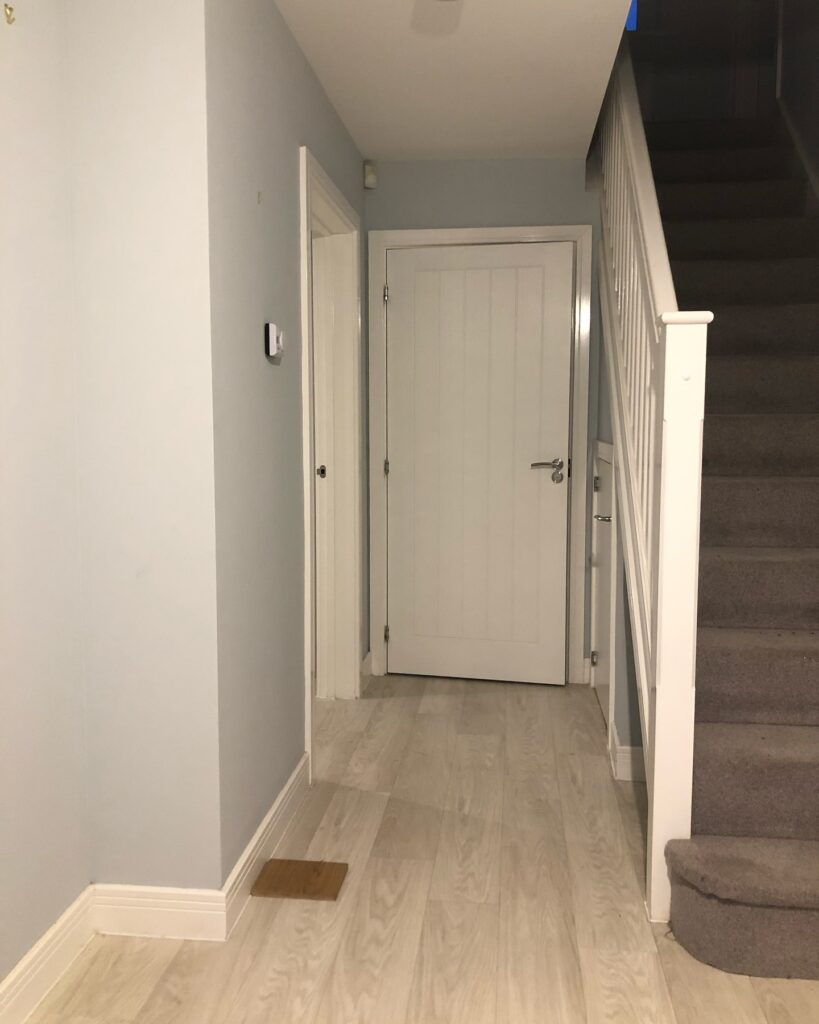
Before the renovation, this hallway already possessed many desirable architectural qualities. White trim framed the openings, the staircase introduced vertical rhythm, and light flooring helped reflect natural brightness throughout the space.
Despite those strengths, the hallway lacked one essential ingredient: purpose. There was nowhere to pause, store belongings, or create the small daily rituals that make a house function smoothly.
Before the Transformation
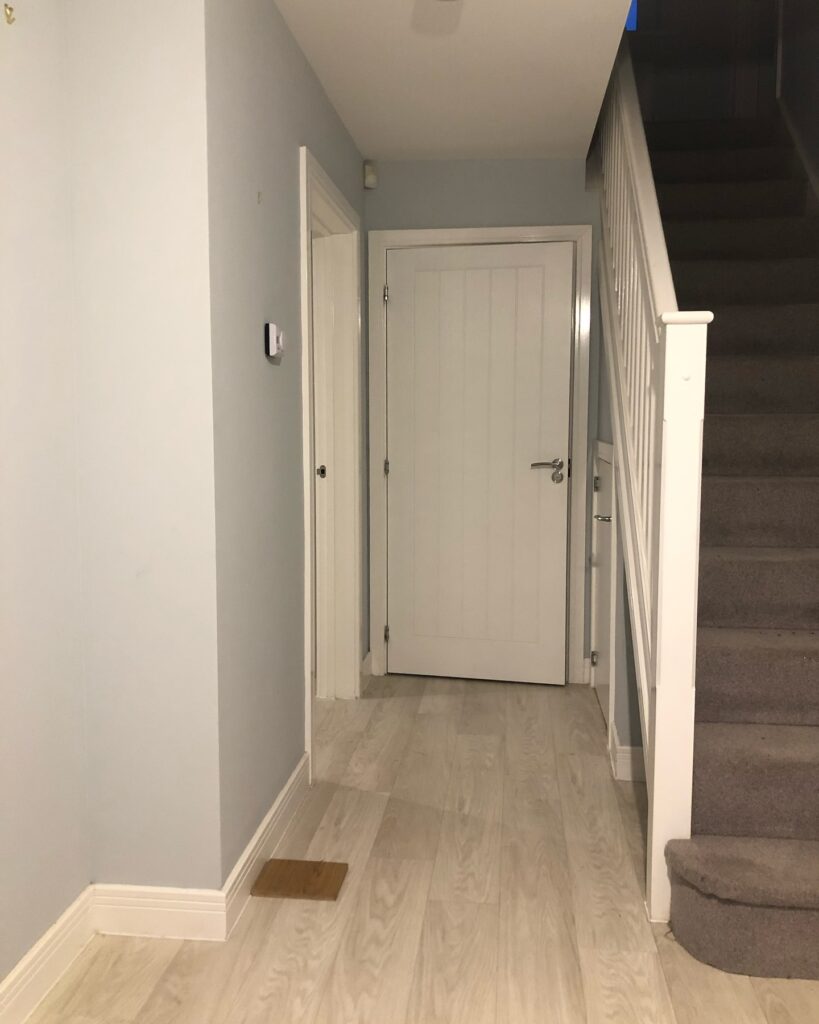
The original hallway feels bright and well-proportioned. Soft gray walls, white trim, and clean-lined doors establish a timeless backdrop that already carries a sense of calm and order.
Yet beautiful architecture alone cannot solve functional challenges. Without designated storage, everyday items naturally migrate into circulation zones, introducing visual clutter and disrupting the room’s rhythm.
Design succeeds when aesthetics support behavior. The most effective spaces quietly encourage better habits without demanding attention.
The Surprise Reveal
The transformation did not involve expanding the footprint, replacing flooring, or reconfiguring walls. Instead, the renovation centered on a far smaller intervention.
An unfinished IKEA bench became the starting point for an entirely new entryway experience. Through paint, decorative trim, and thoughtful styling, an affordable piece of furniture evolved into something that feels far more permanent.
The finished result reads less like a movable object and more like an intentional architectural feature.
What Stayed the Same
The most surprising detail may be how much remained untouched.
The hallway retained its original dimensions. The staircase stayed exactly where it was. The flooring remained in place, and the surrounding doors and circulation path never changed.
Yet the experience of entering the home feels entirely different today. That contrast illustrates one of design’s most valuable lessons: transformation does not always require rebuilding. Sometimes it requires seeing existing space differently.
The Unfinished Bench
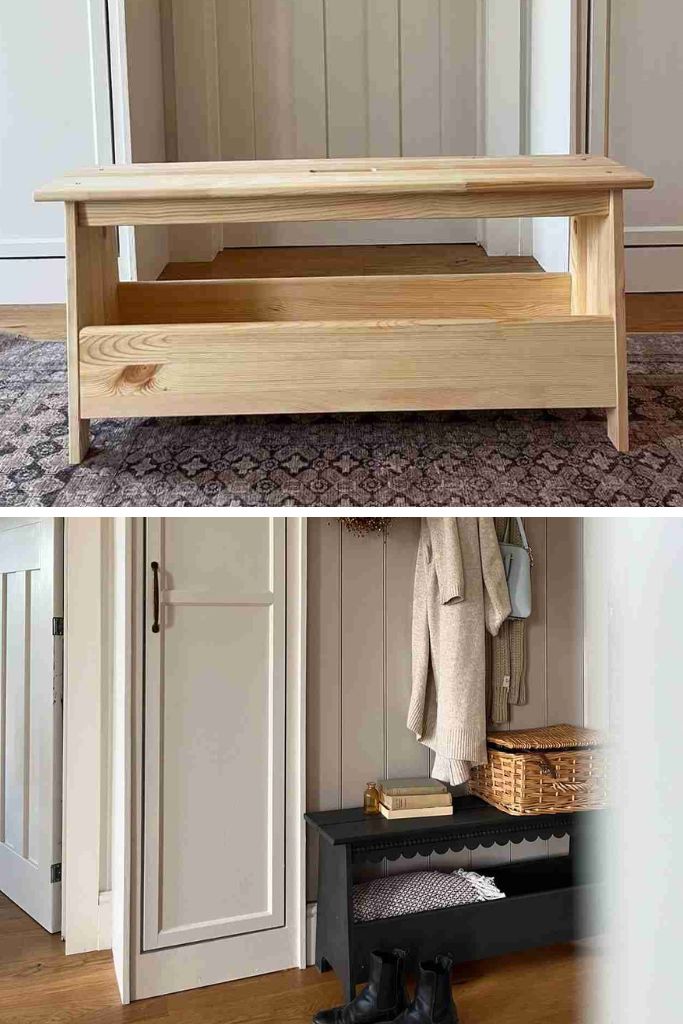
The original bench is straightforward in both material and form. Unfinished pine, simple joinery, and open storage create a practical starting point rather than a decorative statement.
This simplicity is precisely why such pieces are favored in home design. Neutral forms invite customization, allowing homeowners to adapt furniture to the character of their space.
The open lower compartment is especially effective because it introduces storage without adding visual heaviness, preserving airflow within a narrow hallway.
Testing Scale and Placement
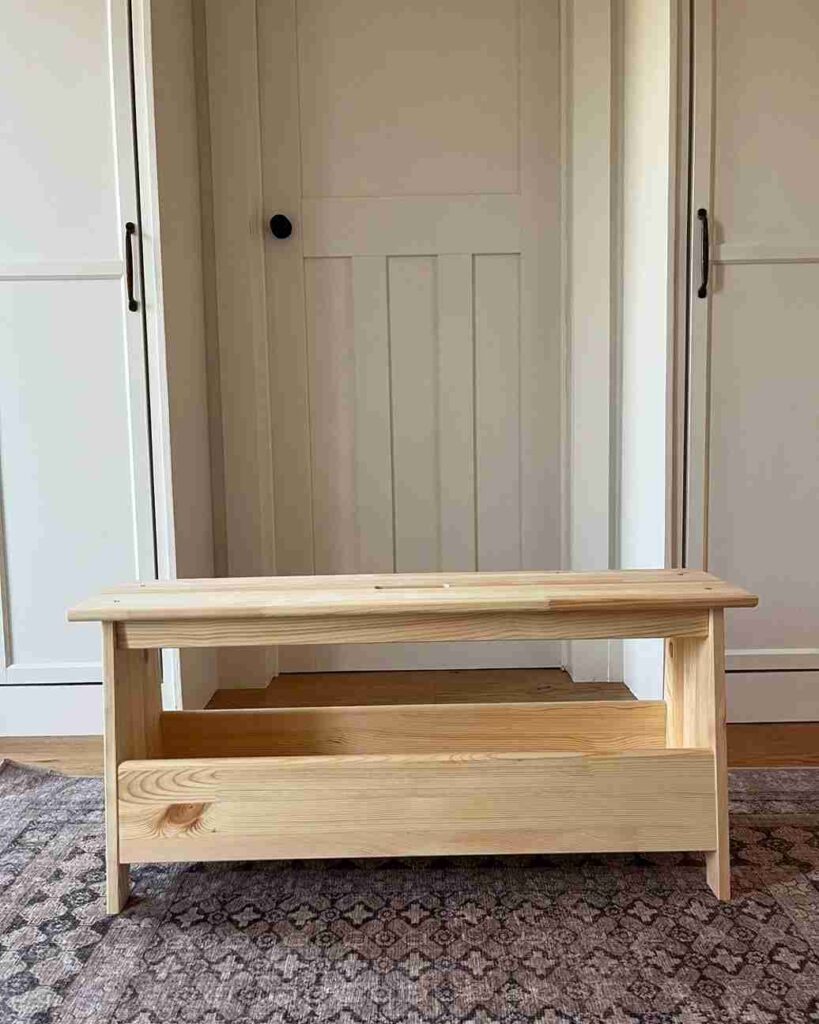
Placed within the hallway, the bench immediately begins shaping the room’s geometry. Its width aligns comfortably with surrounding architectural elements, creating visual balance rather than interruption.
Good interiors often feel expensive because proportions are carefully considered. Furniture that appears appropriately scaled creates harmony, while oversized or undersized pieces introduce subtle tension.
Even before paint or styling, the bench already established a stronger focal point within the space.
Decorative Trim Changes Everything
One of the most impactful additions appears beneath the seat. Decorative scalloped trim paired with beaded detailing introduces craftsmanship that the original piece lacked.
These features matter because the eye naturally responds to repetition and rhythm. Curves soften straight lines, while texture creates subtle shadows that shift throughout the day.
Millwork details are often associated with custom homes. By borrowing that visual language, the bench begins to feel integrated into the architecture around it.
The Power of Dark Paint
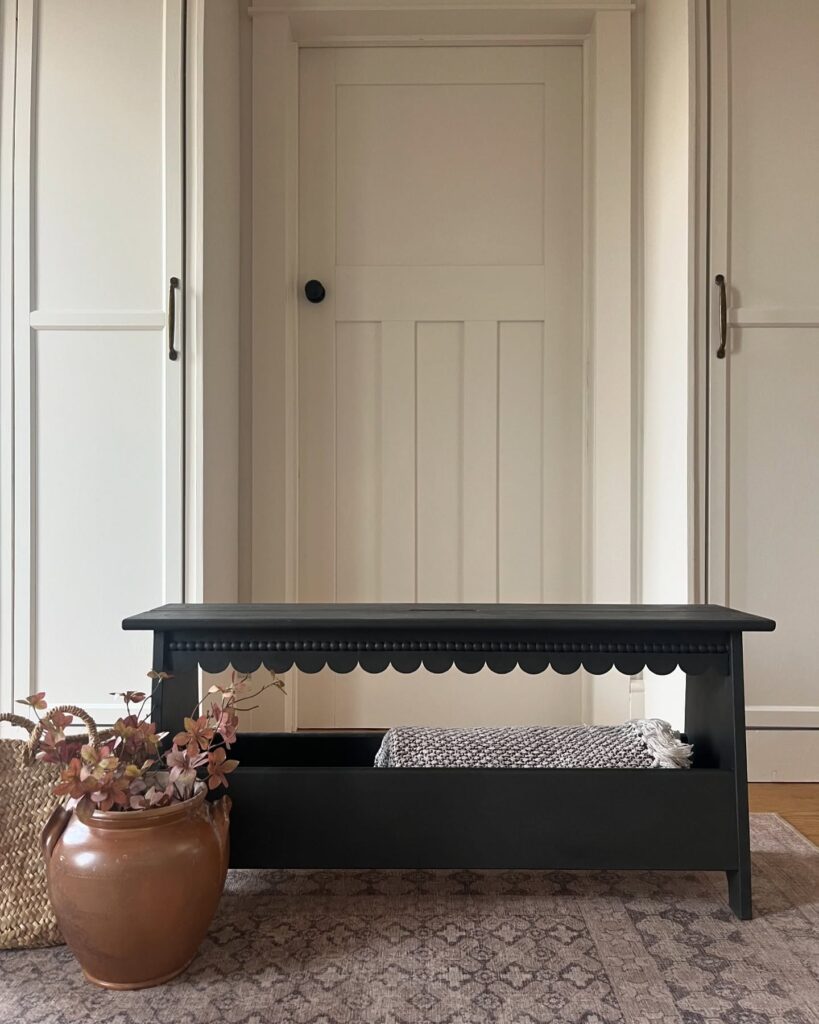
Paint is not merely decorative. It influences how objects are perceived within a room. The transition from natural pine to deep charcoal dramatically changes the bench’s presence.
Dark finishes ground furniture visually, helping it feel established rather than temporary. Against pale walls and white trim, the contrast creates clarity while emphasizing shape and silhouette.
The result feels sophisticated because fewer visual distractions allow the eye to focus on proportion and detail.
Why the Space Feels More Expensive
Luxury often comes from cohesion rather than cost.
Custom homes rely on repetition of materials, aligned proportions, and architectural consistency. This entryway succeeds because every element speaks the same visual language.
The paneling echoes the vertical lines of the doors. The bench mirrors the scale of the surrounding architecture. Decorative trim reinforces traditional detailing already present elsewhere in the home.
When design decisions feel connected, spaces naturally appear more refined.
Paneling Creates a Backdrop
The addition of wall paneling transforms an empty wall into a defined architectural surface. Vertical lines guide the eye upward, subtly increasing the perception of height.
Paneling also introduces depth through shadow. Unlike flat painted drywall, textured surfaces interact with light throughout the day, creating visual richness without overwhelming the room.
Because the tones remain restrained, the effect feels timeless rather than trendy.
Hooks and Storage Establish Daily Rituals
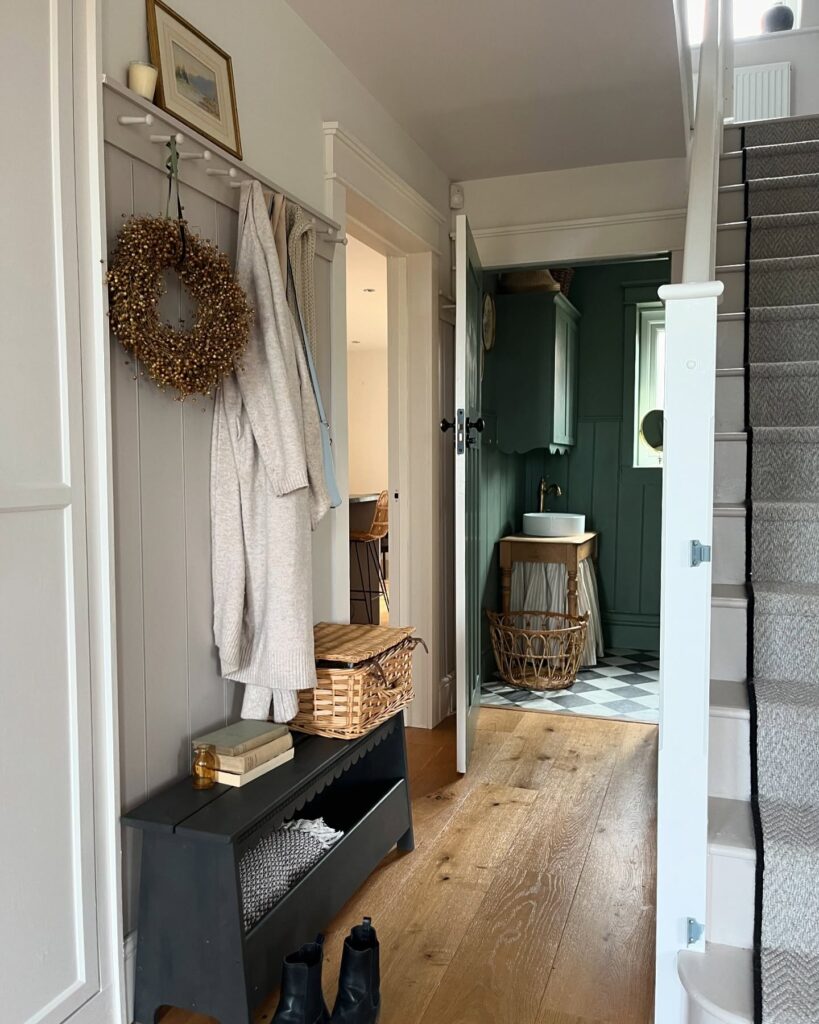
Coats, bags, and baskets are no longer afterthoughts. Instead, they become integrated into the design itself.
One of the hallmarks of successful entryways is intuitive organization. When storage is visible, accessible, and attractive, it becomes easier to maintain order naturally.
The design does not hide everyday life. It simply gives it a more beautiful framework.
Design Psychology: Why It Feels Bigger and Calmer
The hallway did not gain additional square footage, yet it feels more spacious today. That shift is largely psychological.
Vertical storage moves objects upward rather than outward, preserving floor area and improving circulation. Fewer loose items reduce visual noise, allowing surfaces to read more clearly.
The room also feels calmer because repetition creates order. Matching tones, repeated vertical lines, and consistent materials reduce cognitive overload, making the space easier for the brain to process.
Warm materials contribute as well. Wood flooring, woven baskets, textiles, and dried botanicals soften hard architectural edges, creating a sense of comfort and familiarity.
The Final Reveal
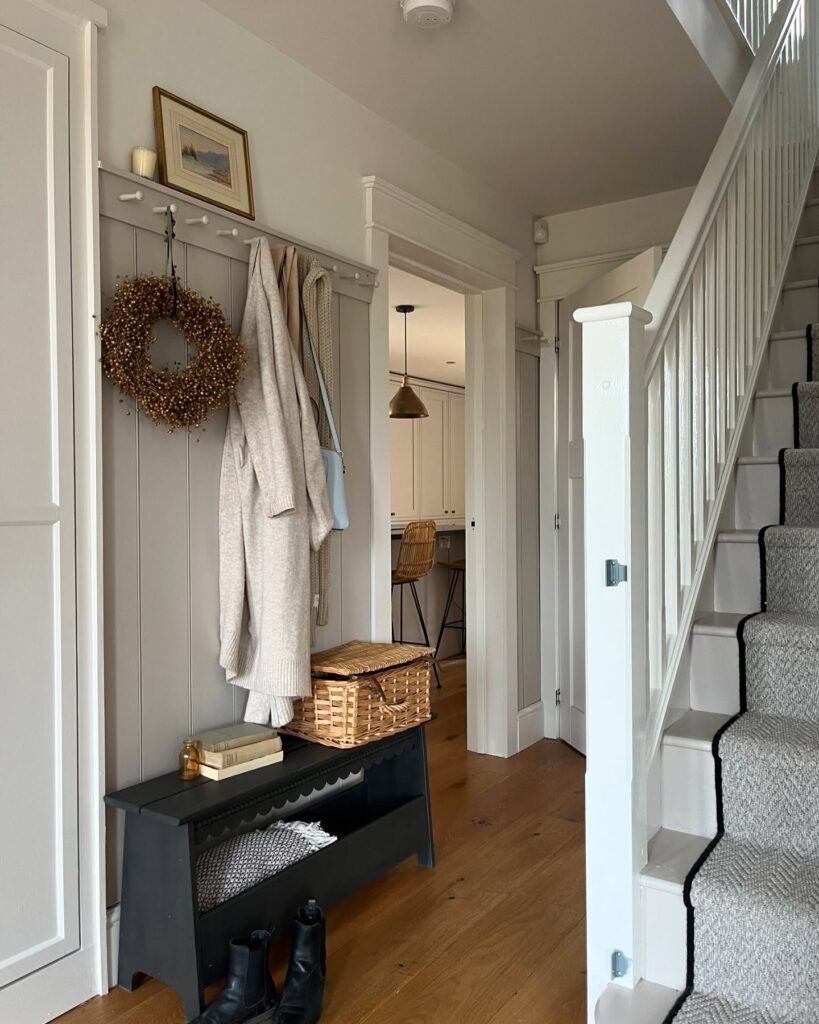
The completed space achieves a rare balance between beauty and utility. The bench anchors the hallway, while hooks and baskets support everyday routines without appearing utilitarian.
Styling plays an equally important role. Books introduce lived-in character, woven textures add warmth, and ceramics contribute visual softness against painted surfaces.
Most importantly, the renovation respects the home’s original architecture. Nothing competes with the staircase, doors, or flooring. Instead, every addition strengthens what was already there.
Materials and Styling
Material selection quietly shapes the mood of this entryway. White trim maintains brightness, while warm oak flooring introduces natural variation and texture.
The charcoal bench acts as a grounding element within the lighter palette. Woven baskets soften hard surfaces, and knit textiles add comfort through texture rather than color.
Decorative objects perform an equally important role. Framed artwork personalizes the space, dried botanicals introduce organic movement, and books create a sense of history and habitation.
Hard surfaces provide structure. Soft layers provide warmth. Together, they transform function into personality.
The Design Lesson
Good design rarely begins with more space. More often, it begins with greater clarity about how space should work.
This hallway never changed its footprint, flooring, or architectural layout. Yet one thoughtful intervention fundamentally altered how the home is experienced every day.
The most successful renovations do not always rebuild a room. Sometimes they simply reveal the potential that was already there.
Image Credit: All renovation and styling images courtesy of Instagram user @fourthhome_.
Discover More Entryway Inspiration
• Front Porch Step Ideas
• Front Porch Railing Ideas
• Spring Porch Ideas
• Driveway Entrance Landscaping Ideas