23+ Driveway Entrance Landscaping Ideas That Make a Stunning First Impression

This post contains affiliate links, and we will be compensated if you buy after clicking on our links. Read our disclaimer.
Read our editorial process
Your driveway entrance is the first thing visitors, appraisers, and potential buyers see. Done right, it can add 5–15% to your home’s perceived value, a figure consistently cited by landscape industry studies.
Done wrong, it becomes a maintenance headache that looks worse every season.
This guide goes beyond pretty pictures. Each idea includes realistic cost estimates, the right plants for different climates, common mistakes to avoid, and honest advice on whether it suits a DIYer or needs a professional.
Whether you’re spending $200 on a weekend project or $20,000 on a full entrance overhaul, there’s something here for you.
Before You Start: 4 Things That Determine Everything
1. Your driveway length: Driveways under 30 feet need one strong focal point not a row of identical plants that gets lost. Driveways over 50 feet can handle layered planting on both sides without feeling crowded.
2. Your climate zone: This matters more than any design trend. A lavender border that thrives in USDA Zone 6 will die in Zone 9 humidity. Every idea below notes which climates it suits.
3. Sunlight exposure: Most entrance plants need 6+ hours of direct sun. If your driveway is shaded by mature trees, your plant list shrinks significantly but options like hostas, ferns, and astilbe can still look stunning.
4. Your maintenance tolerance: Be honest here. A cottage garden looks incredible in June and like a weed patch in September if you don’t stay on top of it. If you travel often or dislike gardening, lean toward structured, low-maintenance designs.
Explore More Front Yard Inspiration
• Front Porch Step Ideas
• Corner Fence Landscaping
• Spring Porch Ideas
• Front Porch Railing Ideas
1. Stone Pillar Gate Entrance with Lanterns and Bowl Planters
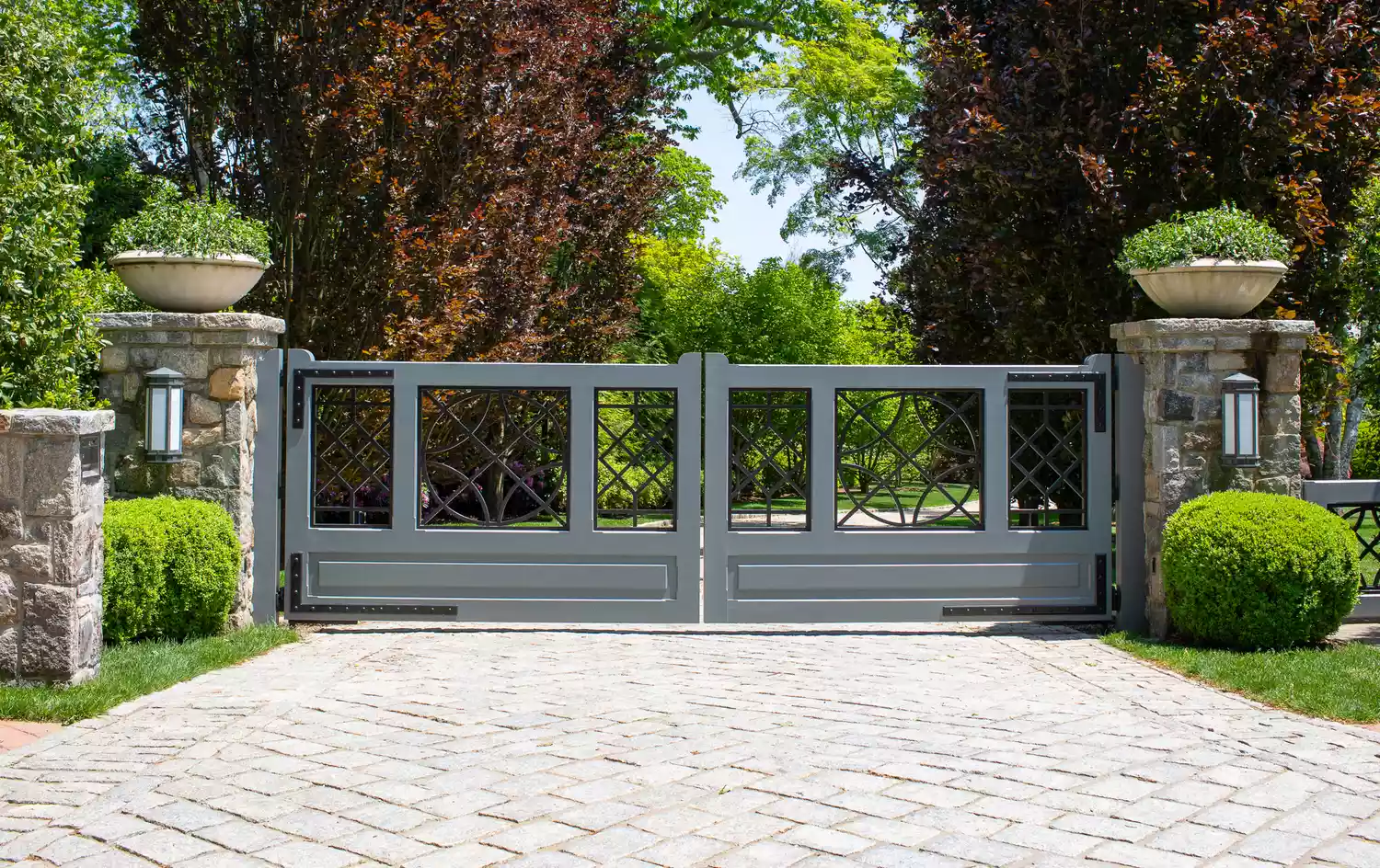
This setup instantly makes the entrance feel premium. Stone pillars add weight and presence that plants alone can’t create, while lanterns give soft lighting without cluttering the ground.
For the planters, keep a simple layered mix. Use a trailing plant like sweet potato vine to soften edges and pair it with an upright option like dwarf arborvitae. Swap seasonal flowers to keep things fresh, while boxwood at the base keeps year-round structure.
One thing people get wrong is going too small with planters. Anything under 18 inches looks out of place here.
This is one of those upgrades that quietly makes a home feel more expensive.
Realistic cost:
DIY: $800–$2,000 | Mason: $2,500–$5,000 | Maintenance: $150–$300/year
2. Gravel Driveway with Raised Garden Beds and Metal Trellis
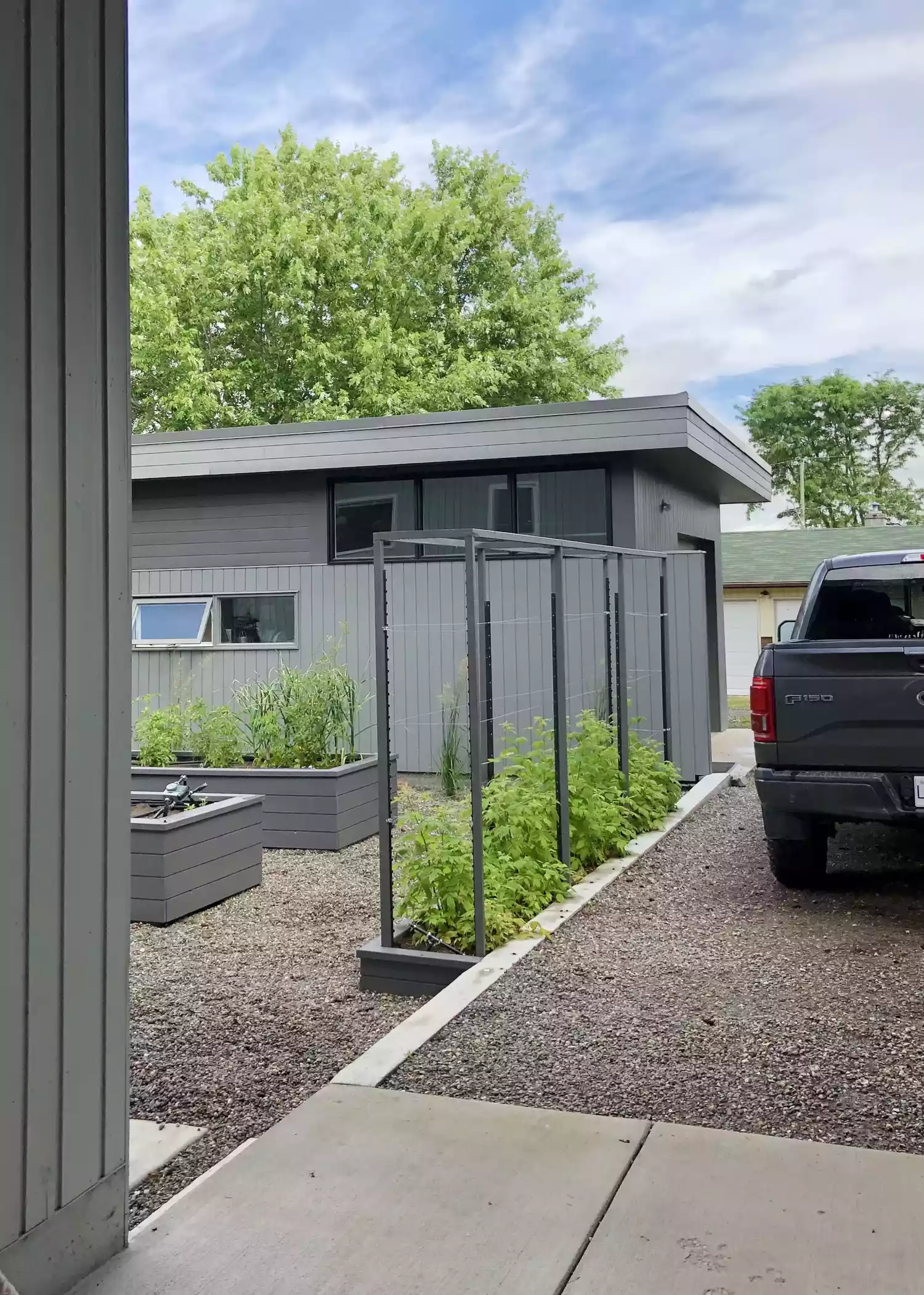
Gravel keeps costs low, but the raised beds are what actually elevate the look. Instead of wasted edges, you turn the border into something alive and layered.
Use a tiered planting approach. Climbers like roses or jasmine go on the trellis, shrubs sit in the middle, and low herbs or ground cover finish the front. This creates depth even in tight spaces.
A common mistake is using untreated wood for beds. It will rot faster than expected near gravel moisture.
This is one of the easiest ways to make a budget driveway feel designed.
Realistic cost:
Gravel: $1–$3/sq ft | Beds: $150–$400 | Trellis: $80–$250
3. Large Concrete Paver Walkway with River Rock Borders
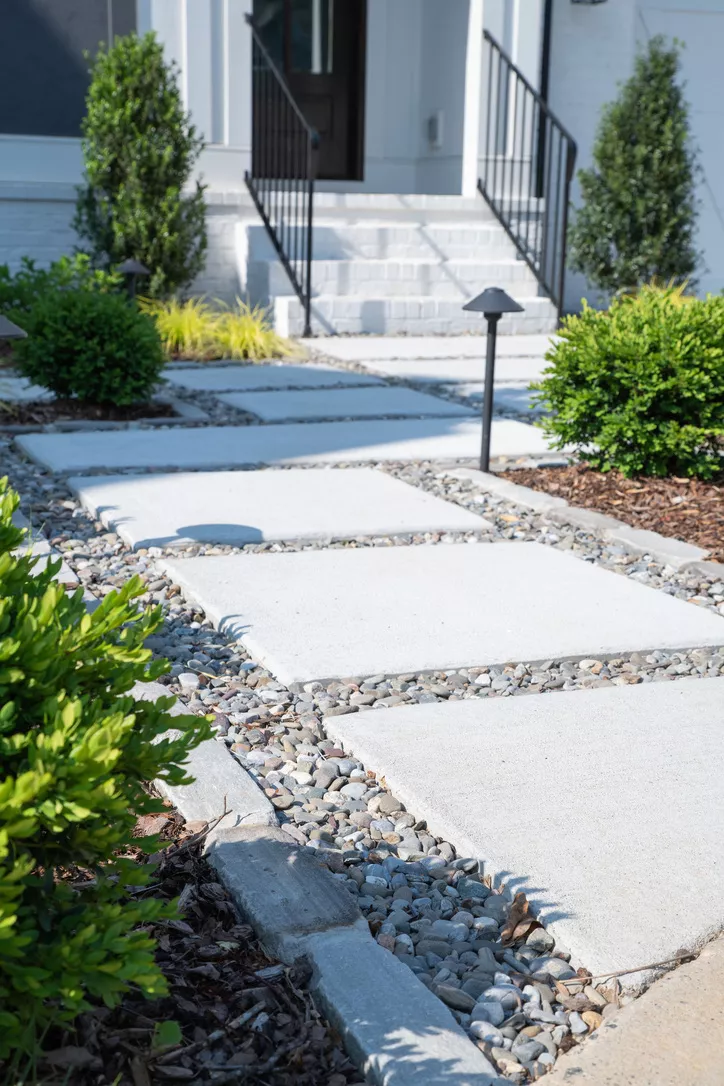
Large pavers instantly give a clean, modern feel. The river rock between them cuts down maintenance and keeps weeds from becoming a constant issue.
Keep planting minimal here. Stick to one shrub, one grass, and one ground cover for a controlled, modern look. Add path lights every few feet for soft, even lighting.
The biggest mistake is using small rocks. They shift easily and ruin the clean lines.
This style works best when everything feels intentional and uncluttered.
Realistic cost:
Pavers: $15–$25/sq ft | Rock: $50–$120/ton | Lights: $20–$80
4. Minimalist Lawn-Lined Driveway for Mid-Century Modern Homes
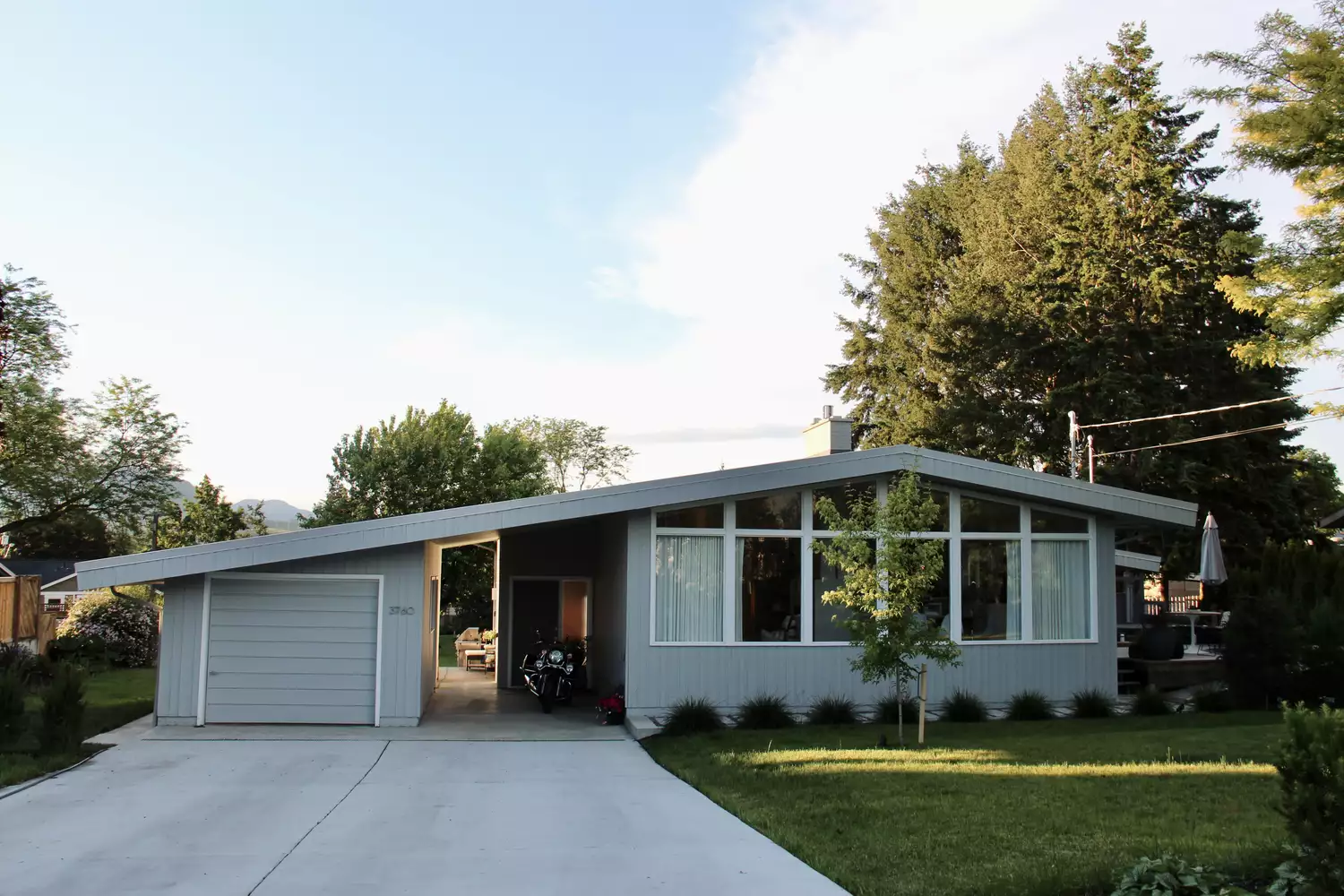
Sometimes doing less is the smartest move. A clean lawn with a few vertical trees lets the architecture stand out instead of competing with it.
Choose narrow trees like Italian cypress or columnar hornbeam and space them properly so they don’t crowd over time. The lawn needs to be healthy since it becomes the main feature.
Most people underestimate lawn quality here. Patchy grass ruins the entire look.
This is minimal, but when done right, it feels high-end.
Realistic cost:
Lawn: $0.50–$2/sq ft | Trees: $150–$350 | Maintenance: $500–$1,500/year
5. Evergreen Tree Row with Layered Mulch Garden Border
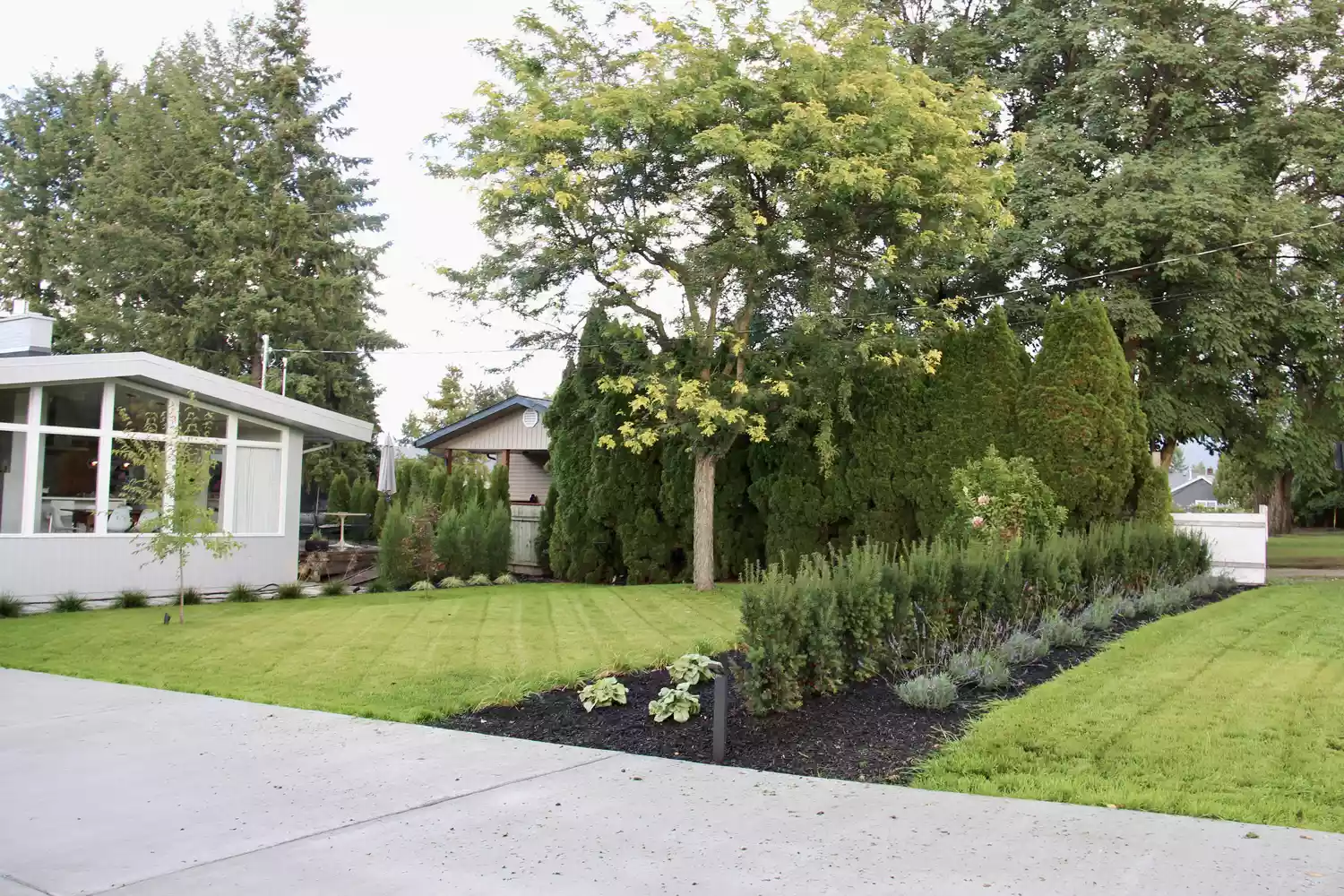
A row of evergreens instantly adds privacy and structure. It works year-round and solves multiple problems at once.
Layer plants in front to avoid a flat wall effect. Tall arborvitae in the back, shrubs in the middle, and ground cover in front create a more natural transition.
Planting them too close is a common mistake. It leads to long-term health issues.
This is one of the most practical and functional designs you can choose.
Realistic cost:
Trees: $80–$150 | Shrubs: $30–$80 | Mulch: $30–$60
6. Decorative Multi-Tone Brick Paver Driveway with Curved Path
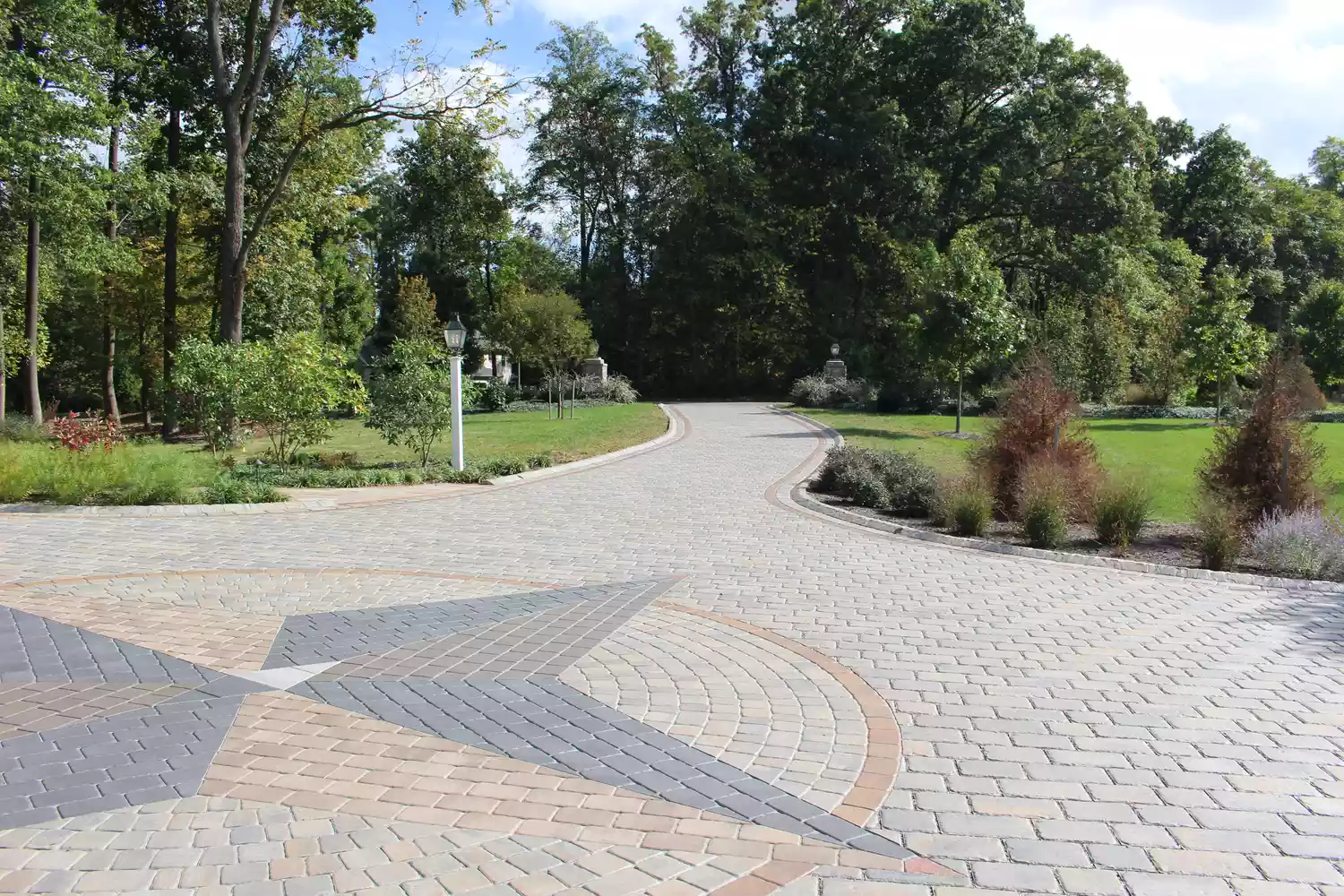
Here, the driveway itself becomes the feature. The pattern and curves immediately make the space feel more custom.
Keep surrounding plants simple so they don’t compete with the paving. Lawn and classic lighting work best.
A weak base is where most people fail. Poor installation leads to shifting and cracks.
This is a higher investment, but it shows instantly.
Realistic cost:
Pavers: $20–$35/sq ft | Pattern work: +20–30% | Lights: $400–$800
7. Brick Paver Driveway with Low Foundation Shrubs and Wall Lanterns
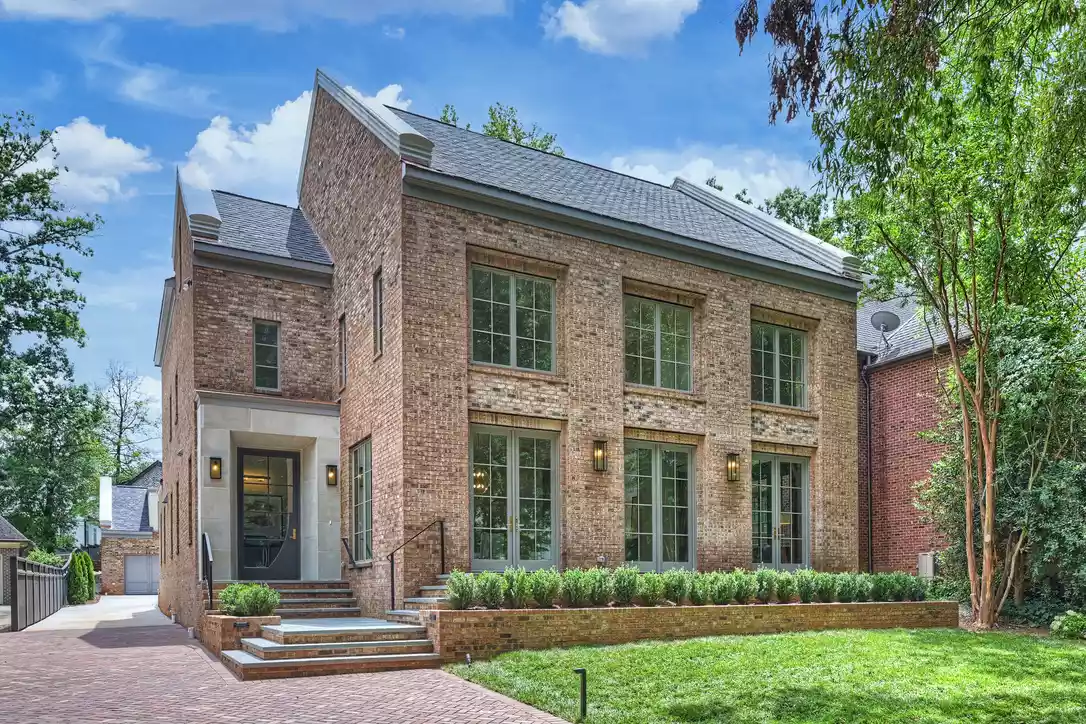
A brick driveway paired with structured greenery creates a look that rarely goes out of style. The balance between symmetry and texture makes the entrance feel polished without looking overly designed.
Keeping shrubs low is important here. Plants under 36 inches maintain clear sightlines and prevent the facade from feeling blocked. Compact options like Japanese holly or dwarf varieties hold their shape well and require less upkeep over time. Wall lanterns tie everything together and add both function and visual balance.
One common mistake is choosing fixtures that are too small. On larger homes, undersized lighting feels disconnected instead of intentional.
Over time, this setup tends to improve rather than fade, which makes it a safe long-term choice.
Realistic cost:
Pavers: $18–$30 | Shrubs: $25–$60 | Lanterns: $80–$400
8. White Modern Gate with Bougainvillea and Boulder Rock Landscaping
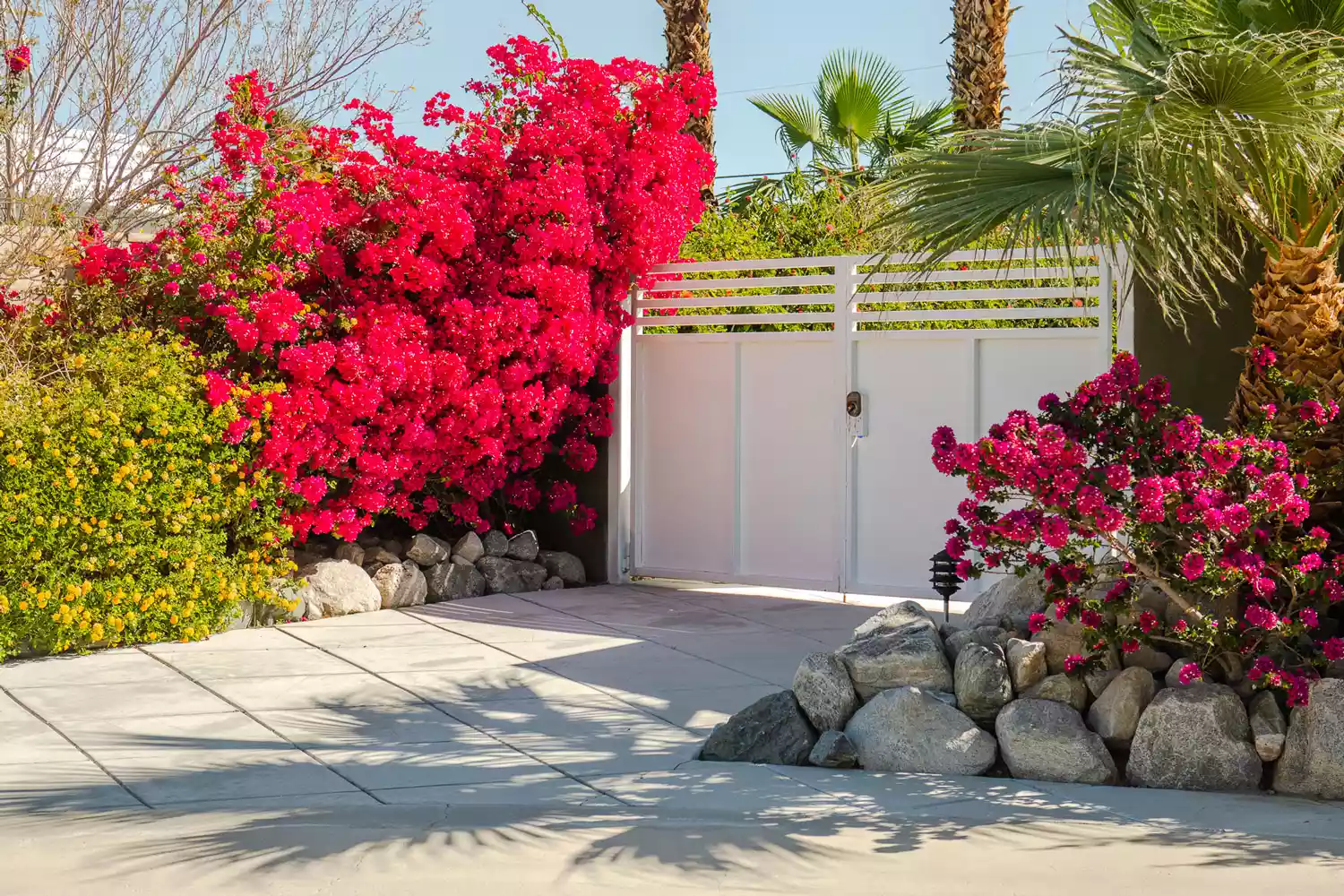
Clean architectural lines combined with bold flowering plants create a strong contrast at the entrance. A white gate acts as a neutral base, allowing vibrant colors to stand out without competition.
Bougainvillea performs best in full sun with well-drained soil. It actually flowers more when slightly stressed, so excessive watering reduces blooms. Adding natural boulders at ground level keeps the design grounded and prevents it from feeling too decorative.
Trying this setup in colder climates is the biggest mistake. Bougainvillea does not tolerate frost and fails quickly outside warm regions.
When conditions are right, the result is bold and hard to overlook.
Realistic cost:
Plants: $30–$60 | Boulders: $200–$500 | Gate: $2,000–$8,000
9. Desert Xeriscape Driveway
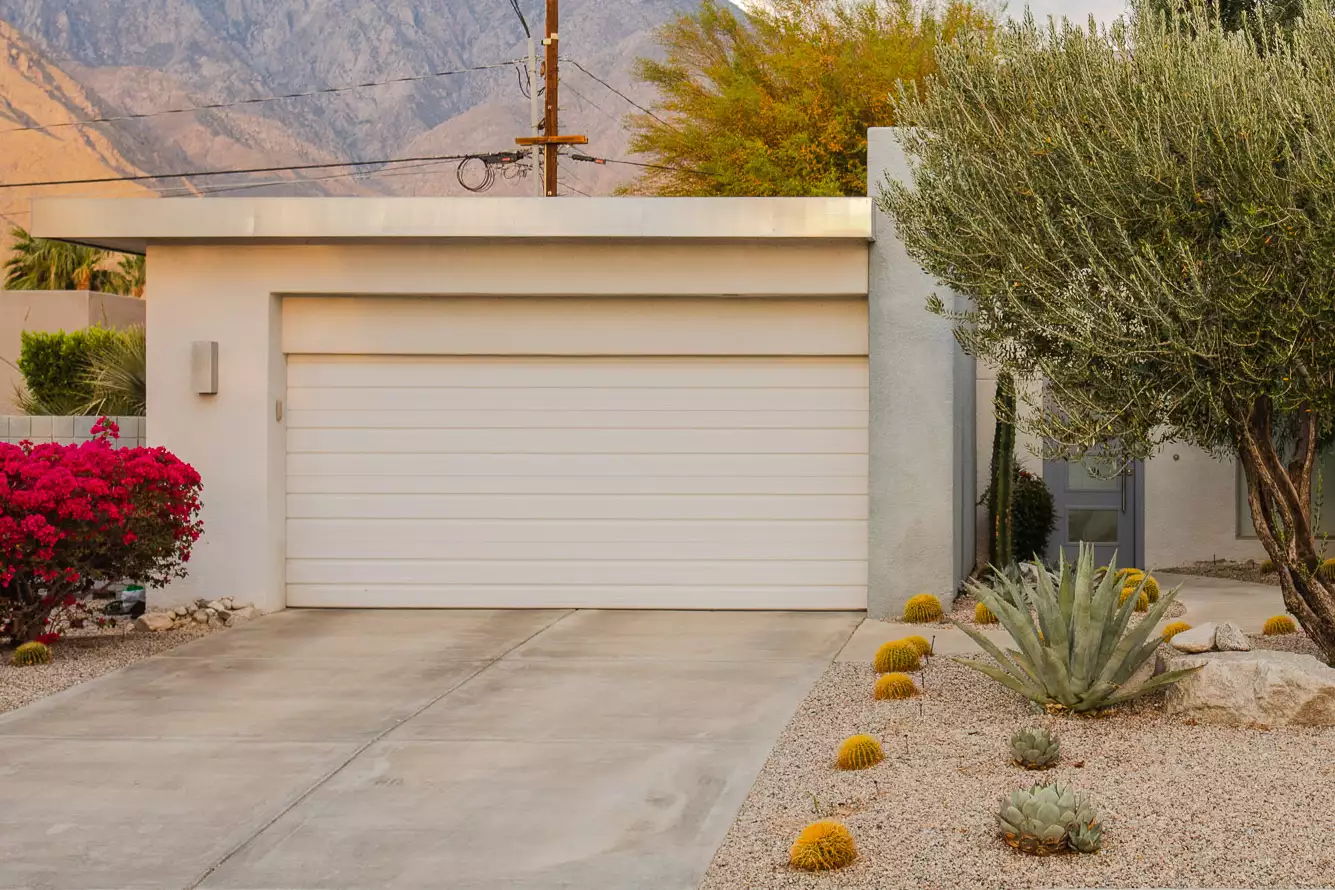
Low-water landscaping can still feel visually rich when done with intention. Instead of relying on grass, this approach uses texture, spacing, and plant form to define the space.
Cactus and agave work best when grouped in clusters rather than spaced randomly. Warm-toned gravel or decomposed granite helps unify the design and reflect the surrounding environment. Once established, most plants require minimal watering and maintenance.
Placing sharp plants too close to walkways is a mistake many overlook. Some varieties can become a safety issue over time.
Long term, this is one of the easiest setups to maintain.
Realistic cost:
DG: $30–$50 | Cactus: $20–$50 | Agave: $40–$120
10. Raised Edging with Dense Shrub Border
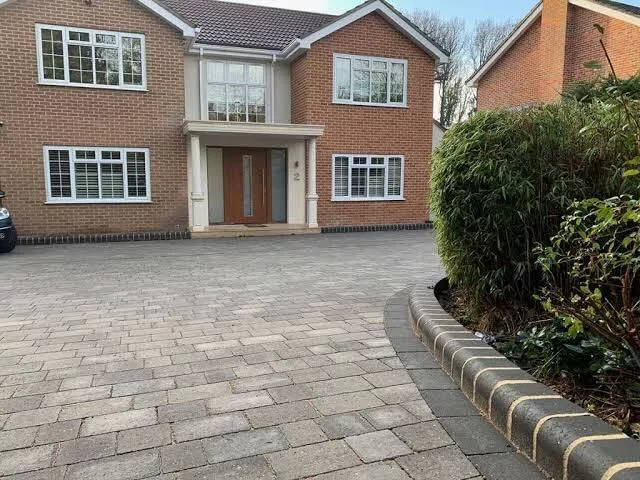
A raised edge adds definition in a way that flat driveways cannot. It separates spaces clearly and keeps grass or soil from creeping into the driveway over time.
Dense shrubs or bamboo can create a natural screen that adds both privacy and depth. When using bamboo, choosing clumping varieties and installing a root barrier is essential to prevent spreading.
Skipping the barrier is where most problems begin. Once bamboo spreads, it becomes difficult to control.
Even a simple raised border can make the entire driveway feel more structured.
Realistic cost:
Paving: $22–$38 | Plants: $40–$100 | Barrier: $5–$8/ft
11. Bougainvillea with Boulder Gravel Garden
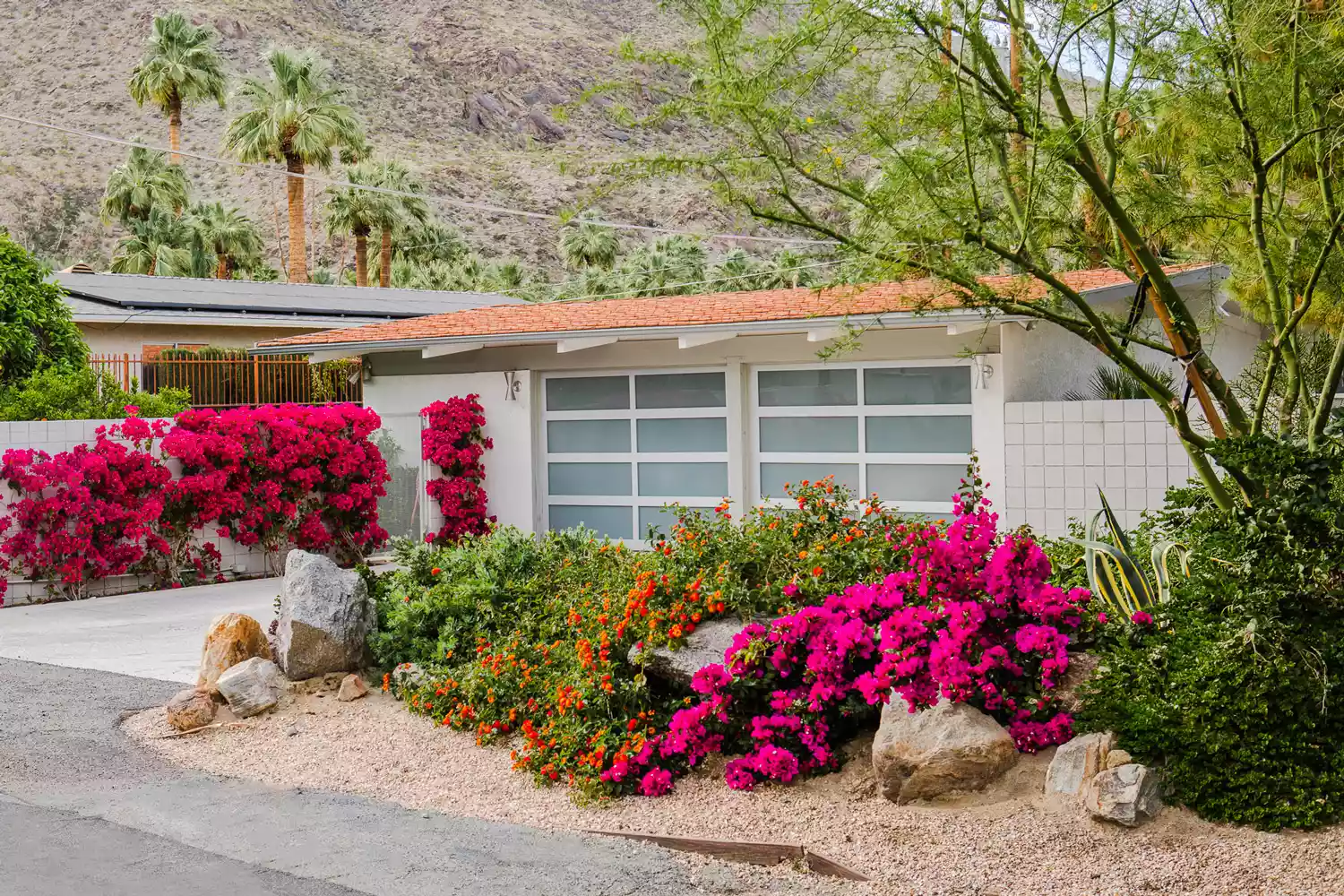
Layering plants both vertically and at ground level increases visual impact without increasing plant count. Covering a wall while planting below creates a fuller and more immersive look.
Bougainvillea should be trained loosely so it can grow naturally. Larger gravel works better for stability and reduces mess compared to finer materials.
Choosing small or pea gravel often leads to constant cleanup issues since it shifts easily.
The result feels vibrant and full without being overly complex.
Realistic cost:
Gravel: $80–$200 | Plants: $30–$60 | Fabric: $50–$150
12. Cottage Garden Border with Hydrangeas
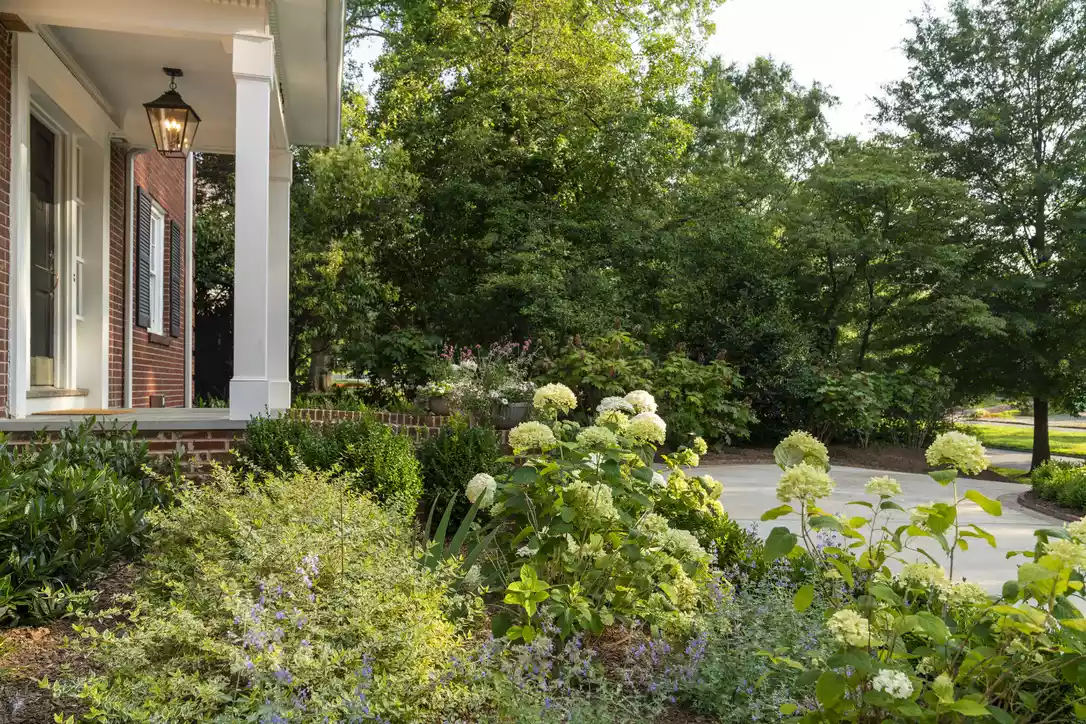
A layered, slightly unstructured layout gives this style its charm. Instead of strict symmetry, it relies on variation in height, color, and bloom timing.
Hydrangeas act as the backbone, while smaller perennials fill gaps naturally. Allowing plants to overlap slightly avoids a staged appearance and creates a softer look.
Incorrect pruning is the biggest issue here. Cutting at the wrong time can prevent blooming the following season.
For anyone who prefers a relaxed and forgiving design, this works well.
Realistic cost:
Plants: $25–$50 | Perennials: $8–$20 | Mulch: $100–$300
13. Farmhouse Garage Entrance with Evergreen Accent
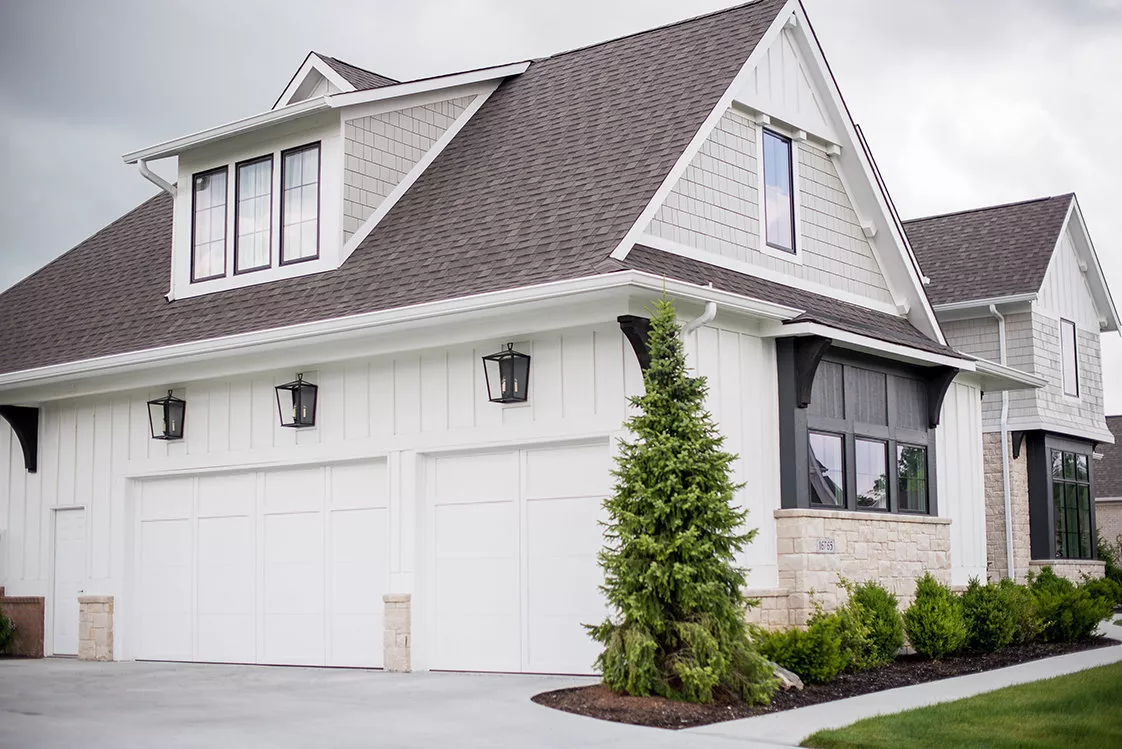
Garages often dominate the front of a home, making the space feel unbalanced. Adding a vertical tree helps shift attention toward the entry.
Narrow trees like Sky Pencil holly or Italian cypress provide height without spreading too wide. Paired with simple lighting, they help anchor the space visually.
Using wide or rounded trees creates the opposite effect and disrupts the balance.
A single well-placed element can change how the entire facade feels.
Realistic cost:
Tree: $35–$150 | Lights: $150–$500
14. Flagstone Walkway with Planter
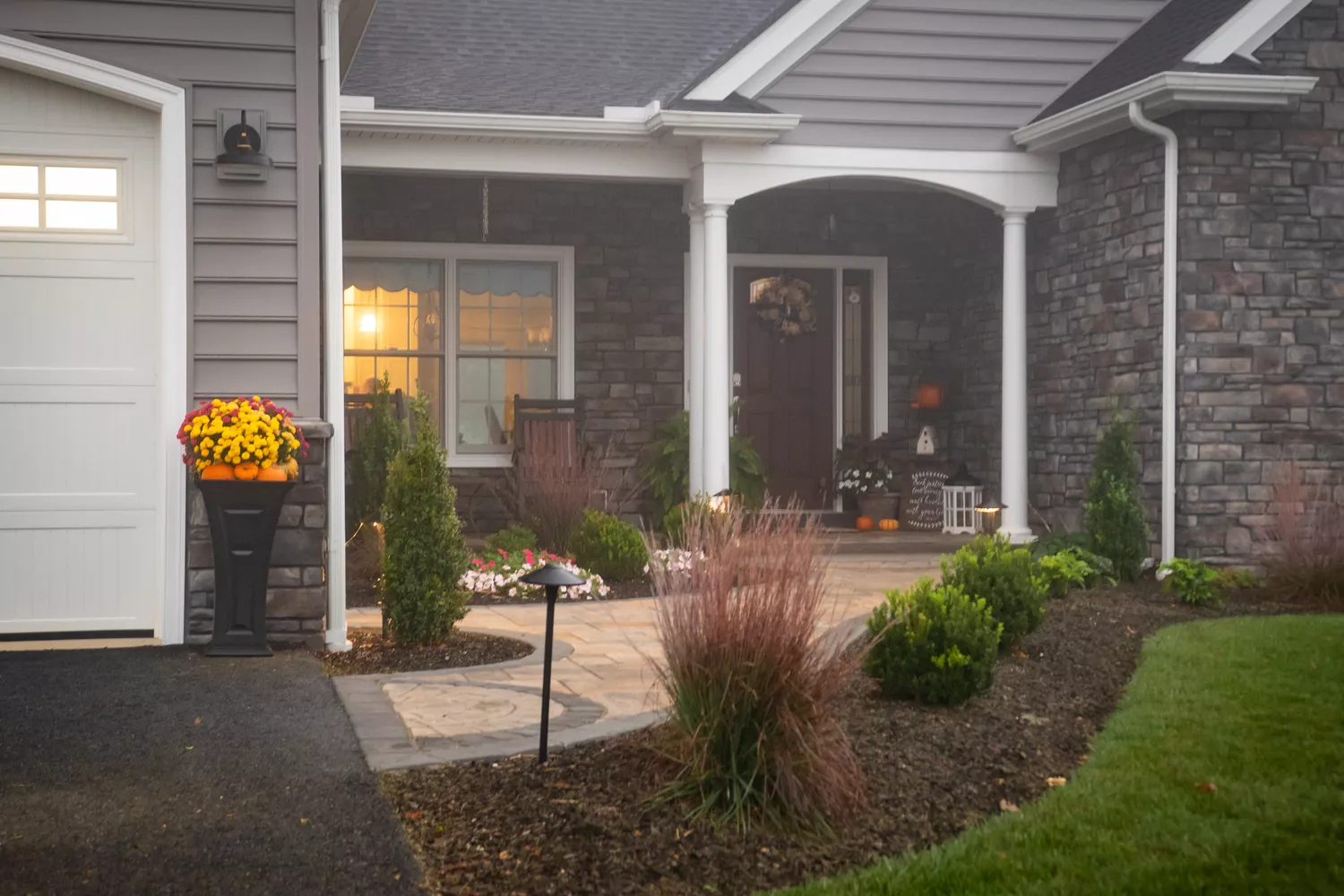
Curved walkways create a more natural flow compared to straight paths. They guide movement while softening the overall layout.
Adding a raised planter near the entry gives a simple focal point. Seasonal plant swaps keep the space looking fresh without major effort.
Poor base preparation is a common issue. Without it, stones shift and become uneven over time.
The overall effect feels welcoming without being overly designed.
Realistic cost:
Stone: $20–$40 | Planter: $100–$600
15. Lavender and Boxwood Garden
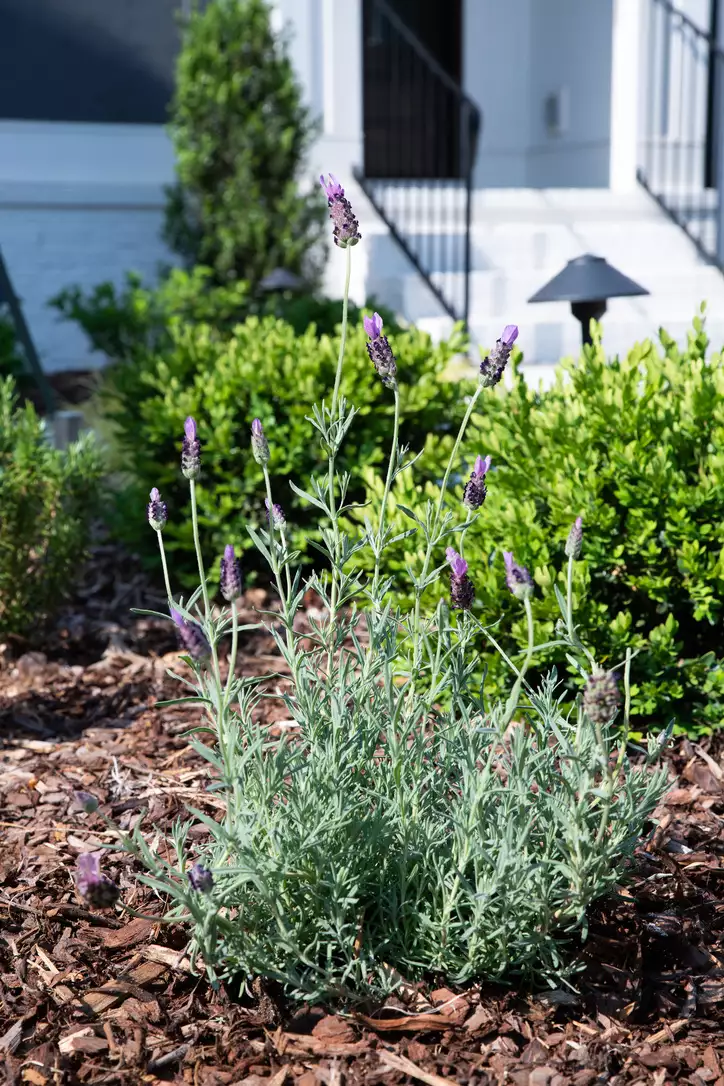
Contrast between soft and structured plants creates a balanced look here. Lavender adds movement and color, while boxwood provides form and consistency.
Well-drained soil is essential for lavender. In humid areas, choosing the right variety makes a noticeable difference in performance.
Ignoring climate conditions is where most people struggle with this setup.
When everything aligns, the result is clean and timeless.
Realistic cost:
Plants: $8–$50 | Mulch: $30–$60
16. Mailbox Garden Bed
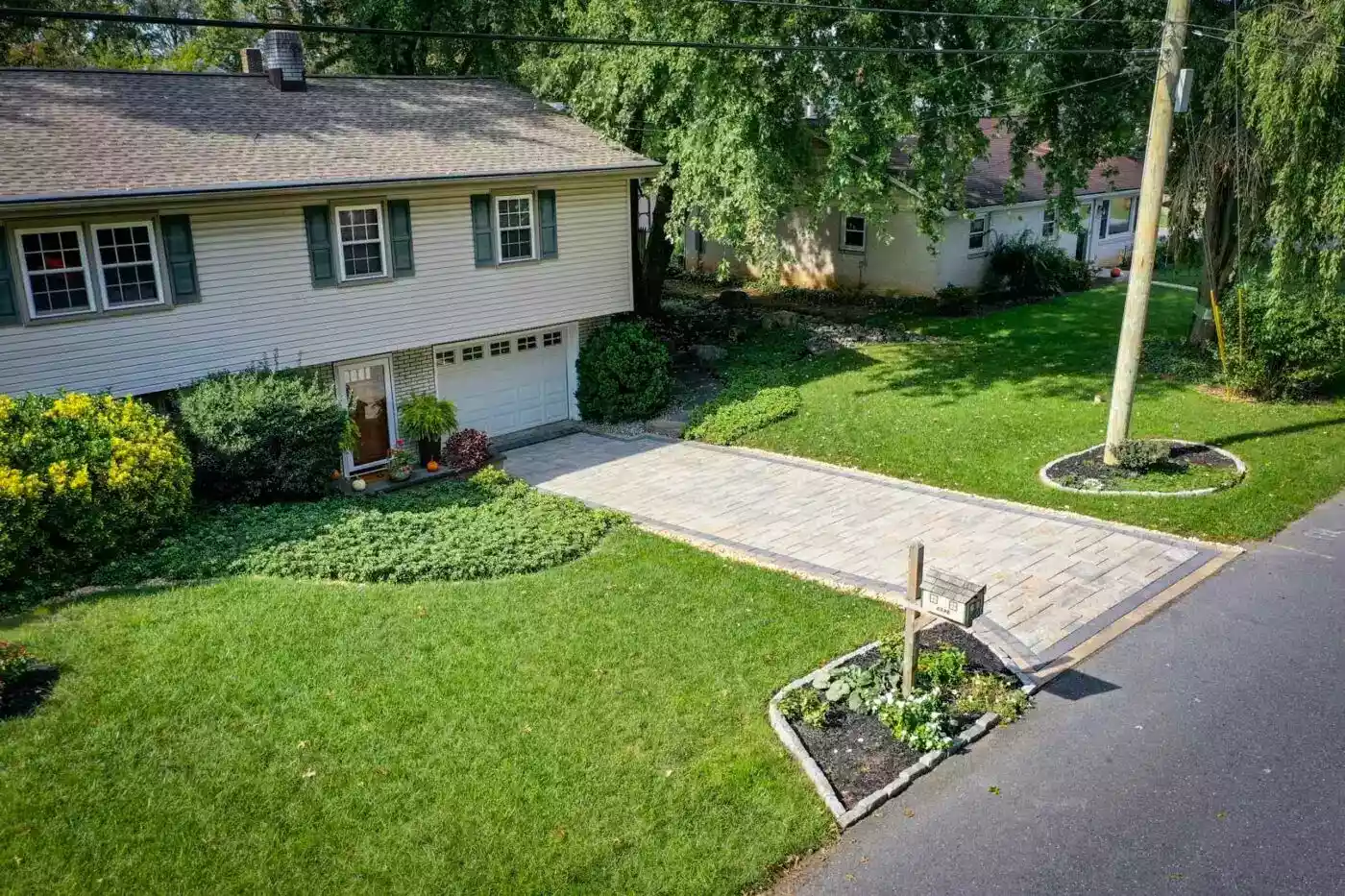
A small space near the mailbox often gets overlooked, but it plays a big role in first impressions. It’s one of the first details visible from the street.
Keeping plants low ensures functionality while still adding color and interest. Seasonal flowers or one anchor plant keep the design simple.
Letting plants grow too large can block access and reduce usability.
It’s a quick upgrade that makes the front feel more finished.
Realistic cost:
Bed: $100–$300 | Plants: $30–$80
17. Landscape Lighting with Woodland Beds
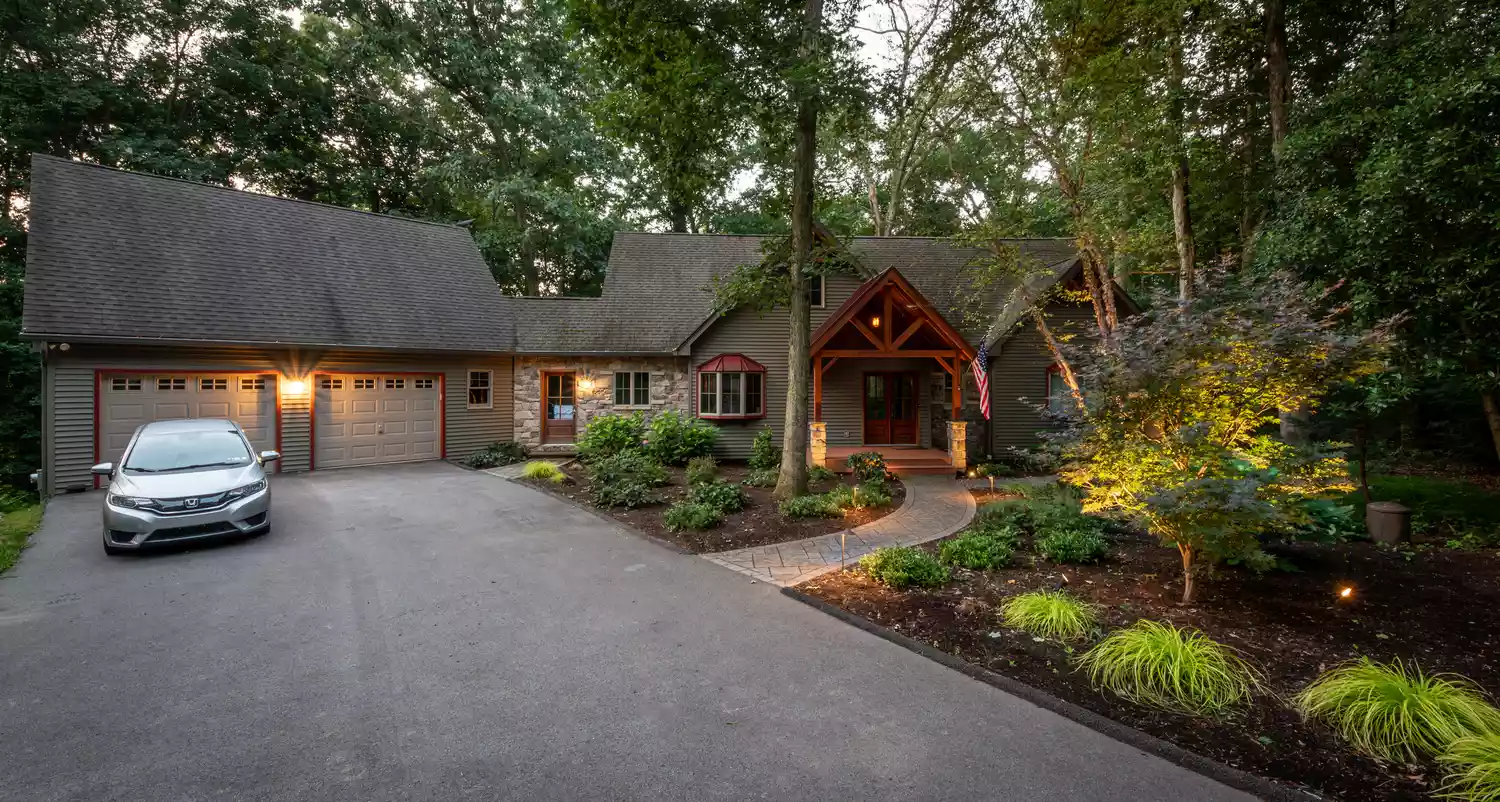
Lighting changes how a space feels after sunset. It highlights structure and creates depth that is not visible during the day.
Focusing on a few key plants produces a stronger effect than lighting everything. Strategic placement always outperforms quantity.
Too many lights can make the space feel harsh instead of inviting.
A well-lit entrance often feels more complete and secure.
Realistic cost:
Lights: $100–$300 | Transformer: $150–$400
18. Stepping Stone Walkway with Gravel
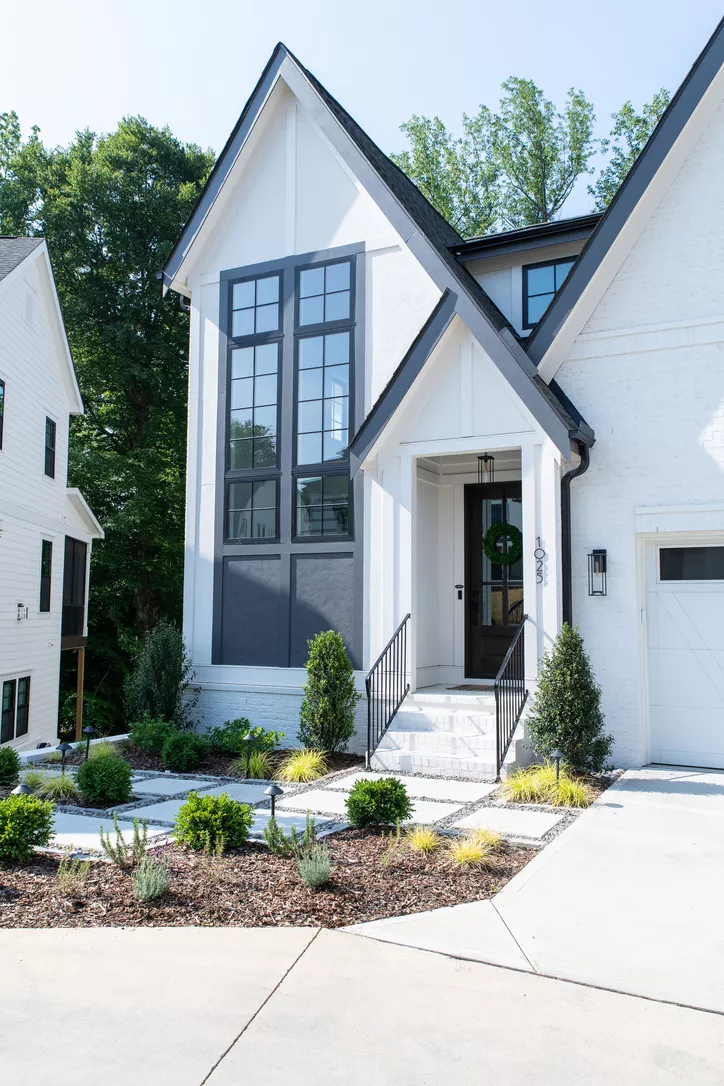
Strong contrast between stepping stones and dark gravel creates a clean and intentional pattern. It adds visual interest without needing complex materials.
Repeating plant shapes along the path helps maintain consistency and avoids a scattered look.
Light-colored gravel tends to reduce contrast and weaken the overall effect.
Even on a smaller budget, this approach can look custom.
Realistic cost:
Stones: $15–$50 | Gravel: $40–$80
19. Curved Path with Flower Beds
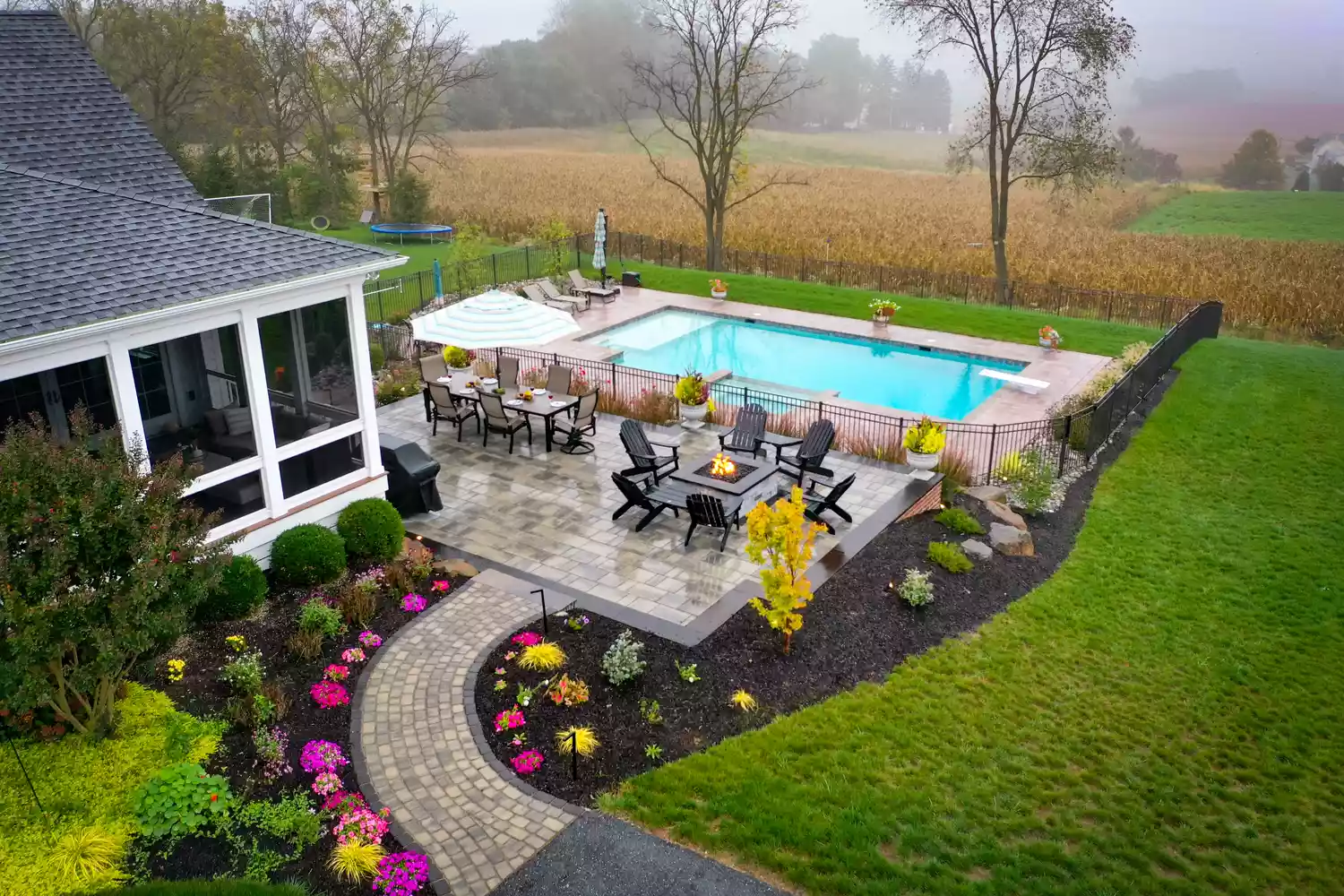
Curved paths naturally feel more inviting than straight lines. They guide movement while adding a sense of flow to the layout.
Layering flowers with different heights creates depth along the path. Using varied colors between sides keeps the design dynamic.
Matching both sides exactly often makes the space feel flat.
The end result feels more alive and engaging.
Realistic cost:
Path: $25–$50 | Plants: $150–$400
20. Farmhouse Gate with Seasonal Decor
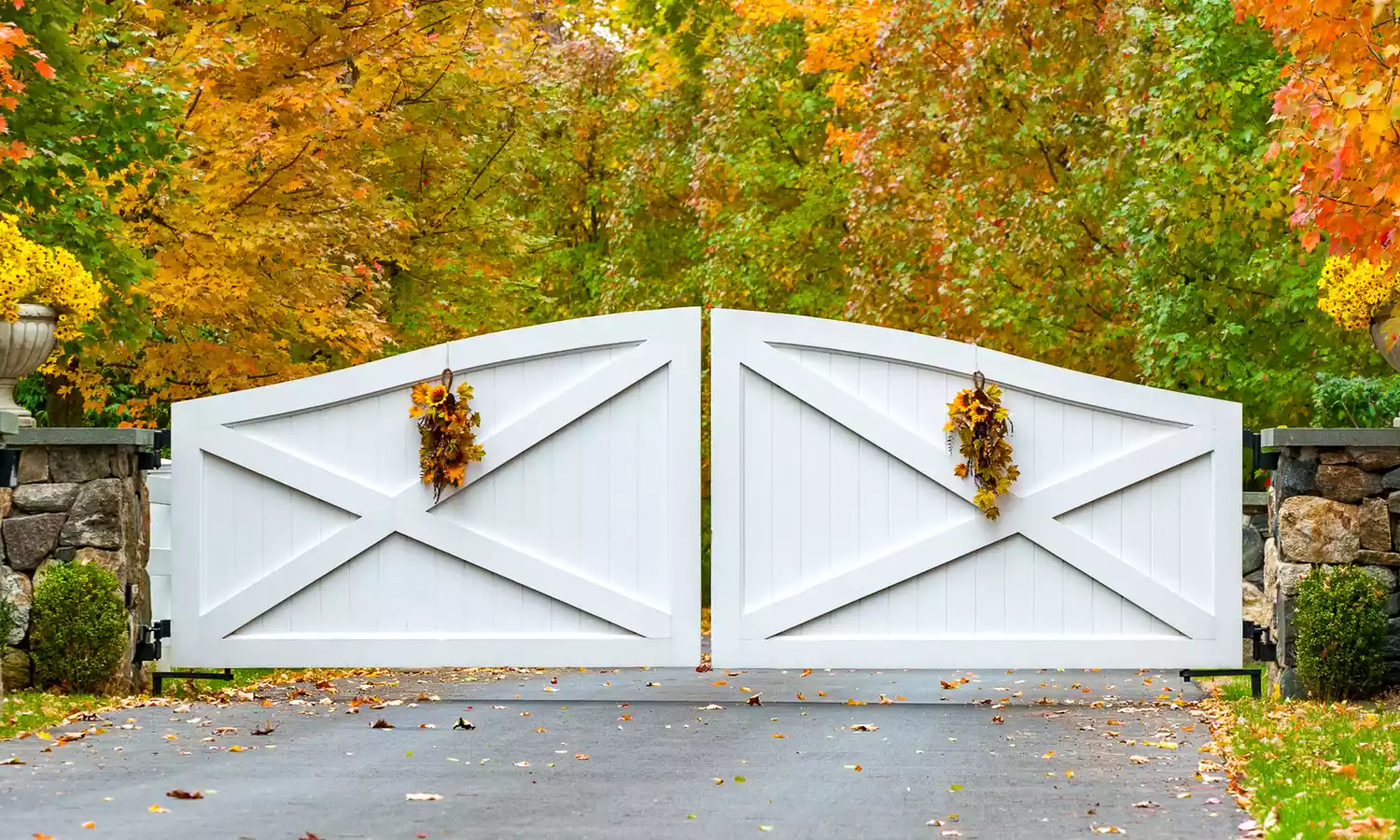
A well-designed gate defines the entrance immediately. It sets the tone before anyone reaches the front door.
Keeping surrounding plants minimal helps maintain focus. Seasonal decor allows for easy updates without permanent changes.
Choosing a gate that is too narrow leads to long-term usability issues.
Even simple designs can feel impactful when scaled properly.
Realistic cost:
Gate: $1,500–$4,000 | Pillars: $1,500–$4,000
21. Mixed Shrub Mulch Bed
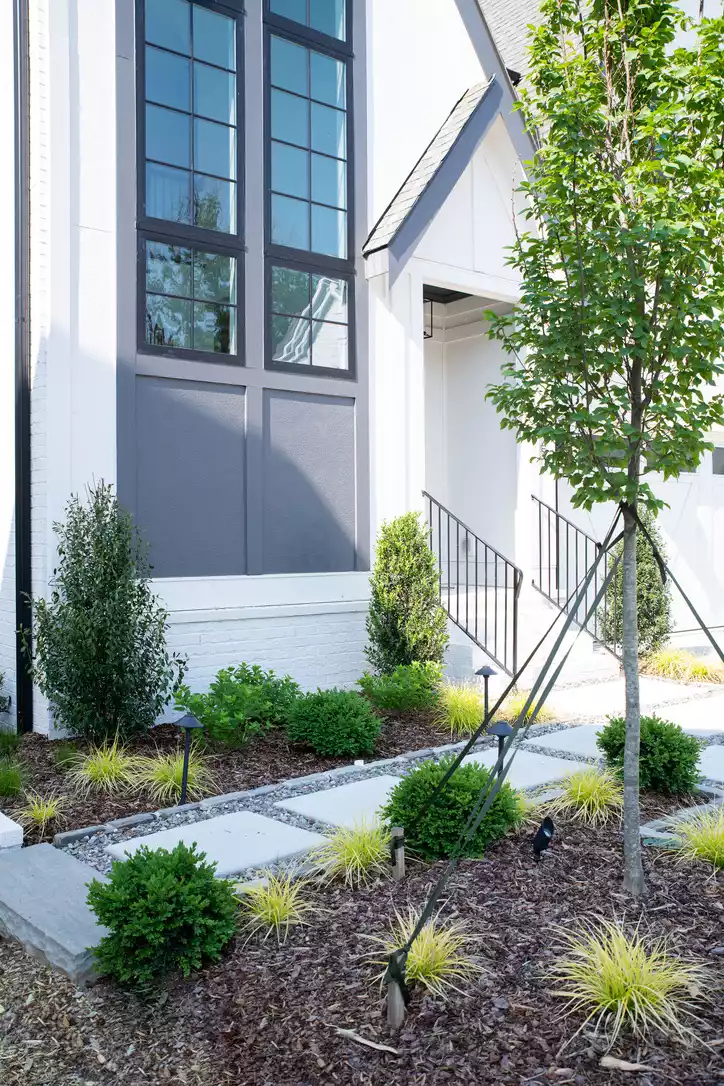
Combining different plant shapes creates a more intentional layout. Mixing round, upright, and low-growing forms adds variety without clutter.
Proper spacing allows plants to mature naturally and reduces maintenance later on.
Overcrowding is one of the most common mistakes and leads to long-term issues.
A balanced mix works well in both small and large spaces.
Realistic cost:
Plants: $25–$60 | Mulch: $30–$60
22. Colonial Brick with White Hydrangeas
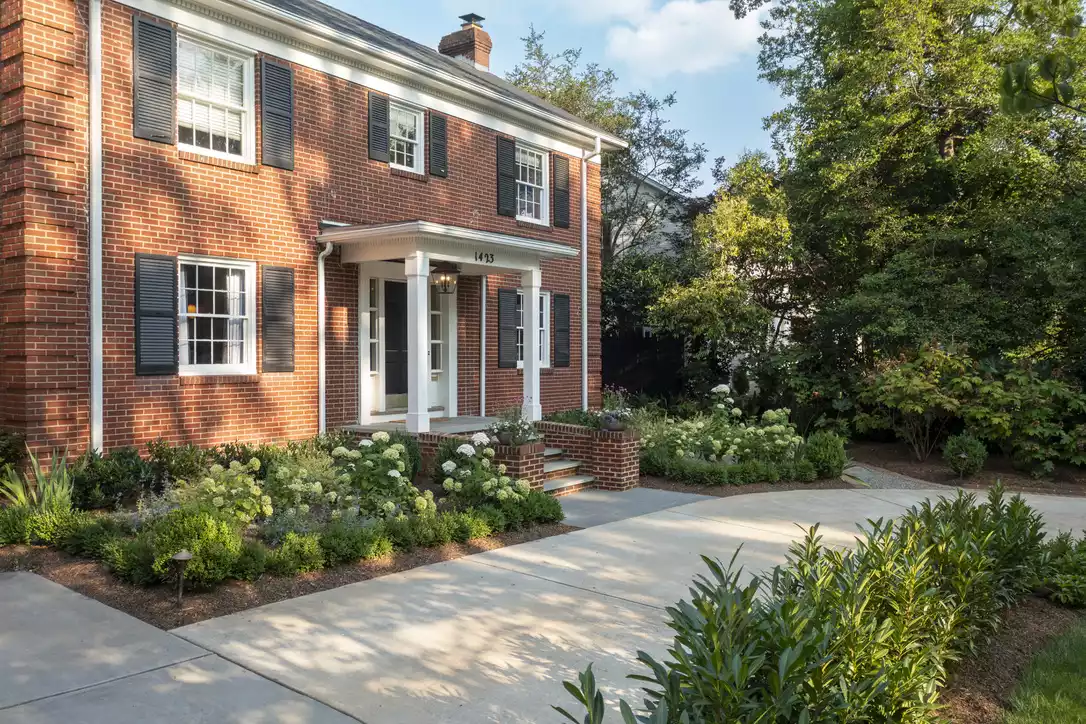
White blooms against red brick create a clean and classic contrast. The combination feels refined without being overly bold.
Layering plant heights helps fill the space properly while maintaining balance. Taller shrubs anchor the design while smaller plants soften edges.
Planting too close to the wall creates maintenance challenges over time.
Few combinations remain as reliable as this.
Realistic cost:
Plants: $25–$60 | Edging: $5–$15
23. Bluestone Entrance with Columnar Tree
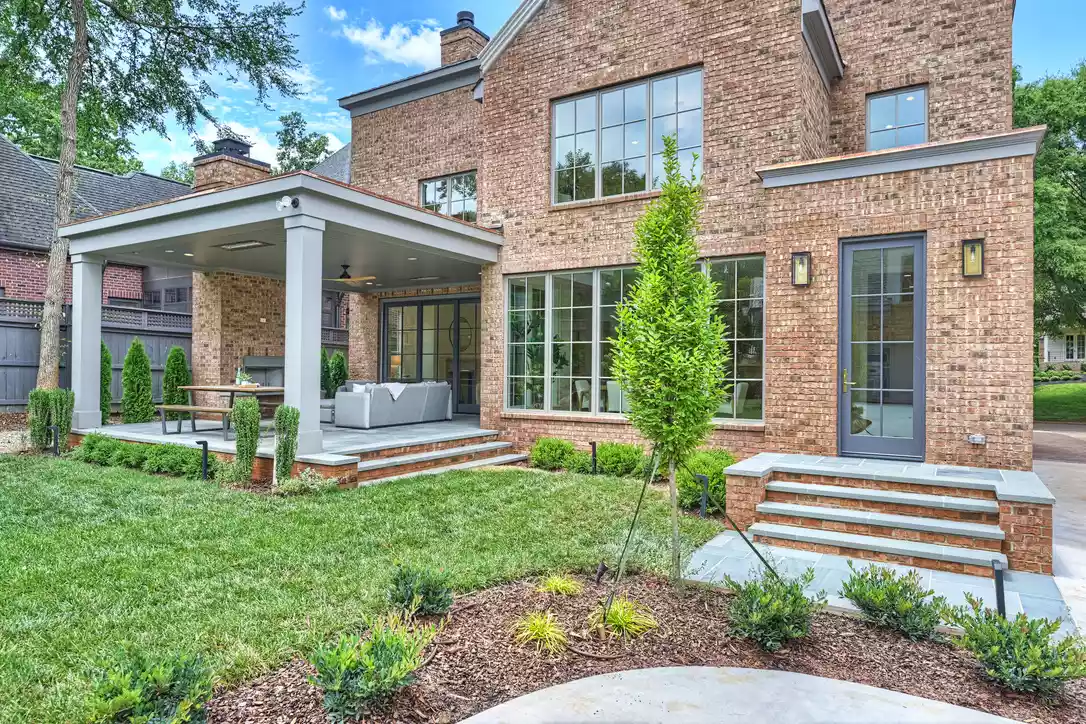
Bluestone brings durability along with a refined look. Its color works well across different home styles and materials.
Pairing it with a vertical tree adds height while keeping the layout clean. It helps complete the space without making it feel crowded.
Skipping sealing often leads to staining over time.
The final result feels subtle but well-finished.
Realistic cost:
Steps: $200–$600 | Tree: $50–$120
24. White Brick Pillar Fence with Natural Wood Gate and Mixed Shrub Border
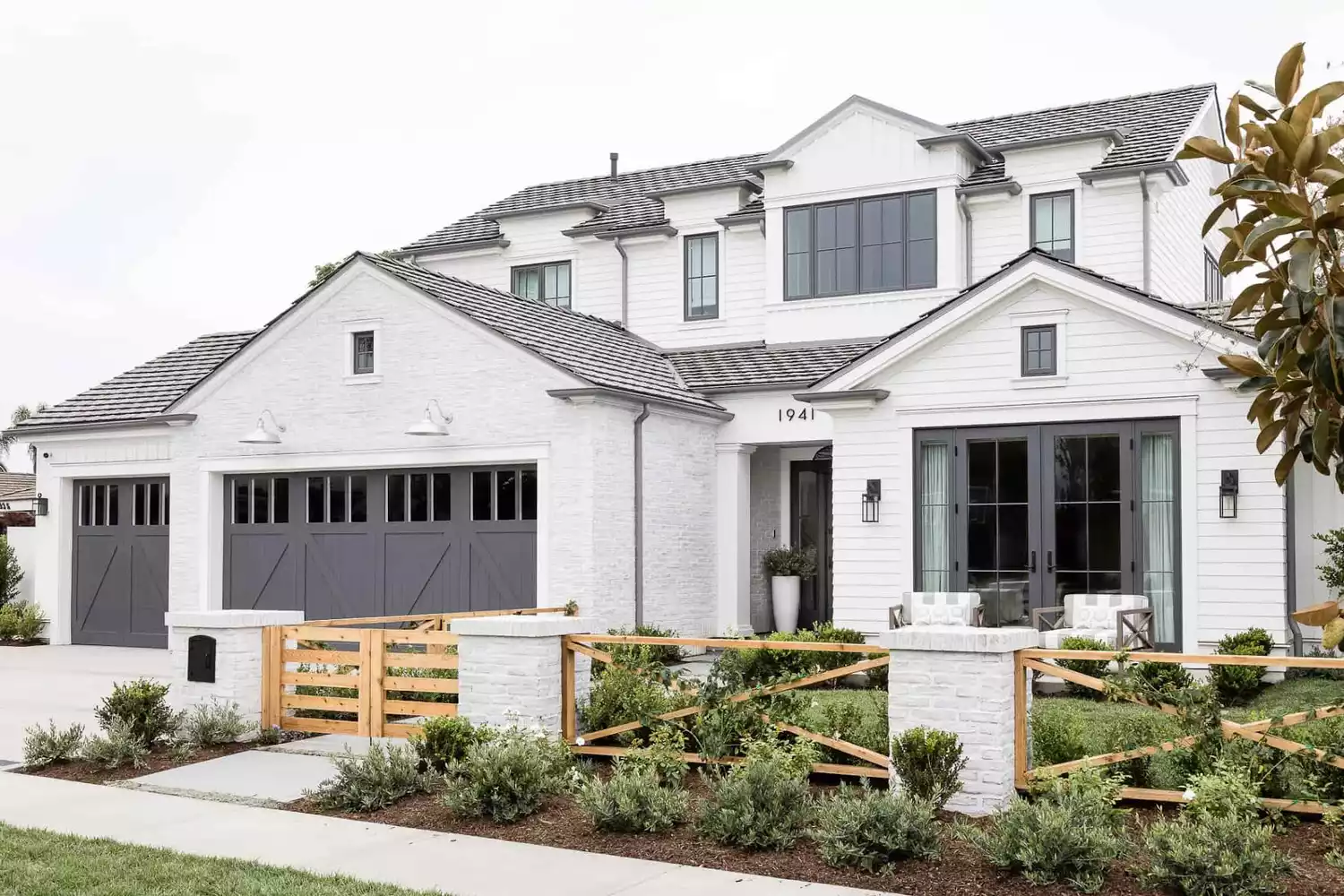
White brick and natural wood create a balanced look that feels both clean and warm. The contrast between painted masonry and raw timber adds character while still keeping the overall design timeless.
Pairing it with silver-green plants helps soften the structure without overpowering it. Options like Russian sage, dusty miller, lamb’s ear, or lavender blend naturally with the white surface and keep the palette cohesive. Matching finishes also matters here, so aligning gate hardware with wall lights keeps everything visually connected.
Using untreated wood is a common mistake. Exposure to sun and rain leads to fading and cracking much faster than expected, so choosing durable materials or maintaining the finish regularly makes a big difference.
The final result feels structured, inviting, and visually strong without being overly complex.
Realistic cost:
White brick pillars: $1,500–$4,000 each
Wood slat gate: $800–$2,500 installed
Shrub border: $30–$80 per linear foot
Top Questions Answered
How much does driveway entrance landscaping cost in total?
It depends entirely on what you’re changing. A purely planting-based upgrade (new border plants, mulch, path lights) typically runs $500–$3,000 for a standard residential driveway. Add hardscape elements like new pavers or stone pillars, and you’re looking at $5,000–$20,000+. Gates with automation systems start at $3,000 and can reach $15,000 for custom work with stone pillars.
The highest-ROI investments in order: path lighting (dramatic impact, low cost), a single statement planter at the entrance, defined mulch borders, and one anchor plant or tree per side. Do those four things for $500–$1,000, and your entrance will look significantly more intentional.
What are the lowest-maintenance plants for driveway borders?
For full sun and most climates: ornamental grasses (Calamagrostis, Pennisetum, or Panicum), liriope, black-eyed Susan, and coneflower (Echinacea). Cut ornamental grasses back in early spring, divide coneflower every 3–4 years, and that’s genuinely the extent of required maintenance.
For dry and warm climates: agave, golden barrel cactus, rosemary, and bougainvillea. Established plantings need water once every 2–3 weeks at most.
Avoid: barberry (invasive in many states), English ivy (aggressively spreading), and annual-heavy borders if you don’t want to replant three times per year.
How do I add privacy to my driveway entrance without a full fence?
The most effective approach is layered height. Start with a tall evergreen screen (arborvitae ‘Green Giant’ at 5–6 foot spacing), plant mid-height shrubs in front of it (viburnum, inkberry), and finish with low plants at the edge. This creates a visual barrier that reads as landscape rather than fence, and it’s legal in virtually all HOA zones that prohibit solid fencing above a certain height.
For faster results, pre-balled arborvitae specimens at 6–8 feet provide immediate privacy and cost $150–$300 per tree. Plant 10 of them along a 50-foot driveway, and you have a solid screen from day one.
Should I hire a landscaper or DIY my driveway entrance?
Hardscape work (pavers, pillars, steps, walls) almost always needs a professional. The base preparation required for long-lasting results, compacted gravel, proper drainage, and mortar work is not beginner territory, and errors are expensive to fix.
Planting is genuinely DIY-friendly with good plant selection. The most important factor is soil preparation: dig 12–18 inches deep, amend heavy clay with compost and coarse grit, and plant at the correct depth (the root flare should sit at or slightly above soil level, never buried). Get the soil right, and most healthy plants will establish themselves.
Lighting installation depends on whether you choose low-voltage systems (DIY-friendly, plug into a transformer) or line-voltage systems (require a licensed electrician).
Improve Your Landscape Design
• Steep Hill Landscaping Ideas
• Brick Garden Edging Ideas
• Swale Landscaping Ideas
• Backyard Layout Ideas