27 Basement Ceiling Ideas I Kept Seeing in Renovations

This post contains affiliate links, and we will be compensated if you buy after clicking on our links. Read our disclaimer.
Read our editorial process
Does your basement still feel unfinished, even after you’ve updated the floors and walls?
The ceiling is often the missing piece. Exposed pipes, outdated tiles, or a plain overhead surface can make the entire room feel less polished than it should.
A well designed ceiling does more than hide utilities. It can add character, improve lighting, create visual interest, and make the space feel larger and more inviting.
From exposed beams and wood planks to modern lighting and decorative ceiling treatments, there are plenty of ways to transform this overlooked surface.
These 27 Basement Ceiling Ideas will help you find the right look for your space and turn your basement into a room that feels truly finished.
Best Basement Ceiling Ideas
In this article, we’ll walk you through 27 amazing basement ceiling ideas. From modern industrial looks to cozy wooden finishes, there’s something for every style. Let’s begin with the first idea to help you start rethinking your basement ceiling.
Explore More Home Renovation Ideas
• DIY Cheap Ceiling Ideas
• DIY Concrete Floor Ideas
• DIY Bathroom Makeover Ideas
• DIY Staircase Makeover Ideas
1. Exposed Beams for an Industrial Look
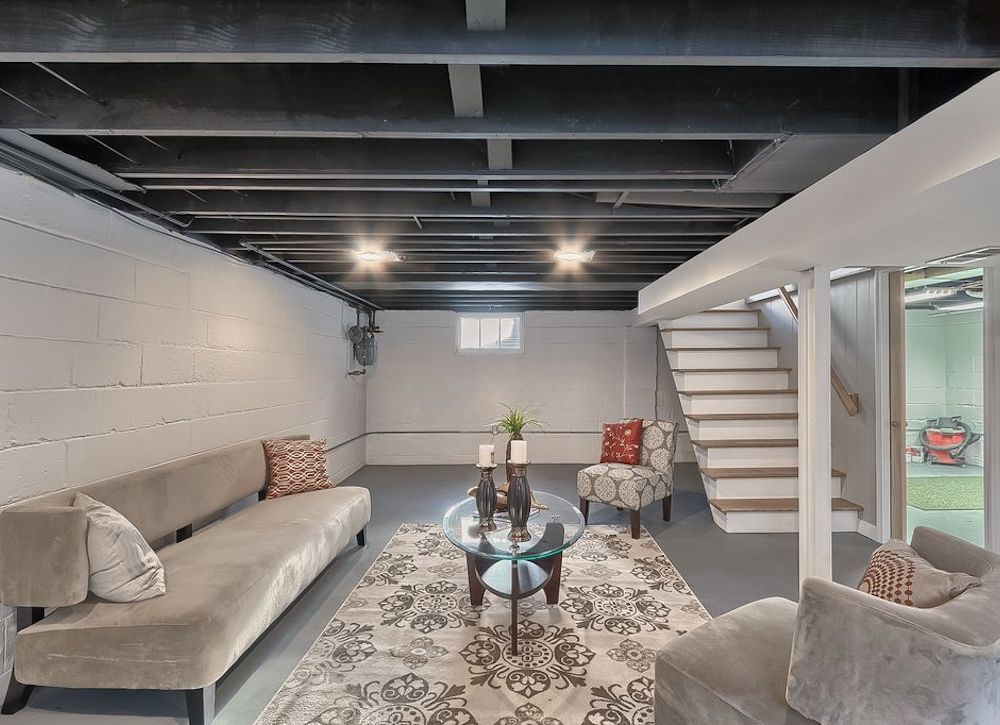
Some basement ceilings look better when you stop trying to hide them. Exposed beams bring attention to the structure itself, giving the space a clean industrial feel with plenty of character.
Natural wood beams add warmth and texture, while painted beams create a more modern appearance. Dark finishes can make the ceiling feel bold and dramatic, especially when paired with simple lighting and streamlined furniture. This approach works particularly well in larger basements where the open ceiling helps the room feel more spacious and architectural.
2. Drop Ceilings for Easy Access
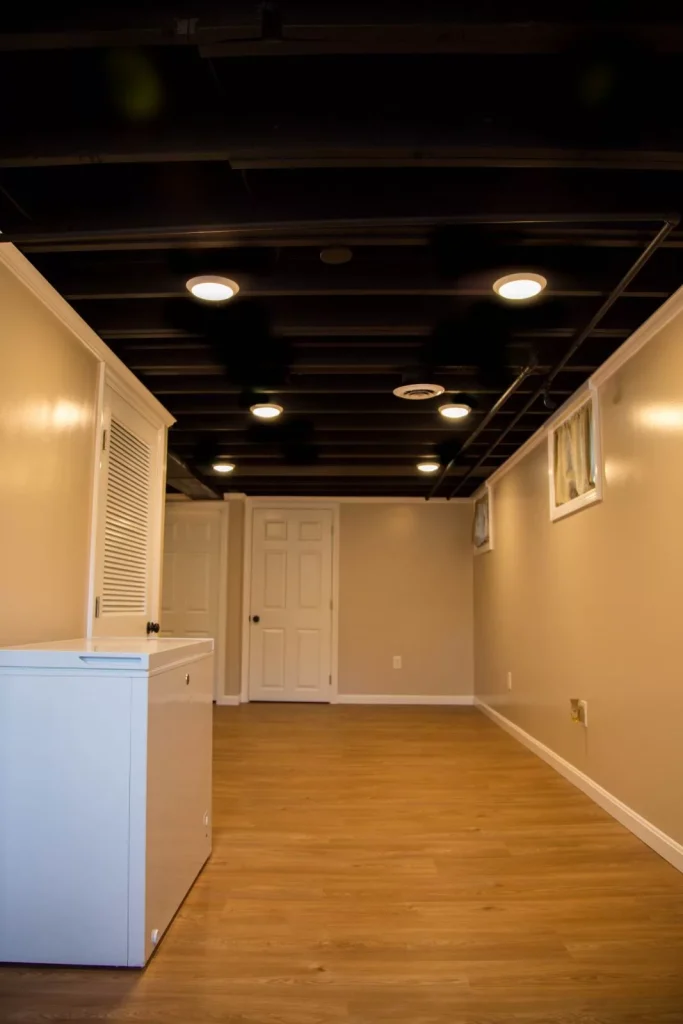
Sometimes the smartest ceiling choice is the one you barely notice. A drop ceiling creates a clean surface overhead while keeping pipes, wiring, and ductwork hidden from view.
The real advantage appears later when repairs or upgrades are needed. Individual panels can be removed without opening up the entire ceiling, making this a practical option for heavily used family spaces and home offices.
3. Tray Ceilings for Added Elegance
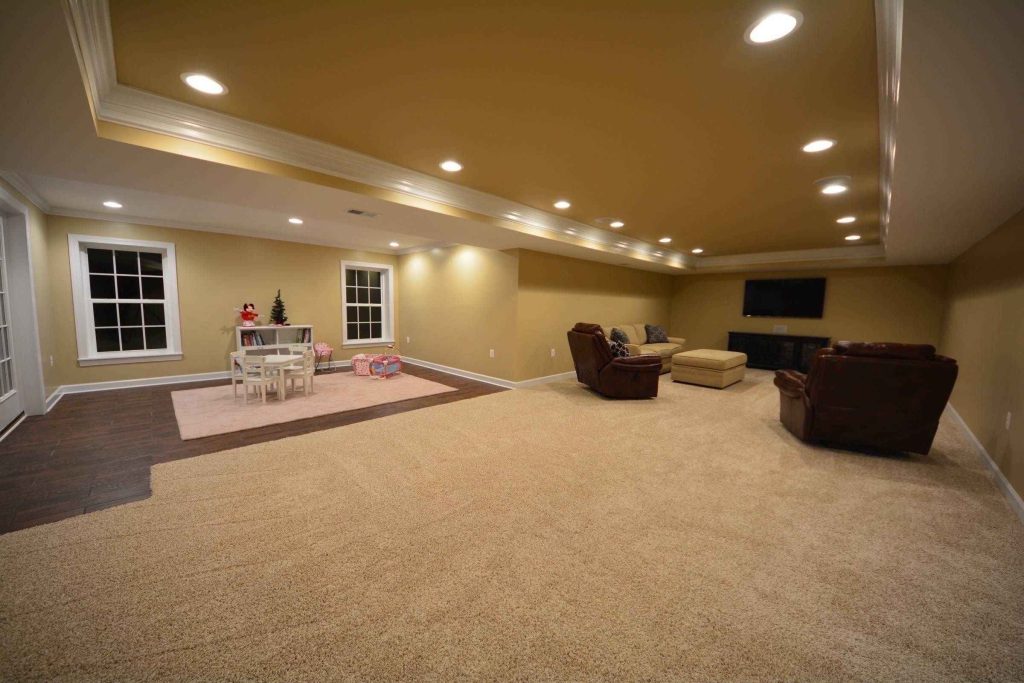
Look up, and the ceiling becomes part of the design. A tray ceiling creates a recessed center that adds depth and helps break up large stretches of flat drywall.
The layered shape naturally draws attention upward and gives the room a more finished appearance. Soft perimeter lighting can make the detail stand out even more during the evening hours.
4. Coffered Ceilings for Timeless Charm
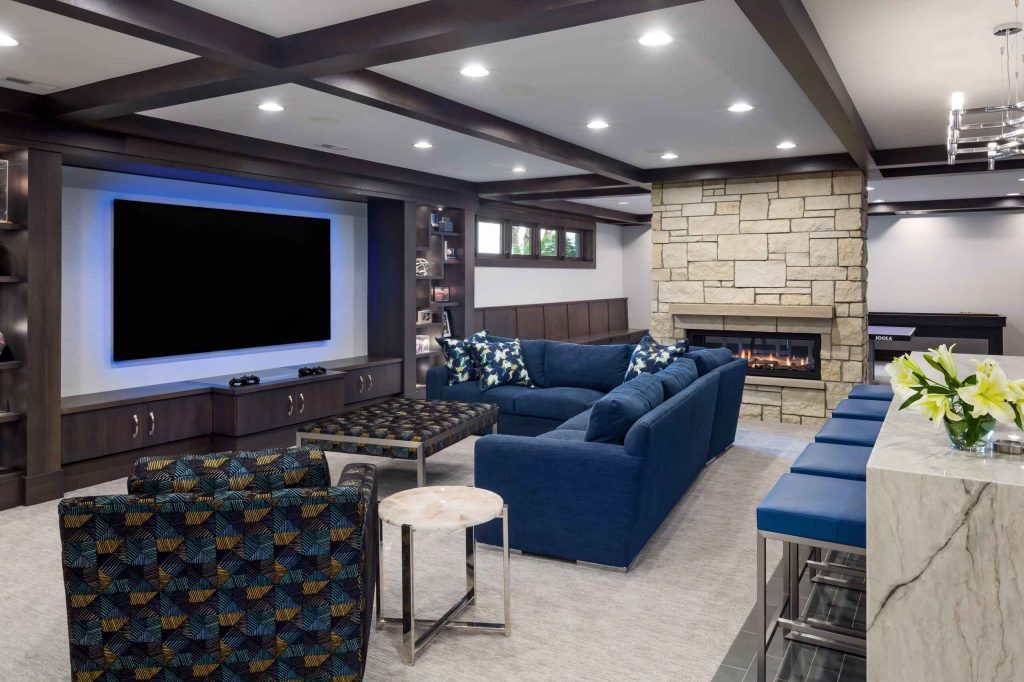
Nothing adds architectural character quite like a coffered ceiling. The repeating grid pattern introduces structure overhead and gives the basement a custom built feel.
Traditional homes often use this detail to create a sense of craftsmanship, though simple beam layouts can feel equally at home in more modern spaces. The result feels substantial without overwhelming the room.
5. Wood Panel Ceilings for Warmth
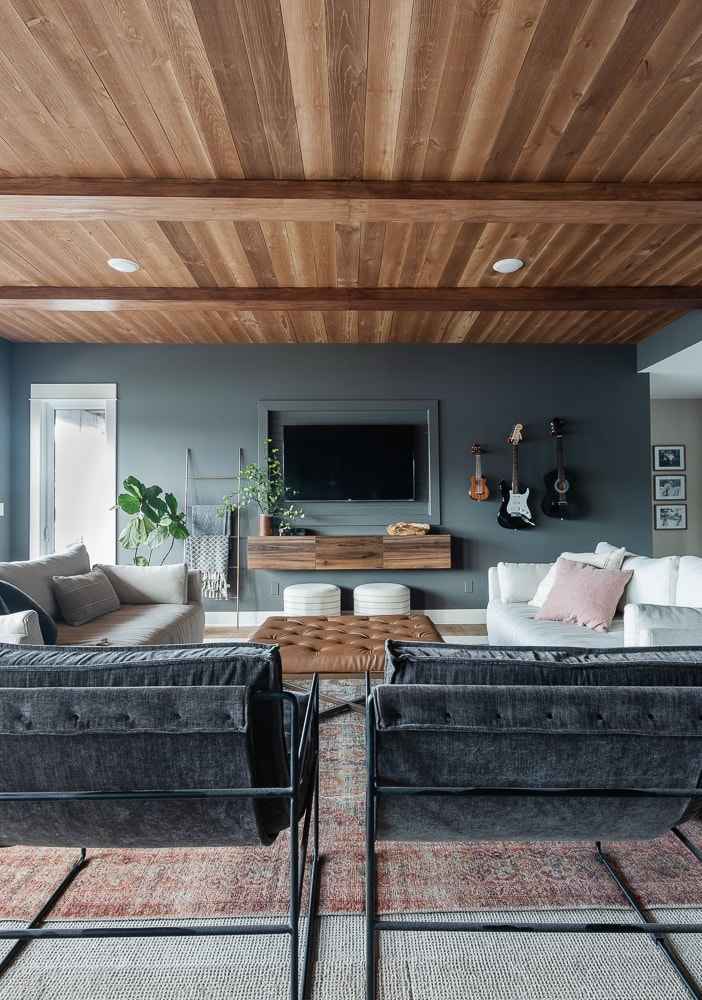
Wood changes the mood of a basement almost instantly. What might feel cold or unfinished starts to feel warmer and more connected to the rest of the home.
Natural grain patterns add texture across the ceiling, while different stain colors can shift the overall look from rustic to contemporary. The finish brings visual interest without relying on bold decorative elements.
6. Whitewashed Wood Ceilings for a Beachy Vibe

Not every wood ceiling needs a dark stain. A whitewashed finish keeps the texture visible while helping the surface reflect more light throughout the room.
That subtle balance between rustic and airy works especially well in basements that feel closed in. The lighter finish softens the space and creates a more relaxed atmosphere.
7. Suspended Ceiling Tiles for Flexibility
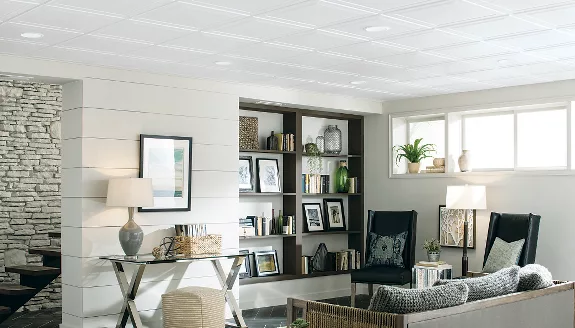
Need a ceiling that can adapt as your basement changes? Suspended ceiling tiles make it easy to access wiring, plumbing, and ductwork without disrupting the finished look of the room.
The grid system keeps everything neatly concealed while allowing individual panels to be removed when needed. With options ranging from simple tiles to decorative designs, this ceiling style balances practicality with a polished appearance.
8. Modern Metal Ceilings for a Sleek Look
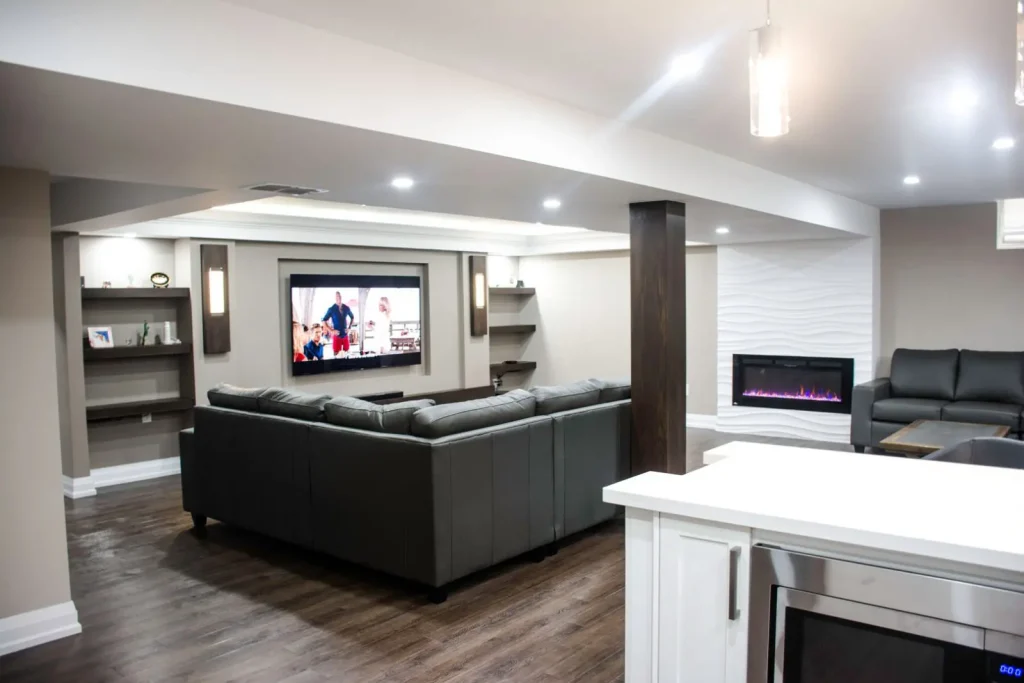
Few materials create a stronger contemporary statement than metal. Clean lines and reflective surfaces give the ceiling a sharp, architectural presence that instantly feels modern.
Large panels create a streamlined look, while patterned tiles introduce extra texture overhead. The reflective finish can also help brighten darker basements by bouncing available light throughout the space.
9. Paint the Ceiling a Bold Color
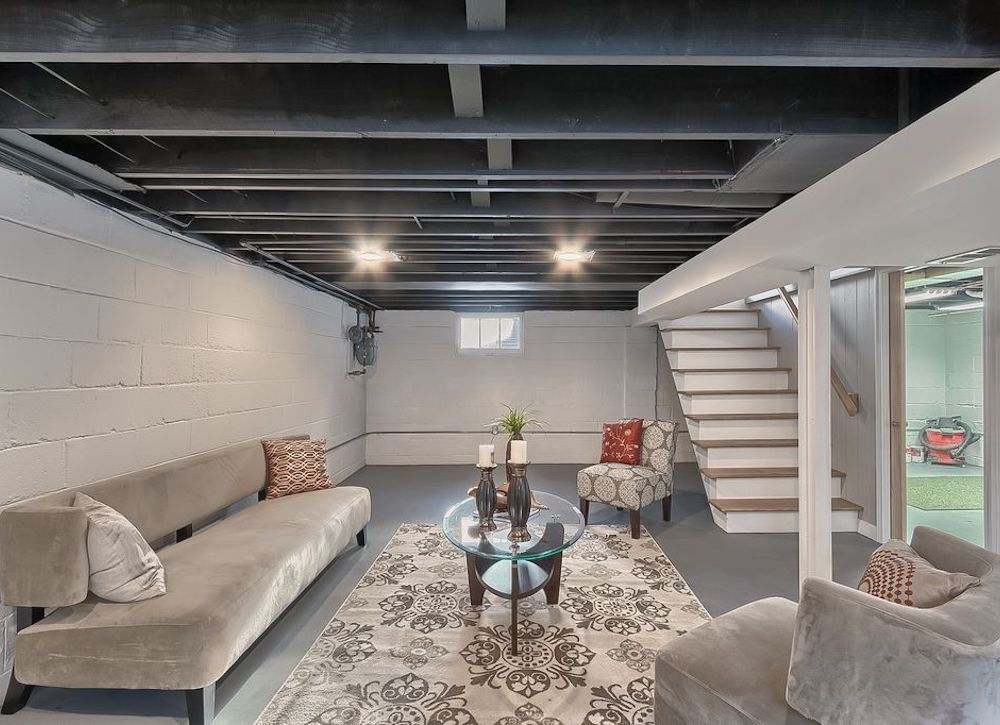
Most people focus on the walls and forget about the ceiling. A bold paint color changes that instantly, turning an often overlooked surface into one of the room’s most memorable features.
Deep blues, rich greens, and dramatic charcoal tones can add depth and personality without requiring major renovations. When paired with lighter walls and furnishings, the contrast feels intentional and visually striking.
10. Acoustic Ceilings for Noise Control
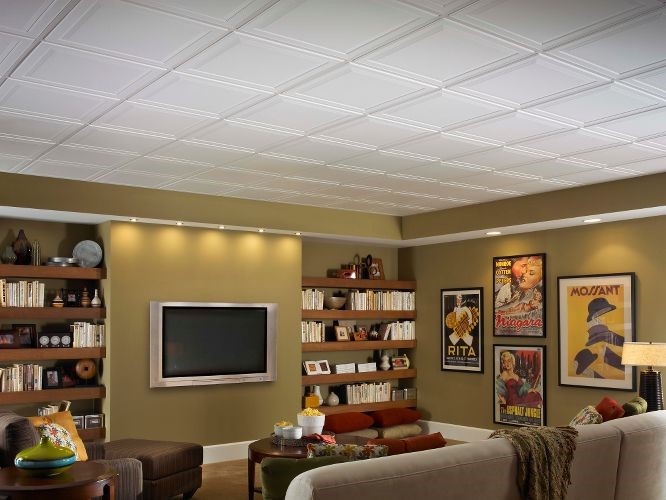
Sound can quickly travel through an unfinished basement, making the space feel less comfortable for everyday use. Acoustic ceilings help absorb excess noise and reduce echoes, creating a quieter environment.
This practical upgrade is especially useful in media rooms, music spaces, and home theaters where sound quality matters. The added noise control can also help minimize disruption between floors.
11. Ceiling Wallpaper for Texture and Pattern
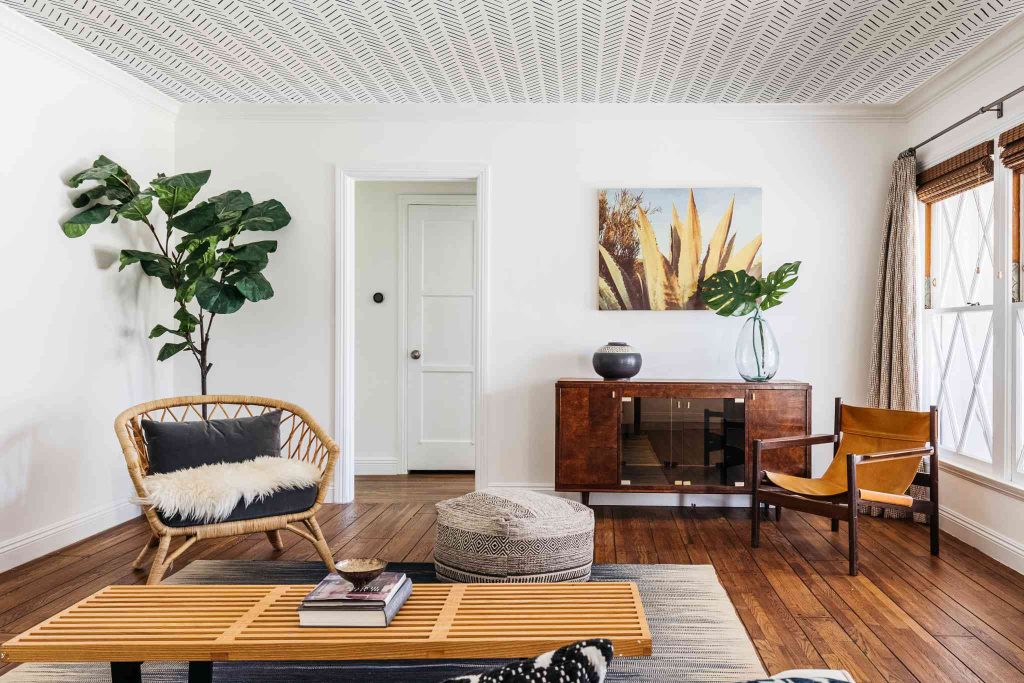
Why leave the ceiling plain when it can become part of the design? Wallpaper introduces color, texture, and pattern in a place many homeowners rarely think to decorate.
Subtle designs add visual depth without overwhelming the room, while larger patterns can create a dramatic focal point overhead. It’s an unexpected detail that helps a basement feel more customized and complete.
12. Faux Tin Ceilings for Vintage Appeal
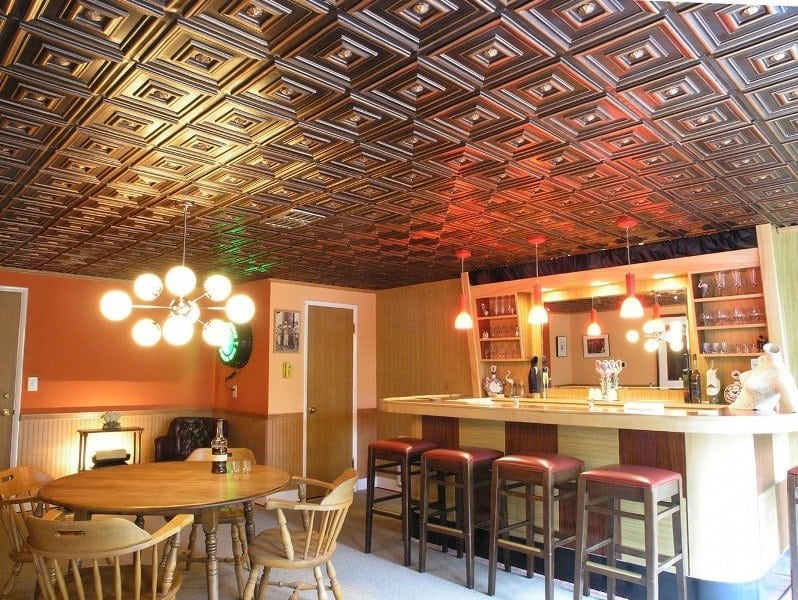
Vintage inspired spaces often benefit from decorative details that feel rich in character. Faux tin ceiling tiles bring that classic look without the weight or cost associated with traditional metal ceilings.
Embossed patterns add texture and visual interest across the entire room. The result feels timeless and distinctive, making it a strong choice for basement bars, recreation rooms, and other gathering spaces.
13. Mirror Ceilings to Create a Sense of Space
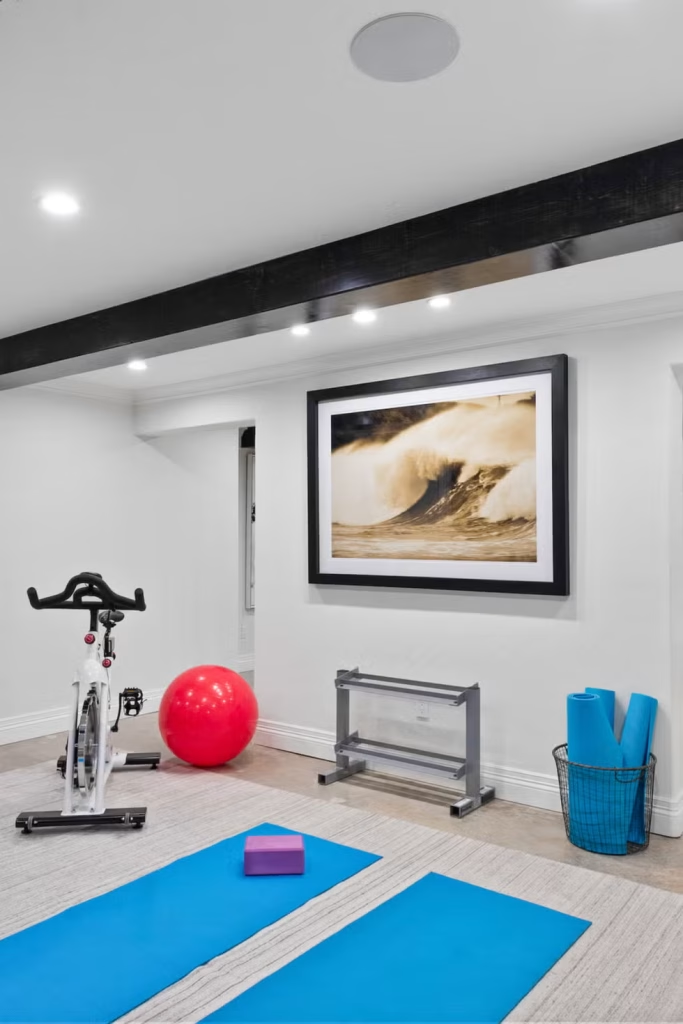
Small basements often benefit from a few visual tricks. A mirrored ceiling reflects light and surrounding surfaces, helping the room feel larger and more open than it actually is.
The reflective finish adds a dramatic touch while brightening darker areas that lack natural light. When balanced with soft furnishings and textured materials, the look feels stylish rather than overwhelming.
14. Skylights for Natural Lighting
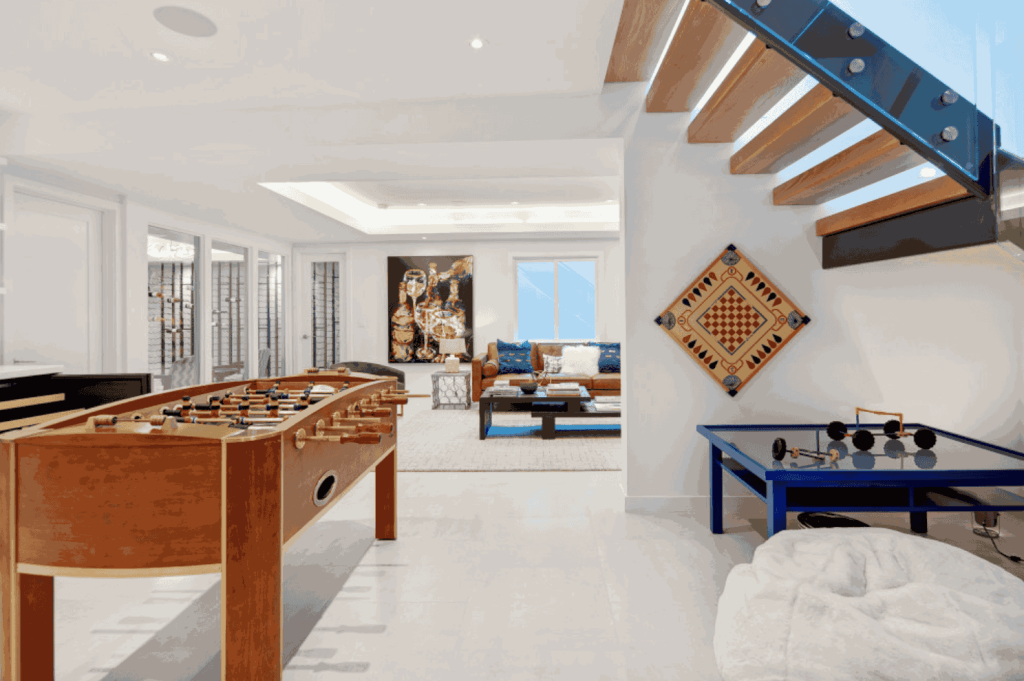
Nothing transforms a basement quite like natural light. A skylight introduces daylight from above, helping the space feel brighter, fresher, and more connected to the rest of the home.
Fixed, vented, and tubular options each offer different advantages depending on the layout. Even a small skylight can make a noticeable difference in how open and welcoming the room feels throughout the day.
15. LED Lighting Integrated into the Ceiling
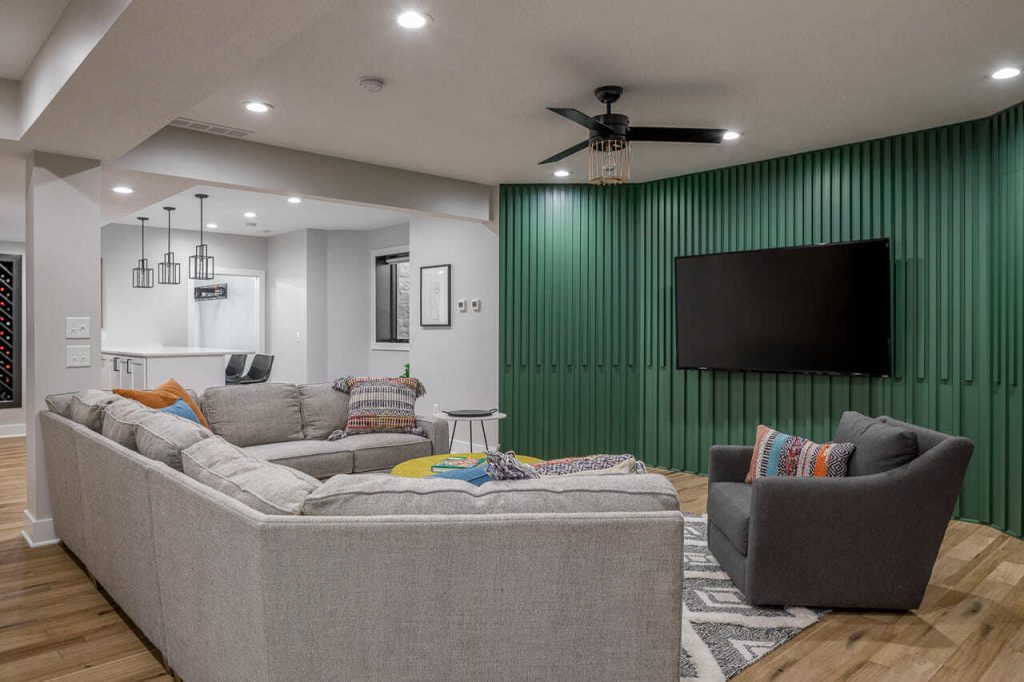
Good lighting often goes unnoticed until it’s missing. Integrated LED fixtures provide clean illumination without drawing attention away from the rest of the design.
Recessed lights, hidden strips, and perimeter lighting can all be incorporated directly into the ceiling. The result is a streamlined look that feels modern while giving you greater control over brightness and atmosphere.
16. Paint a Starry Sky for a Unique Touch
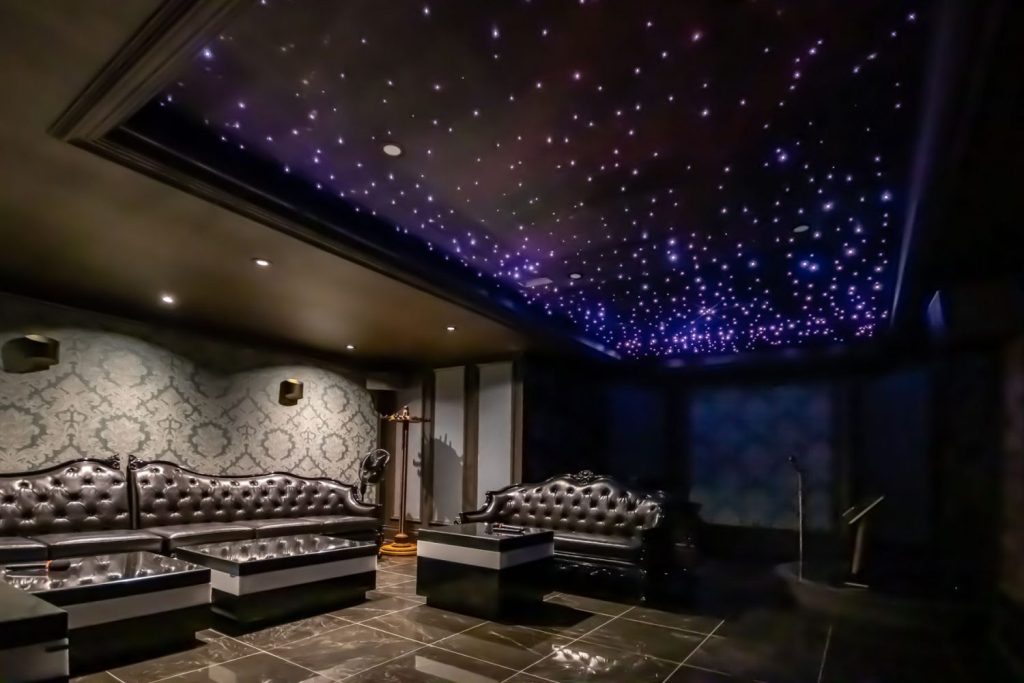
Some ceiling designs focus on function, while others create an experience. A painted starry sky turns the ceiling into a decorative feature that adds personality and a sense of wonder to the room.
Dark background colors paired with glowing stars create depth overhead and make the space feel more immersive. This playful approach works especially well in media rooms, children’s spaces, and cozy basement retreats.
17. Rafter Ceilings for a Rustic Feel
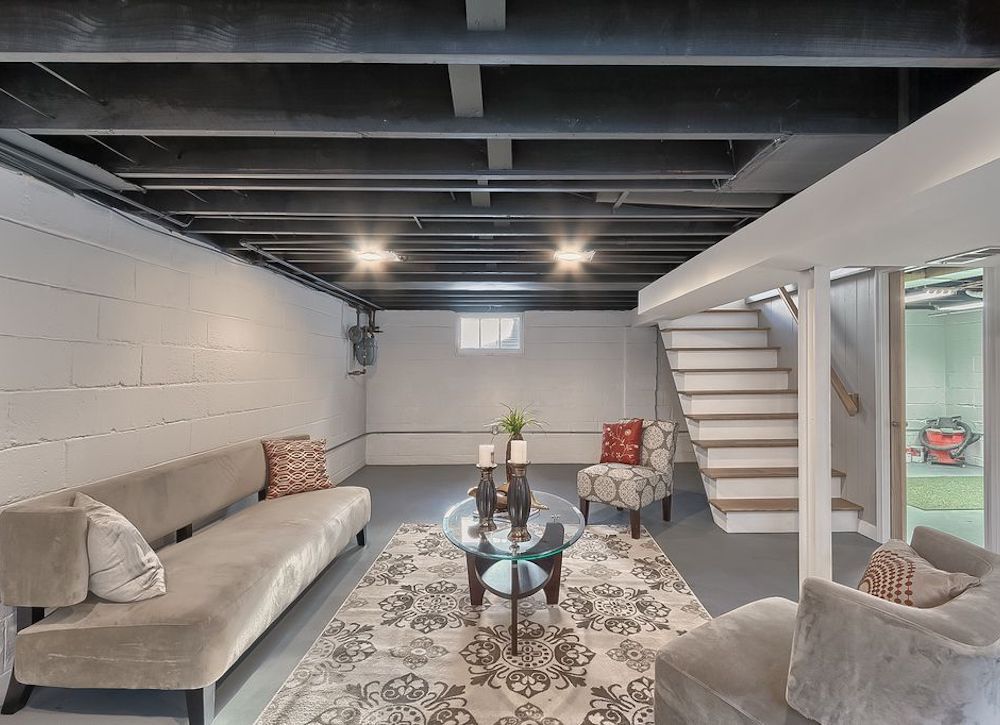
Rustic design often celebrates the structure itself. Exposed rafters bring warmth and character to a basement while showcasing the framework that would normally remain hidden.
Natural wood finishes emphasize the texture and craftsmanship of the ceiling. Combined with stone, leather, or vintage furnishings, the look feels comfortable, relaxed, and full of personality.
18. Minimalist Ceilings for a Clean Look
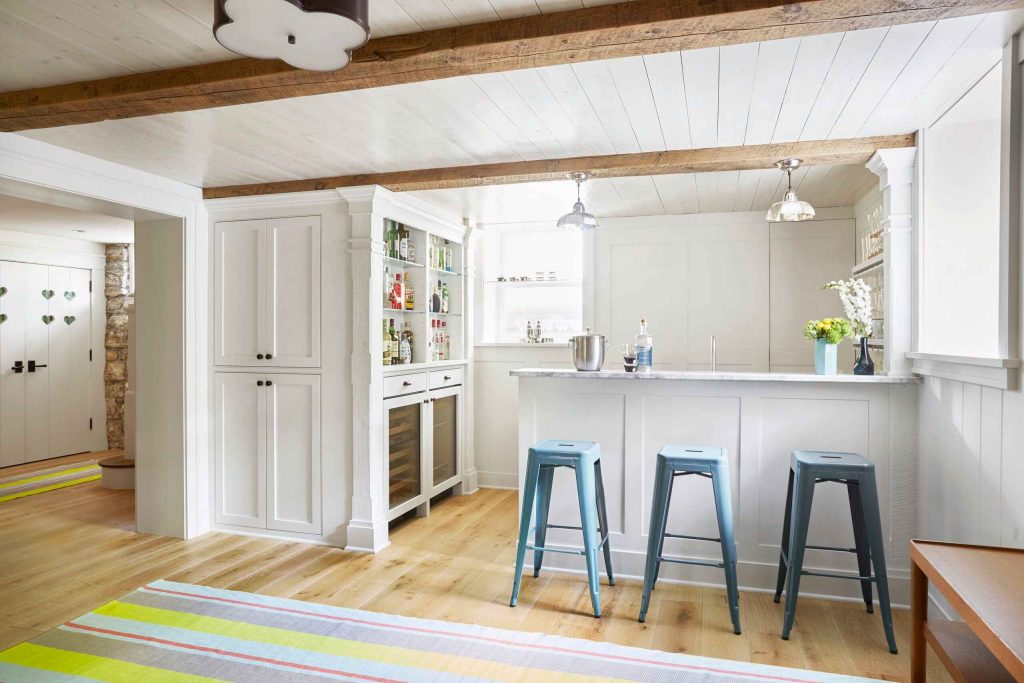
Less detail can sometimes have the biggest impact. A minimalist ceiling keeps visual distractions to a minimum, allowing the room’s layout, furnishings, and lighting to take center stage.
Smooth surfaces and simple finishes help create a calm, uncluttered appearance. This approach is especially effective in modern basements where openness and simplicity are part of the overall design.
19. Vintage Ceiling Tiles for a Retro Look
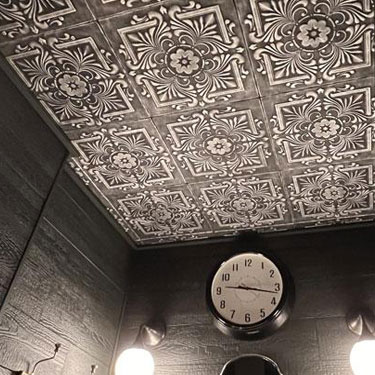
Older design elements have a way of adding character that new materials often cannot replicate. Vintage style ceiling tiles introduce texture, pattern, and a sense of history overhead.
Pressed metal designs create a classic look, while modern reproductions offer similar charm with easier installation. The decorative details help transform an ordinary basement into a space that feels distinctive and memorable.
20. Vaulted Ceilings for a Lofty Feeling
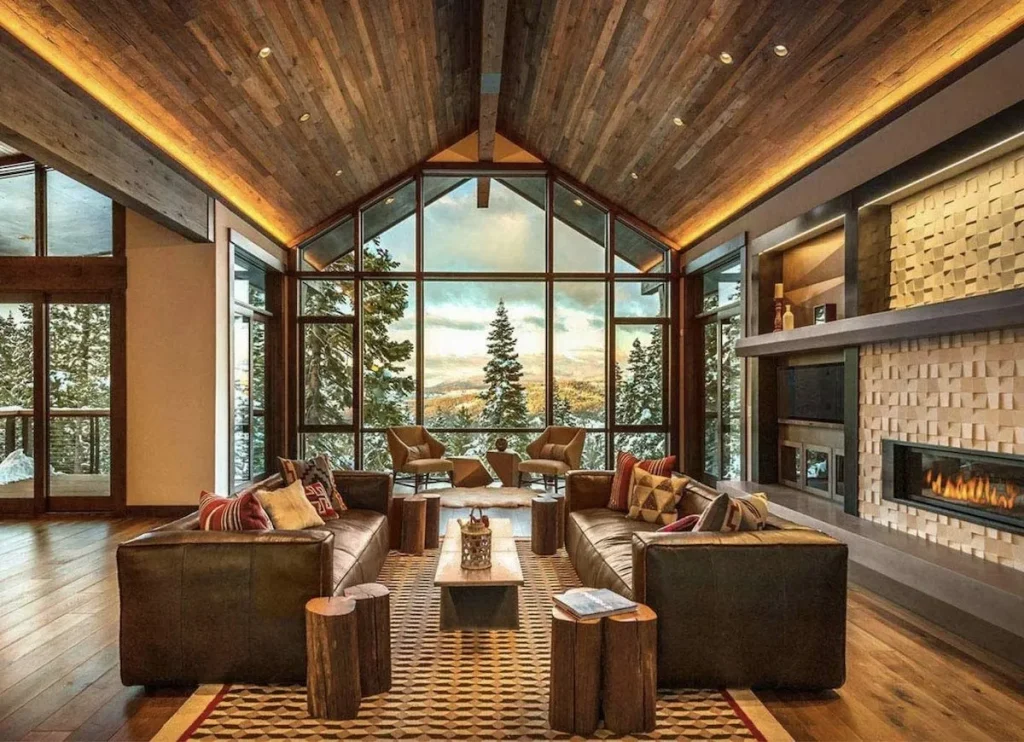
Height has a major impact on how a basement feels. A vaulted ceiling draws the eye upward and helps the room feel larger, brighter, and less confined.
The expanded vertical space creates a more open atmosphere while adding architectural interest overhead. In larger basements, this feature can completely change the perception of the room and make it feel more connected to the main living areas above.
21. Fabric Ceiling Panels for Softness and Comfort
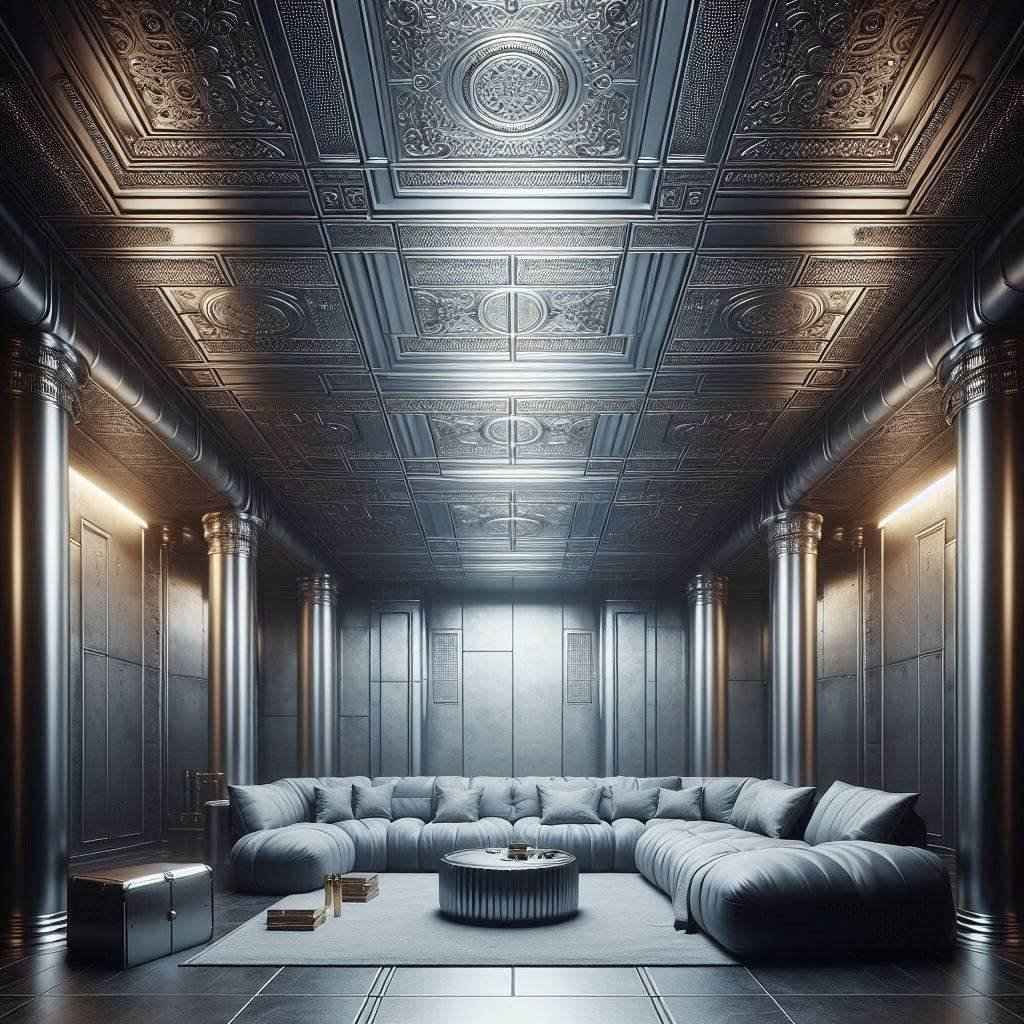
Hard surfaces can sometimes make a basement feel cold or echo prone. Fabric ceiling panels introduce softness that helps create a warmer and more comfortable environment.
Beyond their visual appeal, fabric panels can also improve acoustics by reducing unwanted noise. The added texture brings another layer of interest to the ceiling without relying on bold colors or decorative details.
22. Glass Ceilings for an Open, Light-Filled Space
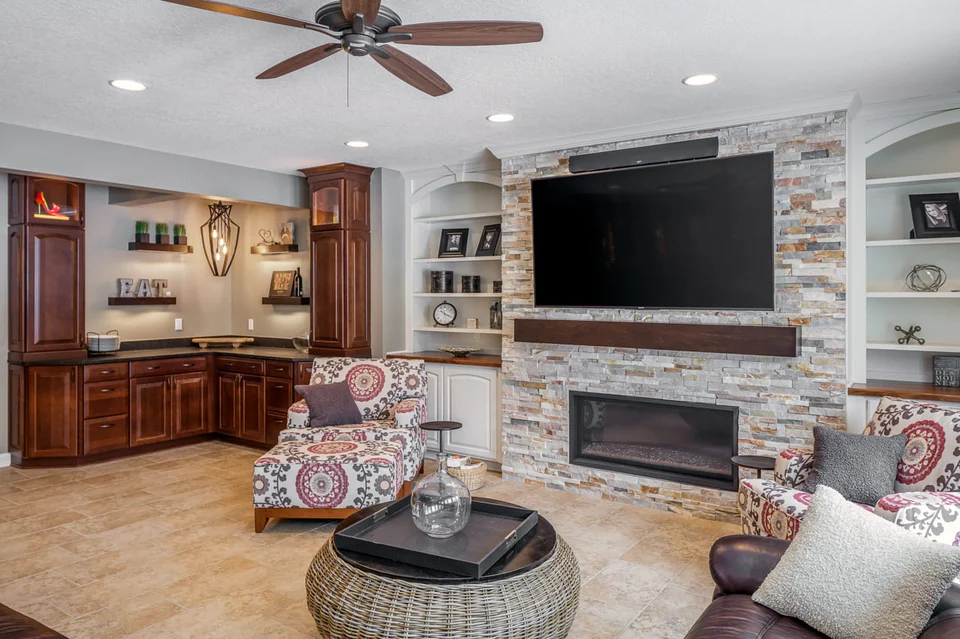
Few ceiling treatments make a stronger statement than glass. The transparent surface creates a unique connection between indoor and outdoor spaces while allowing light to travel through more freely.
Modern interiors often use glass to emphasize openness and simplicity. When paired with clean lines and minimal decor, the result feels contemporary, bright, and visually striking.
23. Ceiling Molding for a Polished Finish
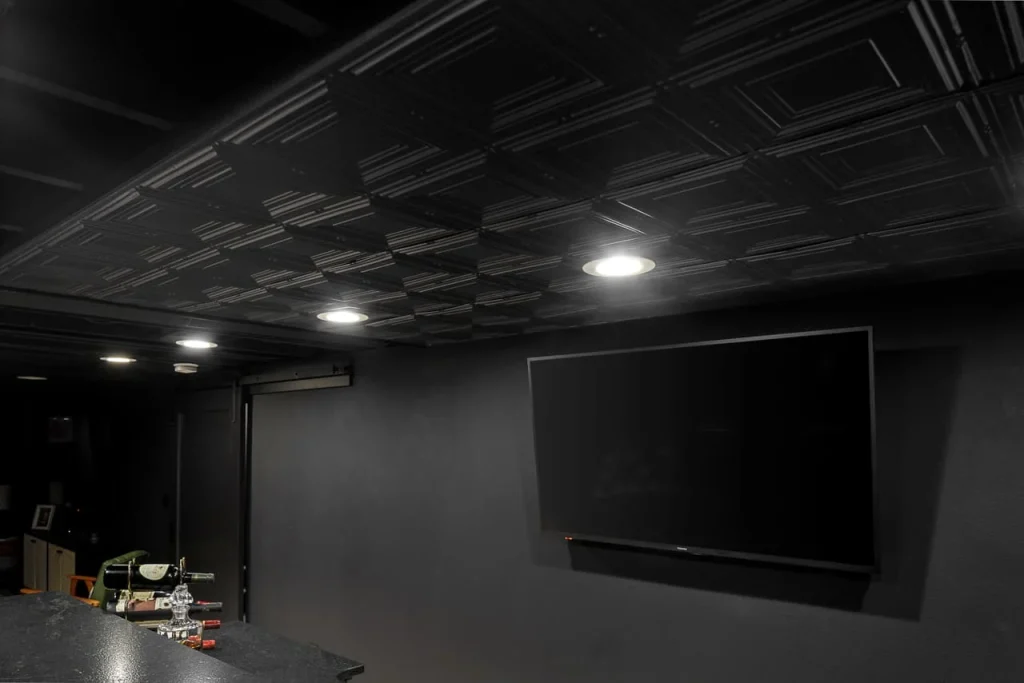
Sometimes the smallest details make the biggest difference. Ceiling molding adds definition where the walls meet the ceiling, giving the entire room a more finished appearance.
Simple profiles create a clean look, while decorative molding introduces a more traditional feel. Either approach helps elevate the design without requiring major construction or renovation.
24. Painted Ceiling Beams for Character
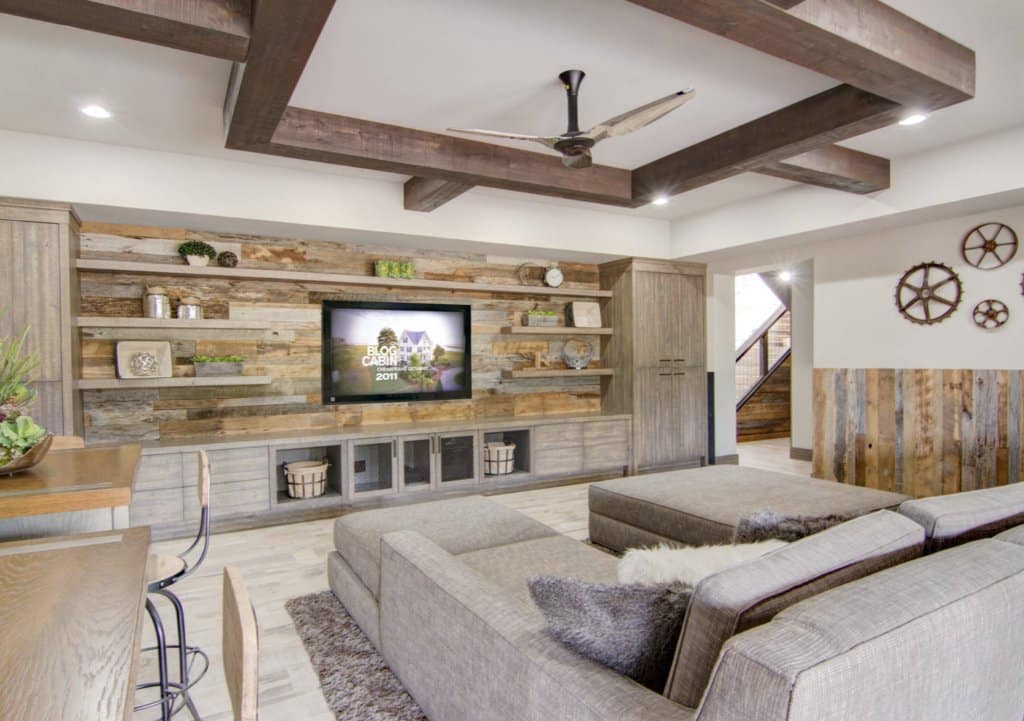
Exposed beams already attract attention, but a fresh coat of paint can make them stand out even more. The color choice helps define the overall mood of the basement, from rustic and casual to bold and modern.
Painting the beams also creates contrast against surrounding ceiling surfaces. This simple update adds personality while highlighting one of the room’s strongest architectural features.
25. Recessed Lighting for Subtle Elegance
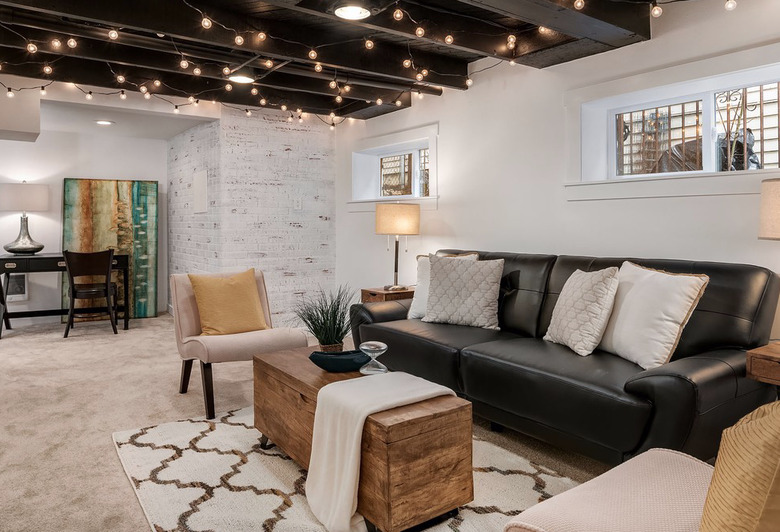
Not every lighting fixture needs to be seen. Recessed lights sit flush with the ceiling, providing illumination without interrupting the overall design.
Their clean appearance makes them especially useful in basements with lower ceiling heights. Spread throughout the room, they create balanced lighting that feels modern, practical, and unobtrusive.
26. Fabric Drapes for a Soft, Elegant Ceiling
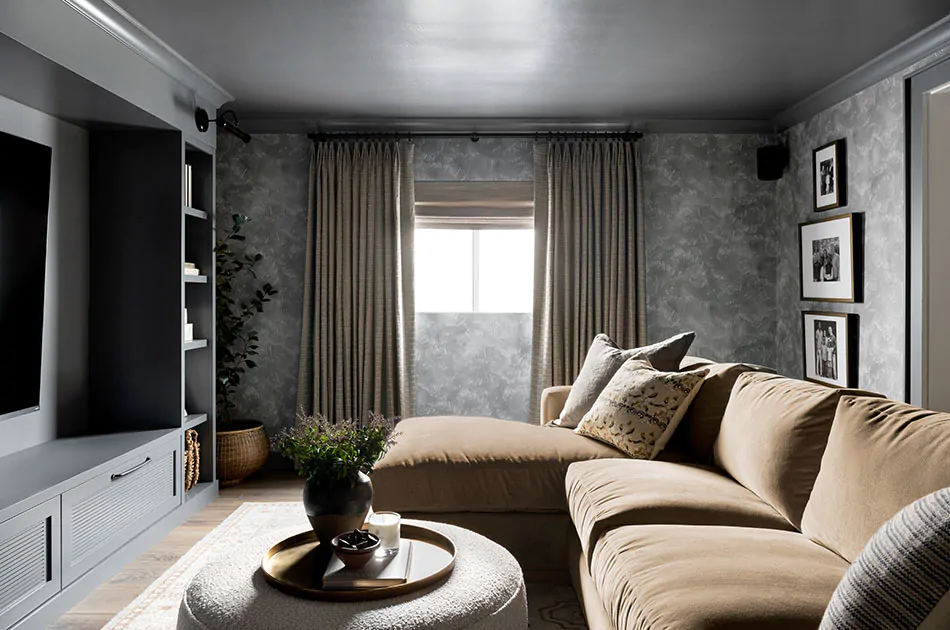
Flowing fabric introduces movement in a place where you least expect it. Draping material across the ceiling softens hard surfaces and creates a more intimate atmosphere.
Lightweight fabrics feel airy and relaxed, while heavier materials add depth and drama. The layered look brings warmth to bedrooms, lounges, and other basement spaces designed for comfort.
27. Ceiling with Hidden Storage
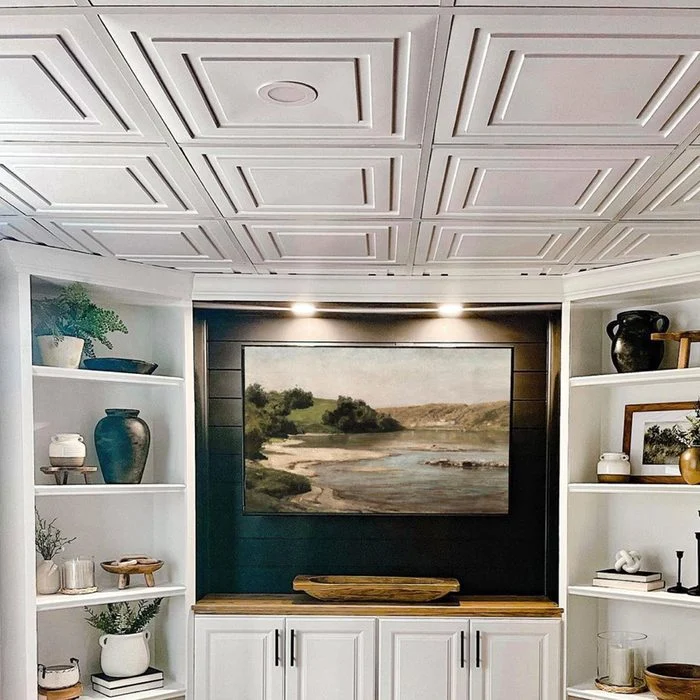
Every square foot matters in a basement, especially when storage is limited. Incorporating hidden compartments into the ceiling helps maximize space without adding visible clutter.
The concealed design keeps seasonal items, supplies, or household essentials out of sight while maintaining a clean appearance. It’s a practical solution that combines organization with smart use of unused space.
Keep Improving Your Home
• How to Paint Bedroom Walls
• How to Decorate A Small Bedroom
• Scrap Wood Ideas
• Quiet Luxury Farmhouse Design Ideas
Conclusion
A well-designed basement ceiling can do far more than cover exposed pipes and wiring. It can add character, improve lighting, soften acoustics, and help the entire space feel more finished and intentional.
From exposed beams and wood paneling to modern lighting and decorative ceiling treatments, there are countless ways to elevate a basement beyond its basic function. The right choice depends on your style, budget, and how you plan to use the space.
As you explore these 27 Basement Ceiling Ideas, focus on solutions that complement both the architecture of your home and the atmosphere you want to create. A thoughtful ceiling design can turn an ordinary basement into one of the most inviting rooms in the house.
If you found inspiration here, share these ideas with friends and family who are planning a basement makeover of their own.