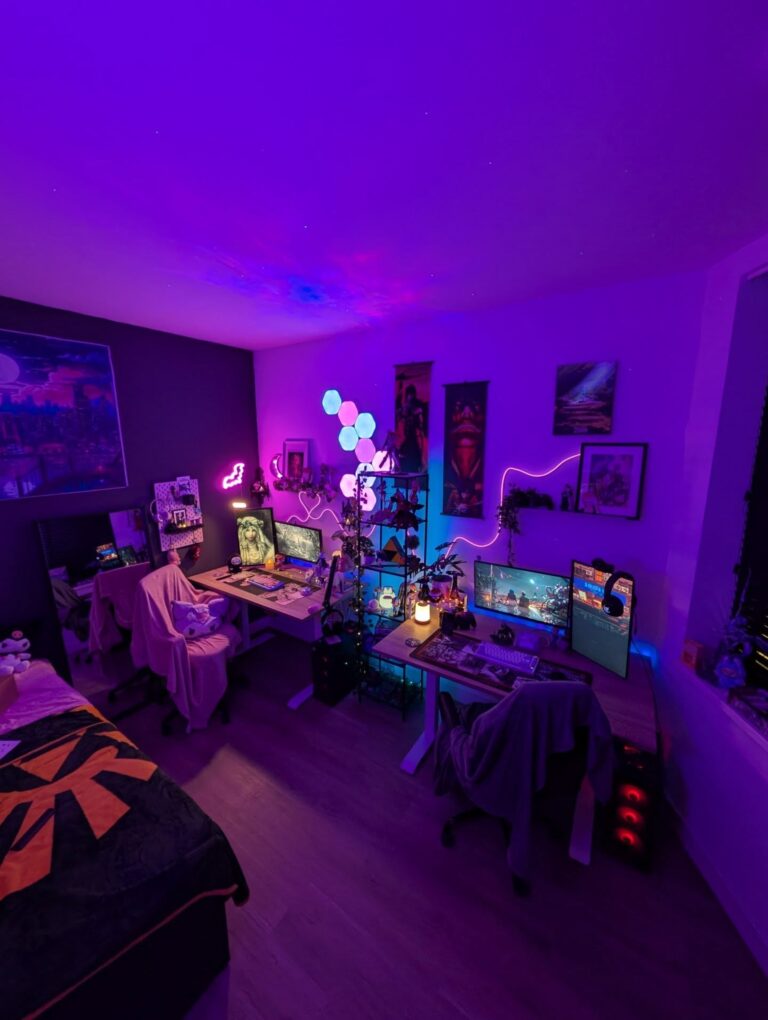
9 Home Office with a Guest Room Organization Tips That Actually Work

This post contains affiliate links, and we will be compensated if you buy after clicking on our links. Read our disclaimer.
Read our editorial process
Working from a room that also serves as a guest bedroom can feel like a constant balancing act. One day, you’re focused on meetings and deadlines. Next, you’re clearing space for overnight visitors and looking for fresh linens.
The challenge is not always a lack of space. In many cases, the room becomes difficult to manage because work supplies, guest items, and everyday clutter end up competing for the same storage areas.
A well-organized setup helps the room handle both jobs without feeling crowded or unfinished. Small changes, such as creating clear zones and using smarter storage, can make daily work easier while keeping the space ready for guests.
These 9 home office with a guest room organization tips will help you create a room that stays functional, organized, and comfortable for everyone who uses it.
1. Create Separate Work and Guest Zones
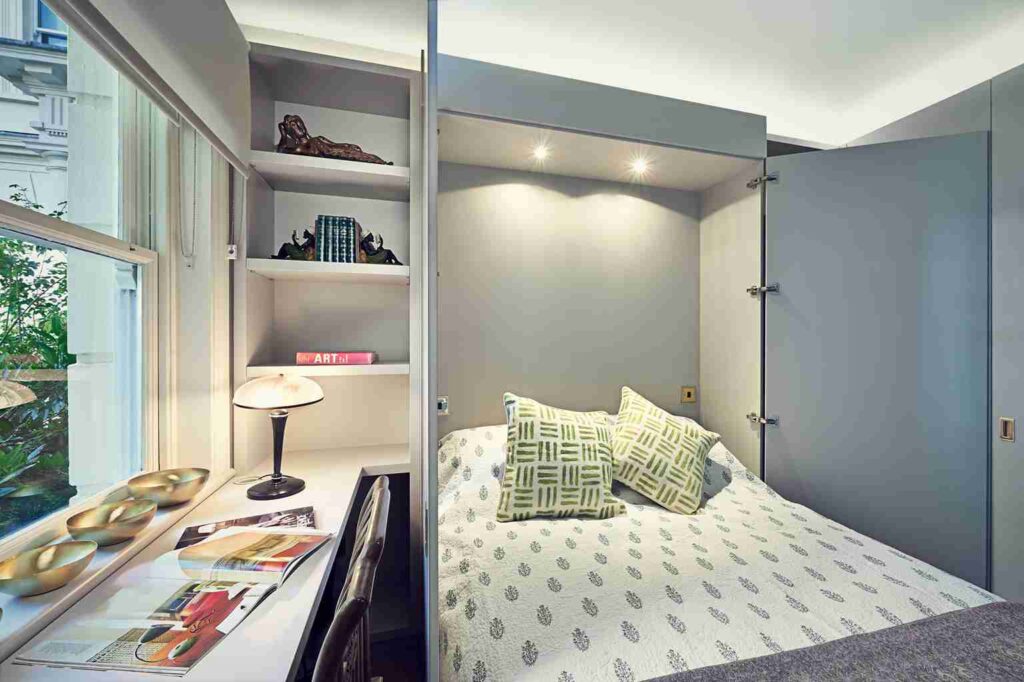
The room starts feeling crowded when work and guest items begin sharing the same surfaces. A laptop sits on the nightstand, extra blankets end up on the office chair, and nothing seems to have a clear place anymore.
Start by dividing the room into two distinct areas. Keep the desk, office supplies, and work equipment in one section, while the bed and guest essentials stay in another. Even in a small room, changing furniture placement or using a rug can create a visual boundary.
Many people try to organize the whole room together. That usually creates confusion because every item ends up competing for space. Instead, ask yourself which area each item supports.
You’ll know it worked when cleaning up becomes easier because you no longer have to decide where things belong. Every item already has a designated zone.
2. Choose Furniture That Works Double Duty
A room with both a desk and a guest bed can fill up faster than expected. Before adding more storage, look at how each piece of furniture is being used.
A daybed can serve as seating during work hours and sleeping space for guests. Storage benches hold extra bedding while providing a place to sit. Fold-down desks create workspace without taking over the room.
The common mistake is choosing furniture based on one purpose only. Every large piece should earn its place by serving at least two functions.
Ask yourself: Which activity happens most often in this room, work or hosting guests? If the office is used daily, prioritize comfort for work. If guests stay frequently, focus on sleeping comfort first.
| Furniture Type | Office Benefit | Guest Room Benefit |
|---|---|---|
| Daybed | Seating during work hours | Sleeping space |
| Murphy Bed | Frees floor space | Full guest bed |
| Storage Bench | Hidden storage | Extra seating |
| Fold-Down Desk | Compact workspace | More open room |
3. Store Guest Essentials Together
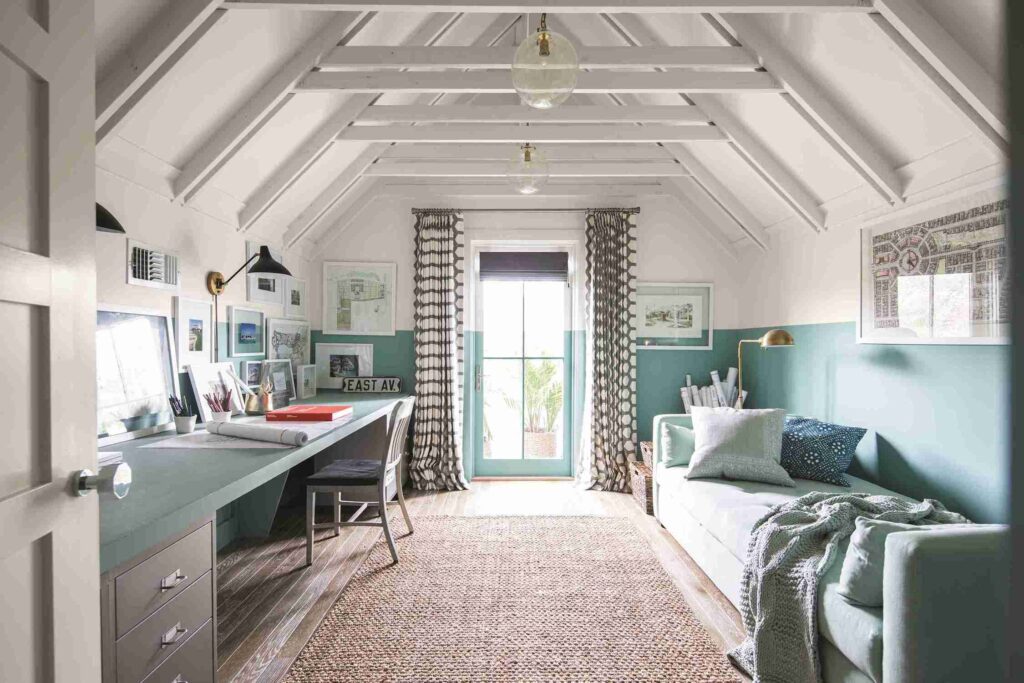
Guest supplies often end up scattered across closets, drawers, and storage bins. Then when someone announces a visit, you’re searching the house for pillowcases and towels.
Create one dedicated guest storage area. Keep extra sheets, blankets, towels, and basic toiletries together in a labeled bin, cabinet, or closet shelf.
What gets missed most is keeping replacement items nearby. A spare phone charger, tissues, and an extra blanket can make guests more comfortable without adding clutter elsewhere.
You’ll know this system is working when you can prepare the room in minutes instead of hunting for supplies throughout the house.
4. Hide Office Supplies When Work Is Done
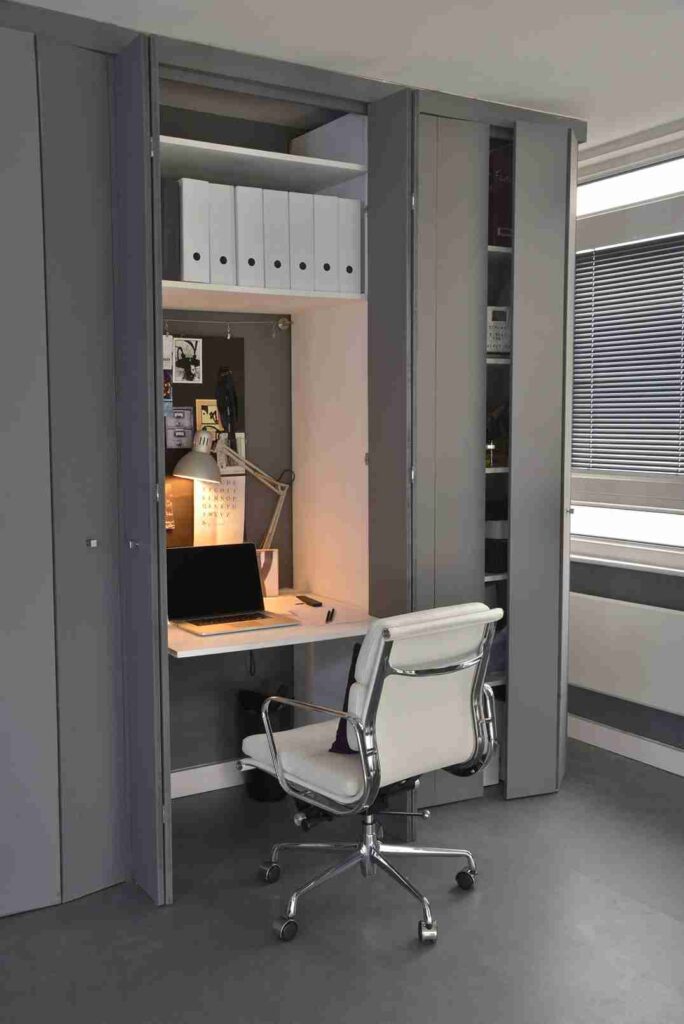
The room can feel less welcoming when paperwork, cables, and notebooks stay visible all the time. Guests may feel like they’re sleeping in someone else’s workspace instead of a guest room.
Use drawers, cabinets, baskets, or storage boxes to hide work materials at the end of the day. Keep only daily-use items within reach and store everything else out of sight.
Many people focus on organizing supplies but forget about visual clutter. The goal is not only finding things quickly. It’s also helping the room switch roles when needed.
You’ll know it worked when the room feels calmer within a few minutes of putting work materials away.
5. Use Vertical Storage Before Buying More Furniture
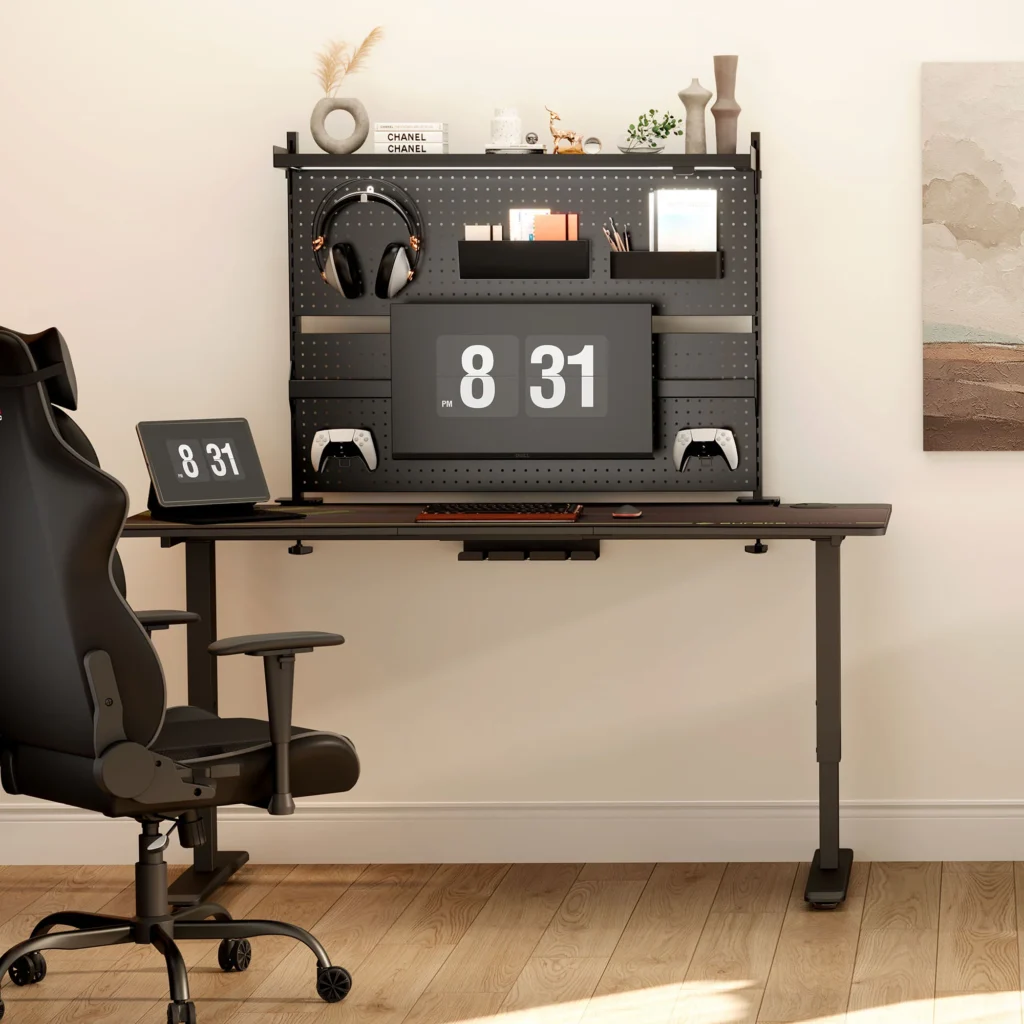
Floor space disappears quickly in a dual-purpose room. Another cabinet may solve one problem while creating two new ones.
Look upward before bringing in additional furniture. Wall shelves, floating cabinets, pegboards, and tall bookcases can hold supplies without taking up valuable floor space.
The most overlooked area is the wall space above desks and beds. That unused space can often handle storage needs that would otherwise require another piece of furniture.
Carry this idea forward: every square foot on the floor should serve movement, seating, sleeping, or work. Storage can often move higher instead.
6. Build a Five-Minute Guest Room Reset Routine
You finish work for the day, then realize a guest is arriving in an hour. The room is not dirty, but it still feels unprepared because work items are spread across every surface.
Create a short reset routine that follows the same order each time. Clear the desk, store office supplies, make the bed, and do a quick walk-through to remove anything that belongs elsewhere.
People often skip the final room check. That last minute helps catch charging cables, coffee mugs, or paperwork that can make the space feel unfinished.
| Task | Time Needed |
|---|---|
| Clear desktop | 1 minute |
| Store office items | 1 minute |
| Make bed | 2 minutes |
| Final room check | 1 minute |
You’ll know this routine is working when preparing for guests feels predictable instead of stressful.
7. Keep Technology From Taking Over the Room
Technology tends to spread slowly. A monitor appears, then a printer, then extra chargers, and before long the room feels more like a workstation than a guest space.
Keep large equipment limited to what you use regularly. Store printers in cabinets when possible, manage cables with clips or sleeves, and create one charging station instead of scattering cords around the room.
The common mistake is giving every device permanent space. Ask yourself which items you actually use daily and which can be stored between uses.
Carry this rule forward: visible technology should support your work, not dominate the entire room.
8. Give Guests Storage Space of Their Own
Guests often end up living out of a suitcase because there is nowhere to unpack. That creates clutter quickly and can make longer stays feel uncomfortable.
Leave at least one drawer, a section of closet space, or a luggage stand available for visitors. Hooks, baskets, and a small nightstand also help guests keep personal items organized.
What gets missed most is empty space. Many homeowners fill every drawer and shelf without realizing guests need storage too.
You’ll know it worked when visitors can settle in without asking where to put their belongings.
9. Create Simple Rules That Prevent Future Clutter
Most organization systems fail because there is no plan for maintaining them. A room can stay organized for a week, then slowly return to old habits.
Create a few simple rules that are easy to follow. Reset the desk each evening, review storage once a week, and remove one item whenever a new item comes into the room.
The most common error is creating a system that requires too much effort. Small habits repeated consistently work better than occasional large cleanups.
You’ll know the system is working when clutter becomes easier to spot and quicker to correct before it spreads.
Conclusion
A home office and guest room can work well together when the space is built around systems instead of storage products.
Clear zones, dual-purpose furniture, hidden office storage, and simple maintenance habits help the room handle both roles without feeling crowded.
Start with the area that causes the most frustration today. Small changes often create the biggest improvements.
Once every item has a purpose and a place, the room becomes easier to use, easier to maintain, and more comfortable for both work and guests.
Make Shared Spaces Work Better
• Linen Closet Organization Ideas
• Kids Organization Hacks
• Ribbon Storage Ideas
• Small Appliance Storage Ideas