19 DIY Cat Shelves Ideas – Elevate Your Feline’s Comfort and Your Home Decor

This post contains affiliate links, and we will be compensated if you buy after clicking on our links. Read our disclaimer.
Read our editorial process
Cats will find a way to climb, even if your home isn’t set up for it. Shelves, cabinets, door frames, nothing really stays off-limits for long.
I used to think buying a big cat tree was the only fix, but it never quite fit the space or the way my place was laid out. It felt bulky, and honestly, kind of out of place.
Wall shelves changed that completely. Once you give cats a path to move up and around, the whole room starts working differently. It’s not just about giving them height, it’s about creating a flow they actually use.
Some setups are super simple with a few steps along the wall, while others turn into full climbing routes with lounging spots and corners to hide in.
In this article, you’ll find 19 DIY Cat Shelves Ideas.
How Do You Plan Cat Shelves That Your Cat Will Actually Use?
It’s easy to place a shelf where it looks good, but cats care more about how they move between spots.
Start by thinking about their usual paths. Where do they already jump or climb? That’s where shelves tend to work best.
Spacing matters too. If the gaps feel awkward, they’ll ignore the setup completely. Keep the jumps natural and give them at least one comfortable place to stop and rest.
Once the layout matches their behavior, the shelves stop being decoration and start becoming part of their daily routine.
Browse More DIY Projects for Pet Lovers
• DIY Cat Tower Ideas
• DIY Cat Litter Box Ideas
• DIY Dog Run Cheap Ideas
• DIY Fence Ideas Cheap
1. Wall-Mounted Cat Shelves With Rope Scratching Post
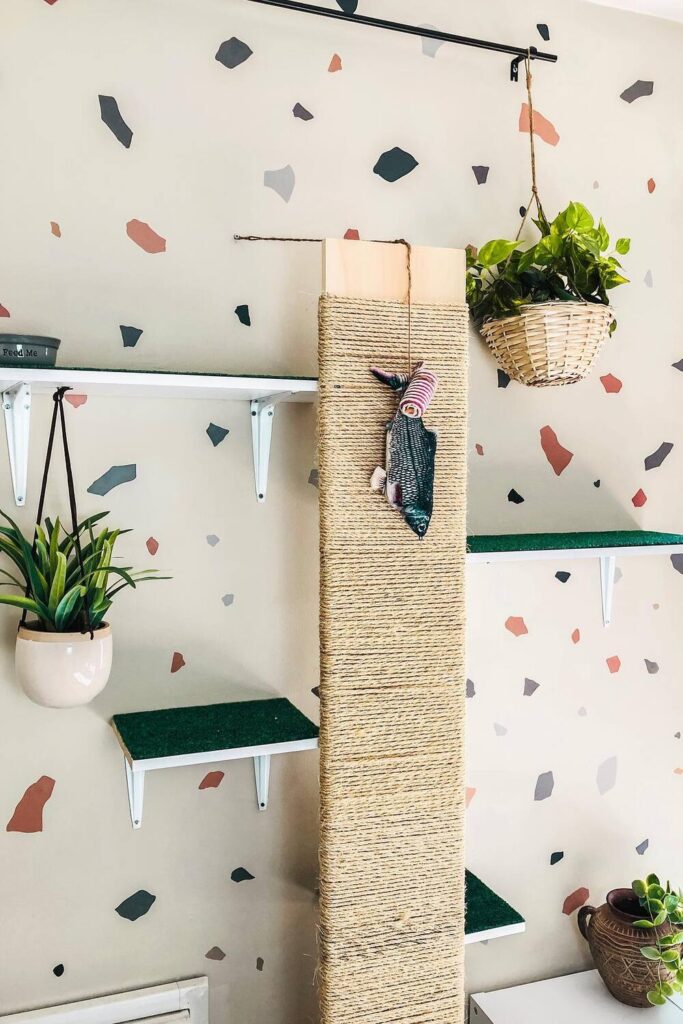
A clean wall setup combines small staggered shelves with a tall rope-wrapped post in the center. Each platform has a soft green surface, giving cats grip as they jump between levels. The spacing feels natural, making movement easy without crowding the wall.
The vertical scratching post adds function right where cats climb the most. Hanging toys and nearby plants bring a bit of life to the setup while keeping the area engaging. It works well in compact rooms where every inch of wall space matters.
2. Angled Climbing Shelves With Tall Scratch Pole
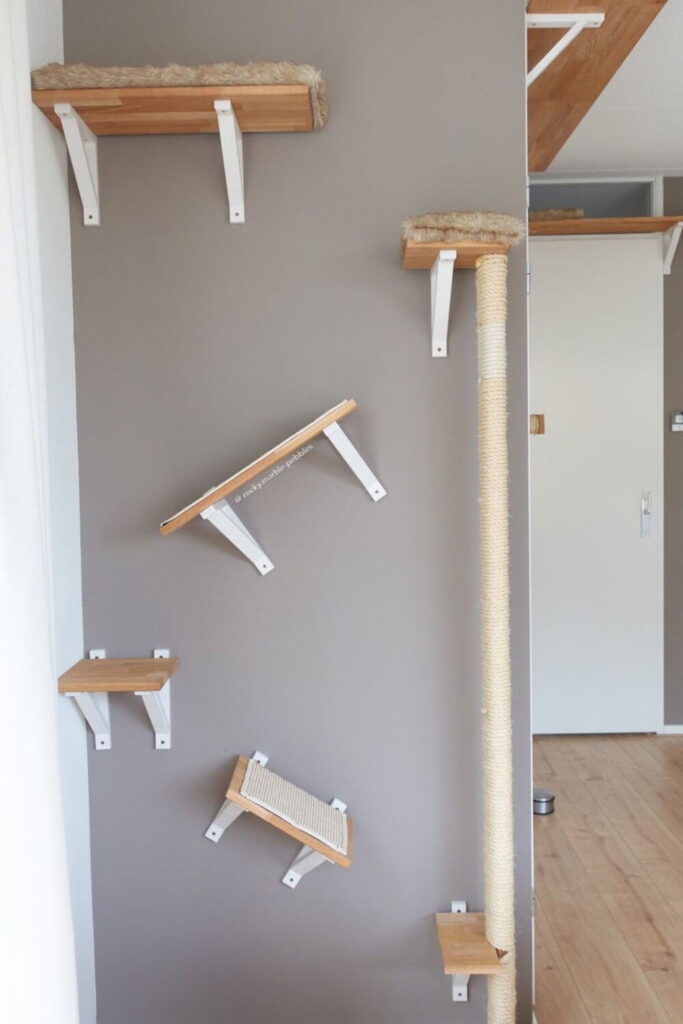
A vertical layout uses small wooden steps placed at different angles, guiding movement upward in a playful way. Some platforms tilt slightly, which adds challenge and keeps cats active as they climb.
A full-height rope wrapped pole stands along the side, giving a solid place to scratch during the climb. Soft pads on top shelves create resting spots once they reach higher levels. The setup fits neatly into a narrow wall without wasting space.
3. Minimal Floating Shelves With Color Brackets
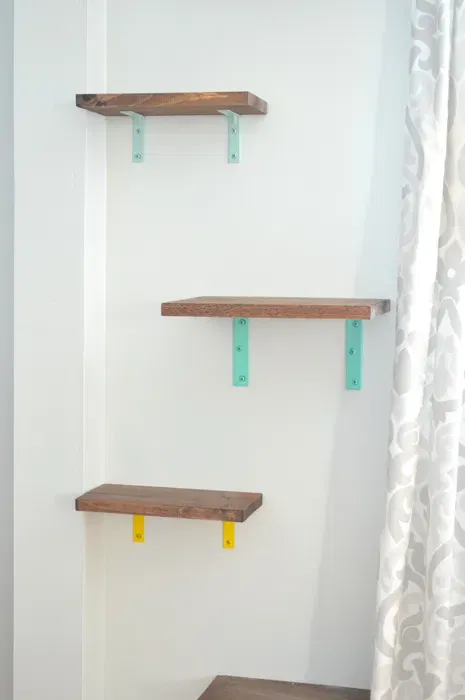
Simple wooden shelves line up vertically with bright metal brackets, adding a pop of color. The spacing stays even, which makes the path clear and easy to follow.
Each level feels open and uncluttered, working well for cats that prefer calm movement over jumping obstacles. Placing this near a window or curtain area gives them a quiet spot to sit and watch outside.
4. Curved Wall Pathway With Step Platforms

Smooth wooden pieces form a flowing path across the wall, almost like a small trail. Rounded edges and connected sections help cats move without sharp stops or gaps.
Lower steps lead into wider platforms above, giving both climbing and lounging zones in one design. Small decorative shapes add personality while keeping the focus on movement and balance.
5. Compact Corner Shelves With Soft Pads
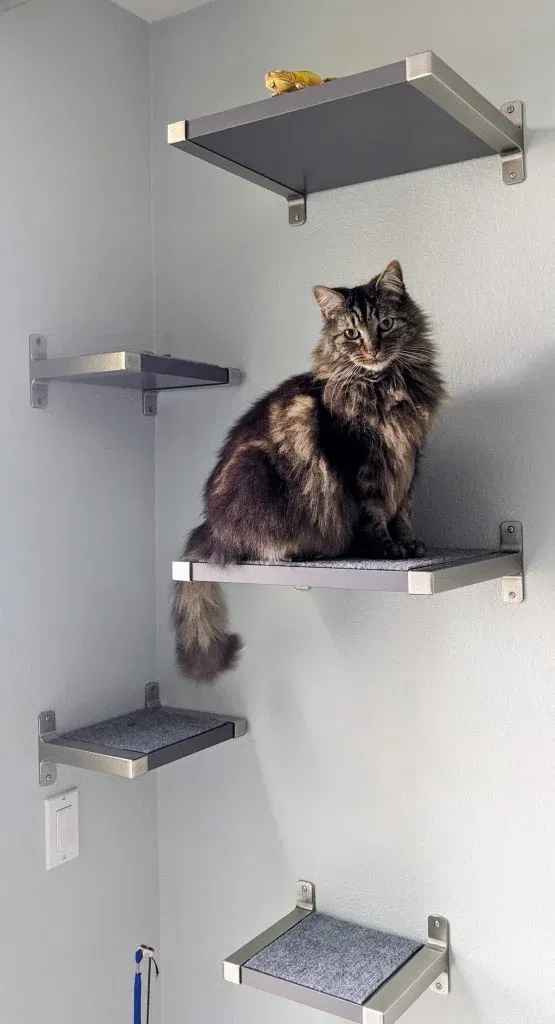
A tight corner setup uses square platforms stacked upward, making use of an area that often stays empty. Each shelf has a cushioned top, giving a comfortable place to sit.
The design feels sturdy with metal brackets holding each level in place. It suits smaller rooms where you want a clean look, but still gives your cat a vertical escape.
6. Full Wall Cat Climbing System With Litter Zone
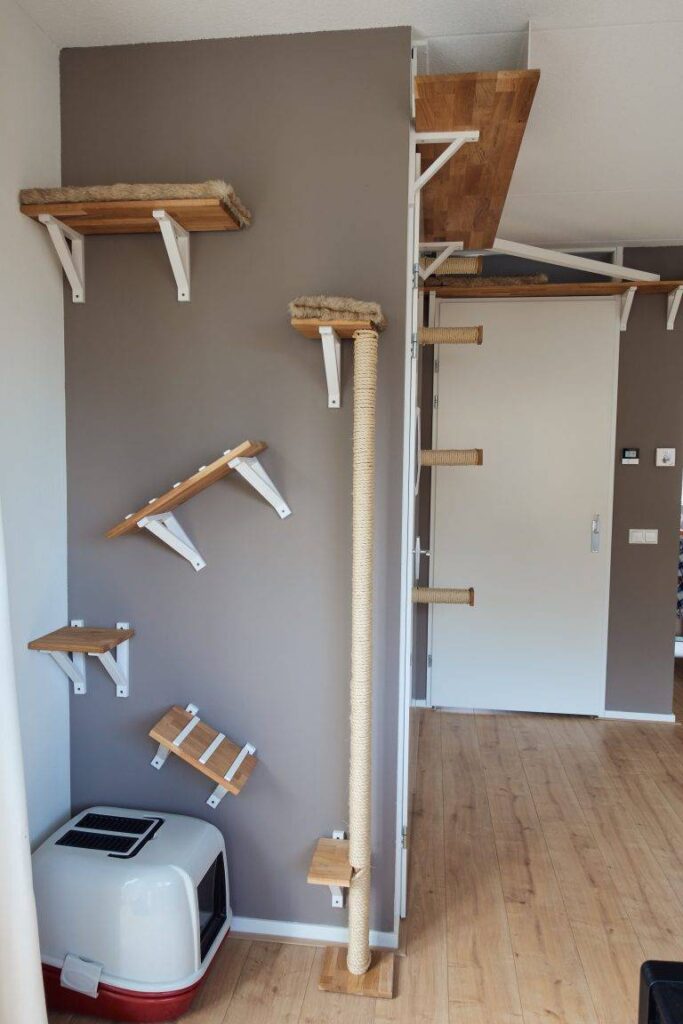
A complete setup covers the wall with shelves, angled steps, and a tall rope post beside a litter box area. The layout creates a clear path upward while keeping the floor section organized.
Each platform feels purposeful, from small stepping boards to wider resting spots with soft covers. Keeping everything in one zone helps manage both play and daily routines without clutter.
7. Industrial Pipe Cat Shelf Design
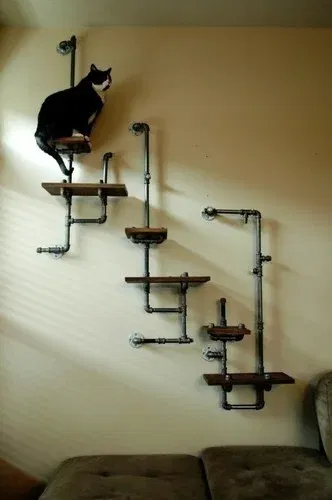
Metal pipes form a strong frame that holds small wooden platforms at different heights. The layout looks bold and raw, adding character to the wall while still working as a climbing route.
Each step connects through the pipe structure, giving steady support for jumping and landing. It fits well in spaces with a more rugged or loft-style interior.
Create a Cat Friendly Home
• DIY Console Table Ideas
• DIY Painted Table Ideas
• Living Room DIY Built In Cabinets
• DIY Canopy Bed Ideas
8. Minimal Wall Shelves With Cat Loft Box
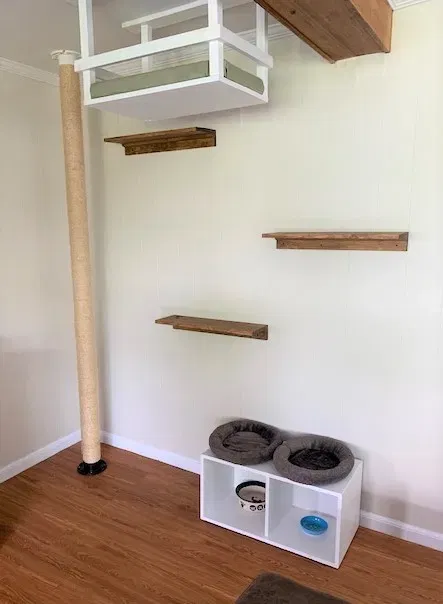
A few simple wooden shelves lead up to a raised box-style perch near the ceiling. The top area gives cats a quiet place to rest away from noise and movement below.
A tall scratching post stands nearby, helping cats reach the upper level with ease. The lower section stays clean with a small storage unit that holds beds and bowls neatly.
9. Floating Step Shelves With Color Accents
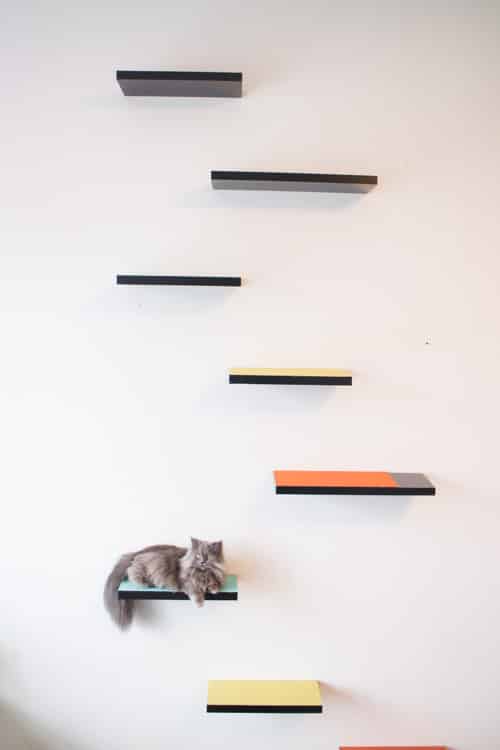
Thin shelves appear to float along the wall, arranged in a zigzag pattern that guides movement upward. Small color blocks on the edges add a playful detail without taking over the look.
Spacing between each step feels balanced, giving cats enough room to jump safely. The open design keeps the wall light and uncluttered.
10. Corner Mounted Shelf With Soft Top Pad
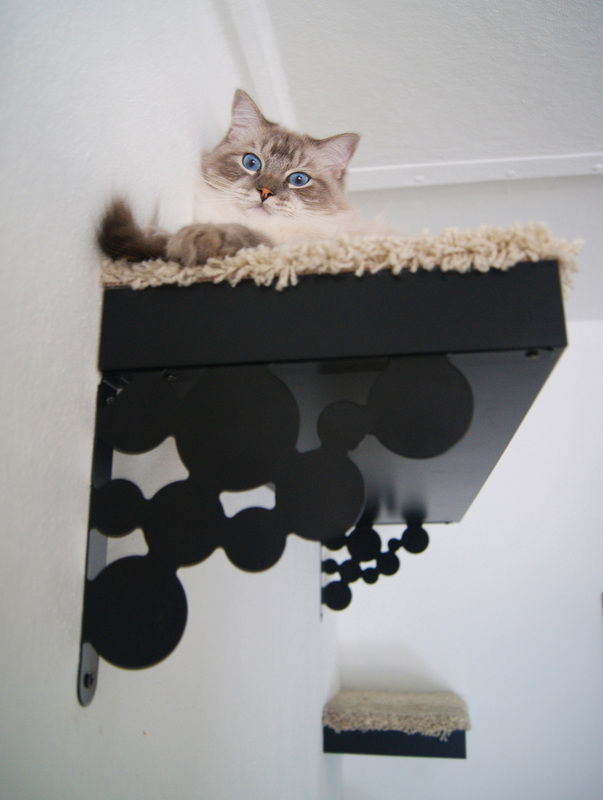
A sturdy corner shelf holds a soft, padded surface where a cat can rest comfortably. The raised position gives a wide view of the room, which many cats enjoy.
Decorative cutouts under the shelf add a bit of style while still keeping the focus on function. Placing it in a corner makes use of space that often goes unused.
11. Corner Jungle Theme Cat Shelves
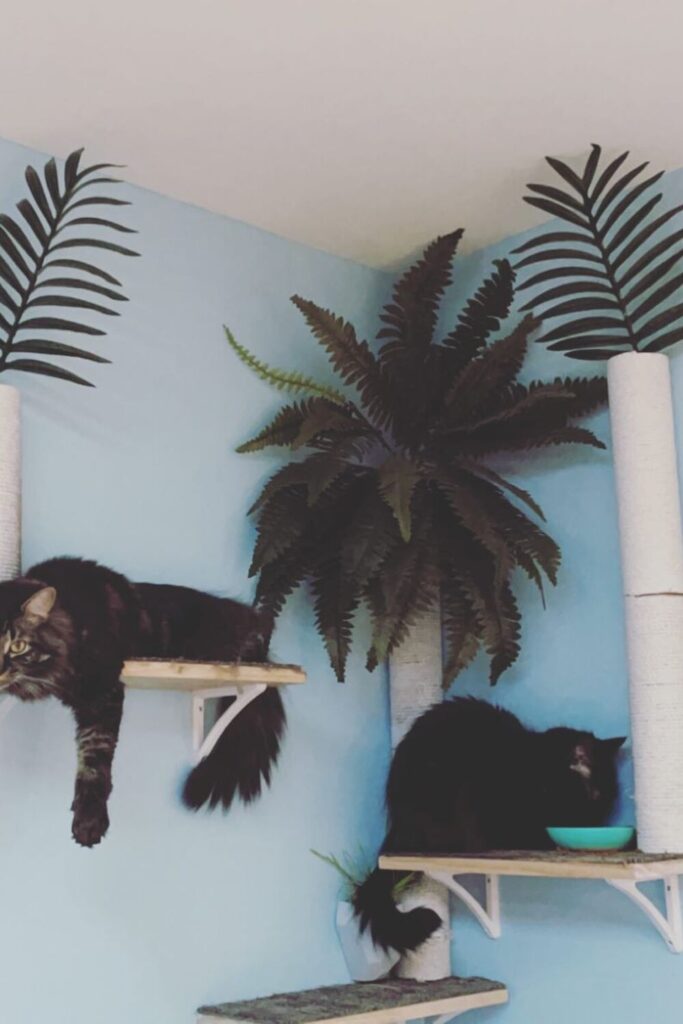
A corner setup blends simple shelves with tall scratching posts and large leafy decor. The plants create a calm backdrop while the shelves give cats a place to rest at different heights.
Both cats can sit close without crowding each other, which works well for multi-cat homes. The mix of greenery and vertical space makes the area feel more natural and relaxed.
12. Multi-Level Wooden Display Shelves
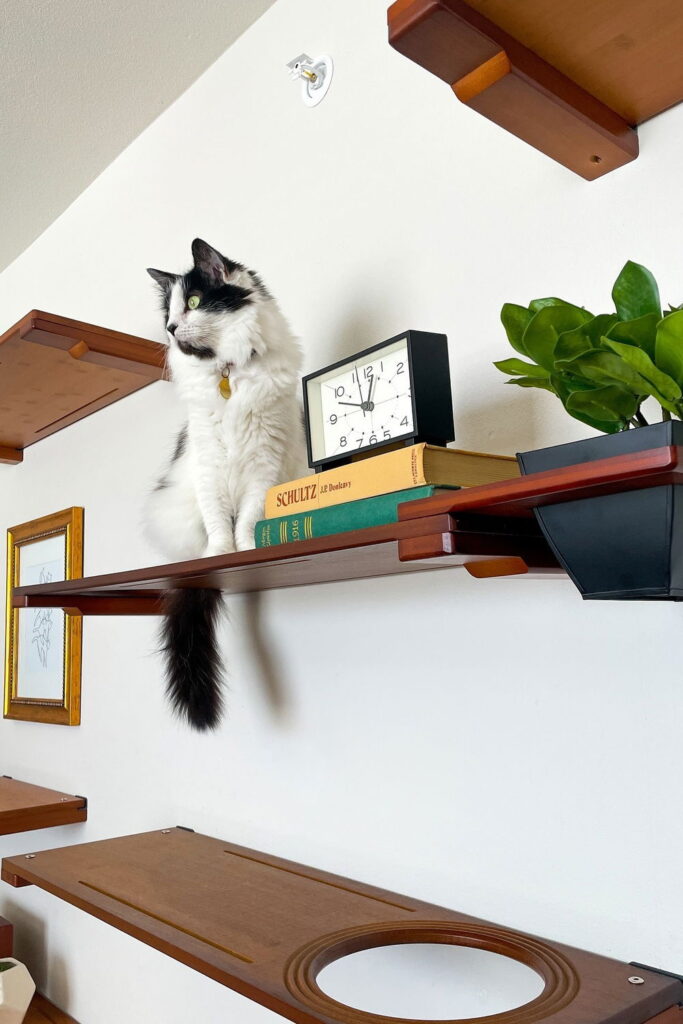
Long wooden shelves stretch across the wall, doubling as decor and catwalks. Books, plants, and small items sit beside the cat, turning the setup into part of the room design.
Each level connects smoothly, letting cats move without sudden jumps. It works best in living areas where you want both style and function in one place.
13. High Wall Floating Platforms
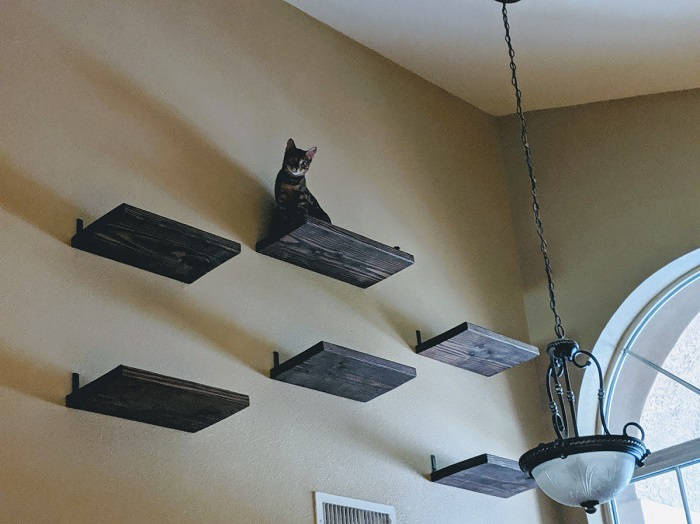
Dark wooden platforms sit high on the wall in a staggered pattern. The height gives cats a quiet space away from the daily movement below.
Spacing stays wide enough for safe jumps while keeping the wall open. This layout suits rooms with tall ceilings where you can build upward without crowding the space.
14. Built-In Shelf System With Bridge Ramp
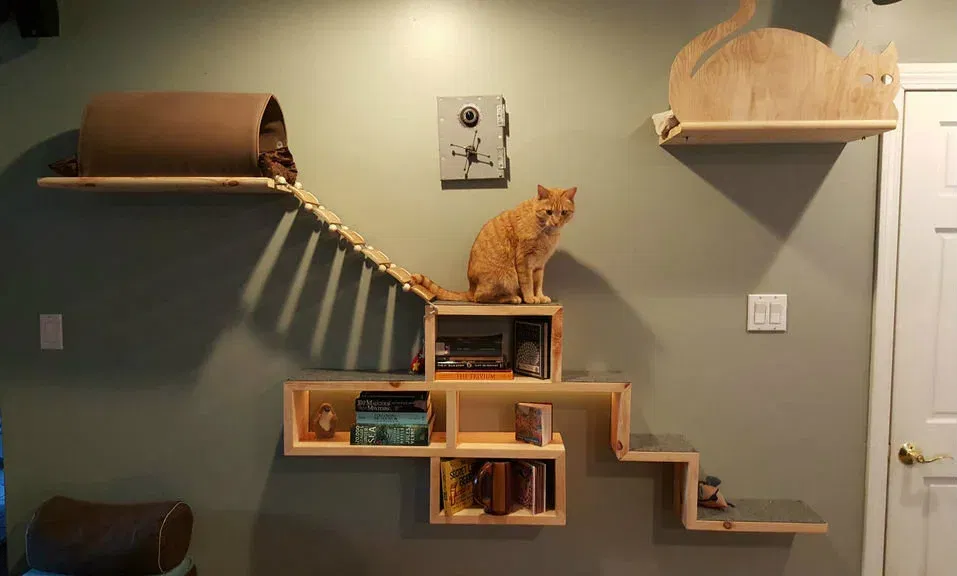
A structured setup uses box shelves, steps, and a small bridge ramp to connect levels. The ramp adds a gentle way to move up instead of only jumping.
Storage cubes below hold books and items, making the whole design feel useful for both cats and people. It turns one wall into a shared living zone.
15. Carpeted Cat Shelf Wall With Box Perch
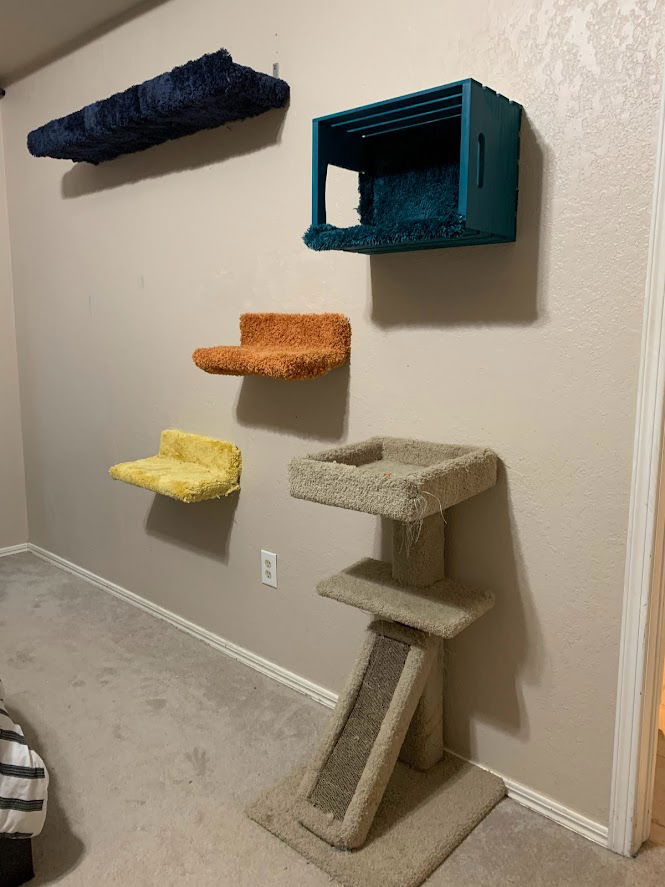
Soft-covered shelves line the wall with a small enclosed box for resting. The carpet texture helps with grip and gives a warm place to sit.
Different shapes and heights keep movement interesting while still feeling safe. A small floor unit connects to the wall path, giving an easy starting point for climbing.
16. Simple Wall Shelves For Multi-Cat Play
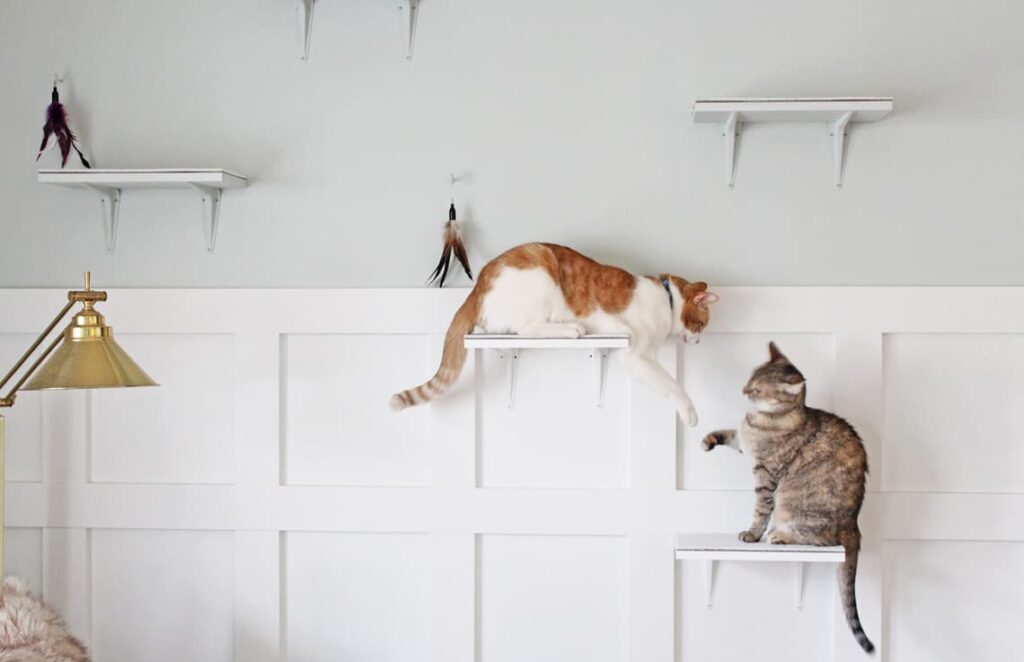
Two cats share a clean wall setup with shelves spaced just right for movement. One reaches down while the other holds position, showing how the levels support interaction without crowding.
Different heights give each cat its own zone, which helps reduce tension. Open spacing also makes the climb feel safe and easy to follow.
17. Soft Carpeted Lounging Shelves
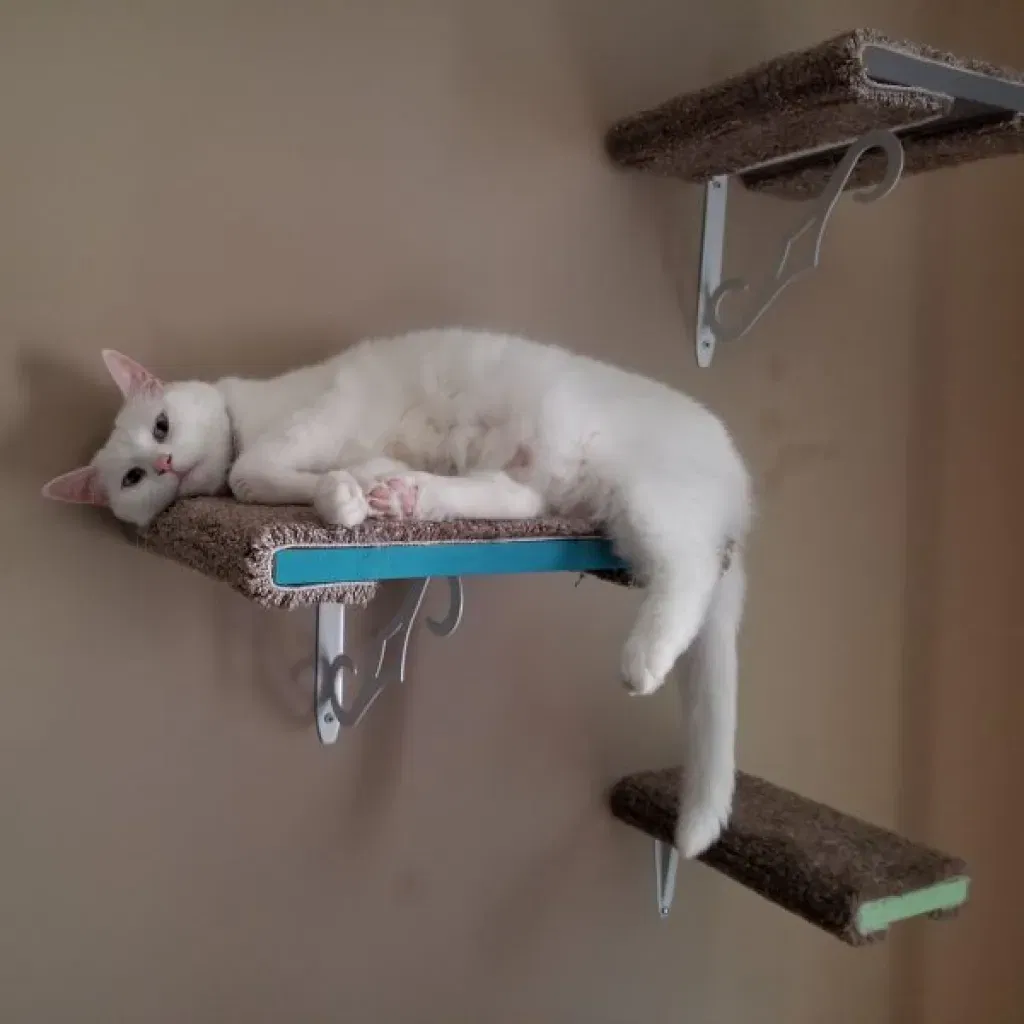
One cat stretches out fully across a fabric-covered shelf, clearly choosing comfort over climbing. The surface looks soft enough for long naps without slipping.
Metal brackets keep everything stable while the padded top adds warmth. Great for slower days when your cat just wants to rest above the floor.
18. Shelf With Built-In Bowl And Plant Space
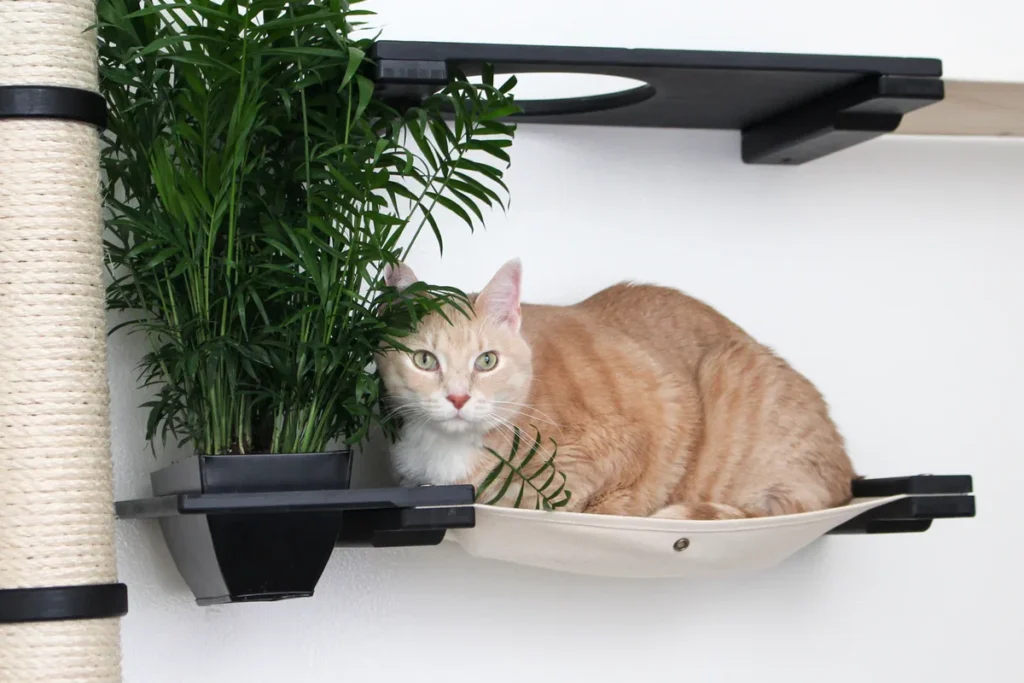
A modern shelf design mixes function with small details like a round cutout and a nearby plant. The cat settles right into the curved space, using it like a shallow bed.
Combining rest space with decor helps the setup blend into the room. Keeping things compact also works well in tighter areas.
19. Integrated Cat Shelf Tower With Play Features
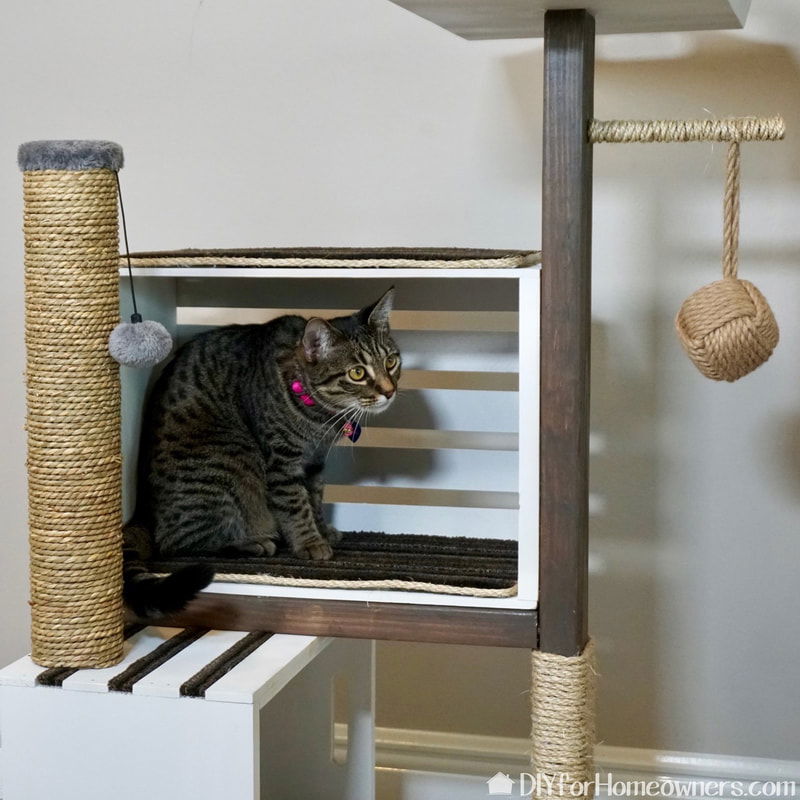
This setup brings everything together in one structure, from rope-wrapped posts to a small enclosed box. The cat moves through levels that feel connected and easy to navigate.
Hanging toys and textured surfaces keep things interesting during playtime. It works well when you want one dedicated zone instead of spreading shelves across the wall.
FAQs
How High Should Cat Shelves Be Placed?
Start low so your cat feels confident, then build step by step upward. Most cats handle 12 to 18 inches between shelves, but it depends on age and agility. Watch how your cat moves and adjust spacing if needed. Comfort always comes before looks.
What Material Works Best For DIY Cat Shelves?
Wood remains the most reliable choice because it is strong and easy to work with. Add carpet or fabric on top for grip and comfort. Avoid slippery surfaces since cats need traction when jumping or landing on each level.
How Do You Make Cat Shelves Safe?
Secure every shelf to the wall studs or use strong anchors. Test each level with weight before letting your cat use it. Keep edges smooth and avoid sharp corners. Stability matters more than design when it comes to safety.
How Many Shelves Does A Cat Really Need?
You do not need a full wall setup to start. Even two or three shelves can make a difference. Build based on your space and your cat’s energy level. Some cats love climbing; others prefer just one quiet perch.
Can Cat Shelves Match Home Decor?
Yes, and that is what makes them worth doing. Choose colors, wood tones, or simple designs that blend with your room. When done right, the shelves look like part of your home instead of something added later.
Continue Your Home DIY Projects
• DIY Key Holder Ideas
• DIY Shoe Rack Ideas
• DIY Pin Board
• DIY Bathroom Makeover Ideas