How to Fill Empty Space in Bedroom and Make It Cozy

This post contains affiliate links, and we will be compensated if you buy after clicking on our links. Read our disclaimer.
Read our editorial process
Does your bedroom feel unfinished even though it already has all the furniture you need?
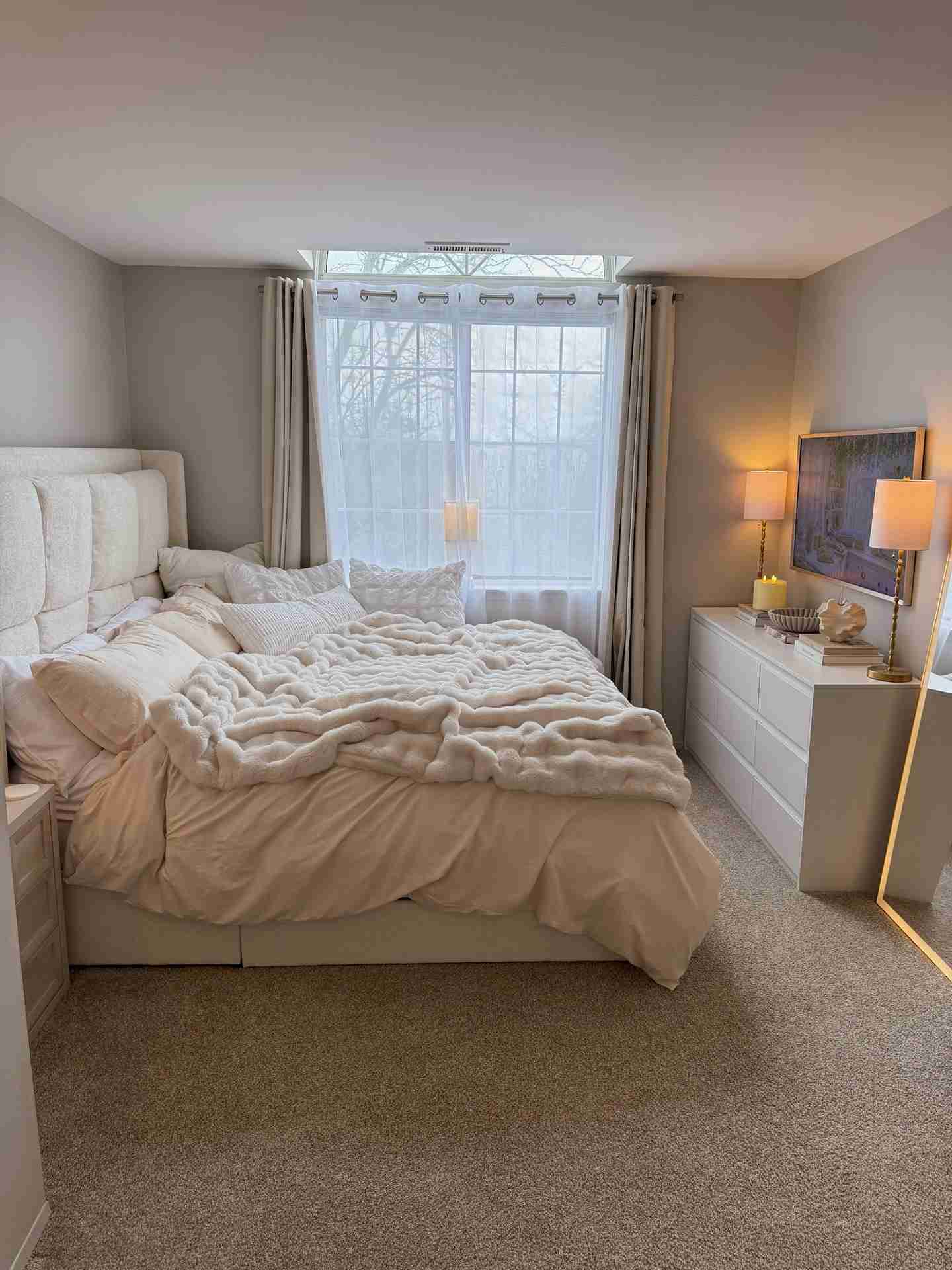
Large blank walls, empty corners, and awkward gaps can make a room feel cold or unbalanced. Many people try to solve the problem by buying more decor, but that often creates clutter instead of improving the space.
The good news is that not every empty area needs to be filled. In fact, some open space helps a bedroom feel larger and more comfortable. The key is knowing which areas need attention and which ones should remain open.
By making a few thoughtful changes, you can improve both the look and function of your room without spending a fortune.
This guide will show you how to fill empty space in bedroom areas, choose practical bedroom space-filling ideas, and create a room that feels balanced, comfortable, and complete.
Identify What Type of Empty Space You Have
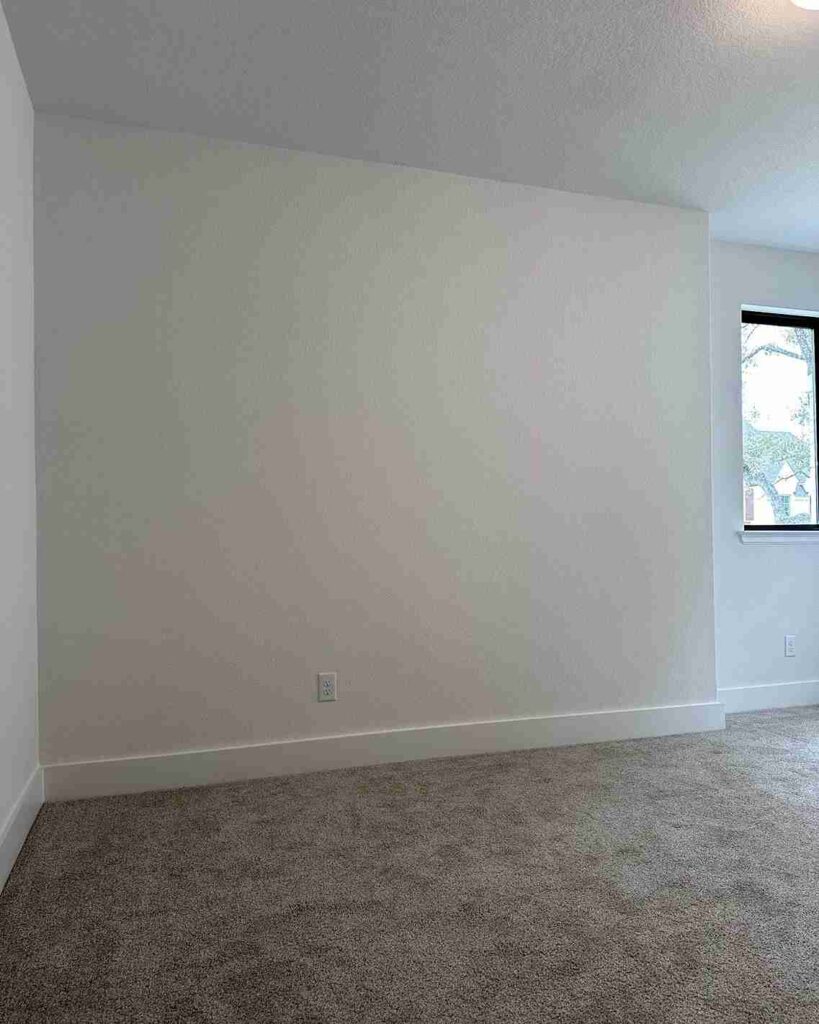
Before adding furniture or decor, determine whether the space actually needs filling.
Not all empty areas are a problem. Some open space helps a bedroom feel larger, more balanced, and easier to move around in. Designers often use negative space intentionally to prevent rooms from feeling crowded.
Start by identifying areas that feel unfinished. Common examples include empty corners, blank walls, unused space beside the bed, the foot of the bed, window areas, and large gaps between furniture.
Next, consider the purpose of each space. Walkways should remain clear, while unused corners or awkward gaps may benefit from seating, storage, lighting, or decor.
Measure the area before buying anything. A piece that looks right online may be too large or too small for your room.
Finally, review your bedroom layout. Sometimes the issue isn’t the empty space itself. Rearranging existing furniture can often create a more balanced room without adding anything new.
How Designers Decide Whether a Space Needs Something
Professional designers don’t try to fill every empty area. Instead, they look for balance, function, and flow.
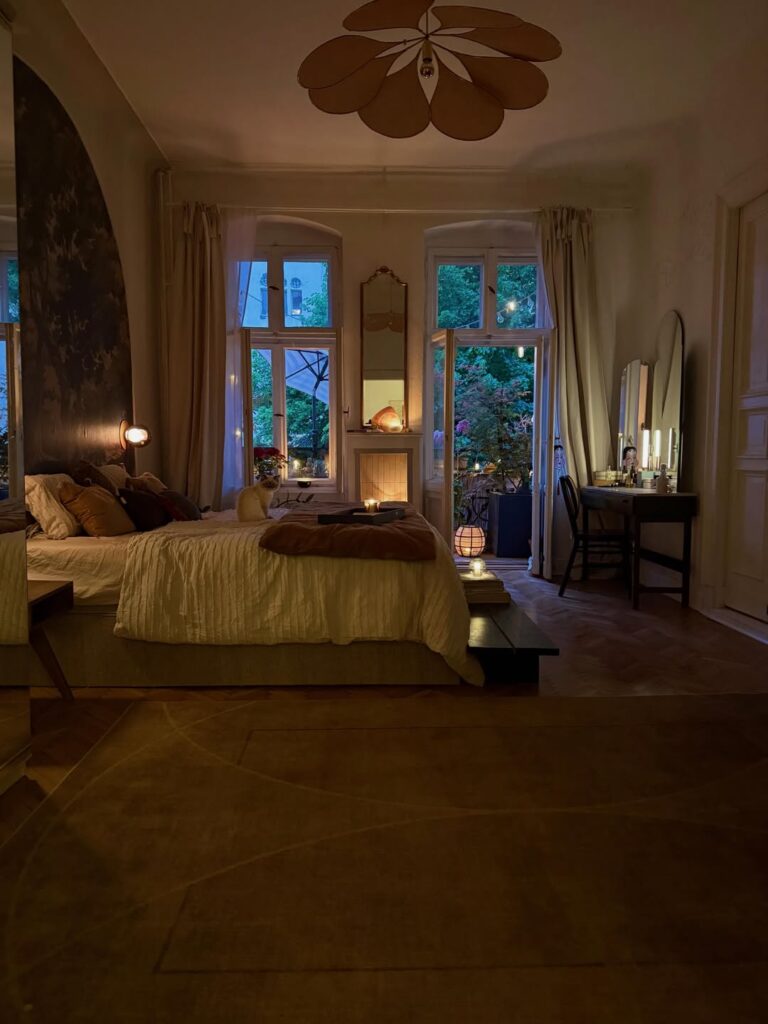
Before adding anything, use these simple checks:
The best bedroom decorating ideas make a room feel complete without making it feel crowded.
Fill Empty Bedroom Corners With Purpose
An empty corner can make a bedroom feel unfinished, but it can also become one of the most useful areas in the room.
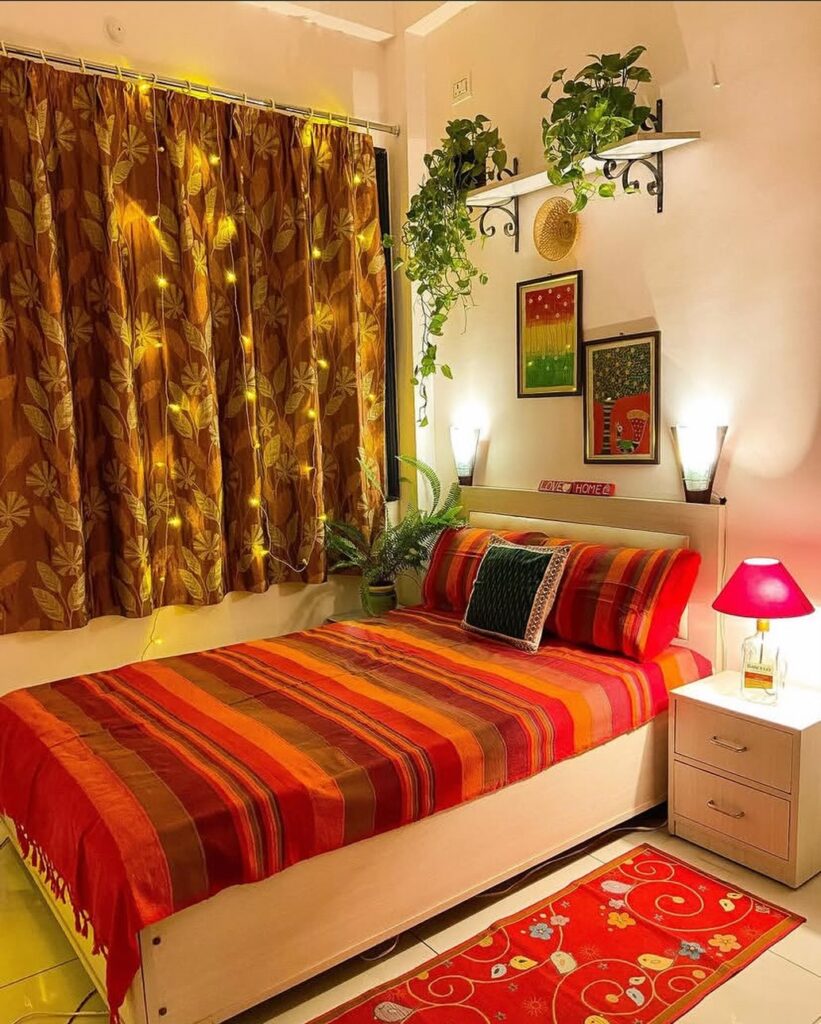
Here are several ways to give that space a purpose:
For larger corners, combine multiple elements. A floor lamp, accent chair, and storage basket can create a complete setup that feels intentional rather than empty.
The best bedroom corner decor ideas add function first and decoration second.
Use the Space at the Foot of the Bed
The space at the foot of the bed is ideal for adding storage, seating, or visual balance. Choose a solution that matches your room size and storage needs.
| Option | Best For | Main Benefit |
|---|---|---|
| Storage Bench | Extra bedding and pillows | Hidden storage |
| Upholstered Bench | Large bedrooms | Additional seating |
| Storage Ottoman | Small bedrooms | Seating and storage |
| Small Trunk | Traditional styles | Decorative storage |
| Console Table | Narrow rooms | Display space |
| Blanket Basket | Budget friendly updates | Quick organization |
Before adding furniture, keep at least 24 to 36 inches of walking space around the bed. If the room feels cramped, choose a smaller piece or skip this area entirely.
Decorate Large Empty Bedroom Walls
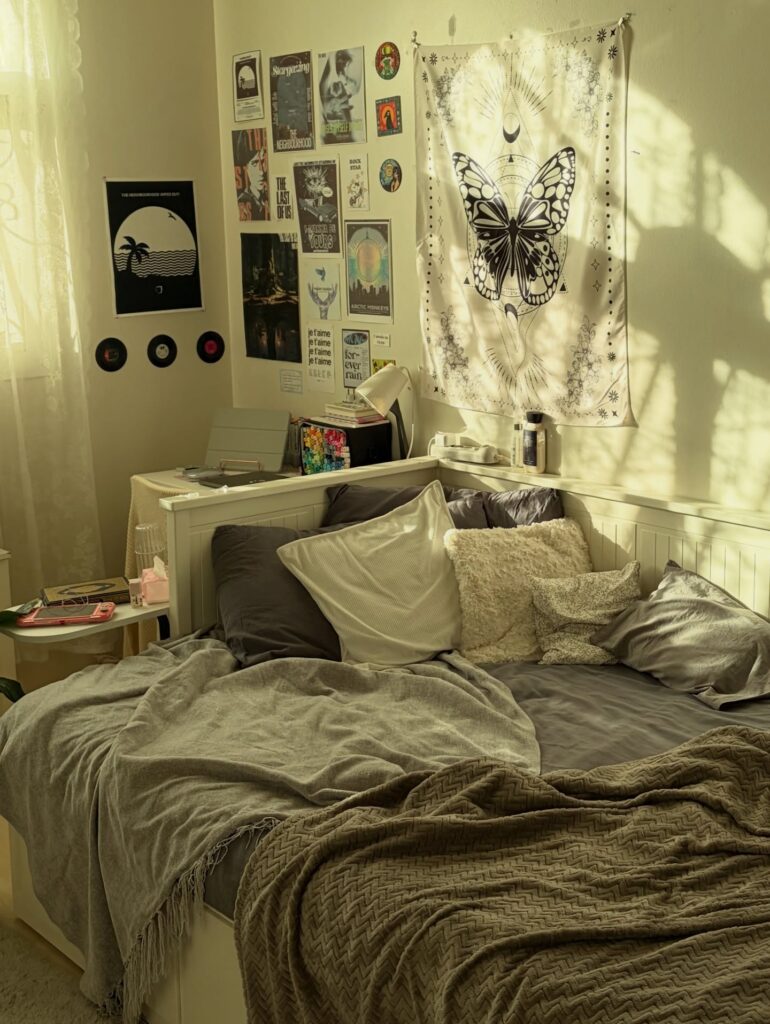
Large walls need decor that matches their scale. Small pieces often look lost and fail to create visual balance.
| Wall Solution | Best For | Why It Works |
|---|---|---|
| Oversized Art | Modern bedrooms | Creates a focal point |
| Gallery Wall | Personalized spaces | Adds character |
| Floating Shelves | Small bedrooms | Adds storage and decor |
| Mirror | Dark or small rooms | Reflects light |
| Wall Molding | Traditional styles | Adds architectural detail |
| Tapestry | Cozy or boho rooms | Adds texture |
| Picture Ledges | Flexible decorating | Easy to update |
Start with one large feature before adding smaller decorative elements. In most bedrooms, one strong focal point works better than several competing pieces.
Make Use of Space Beside the Bed
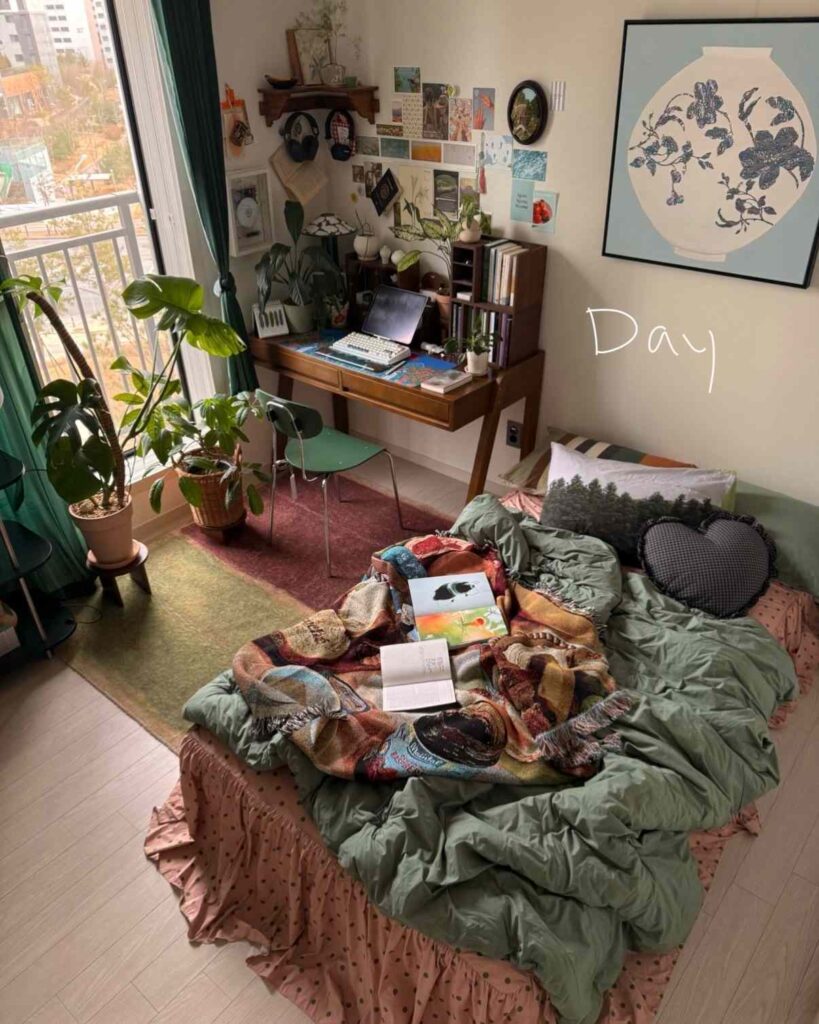
Extra space beside the bed can improve both storage and functionality.
If the gap is less than two feet wide, a larger nightstand or narrow bookcase is often the best use of the space. Floating shelves can provide additional storage without using floor space.
For larger gaps, consider creating a functional zone rather than leaving the area empty.
| Space Available | Recommended Solution |
|---|---|
| Under 2 ft | Larger nightstand |
| 2 to 3 ft | Narrow bookcase |
| 3 to 4 ft | Floating shelves and chair |
| 4 ft+ | Reading nook |
A chair paired with a small table can turn an unused area into a practical reading corner while helping balance the room.
Turn Window Areas Into Functional Spaces
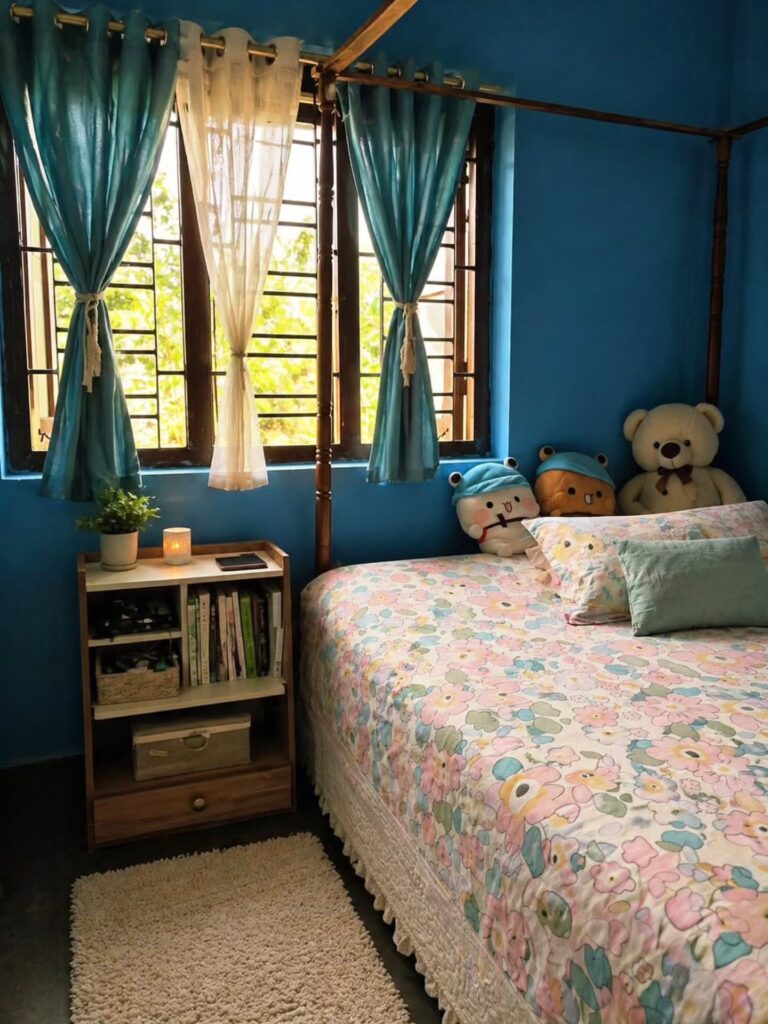
Natural light makes window areas some of the most valuable spaces in a bedroom. Instead of leaving them empty, use them for seating, storage, or daily activities.
| Window Area Idea | Best For |
|---|---|
| Window Bench | Seating and storage |
| Reading Corner | Relaxation |
| Small Desk | Work or study |
| Plant Display | Bringing life into the room |
| Storage Seating | Small bedrooms |
A window bench is often the most effective option because it combines storage and seating in one piece. If space is limited, a chair and side table can create a simple reading corner.
Fill Large Bedrooms Without Making Them Feel Empty
Large bedrooms usually need better space planning, not more furniture.
Instead of placing furniture around the perimeter, divide the room into functional zones.
| Zone | Purpose |
|---|---|
| Sleeping Zone | Bed and nightstands |
| Reading Zone | Chair and lamp |
| Workspace | Desk and chair |
| Dressing Area | Mirror and storage |
| Lounge Corner | Additional seating |
Not every bedroom needs all five zones. Focus on the activities that actually happen in the room.
Creating dedicated areas helps large bedrooms feel more balanced and prevents them from looking empty or unfinished.
Common Mistakes That Make Bedrooms Look Worse
Filling empty space without a plan can make a bedroom feel more cluttered than comfortable.
The table below highlights some of the most common mistakes and how to avoid them.
| Mistake | Why It’s a Problem | Better Solution |
|---|---|---|
| Adding too much furniture | Makes the room feel cramped | Keep only pieces you use regularly |
| Blocking walkways | Reduces comfort and flow | Maintain clear walking paths |
| Choosing decor that’s too small | Looks out of proportion | Match decor size to wall or room size |
| Decorating every empty corner | Creates visual clutter | Leave some open space |
| Ignoring scale | Makes the room feel unbalanced | Choose furniture that fits the room |
| Relying on one ceiling light | Makes the room feel flat | Add layered lighting |
Before buying anything, ask yourself one question: Does this improve the room or simply fill space?
If the answer is only to fill space, it’s usually better to leave the area empty.
Most professional designers agree that overcrowding is one of the biggest bedroom decorating mistakes. A few well-chosen pieces almost always look better than a room packed with furniture and decor.
Quick Bedroom Space-Filling Ideas for Any Budget
You do not need a large budget to improve an empty bedroom.
Many simple additions can make a noticeable difference.
Under $50
- Decorative basket
- Cozy throw blanket
- Framed wall art print
- Small plant stand
- Decorative pillow
These affordable updates can make empty areas feel more intentional.
$50 to $200
- Floor lamp
- Storage ottoman
- Corner shelf
- Floating shelves
- Large mirror
These pieces add both function and style without requiring a major investment.
$200+
- Accent chair
- Upholstered bench
- Window seat
- Reading nook furniture
- Statement lighting fixture
Larger investments often have the biggest visual impact because they help define areas within the room.
Start with the space that bothers you most.
A single well-chosen piece can often solve the problem better than several smaller purchases.
The best budget bedroom ideas focus on function first and decoration second.
Conclusion
Filling space in a bedroom isn’t about adding more decor. It’s about making better use of the space you already have.
Focus on areas that feel unfinished and choose solutions that add function, comfort, or visual balance. A chair, bench, plant, or piece of wall art can often make a bigger impact than several smaller items.
At the same time, don’t feel the need to fill every corner. Some open space helps a bedroom feel larger and more comfortable.
With a few thoughtful changes, you can create a bedroom that feels balanced, functional, and complete.
FAQ
What Is The Best Way To Fill Empty Space In A Bedroom?
The best solution depends on the location of the space. Corners often work well with plants, chairs, or floor lamps. Blank walls may need artwork, mirrors, or shelves. Focus on items that add function as well as style. This helps the room feel complete without creating clutter.
Should Every Empty Space In A Bedroom Be Filled?
No. Some space is important for good design. Interior designers often use open areas to improve balance and make rooms feel larger. Instead of filling every gap, focus on spaces that feel awkward, unfinished, or disconnected from the rest of the room.
How Do You Fill A Large Empty Corner In A Bedroom?
Large corners work well with reading chairs, floor plants, ladder shelves, or floor lamps. You can also combine several items to create a small functional zone. The goal is to make the area feel intentional rather than forgotten.
What Can I Put At The Foot Of My Bed?
Popular options include storage benches, upholstered benches, ottomans, trunks, and blanket baskets. These pieces add function while helping balance the room visually. Just make sure there is enough walking space around the bed.
How Can I Fill Bedroom Space On A Small Budget?
Start with affordable items such as baskets, throw blankets, framed prints, plants, and wall shelves. Even a few small changes can make a bedroom feel more finished. Focus on solving one problem area at a time instead of redecorating the entire room at once.
Make Every Corner Count
• How to Hang Fairy Lights In A Bedroom
• How to Hang Vines In A Bedroom
• How to Paint Bedroom Walls
• Bedroom Cleaning Checklist