How to Build a DIY Dog Run That Is Safe, Affordable, and Surprisingly Stylish

This post contains affiliate links, and we will be compensated if you buy after clicking on our links. Read our disclaimer.
Read our editorial process
Are you dealing with a yard that looks worn out, muddy, or constantly messy because of your dog? Then you are not alone.
Many dog owners want their pets to have outdoor space, but keeping the yard clean, safe, and usable at the same time can feel frustrating.
The good news is, you do not need a big budget to fix it.
In this article, we will explore practical, affordable DIY dog run ideas you can build yourself, whether you have a small yard, a narrow side space, or just want a simple solution that works.
Let’s jump into it!
Why Cheap Dog Runs Can Work Better Than Expensive Ones?
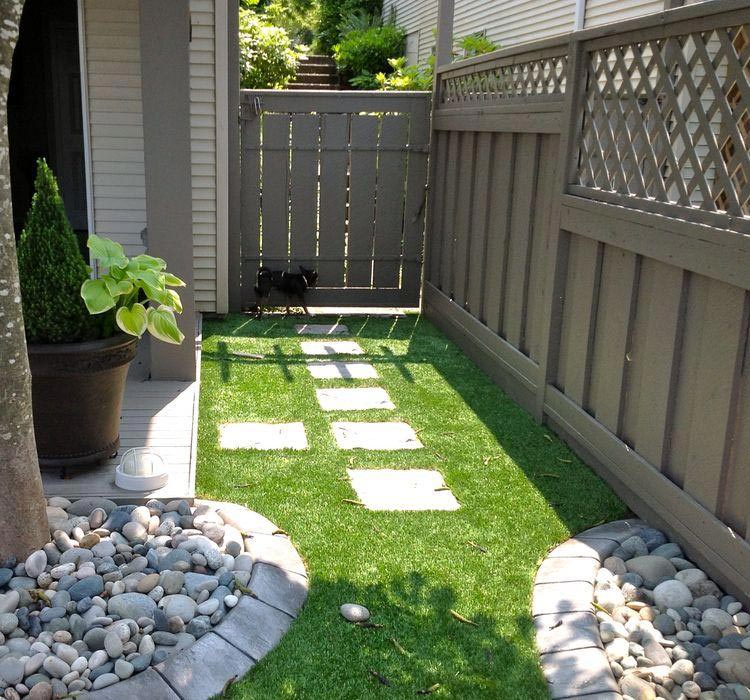
Most dog run setups seem expensive because many examples online show large custom builds, heavy fencing, or professionally installed enclosures.
The truth is, you can create a clean, durable, and safe dog run using simple materials without spending much.
Most people just want a space that controls mess, prevents damage, and gives their dog room to move freely.
This is completely achievable with options like gravel, mulch, basic fencing, repurposed panels, and smart layout planning.
It is not about how much you spend, it is about how well the space works for your dog and your yard.
Build a Better Outdoor Space for Pets
• DIY Fence Ideas Cheap
• DIY Garden Ideas
• DIY Bird House Ideas
• DIY Insect Hotel Made From Recycled Can
Can You Build One Without Construction Experience?
Absolutely. Many budget-friendly designs rely on simple steps like installing pre-made panels, driving posts, laying ground cover, or repurposing existing structures such as fences or walls.
Beginner-friendly options include narrow side-yard runs, pallet enclosures, gravel tracks with edging, and modular panel systems. These allow you to test what works for your space without committing to a complex build.
21 DIY Dog Run Cheap Ideas That Actually Work
Explore these practical, low-cost setups designed to keep your dog safe, active, and your yard looking far better than before.
Circular Mulch Play Zone
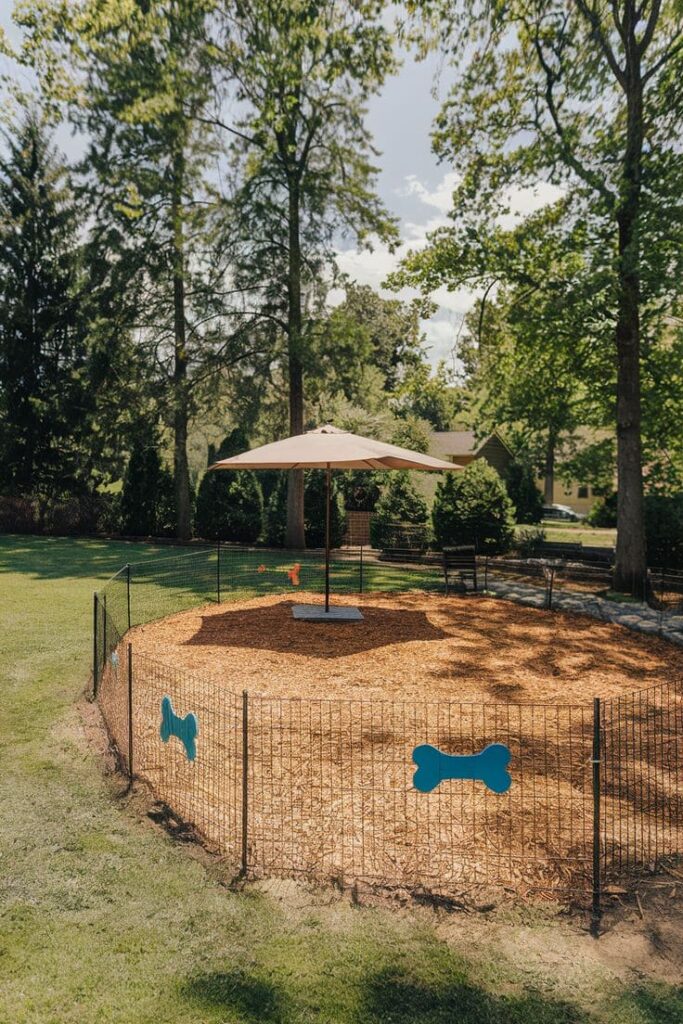
A round fenced area filled with cedar mulch creates a soft surface for dogs to run and play. The wire mesh enclosure keeps the space secure, while the large patio umbrella adds shade and makes the run feel more inviting.
Curved borders help this setup stand out from a standard rectangular yard layout. Flexible landscape edging and mulch are all you need to recreate the clean circular shape and keep the area looking neat.
2. Heavy Duty Covered Kennel
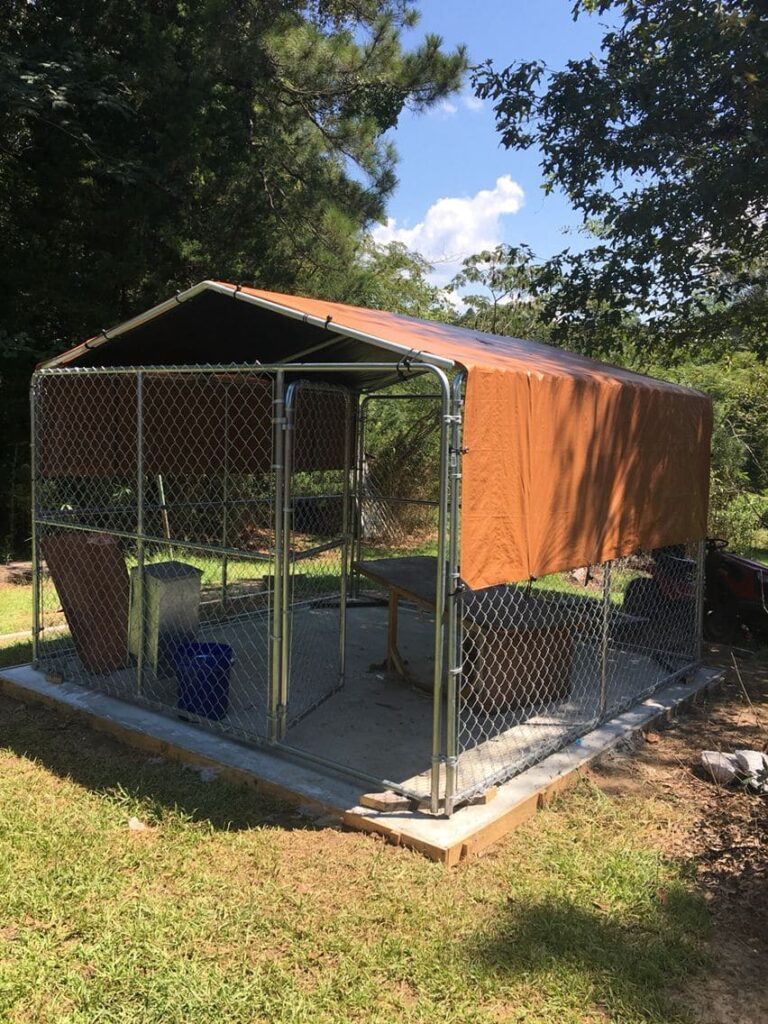
This practical build utilizes a classic chain-link structure topped with a durable orange tarp for full weather protection. By placing the kennel on a raised concrete pad, it ensures the interior stays dry and easy to hose down.
The vibe is purely functional and secure, offering a sturdy retreat for dogs that love to spend all day outdoors. Adding a tarp is a fantastic low-cost way to provide instant shade and rain cover.
Tropical Side Yard Oasis
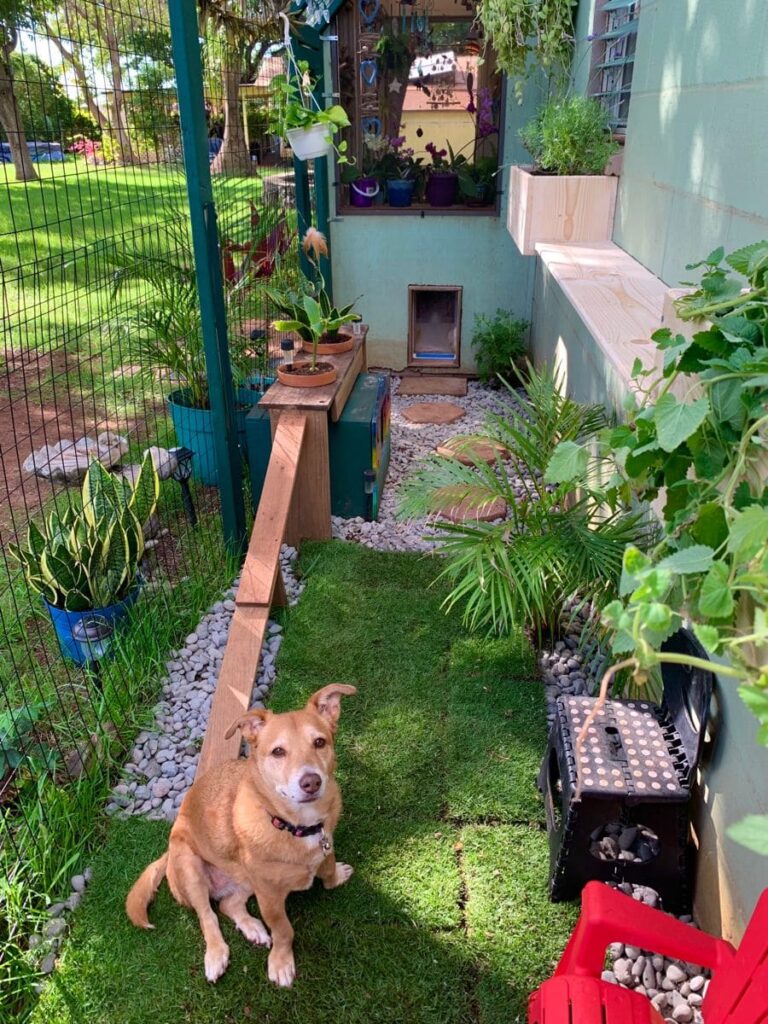
An unused side alley is transformed here into a lush paradise using artificial grass, white pebbles, and plenty of potted greenery. The verticality of the fence is used to hang plants, making the narrow space feel like a hidden garden retreat rather than a hallway.
It radiates a calm, serene energy that turns a bathroom break into a spa moment for your pup. Try mixing different textures like stones and turf to keep the area visually interesting.
Attached Lean-To Shelter
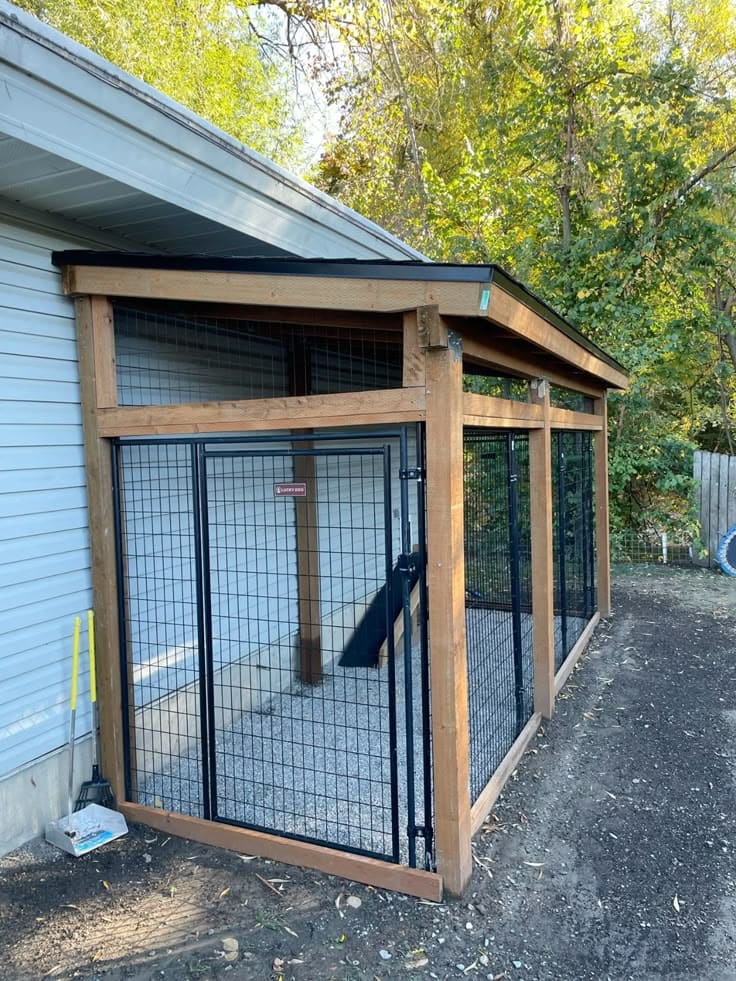
Building directly against the side of the house, this dog run uses a wooden frame and a slanted roof to create a seamless addition. The black wire panels keep the look modern and airy while ensuring the dog can see everything happening in the yard.
There is a sense of architectural permanence here that feels very integrated and safe. Utilizing your home’s existing exterior wall saves you money on materials and construction time.
Modern Planter Box Hideaway
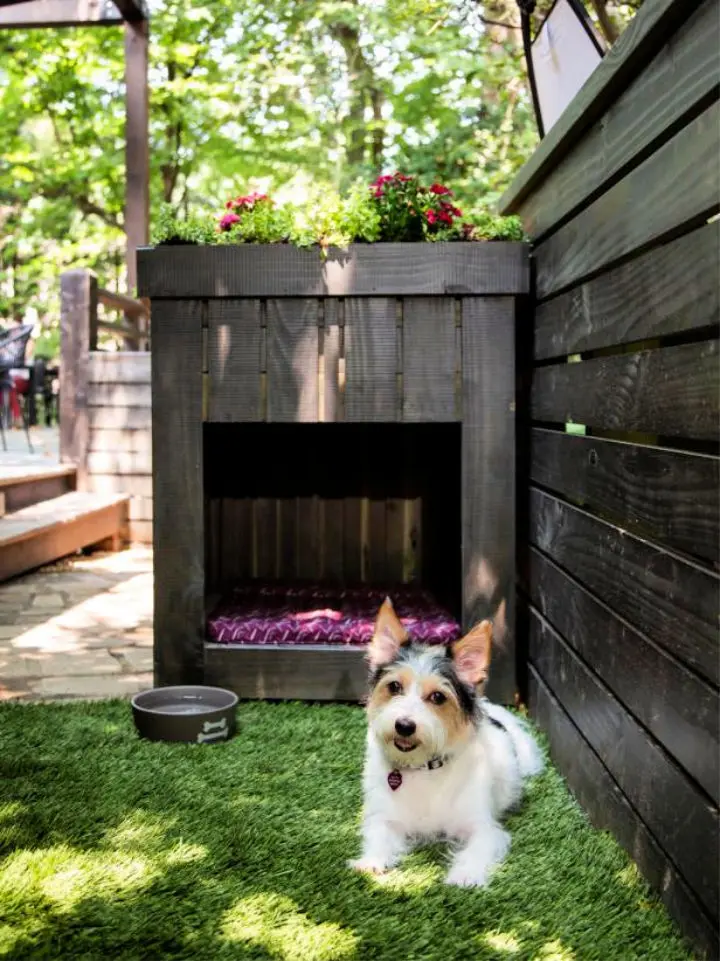
Dark stained wood gives this dog house clean lines and polished character. Built in planter overflowing with colorful flowers helps the structure blend naturally into the surrounding yard.
Raised planter adds height and softens the overall appearance of the shelter. Smart combination of greenery and pet space creates design that feels integrated with the landscape.
Wide Open Wire Enclosure
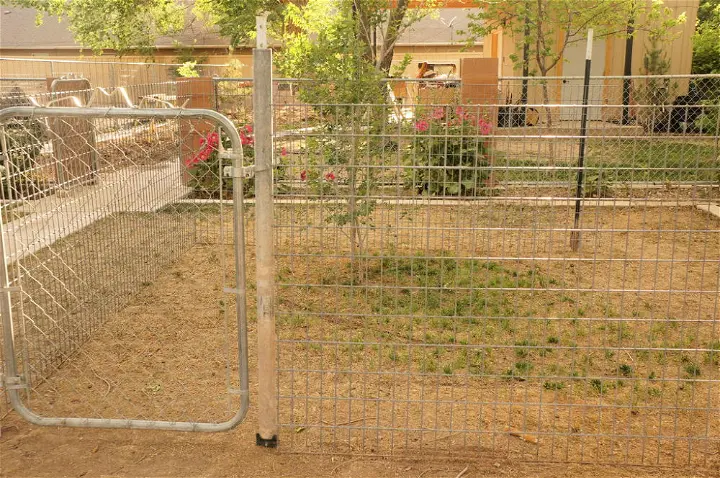
Wide wire fencing creates generous running space while keeping sightlines open across the yard. Reinforced metal posts and sturdy gate construction help the enclosure handle daily activity and frequent use.
Large layouts like this give dogs more freedom to move while protecting nearby garden areas. Open design also makes it easy to supervise pets from different parts of the property.
Sand Pit Shade Sanctuary
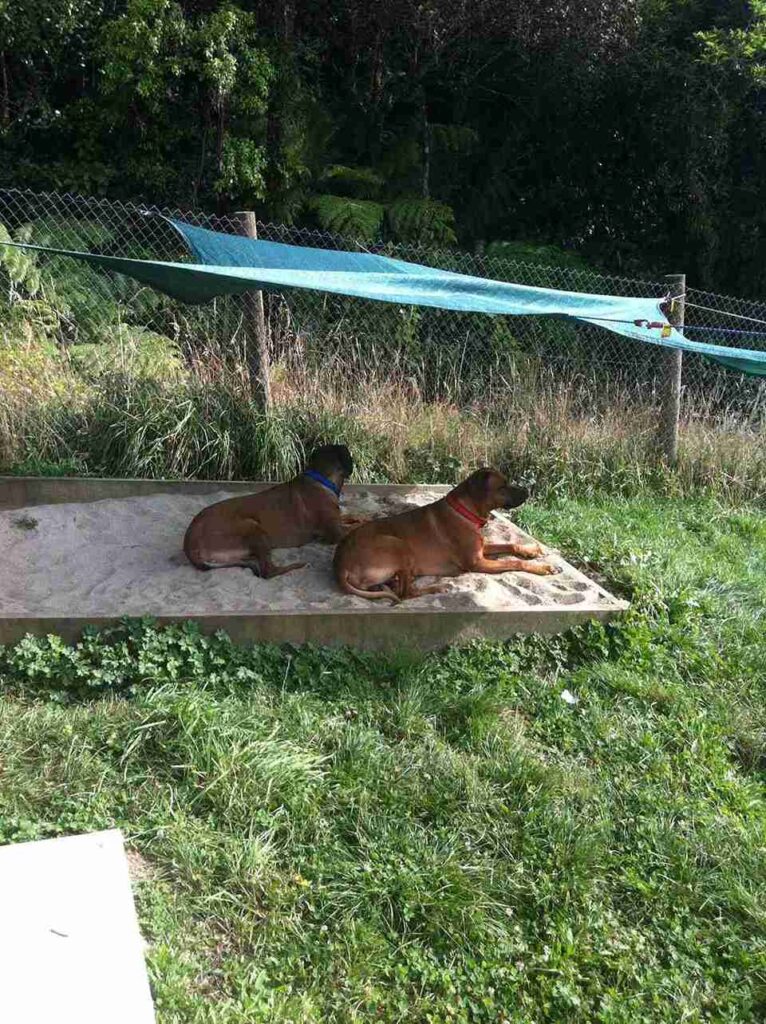
Wood framed sand area offers soft ground for digging, lounging, and cooling off during warm days. Teal shade sail stretched overhead helps reduce direct sun exposure and creates comfortable cover.
Contained border keeps sand from spreading across the yard. Combination of shade and loose surface adds variety to the run and encourages natural play behaviors.
Elegant Pergola Style Run
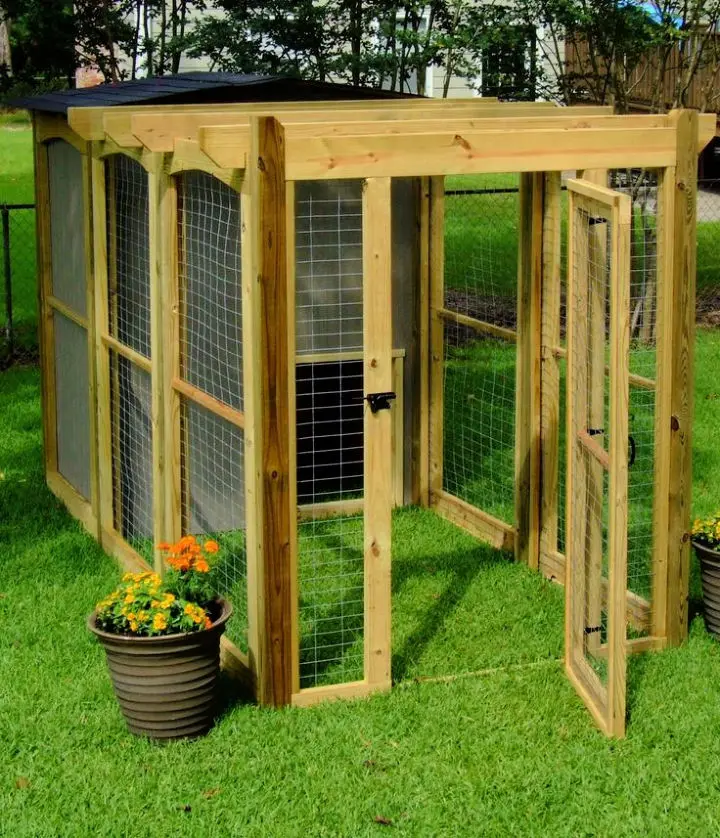
Light wood beams frame this dog run with clean architectural lines that resemble an outdoor living space. Wire mesh panels fit neatly within the structure, creating secure boundaries without making the enclosure feel closed in.
Pergola inspired design blends easily with patios, gardens, and landscaped yards. Decorative plants around the perimeter can help soften the structure and make it feel like part of the overall outdoor design.
Rustic Woodland Shelter
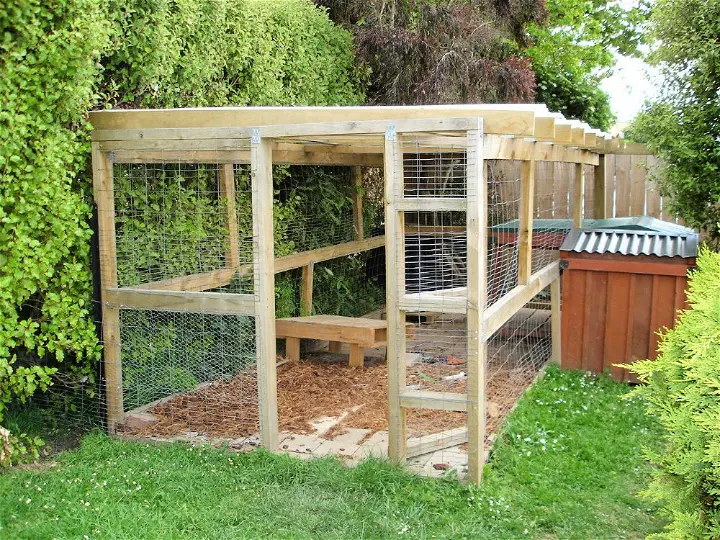
Tucked against a tall privacy hedge, this DIY run uses reclaimed-style wood and a simple corrugated roof. The ground is covered in natural wood chips, which are soft on paws and blend perfectly with the surrounding trees.
It feels like a cozy forest fort, providing a sense of privacy and “den-like” security. This is an excellent way to utilize those tricky shaded spots where grass refuses to grow.
Multi-Surface Activity Park
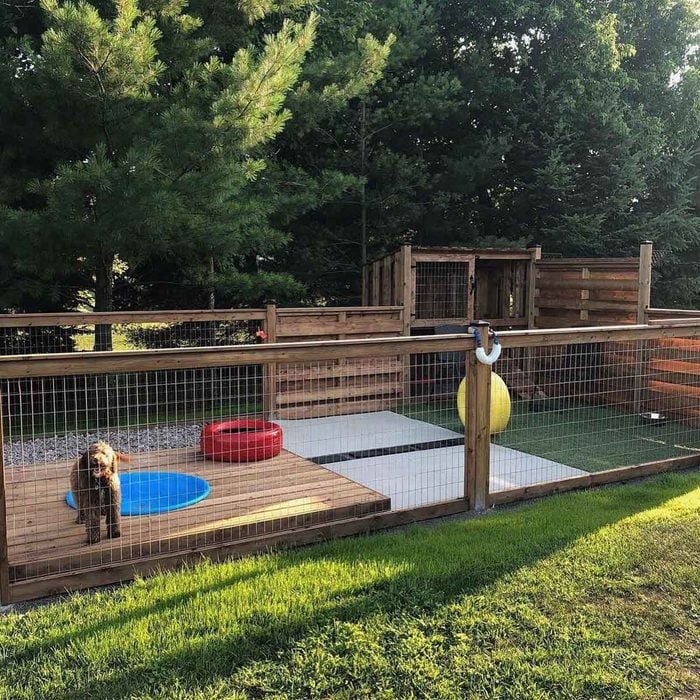
Wood decking, concrete sections, and artificial turf create different activity zones within one dog run. Bright toys and a small splash pool add extra enrichment and encourage active play.
Mixing surfaces helps keep the space more engaging throughout the day. Separate zones can support running, resting, cooling off, and interactive play in one layout.
Industrial Gravel Courtyard
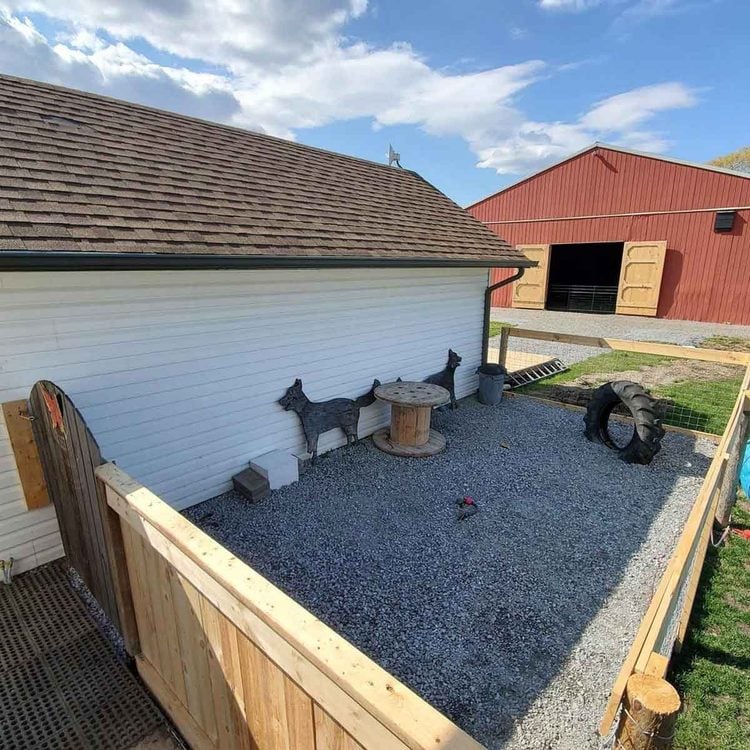
Gravel flooring paired with simple wood fencing creates durable outdoor space that can handle heavy use. Large tire feature and decorative wall accents bring personality to the enclosure.
Gravel helps with drainage and makes cleanup easier after wet weather. Strong materials like these work especially well for larger, energetic dogs.
Sleek Minimalist Side Run
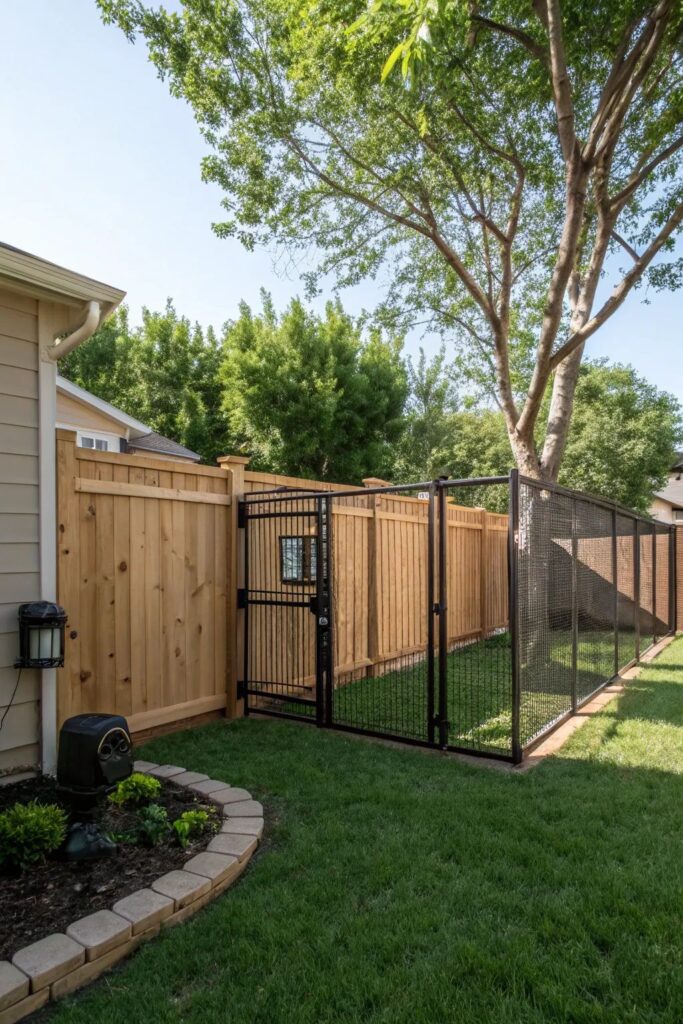
Tall black metal fencing forms secure boundaries while maintaining open views across the yard. Gate blends smoothly into the surrounding fence line for clean, streamlined appearance.
Thin fence profiles keep the enclosure from feeling bulky or intrusive. Design works well in modern landscapes where preserving visual openness is important.
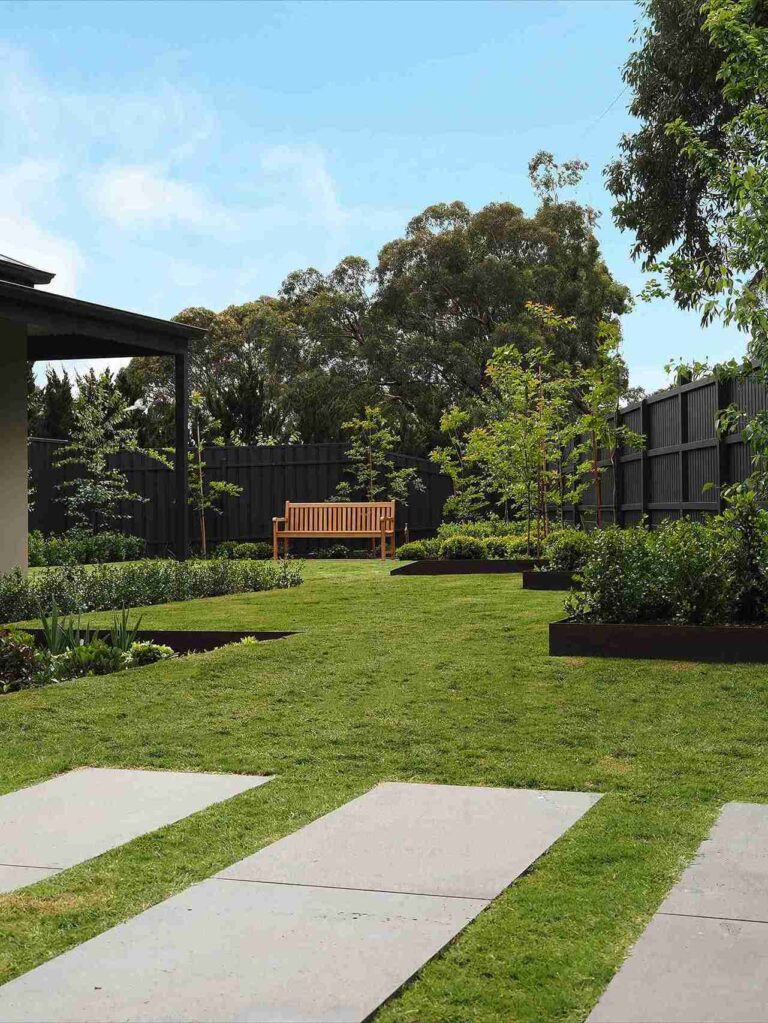
Paver Path Patio Retreat
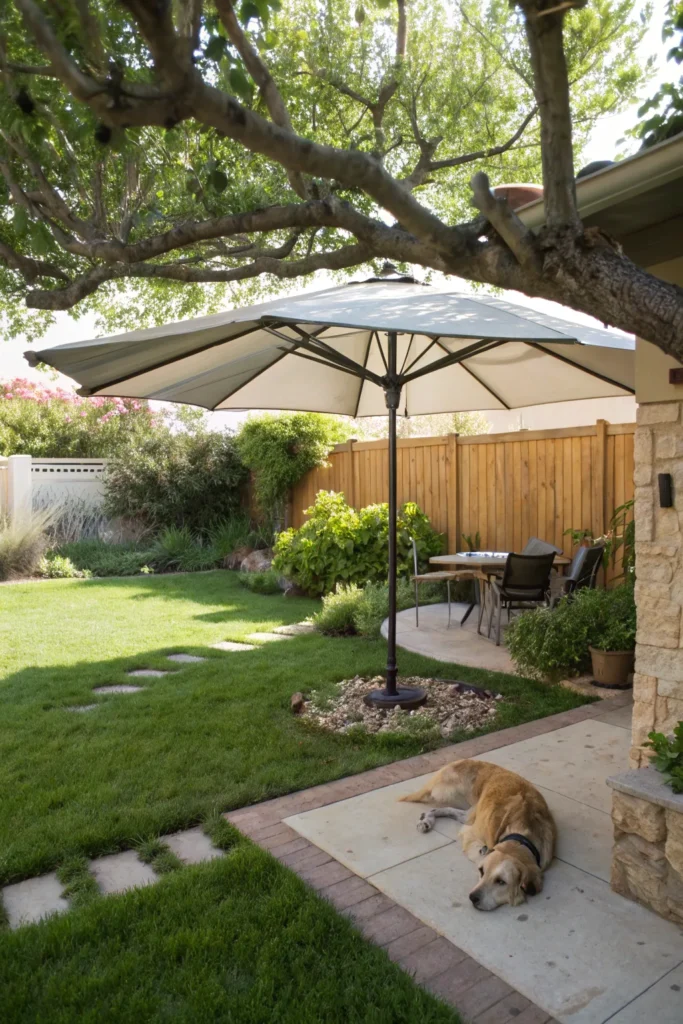
Stone pavers create comfortable walking route through grassy areas while reducing muddy spots. Large umbrella nearby provides shade and encourages longer outdoor relaxation.
Combination of hardscape and lawn gives dogs different surfaces to enjoy. Layout also creates comfortable spot for owners to spend time alongside their pets.
Curving Flagstone Garden Path
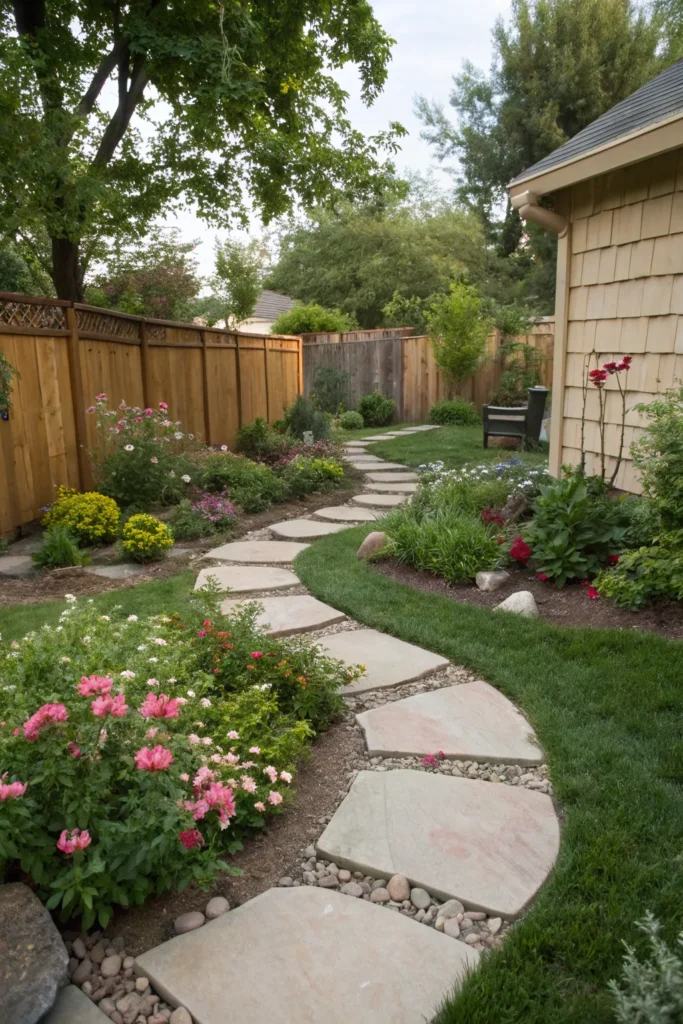
Winding flagstone pathway moves through landscaped planting beds instead of relying on traditional fencing. Natural stone introduces texture while guiding movement throughout the yard.
Integrated approach allows dog friendly features to blend into the garden design. Durable materials hold up well to daily foot traffic and active play.
Pristine Artificial Turf Yard
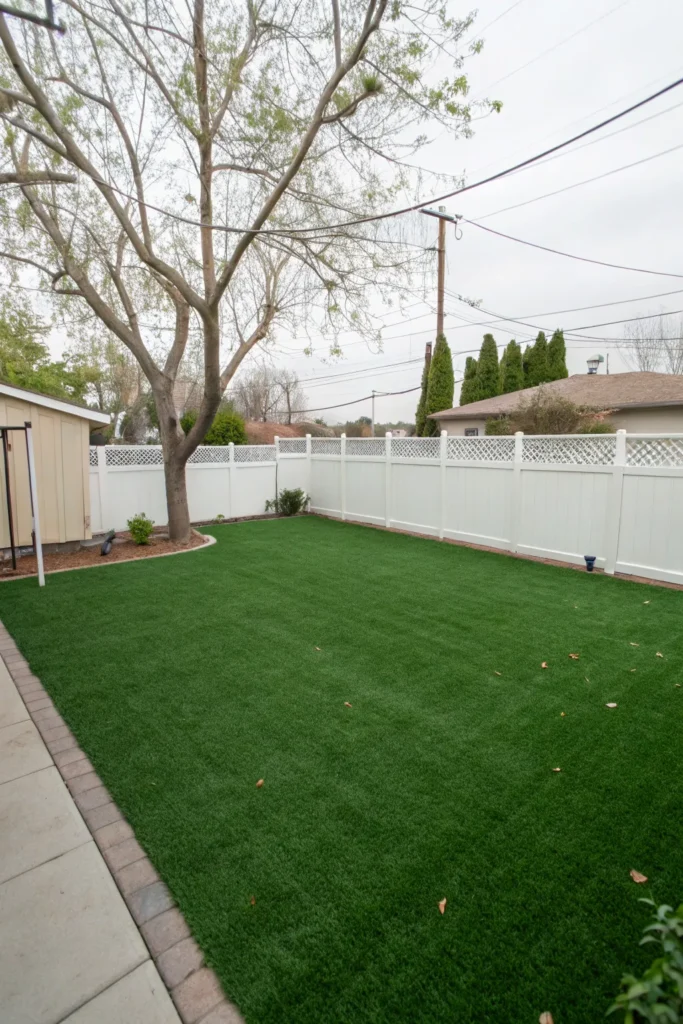
Large artificial turf surface provides year round green space without bare patches or mud. White privacy fencing creates secure boundaries while keeping the area bright and open.
Low maintenance ground cover reduces lawn care demands. Consistent surface stays usable even after heavy rain or frequent play sessions.
Elevated Gravel Kennel
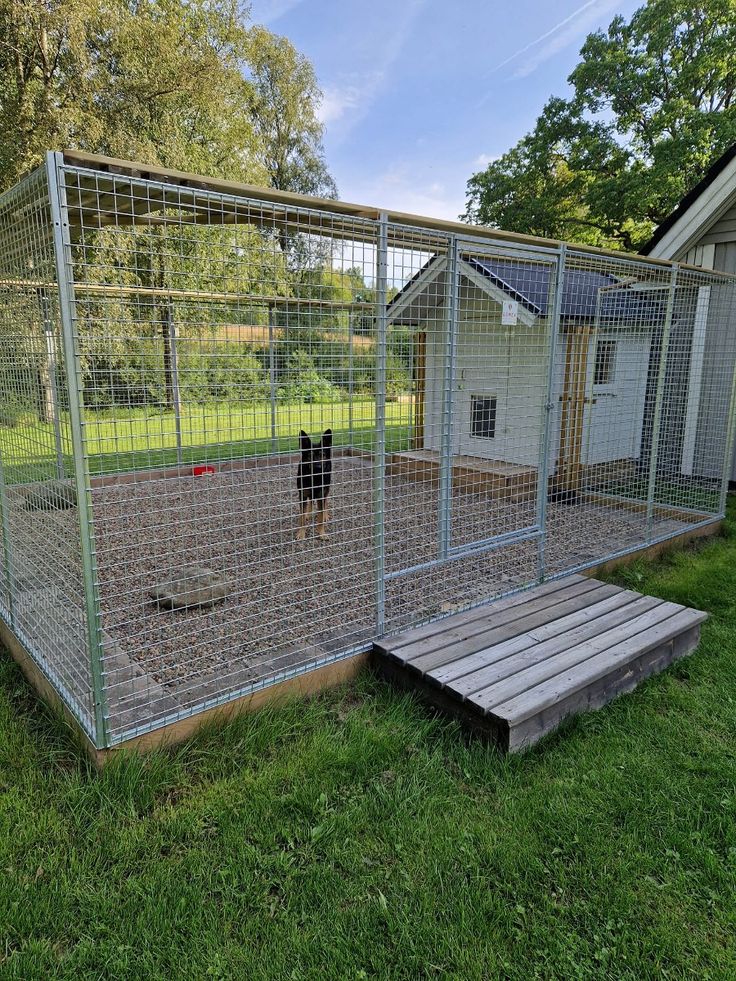
Raised platform filled with pea gravel improves drainage and helps keep the enclosure dry. Sturdy metal framework surrounds the run, while attached shelter offers protection from changing weather.
Elevated construction promotes airflow beneath the structure. Combination of gravel and covered retreat creates practical setup for long term outdoor use.
Modernist Shed Style Run
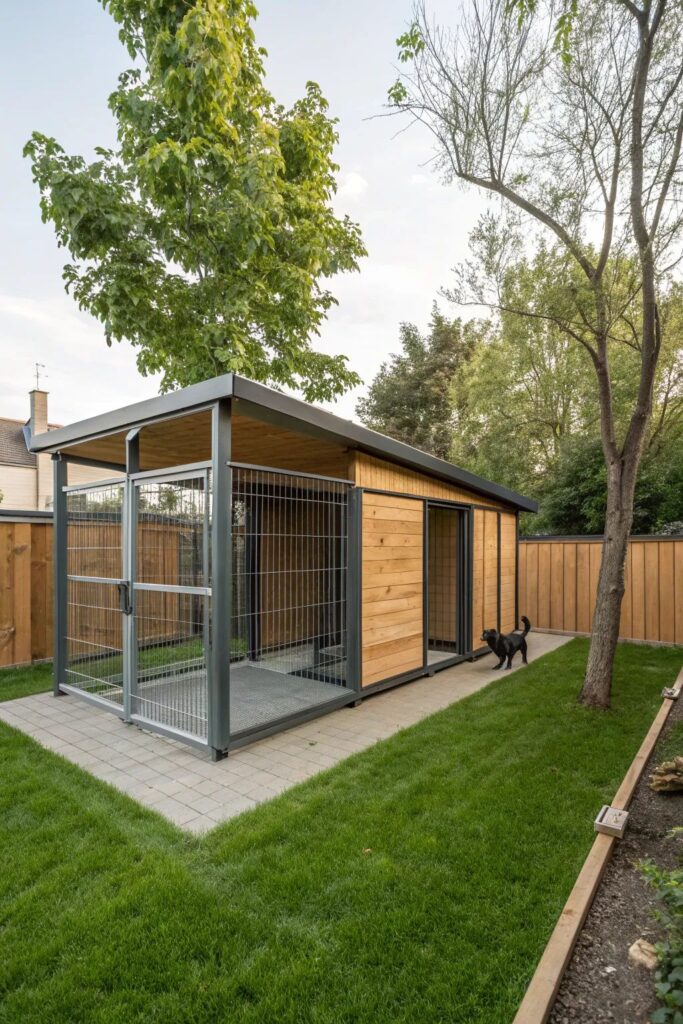
Sloped metal roof and horizontal wood siding give this dog run contemporary architectural character. Concrete flooring near the shelter transitions into grass, providing both durability and comfort.
Matching materials with existing outdoor structures helps create cohesive backyard design. Clean lines and practical surfaces make maintenance simple while keeping the space attractive.
Classic Cedar Siding Shelter
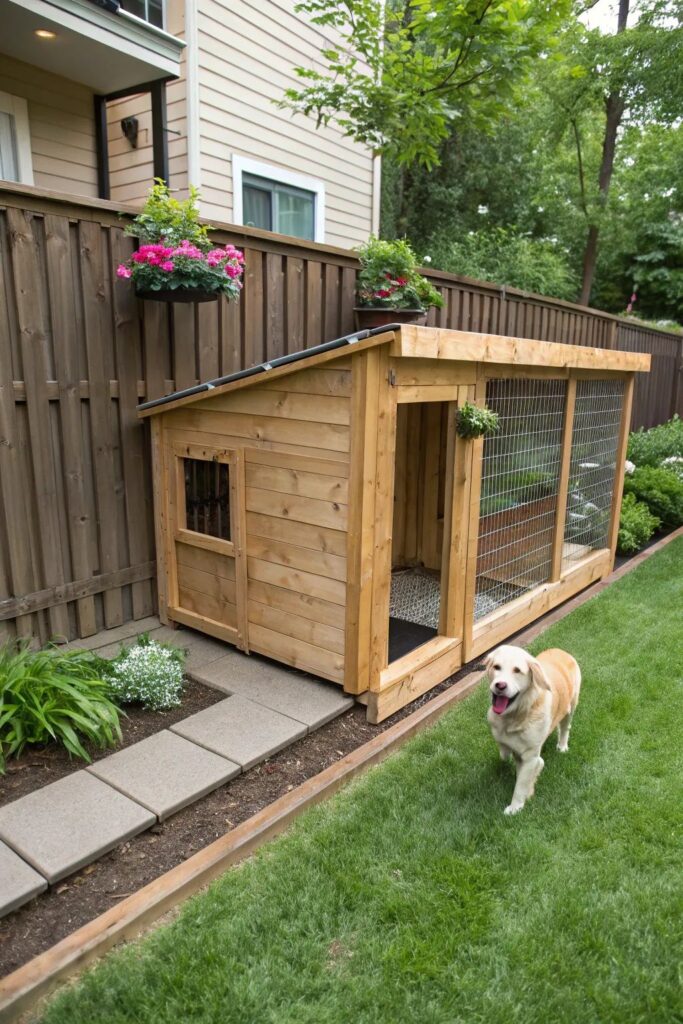
Cedar siding gives this shelter a timeless look that blends naturally with surrounding landscaping. Small window allows dogs to watch the yard while staying protected inside their own space.
Stepping stones and mulched planting beds help the structure feel like part of the garden. Natural wood also holds up well outdoors and adds warmth to the overall design.
Ultimate Indoor-Outdoor Lounge
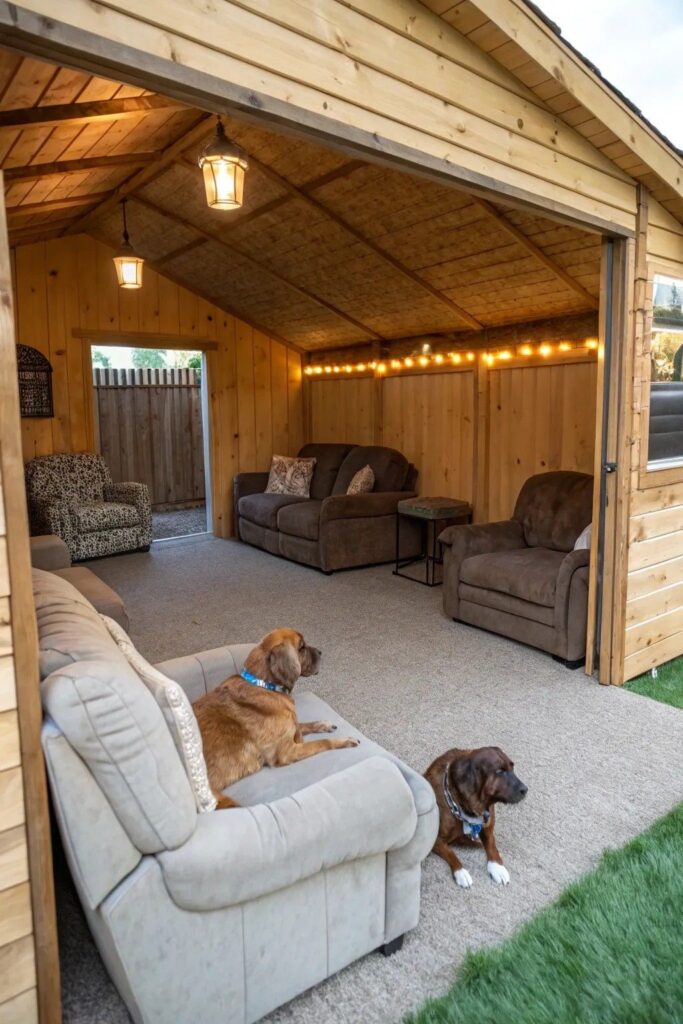
Comfortable indoor area opens directly onto grass, giving dogs freedom to move between resting and playing. Soft furnishings, rugs, and warm lighting create inviting retreat within the run.
Indoor outdoor layouts provide shelter without limiting access to fresh air and exercise. Thoughtful details can make the space feel more comfortable for both pets and owners.
Conclusion
Creating dedicated outdoor space helps dogs stay active, safe, and comfortable throughout the day. Right design depends on your yard size, your budget, and how your dog likes to play.
Some runs focus on durability, while others blend seamlessly into the landscape. Even simple upgrades can make outdoor time more enjoyable and easier to manage.
Start with ideas that fit your space and build from there. If you found inspiration in these DIY dog run ideas, share this article with friends and family who want to create better outdoor spaces for their dogs.
FAQ
Which Surface Material Is Best For My Dog’s Paws?
The best surface depends on your dog’s habits and your local climate. Artificial turf is incredibly popular because it stays green year-round and is soft on paws, while pea gravel offers excellent drainage and is very easy to clean.
If your dog loves to dig, a dedicated sandpit can save the rest of your lawn, while for a low-maintenance, organic feel, cedar mulch is a fantastic, aromatic choice.
How Can I Provide Enough Shade In A Sunny Yard?
Shade is essential for preventing overheating, and there are several stylish ways to provide it. Sun sails are a modern, budget-friendly option that covers large areas, while traditional umbrellas offer flexibility since they can be moved as the sun shifts.
For a more permanent solution, building a lean-to with a corrugated roof or a pergola provides heavy-duty protection from both sun and rain.
Is A DIY Dog Run Actually Secure For Larger Breeds?
Yes, as long as you choose the right materials for your dog’s size and energy level. For larger or more active breeds, it is best to use heavy-duty wire mesh panels or chain-link fencing anchored with sturdy wooden or metal posts.
Ensure the fence is tall enough to prevent jumping, and consider burying the bottom of the fence or using a gravel border to discourage those who love to dig their way out.
How Do I Keep A Small Dog Run From Smelling?
Proper drainage and regular maintenance are the keys to a fresh-smelling space. Choosing a porous base, such as gravel or specialized “pet-friendly” artificial turf, allows liquids to drain easily.
Many pet parents also use a simple mixture of water and white vinegar or a dedicated enzymatic cleaner to spray down the area weekly, which breaks down odors naturally without using harsh chemicals.
How Much Space Does A Dog Run Really Need?
The “perfect” size varies, but a good rule of thumb is to provide at least enough room for your dog to reach a full trot. For smaller dogs, a narrow side yard (about 4 to 5 feet wide) is often plenty of space for a run.
Larger dogs benefit from a longer stretch of at least 15 to 20 feet so they can truly exercise. Always prioritize the quality of the space, like adding toys and shade, over the sheer square footage.
Keep Upgrading Your Backyard
• DIY Grill Station Ideas
• DIY Fountain Ideas
• DIY Outdoor Fairy Garden Ideas
• Modern DIY Mailbox Ideas