27 Under-Sink Bathroom Organization Ideas to Maximize Space

This post contains affiliate links, and we will be compensated if you buy after clicking on our links. Read our disclaimer.
Read our editorial process
Does the space under your sink always seem to end up cluttered, no matter how often you tidy it? One minute everything is neatly arranged, and before long, cleaning supplies, bottles, and miscellaneous items are stacked on top of each other again.
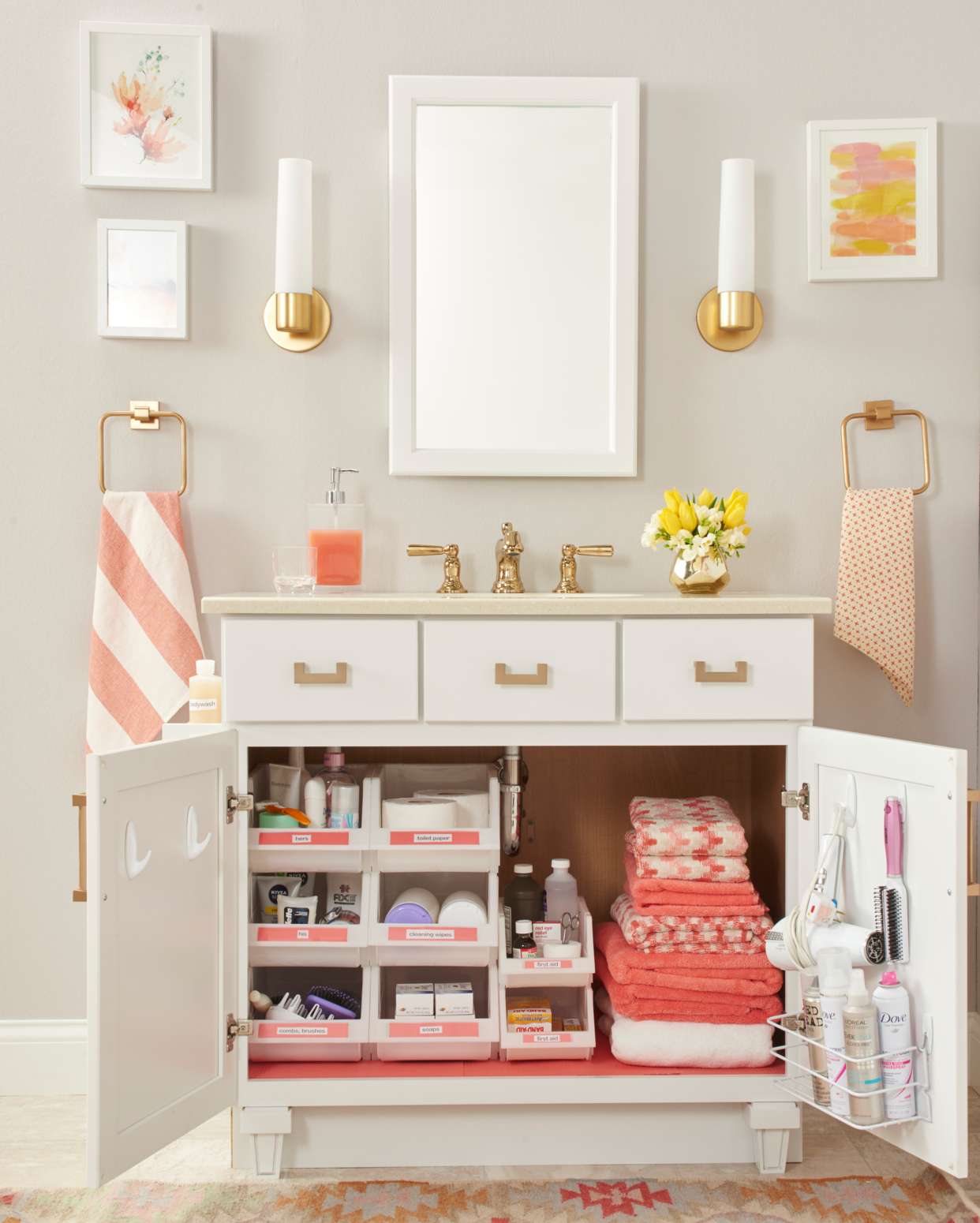
The problem is not you; it is the space. Pipes block useful areas, shelves do not fit properly, and it is hard to see what is actually inside.
That is why this spot often gets ignored or used inefficiently. Things get pushed to the back, and you end up buying duplicates because you cannot find what you already have.
In this guide, you will find 27 Under-Sink Bathroom Organization Ideas that help you make better use of this awkward space without overcomplicating it.
Let’s jump in!
How Can You Make Under-Sink Storage More Practical?
Under-sink storage works best when you stop treating it like a normal cabinet. The shape is uneven, so standard setups rarely work well.
Instead of forcing shelves, use bins, stackable trays, or sliding organizers that fit around pipes. Keeping everyday items within reach also makes a big difference in daily use.
You do not need a full overhaul. Small changes in how you arrange and group items can make the space feel easier to manage and actually useful.
Make Bathroom Storage Easier
• RV Bathroom Storage Ideas
• Laundry Detergent Storage Ideas
• Linen Closet Organization Ideas
• Apartment Organization Ideas
1. Simple Stackable Acrylic Drawers
Clear stackable acrylic drawers let you see everything instantly, which helps in low light or tight under-sink spaces. You avoid knocking over bottles just to reach one item.
Sorting items by category keeps things simple. One drawer for hair, one for skincare, and one for extras makes the setup feel controlled even in a small layout.
If the space is shared, labels help avoid mix-ups. Clear drawers show clutter fast, so keeping only daily use items inside helps it stay neat without constant fixing.
2. Dedicated Cleaning Caddies
A simple cleaning caddy keeps sprays and tools contained in one place, especially in shared or narrow cabinets. Instead of reaching around pipes, you can grab everything at once and clean faster.
Matching containers help the space feel intentional. Adding small labels keeps things clear, and using a handle that fits under your sink height makes it easy to pull out without bumping pipes.
Small tip: Avoid overfilling the caddy. When it gets too heavy, you stop using it, and everything slowly goes back to clutter.
3. Cohesive Clear Bin System
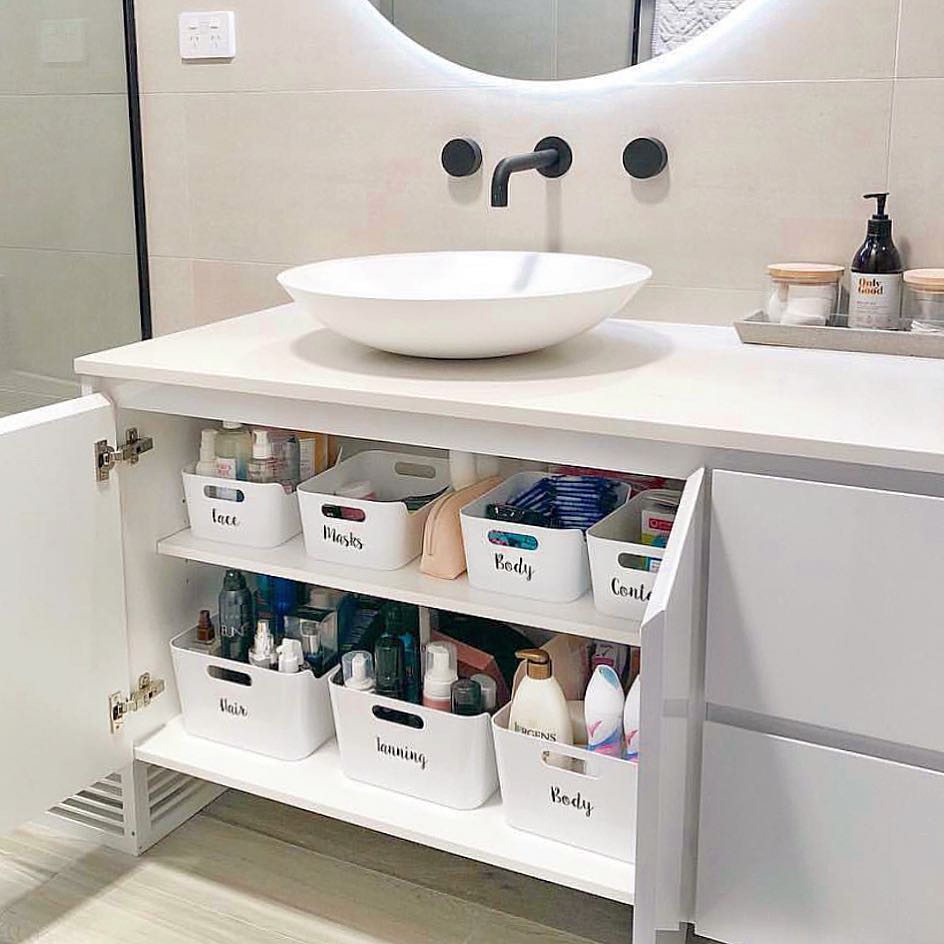
Using matching bins creates a visually calm setup, which matters in cabinets that already feel tight. In low-light spaces, uniform bins make everything easier to scan.
Grouping by routine instead of product type simplifies daily use. Morning and night bins reduce decision fatigue and help you move through your routine without searching.
One thing people miss, mixing sizes breaks the look. Keeping bin heights aligned makes the cabinet feel more structured.
4. Double-Tiered Pull-Out Baskets
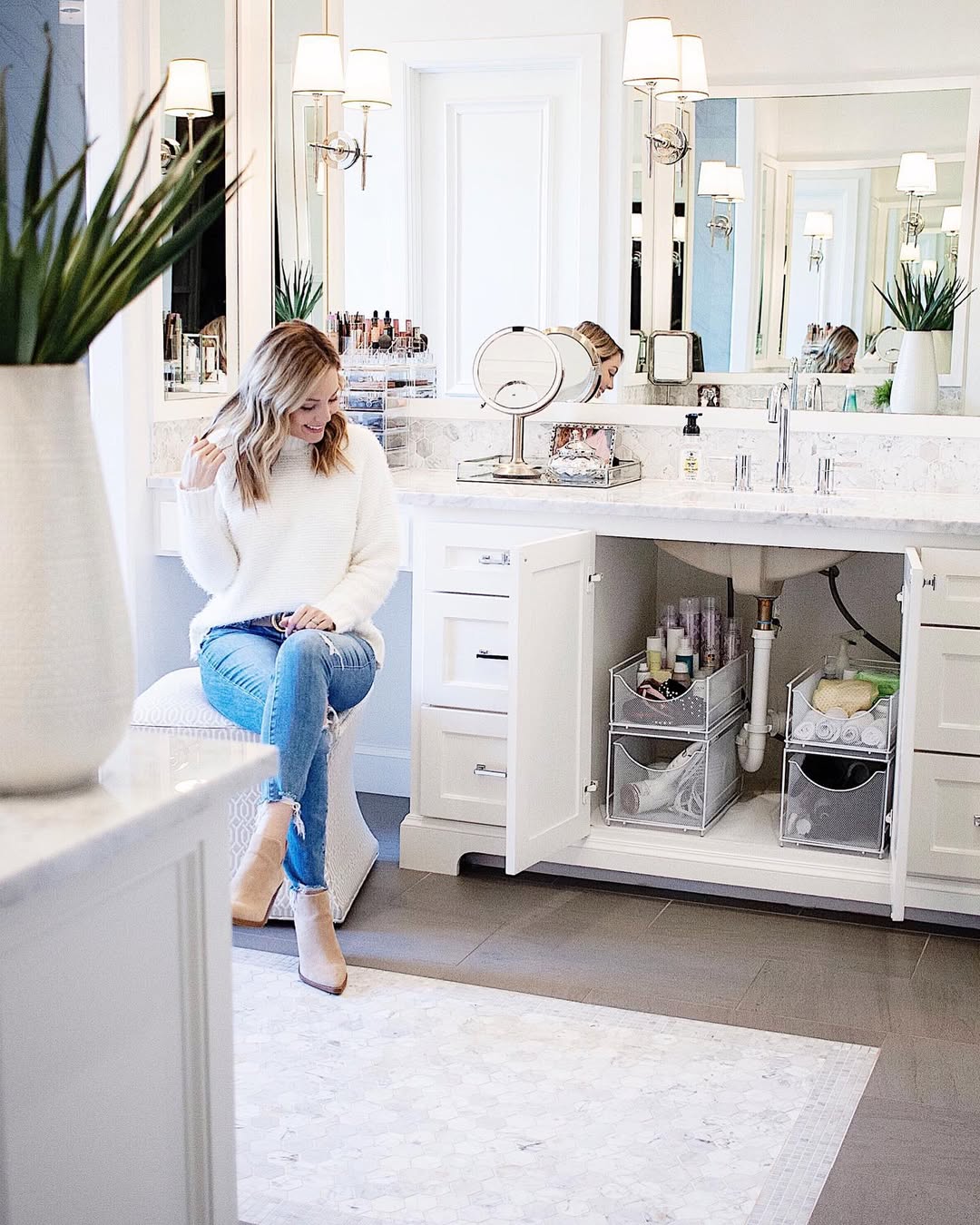
Pull-out baskets solve the problem of hard-to-reach back areas, especially in deep cabinets. You can access everything without bending or shifting items around.
Use the top tier for smaller items and the bottom for bulkier ones like towels or tools. This layout keeps the weight balanced and makes the system slide smoothly over time.
Check the width before buying. If it is too tight, the basket will scrape the cabinet sides and become frustrating to use.
5. Vertical Storage With Stacked Bins
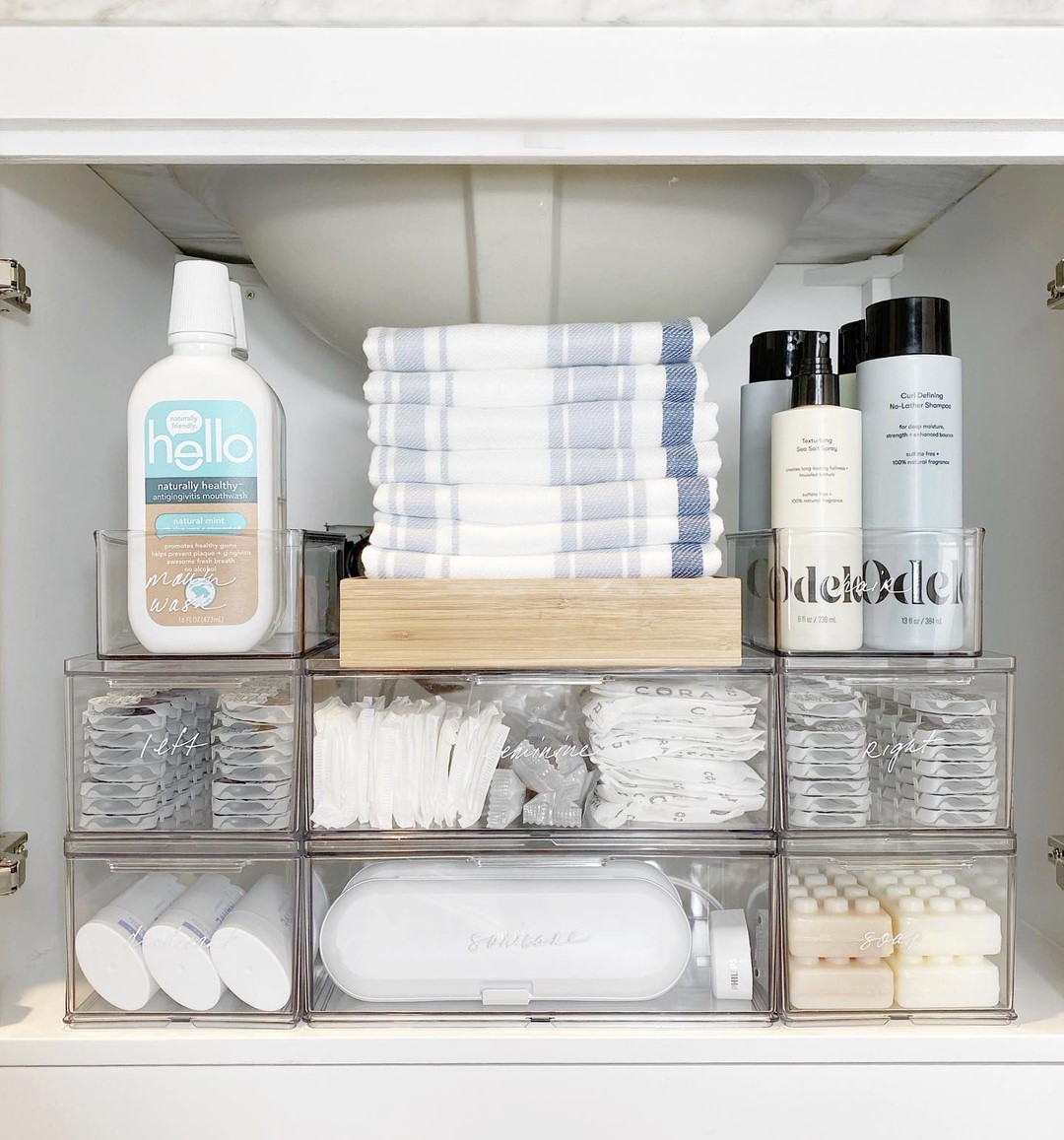
Stacked bins help you use vertical space that often gets wasted, especially under taller sinks. This works well when the cabinet height is underused.
Keep daily items at eye level and backups on top. This simple split makes access easier and keeps the space feeling less crowded.
Avoid stacking too high. When bins become hard to reach, you stop using the top layer, and it turns into forgotten storage.
6. Colorful Product Displays
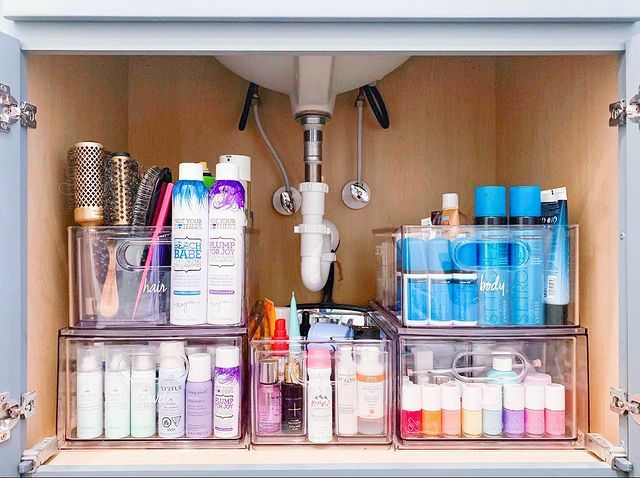
If your products have color, letting them show adds character. In neutral cabinets, this creates a more lively and less dull setup without extra decor.
A lazy Susan helps in deeper layouts where tall bottles get lost. You can spin and grab quickly, which makes the space more functional in daily use.
Be careful with overcrowding. Too many colors in a small area can feel messy instead of styled.
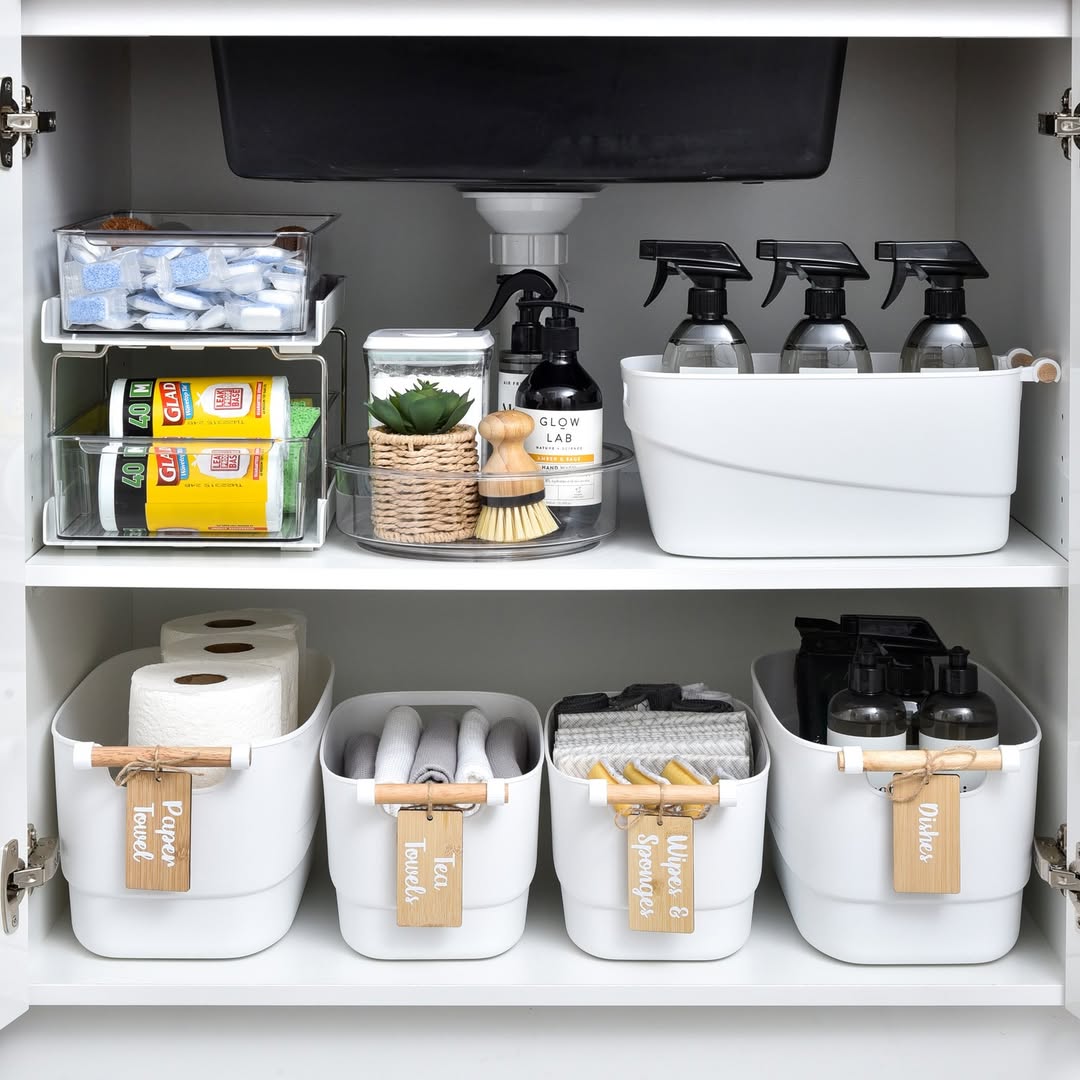
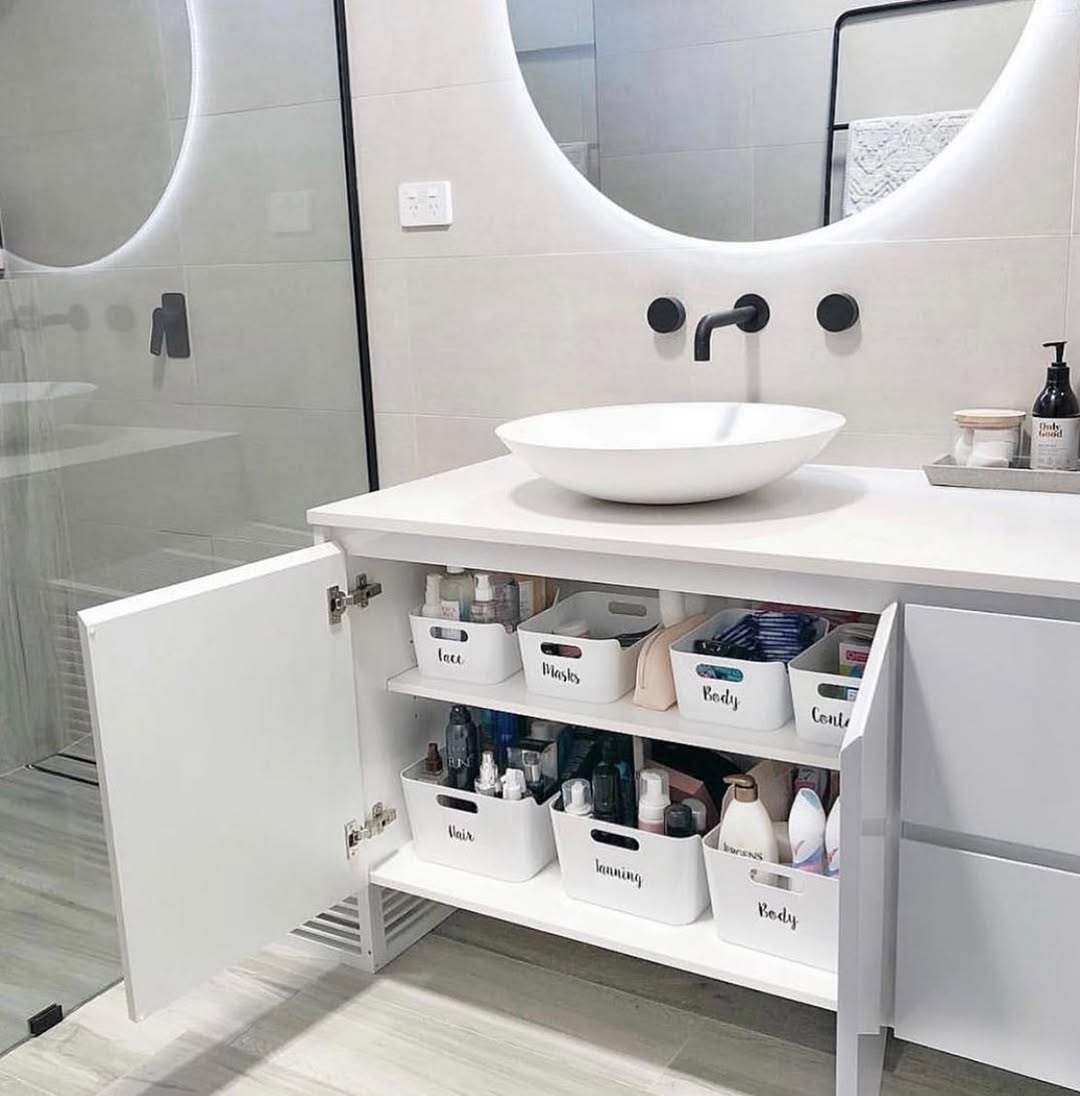
7. Thoughtful White Bins For Essentials
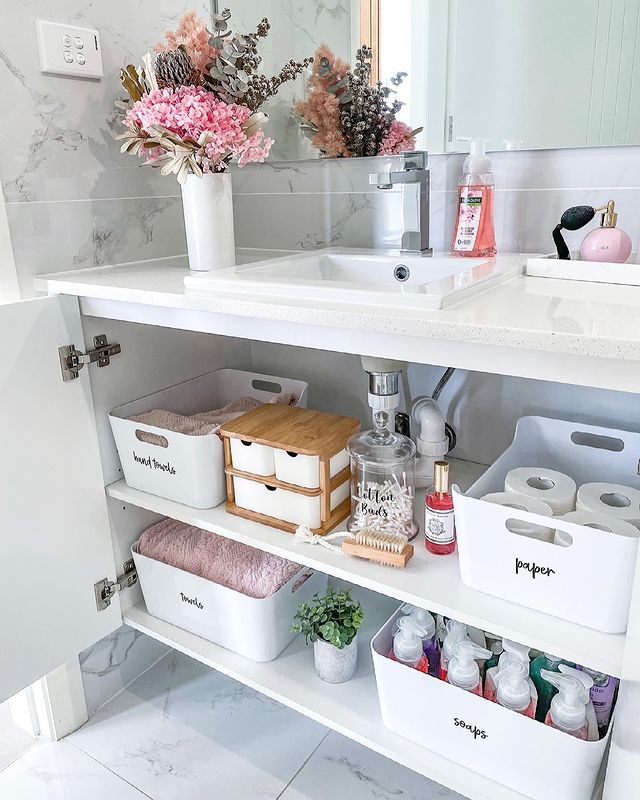
White bins give a clean and structured look, especially in small or shared bathrooms. They help hide visual clutter while keeping things easy to sort.
Separating essentials like towels, toilet paper, and refills makes everything easier to find. This keeps the cabinet organized without constant rearranging.
One small detail, matte bins tend to hide scuffs better than glossy ones, so they stay looking fresh longer.
8. Glamorous Skincare Carousel
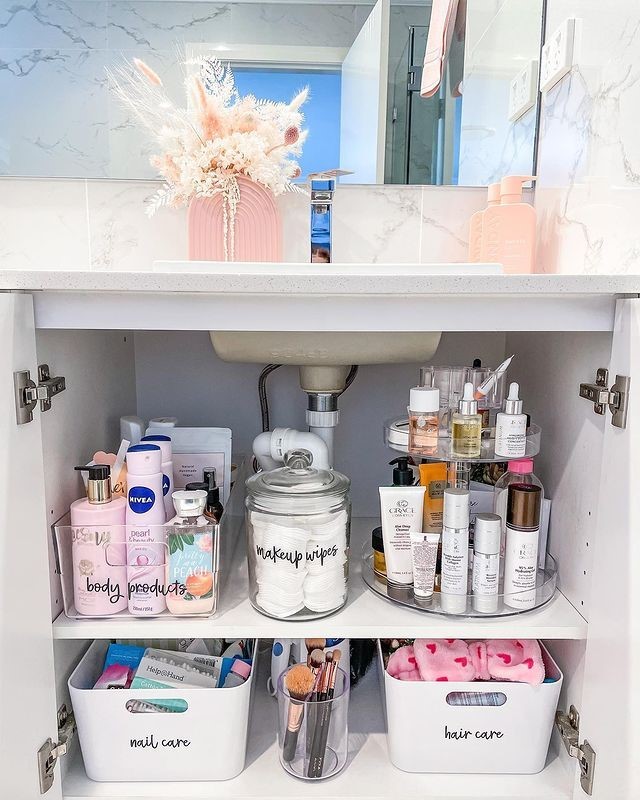
A rotating tray keeps daily skincare within easy reach, especially in cabinets with limited depth. You avoid shifting bottles around just to grab one item.
Placing everyday products here helps your routine flow better. In tighter layouts, this setup reduces clutter at the front and keeps movement smooth.
Choose a tray with a slight edge. Flat ones can let bottles slip when you spin too quickly.
9. Wire Pull-Out Baskets
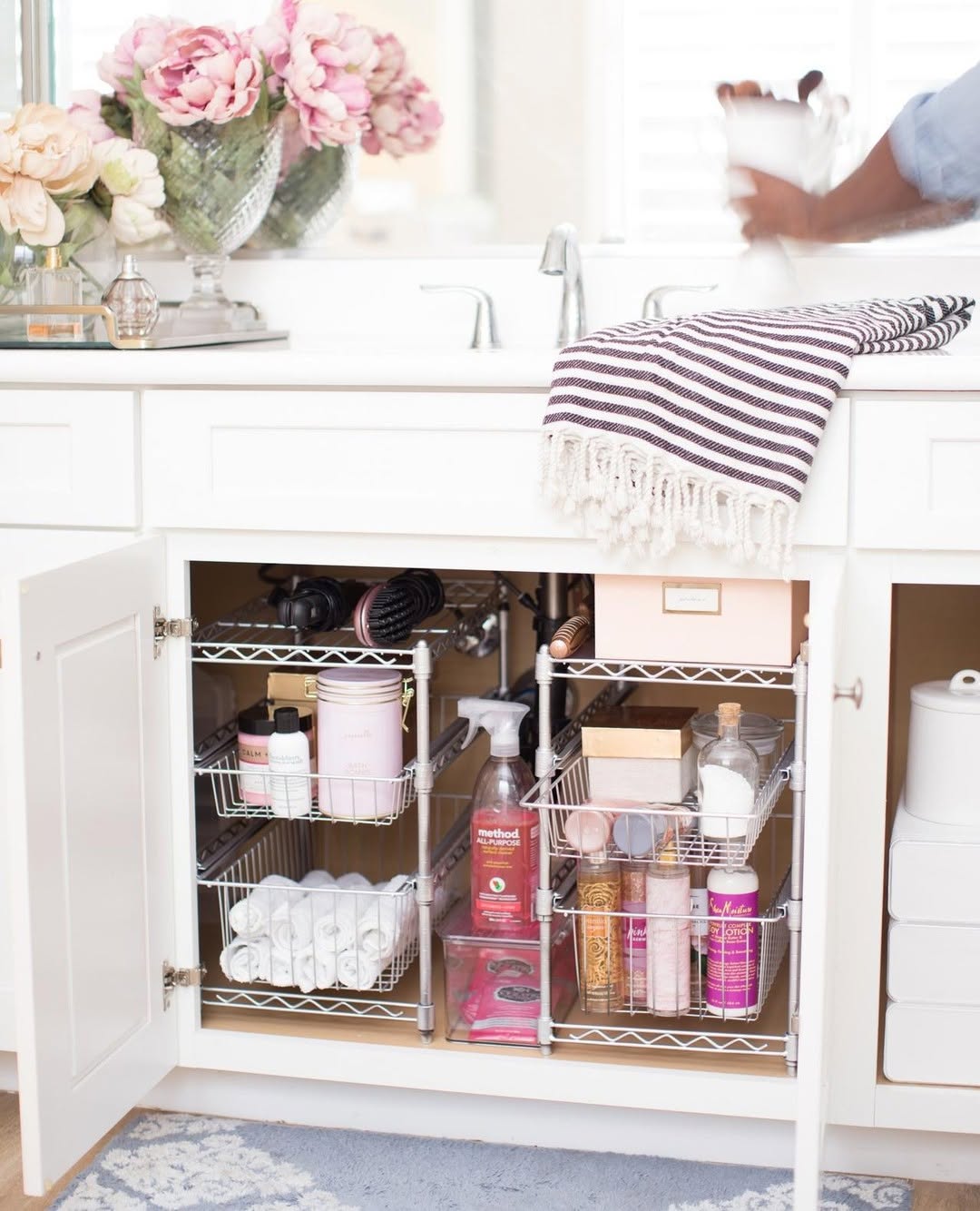
Wire pull-out baskets are sturdy and breathable, which works well in cabinets that trap moisture. Towels and backup items stay fresh instead of feeling damp.
They slide out easily, making access simple in deeper spaces. The open design keeps everything visible without needing to rearrange items.
Go for coated wire if possible. Bare metal can scratch the cabinet base over time.
10. Custom Wood Drawer Organizers
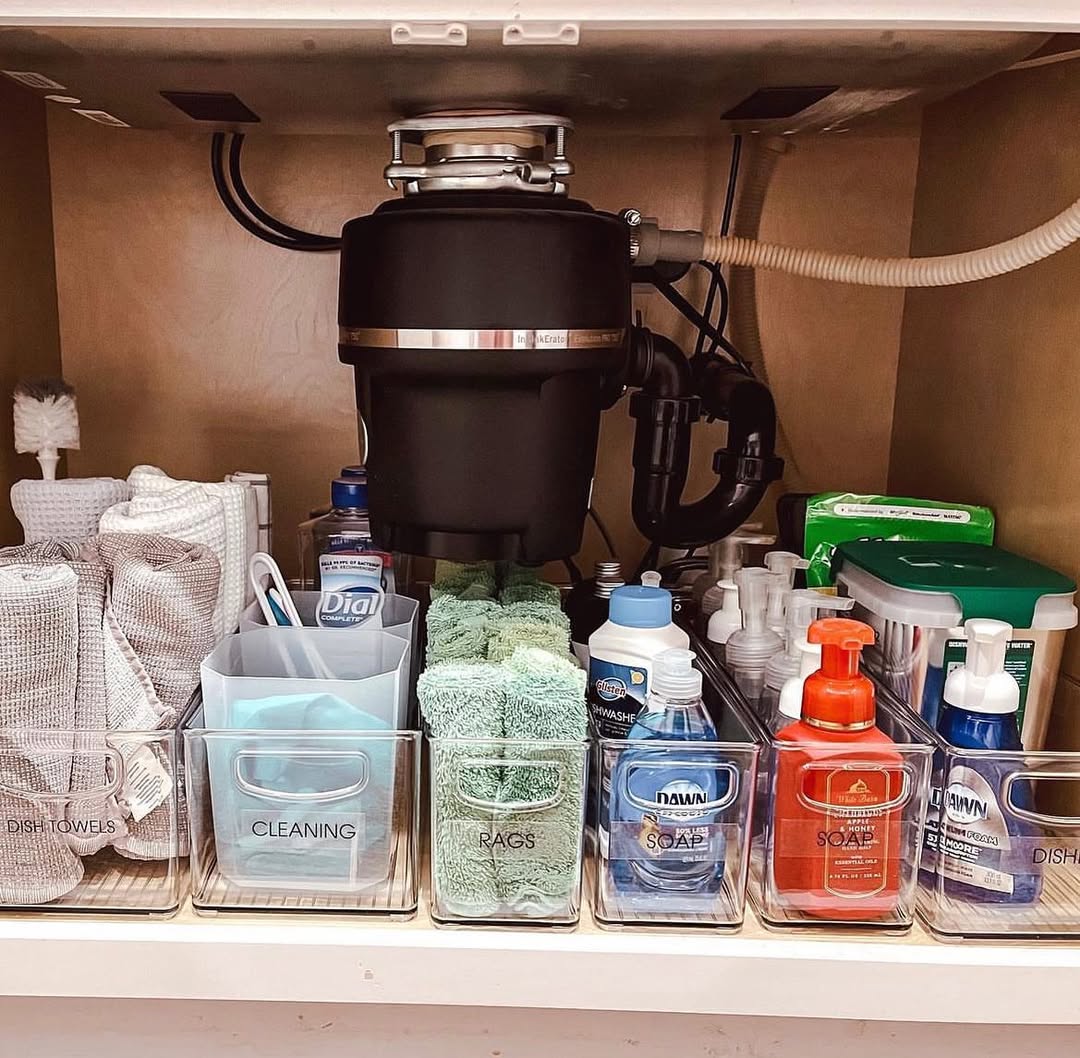
Custom drawers built around pipes help you use space that usually goes to waste. This works well in cabinets with awkward plumbing layouts.
They create hidden compartments for tools or supplies, keeping things out of sight. The result feels cleaner and more structured without losing storage.
Measure carefully before building. Even small misalignment around pipes can make drawers hard to open.
Organize Everyday Essentials
• Kitchen Organization Ideas
• Small Appliance Storage Ideas
• Desk Organization Ideas
• Camper Storage Ideas
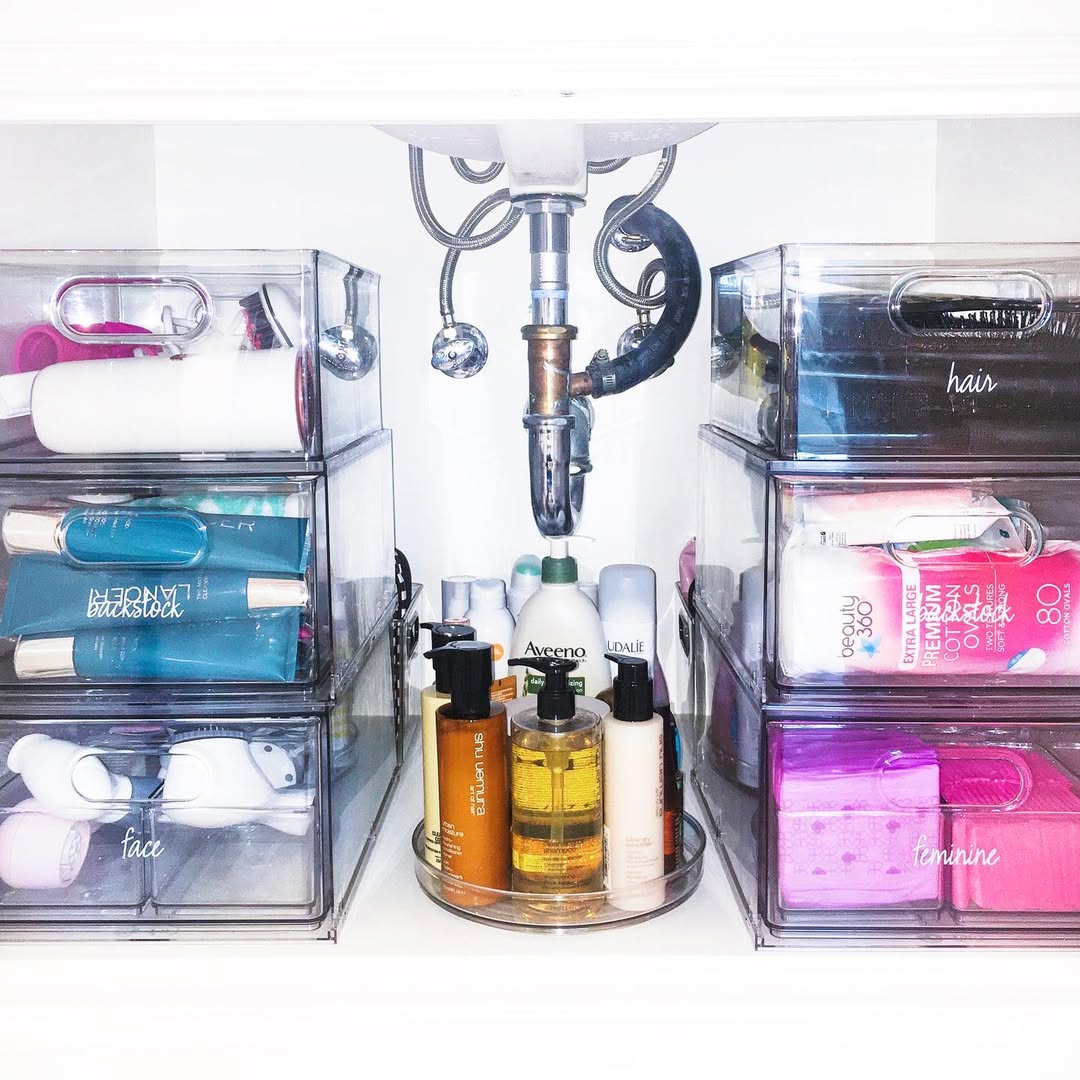
11. Streamlined Tiered Storage
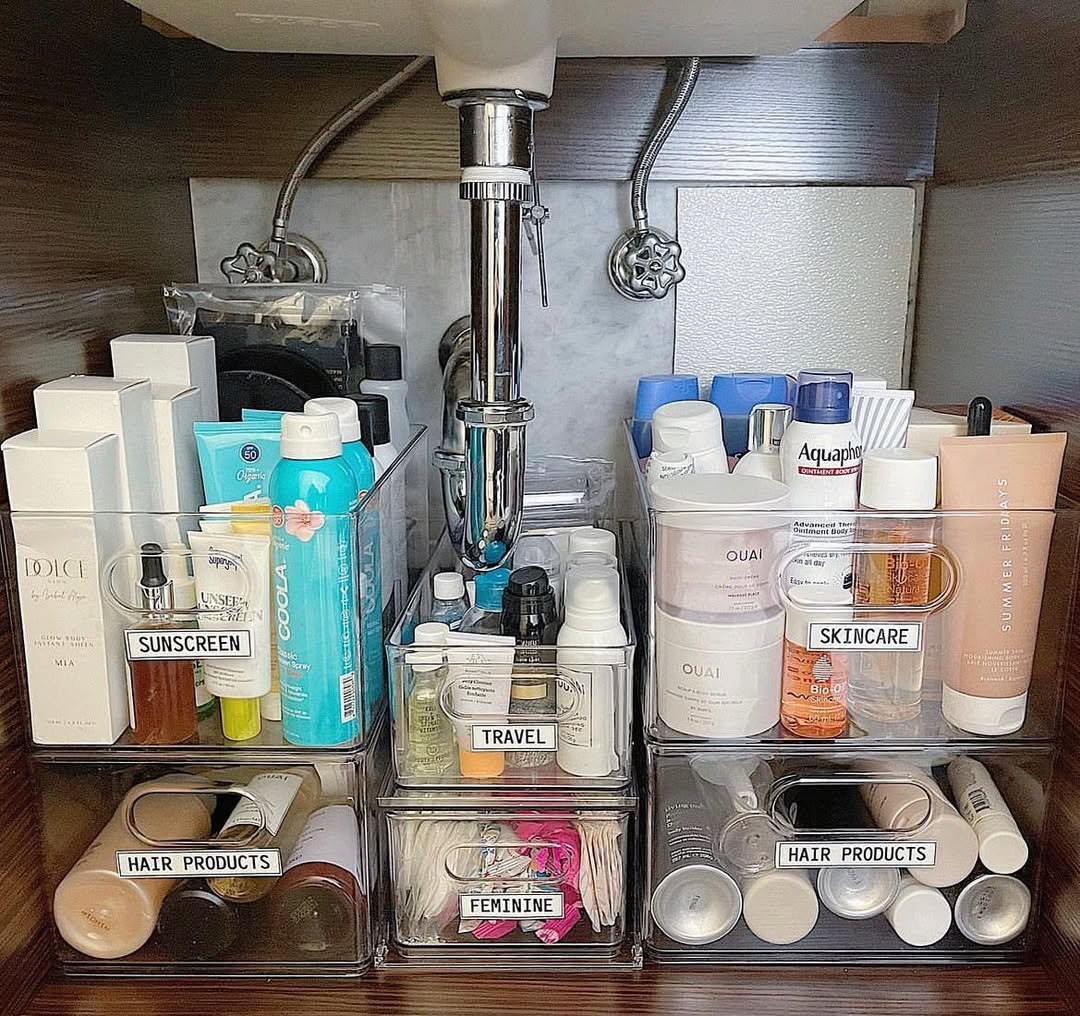
Tiered containers separate smaller items so nothing gets buried. In narrow cabinets, this setup adds layers without taking extra width.
A rotating tray in the center works well for taller bottles. It keeps everything accessible and makes the space feel more organized in daily use.
Keep spacing between tiers comfortable. If it feels tight, you will stop using the upper levels.
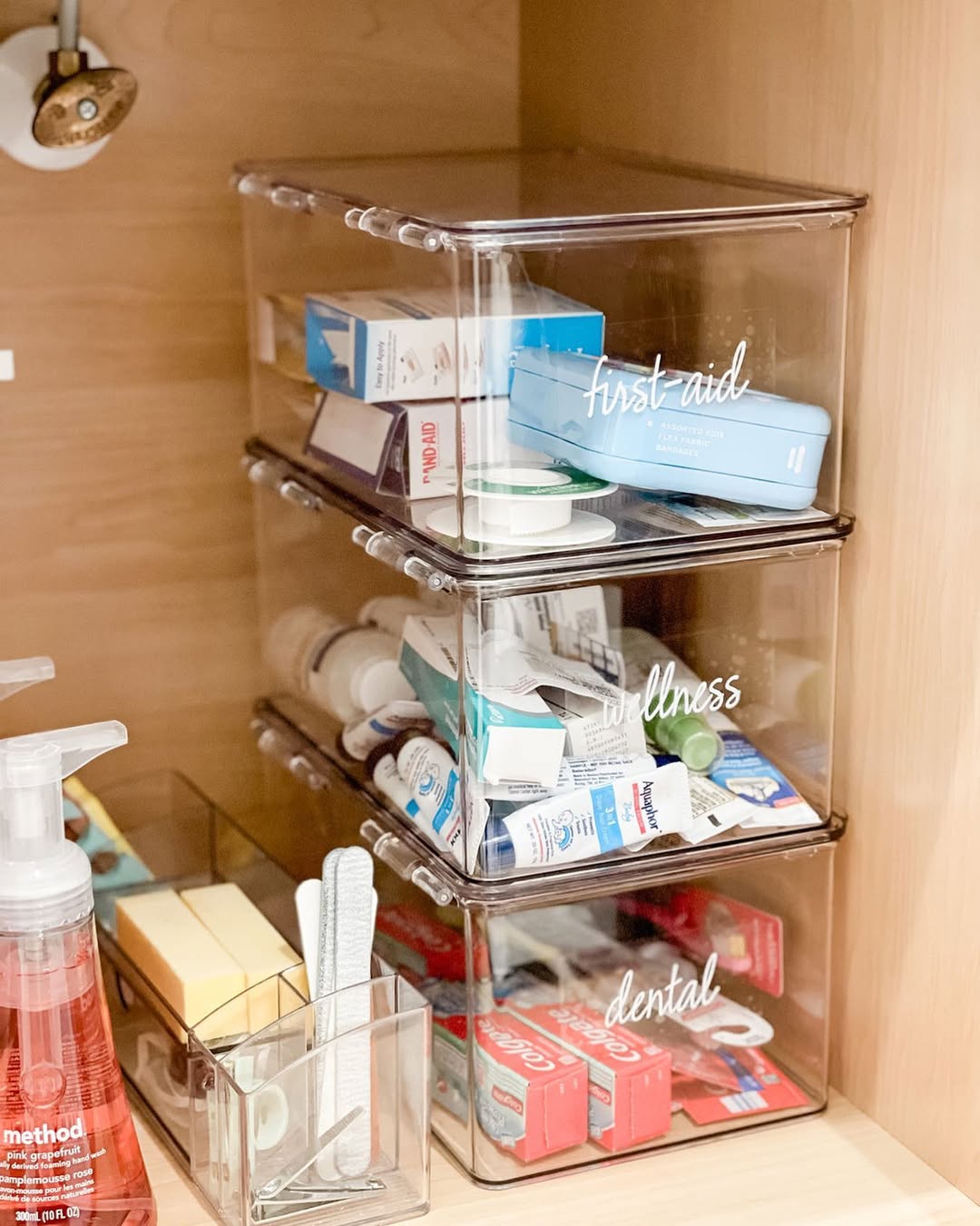
12. Medical Essentials in Clear Drawers
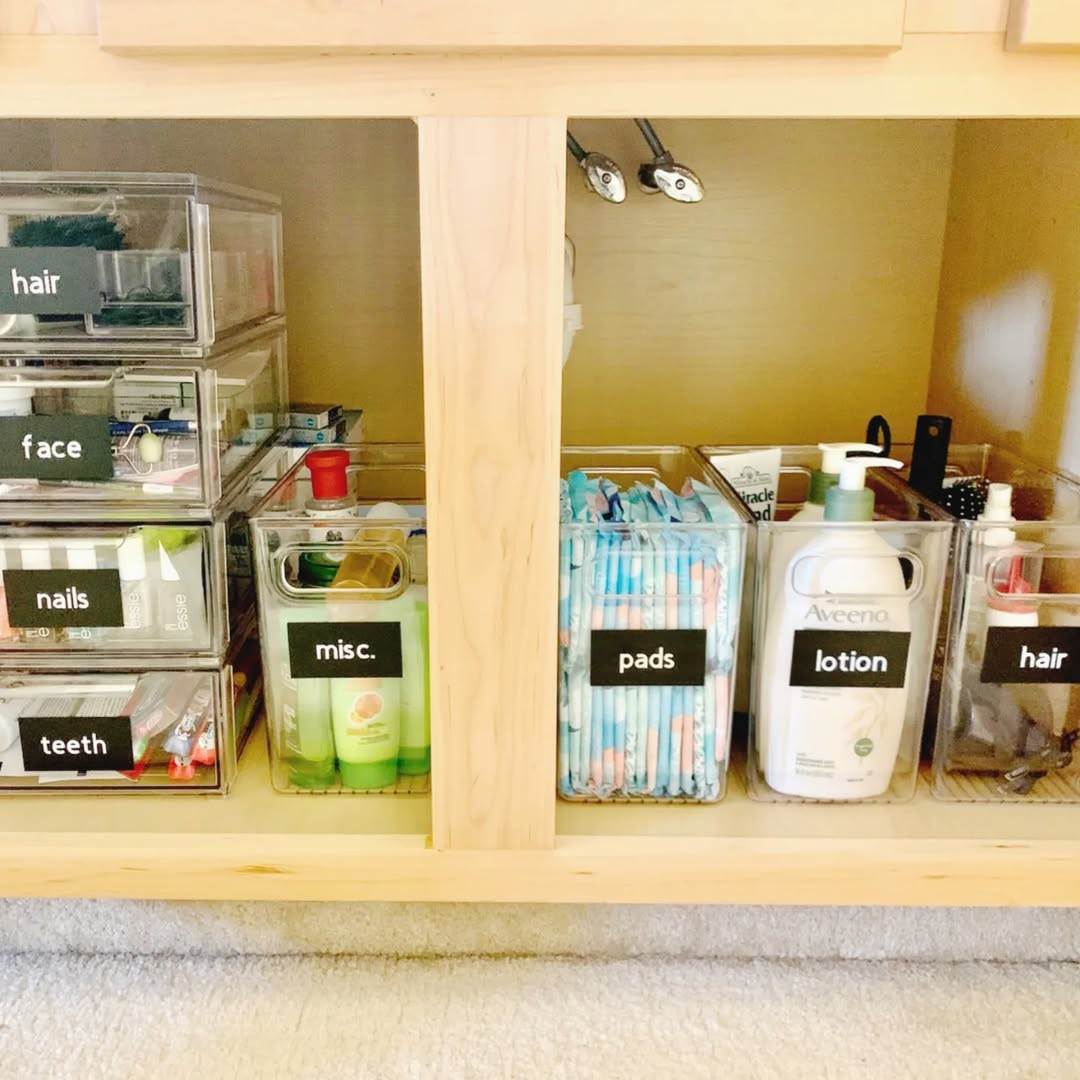
Clear drawers keep medical items visible and easy to find, which matters in urgent moments. Late night searches become much quicker.
Labeling sections like dental or allergy keeps everything sorted. This reduces duplicates and helps the space stay organized over time.
Avoid overpacking one drawer. When items are too tight, it becomes harder to grab what you need quickly.
13. Open Shelving with Labeled Bins
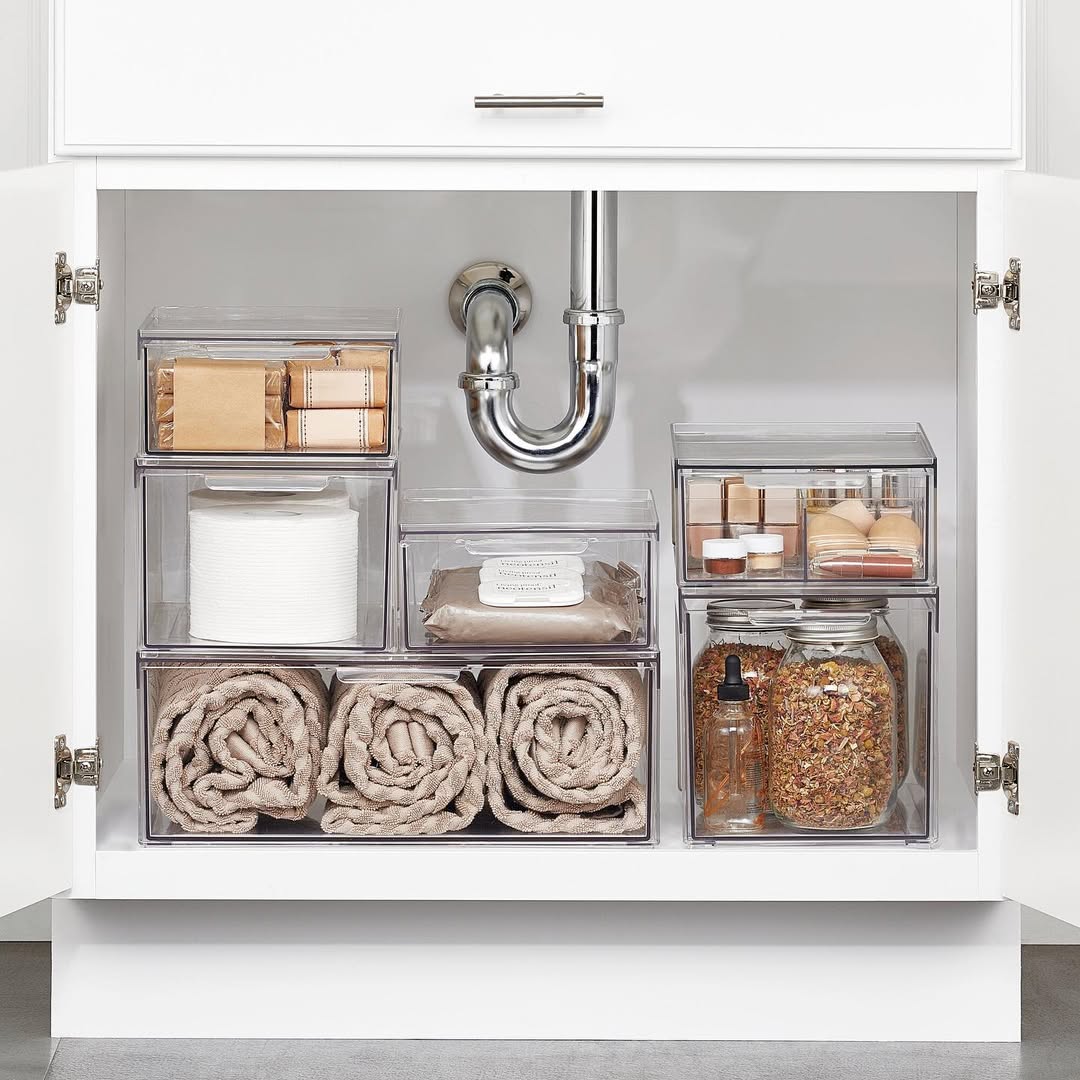
Open shelving with labeled bins creates a clean and structured look, even in small cabinets. It works well when the interior is visible or frequently accessed.
Keeping categories broad makes the system easier to maintain. This prevents constant rearranging and keeps the setup feeling effortless long term.
Stick to consistent bin sizes. Mixed proportions can make the shelf look cluttered again.
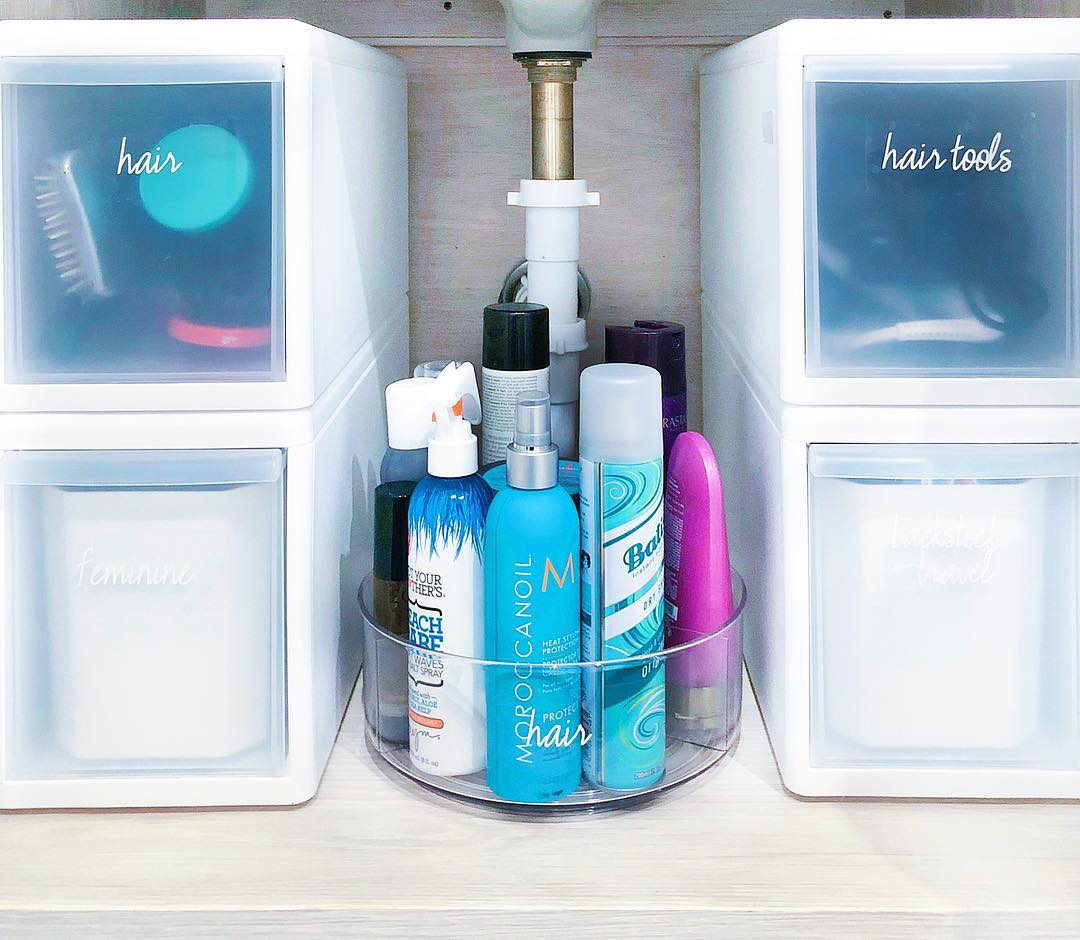
14. Compact Corner Organizers
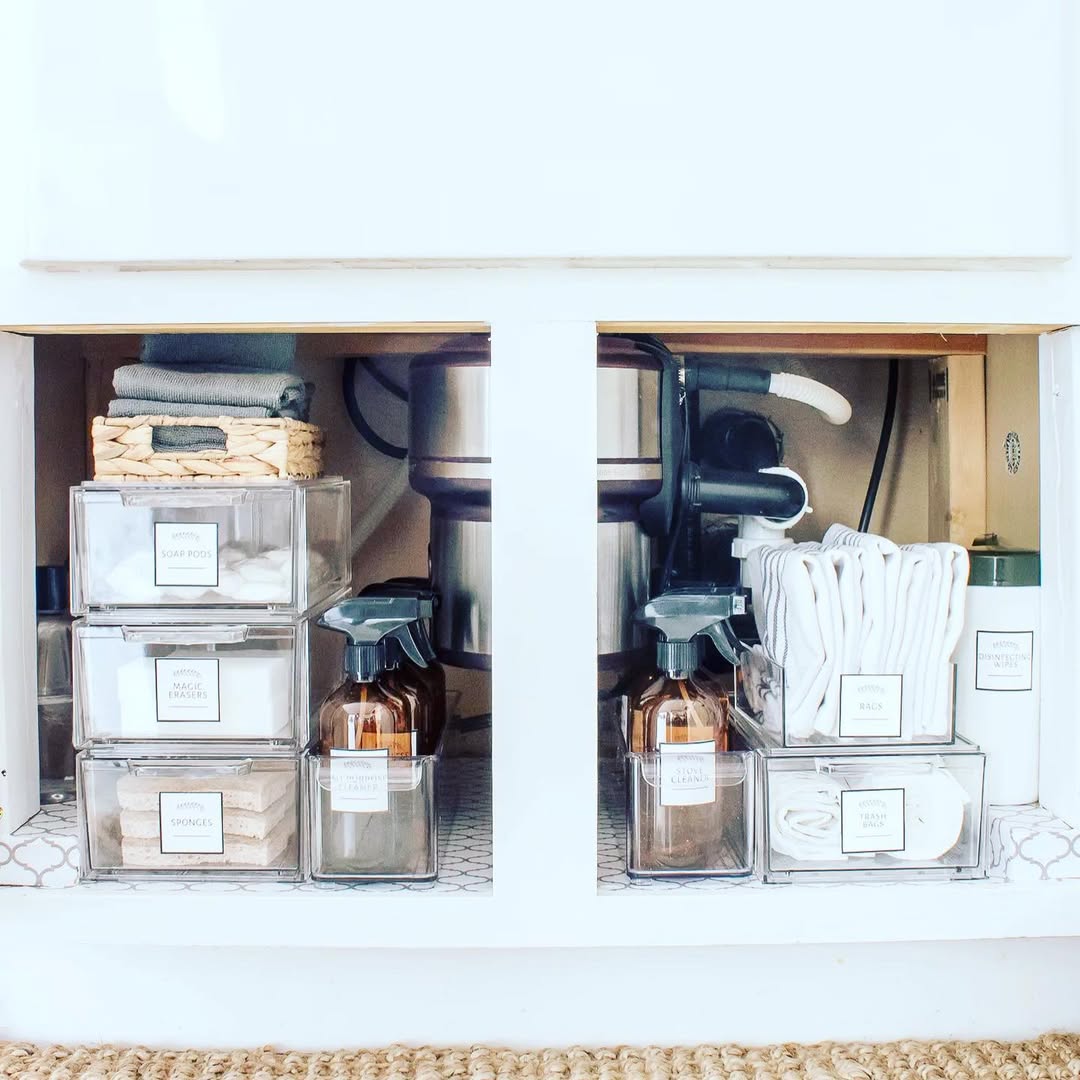
Corner organizers help you use space that usually gets ignored, especially around curved pipes or tight edges. This makes small cabinets more efficient.
Combining frosted bins with a small rotating tray balances privacy and access. You get a setup that feels neat without hiding everything.
Keep the corner light. Overloading it makes access harder and defeats the purpose.
15. See-Through Skincare Sanctuary
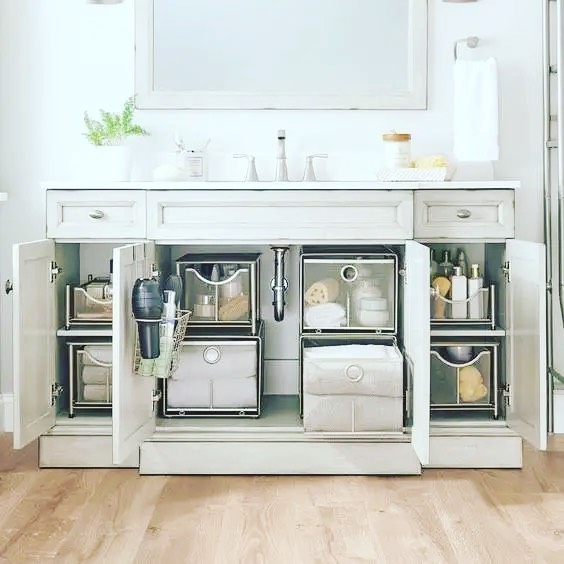
Clear drawers create a store like view of your products, which works well in cabinets with limited lighting. You can quickly see what you have.
Separating daily items from backups keeps things intentional. This makes the space easier to manage and reduces overbuying.
Clean the drawers regularly. Clear surfaces show dust faster than solid bins.
16. Streamlined Cleaning Supplies
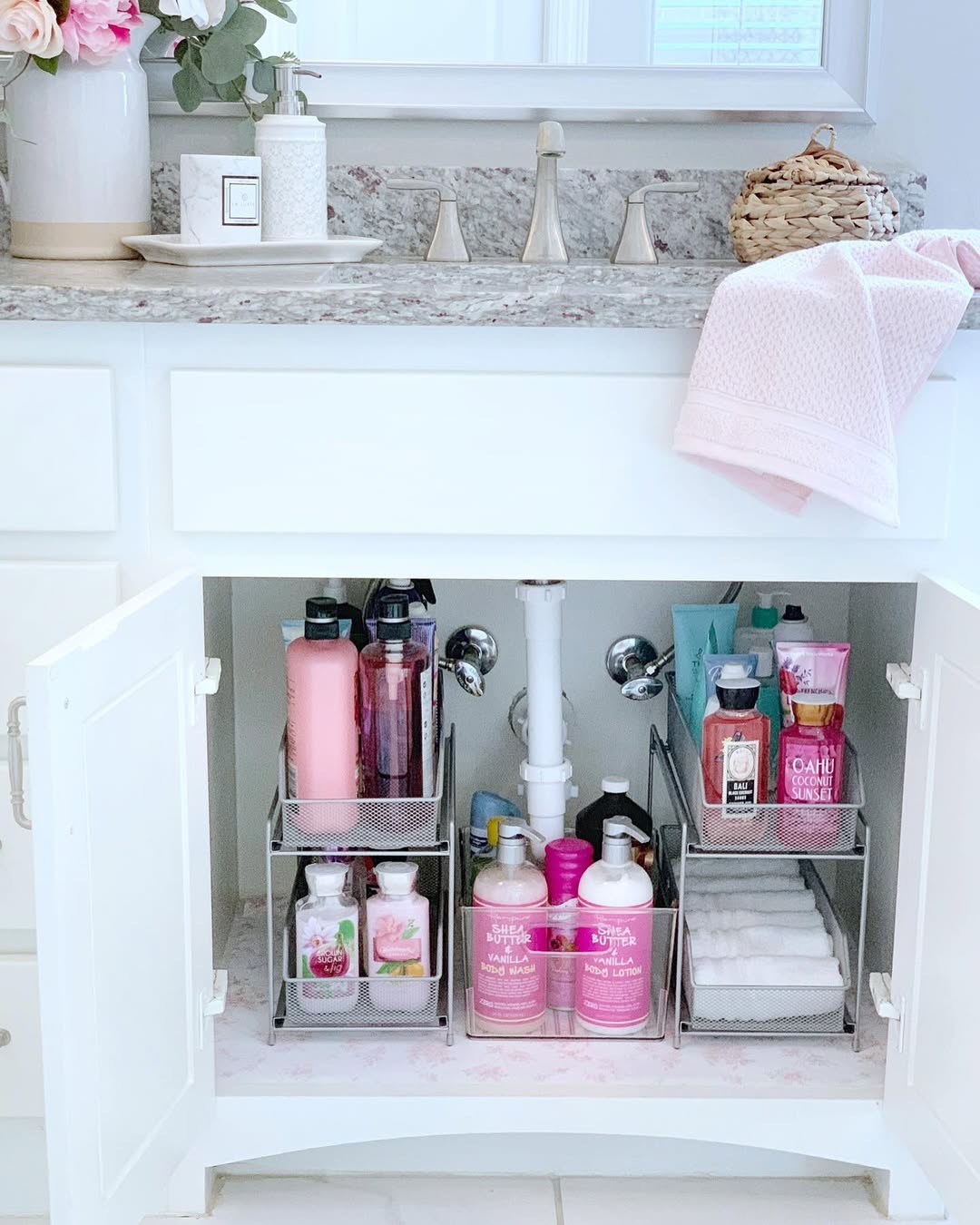
Switching to uniform bottles creates a more organized and refined look, even for cleaning supplies. It helps the cabinet feel less chaotic.
Sorting pods, cloths, and tools into drawers keeps items from rolling around. This makes the setup more stable and easier to maintain.
Use leak proof bottles. Small spills under the sink can go unnoticed and create mess over time.
17. Plush Bath Towel Storage
Rolling towels saves space and helps them fit better in tighter cabinets. It also makes stacking more flexible than folding.
Adding jars for bath salts or soaps keeps everything coordinated. This turns the space into a more relaxed and styled storage area.
Do not stack towels too tightly. They need a bit of air to avoid holding moisture.
18. Thoughtful Categories for Daily Needs
Clear categories make it easier to find things without thinking, especially in shared bathrooms. In smaller cabinets, this reduces overlap and keeps daily items from mixing together.
Separating hair, nails, and dental into their own spots creates a simple system. It helps your routine move faster without searching or guessing.
Keep labels short and obvious. Over labeling can slow you down instead of helping.
19. Pull-Out Drawers for Everything
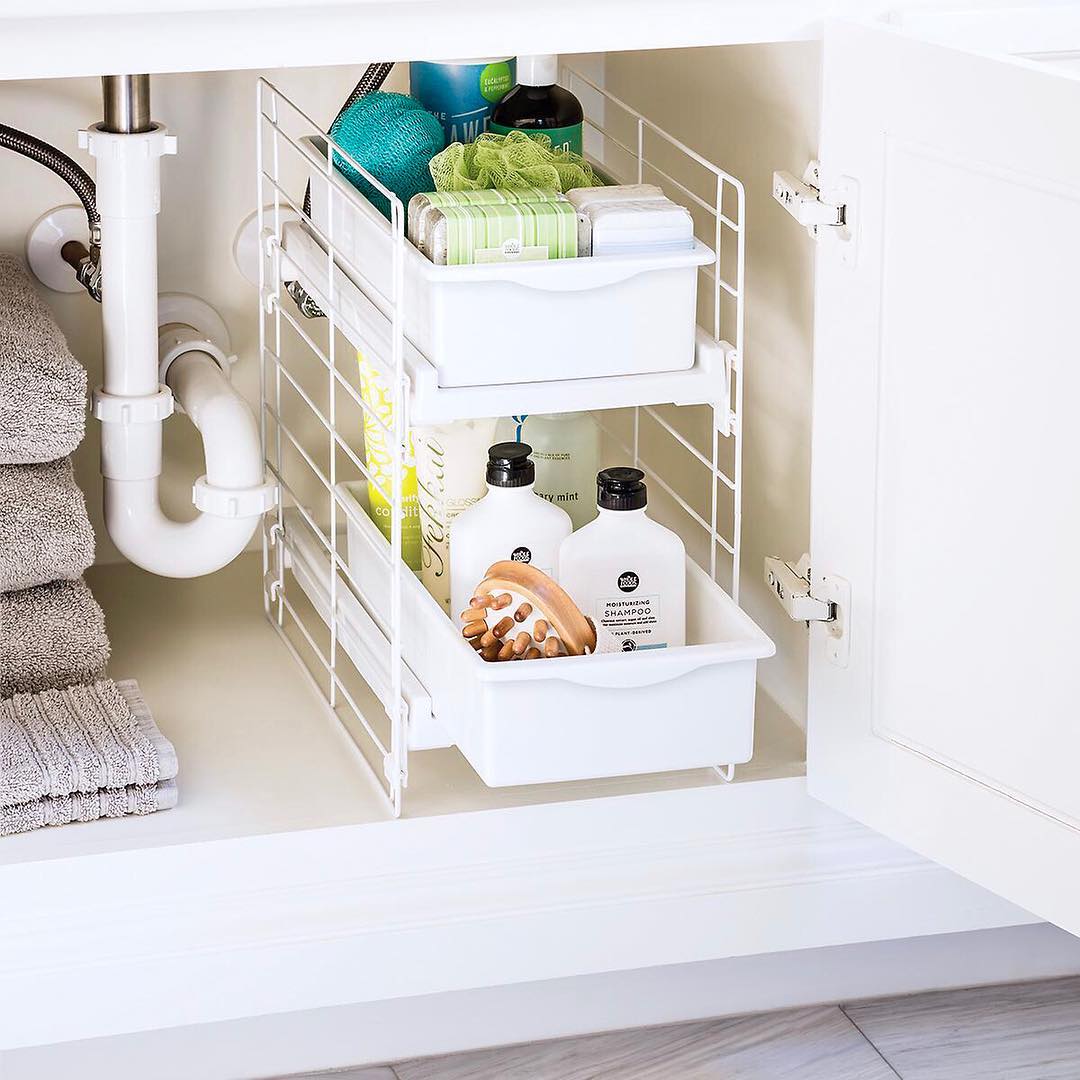
Pull out drawers bring items forward, which helps in deep cabinets where reaching the back feels awkward. You can access everything without bending too much.
Using the top for smaller items and the bottom for bulkier ones keeps weight balanced. This makes the setup smooth and easy to use daily.
Check drawer height before installing. Taller bottles can block movement if space is too tight.
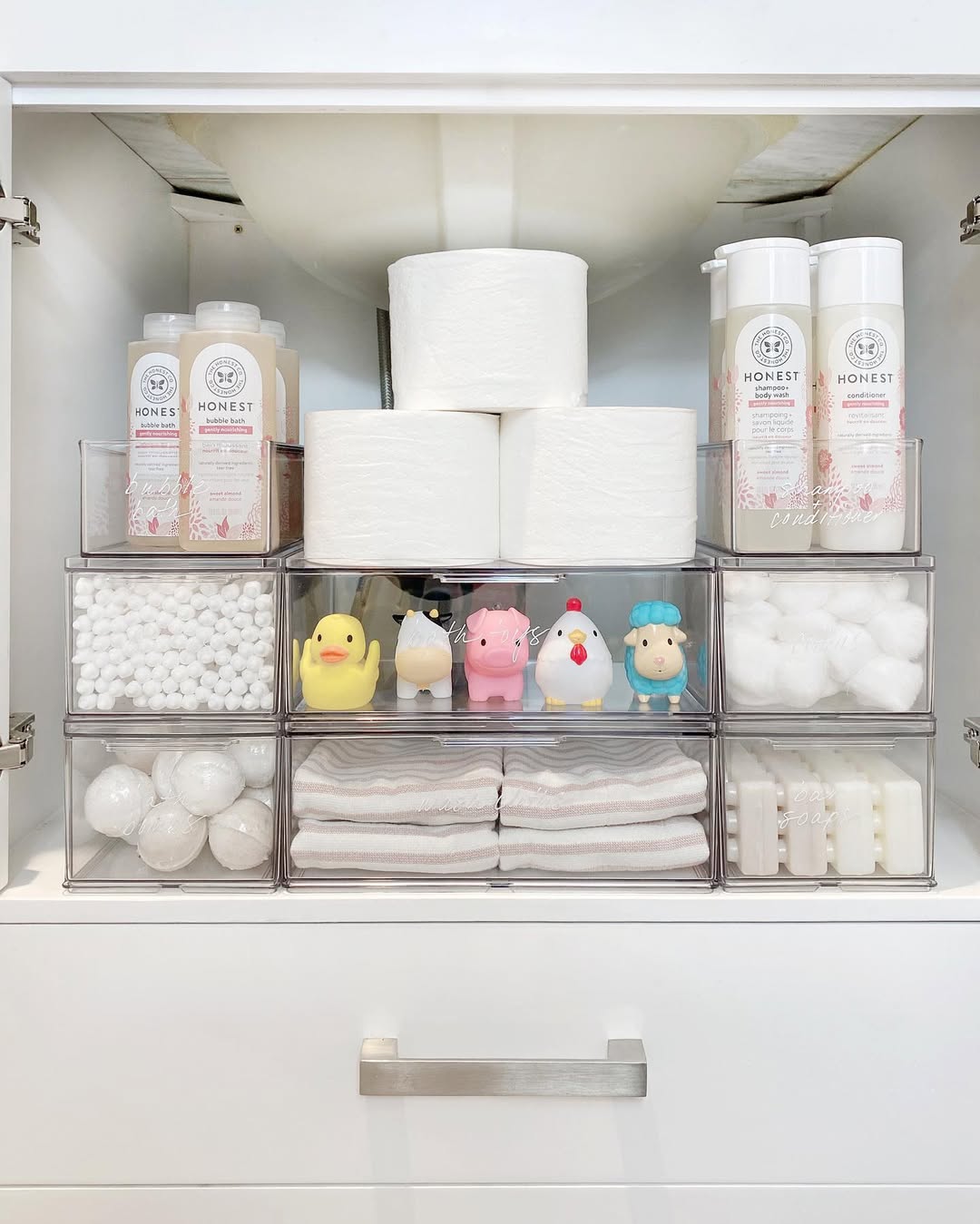
20. Playful Family Bathroom Storage
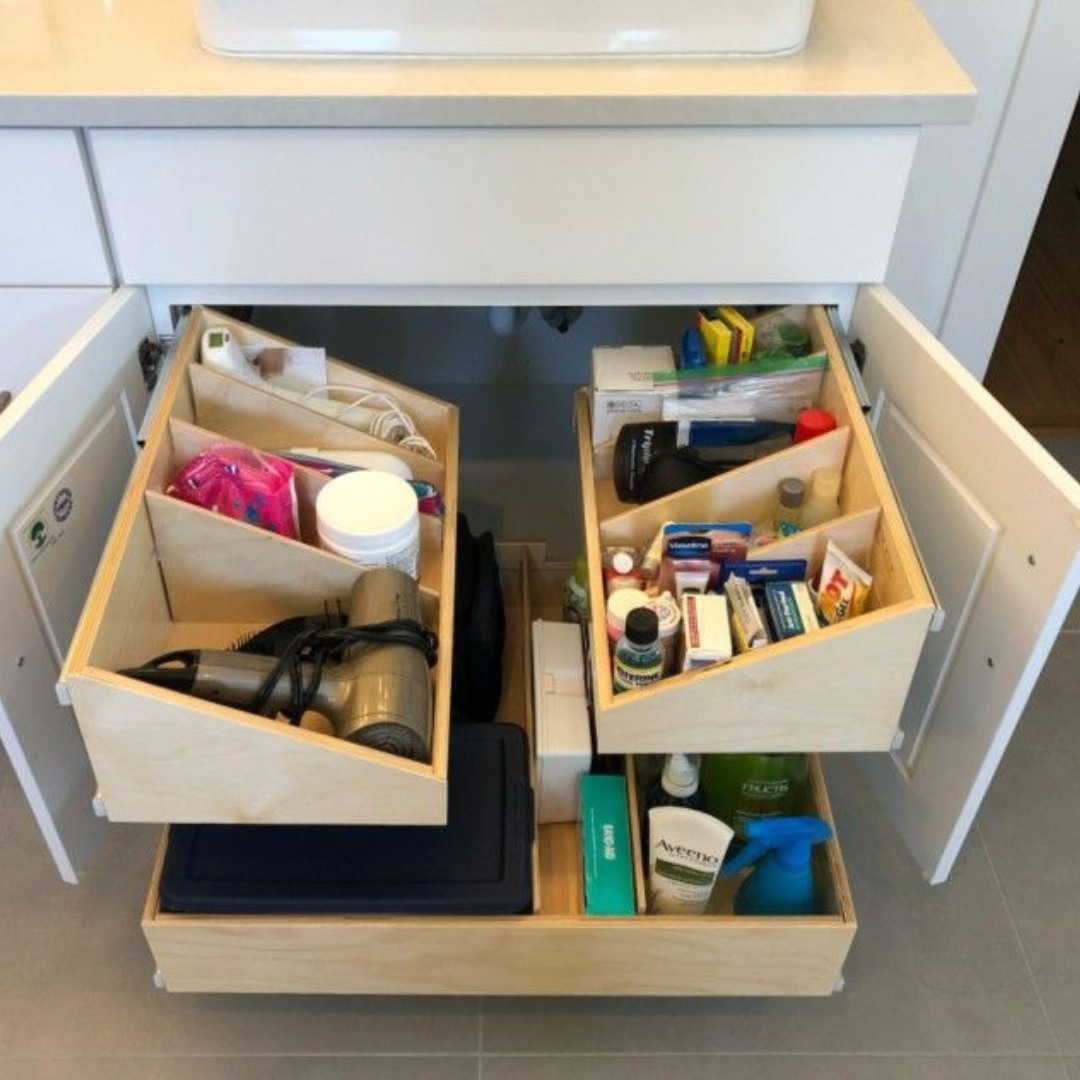
Clear bins help keep toys contained, which matters in busy family bathrooms with limited space. Kids can see where things go, making cleanup easier.
Adding a bit of color or fun elements keeps the space inviting. This encourages kids to put things back instead of leaving them scattered.
Avoid overfilling bins. When they get too full, kids stop using them properly.
21. Layered Bins with Rustic Labels
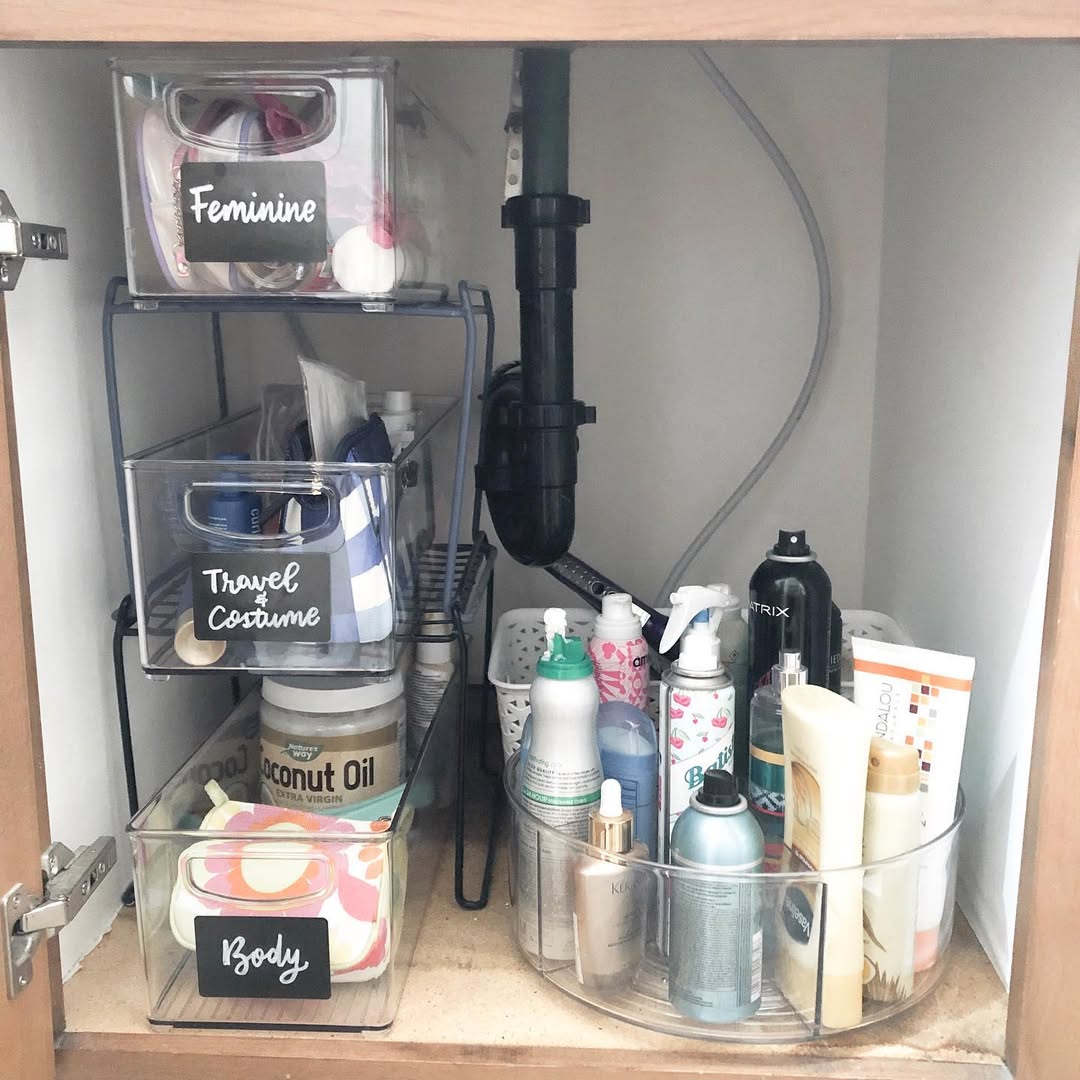
Stacked bins make use of the space above plumbing, which often goes unused. This works well in cabinets with uneven layouts.
Combining clear bins with wood labels keeps things clean but adds warmth. The setup feels organized without looking too plain.
Keep heavier items on the bottom. It prevents the stack from feeling unstable.
22. Essential Oils and Herbal Accents
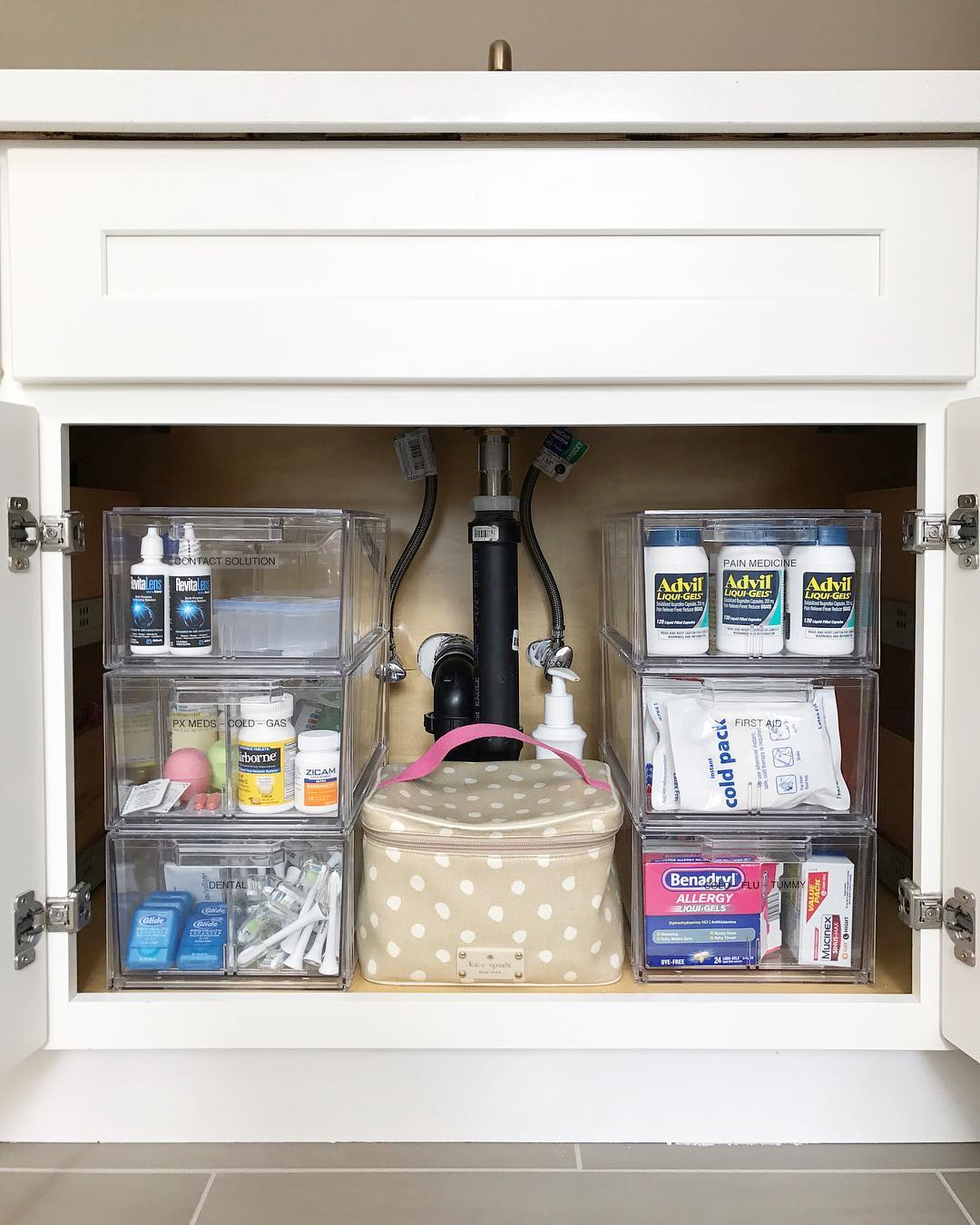
Adding scent elements creates a more pleasant cabinet experience, especially in closed spaces with limited airflow. It keeps things from feeling stale.
Placing oils or sachets near towels spreads a light fragrance. This makes the cabinet feel more intentional and less purely functional.
Use mild scents only. Strong ones can become overwhelming in a small enclosed space.
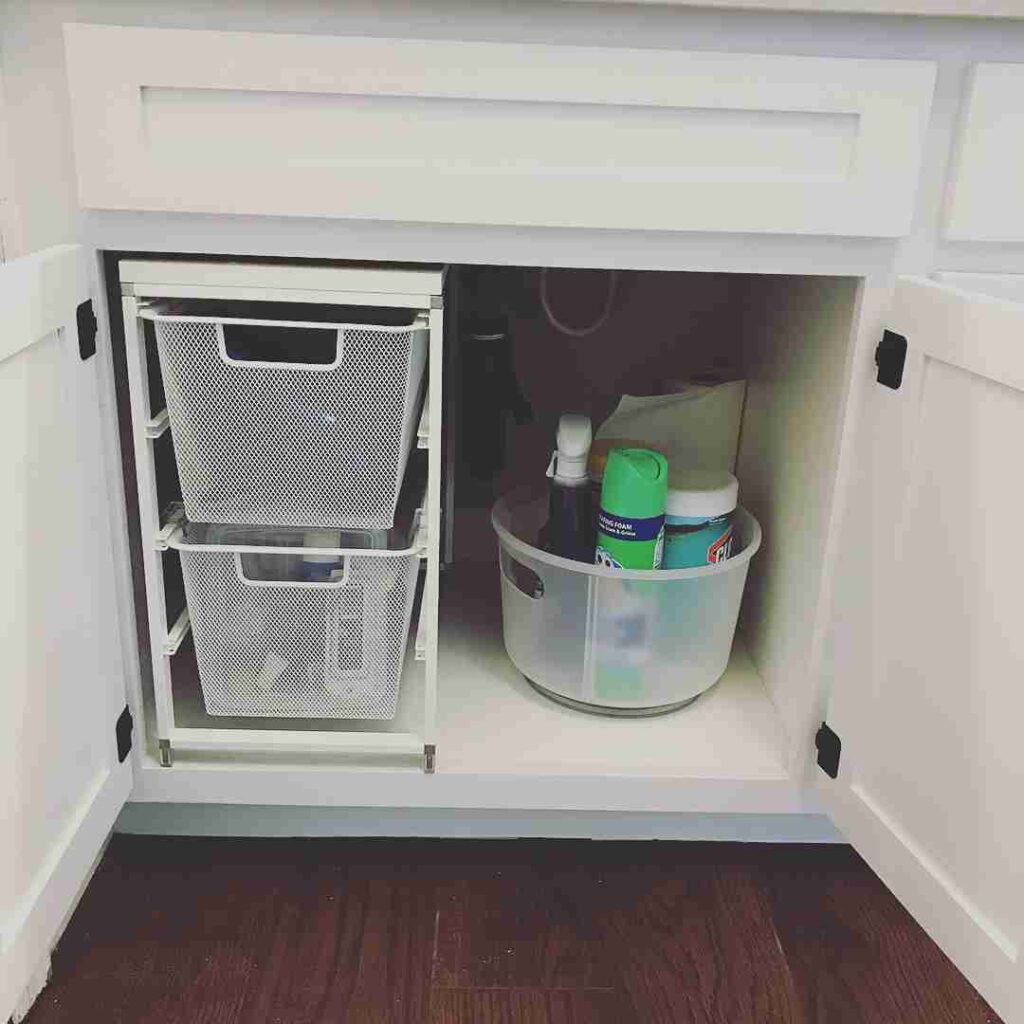
23. Minimalist Cleaning Under the Sink
A simple setup with one main bin works well in small or low height cabinets. Fewer containers make it easier to maintain.
Keeping sprays together and cloths separate reduces clutter. This approach keeps the space clean without constant organizing.
Avoid adding extra bins later. That slowly breaks the simplicity that makes this work.
24. Multi-Tiered Corner Shelving
Corner shelves turn unused areas into storage, especially around pipes. This helps in tight cabinets where every inch matters.
Using multiple tiers keeps smaller items visible. Nothing gets lost, and the space feels more open and usable.
Choose clear shelves if the lighting is low. Dark corners can hide items quickly.
25. Smartly Divided Cleaning Zone
Divided bins keep small items from sliding around, which helps in cabinets that get opened and closed often. Everything stays in place.
Separating sponges, cloths, and pods creates a tidy system. This makes cleaning supplies easier to grab without sorting through a pile.
Pick dividers that fit snugly. Loose ones shift and reduce the benefit.
FAQs
How do I organize under a bathroom sink with pipes in the way?
Work around the pipes instead of fighting them. Use stackable bins, corner shelves, or custom-cut drawers to fit the layout. This helps you use awkward gaps without blocking access, making the space easier to manage daily.
What should I store under my bathroom sink?
Keep items you use often, like cleaning supplies, skincare backups, and towels. In smaller cabinets, limiting storage to essentials helps prevent clutter from building up quickly and keeps everything accessible.
How can I keep under sink storage from getting messy again?
Stick to simple categories and avoid overfilling bins. When each item has a clear place, it is easier to maintain. A quick reset once a week helps keep things from piling up again.
Are clear bins better than opaque ones?
Clear bins work well in low light or deep cabinets because you can see everything instantly. Opaque bins hide clutter better, but they can slow you down when searching for items.
How do I maximize space in a small under-sink cabinet?
Use vertical storage, pull-out drawers, and corner organizers to make the most of tight layouts. This helps you use every inch without overcrowding, keeping the cabinet functional and easy to use
Discover More Storage Solutions
• Hallway Organization Tips
• DIY Garage Organization Ideas
• Entryway Organization Hacks
• Basement Organization Tips