How to Clean Grease Off Cabinets Without Damage

This post contains affiliate links, and we will be compensated if you buy after clicking on our links. Read our disclaimer.
Read our editorial process
Kitchen cabinets take a lot of abuse. Steam, cooking oil, and everyday use slowly leave behind a sticky layer that seems impossible to remove. If you’ve ever wiped a cabinet door only to find it still feels greasy, you’re definitely not alone.
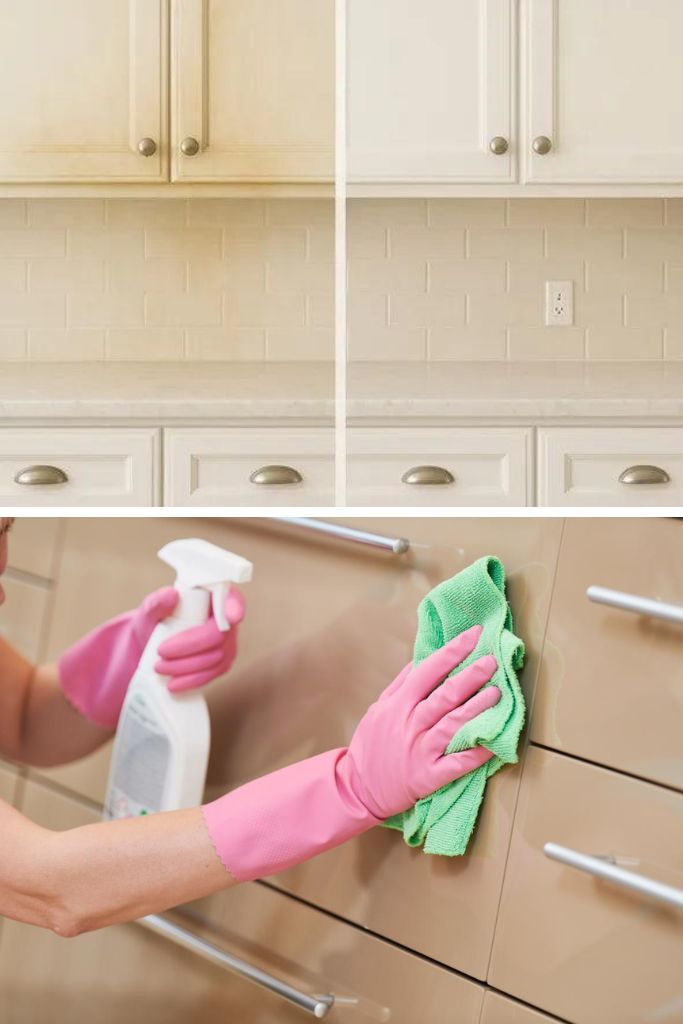
Learning how to clean grease off cabinets can save your kitchen from looking dull and dirty. The tricky part is that greasy kitchen cabinets need the right cleaning method.
Using the wrong product can damage paint, strip wood finishes, or leave streaks behind. A good kitchen cabinet cleaner should remove grease without harming the surface.
In this guide, you’ll learn which cleaners actually work, when vinegar is safe to use, and how to clean wood and painted cabinets properly.
You’ll also discover simple habits that help stop grease from building up again.
With a few basic tools and the right method, your cabinets can look fresh again without hours of scrubbing.
Gather the Right Cleaning Supplies Before You Start
Before you start scrubbing, make sure you have the right tools. Using harsh products often causes more damage than the grease itself.
For most cabinets, you only need a few simple supplies:
- Microfiber cloths
- Warm water
- Mild dish soap
- Spray bottle
- Soft sponge
- Baking soda
- Soft toothbrush
- Dry towel
How to Clean Grease Off Cabinets Step by Step
If your cabinets feel sticky or look dull, don’t reach for harsh chemicals right away. In most cases, warm water and dish soap can remove grease safely without damaging the finish.
Step 1: Remove Dust and Loose Dirt
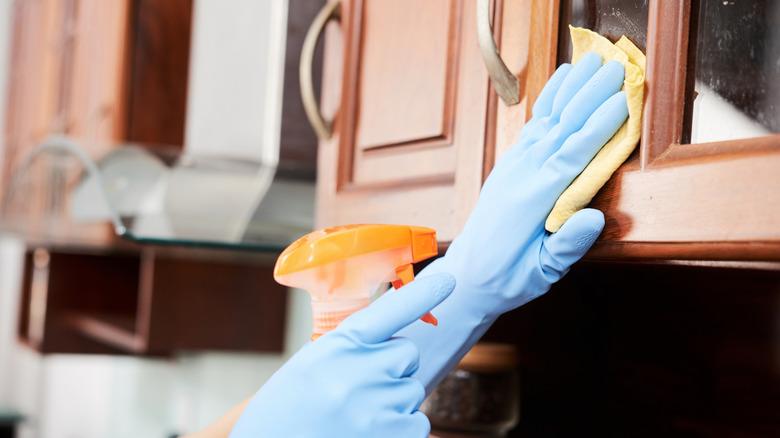
Before using any cleaner, wipe the cabinets with a dry microfiber cloth. Dust often sticks to grease, creating a grimy layer that can scratch surfaces during cleaning.
Pay close attention to cabinet edges, handles, and corners. These areas tend to collect more dirt over time.
Step 2: Mix a Gentle Cleaning Solution
Fill a bowl or spray bottle with warm water and add a few drops of mild dish soap. Stir gently until the soap mixes with the water.
Professional cleaners often recommend dish soap because its surfactants break down oil molecules and help lift grease from surfaces. According to cleaning experts at The Spruce, dish soap remains one of the safest options for routine cabinet cleaning.
Step 3: Wipe Cabinets From Top to Bottom
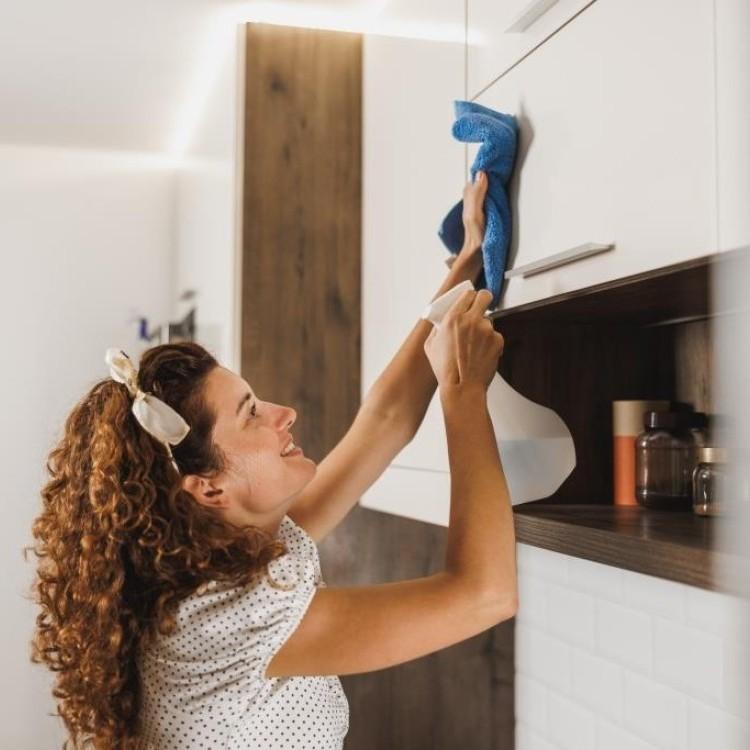
Dip a microfiber cloth into the solution and wring it out well. The cloth should be damp, not soaking wet.
Start cleaning at the top of the cabinets and work downward. This prevents dirty water from dripping onto areas you’ve already cleaned.
If you’re trying to remove grease from kitchen cabinets, use gentle circular motions rather than scrubbing aggressively. A little patience often works better than force.
Step 4: Let the Cleaner Sit Briefly
For stubborn spots, let the cleaning solution sit on the grease for one to two minutes. This gives the soap time to loosen oily residue.
Avoid leaving moisture on wood surfaces for too long. Extended exposure to water can damage some finishes.
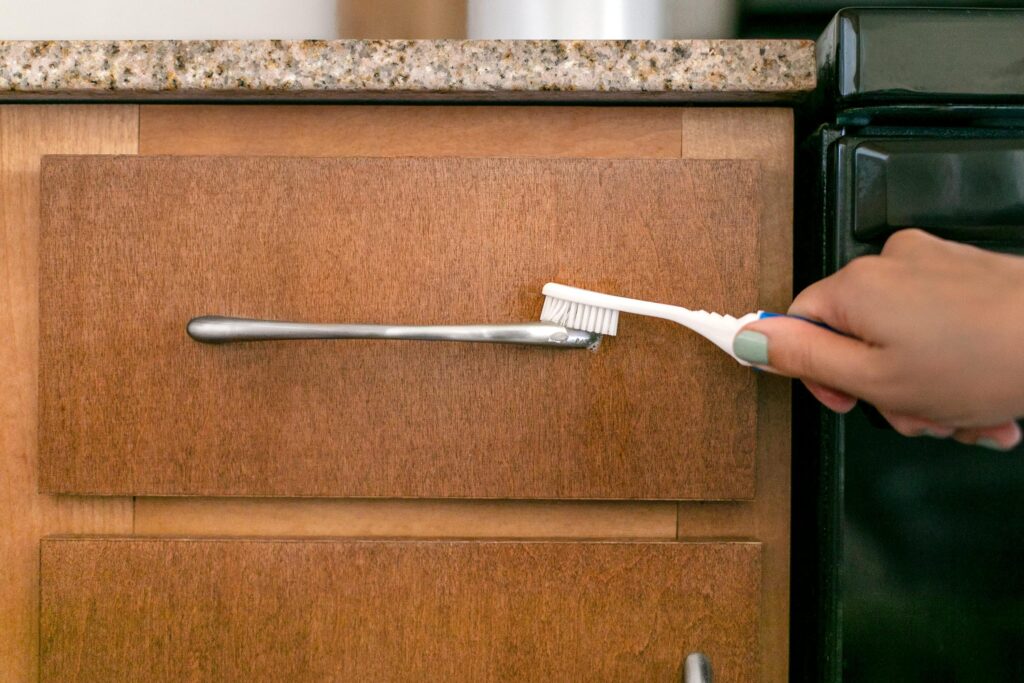
Step 5: Use a Soft Brush for Crevices
Grease often hides around hardware and decorative grooves. Use a soft toothbrush to clean these hard-to-reach areas.
Work gently around hinges and corners to avoid scratching the finish.
Step 6: Rinse Away Residue
Wipe the surface again with a clean cloth dampened with plain water. This removes leftover soap and prevents streaks.
Cleaning experts at Real Simple recommend removing cleaner residue completely to keep cabinet surfaces looking their best.
Step 7: Dry Immediately
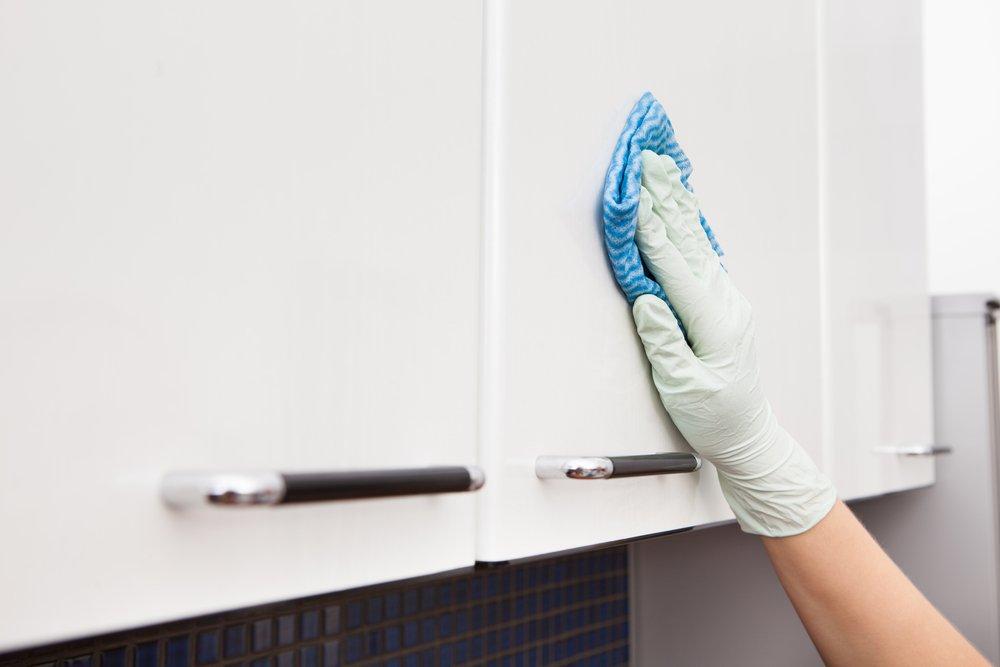
Use a dry towel or microfiber cloth to dry the cabinets right away. This step is especially important for wood cabinets.
Knowing how to clean grease off cabinets properly helps protect the finish and keeps your kitchen looking fresh. These simple cabinet cleaning hacks can make a big difference when grease starts to build up.
How to Remove Sticky Grease From Wood Cabinets
Wood cabinets add warmth and beauty to a kitchen, but they need extra care during cleaning. Using the wrong product can damage the finish or even cause the wood to swell.
Start with the gentlest cleaner first. Warm water mixed with a small amount of dish soap is usually enough for light grease. Dampen a microfiber cloth and wipe the surface carefully.
Never soak wood cabinets. Excess moisture can seep into joints and edges, causing warping over time. Experts at Southern Living recommend using as little water as possible when cleaning finished wood.
If grease remains, make a paste using baking soda and water. Apply it lightly to stubborn areas and wipe gently with a soft cloth. Test any cleaner in a hidden spot first to make sure it doesn’t affect the finish.
Hardware often traps grease, too. Remove knobs if possible and clean them separately using warm, soapy water.
Harsh chemicals, bleach, and abrasive pads can strip protective coatings from wood. That’s why choosing the right cabinet cleaner for wood matters.
Regular wood cabinet cleaning prevents buildup from becoming harder to remove later. If you have greasy wood cabinets, a quick monthly wipe down can help preserve their appearance and extend their lifespan.
Can You Use Vinegar on Kitchen Cabinets?
Vinegar is a popular homemade cleaner, but it isn’t always the right choice for every cabinet surface.
Vinegar can work well on laminate cabinets, painted cabinets, and light grease buildup. Its acidity helps dissolve some residue and remove fingerprints.
However, vinegar is not ideal for natural wood finishes or unsealed cabinets. Acidic cleaners may slowly wear down certain protective coatings over time. They can also damage nearby stone surfaces such as marble or granite.
Experts frequently caution against using acidic cleaners on sensitive materials. According to advice shared by Southern Living, homeowners should test any cleaner on a hidden spot before cleaning an entire surface.
For light grease, try this simple homemade cabinet cleaner:
- 1 cup warm water
- 1 cup white vinegar
- 1 teaspoon dish soap
Mix the ingredients in a spray bottle and shake gently. Spray onto a cloth rather than directly onto the cabinets. This helps prevent excess moisture from getting into seams.
When using vinegar for cabinets, moderation matters. It can be useful for some surfaces, but it isn’t a universal solution. A gentle kitchen cabinet cleaner designed for your cabinet material is often the safest choice.
Best Degreasers for Kitchen Cabinets in 2026
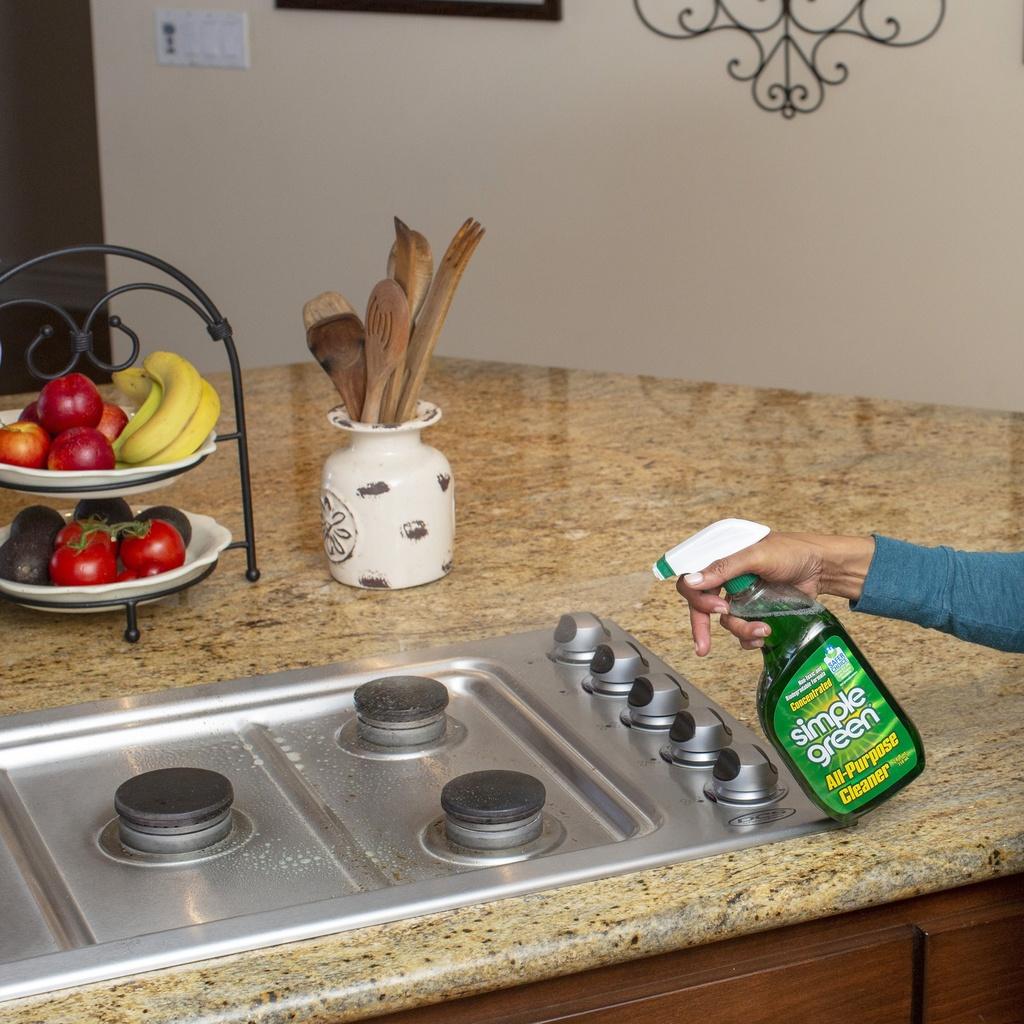
Sometimes dish soap alone isn’t enough. If grease has built up over months or even years, you may need a stronger cleaner. The key is choosing one that is safe for your cabinet material.
When shopping for a degreaser for cabinets, always read the label first. Some products work well on painted or laminate cabinets but may damage natural wood finishes.
Here are a few cleaners that are widely recommended for kitchen use:
- Simple Green All Purpose Cleaner
- Krud Kutter Kitchen Degreaser
- ECOS plant-based cleaners
- EPA Safer Choice certified products
These cleaners are designed to cut through grease while being gentler on household surfaces. Still, it is always smart to test a small hidden area before cleaning an entire cabinet door.
The U.S. Environmental Protection Agency operates the Safer Choice program, which certifies products that meet safety and performance standards. According to the EPA, more than 2,000 products now carry the Safer Choice label, giving consumers safer cleaning options.
Remember that the best cabinet cleaner depends on your cabinet material and the amount of grease buildup. A heavy-duty degreaser may work well for stubborn grime, while mild cleaners are often enough for regular maintenance.
No kitchen cabinet cleaner is perfect for every situation. Starting with the gentlest option first is usually the safest approach.
Cleaning Mistakes That Damage Cabinets
Cleaning cabinets seems simple, but small mistakes can shorten their lifespan. Some cleaning methods remove grease while also damaging the finish.
Avoid these common cabinet cleaning mistakes:
❌ Using bleach
❌ Scrubbing with steel wool
❌ Using Magic Erasers too aggressively
❌ Leaving water on surfaces
❌ Applying harsh degreasers without testing
❌ Skipping the drying step
Bleach can discolor painted surfaces and weaken some finishes. Steel wool may leave scratches that are difficult to repair. Even products marketed as powerful cleaners can be too harsh for delicate cabinet materials.
Experts often recommend testing any cleaner in a hidden spot first. According to advice from The Washington Post, testing products before full use can help prevent costly damage.
Water is another common problem. Letting moisture sit on cabinet surfaces may lead to swelling, peeling, or warping over time.
Good wood cabinet care is about cleaning gently and consistently. The goal is to remove grease while preserving the cabinet finish. If your greasy cabinets need frequent cleaning, regular maintenance is often safer than aggressive scrubbing.
How to Prevent Grease Buildup on Cabinets
The easiest grease to clean is the grease that never builds up in the first place. A few simple habits can save you hours of scrubbing later.
Try these easy maintenance tips:
- Wipe cabinet doors once a week.
- Clean areas near the stove more often.
- Use your range hood whenever cooking.
- Replace range hood filters as recommended.
- Deep clean cabinets every three to six months.
Ventilation makes a big difference. Range hoods pull grease and steam out of the air before they settle on surfaces. If your kitchen lacks ventilation, grease buildup may happen much faster.
Cleaning experts note that grease becomes harder to remove as it oxidizes and hardens. According to cleaning guidance shared by Allrecipes, regular maintenance is far easier than removing old, hardened residue.
Building a cleaning routine does not have to take much time. A quick wipe down after cooking can help prevent greasy cabinets and keep your kitchen looking fresh.
Simple cabinet maintenance habits also protect finishes and extend the life of your cabinets. These small kitchen cleaning tips may save you money on repairs or refinishing in the future.
Conclusion
Grease buildup is a normal part of having a busy kitchen, but it does not have to become a permanent problem. The right cleaning method can remove sticky residue while protecting your cabinet finish.
Dish soap remains one of the safest places to start. Match the cleaner to your cabinet material, avoid harsh chemicals, and dry surfaces thoroughly after cleaning. Regular maintenance also prevents grease from becoming harder to remove later.
Start small today.
Pick one cabinet door near the stove and give it a quick cleaning. Once you see the difference, creating a weekly routine becomes much easier.
Browse More Kitchen Care Guides
• How to Paint Kitchen Cabinets
• How to Organize Kitchen Cabinets
• How to Organize Kitchen Cabinets Layout
• How to Decorate Above Cabinets