Looking For Above Kitchen Cabinet Decor? These Ideas Elevate the Space

This post contains affiliate links, and we will be compensated if you buy after clicking on our links. Read our disclaimer.
Read our editorial process
You might think the space above your kitchen cabinets doesn’t matter much. Most of the time, it ends up collecting dust or random items you forgot were even there.
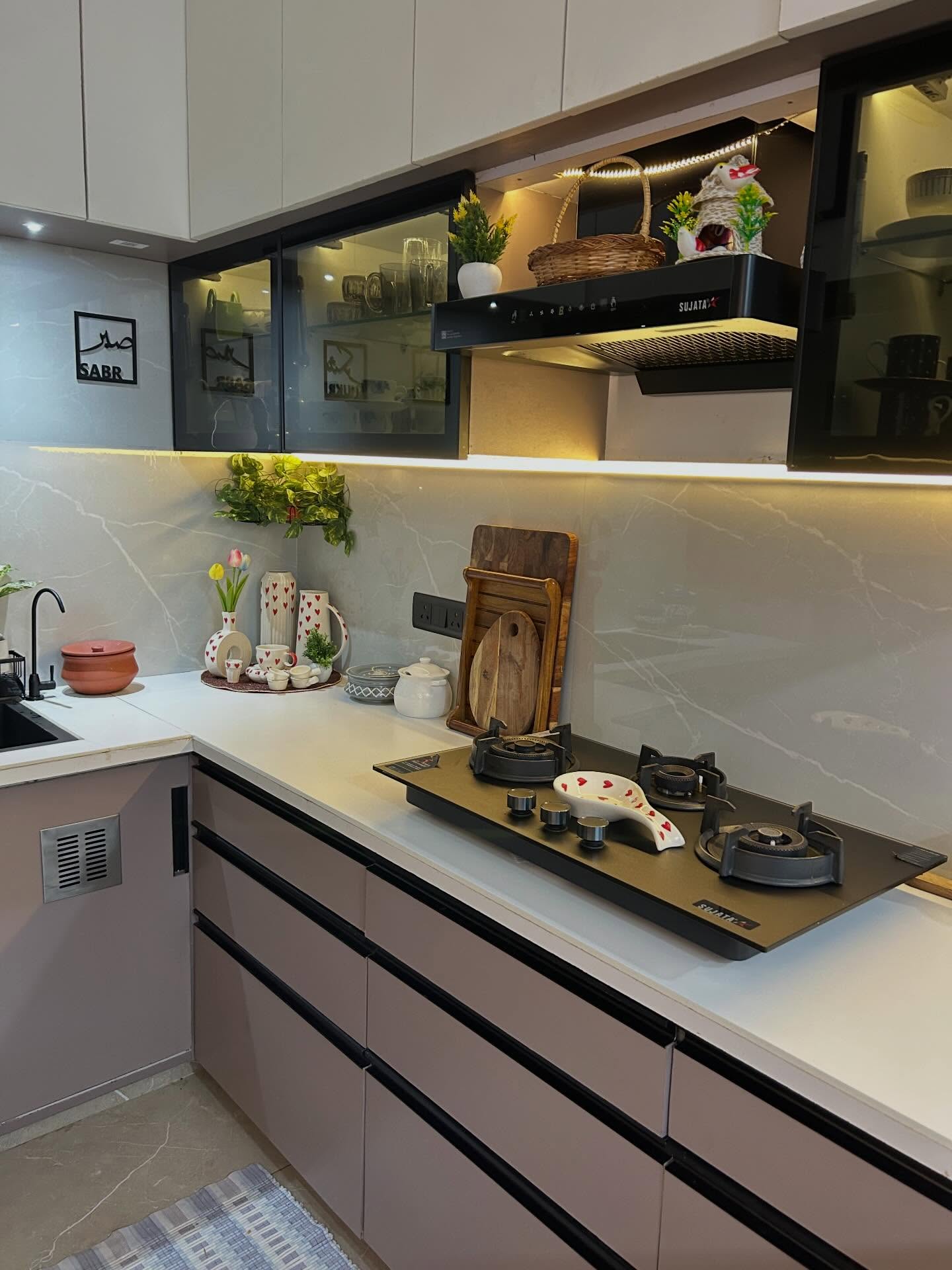
It’s one of those areas that feels awkward to decorate. Too empty, and it looks unfinished. Too cluttered, and it quickly becomes visual noise that throws off the whole kitchen.
The good news is, a little planning can turn that overlooked strip into something that actually works for your space. When you balance height, texture, and spacing, it can tie your entire kitchen together without feeling forced.
There are plenty of ways to approach it, depending on your style and how much effort you want to put in. Some lean simple and clean, while others add layers and personality.
In this article, you’ll find 21 Above Kitchen Cabinet Decor Ideas.
How Can You Decorate Above Kitchen Cabinets Without Making It Look Cluttered?
It’s not really about how much decor you add up there; it’s how you arrange it.
When everything is placed at the same height or packed too tightly, the space starts to feel heavy and messy.
A simple way to fix that is by mixing heights and leaving small gaps between items so each piece can stand out.
Try grouping a few larger items instead of filling every inch, and stick to a consistent color palette to keep things calm and cohesive.
When the setup feels balanced and intentional, the space looks styled instead of crowded, and your whole kitchen benefits from it.
Browse More Kitchen Decorating Ideas
• How to Decorate Above Cabinets
• How to Decorate Top Of Cabinets
• How to Decorate Glass Cabinets
• Copper Kitchen Ideas
1. Floating Shelves for a Stylish Display
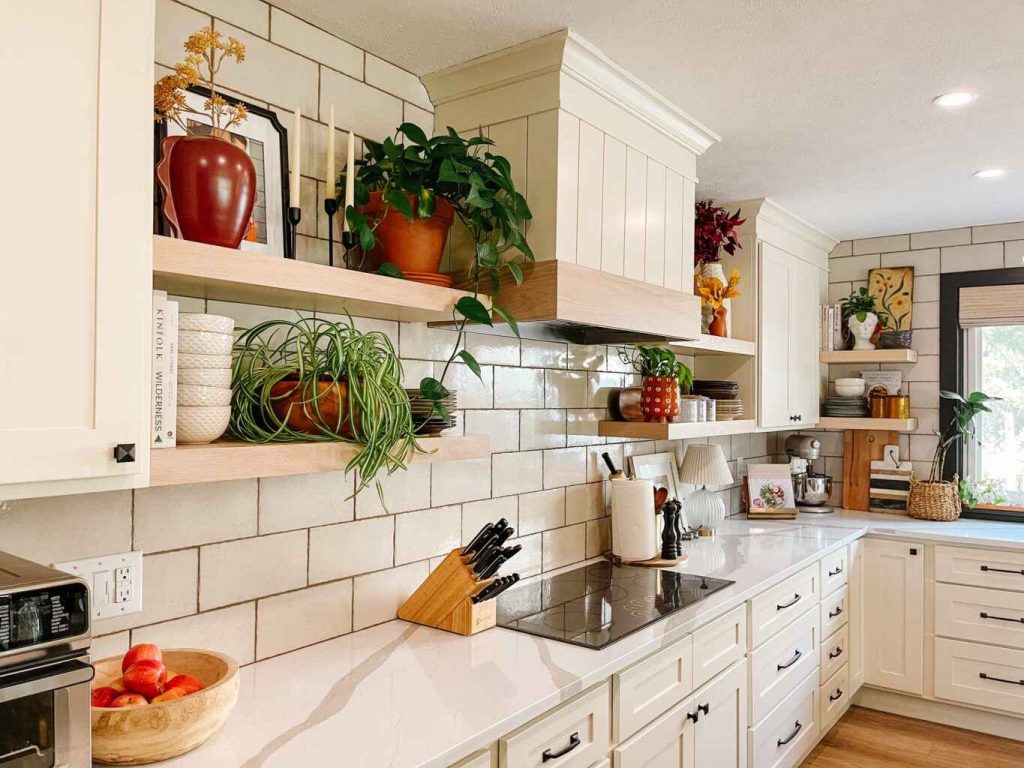
Adding floating shelves above cabinets helps use that empty strip without closing it off. It works best when there is enough height so the shelves do not feel tight or awkward.
In kitchens with low ceilings or less natural light, go for thinner shelves with a matte finish. A few ceramic pieces or glass jars with dried stems keep the look clean while adding texture.
Spacing matters more than most expect. If shelves sit too close, the area feels cramped and collects dust faster, while a small gap keeps it lighter and easier to maintain.
2. Vintage Signs for a Nostalgic Touch
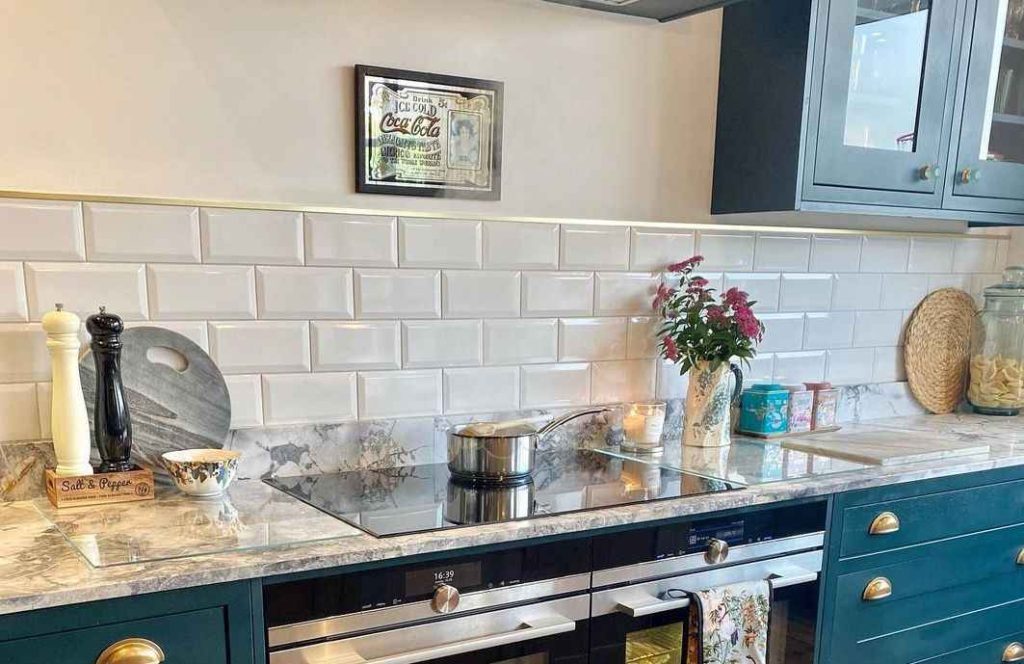
Vintage signs bring personality without adding bulk, which helps when the space above cabinets is narrow. They sit well in areas where deeper decor would feel crowded.
For mixed-style kitchens, choose one consistent finish, such as aged wood or muted metal, to keep things aligned. Clean typography or slightly faded prints keep the look controlled.
Height placement is often overlooked. Hanging it slightly lower helps it connect visually with the cabinets rather than feel like it is floating too high.
3. Potted Plants for Freshness and Texture
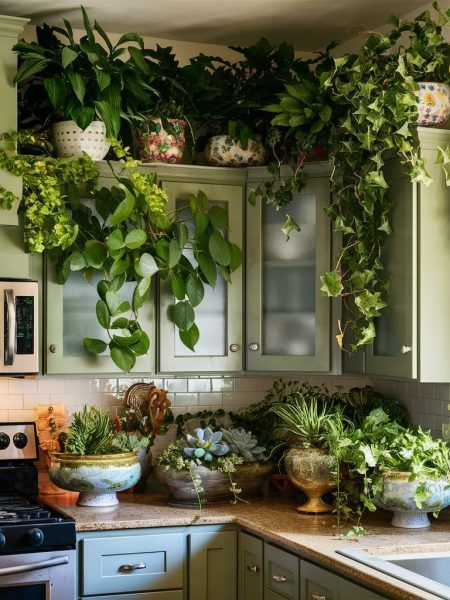
Greenery softens the hard edges of cabinets and adds a natural break in an otherwise structured layout. It works best when there is enough vertical space to let plants fall naturally.
Kitchens with limited sunlight or heat exposure benefit from hardy plants or even realistic faux options. Simple matte pots keep attention on the shape rather than the container.
Maintenance becomes the tricky part here. Choosing low-effort plants or lightweight containers avoids spills and makes upkeep easier over time.
4. Decorative Baskets for Practical Storage
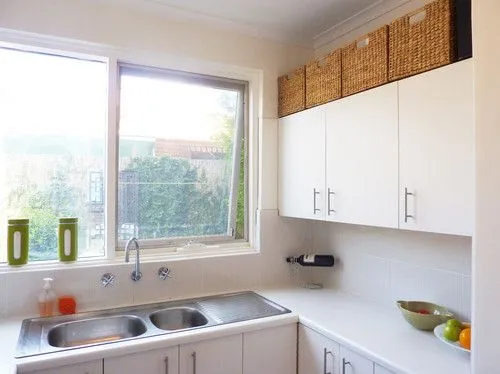
Baskets turn unused space into hidden storage that still looks intentional, especially when cabinets are already full. They also introduce texture that flat surfaces lack.
Smaller kitchens benefit from matching woven baskets in similar tones to avoid visual clutter. Too many variations can make the area feel scattered.
Weight builds up faster than expected. Keeping contents light ensures they remain easy to move and practical for daily use.
5. Antique Mirrors for a Touch of Elegance
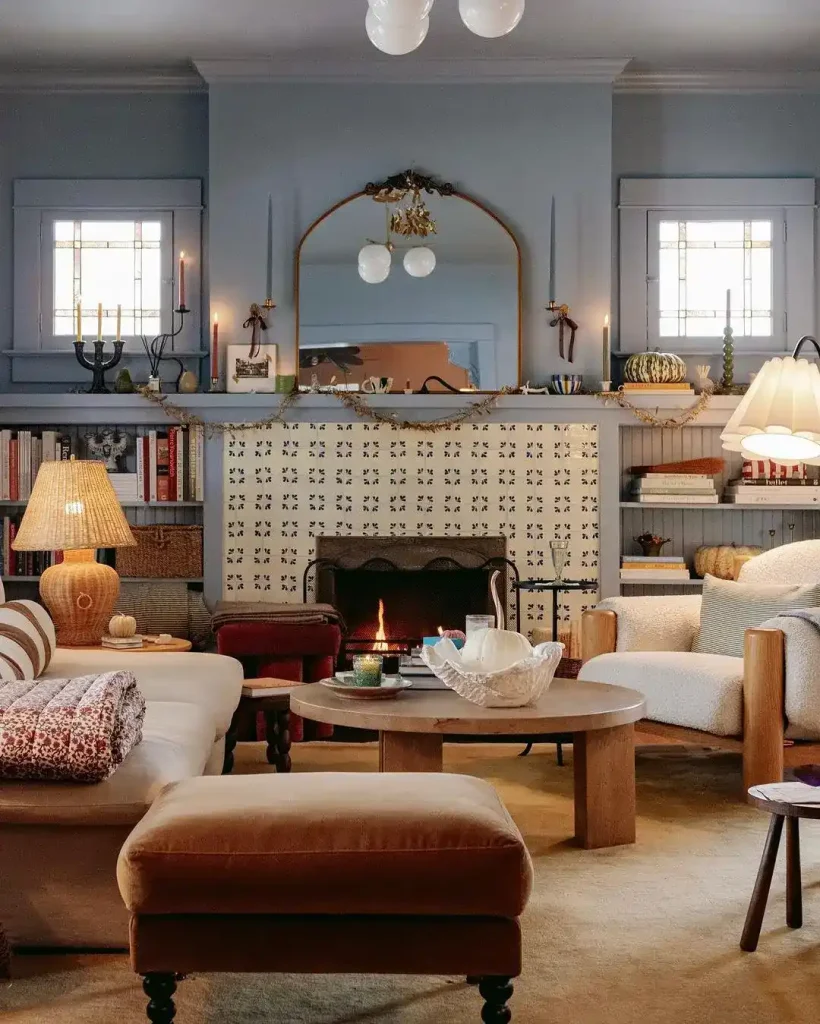
Mirrors help spread light into darker upper areas, which can make cabinets feel less heavy. This works especially well where natural light is limited.
Frame choice plays a big role. A thin metal edge or lightly distressed wood frame keeps the mirror from dominating the space.
Reflections can either help or hurt the look. Positioning them to catch clean surfaces or light sources avoids highlighting clutter.
6. Glass Jars with Dried Ingredients
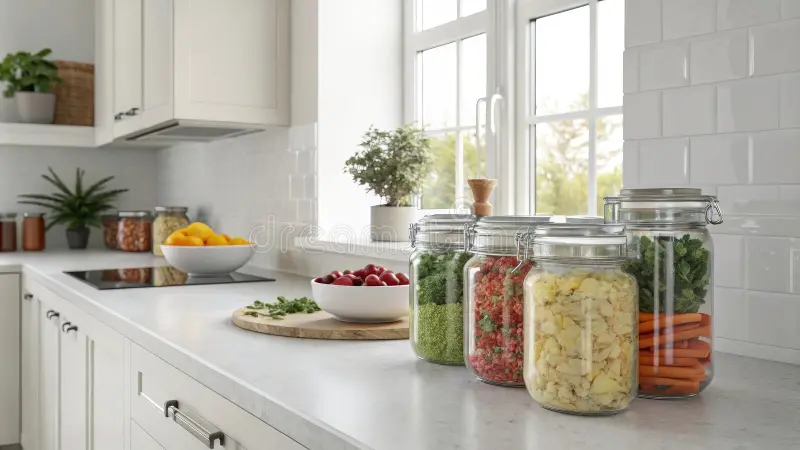
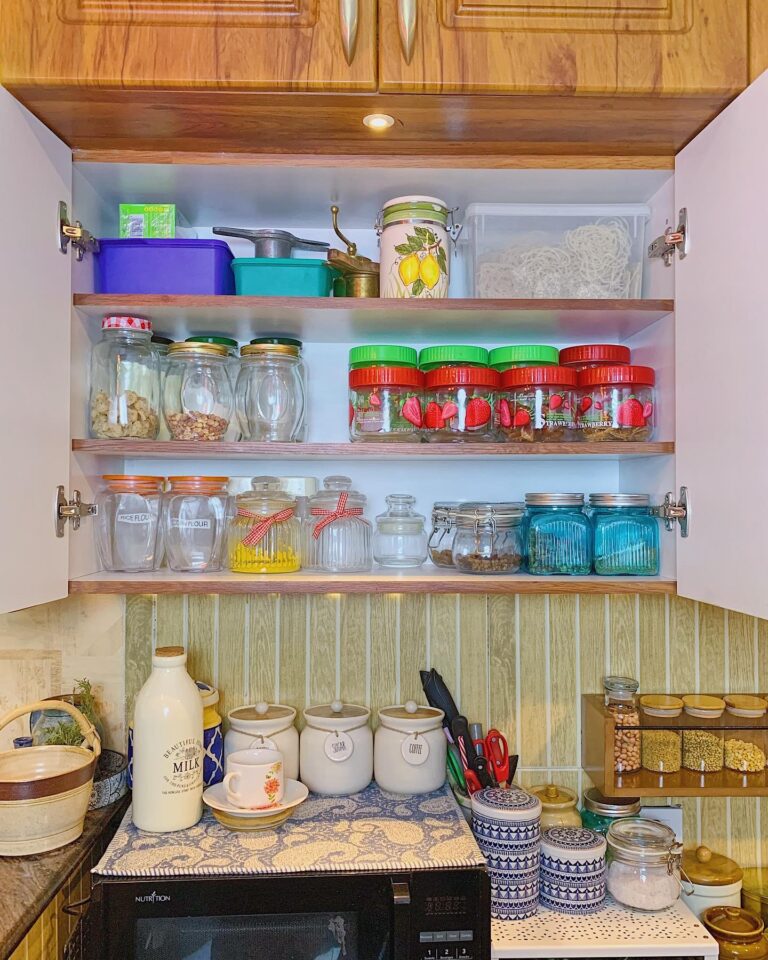
Glass jars create a structured display that still feels useful, blending storage with decor. They suit kitchens where open visual order matters.
Humidity and heat can affect contents, so sealed jars with subtle variations in size keep things both practical and visually balanced.
Too many colors can feel chaotic. Sticking to similar tones helps the setup look calm and organized rather than busy.
7. Rustic Wooden Boxes for Added Charm

Wooden boxes add depth and warmth to flat cabinet tops, which helps soften kitchens that feel too clean or plain.
Tighter layouts benefit from low-profile boxes with a natural finish, so the space does not feel heavy or blocked.
Overfilling is a common mistake. Leaving some open space inside keeps everything looking intentional instead of packed.
8. Statement Lighting Above Cabinets
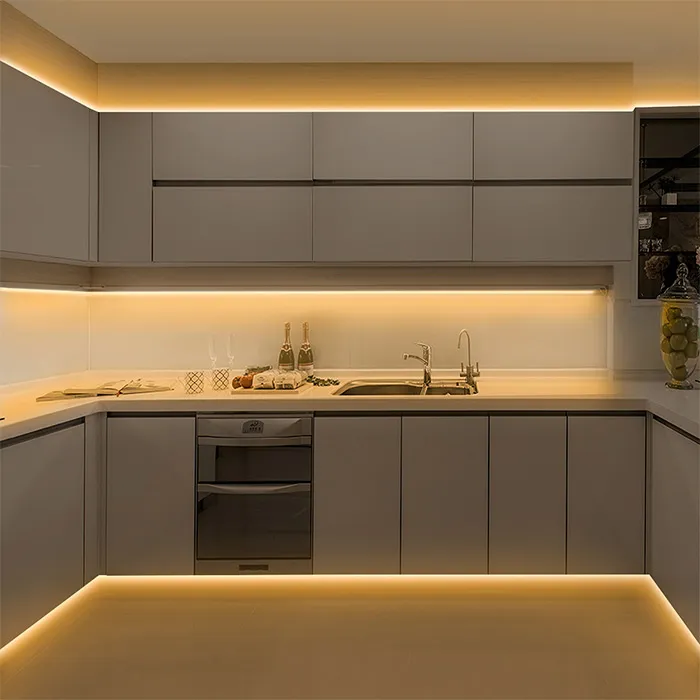
Adding lighting above cabinets changes how the whole upper space reads, especially at night. It works best when the area feels dim or disconnected from the rest of the kitchen.
Kitchens with low ambient light benefit from warm LED strips or small sconces, while matte black or metallic fixtures add structure. Softer options like string lights create a lighter visual layer.
Brightness needs control. Too strong and the area feels harsh, but balanced lighting makes it look defined and easier on the eyes after dark.
9. Framed Art or Photos for a Personal Touch
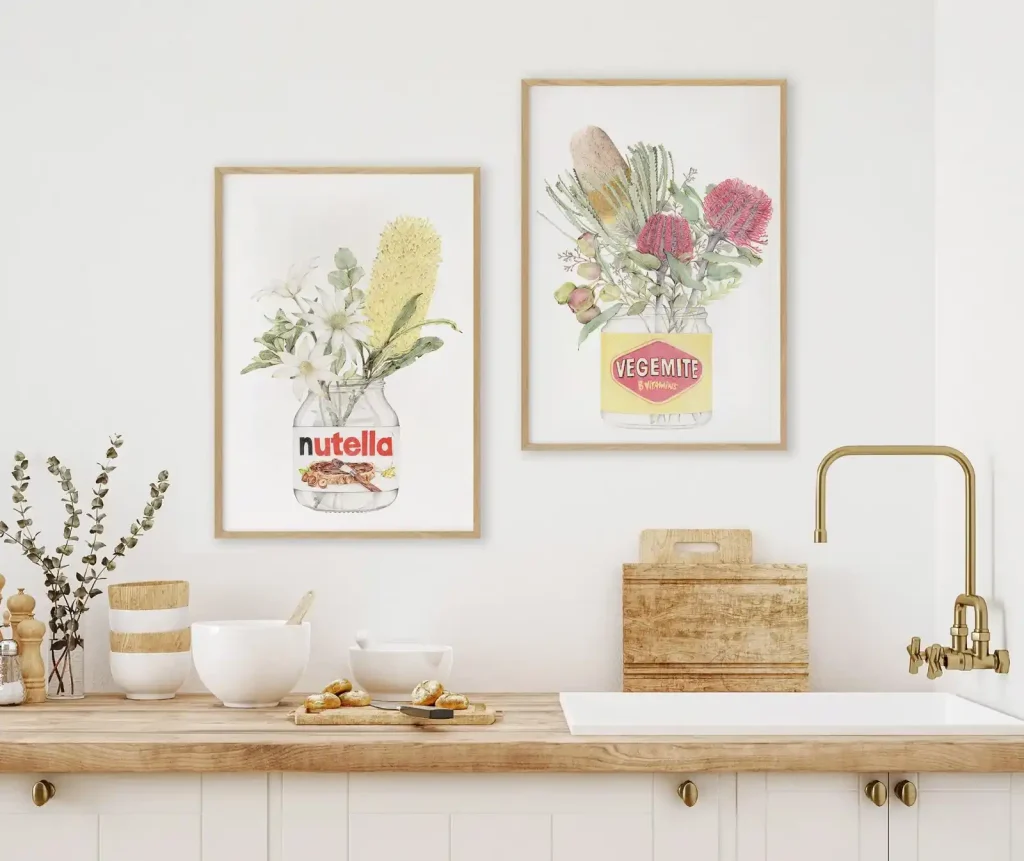
Framed pieces turn that empty strip into something personal without changing the layout. It fits well when you want the kitchen to feel more lived in.
For tighter spaces, thin frames in similar tones keep things from feeling crowded. Mixing sizes works, but staying within one color family keeps it cohesive.
Leaning frames instead of mounting them adds flexibility. It also makes it easier to swap or adjust without leaving marks behind.
10. Chalkboard or Whiteboard for Functionality
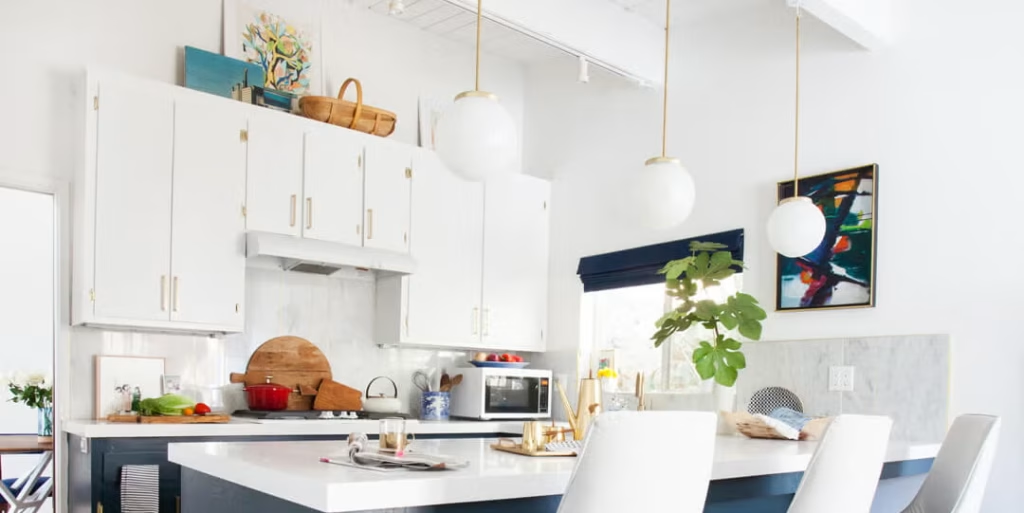
A board above cabinets adds function to a space that is usually decorative. It suits kitchens where quick notes or lists are part of daily routine.
Smaller kitchens benefit from compact boards with clean edges so they do not overpower the area. A simple wood or metal frame helps it blend in.
Height can limit usability. Placing it slightly lower keeps it reachable without making it feel disconnected from the cabinets.
11. Decorative Wooden Ladders for Rustic Elegance
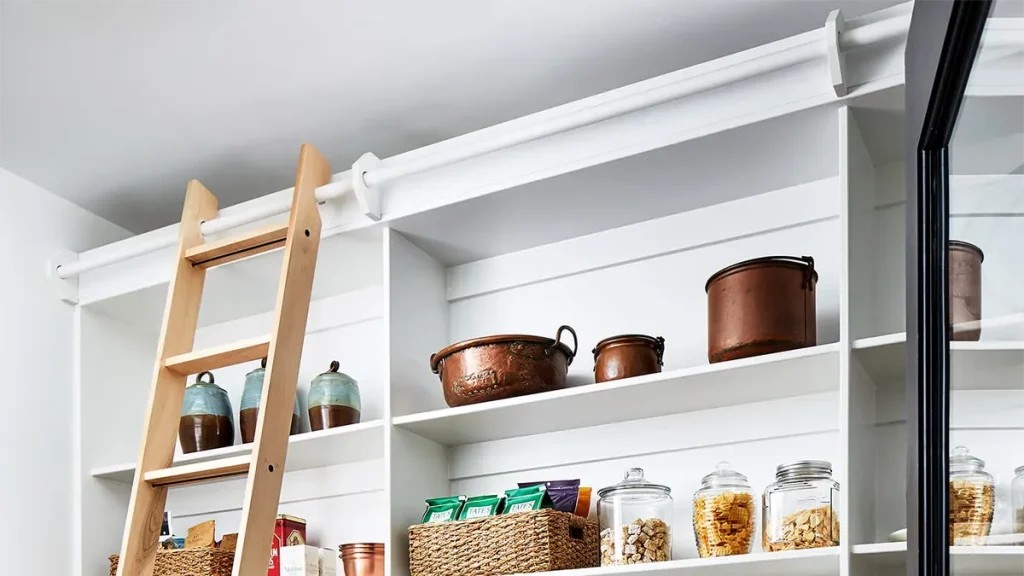
A wooden ladder introduces vertical interest, which helps break up long cabinet lines. It works best when the wall feels flat or lacks variation.
Narrow kitchens need slimmer ladders with a soft wood tone to avoid blocking the visual flow. Light items like towels or small decor keep it balanced.
Overloading changes the effect quickly. Keeping it minimal allows the ladder to add shape without turning into storage clutter.
12. Industrial-Style Metal Bins
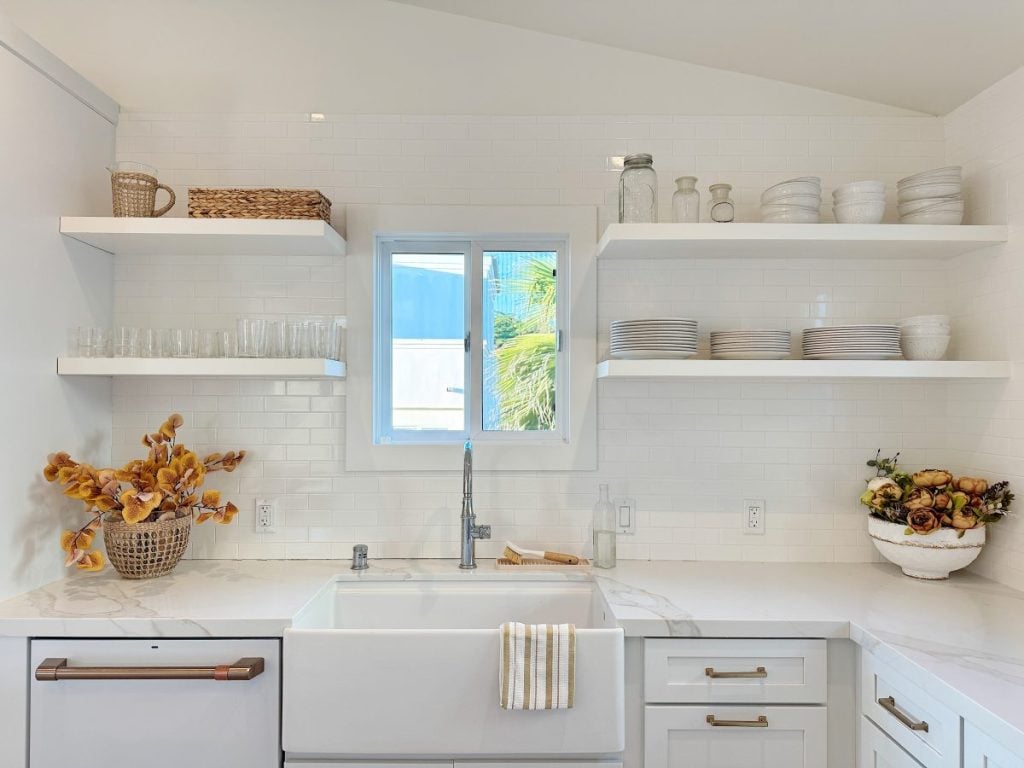
Metal bins bring structure and storage together, especially in kitchens that lean modern or urban. They help keep items out of sight while still accessible.
Using similarly sized bins in black, silver, or matte finishes keeps the upper area consistent. Mixing too many sizes can feel uneven.
Sound is often overlooked. Metal can shift or scrape, so adding a soft liner helps reduce noise and protect surfaces over time.
13. Ceramic Jugs for Rustic Appeal
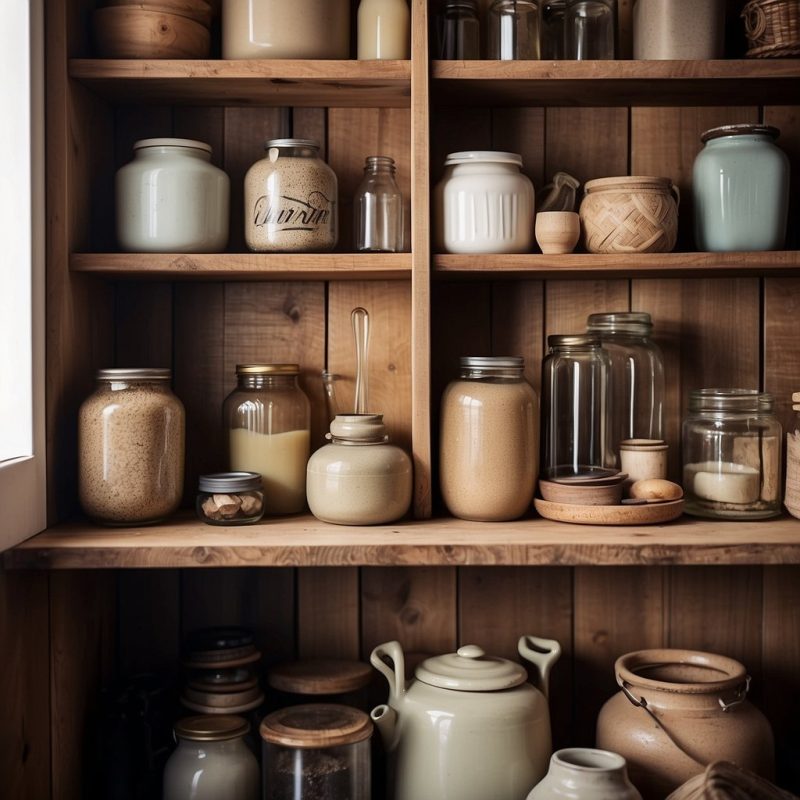
Ceramic jugs add soft curves that contrast with straight cabinet lines. They work well when the space feels too sharp or uniform.
Neutral tones or lightly textured finishes keep the display calm, while dried branches or stems add height without clutter.
Grouping matters more than quantity. A small cluster feels intentional, while too many pieces can make the area look busy and heavy.
14. Hanging Baskets for a Practical and Aesthetic Touch

Hanging baskets create visible storage without closing off the space, which suits kitchens that need extra function.
Lightweight materials like rattan or wire work better at height, especially when arranged in a simple vertical or staggered layout.
Accessibility is key here. Placing them at too high a limit for use, while a reachable position keeps them practical instead of purely decorative.
15. Wooden Slat Wall for a Cozy, Natural Look
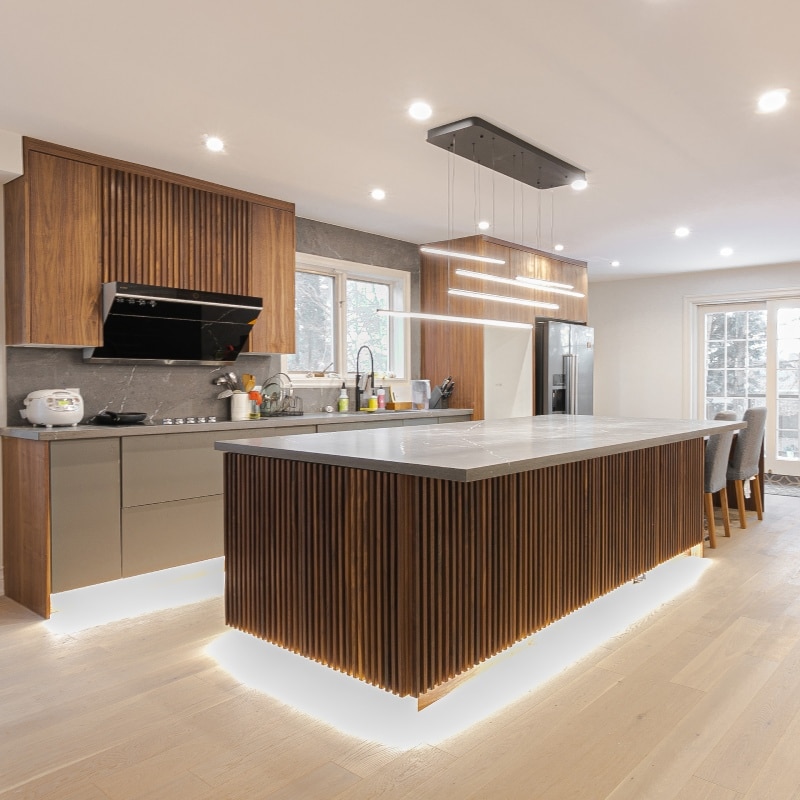
A wooden slat wall adds texture without needing extra decor pieces, which helps when the space feels flat. It works well when the cabinet top area looks too plain or disconnected.
Vertical slats can make lower ceilings feel taller, while horizontal lines stretch the space visually. A natural or lightly stained finish keeps it grounded.
Spacing between slats matters more than expected. Tight gaps can feel heavy, while a bit of openness keeps it lighter and easier to clean over time.
16. Minimalist Wall Clocks
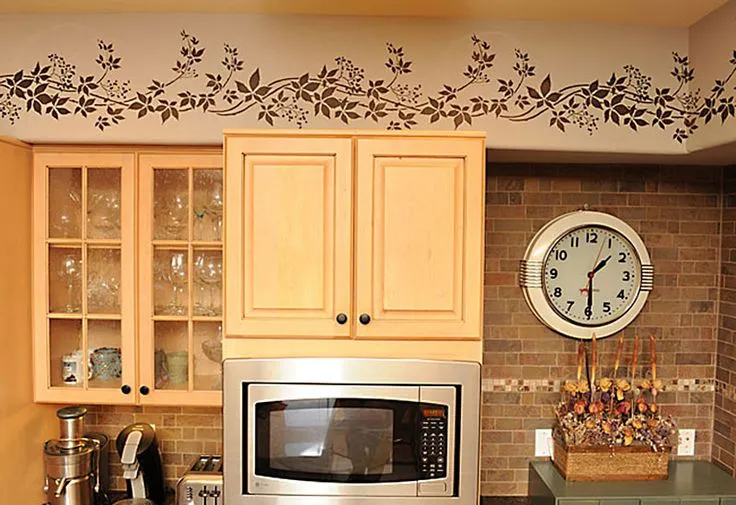
A simple wall clock adds function without cluttering the space, especially useful in kitchens where timing matters. It fits best when the decor is already clean.
Slim designs in matte black or soft white blend in without drawing too much attention. Larger clocks work better on wider cabinet runs.
Glare can be an issue near lighting. Choosing a non-reflective face makes it easy to read from different angles.
17. Bold Statement Vases
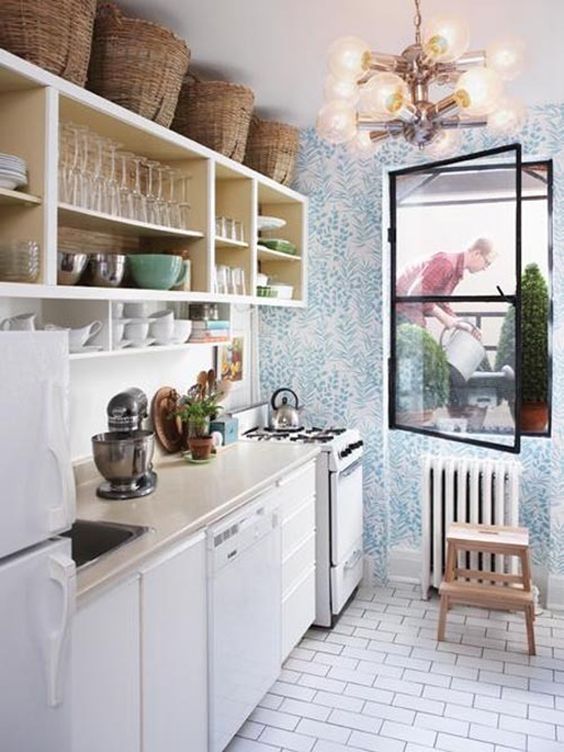
Statement vases bring height and shape variation, which helps break up flat cabinet lines. They stand out more when the surrounding decor stays minimal.
Tall ceilings can handle larger ceramic or glass pieces, while smaller spaces benefit from one controlled focal piece.
Balance is key here. Too many bold shapes compete, but one strong piece creates a clear focal point without visual noise.
18. Upcycled and Repurposed Decor
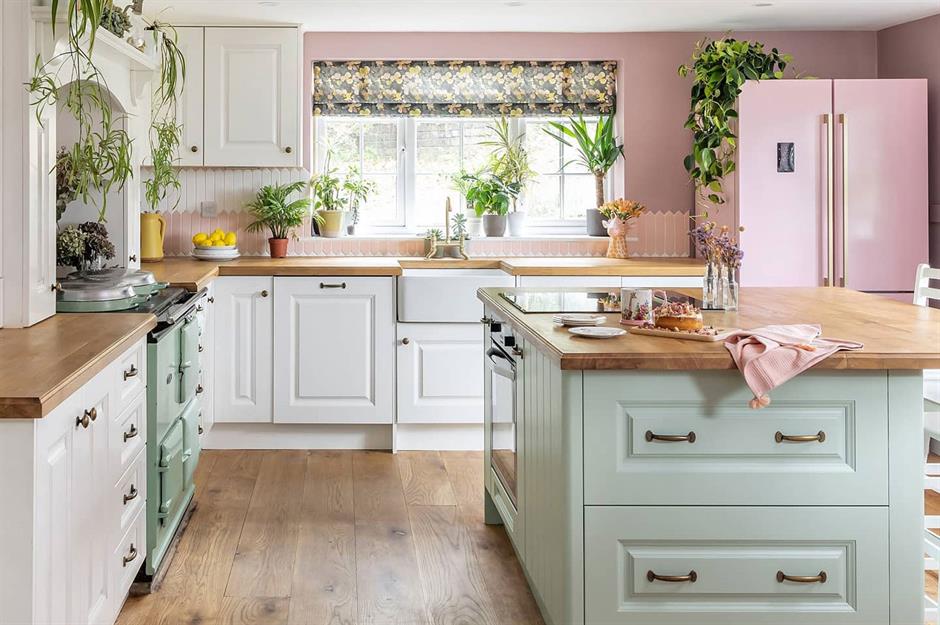
Repurposed items add character through materials that feel lived in, which works well in kitchens that feel too new or plain.
Old crates or trays with visible wear or muted finishes blend better than overly polished pieces. Keeping tones consistent helps avoid clutter.
Not every item works at height. Choosing stable, lightweight pieces prevents shifting and keeps the setup safe over time.
19. Reclaimed Wood Shelves for a Rustic, Eco-Friendly Touch
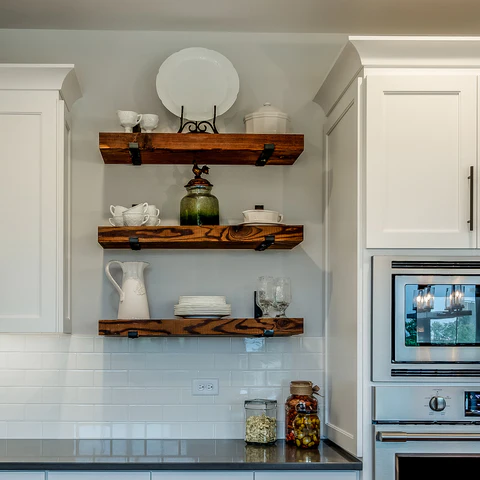
Reclaimed wood shelves bring warmth and depth, especially when cabinets feel too smooth or uniform. They fit well in spaces leaning rustic or mixed style.
Thicker boards with a slightly distressed finish hold visual weight without needing heavy decor on top.
Surface prep matters here. Sealing the wood properly helps prevent dust buildup from settling into rough textures.
20. Modern Metallic Accents
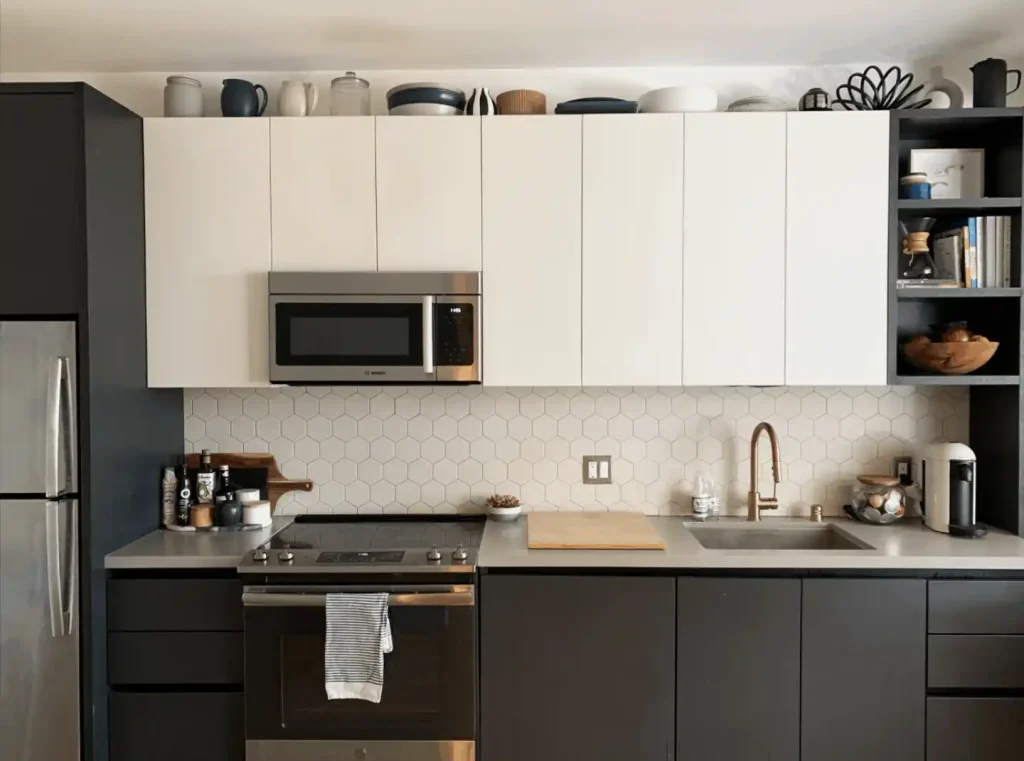
Metal accents add contrast and reflect light, which helps brighten darker upper spaces. They work best when used sparingly.
Brushed or matte finishes in gold, silver, or bronze feel more controlled than highly polished surfaces.
Too much shine can feel harsh under lighting. Limiting metallic pieces keeps the area clean and visually balanced.
21. Vintage Kitchen Utensils as Wall Art
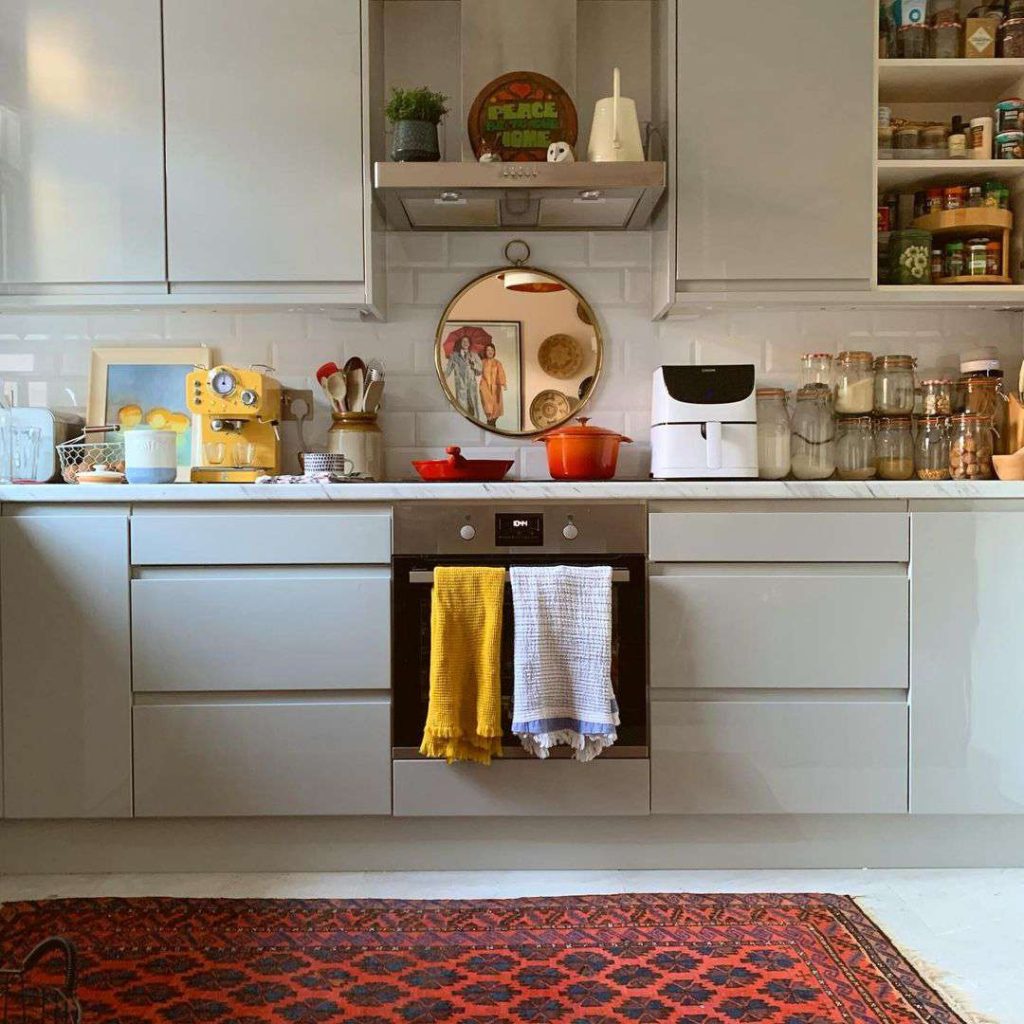
Old utensils create texture and a sense of history, turning unused space into something more personal. They fit well in relaxed or rustic kitchens.
Wooden spoons, whisks, or tins with aged finishes blend better than newer pieces. Arranging them in a loose pattern keeps it natural.
Mounting needs attention. Securing each piece properly avoids shifting, keeping the display stable and easy to maintain.
FAQs
What Should I Avoid Placing Above Kitchen Cabinets
It is easy to overload this space with random items. Heavy objects, too many small pieces, or anything hard to clean can quickly turn it messy. Stick to fewer, well sized items so the area stays balanced and manageable over time.
How Do I Choose The Right Decor Height Above Cabinets
Start by checking the gap between cabinets and ceiling. Smaller gaps need low profile decor, while taller spaces can handle layered pieces. Keeping some breathing room helps everything look intentional instead of crowded.
Can I Mix Different Decor Styles Above Cabinets
Mixing styles works if there is one common element like color or material. Without that, the space can feel scattered. Keeping a consistent tone or finish helps everything feel connected even with varied pieces.
How Do I Keep The Area Above Cabinets Easy To Clean
Dust builds up faster than most expect. Choosing larger decor pieces with simple shapes makes cleaning easier. Avoid too many small items, and leave slight gaps so you can reach and wipe without moving everything.
Is It Better To Decorate Or Leave The Space Empty
It depends on the kitchen layout. Some spaces look cleaner when left open, especially with low ceilings. Others benefit from light decor to fill the gap. The goal is to keep it balanced, not forced.
Conclusion
That space above kitchen cabinets can either feel unfinished or quietly complete the whole room. A few thoughtful choices make a big difference without adding clutter.
Focus on proportion, light, and ease of maintenance. Once those are right, the rest comes together naturally.
If this gave you a few ideas, share it with friends or family who are working on their kitchen too.
Complete Your Kitchen Makeover
• How to Paint Kitchen Cabinets
• How to Clean Grease Off Cabinets
• How to Organize Kitchen Cabinets Layout
• Corner Pantry Ideas