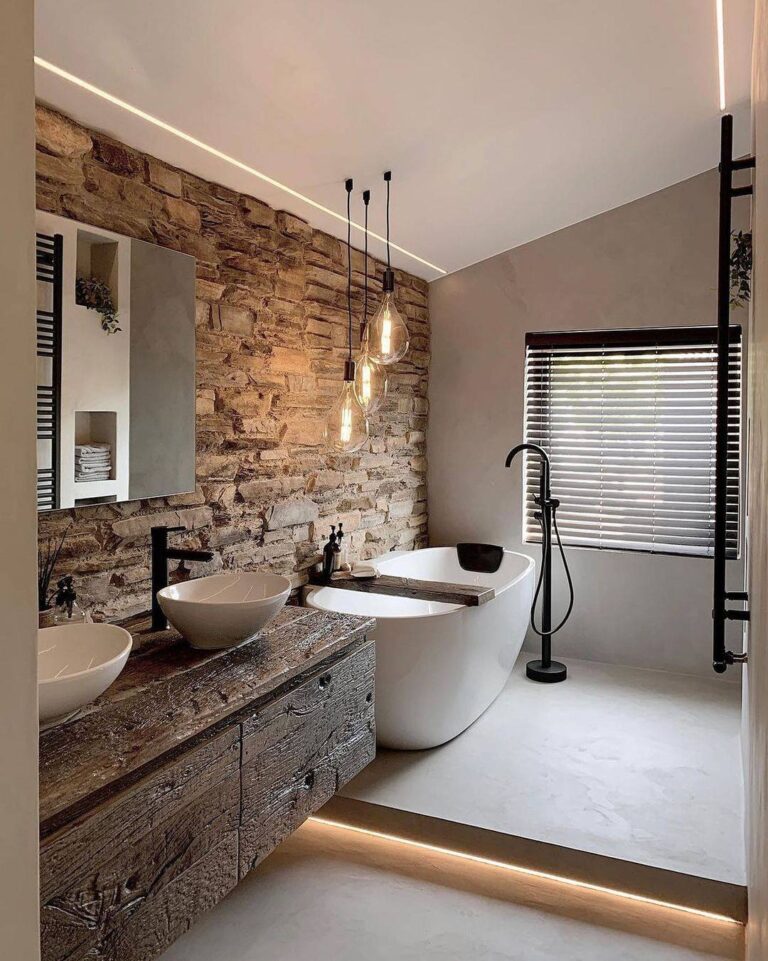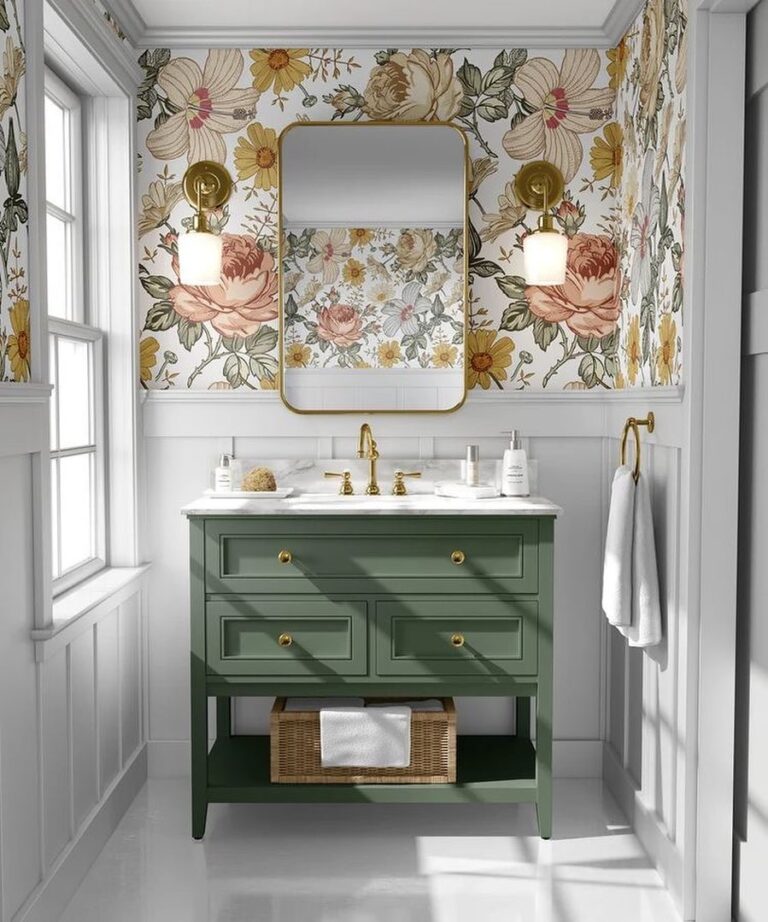
Brown Bathroom Decor Can Look Amazing When It’s Done Like This

This post contains affiliate links, and we will be compensated if you buy after clicking on our links. Read our disclaimer.
Read our editorial process
You probably already know how tricky it gets when you try to add brown to a bathroom. It sounds simple, but once you start, the space can quickly feel too dark or a bit outdated.
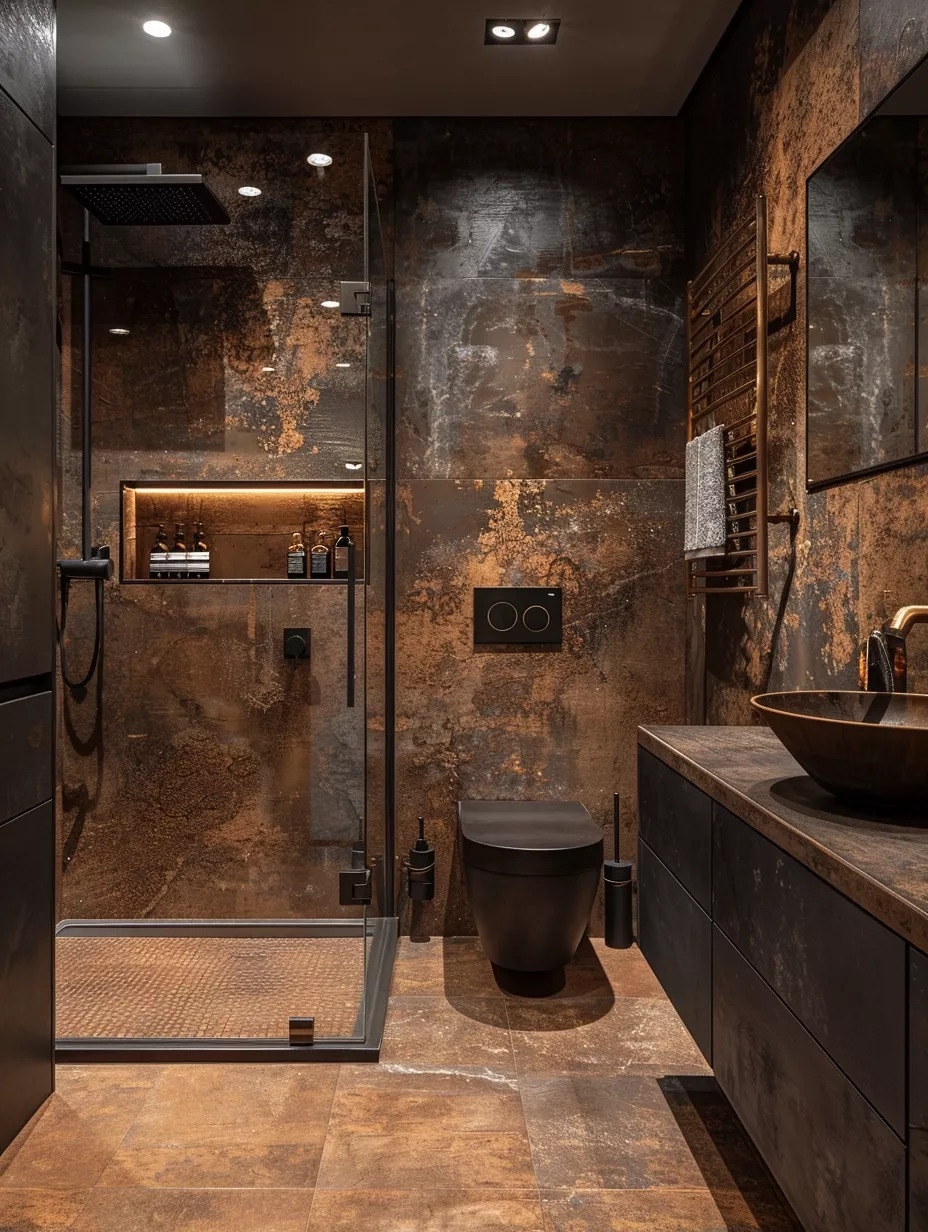
Most bathrooms already have fixed elements like tiles, sinks, and lighting, so adding brown without making everything feel heavy becomes a real challenge. Small choices in tone or finish can completely change how the room looks.
If not balanced well, brown can make the space feel closed or dull instead of warm and inviting. That is why many people avoid it or stop halfway through the design.
This article shares 25 Brown Bathroom Decor Ideas to help you bring warmth into your space without making it feel overwhelming. Simple adjustments can make a noticeable difference.
Let’s jump in!
What Are the Best Brown Bathroom Decor Ideas?
Using brown in a bathroom is not just about picking a color. It is about how that color works with light, texture, and the size of your space.
In many bathrooms, poor lighting or limited space can make brown feel heavier than expected. That is why placement and material choice matter just as much as the shade itself.
The good part is you do not need a full renovation to make it work. Small changes like adding wood accents, adjusting lighting, or using brown in specific areas can shift the entire feel.
There are many practical ways to use brown without making your bathroom feel crowded. When balanced properly, it can make the space feel warmer, calmer, and more put together.
Explore More Bathroom Color Ideas
• Grey and White Bathroom Ideas
• Mauve Bathroom Ideas
• Green Tile Bathroom Ideas
• Luxury Master Bathroom Ideas
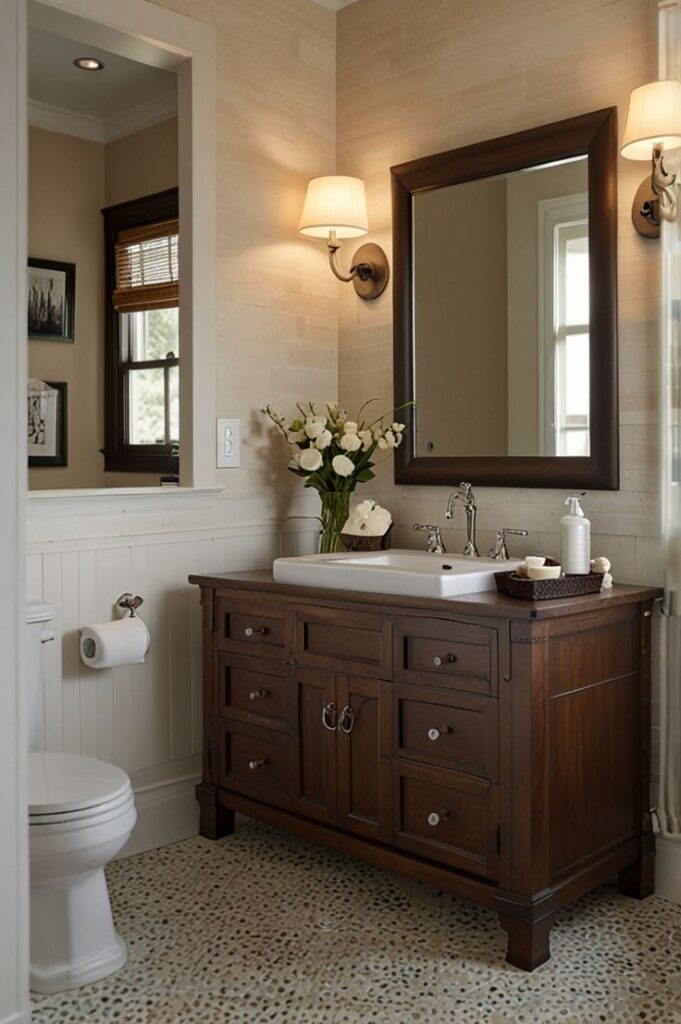
Rustic Wood Accents in Brown Bathrooms

Wood accents bring a calm, grounded feel, especially in simple layouts. In a small or low light bathroom, darker wood can feel heavy, so pairing it with lighter walls helps keep balance.
A textured wall and woven baskets add depth and everyday function, while a matte wood finish keeps lighting soft and reduces glare. These small details make the space feel used, not staged.
If a full vanity swap is not possible, add a floating wood shelf or stool for a similar effect. Keep wood tones consistent, as mixing too many shades can make the space feel messy.
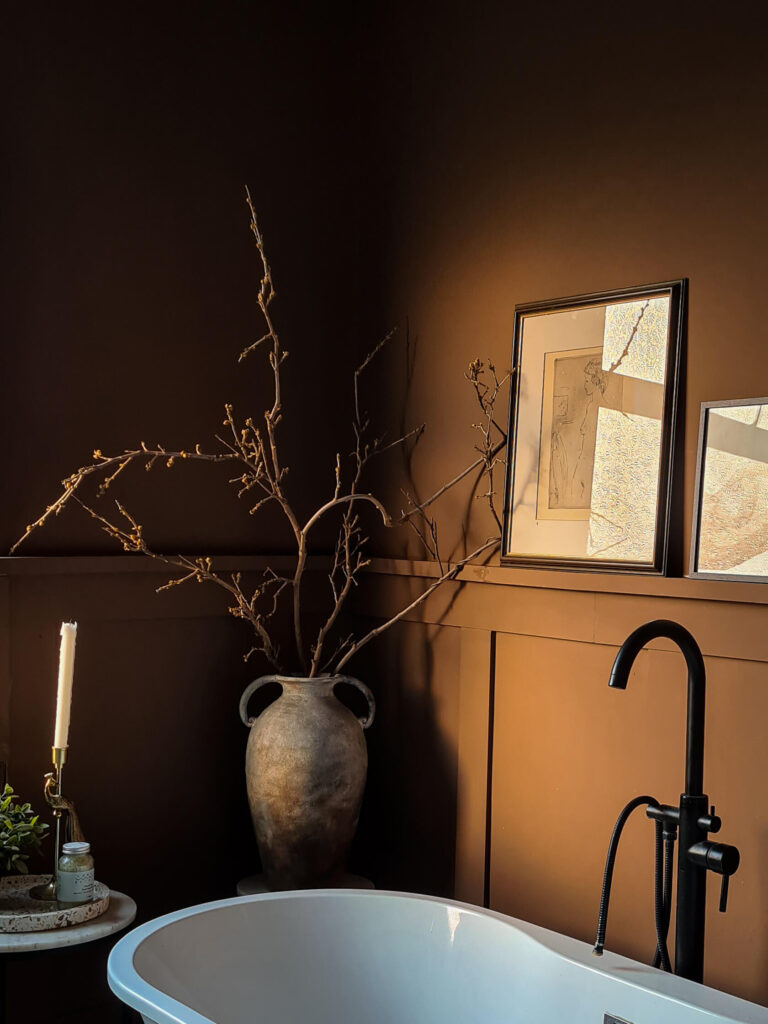
Earthy Brown Wall Paint
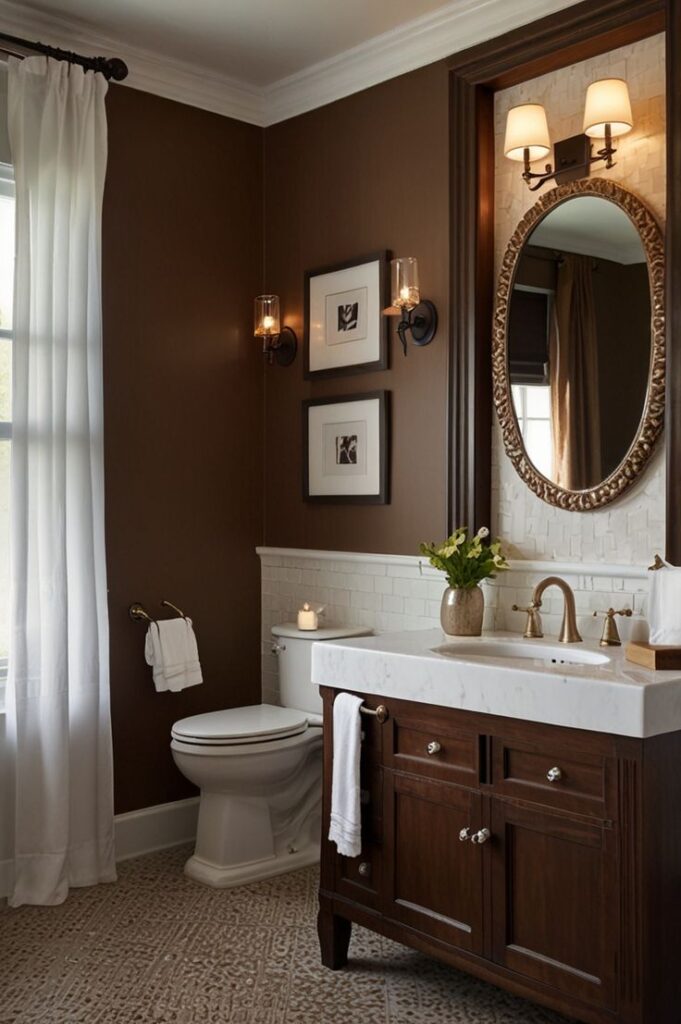
Brown wall paint can feel bold at first, but it often brings a quiet, grounded tone once applied. In a small bathroom with limited natural light, deeper shades can add depth, especially when paired with clean white fixtures.
Plants stand out clearly against the warm background, while warm LED lighting keeps the color rich instead of dull. Cooler bulbs can make brown look flat, so lighting choice matters more than most expect.
Keeping surrounding elements simple helps the color settle naturally. One thing people overlook is testing paint under night lighting, since brown can shift more than lighter shades.
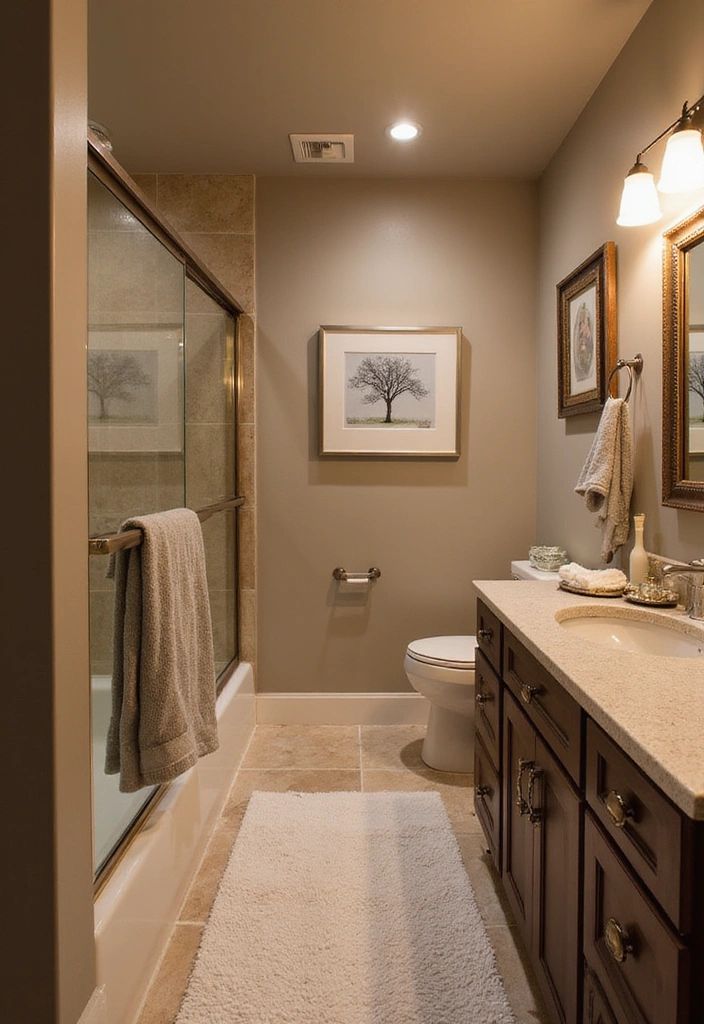
Combination of Light and Dark Brown Shades
Mixing light and dark brown helps the space feel balanced instead of heavy. In a narrow layout, lighter tiles on larger surfaces keep things open, while darker cabinetry adds structure without closing it in.
Glass shower panels maintain flow, and placing darker tones on lower elements like vanities anchors the room visually. This contrast creates a layered look without making it feel crowded.
Repeating the darker shade in small details like frames or hardware makes everything feel connected. Skipping this step can leave the design looking slightly unfinished.
Brown Spa-Like Retreat
A brown palette can create a calm, enclosed feel, especially in bathrooms designed for relaxation. In a larger space or one with high ceilings, deeper tones help reduce that empty feeling and make it more inviting.
Soft lighting from candles or warm fixtures adds gentle highlights that keep brown from looking flat. Keeping decor minimal, like a simple tray with one element, maintains that quiet atmosphere.
Too many accessories can break the effect quickly. Limiting visual clutter is what allows the space to feel slow, calm, and intentional.
Luxurious Chocolate Brown Tiles
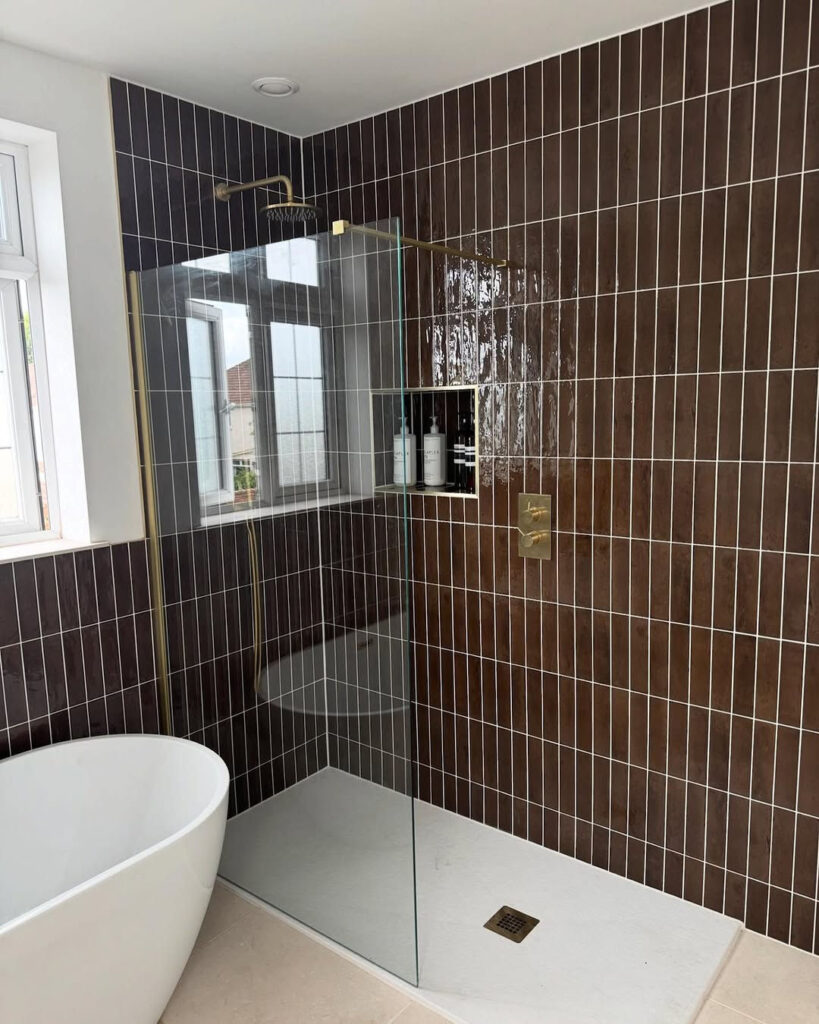
Chocolate brown tiles bring a rich, high contrast look, especially when paired with a white tub. In a bathroom with limited light, glossy tiles help reflect brightness so the space does not feel closed in.
The shine adds depth, while the white elements keep everything crisp and balanced. Using glossy tiles on one wall like the shower or vanity backdrop avoids overwhelming the room.
Full coverage can feel heavy if overused. Limiting it to a feature area keeps the effect strong without making the space feel darker.
Warm Beige and Brown Color Palette
Beige paired with brown creates a warm and easy-going base, especially in shared or busy bathrooms. In a small space, keeping walls beige helps reflect light while brown accents add depth without shrinking the room.
Round mirrors and woven storage bring soft texture that breaks up straight cabinetry lines. Warm lighting also keeps the palette feeling relaxed instead of flat.
Too much brown on large surfaces can dull the brightness. Keeping brown in smaller elements like baskets or frames keeps the balance right.
Vintage Brown Fixtures and Decor
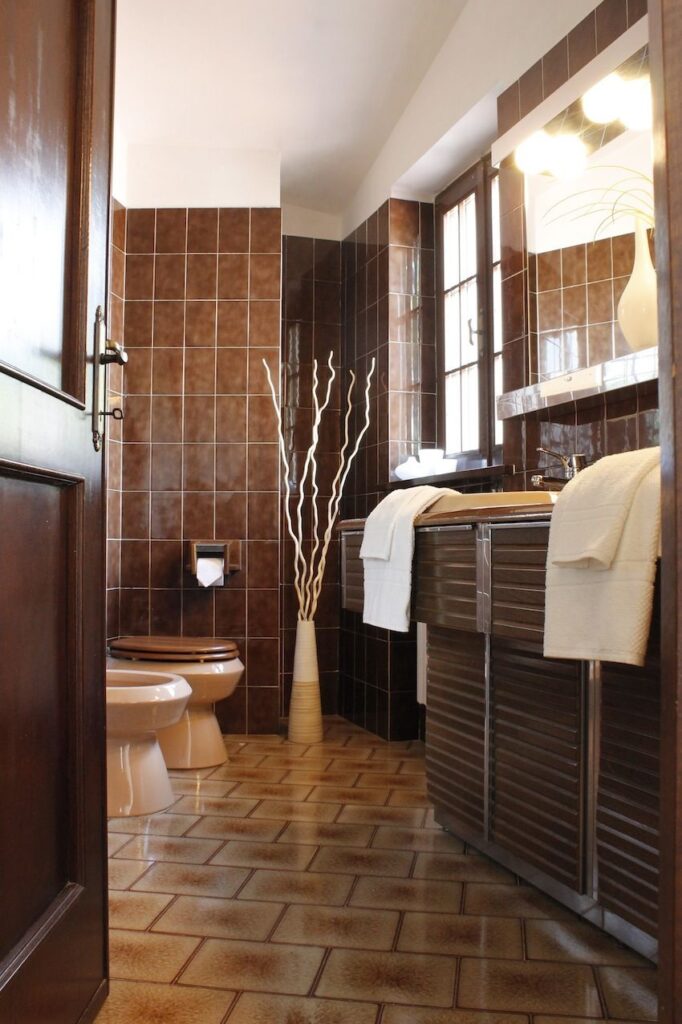
Vintage brown details bring a classic, lived in feel, especially with elements like a clawfoot tub. In a bathroom with higher ceilings, these details fill the space without making it feel empty.
Patterned wallpaper adds personality, while wall sconces with warm bulbs create a softer glow than overhead lights. This keeps the brown tones feeling inviting.
Using vintage on every surface can feel overwhelming. Focusing it on one wall or key fixture keeps the space charming instead of crowded.
Brown Marble Countertops
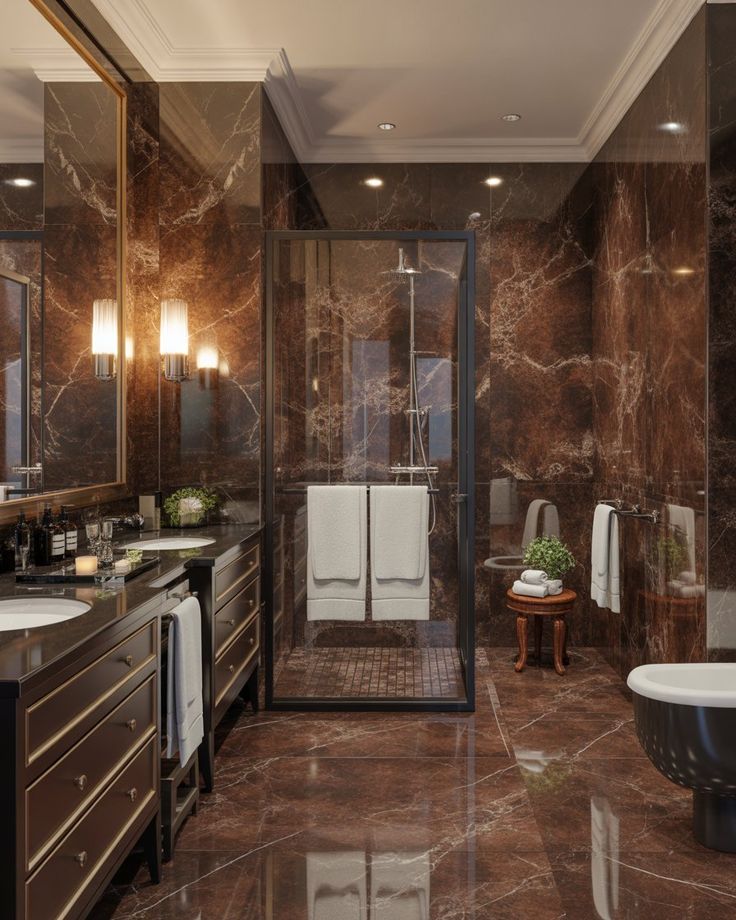
Brown marble adds natural movement and warmth, making each surface feel unique. In a busy bathroom, it hides minor water marks better than lighter stone due to its veining.
Keeping the surrounding design simple allows the marble to stand out. A polished finish reflects light, while minimal decor prevents visual clutter.
Too many patterns nearby can compete with the stone. Letting the countertop remain the focal point keeps the look clean and controlled.
Cocoa Brown Bathtub Focal Point
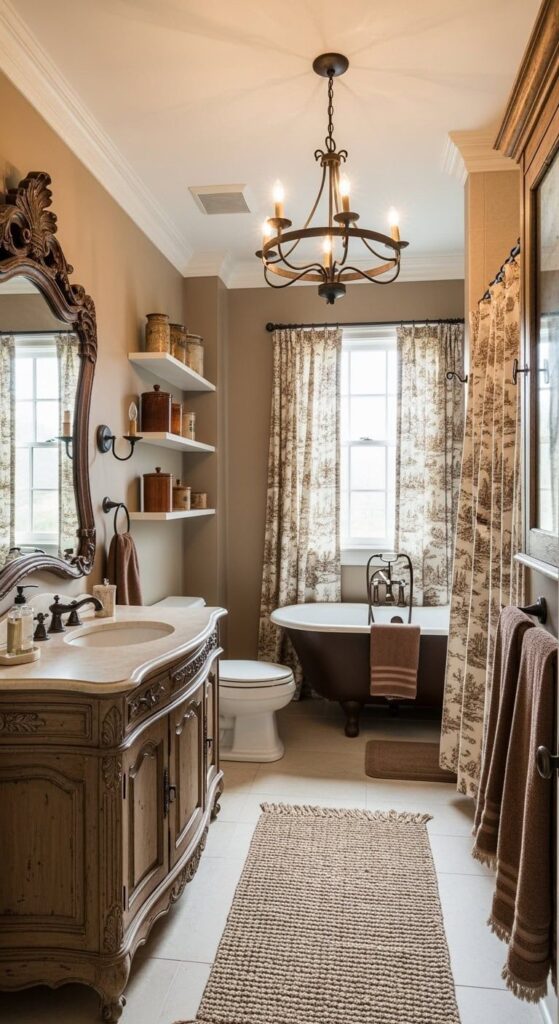
A cocoa brown tub creates a strong focal point without feeling harsh. In a medium sized bathroom, it anchors the space while lighter walls keep the room open.
Warm lighting enhances the tone, and pairing with soft white and natural wood keeps the overall look balanced. This contrast prevents the tub from feeling too dominant.
If the surrounding elements are also dark, the effect gets lost. Keeping nearby surfaces lighter helps the tub stand out clearly.
Natural Light in Brown Bathrooms
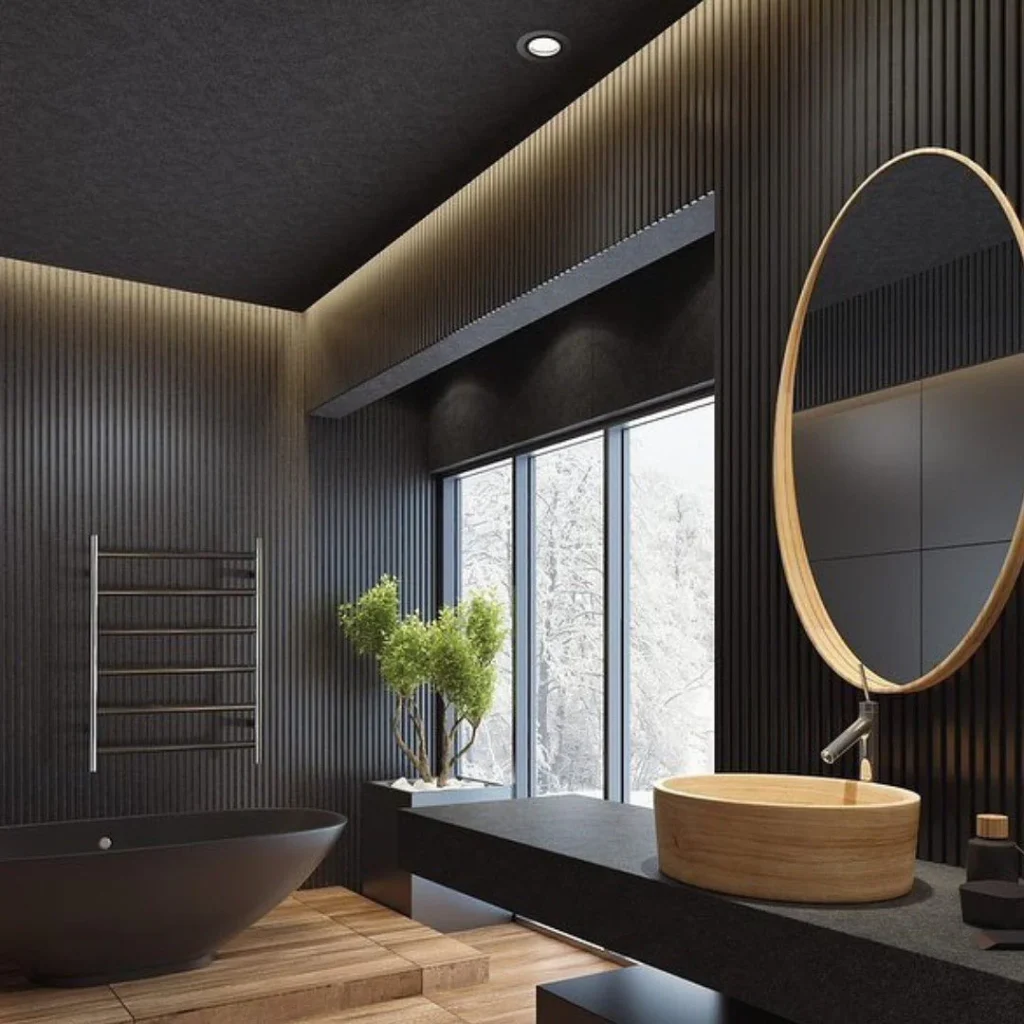
Natural light softens brown tones and makes the space feel fresh instead of heavy. In a bathroom with small windows, light can fade quickly, so placement becomes important.
Mirrors help bounce sunlight across the room, while plants add contrast and highlight the earthy palette. This keeps the space feeling alive and open.
Without enough reflection, darker areas can feel shadowy. Positioning a mirror opposite the window helps spread light more evenly.
Elegant Brown Glass Shower Enclosure
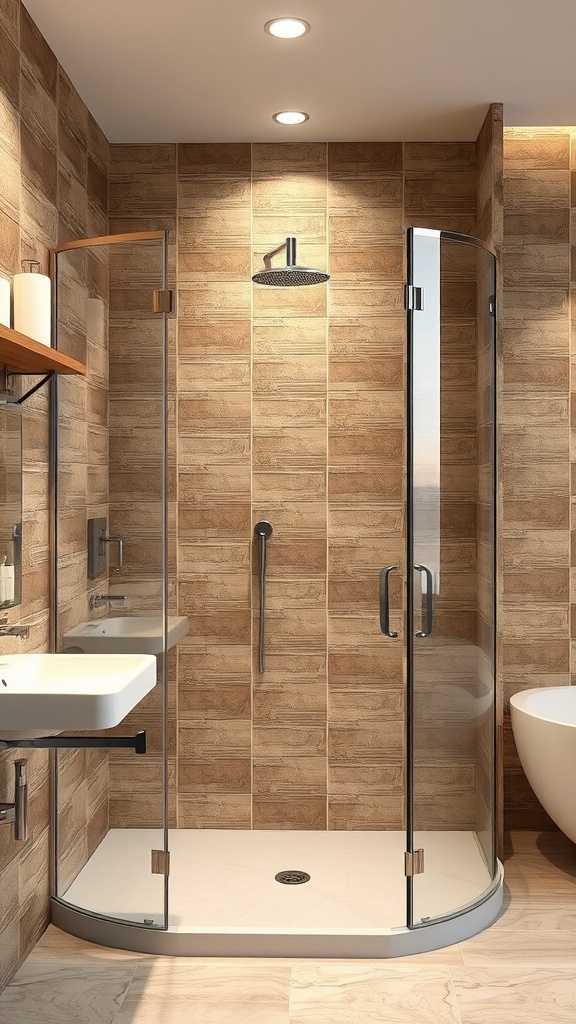
Brown-tinted glass gives the shower a softer, integrated look compared to clear panels. In a small bathroom, it slightly reduces visual transparency, so pairing it with warm tiles keeps the space from feeling closed.
Matching tones between the glass and tiles creates a smooth, cohesive flow, while simple hardware like matte black avoids visual clutter. This keeps the shower from standing out too sharply.
Using too many metal finishes can break the balance. Keeping hardware consistent helps the enclosure feel like part of the design, not separate.
Brown Accent Walls with Textured Patterns
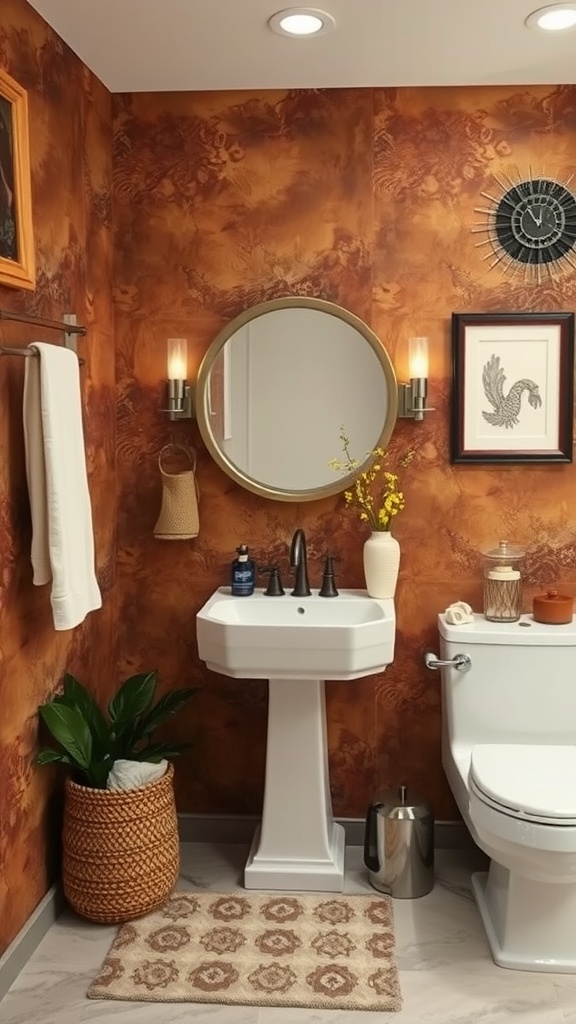
A brown accent wall adds depth without covering the whole room, which works well in a compact layout. Texture helps reflect light unevenly, so the wall feels more dynamic than flat paint.
White fixtures stand out clearly, and a round mirror softens the sharper lines around the space. Warm lighting enhances the texture and keeps the tone inviting.
Overdoing texture across multiple walls can feel busy. Limiting it to one area keeps the focus clean and controlled.
Modern Brown Lighting Fixtures
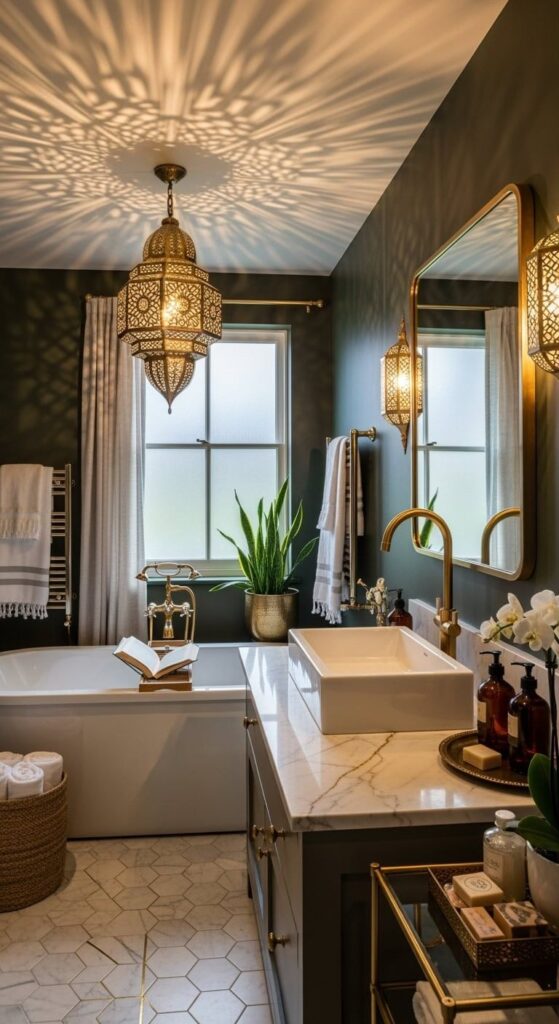
Lighting shapes how brown appears, especially in bathrooms with limited natural light. The wrong bulb can dull the tone, while warm lighting keeps it rich and balanced.
Tall fixtures near mirrors add structure, while a pendant light introduces a softer ambient glow. Matching lighting tones with wood elements ties everything together visually.
Skipping dimmers limits flexibility. Adding one allows the space to shift from functional brightness to a calmer evening setting.
Brown Accessories for a Cohesive Look
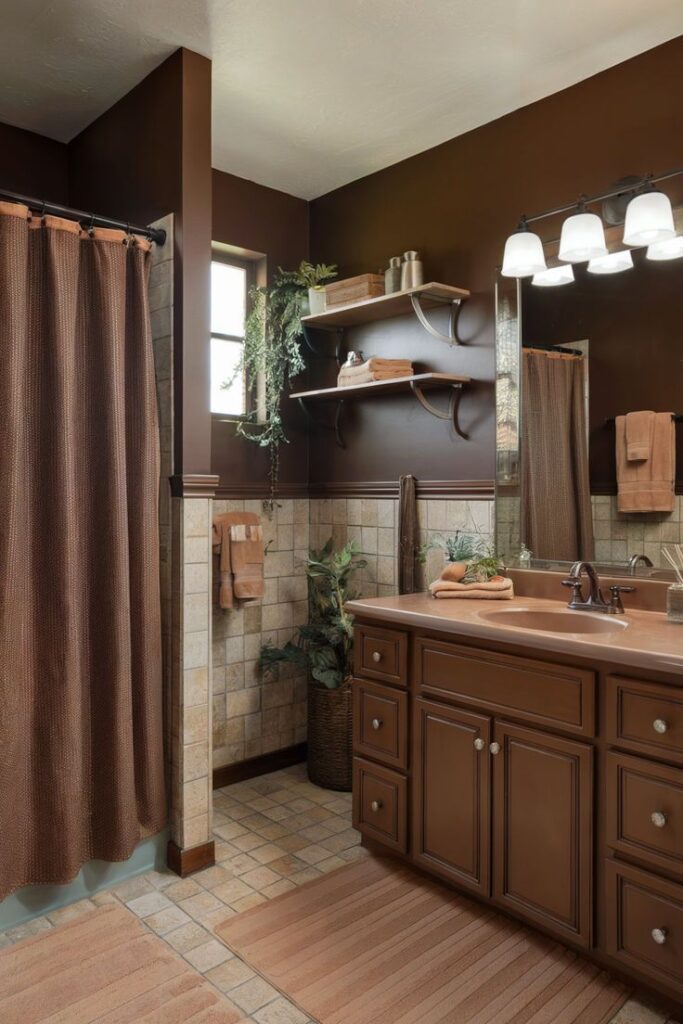
Using brown through accessories is a simple way to build a layered, cohesive feel without changing major surfaces. In a shared bathroom, this approach keeps things flexible and easy to update.
Mixing textures like soft towels, woven baskets, and framed pieces adds depth without crowding the space. Keeping the base neutral helps these details stand out.
Too many shades can feel scattered. Sticking to two or three tones keeps the look consistent and easy on the eyes.
Brown and White Striped Wallpaper
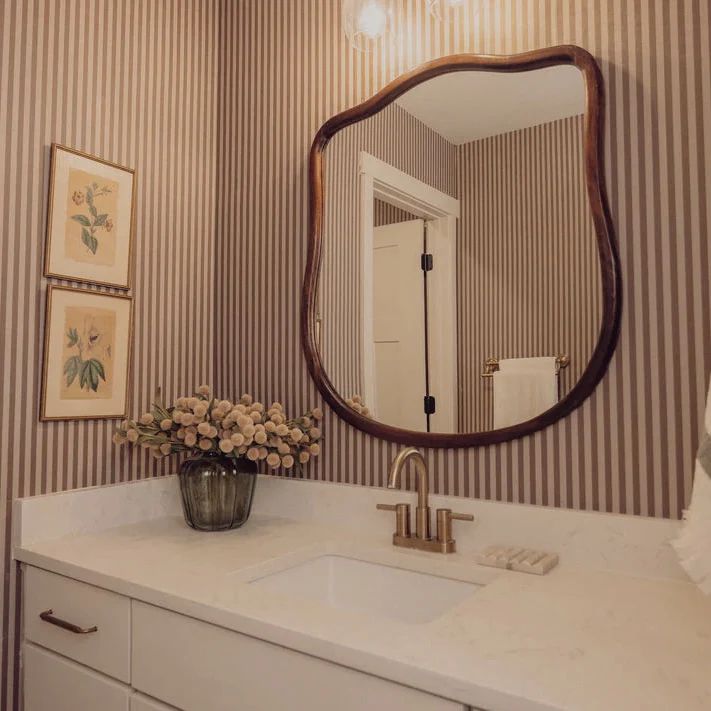
Striped wallpaper adds structure without extra decor, making it useful in plain bathrooms. In a narrow space, vertical stripes can make the ceiling feel higher, while horizontal ones widen the room visually.
The brown and white mix keeps it balanced, especially with clean white fixtures that prevent it from feeling busy. Keeping floors and countertops simple avoids competing patterns.
Using stripes on every wall can feel overwhelming. Limiting it to one area keeps the effect sharp and easy to live with.
Brown and Gold Combination
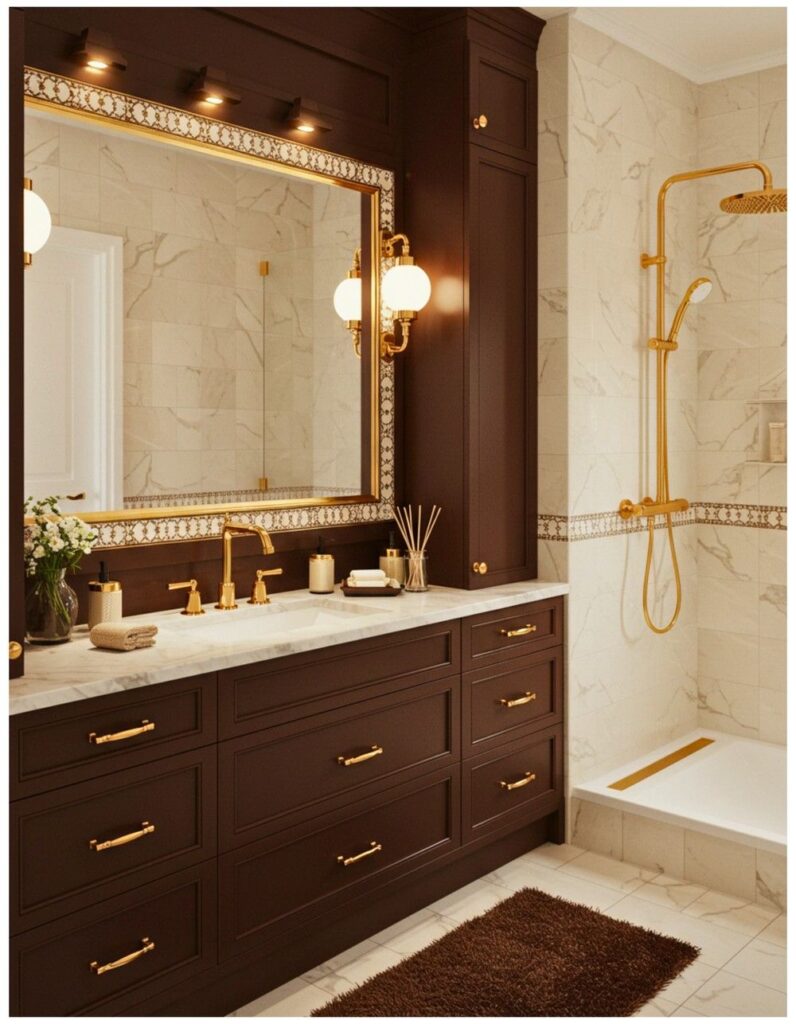
Brown paired with gold creates a warm, layered richness, especially in bathrooms with softer lighting. In a smaller room, too much shine can feel intense, so placement matters.
Gold accents like mirrors or fixtures stand out against brown, while brushed finishes soften reflections under artificial light. This keeps the look refined instead of flashy.
Overusing gold can shift the balance quickly. One or two key pieces are often enough to change the mood without crowding the space.
Nature-Inspired Brown Decor
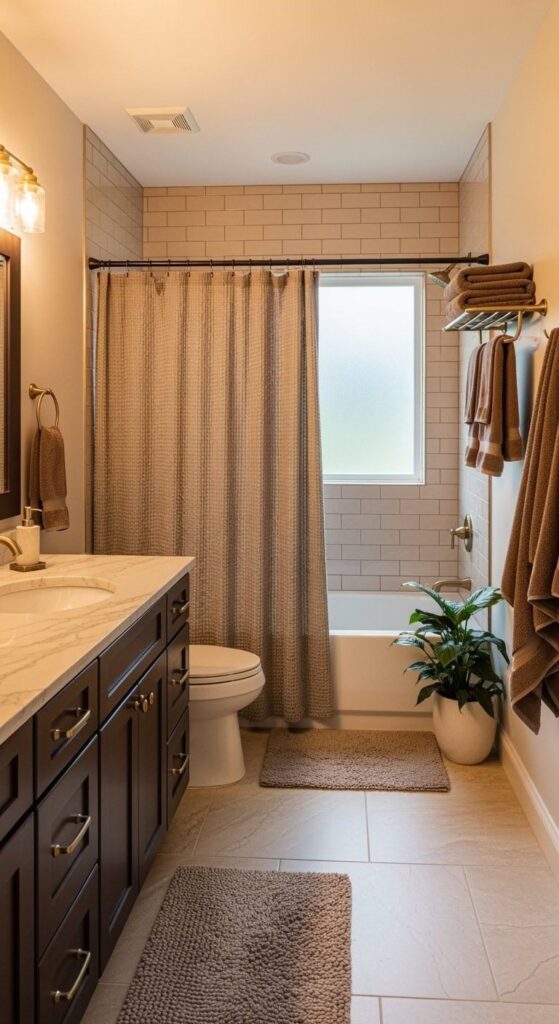
Nature driven brown decor creates a relaxed, grounded atmosphere, especially in bathrooms with access to light. In a humid space, materials like wood and plants respond differently, so selection matters.
A wood ceiling adds warmth from above, while green plants contrast with earthy tones and soften hard surfaces. This mix keeps the room feeling alive and balanced.
Not all plants handle humidity well. Choosing ones like pothos or ferns helps maintain the look without extra effort.
Minimalist Brown Bathroom Design
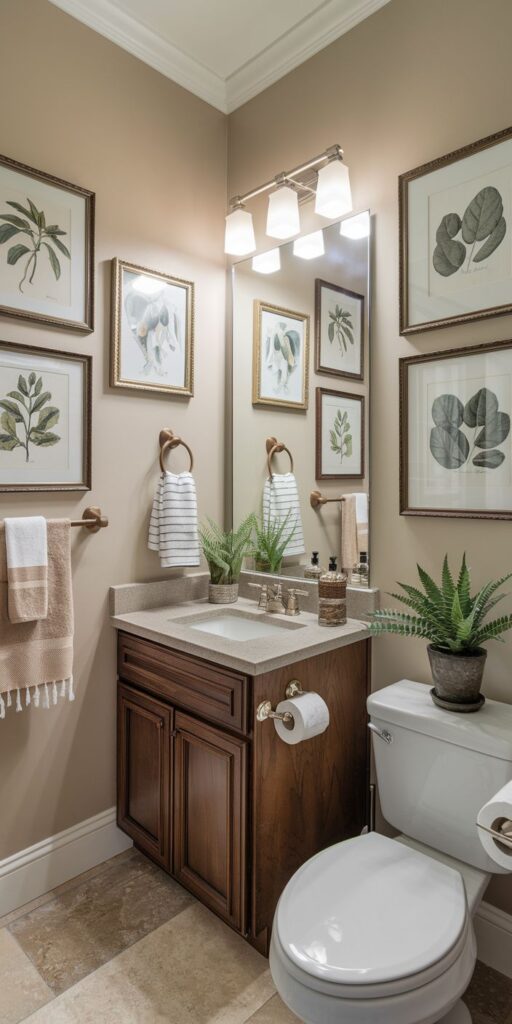
Minimalism can sometimes feel cold, but brown fixes that. This bathroom keeps everything clean and simple, but the warm wood makes it feel comfortable instead of sterile.
Big windows help too. Natural light plus brown tones gives that calm, quiet vibe that feels really good in the morning.
Try this: In a minimalist brown space, hide clutter. Use closed storage so the warm tones stay the focus.
Brown Textiles for Comfort
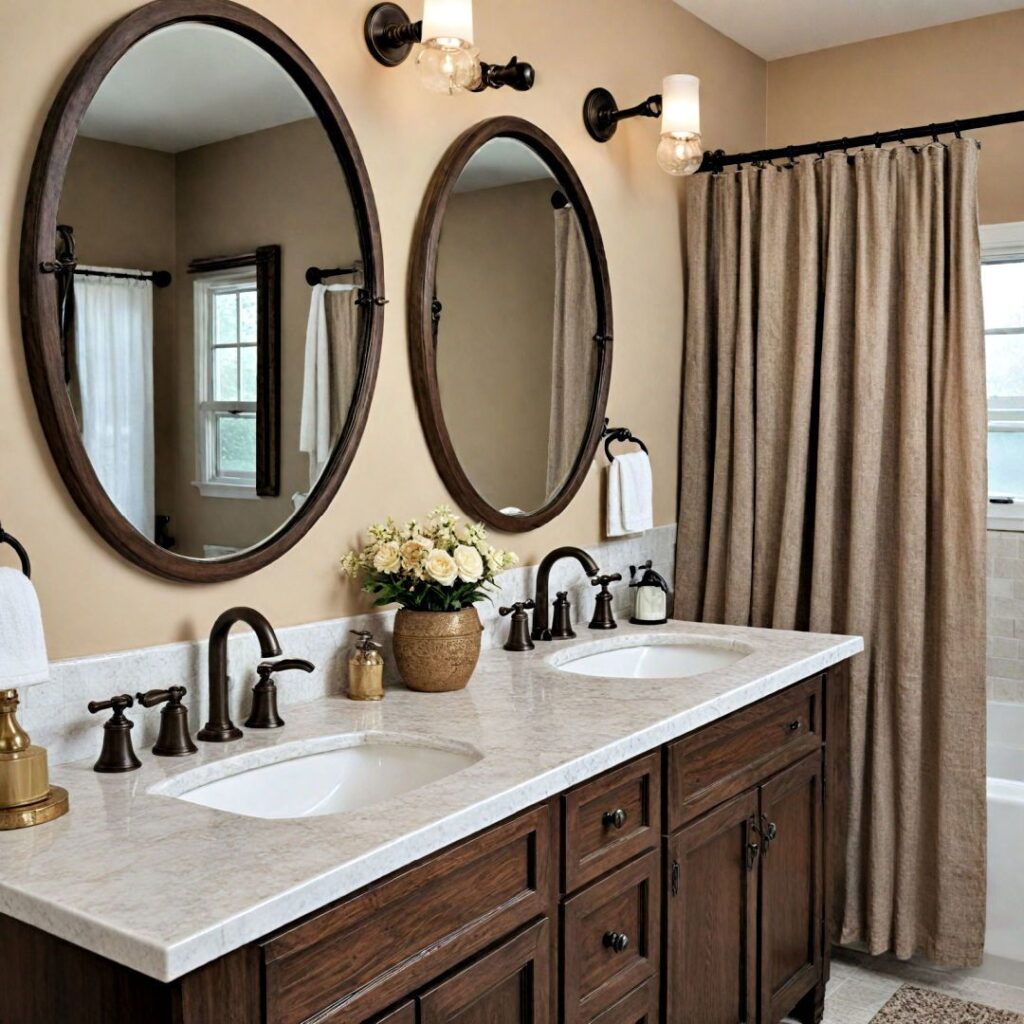
Minimal design with brown tones keeps the space clean yet comfortable, avoiding the cold feel of plain minimalism. In a bathroom with good natural light, brown surfaces appear softer and more inviting.
Simple lines and closed storage reduce visual clutter, allowing warm wood tones to stand out. This keeps the space calm and easy to maintain.
Open storage can break the clean look quickly. Keeping everyday items hidden helps preserve the quiet, uncluttered feel.
Warm Lighting to Enhance Brown Tones
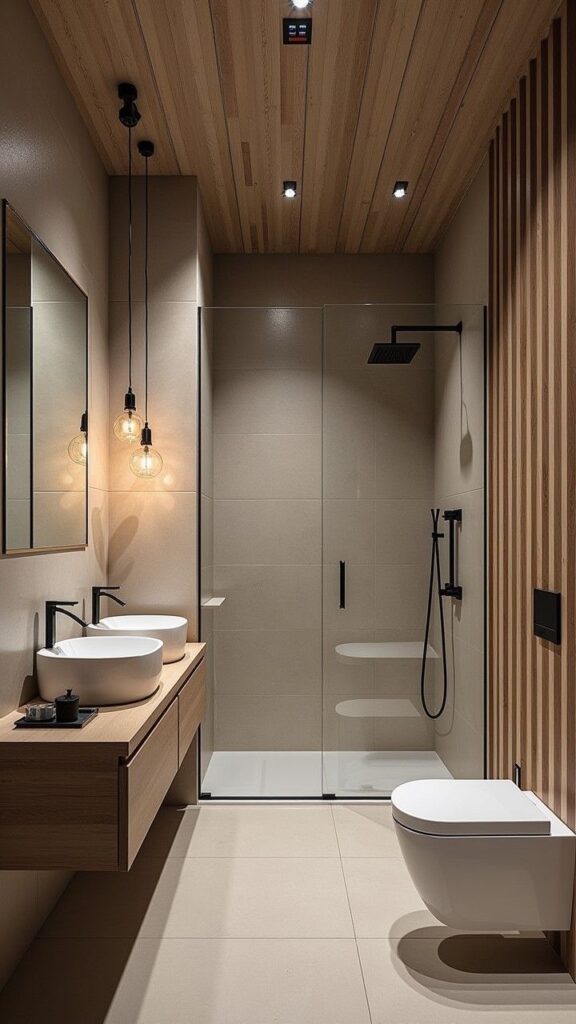
Brown textiles add instant warmth without major changes, especially in bathrooms that feel cold. In a tile-heavy space, soft elements like rugs and towels help balance the harder surfaces.
Mixing textures like plush mats and smoother towels keeps the setup from looking too uniform. This layering makes the room feel used and comfortable.
Using only one tone can feel flat. Blending a couple of shades keeps the space visually soft and more natural.
Dramatic Brown Tile Patterns
Lighting strongly affects how brown appears, especially in bathrooms with limited natural light. Warm bulbs bring out richness, while cooler tones can make surfaces look dull.
Using multiple light sources like sconces and mirrors, helps spread light evenly across textures. This prevents shadows from making the space feel heavier.
Relying on a single overhead light often leaves dark corners. Adding a secondary source improves both function and mood.
Mixing Brown with Other Earthy Tones
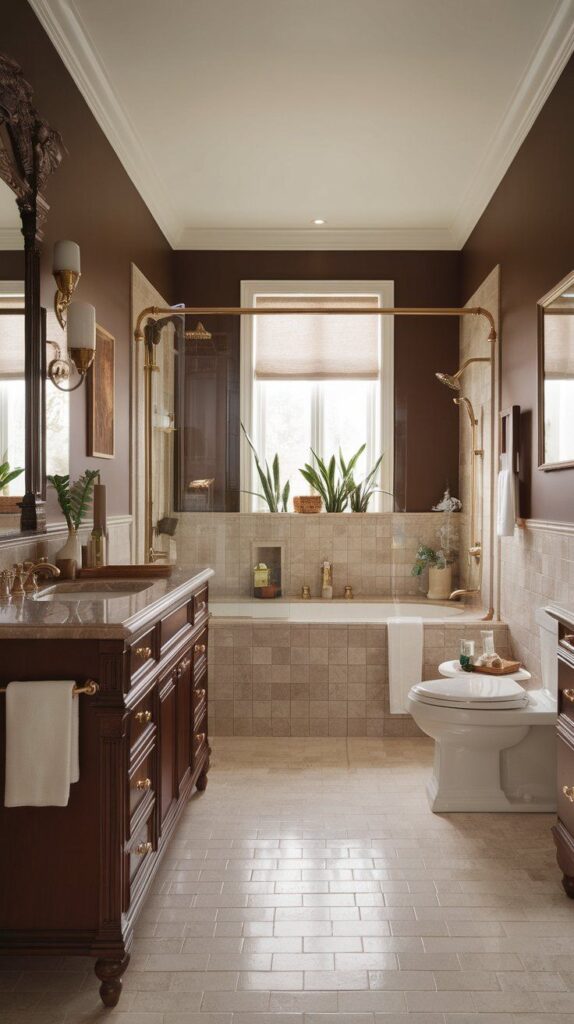
Patterned brown tiles introduce visual depth without extra decor, making them useful in simple layouts. In a small bathroom, using them across all walls can feel overwhelming.
Keeping fixtures minimal and placing patterned tiles on one feature wall lets the design stand out without crowding the space. Subtle tone variations add movement.
Overusing patterns can compete with other elements. Limiting them to one area keeps the look controlled and easier to maintain.
Brown and Black Contrasting Elements
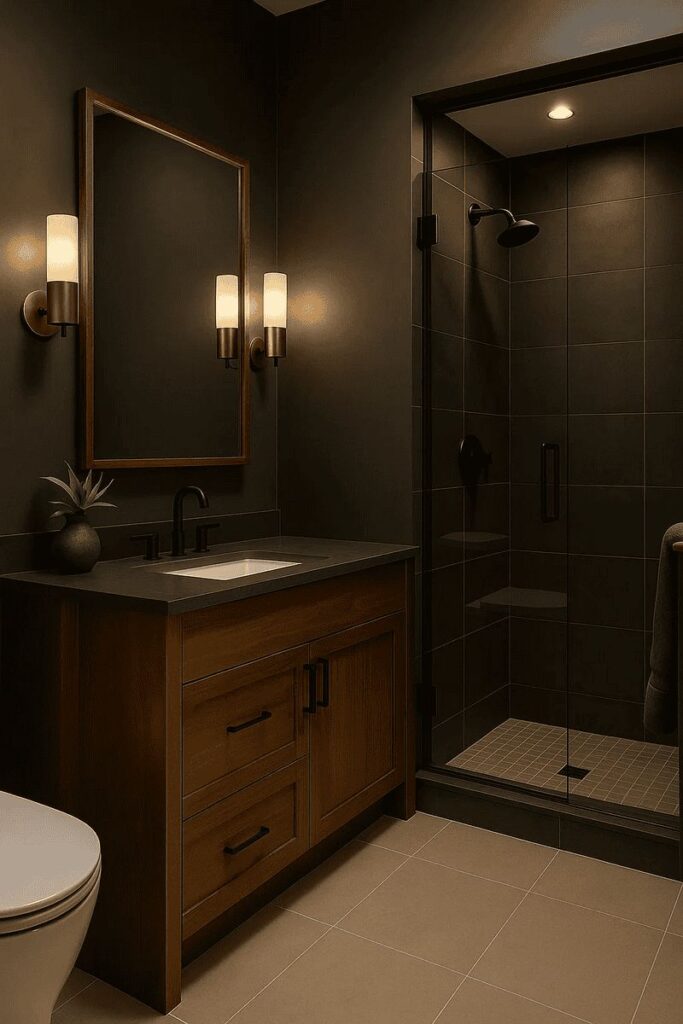
Brown pairs naturally with other earthy shades, creating a layered and grounded look. In a shared bathroom, this mix helps hide everyday wear better than single-tone designs.
Combining materials like wood, textiles, and plants adds variation without making the space feel busy. Repeating one accent tone keeps everything connected.
Too many colors can feel scattered. Choosing one supporting shade and using it consistently improves cohesion.
Brown Vanity with Unique Design
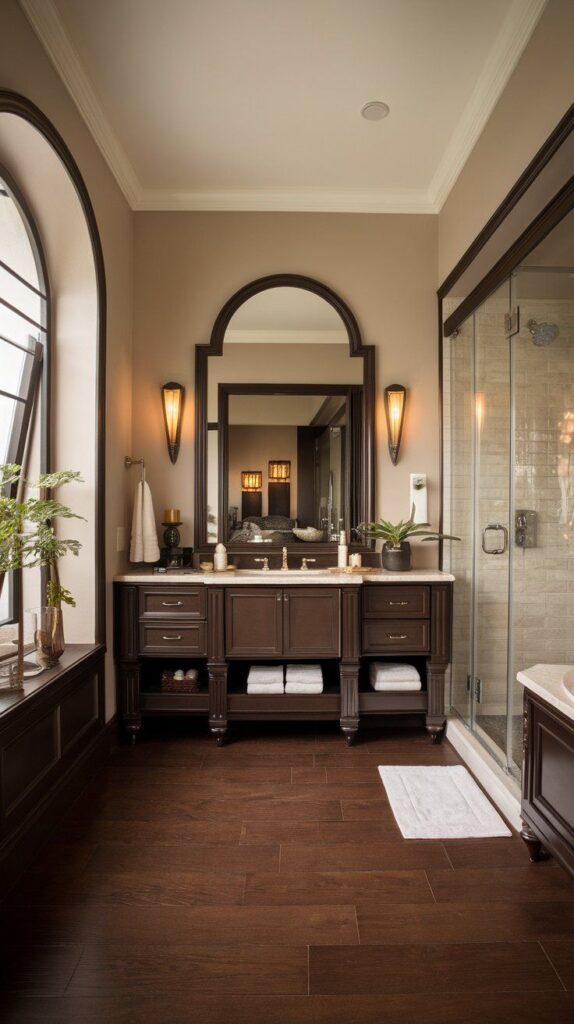
Brown and black create a strong contrast that feels modern yet warm. In a low-light bathroom, too much black can make the space feel closed, so balance is key.
Using black in hardware or fixtures adds structure, while brown surfaces keep the overall tone softer. Rounded shapes help ease the contrast.
If black dominates too much, the warmth gets lost. Keeping it as an accent preserves the balance.
Open Shelving with Brown Decor
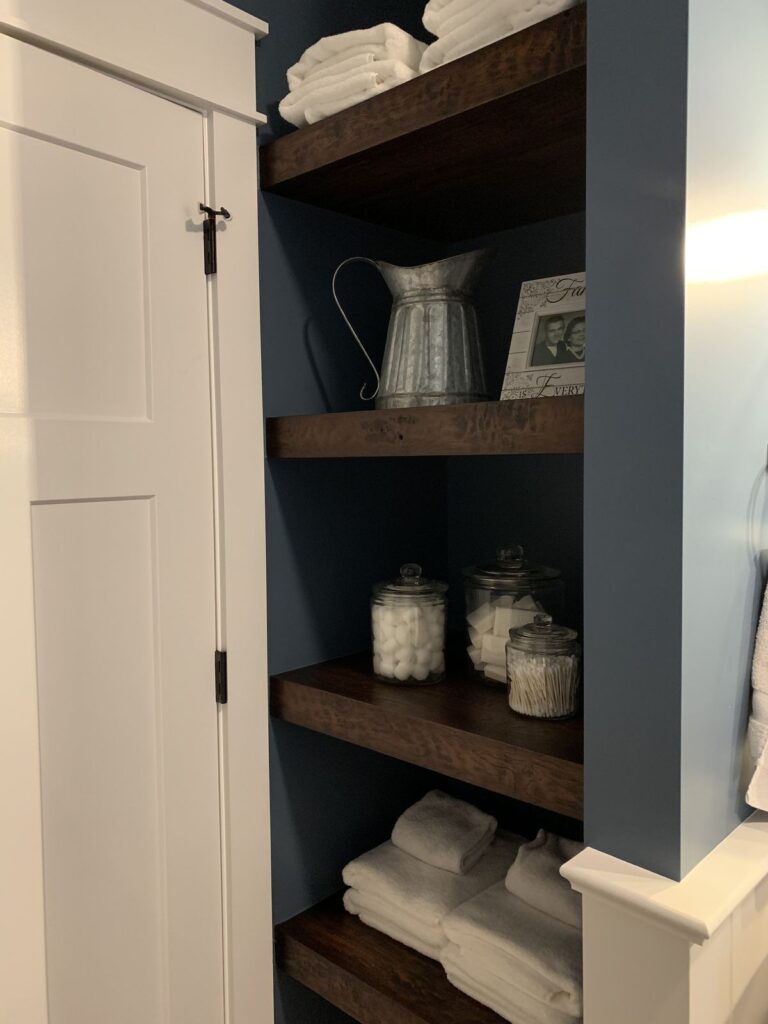
Open shelving adds both function and style, especially in bathrooms with limited storage space. In a busy household, it can quickly look cluttered without structure.
Using matching containers and repeating brown tones keeps the setup organized. A light backdrop like white tile helps items stand out clearly.
Overfilling shelves can make them look messy. Leaving small gaps between items keeps the display clean and easy to use.
Finish Your Bathroom Makeover
• How to Choose Bathroom Tiles
• Painting Bathroom Tile Floor
• Guest Bathroom Essentials
• Small Bathroom Wallpaper Ideas
FAQs
What shades of brown work best in a bathroom?
Lighter browns like beige or tan work well in small or low light bathrooms because they reflect more light. Darker tones like chocolate or cocoa add depth but need balance. A matte finish often feels softer, while glossy surfaces reflect light and look sharper. Testing samples under your actual lighting helps avoid unexpected dullness.
How do you keep a brown bathroom from feeling too dark?
Balance is key. In a compact space, pair brown with white fixtures or lighter walls to keep it open. Use warm lighting and mirrors to spread brightness across the room. Too many dark surfaces together can feel heavy, so breaking them up with lighter elements keeps the space comfortable.
Is brown a good choice for small bathrooms?
Yes, when used carefully. In a small layout, brown can add depth instead of shrinking the room if combined with lighter tones. Using it on one wall, vanity, or accents works better than covering every surface. This approach keeps the room feeling structured without closing it in.
What materials pair well with brown in bathrooms?
Brown works well with wood, marble, glass, and woven textures, especially in spaces with mixed finishes. In a humid environment, materials like sealed wood or stone hold up better over time. Combining smooth and textured surfaces prevents the design from feeling flat.
How can I update my bathroom with brown without renovating?
Start with small changes. In a shared or rented bathroom, adding towels, rugs, baskets, or lighting updates can shift the tone quickly. Keeping the base neutral and layering brown through accessories makes it easy to adjust later if needed.