11 Staircase Organization Tips That Actually Keep Clutter Away

This post contains affiliate links, and we will be compensated if you buy after clicking on our links. Read our disclaimer.
Read our editorial process
Staircases rarely stay clutter-free for long. A few shoes, a shopping bag, or a pile of mail can quickly turn the steps into a holding area for things that belong somewhere else.
The challenge is that stairs connect different parts of the house, so clutter naturally passes through them. Without a system, those temporary items tend to stick around.
A few small changes can make a big difference.
These 11 staircase organization tips will help you reduce clutter, improve safety, and make better use of the space around your stairs.
1. Stop Using the Stairs as a Temporary Holding Area
You have probably walked past the same shopping bag or pile of clothes on the stairs for three days straight. At first it feels temporary, then it quietly becomes part of the staircase.
That happens because stairs sit between where items are and where they belong. People leave things there intending to move them later, but later often turns into tomorrow.
Common staircase clutter includes:
- Mail and paperwork
- Laundry baskets
- Toys
- Shopping bags
- Books
- Shoes
The fix is creating one rule: nothing stays on the stairs overnight. If an item needs to go upstairs, take it the next time you go up. If it belongs downstairs, bring it with you on the next trip down.
The most common mistake is treating the stairs like storage. They are a pathway, not a holding area.
You’ll know it worked when you can walk up and down without stepping around anything.
Smart Ideas for Better Home Storage
• Hallway Organization Tips
• Entryway Organization Hacks
• Apartment Organization Ideas
• Kitchen Organization Ideas
2. Create a Daily Stair Reset Routine
You may notice the stairs look clean in the morning and crowded again by evening. That is usually not an organization problem. It is a maintenance problem.
A short reset at the end of the day prevents small messes from turning into permanent clutter. Most staircases need less than five minutes of attention.
Use a quick routine like this:
| Task | Time Needed |
|---|---|
| Remove loose items | 2 minutes |
| Check landings | 1 minute |
| Return misplaced items | 2 minutes |
The items people miss most are things left on the middle steps because they blend into the background after a few days.
A staircase reset works best when everyone in the home follows the same rule. One person cannot maintain the system if everyone else treats the stairs as storage.
You’ll know it worked when the staircase stays mostly clear without requiring a weekend cleanup.
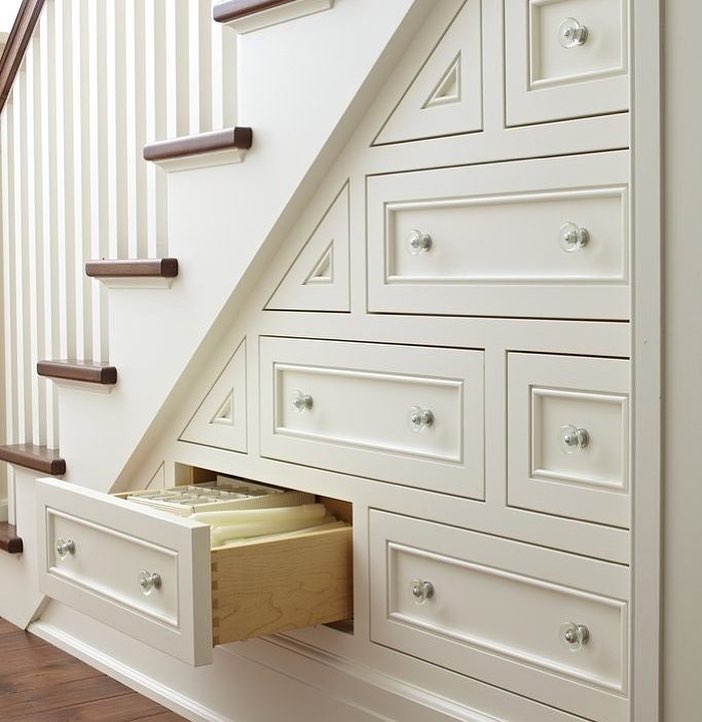
3. Use Under-Stair Space for Hidden Storage
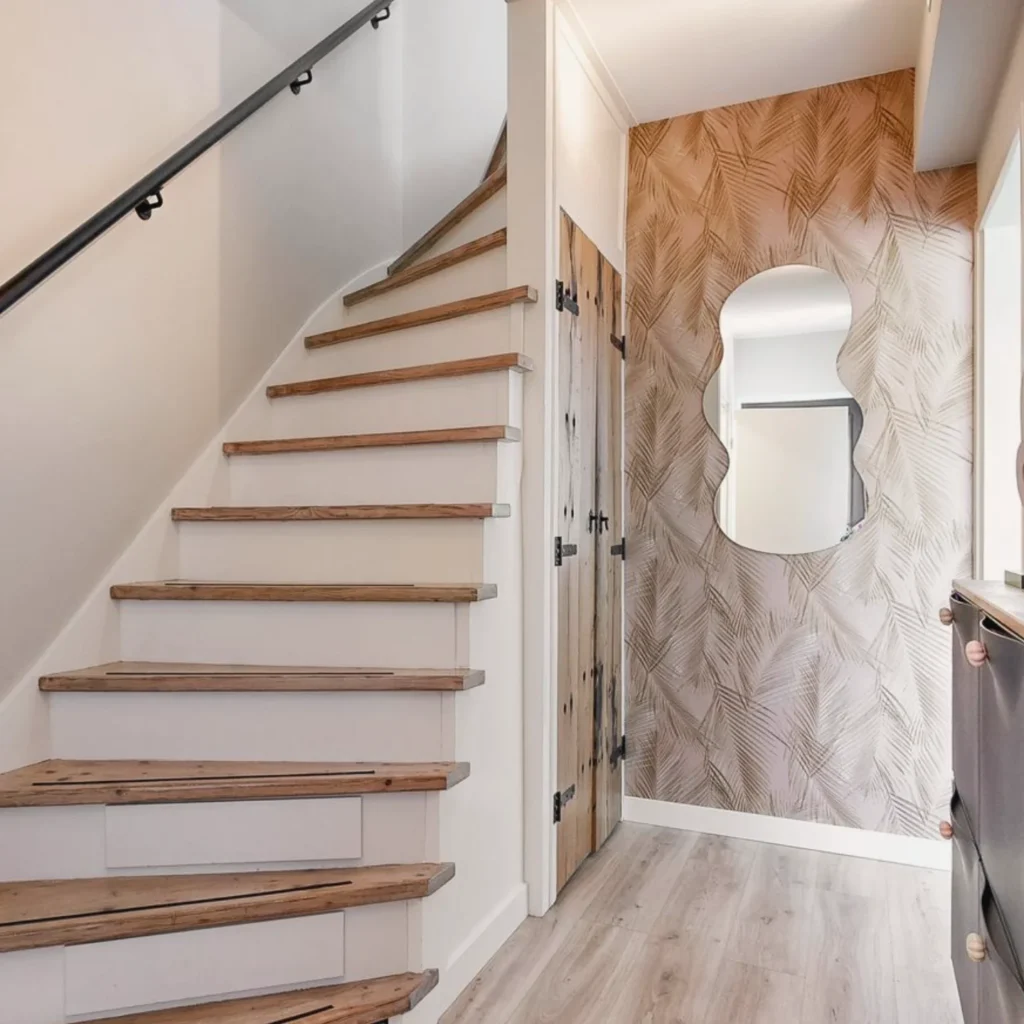
That empty space beneath the staircase often gets ignored until clutter starts collecting there. Then it becomes a random pile of boxes, seasonal items, and things nobody uses.
Instead of seeing it as leftover space, treat it as one of the largest storage areas in the house. The right setup depends on what you need to store.
| Storage Type | Best For |
|---|---|
| Cabinets | Seasonal items |
| Drawers | Shoes |
| Shelves | Baskets and bins |
| Closed doors | Household supplies |
Some homes benefit from built-in storage, while others only need a few sturdy shelves. The goal is not adding more storage. The goal is giving existing items a defined home.
The biggest mistake is storing things you need every day at the very back. Frequently used items should stay easy to reach.
You’ll know it worked when you stop leaving items beside the stairs because there is already a designated place for them.
4. Add a Stair Basket System That Actually Gets Used
You may have seen staircase baskets that looked organized for a week and then turned into overflow bins. That happens when the basket becomes the final destination instead of a temporary stop.
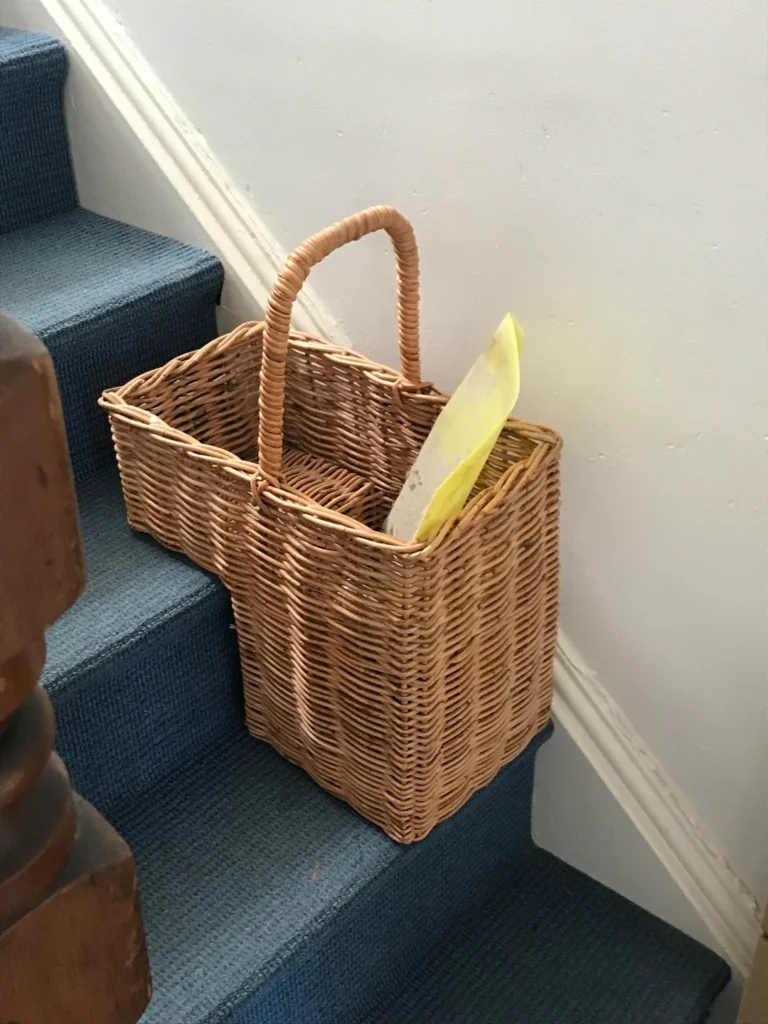
A basket system works best when each basket has one purpose and one owner. People are more likely to use it correctly when the destination is clear.
Examples include:
- Upstairs belongings
- Downstairs belongings
- Children’s items
- Pet supplies
Labels can help in busy households. Smaller baskets also prevent items from piling up beyond what can be carried comfortably.
The trade-off is that baskets reduce clutter visually but still require someone to empty them regularly.
If your family already carries items between floors daily, baskets can work well. If items tend to sit untouched for days, skip the baskets and focus on behavior changes first.
5. Organize Shoes Before They Reach the Staircase
You have probably found a single shoe halfway up the stairs with no sign of its match. Shoes often end up there because there is no clear storage system nearby.
The solution starts before the shoes ever reach the staircase. Create storage where shoes naturally come off or where they are usually needed.
| Shoe Type | Storage Location |
|---|---|
| Everyday shoes | Entryway |
| Seasonal shoes | Closet |
| Sports shoes | Mudroom |
| Formal shoes | Bedroom storage |
Many households keep too many active pairs near the door. Rotating seasonal footwear reduces crowding and makes storage easier to maintain.
The mistake people make is storing every pair in the same area. Daily-use shoes and occasional-use shoes should not compete for the same space.
You’ll know it worked when shoes stop migrating toward the stairs throughout the week.
6. Turn Staircase Walls Into Functional Storage
A narrow staircase can feel cramped when items have nowhere to go. The wall beside the stairs often holds more storage potential than people realize.
Using vertical space removes pressure from steps and landings. Even small additions can make a noticeable difference.
Useful options include:
- Hooks for bags
- Key holders
- Mail organizers
- Floating shelves
- Dog leash stations
- Lightweight coat hooks
The key is choosing items that stay flat against the wall. Bulky storage can make staircases feel crowded and may create safety concerns.
The most overlooked detail is placement. Storage should stay accessible without forcing someone to lean over the stairs to reach it.
You’ll know it worked when frequently used items stay off the steps because they already have a nearby home.
7. Keep Stair Landings Clear and Purposeful
You clean the stairs, then notice clutter gathering on the landing instead. That flat surface often becomes a parking spot for items waiting to go somewhere else.
A landing should support movement, not storage. Even a small pile can make the area feel crowded and increase the chance of trips or falls.
If your landing is large enough, you may be able to add a narrow table or small shelf. Smaller landings usually work better when left open.
The most common items that collect here include:
- Laundry baskets
- Packages
- Books
- Toys
- Decorative items that have multiplied over time
The mistake is treating the landing like another room. It is still part of the staircase system.
You’ll know it worked when the landing feels easy to walk through and nothing needs to be moved out of the way.
8. Create a Drop Zone Near the Bottom of the Stairs
You bring something home, set it near the stairs, and tell yourself you will carry it up later. A few days later, three more items have joined it.
That is why a drop zone can help. It creates a controlled place for items in transition instead of allowing clutter to spread across the staircase.
| Drop Zone Item | Purpose |
|---|---|
| Basket | Miscellaneous items |
| Tray | Mail and papers |
| Hooks | Bags and jackets |
| Small shelf | Daily essentials |
Keep the drop zone small. Large storage areas often encourage people to leave more items than necessary.
The detail most people miss is adding a time limit. Items should not stay there longer than a day or two.
You’ll know it worked when things waiting to move upstairs stay contained instead of spreading onto the steps.
9. Make the System Easy for Kids to Follow
You can organize a staircase perfectly, but children will struggle to maintain it if the system feels confusing. Adults often create storage solutions that make sense to them but not to younger family members.
Simple systems tend to last longer. Clear labels, easy-to-reach storage, and consistent routines make a bigger difference than complicated rules.
Helpful habits include:
- Returning toys before bedtime
- Storing backpacks in one location
- Keeping books in designated bins
- Using labeled baskets
Age matters here. Younger children may need picture labels, while older kids can handle more responsibility.
The mistake is expecting children to remember rules that are not visible. The easier the system is to understand, the more likely they are to use it.
You’ll know it worked when reminders become less frequent and items start returning to their assigned places automatically.
10. Use Decorative Storage That Matches Your Home
Storage can solve clutter while still fitting the look of your home. The challenge is finding pieces that work hard without drawing attention to the mess they are holding.
Many people buy storage first and then try to make it fit. A better approach is choosing storage that matches the materials, colors, and style already present nearby.
Popular options include:
- Woven baskets
- Wooden crates
- Storage benches
- Closed cabinets
- Decorative bins
There is always a trade-off. Open storage provides quick access but can look cluttered when overloaded. Closed storage hides mess but requires more effort to maintain.
Ask yourself one question: do you need quick access or visual calm?
If you frequently use the stored items, open storage often works best. If appearance matters more, closed storage is usually the better choice.
11. Schedule a Weekly Staircase Maintenance Check
You may notice small problems appearing even after creating a good system. That does not mean the system failed. Every organization system needs occasional adjustment.
A weekly check helps catch clutter before it becomes overwhelming. Most households can complete this review in less than ten minutes.
| Check | Frequency |
|---|---|
| Remove clutter | Weekly |
| Review baskets | Weekly |
| Vacuum stairs | Weekly |
| Deep clean stairs | Monthly |
| Reassess storage system | Quarterly |
Pay attention to recurring problem areas. If the same items keep appearing on the stairs, the issue usually starts somewhere else in the house.
The most overlooked step is reviewing storage containers. Baskets and bins often become clutter themselves when nobody empties them.
You’ll know it worked when the staircase stays manageable between maintenance sessions instead of requiring major cleanups.
Conclusion
A staircase stays organized when it supports your daily routine instead of working against it. Most clutter appears because items do not have a clear destination or because small habits allow things to collect over time.
Focus on creating simple systems, maintaining them consistently, and adjusting them when your needs change.
A few minutes of attention each week can keep the stairs safer, cleaner, and easier to use. The goal is not a staircase that looks untouched.
It is one that functions well every day.
Explore More Organization Guides
• DIY Garage Organization Ideas
• Basement Organization Tips
• Desk Organization Ideas
• Homeschool Organization Ideas