25 DIY Fountain Ideas to Transform Your Outdoor Space

This post contains affiliate links, and we will be compensated if you buy after clicking on our links. Read our disclaimer.
Read our editorial process
A fountain can do more than decorate a yard. It adds movement, sound, and a sense of calm that instantly changes how an outdoor space feels.
Many homeowners assume water features require a large budget or professional installation. In reality, DIY fountains can be surprisingly simple, using materials such as planters, stone, barrels, or other repurposed containers.
The right fountain depends on your space, style, and budget. Some designs become a focal point, while others blend naturally into the surrounding landscape.
These 25 DIY Fountain Ideas showcase creative ways to add character, texture, and soothing water sounds to your backyard or garden.
Most Common DIY Fountain Mistakes
Choosing the wrong pump size is the most frequent error. A pump too weak for the container height will barely move water. Too strong and it sprays everything around the basin.
Most people seal the outside of their container and forget the inside. Unsealed interiors absorb water slowly and either weaken the material or quietly drain the basin between refills.
Skipping a level surface check before filling costs time later. Even a two-degree tilt redirects water completely off course, and correcting it means emptying and starting over.
Tubing length is almost always underestimated. Short tubing pulls the pump off the base when the container settles. Always leave more slack than seems necessary before cutting.
Running the pump without water, even briefly, burns out the motor fast. This happens most during setup when people test the pump outside the basin. Never run a submersible pump dry, not even for a few seconds.
Many first builds ignore the evaporation rate. In summer heat, a small fountain can lose several inches of water weekly. A low water level starves the pump and shortens its life significantly.
Placing the fountain directly on soil without a stable base is a slow problem. Ground shifts seasonally, and what sits level in spring will tilt by autumn. A flat paver or compacted gravel base prevents that entirely.
1. Classic Tiered Stone Fountain
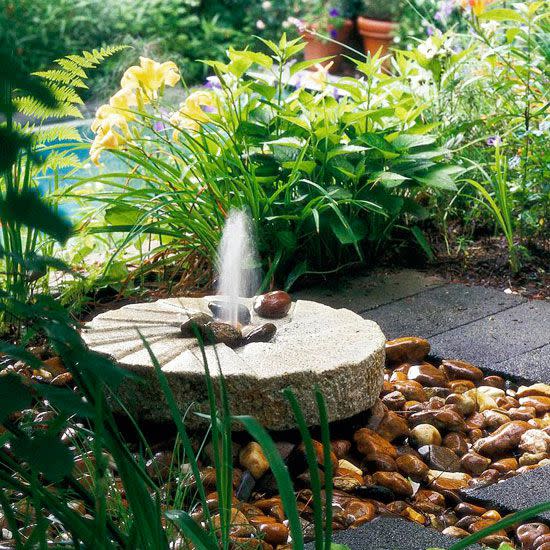
Stone fountains look simple until you start stacking. Weight distribution matters more than most guides mention, and a small tilt changes how water flows entirely.
Use a mix of rough and smooth stones to control the water path. Rough stone spreads the flow wider, smooth stone lets water sheet cleanly and drop faster.
Place the pump off-center in the base tier, not in the middle of the basin. In shaded spots, still water between tiers reads as a dark mirror, making the whole structure feel more grounded.
2. Rustic Wooden Barrel Fountain
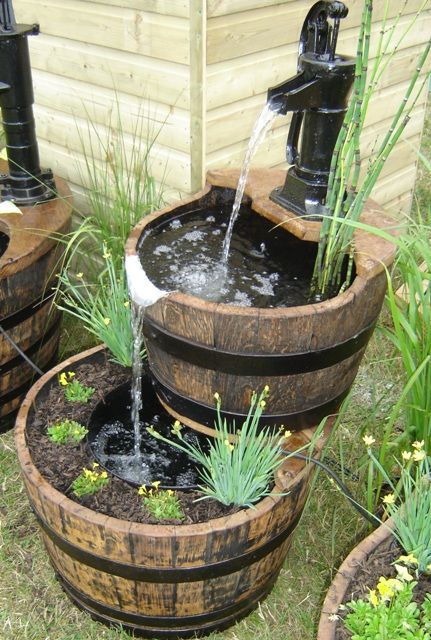
Old barrels absorb water before they seal. Let it soak for 24 hours before finalizing any pump or tubing placement.
Drill the tubing hole just above the base, not at the lowest point. This keeps a small water reserve at the bottom, which reduces air noise and protects the pump.
Moss and trailing plants around the rim soften both the sound and the splash. In full sun, that organic layer also slows evaporation, so you refill less often.
3. Wall-Mounted Vertical Fountain
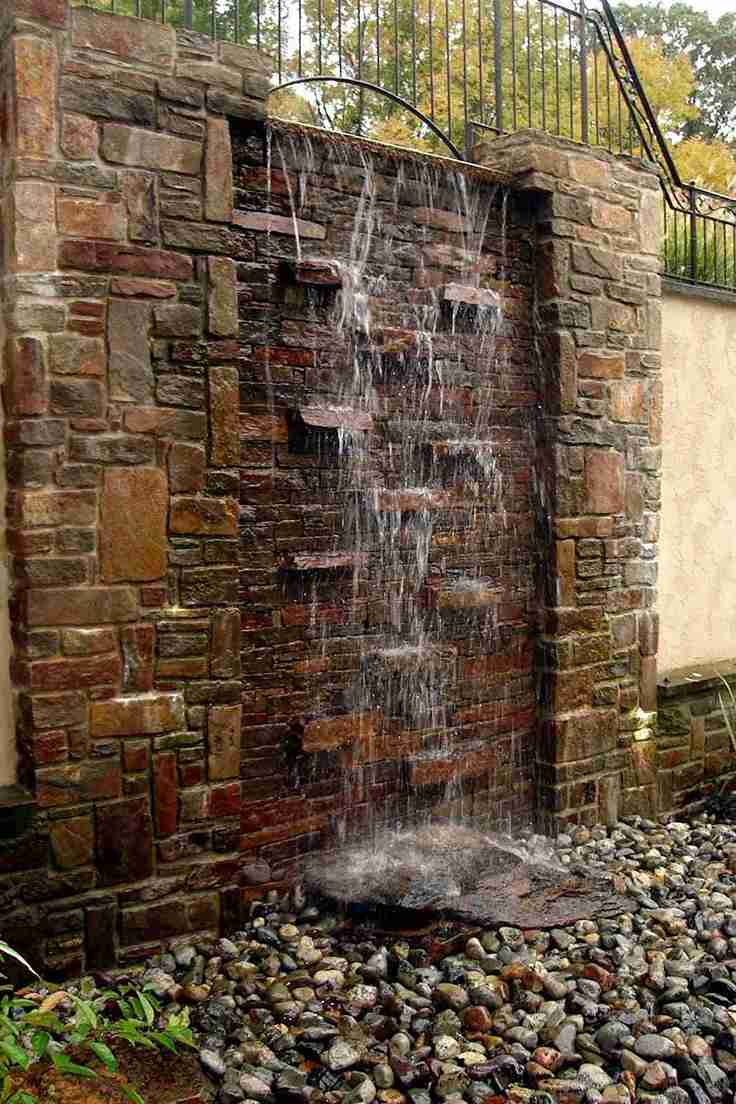
Check the wall for hollow sections before mounting anything. A fountain pulling away mid-season is a common and entirely avoidable problem.
Narrow channels need a lower flow rate, not a stronger pump. Too much pressure creates spray instead of a clean water sheet against the surface.
A small upward-facing LED behind the lowest channel adds real depth at night. Moving water catches light from below in a way that makes a simple build look far more considered.
4. Mini Zen Garden Fountain

Shallow containers amplify pump hum more than deep ones. A thin layer of smooth stones placed over the pump muffles vibration without blocking water flow.
Keep the flow slow enough that the surface stays calm and movement stays visible. River stones work better than decorative pebbles because they do not shift under moving water.
Indoors, these fountains carry sound much farther than expected. Position away from electronics and closer to where you actually sit.
5. Mosaic Tile Fountain
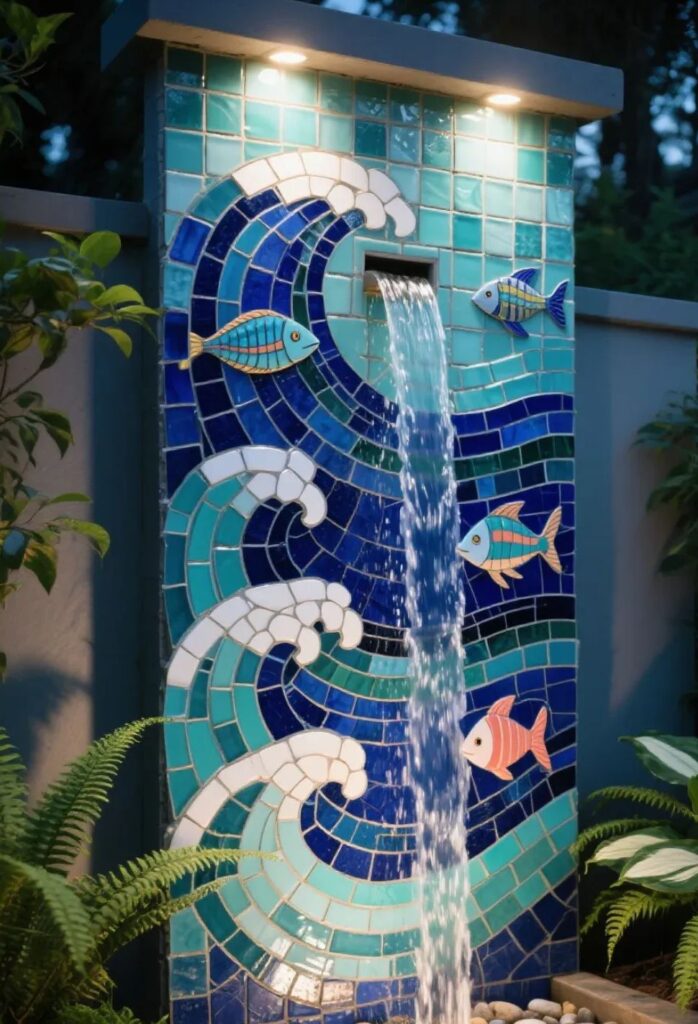
Standard wall grout is not rated for constant water contact. Use epoxy-based or pool-rated grout from the start, even on small projects.
Glass tiles create sharp, moving reflections in direct sunlight, which can feel visually busy in a small space. Ceramic gives a softer, more stable effect in bright outdoor settings.
Concentrate color near the waterline and go neutral toward the base. That shift draws the eye to the moving water, not the container.
6. Recycled Teacup Fountain
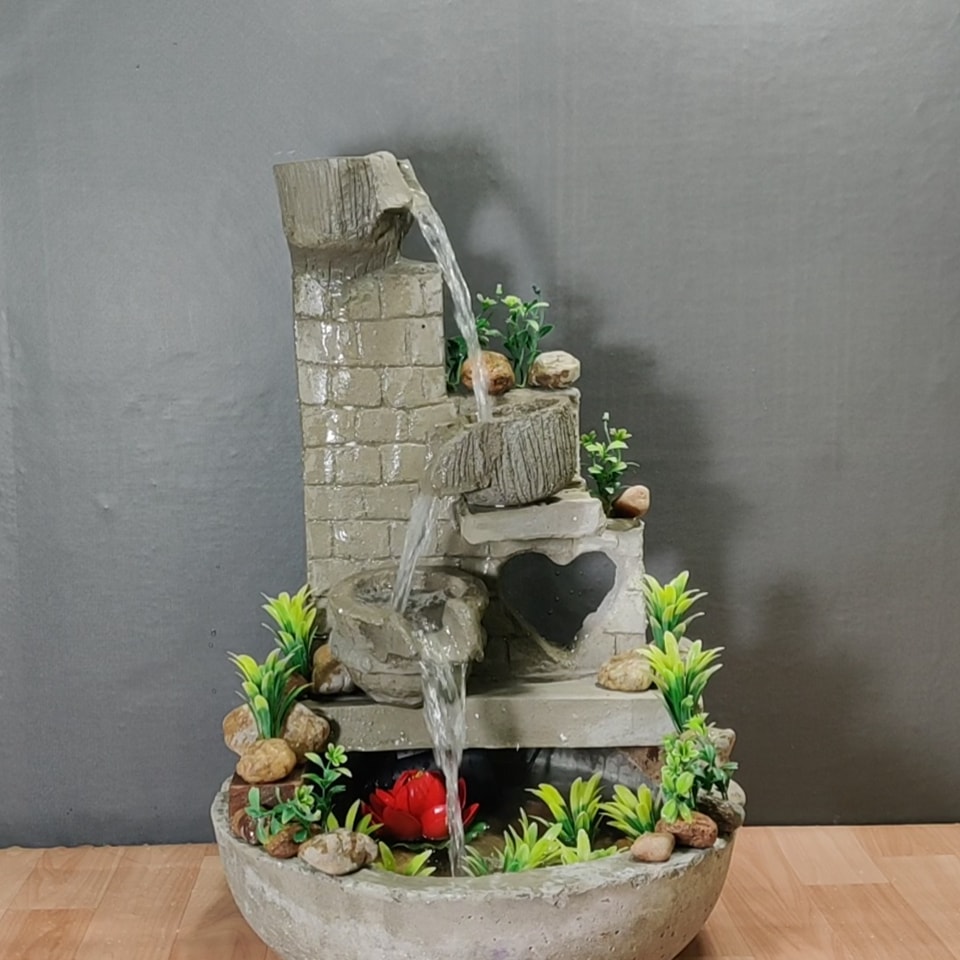
Mismatched teacups create uneven rim heights, and that unevenness affects where water spills. Test the stack dry before committing to any adhesive or tubing path.
Size the cups so each one overflows at the rim, not through a drilled hole. Overflow flow looks more natural and avoids the cracking risk that drilling ceramic creates.
Vintage porcelain is thinner than modern ceramic and chips under pressure more easily. Handle the stacking points carefully, as a small crack at the base cup will drain the whole reservoir fast.
7. Concrete Flower Pot Fountain
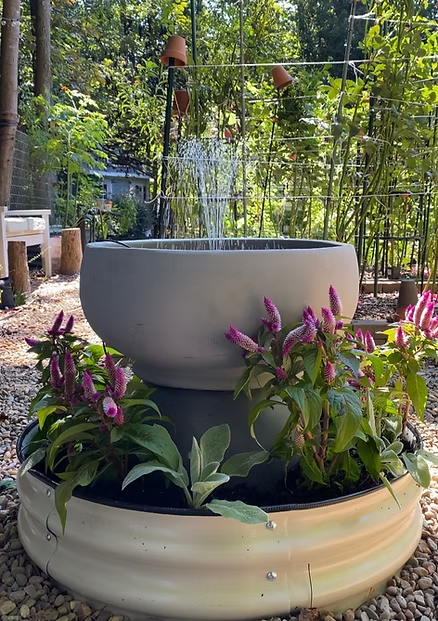
Unsealed concrete is porous and will slowly absorb water, which weakens the pot wall over time. Seal the interior of each pot with a waterproof masonry sealer before assembling anything.
Stacking pots of varying sizes works best when the size difference between tiers is significant. Too similar in diameter and the overflow looks more like a leak than a cascade.
Succulents around the base work well visually, but need dry soil to survive. Keep the planting zone slightly raised so runoff water drains away from the roots, not into them.
8. DIY Waterfall Fountain with Rocks
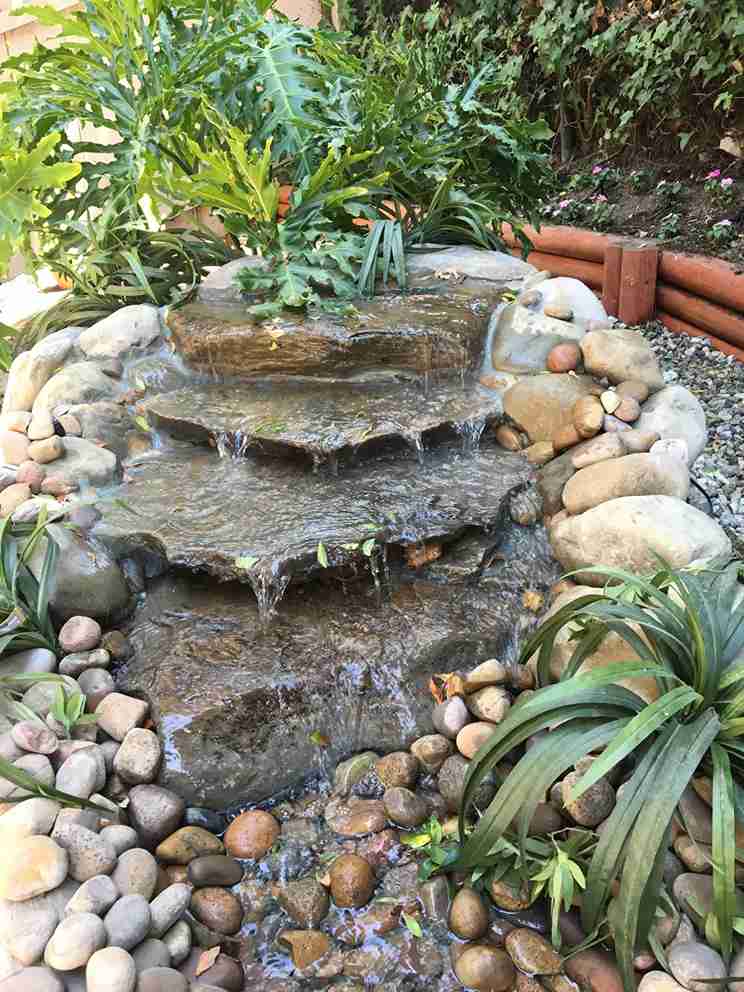
Flat rocks laid at a slight incline look natural, but the angle needs to be consistent across each layer. An uneven pitch sends water sideways instead of forward, and that wears a path into the surrounding soil fast.
Choose rocks with a natural lip at the front edge to direct the water drop cleanly. Without that edge, water clings to the underside of the rock and drips silently instead of cascading visibly.
Ferns and moss planted nearby soften the edges well, but roots can work into the base layer over a season or two. Check the rock placement annually and reset any that have shifted.
9. Gazing Ball Fountain
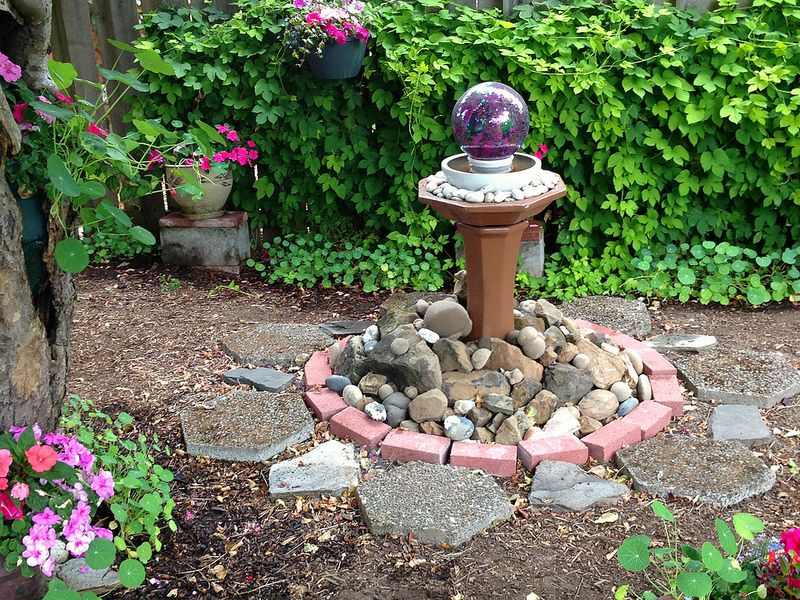
A gazing ball sitting on a narrow pedestal becomes unstable once water runs over it. Set it into a shallow concave base rather than balancing it on a flat or pointed top. That small change prevents tipping in the wind.
The reflective surface picks up everything around it, including hose connections and pump edges. Keep the base clean and simple so the reflection stays attractive rather than cluttered.
In direct afternoon sun, a metallic gazing ball heats up significantly and warms the water sitting at the surface. That temperature shift encourages algae faster than a shaded fountain would, so plan for more frequent cleaning in sunny spots.
10. Glass Jar and String Light Fountain
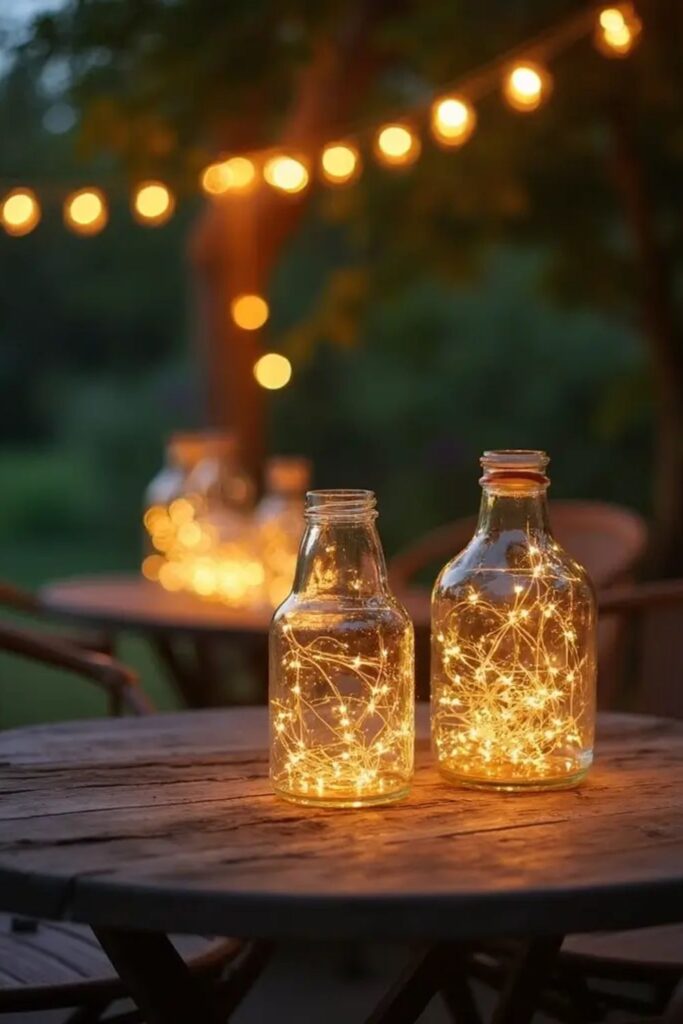
Not all string lights are rated for moisture exposure. Use IP65-rated outdoor string lights specifically, as standard decorative lights will fail quickly inside a wet jar.
Clear glass shows every waterline mark and mineral deposit more than any other material. A quick wipe with diluted white vinegar weekly keeps the glass looking clean without damaging the pump or lights inside.
This fountain works best in a sheltered corner away from direct rain. Heavy rainfall overwhelms the small jar volume fast and can push water out faster than the pump cycles it back in.
11. Tiered Ceramic Pots Fountain
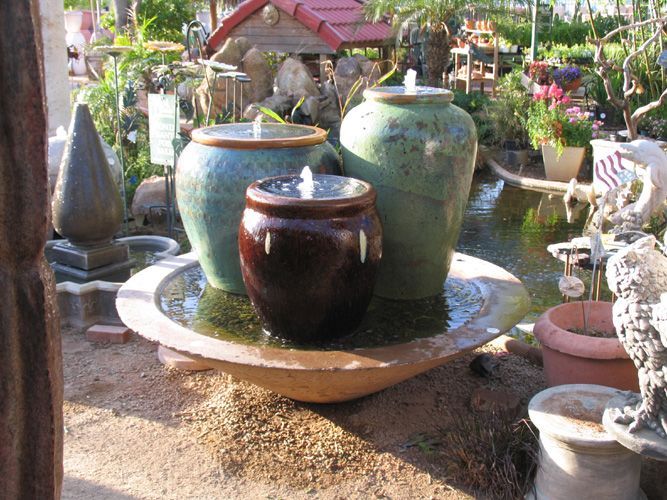
Glazed ceramic is slippery when wet, and stacked pots can shift more than expected once water runs over them. Set each pot on a rubber gasket or non-slip pad before stacking.
Choose pots where the diameter difference between tiers is at least 30 percent. Too close in size and the overflow line becomes unclear, making the cascade look unintentional.
In minimalist gardens, the pot color matters more than the shape. A mismatched glaze across tiers pulls attention away from the water movement, which is what the design depends on.
12. Copper Pipe Fountain
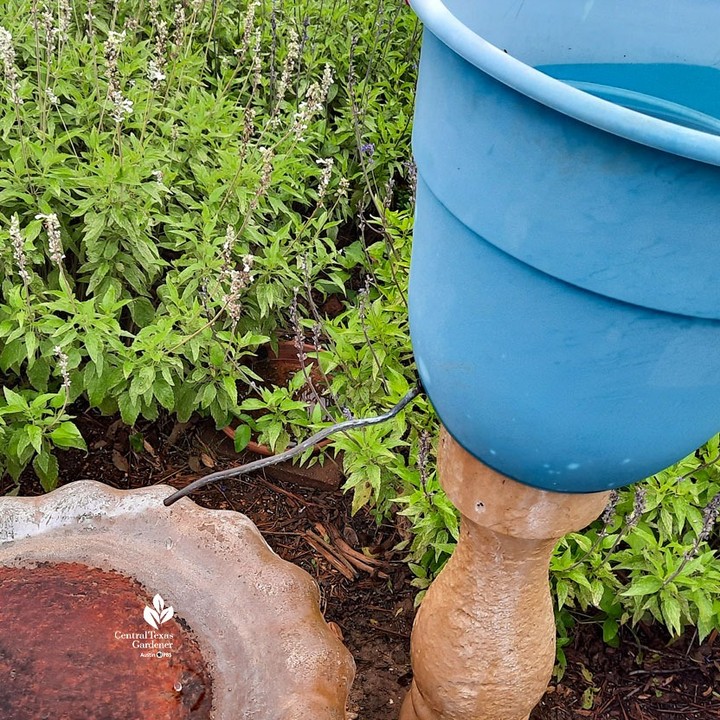
Copper reacts with water minerals over time and develops a patina that some find attractive, and others do not. If you want to keep the shiny finish, seal the exterior with a clear lacquer before the first fill.
Pipe joints are the most likely failure points. Use solder connections rather than push-fit fittings for any joint that stays permanently submerged or under constant water pressure.
In coastal or humid climates, copper oxidizes faster, and the green patina appears within weeks. That change affects how the fountain reads visually against stone or dark timber, so factor the aged look into your material pairing from the start.
13. Bamboo and Stone Fountain
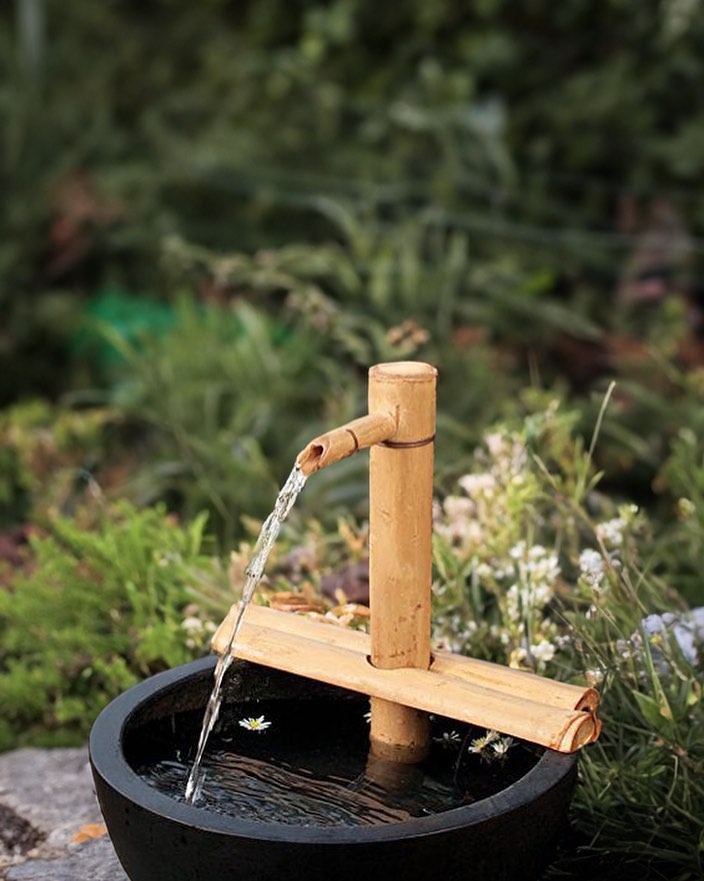
Bamboo spouts crack at the cut end after prolonged water exposure. Seal the cut ends with clear waterproof wood sealant and check them each season before the water runs again.
Horizontal bamboo arrangements pool water inside the hollow if the pipe angle is even slightly off level. A consistent downward slope of a few degrees keeps water moving and prevents stagnant pockets forming inside the cane.
The stone base needs a stable, level surface underneath it. Bamboo spouts are lightweight, but uneven stone shifts the water direction enough to miss the basin entirely after a few months of ground settling.
14. Rustic Wooden Crate Fountain
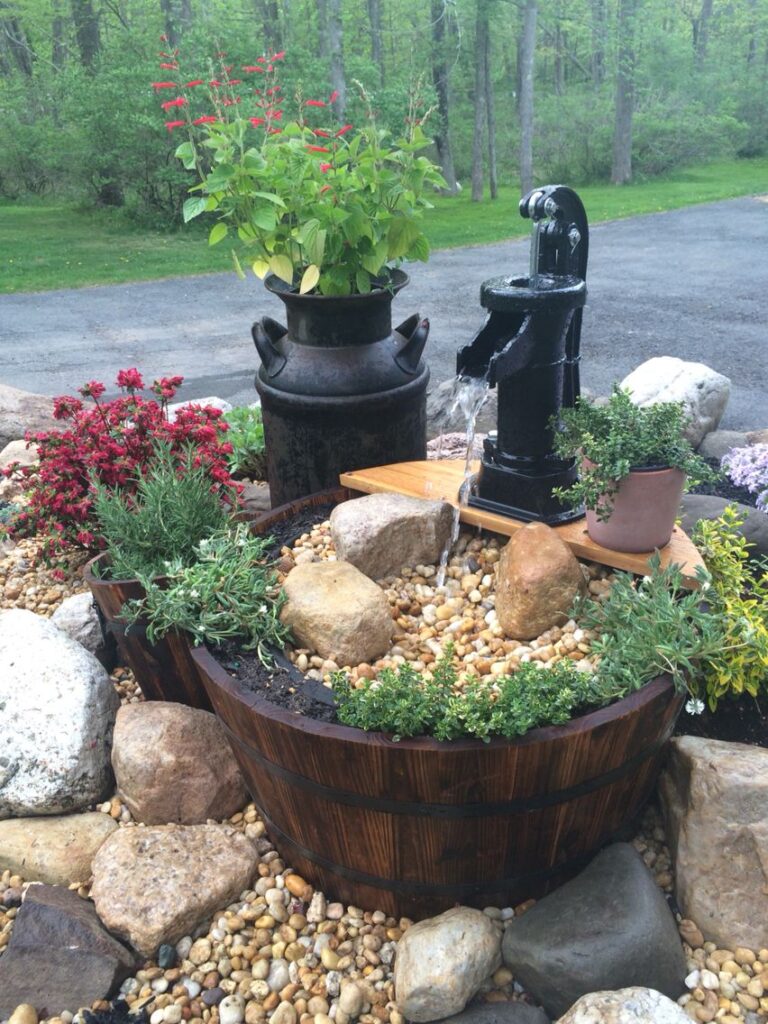
Untreated wood in constant contact with water will rot within a single season. Line the interior of each crate with a pond liner or heavy-duty plastic sheet before installing any pump or tubing.
Staining the exterior adds visual character, but oil-based stains near the waterline will leach into the basin water. Use a water-based exterior stain and keep it well above the water contact zone.
Wooden crates look best when the spacing between tiers is deliberate and consistent. An uneven gap between boxes reads as a construction error, not a design choice, so measure before stacking.
15. Birdbath Fountain
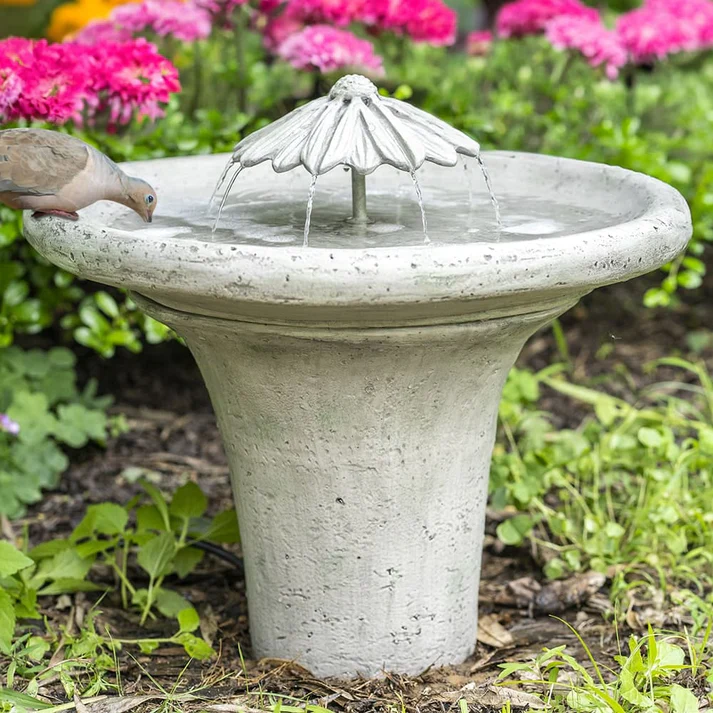
A centered pump creates a single jet that disturbs the whole basin surface. Position the pump toward one side so most of the water stays calm, which is what actually attracts birds to drink and bathe.
The basin depth matters more than size for bird use. Anything deeper than two inches discourages smaller birds, and a fountain that birds avoid defeats the whole purpose of the build.
Algae builds faster in birdbath fountains than in most others because the shallow water heats quickly in the sun. Skip chemical treatments entirely and opt for a weekly rinse and scrub to keep the water safe for wildlife.
16. Cement Bowl Fountain
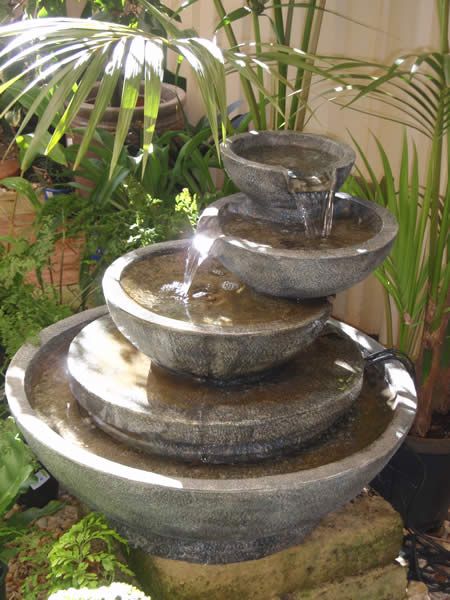
Cement is heavier than it looks at scale, and a large bowl placed on a deck or raised patio can exceed safe load limits. Check the surface weight rating before filling, not after.
Raw cement is alkaline and will affect water pH until it fully cures. Let the filled bowl sit and drain twice before running the pump continuously, which helps neutralize the surface.
In urban patio settings, the wide open surface catches debris faster than a tiered design. A loose layer of smooth stones across the basin floor hides settled dust and slows algae growth without blocking the pump intake.
17. Wheelbarrow Water Fountain
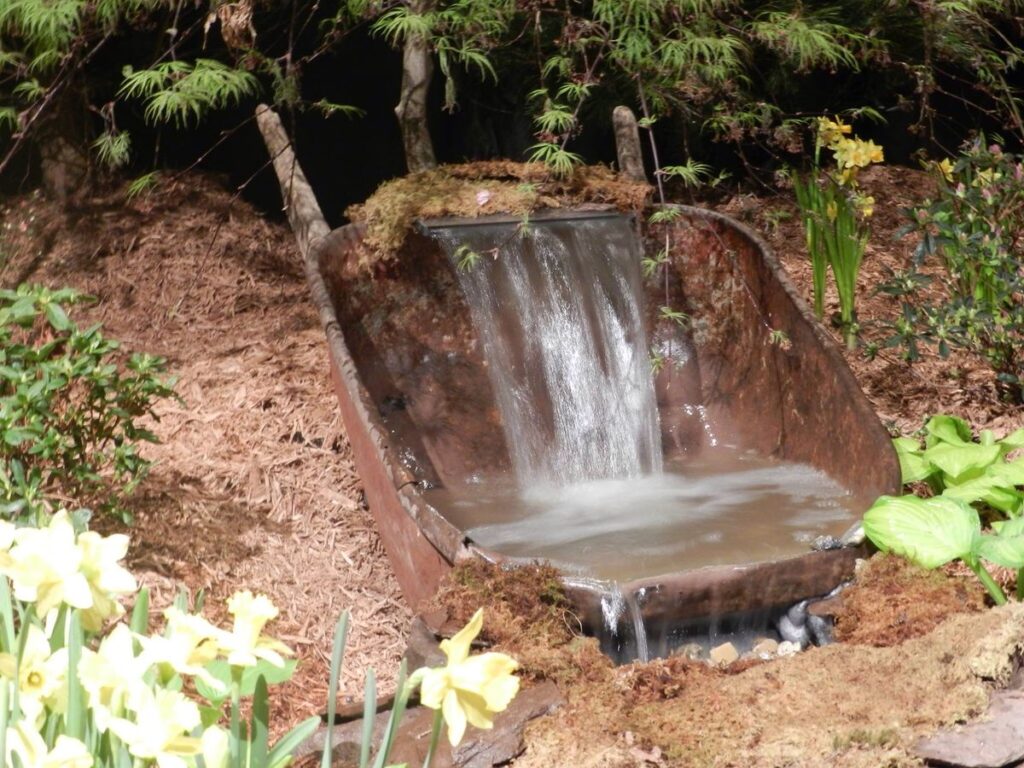
Metal wheelbarrows rust from the inside out once water sits in them. Coat the interior with a rubber pond sealant before adding any water, even if the metal looks intact.
The natural tilt of a wheelbarrow’s body means water pools toward the front axle end. Position the pump there, not at the center, so it stays submerged as the water level drops between refills.
Vintage wheelbarrows look best when the surrounding planting feels equally relaxed and informal. Overly manicured beds next to a distressed metal tub create a visual mismatch that undercuts the whole rustic effect.
18. Bubbling Garden Fountain
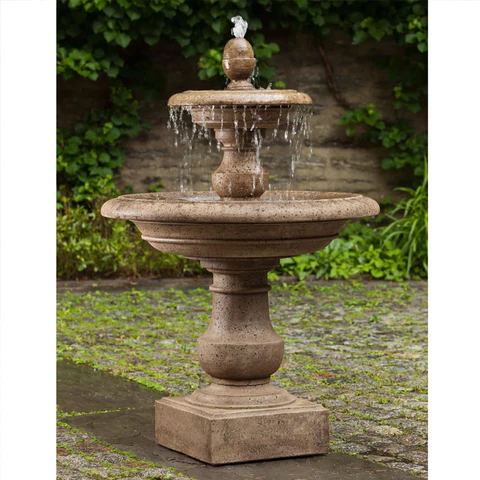
Flat stones used as bubbling surfaces need a perfectly level base underneath. Even a slight forward tilt sends water running off one side instead of spreading evenly across the surface.
Choose a stone with a naturally rough center and smoother edges. The rough center slows the bubble and spreads it wider, while smooth edges let water sheet off cleanly into the basin below.
In small patios, the sound of a bubbling fountain carries more than expected in the evening when ambient noise drops. That amplified effect is pleasant up close but can feel intrusive near a sitting area placed too near the source.
19. Upcycled Glass Bottle Fountain
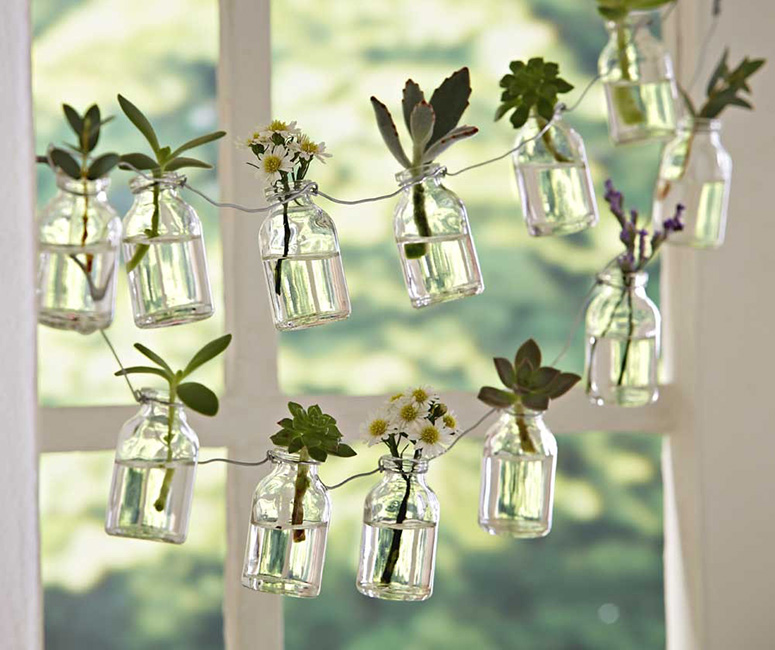
Bottles placed upright in a basin act as unintentional funnels during rain. Water collects inside the bottle necks and overloads the basin fast. Cap unused bottle openings or angle them slightly to prevent overflow after heavy rainfall.
Colored glass changes how the water reads in sunlight. Blue and green bottles cast tinted reflections across the basin floor, which adds visual interest without any extra effort.
Thrift store bottles often have label adhesive residue that clouds the glass once wet. Soak them in warm water with a small amount of baking soda before use, and the glass stays clear through the season.
20. Pumpkin Fountain (Perfect for Fall)
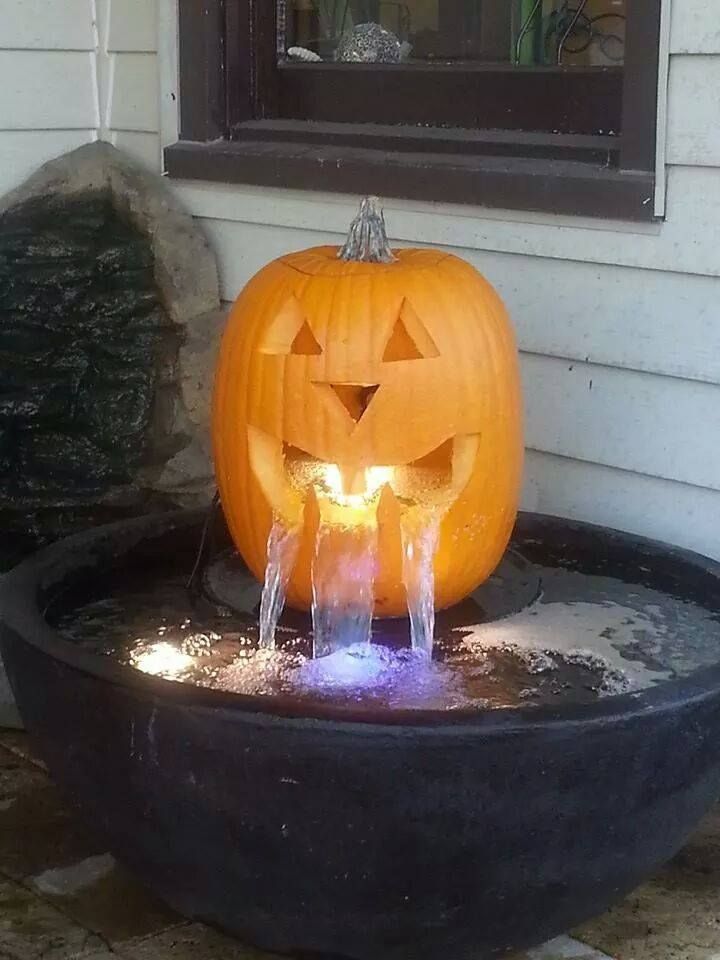
A real pumpkin starts decomposing within days of being carved and filled with water. Plan this as a two-week feature at most, and check the base daily for soft spots that could collapse under the pump weight.
Seal the carved interior with a thin layer of petroleum jelly before inserting the pump. It slows moisture penetration into the flesh and extends the usable life of the pumpkin by several days.
The water takes on a slightly earthy smell as the pumpkin ages. Positioning the fountain near a garden bed rather than a seating area makes that natural scent far less noticeable for guests.
21. DIY Fountain with Solar Pump
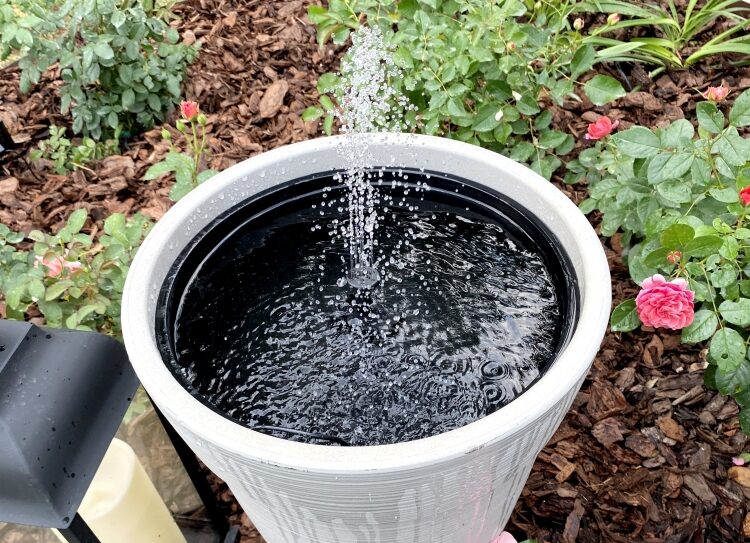
Solar pumps stop working the moment a cloud passes over, and that inconsistency frustrates most first-time users. Choose a pump with a built-in battery reserve so it keeps running through short shade periods.
Output drops significantly in indirect light, so north-facing gardens or shaded patios are poor fits for solar-only setups. In those spots, a low-voltage plug-in pump will always outperform a solar panel placed out of direct sun.
The panel placement matters as much as the pump itself. Keeping it angled toward peak afternoon sun rather than morning light maximizes daily run time, especially in spring and autumn when sun angles are lower.
22. Flower-Shaped Metal Fountain
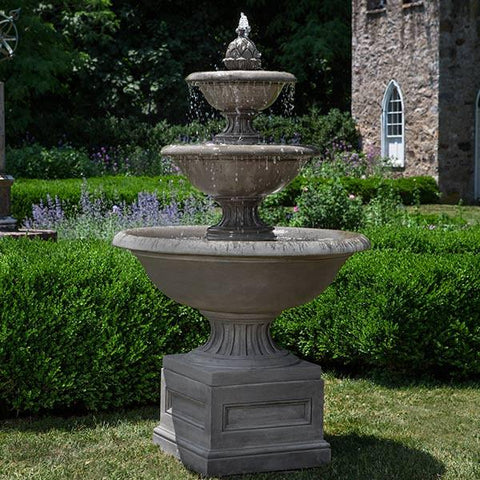
Metal petals cut by hand rarely sit at identical angles, and even a small difference changes where water falls from each one. Test the flow before painting or finishing and adjust petal angles while the metal is still bare and easy to bend.
Raw steel rusts quickly around water contact points. A powder-coated or enamel finish holds up far better than spray paint, which chips at the waterline within one season.
In garden settings with strong afternoon light, polished metal petals create bright glare that competes visually with the water movement. A matte or patina finish keeps the eye on the flowing water rather than the reflected light.
23. Wheel-Style Fountain
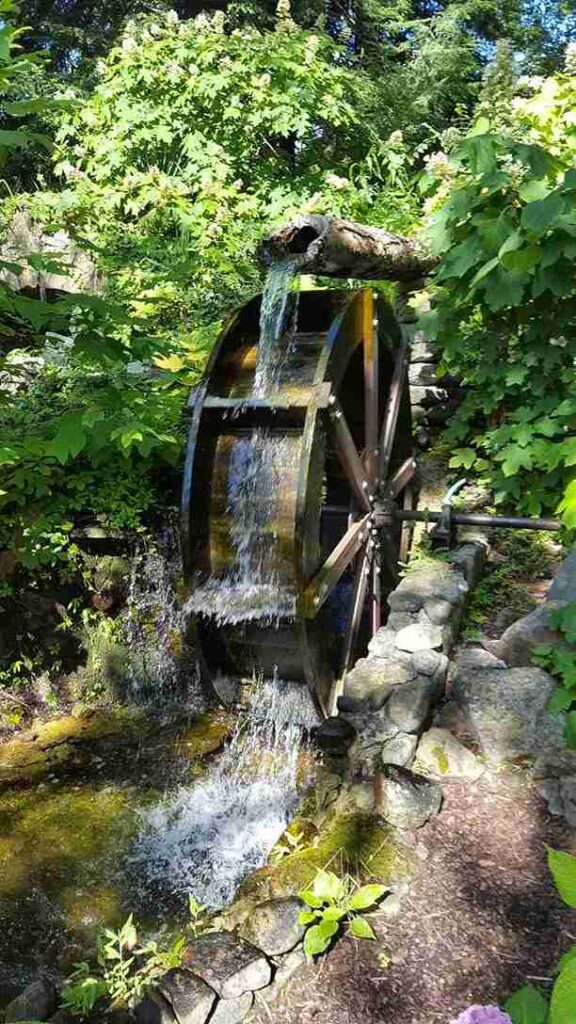
Metal petals cut by hand rarely sit at identical angles, and even a small difference changes where water falls from each one. Test the flow before painting or finishing and adjust petal angles while the metal is still bare and easy to bend.
Raw steel rusts quickly around water contact points. A powder-coated or enamel finish holds up far better than spray paint, which chips at the waterline within one season.
In garden settings with strong afternoon light, polished metal petals create bright glare that competes visually with the water movement. A matte or patina finish keeps the eye on the flowing water rather than the reflected light.
24. Glass Bottle Cascade Fountain
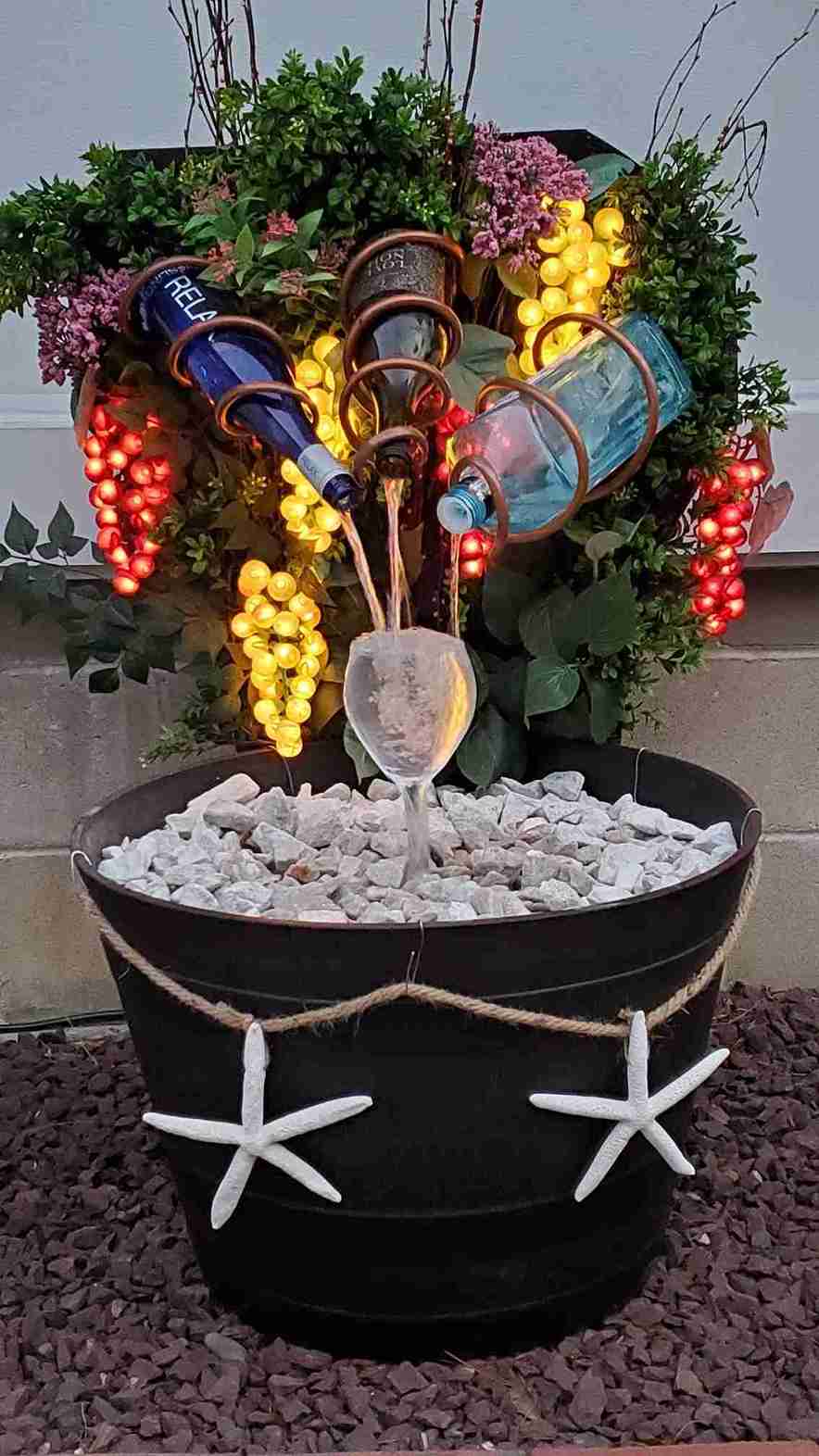
Stacked glass bottles look elegant but are structurally fragile at the contact points. Use a metal rod threaded through all bottle necks as a central spine to keep the stack stable without relying on the glass alone.
Clear glass shows mineral deposits from hard water within weeks. A monthly wipe with diluted white vinegar keeps the cascade surface clean and the reflective quality intact through the season.
Bottle diameter controls the cascade sound more than pump strength does. Wider bottles produce a low, spreading pour while narrow ones create a focused drip. Mixing both in one stack creates a layered sound that feels more natural than a uniform set.
25. Terracotta Pot Water Feature
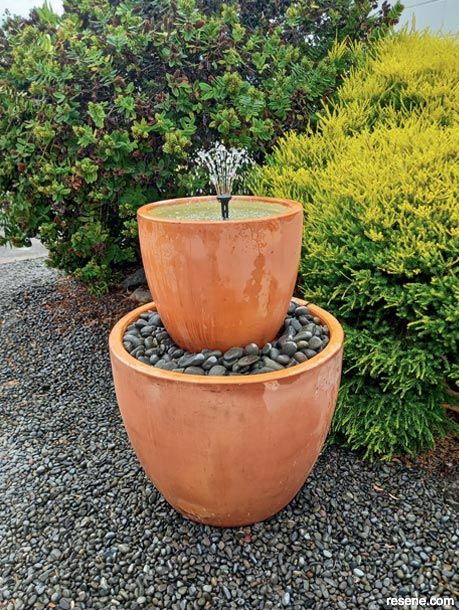
Terracotta is porous and wicks moisture into the pot wall constantly, which weakens it over multiple seasons. Seal the interior of each pot with waterproof masonry paint before the first fill to extend its lifespan significantly.
Unglazed terracotta develops a white mineral crust at the waterline in hard water areas. That deposit is harmless but dulls the natural warm tone of the clay. A seasonal rinse with diluted vinegar removes it without damaging the surface.
In Mediterranean or desert-style gardens, terracotta reads as intentional and grounded. Pairing it with bright glazed tiles or chrome fixtures nearby breaks that visual coherence, so keep surrounding materials earthy and matte for the best overall effect.
Frequently Asked Questions
What is the easiest DIY fountain to build for beginners?
A bubbling stone or ceramic pot fountain is the simplest starting point. It needs only a container, a small submersible pump, and tubing. There are no tiers to balance and no complex water paths to manage. Most beginners complete it in an afternoon.
How do I keep my DIY fountain water clean?
Change the water every one to two weeks and rinse the basin thoroughly. Remove debris before it breaks down. A small amount of white vinegar added monthly slows mineral buildup without harming plants or wildlife nearby.
What size pump do I need for a DIY fountain?
Match the pump flow rate to the fountain height. A general rule is 100 GPH per foot of vertical rise. Always check the pump label for the maximum head height before buying, not after assembly.
Can I leave my DIY fountain running all the time?
Yes, as long as the water level stays adequate. Running a pump dry is the fastest way to burn it out. Check water levels daily in hot weather and top up before the level drops near the pump intake.
How do I stop my fountain from making a loud noise?
Noise usually comes from a pump sitting directly on a hard surface. Place a small piece of foam or rubber mat underneath it. Also check that the water level is high enough, as low water amplifies pump vibration noticeably.
Do DIY fountains attract mosquitoes?
Moving water does not breed mosquitoes. Stagnant water does. Keep the pump running consistently so water stays in motion. If the fountain sits unused for several days, drain and refill it before restarting.
Can I build a DIY fountain indoors?
Yes, smaller designs like Zen garden fountains or glass jar fountains work well indoors. Use a drip tray underneath and keep the pump flow rate low. High flow indoors creates mist that settles on nearby surfaces over time.
Conclusion
Building a fountain does not require professional tools or a large budget. Most of these projects come down to three things: a stable base, the right pump size, and a sealed container. Get those right and the rest follows naturally.
What makes a DIY fountain genuinely satisfying is the sound. Not the look, not the materials. The sound of moving water changes how a space feels, and that effect is immediate the first time you switch the pump on.
Start with one build. Keep it simple. A single bubbling pot in a quiet corner of the garden teaches you more about water flow, pump behavior, and material choice than any guide can. The second fountain always turns out better than the first, and that is exactly how it should work.
Create a Relaxing Outdoor Space
• DIY Hydroponic System Ideas
• DIY Scarecrow For Garden
• DIY Bird House Ideas
• Modern DIY Mailbox Ideas