Struggling With Kitchen Storage? These Smart Indian Kitchen Organization Ideas Help

An Indian kitchen can get cluttered quickly with spices, utensils, and daily cooking essentials. Without a proper system, even a well-used kitchen starts to feel crowded and hard to manage.
Many people struggle to keep everything organized while still making it easy to access during cooking. Stacked containers, mixed spices, and limited storage space can slow down your routine.
The good news is you don’t need a bigger kitchen to fix this. With a few smart organization ideas, you can make your space more efficient and easier to maintain.
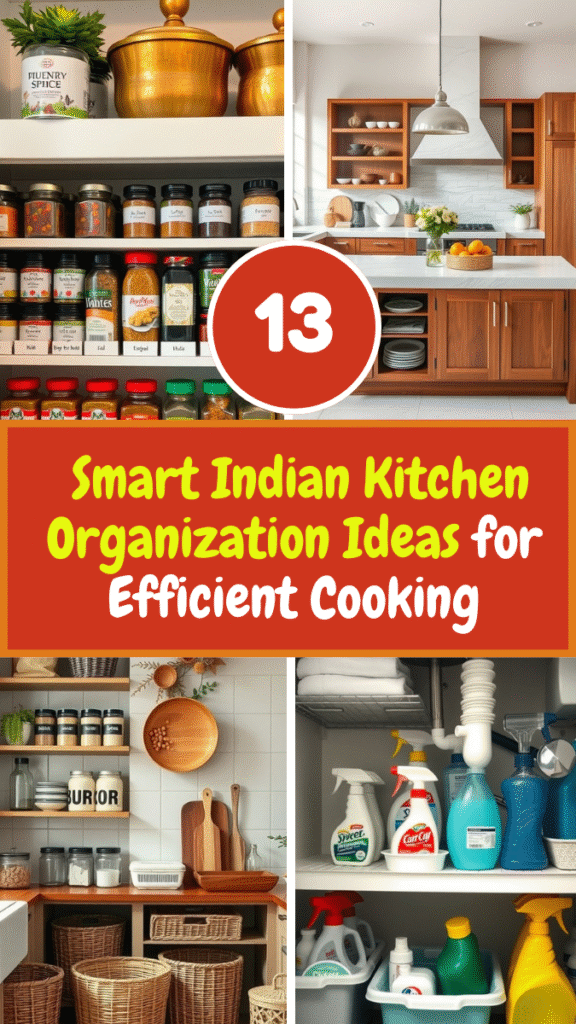
This article brings you 13 Indian kitchen organization ideas to help you stay organized. Practical solutions that work for real cooking habits.
Let’s jump in!
How Do You Organize an Indian Kitchen Efficiently?
Even a clean kitchen can feel messy when items are not stored properly. People notice it quickly because everyday cooking requires constant access to tools and ingredients.
The key is to group items based on use. Keep spices, lentils, and cooking tools within easy reach while using shelves, racks, and containers to maximize space.
You can also label containers, use vertical storage, and dedicate zones for prep, cooking, and storage. With the right setup, your kitchen feels more functional, organized, and easy to use every day.
Magnetic Knife Strip
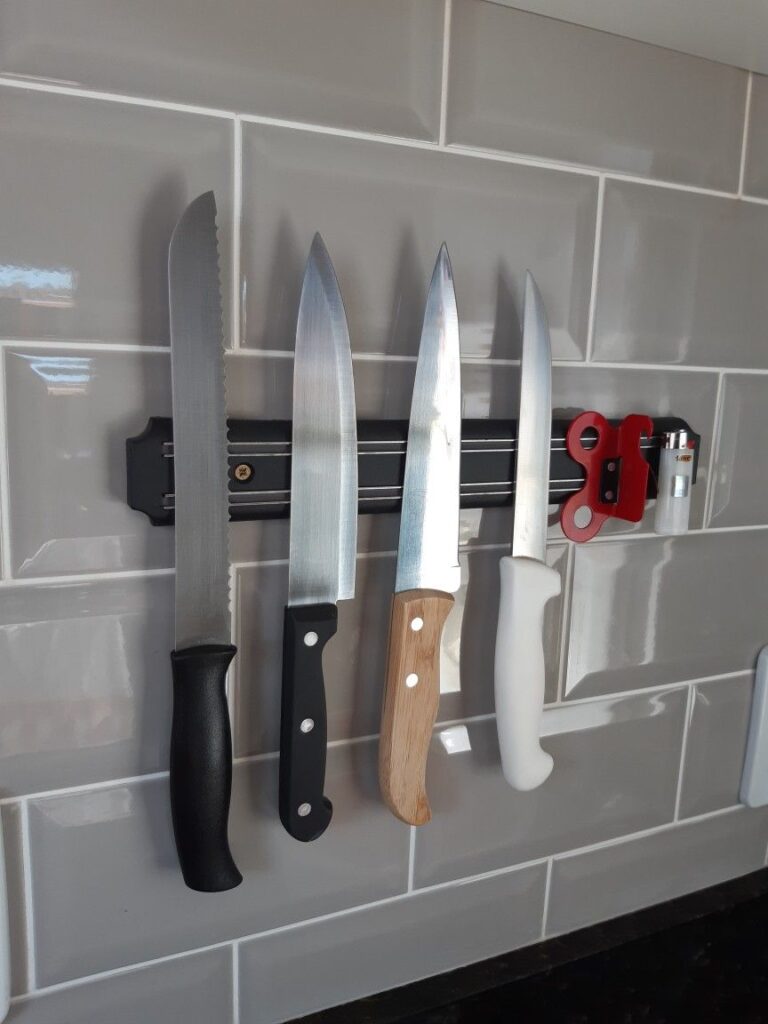
A cluttered drawer often leads to unsafe moments during cooking. A magnetic strip fixed near your main prep wall keeps knives visible and separated, which matters more in compact Indian kitchens.
Placement changes everything if the wall faces direct heat or steam. A matte steel strip handles moisture better than glossy ones and stays easier to clean after daily use.
Knives remain sharper because they are not hitting other utensils. Keep a slight gap between each piece, they pull together and slow you down during quick prep.
Rotating Turntables
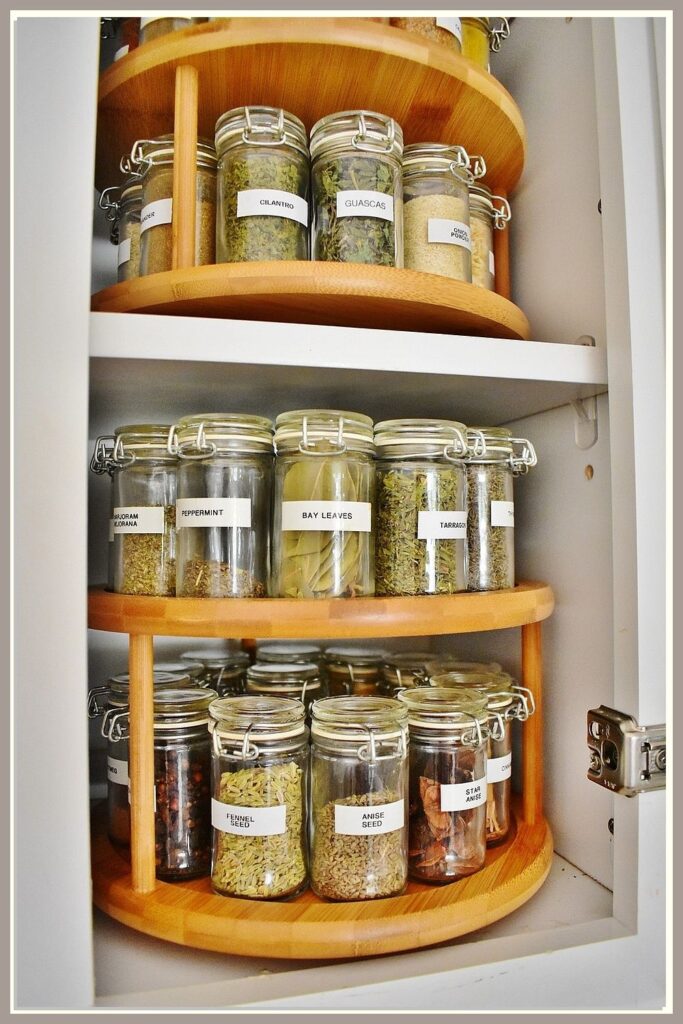
Deep shelves usually hide half your essentials, which wastes time during cooking. A rotating turntable placed inside cabinets brings oils, sauces, and jars forward without moving everything around.
This behaves differently when bottle sizes vary a lot. Taller items can tilt slightly, so grouping similar heights makes the rotation smoother and more stable.
It reduces the need to search or rearrange items constantly. Keeping one tray per category also prevents mixing, which is a common reason shelves become messy again.
Utilizing Vertical Space
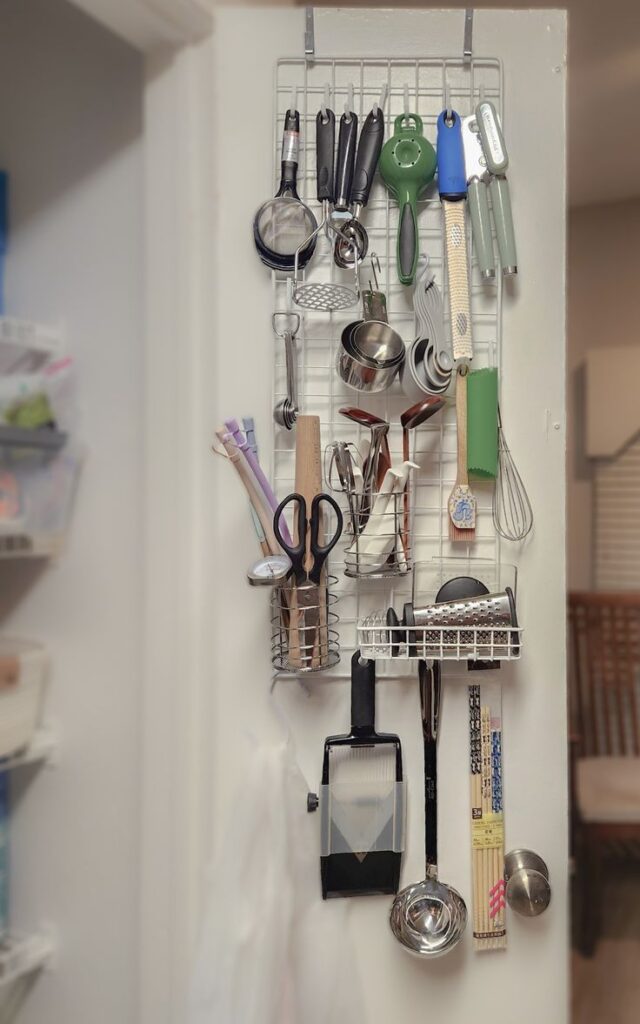
Unused wall space often goes unnoticed until storage becomes tight. Adding stacked shelves with hooks underneath helps move tools off the counter while keeping them easy to access.
This setup needs careful spacing if your ceiling height is low. Shelves placed too close together make it harder to grab larger utensils comfortably.
Organizing tools by usage area improves flow while cooking. Keeping ladles near the stove and prep tools near the cutting space reduces back-and-forth movement.
Drawer Dividers for Utensils
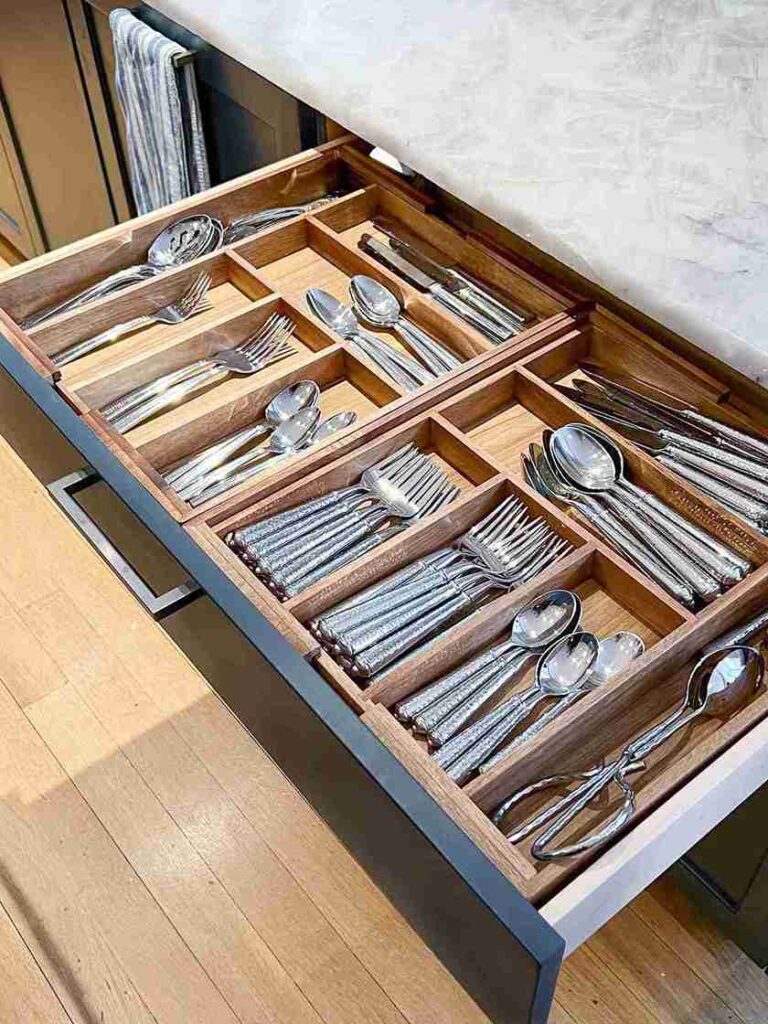
A wide drawer without sections quickly turns into a mix of scattered tools. Using adjustable dividers that fit properly inside the drawer creates clear zones for each utensil.
Deeper drawers behave differently since items tend to stack. Keeping daily tools in front and less used ones at the back makes access easier.
It saves time during cooking because everything has a fixed place. Leaving small gaps between sections also prevents tools from getting stuck or overlapping.
Bamboo Storage Solutions
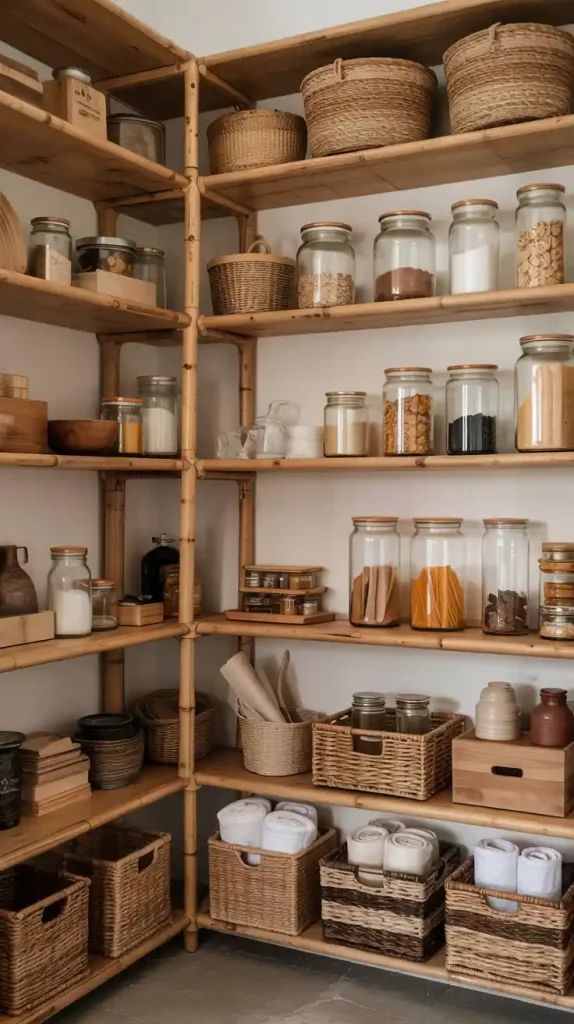
Open shelves can look messy when items are loosely placed. Bamboo baskets with a natural matte finish help group ingredients while keeping the space visually calm.
Humidity affects storage more than most people expect. Bamboo works better in areas with airflow instead of tightly closed cabinets where moisture builds up.
Consistent grouping changes how you manage supplies. When each basket has a purpose, it becomes easier to track what you already have and avoid overbuying.
Clear Container Storage
Pantry shelves often get messy when packets are half-opened and pushed behind each other. Clear containers placed at eye level make staples like rice, dal, and flour instantly visible, which helps in kitchens where these are used daily.
In humid conditions, material choice matters more than expected. Containers with airtight lids and a matte finish handle moisture better and keep ingredients fresh for longer without clumping.
You start noticing how easy it becomes to track usage and avoid waste. Adding simple labels improves clarity, and one small habit that helps is dating flours or spices so older stock gets used first.
Over-the-Door Organizers
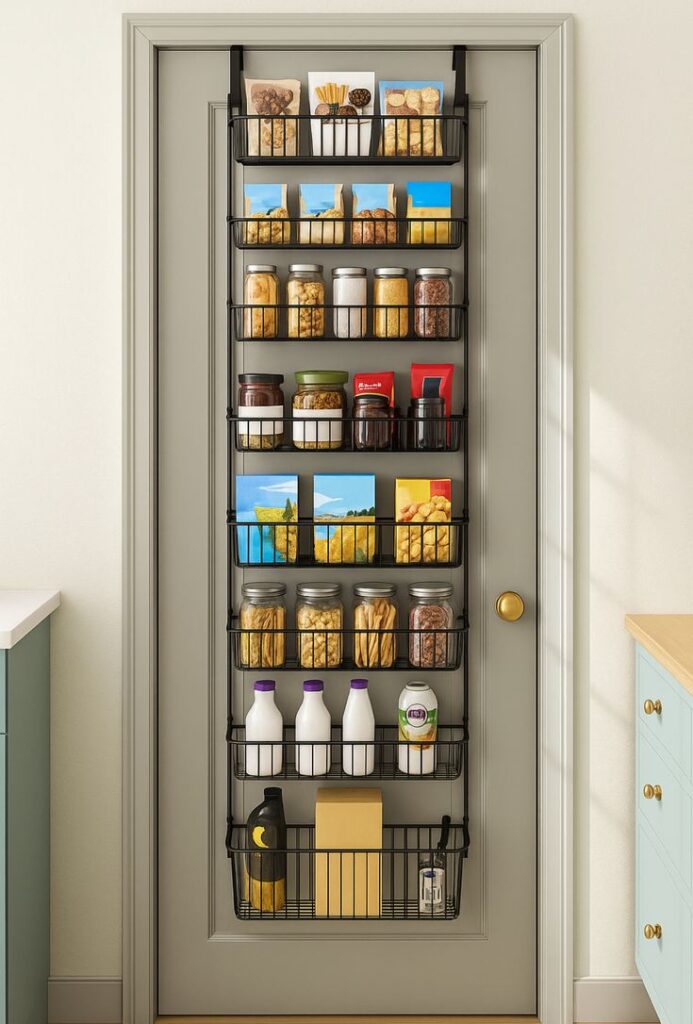
Cabinet doors are often overlooked even when storage feels tight. An over the door rack fixed securely inside or outside a cabinet creates extra space for smaller items without changing your setup.
This works best when weight is distributed carefully. Heavier bottles placed on lower tiers keep the rack stable, especially if the door closes with force.
It keeps frequently used items visible, which reduces duplicate buying. A small addition like a non slip liner inside each shelf prevents jars from shifting every time the door moves.
Spice Rack Innovations

Spice clutter builds quickly in Indian kitchens where multiple masalas are used daily. A structured rack with uniform jars keeps everything visible, so you are not searching through layers of containers while cooking.
Lighting plays a role here more than expected. In darker cabinets, clear jars with bold labels make identification easier, while uneven setups often slow things down.
Grouping spices based on frequency changes how smoothly you cook. Keeping daily spices in front reduces mess, and using smaller jars for rarely used ones avoids stale leftovers sitting for too long.
Multi-Functional Furniture
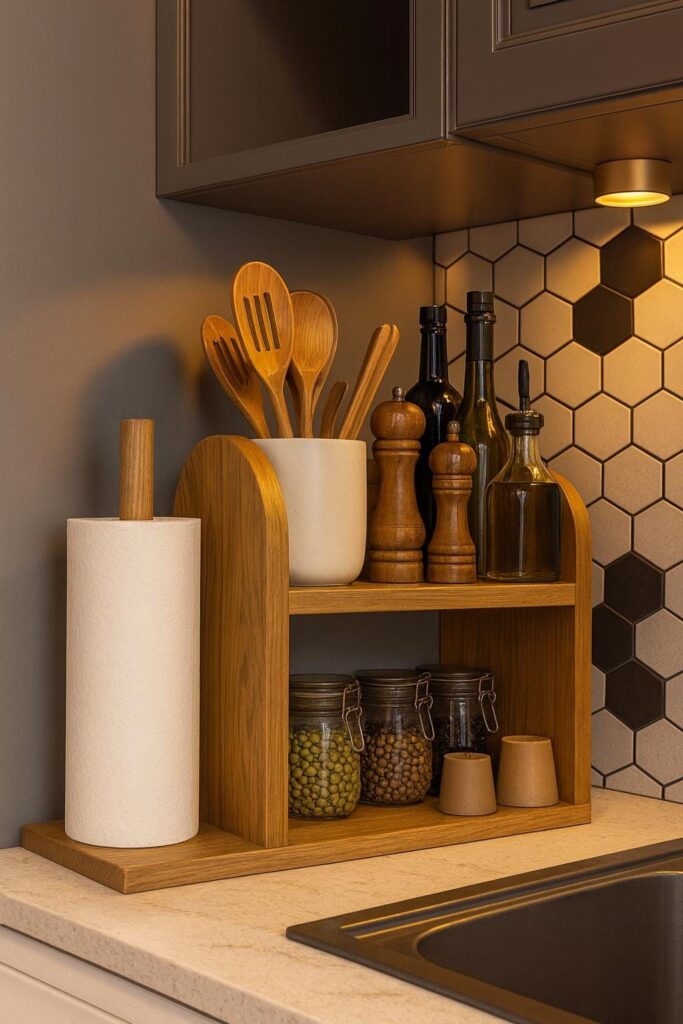
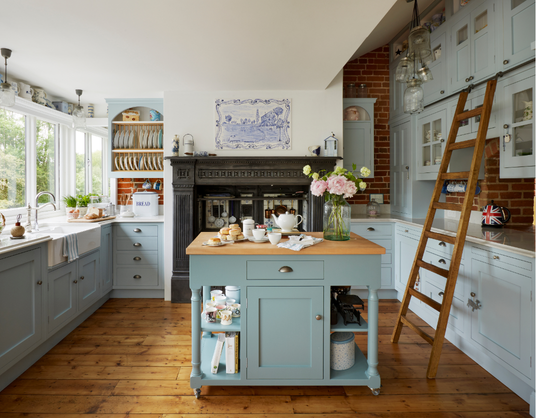
When multiple activities happen in the same kitchen, space gets crowded fast. A compact island with built in shelves or drawers helps combine prep, storage, and casual dining into one area.
In smaller layouts, movement becomes the main concern. Choosing furniture that fits walkway width and allows stools to tuck in keeps the space usable without blocking flow.
It creates a more flexible setup where everything feels within reach. Hidden storage inside furniture also reduces visible clutter, which makes the kitchen feel more open during daily use.
Under-Sink Organization
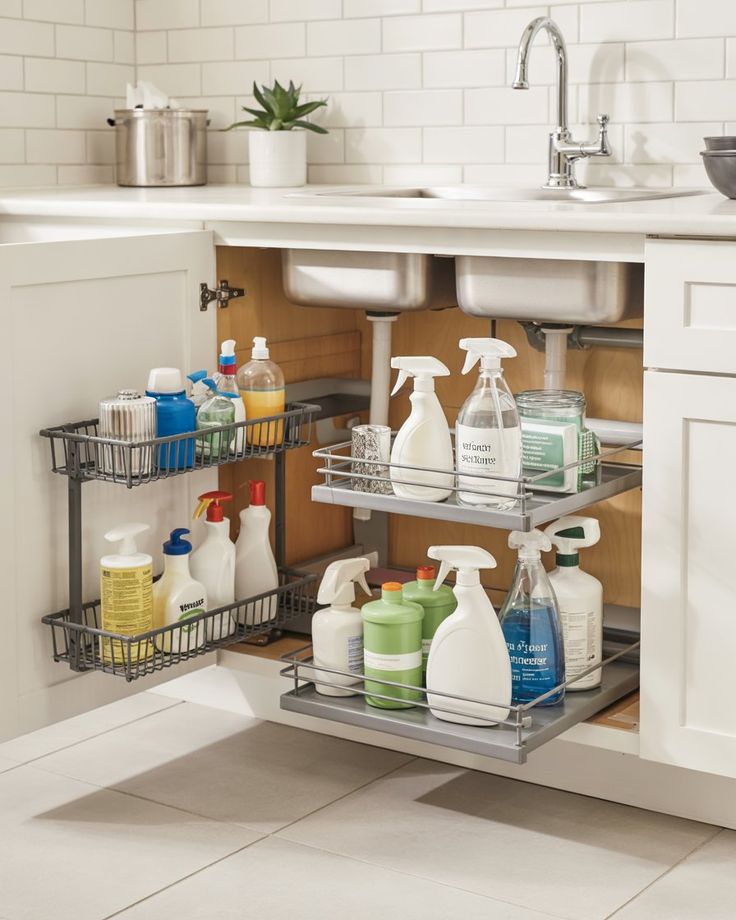
The area under the sink often collects random items because it is out of sight. Stackable bins or trays placed around plumbing space help separate cleaning supplies without wasting awkward gaps.
Moisture and leaks are common here, so using plastic or coated materials works better than untreated wood. Adding a liner at the base protects the cabinet from long-term damage.
Once items are grouped, access becomes easier and safer. Keeping backups in a single labeled bin prevents over-stacking, which is usually what turns this space messy again.
Labeled Storage Bins
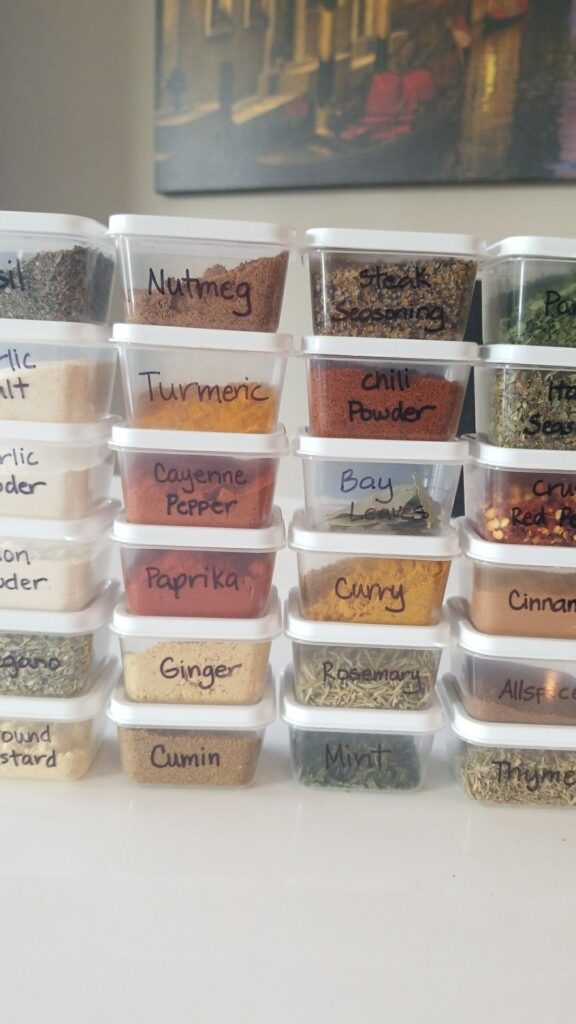
Opening a shelf and instantly knowing where things are removes a lot of daily friction. Labeled bins grouped by category help organize staples like dals, flours, and snacks without needing to search every time.
Tight pantry spaces can make bins feel bulky if they are not sized right. Choosing stackable options with a clean front label and slightly textured finish keeps them easy to handle and read.
Cooking becomes more efficient because everything has a fixed place. Keeping frequently used bins at eye level works well, and leaving a bit of extra space inside each bin prevents items from getting stuck or messy again.
Seasonal Ingredient Storage
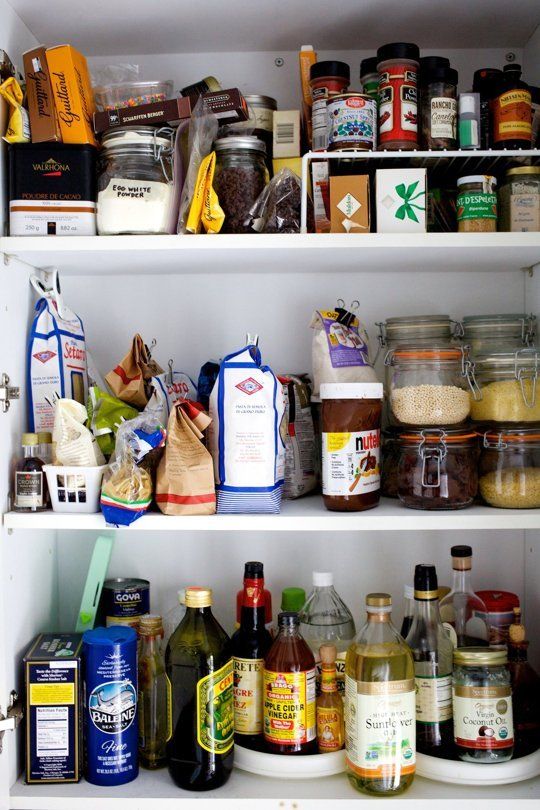
Stocking seasonal items often leads to overcrowded shelves if there is no clear system. Creating a separate zone for seasonal ingredients helps you track what needs to be used first without mixing it with daily staples.
Limited shelf depth can make rotation harder than expected. Using transparent containers with visible quantity levels allows you to monitor usage without pulling items out repeatedly.
This approach keeps your pantry moving instead of piling up unused items. Assigning one section per season makes it easier to switch things out, and it reduces the chance of ingredients getting forgotten at the back.
Hanging Storage for Pots and Pans
Stacking heavy cookware inside cabinets quickly eats up space and creates noise. A hanging rack or wall mounted hooks keeps pots and pans visible while freeing up storage below.
Not every wall handles weight the same way. In kitchens with weaker surfaces, reinforced hooks or ceiling-mounted options provide better support and long term stability.
Daily cooking feels smoother because you can grab items without shifting others. Keeping enough space between each piece helps reduce clanging and keeps the setup looking clean instead of crowded.
FAQs
1. How do I organize a small Indian kitchen without adding more cabinets?
Start by using vertical space and hidden areas like cabinet doors and walls. Add hooks, racks, and stackable containers to lift items off the counter. Focus on grouping similar items together so you are not spreading things across multiple shelves. Even small changes like using clear containers or labeled bins can make the kitchen feel more structured without adding new furniture.
2. What is the best way to store spices for daily cooking?
Keep frequently used spices within arm’s reach of your cooking area. A simple rack with labeled jars works well, so you can identify everything quickly. Store daily spices in front and occasional ones behind or above. Using smaller jars for less-used spices helps maintain freshness and avoids waste from storing large quantities for too long.
3. How can I prevent pantry items from expiring or being wasted?
Visibility plays a big role here. Use clear containers and label them with names and dates so you know what to use first. Try a basic rotation system where newer stock goes behind older items. Keeping categories separate also helps you track what you already have, which reduces overbuying and forgotten ingredients.
4. Is open storage a good idea for Indian kitchens?
It can work well if managed properly. Open shelves make daily items easier to access, especially during frequent cooking. However, grouping items in baskets or containers prevents the space from looking cluttered. It also helps protect ingredients from dust and keeps everything looking consistent instead of scattered.
5. What are the most common mistakes when organizing a kitchen?
One common issue is organizing without thinking about daily habits. Placing items far from where they are used creates extra effort. Another mistake is overfilling containers or shelves, which leads to clutter returning quickly. Keeping a little extra space and organizing based on usage makes the setup easier to maintain.
6. How do I keep my kitchen organized long term?
Consistency matters more than complexity. Stick to simple systems like labeling, grouping, and keeping items in fixed zones. Avoid changing layouts too often unless something is clearly not working. A quick weekly reset, like putting items back in their place, helps maintain order without needing a full reorganization again.