Zen Office Decor: How I’d Make Your Desk Feel Calm Without Turning It Into a Sad Beige Museum

Visual noise becomes mental noise. I learned that the annoying way.
I would sit down to do one simple task, and somehow my eyes would catch the random receipts, the loose charger, the weird pile of pens that do not work, and suddenly my brain would go full browser-tab mode. Not because I am dramatic, but because clutter keeps whispering “unfinished” all day.
So when I talk about zen office decor, I am not talking about empty white desks and pretending you do not own paper. I am talking about a workspace that feels calm, clear, and intentional in real life.
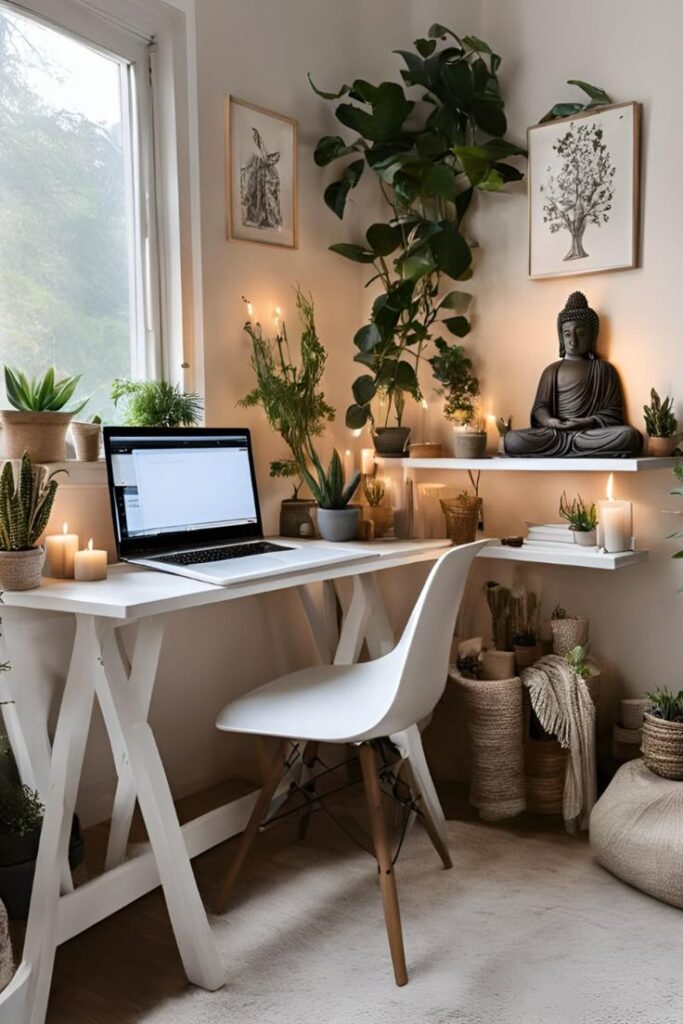
No full renovation. No seventeen matching accessories. Just a system that makes your shoulders drop a little when you sit down.
What Zen Office Decor Actually Means
Zen is not a “look.” It is a feeling you build on purpose.
A Zen office usually has:
- Calm: your eyes are not bouncing around
- Clear: your work surface is visible and usable
- Intentional: what is out has a job
That is it. If something is out and it has no job, it is basically unpaid stress.
Also, intentional does not mean everything matches. It means nothing is accidentally screaming for attention.
Start Here: A 10 Minute Visual Detox (No Spiraling Allowed)
This is the step people skip. This is the step that actually changes your desk.
I set a timer for 10 minutes because otherwise I will accidentally reorganize my entire life at 9:47 pm.
Grab one container: tote bag, laundry basket, paper bag. This is your temporary chaos container.
Quick Triage, Fast Decisions
When a desk feels overwhelming, the fastest fix is not organizing. It is deciding. I start by completely clearing the surface so I am not negotiating with piles, then I sort everything into clear categories.
Keep on the desk
This is for true daily use only. If you do not touch it every single workday, it does not earn desk space. Fewer items mean less visual noise and fewer distractions.
Keep, but not visible
These are important items that you need access to, but not constant eye contact. They might be functional, not pretty, or just mentally distracting. Drawers, boxes, or closed storage are perfect for this group.
Relocate
Anything that clearly belongs in another room goes here. Mugs, clothes, random tools, mail. The desk is not a temporary holding zone for the rest of the house.
Trash or recycle
This one is usually obvious. Old notes, broken pens, packaging, and expired papers can go immediately. No second-guessing.
Decide later
This is a small and controlled maybe pile. If you hesitate, it goes here instead of back on the desk. The key rule is that this pile does not live on the desk and gets revisited at the end.
Desk archaeology is always humbling. The last time I did this, I found a single sock, an Allen key, and a sticky note that just said “CALL” with absolutely no context. Apparently, past me was confident future me would understand.
The Zen Secret: Your Desk Needs Homes, Not Vibes
Zen is not created by buying a new pen cup. Zen is created when your stuff has a home, so it stops migrating.
If you have drawers, great. If you do not, you can fake it with:
- a lidded box
- a small closed organizer
- a slim rolling drawer unit
- one basket on a shelf
My strongest opinion: a tray is the cheapest way to make chaos look intentional.
A tray turns scattered items into “a contained moment.” It is visual boundaries for messy people.
The 3 Zone Zen Desk Layout I Use Every Time
This is the layout that keeps calm from falling apart after two days.
1) Focus Zone: only what you touch daily
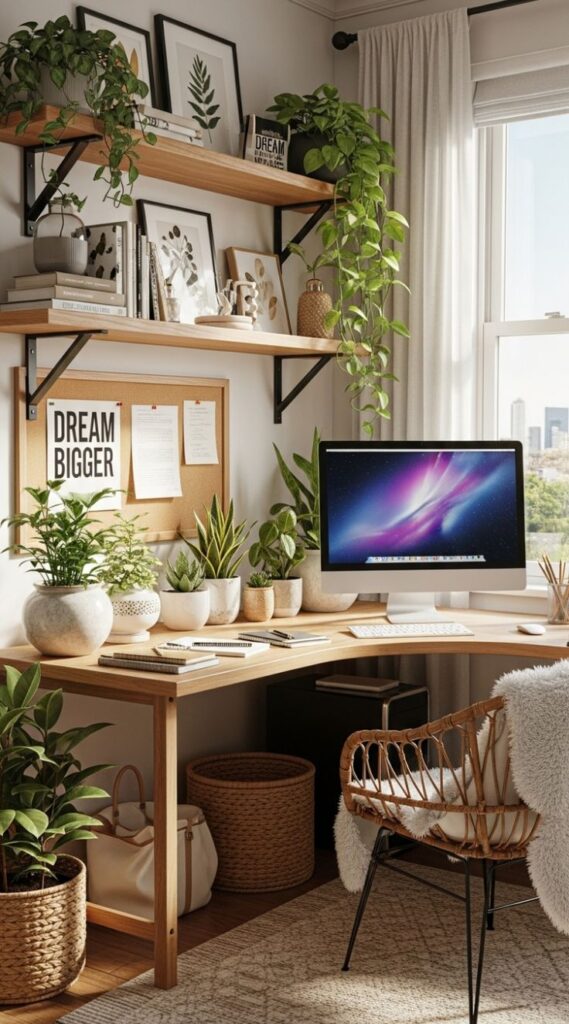
This is the area directly in front of you.
Keep it brutally simple:
- laptop or monitor setup
- keyboard and mouse
- one notebook you actually use
- one pen you love
The Focus Zone is where you want the most visual quiet, because it is where your eyes go when you are trying to think.
2) Flow Zone: paper and charging live here
Flow Zone is your “in and out” landing strip.
If paper enters your life, you need one official landing spot:
- one tray, or
- one vertical file holder
Not five piles. Not “just for now.” “For now” becomes forever.
This is also where charging lives:
- a charging tray
- a cable box
- sticky cable clips along the back edge
The goal is: cords do not get to sprawl across your desk like they are auditioning for spaghetti commercials.
3) Hide Zone: the not-so-pretty necessities
This is where the stuff goes that you need but do not want to look at all day:
- stapler
- tape
- backup chargers
- extra pens
- sticky notes
- random adapters
The real Zen move is making it easy to put things away. If it is annoying to put away, you will not do it. I have evidence.
The 1 3 5 Rule So Minimal Does Not Turn Into Curated Clutter
This keeps “Zen desk decor” from becoming “tiny objects everywhere.”
- 1 focal piece
- Up to 3 functional items visible
- Up to 5 total decor touches
A focal piece can be a plant, a lamp, a ceramic bowl, or one art piece. Functional items are your daily tools. Decor touches are small, intentional details.
This rule keeps your desk from slowly getting loud again.
Calm Without Beige: Palette Plus Texture
A clean desk can still feel harsh if it is too sterile. The fix is warmth and texture.
A calm palette that still has life
Start with neutrals like:
- warm white
- cream
- soft gray
- sandy beige
- muted wood tones
Then add one soft accent if you want. My favorite is muted green because it reads like nature without being loud. Dusty blue and clay tones work too.
If everything is bright white, it can feel clinical. Adding one warm element, like wood or woven texture, makes it instantly more human.
Pick 2 or 3 natural materials and repeat them
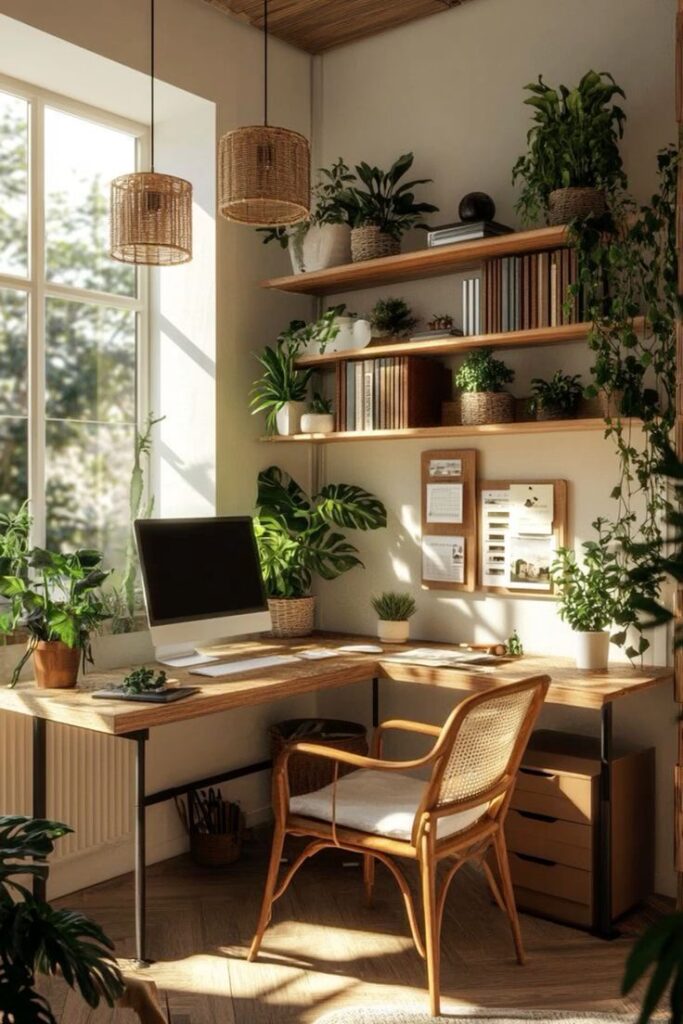
This makes a space feel cohesive without buying a matching set.
Pick two or three:
- wood
- linen or woven texture
- ceramic or stone
- matte black metal
Example combo that always works: wooden tray + linen desk mat + ceramic pen cup. Even your boring items start looking intentional.
Lighting That Makes Your Brain Unclench
Lighting is the quickest before-and-after, especially if your overhead light makes everyone look haunted.
What I do in real life
I aim for two layers:
- Warm task light: a desk lamp that actually helps you work
- Soft ambient glow: a small lamp or light behind the monitor, or a corner floor lamp
Even if your desk is still not perfect, warm lighting makes the whole space feel calmer instantly.
If you can, put the light source at eye level or slightly above, not only overhead. It softens shadows and makes the space feel inviting.
Nature, But Low Maintenance
Plants help. But I refuse to recommend a setup that becomes a chore you resent.
If you want easy plants that tolerate office life:
- pothos
- snake plant
- ZZ plant
- peace lily
One plant as your focal piece is enough. Place it slightly off-center so it looks styled, not panic-placed.
If plants stress you out, you can still get the nature feeling through wood, woven textures, stone, and soft botanical art.
The Zen Cue: One Tiny Ritual That Trains Your Brain
This is my favorite part because it makes the space feel like a feeling.
Pick one sensory anchor you will actually use:
- a subtle scent you like
- a specific playlist or white noise
- a warm lamp you turn on only when you start work
- one object you touch when you sit down, like a smooth stone or a small bowl for clips
One cue. Not a whole wellness ceremony. The goal is repeatable calm.
Wall Decor That Stays Quiet
If you want wall decor, keep it edited.
One larger piece behind your desk often looks more Zen than a busy gallery wall. Nature scenes, soft abstracts, botanical prints, or muted typography can all work, as long as it is not visually loud.
If you love inspirational quotes, choose one that actually hits you emotionally and frame it simply.
Keeping It Zen: The Reset That Prevents Backsliding
The secret to Zen is not perfection. It is maintenance that is easy.
Daily 5-minute close down
- Clear the surface back to your baseline
- The paper goes into the one landing spot
- Tools go back into the Hide Zone
- Plug in what needs charging
Weekly 15-minute refresh
- purge paper
- wipe the surface and keyboard
- re-tame cords
- water plants
That is enough to keep your desk from slowly turning into a junk drawer with a monitor.