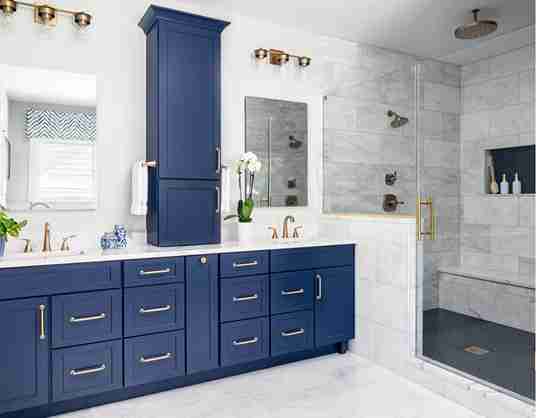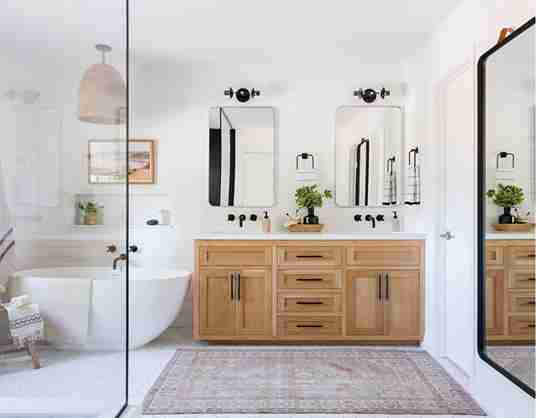
31 Stunning Outdoor Bathroom Designs to Inspire Your Home Oasis

You step outside, and instead of a basic setup, there’s a bathroom that actually feels part of the space around it. Open air, natural textures, and light moving through the area make it feel completely different from anything indoors.
But designing an outdoor bathroom is not as simple as moving things outside. Weather, privacy, and materials all behave differently, and small mistakes can make the space feel exposed or hard to maintain.
That is where most setups fall short. It either looks good but does not last, or it works but lacks any real atmosphere.
In this guide, you will explore 31 Outdoor Bathroom Designs that show how to balance function with a natural, open feel.
Let’s jump in!
What Makes an Outdoor Bathroom Feel Comfortable and Practical?
An outdoor bathroom works best when it feels connected to its surroundings while still offering enough privacy. Layout and placement play a big role in how usable the space feels.
Materials also matter more outside. Stone, sealed wood, and weather-resistant finishes hold up better and keep the space looking consistent over time.
You do not need a large area to make it work. Even a small setup can feel open and functional when planned with the right elements.
With the right approach, an outdoor bathroom can feel refreshing, practical, and easy to maintain.
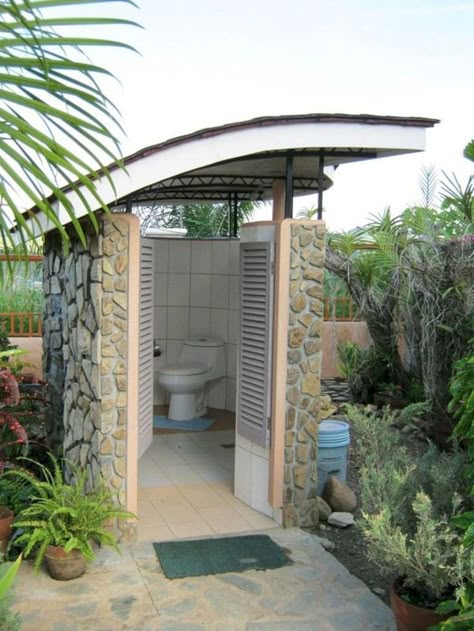
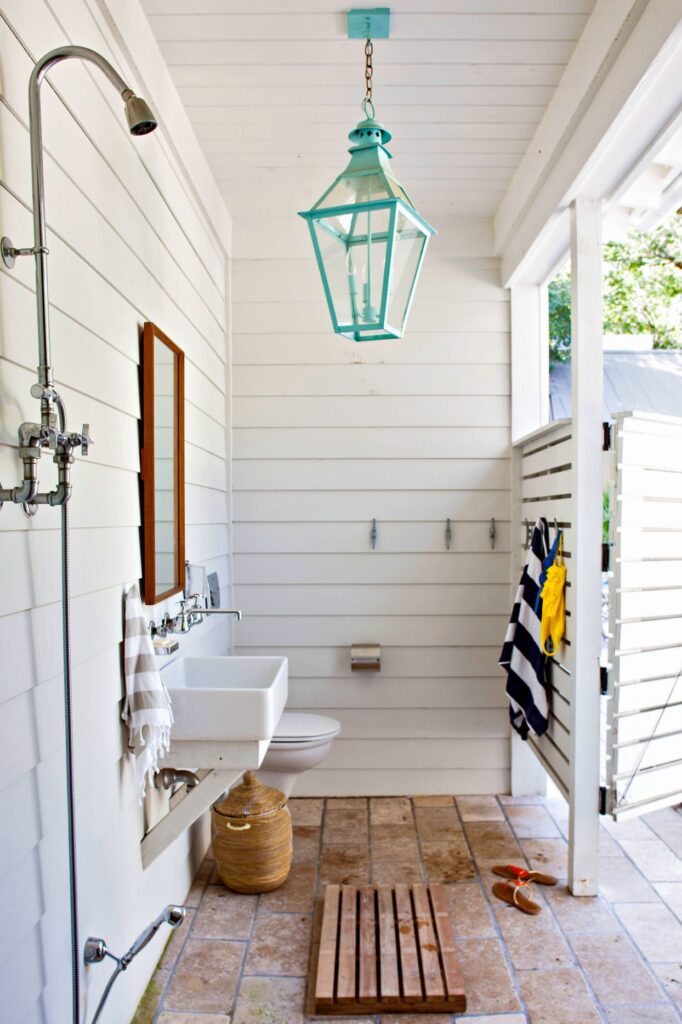
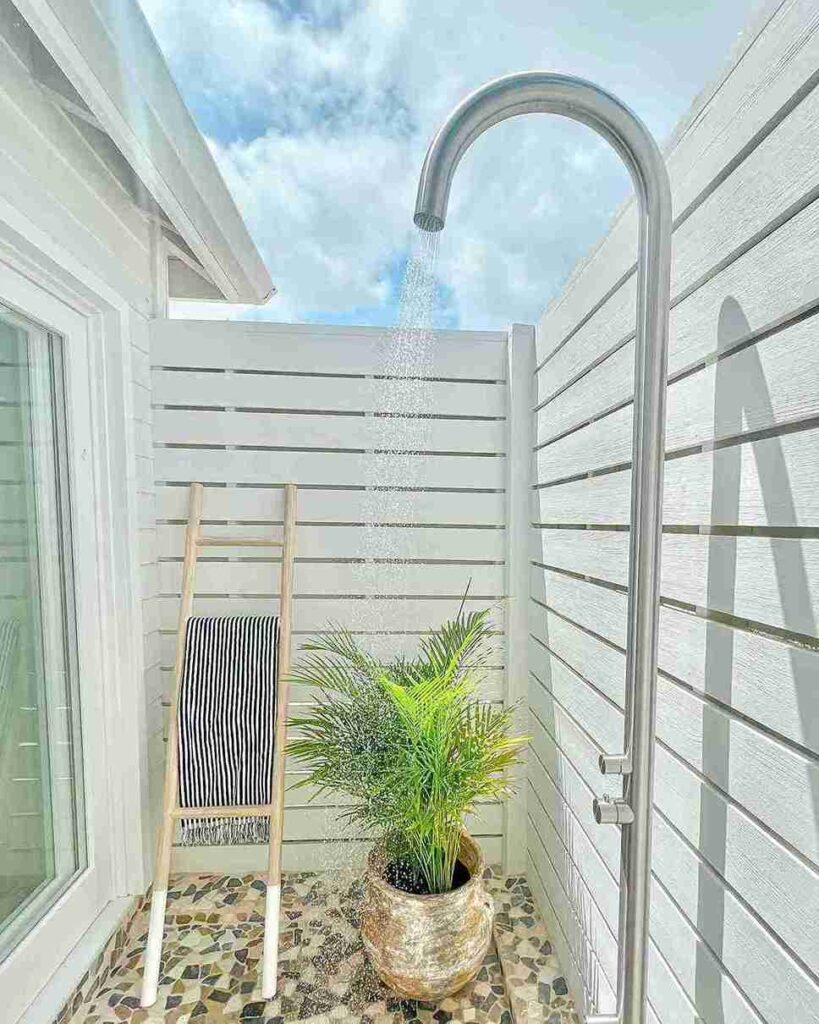
Here are 31 outdoor bathroom design ideas that blend nature with function, so your space feels like a calm, usable escape.
Open-Air Showers for a Refreshing Experience
An outdoor shower set within greenery can feel more private than expected. Plants and natural edges help soften the space without needing full walls.
In tighter layouts, placing it along a fence or behind tall shrubs creates coverage. Adding a small bench or hook keeps things practical, so you are not holding items.
Pebble or stone flooring changes the feel underfoot and softens the sound of water. Without proper drainage, though, water can collect and make upkeep harder.
Lighting Solutions for Evening Ambiance
Lighting changes how usable an outdoor bathroom feels after sunset. Warm tones make the space feel steady and easier to move through without relying on harsh light.
In areas with limited power access, string lights through greenery add soft coverage without much setup. A focused light near the mirror helps with daily use, while the rest stays low and relaxed.
Warm LED bulbs reduce insect attraction and keep the mood softer. Placing a few lanterns near the ground adds depth, though too many bright sources can make the space feel exposed instead of calm.
Creating a Spa-Like Atmosphere
Some outdoor setups shift the mood the moment you step in. Adding a tub with surrounding greenery and soft textures makes the space feel quieter and more settled.
In open layouts, a wood pergola or partial cover gives a sense of shelter without blocking light. Keeping a small basket with towels nearby avoids constant trips inside when the space is in use.
Natural scent elements like eucalyptus or mild candles change how the space feels during use. Too many strong scents can become overwhelming in humid air, so keeping it subtle helps maintain that calm effect.
Choosing the Right Location for Privacy
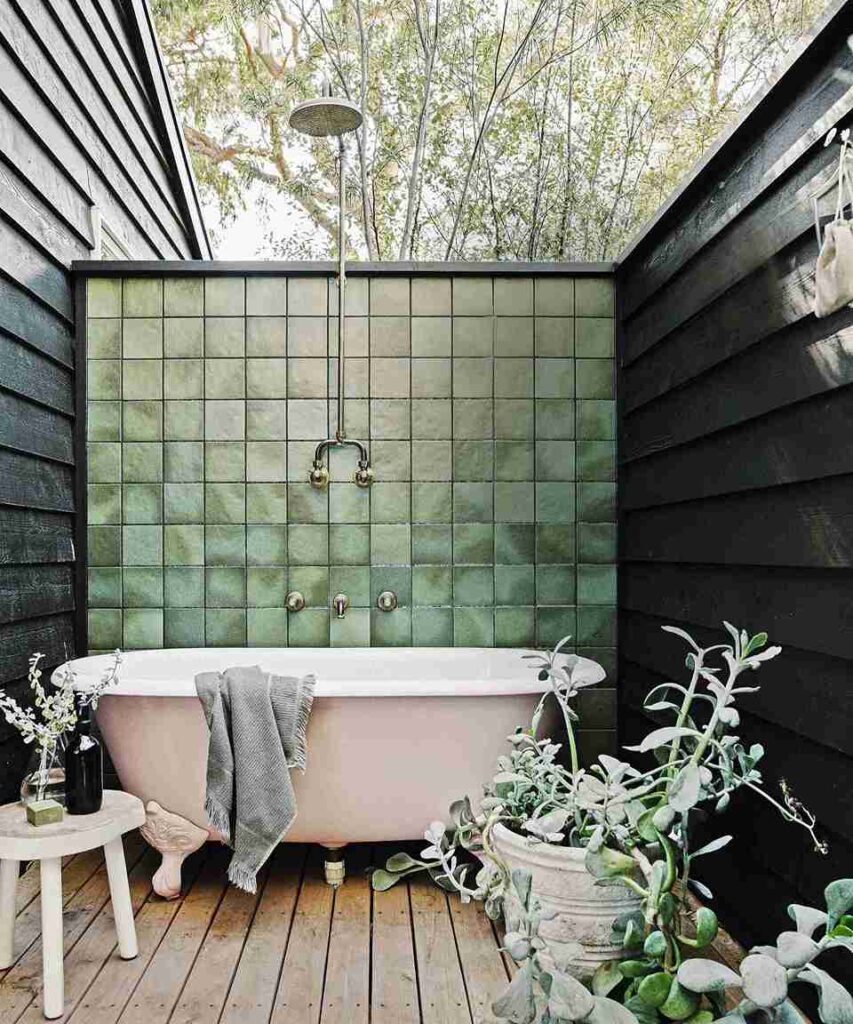
Placement can make or break the whole experience. A bathroom tucked into a quiet corner with thick greenery feels natural, while an open spot can feel uncomfortable fast.
If your yard is more exposed, start with plants, then layer in a screen or fence only where needed. Even a slightly curved walkway helps break direct views and makes the space feel less on display.
Noise is one of those details people forget. In quieter areas, water sounds feel calming, but near busy surroundings, adding plants or a small fountain helps soften the background and keeps things more secluded.
Incorporating Water Features for Serenity
Some details change the feel of the space right away. A small water feature adds a steady sound that makes the area feel more relaxed and less functional.
In compact layouts, a wall mounted feature near a basin or pebble zone keeps splashes contained. Surrounding it with a few plants helps it blend in rather than stand out.
The sound of water softens background noise, especially in busier areas. One thing to watch is buildup, without regular cleaning, mineral marks can dull the surface over time.
Stylish Bathtubs for Outdoor Relaxation
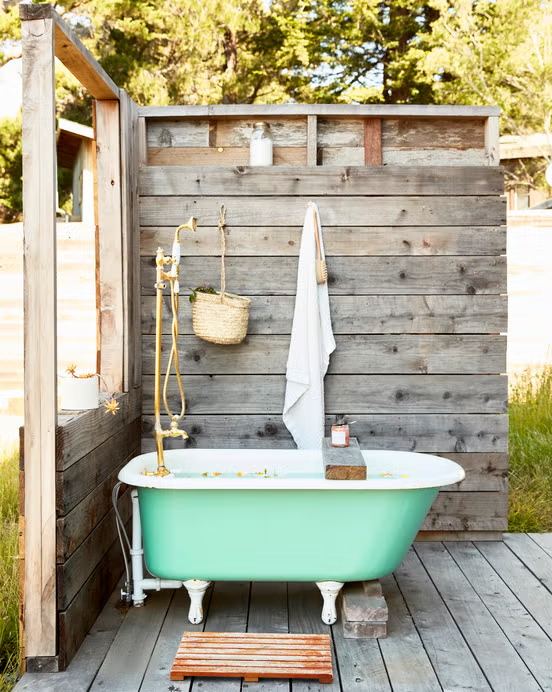
A small water feature can shift the mood of the whole space. That gentle trickling sound makes the bathroom feel quieter and more relaxed.
A wall mounted feature near a basin or pebble base keeps splashes under control and blends into the layout. A few surrounding plants help it feel like part of the space.
Water sound softens outside noise and adds a calm layer. Over time, mineral buildup can show on the surface, so occasional cleaning keeps it looking clear.
Sustainable Materials for Eco-Friendly Bathrooms
Some setups make you slow down without trying. An outdoor tub placed toward the best view turns a simple bath into something more intentional.
In open yards, surrounding the tub with taller plants or flowers adds privacy without blocking airflow. A small side table nearby keeps essentials within reach, just placed outside the splash range.
Soft lighting and a robe hook improve how the space works at night. One detail people miss is sun exposure; direct sunlight can heat the tub surface, making it less comfortable during the day.
Utilizing Space Efficiently in Small Areas
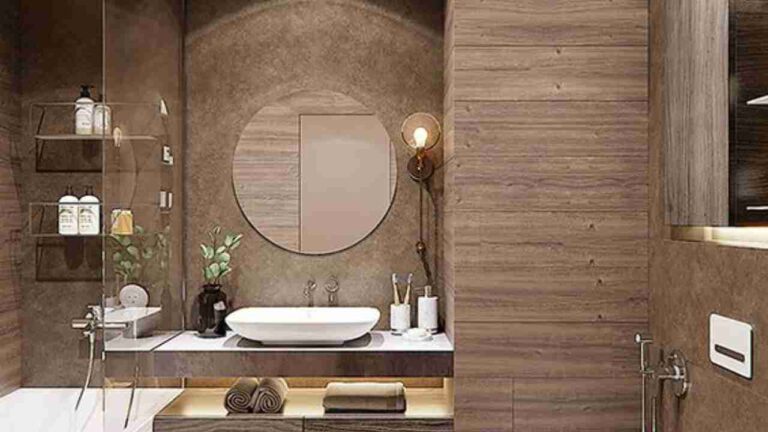
Tight outdoor layouts can feel crowded without much effort. A round mirror helps reflect light and softens the wall, which makes the space feel less boxed in.
Wall-mounted storage keeps the floor clear, especially in narrow setups. A single shelf above the toilet or sink holds daily items without adding bulk.
Keeping shapes simple reduces visual clutter. One mirror, one shelf, one plant is often enough. Adding too many pieces can make the space feel smaller instead of styled.
Creative Privacy Screens for Outdoor Spaces
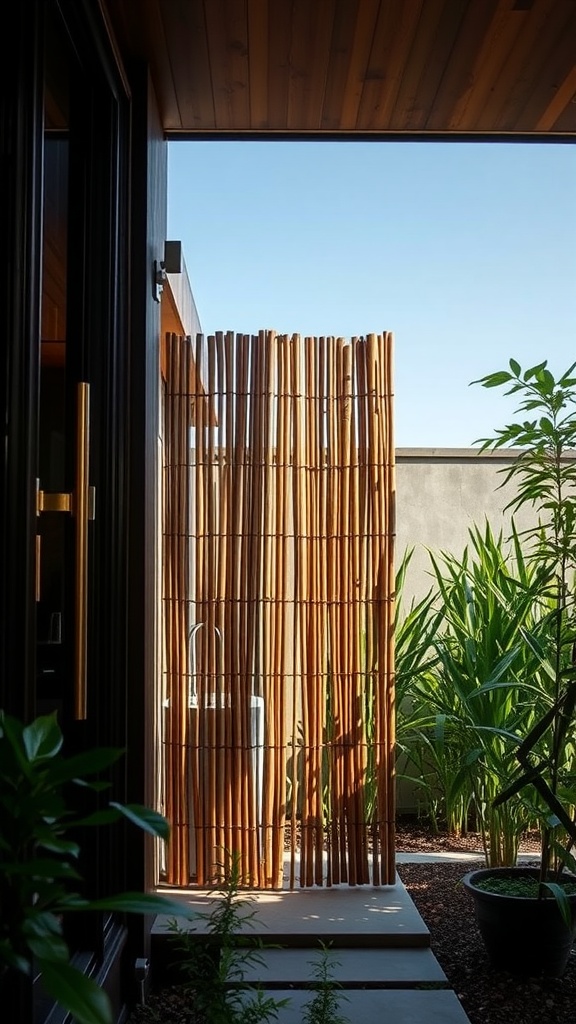
Privacy can feel tricky when you want coverage without closing everything off. Bamboo screens keep the space open while still blocking direct views.
Bamboo allows airflow and filtered light, which works well in warm climates. Pairing it with plants at the base helps it blend into the surroundings instead of looking like a divider.
Angling the screen slightly improves sightline blocking more than placing it straight. Over time, untreated bamboo can fade or weaken, so sealing or choosing treated panels helps it last longer.
Integrating Natural Stone Elements
Stone changes how the space feels right away. The mix of tones and textures makes the bathroom feel more grounded and connected to the surroundings.
In smaller areas, using stone on one main wall keeps it from feeling too heavy. Keeping fixtures simple allows the texture to stand out without crowding the space.
A small plant or soft accent balances the look. One thing people miss is sealing; without it, moisture can darken the surface unevenly over time.
Inspiration from Tropical Outdoor Designs
Some styles bring energy without much effort. Teal tiles with warm accents can shift the space toward a more relaxed, vacation-like feel.
In compact layouts, layering plants at different heights adds depth without taking up much floor space. A patterned floor can introduce movement while keeping the rest of the setup simple.
Limiting the color palette keeps the look controlled. Too many tones can make the space feel scattered, especially in smaller areas.
Innovative Drainage Solutions for Outdoor Bathrooms
Drainage is what keeps the space usable day to day. Without it, water collects fast and turns the area messy.
A central drain clears water quickly, while a linear drain along the edge helps manage heavy rain. This works well in flat layouts where water does not flow naturally.
Textured flooring improves grip and helps water move off the surface. One detail people miss is slope; even a slight tilt toward the drain makes a big difference over time.
Combining Indoor and Outdoor Elements
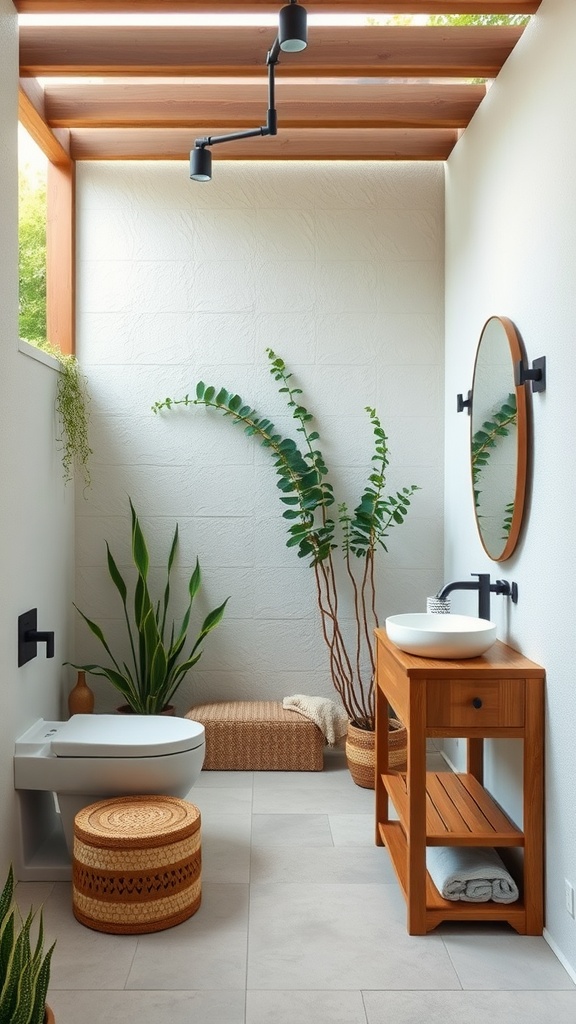
Some layouts work best when they borrow from both sides. Open air and plants keep things fresh, while a vanity and clean lines make the space feel usable.
In partially covered setups, wood beams add structure without closing the space. Adding hooks, a small shelf, and a well placed mirror makes daily use easier.
A textured mat near the sink improves comfort underfoot. One detail people overlook is lighting balance; too little makes tasks harder, while overly bright light breaks the relaxed feel.
Seasonal Decor Ideas for Outdoor Bathrooms
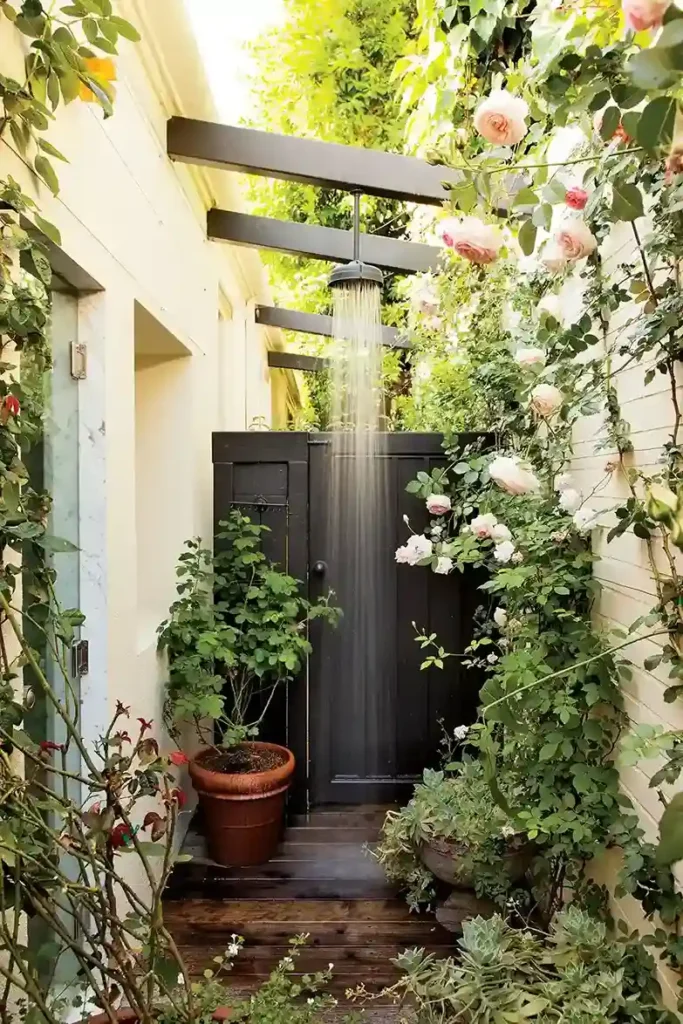
Some spaces feel more complete when they change slightly over time. Small seasonal updates can make an outdoor bathroom feel maintained instead of overlooked.
In exposed areas, keeping the base neutral makes it easier to swap small decor pieces. A wreath, a plant, or a mat can shift the look without adding clutter.
Rotating one focal spot keeps things simple to manage. One thing people miss is durability; outdoor decor can fade or wear quickly, so choosing weather-resistant pieces helps it last longer.
Using Textiles to Add Comfort
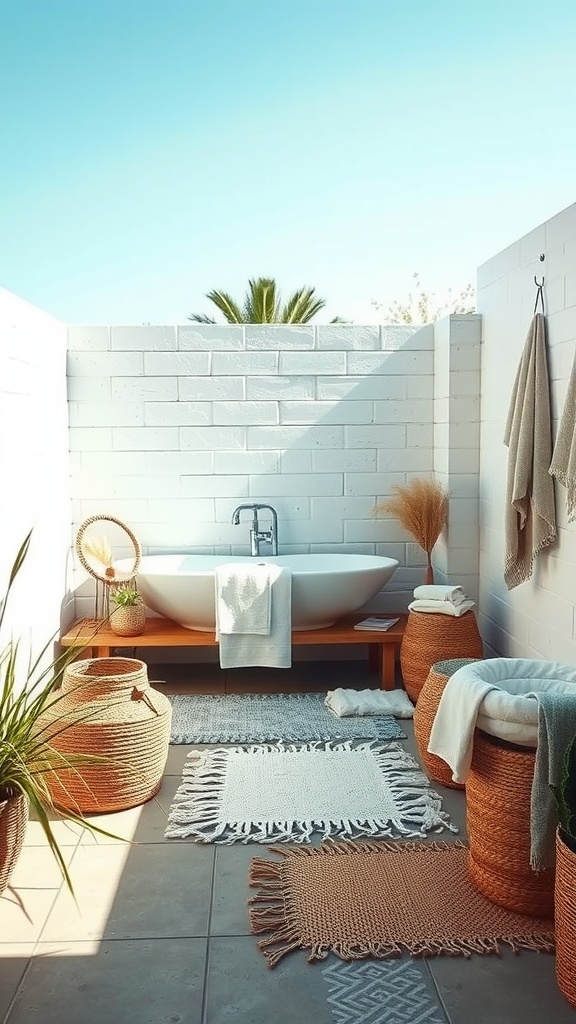
Hard surfaces can make outdoor bathrooms feel a bit stark. Adding rugs, towels, and baskets softens the space and makes it more usable day to day.
In humid areas, quick-drying fabrics work better since they do not hold moisture for long. Layering a small rug with a textured runner also helps catch drips and adds comfort underfoot.
Woven baskets keep items organized without looking cluttered. One detail people miss is placement; textiles too close to wet zones stay damp longer and need more upkeep.
Incorporating Technology into Outdoor Spaces
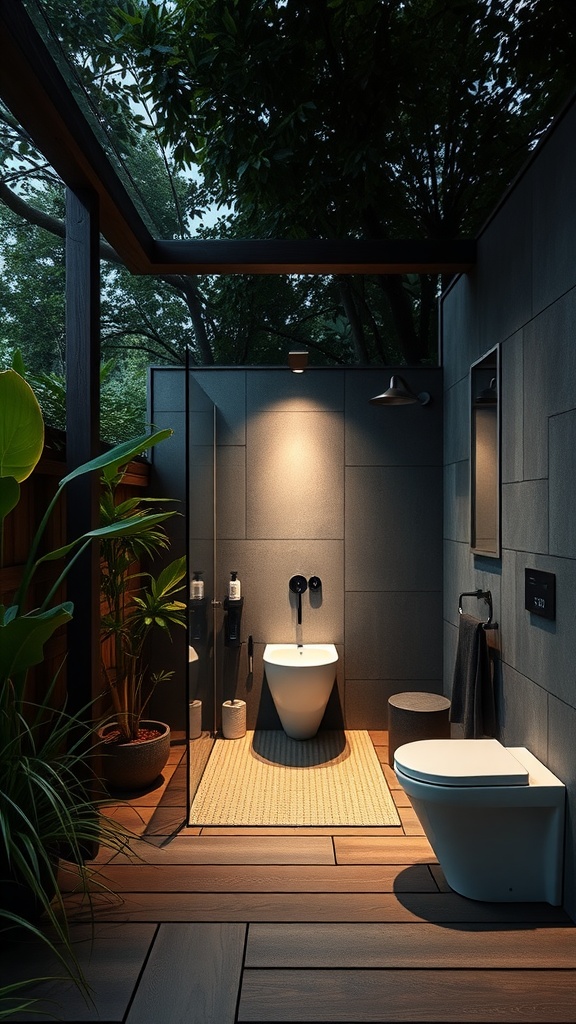
Modern upgrades can make outdoor bathrooms easier to use day to day. Simple additions like smart lighting or a compact heater improve comfort without changing the layout.
In open or semi-covered setups, weather-rated fixtures and controls are important. Water-saving showerheads also help manage usage while keeping pressure consistent.
Outdoor safe speakers add a quiet background layer without taking over the space. One detail people miss is protection; electronics not rated for moisture tend to fail quickly.
Plant Selection for Outdoor Bathrooms
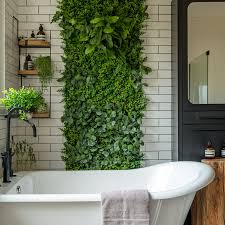
Plants shape both the feel and function of the space. Larger varieties can create natural separation while keeping the area open.
In humid or partially shaded spots, choosing moisture-tolerant plants reduces upkeep. Mixing taller plants with smaller potted ones near the sink adds layers without crowding the floor.
Hanging plants bring depth without using space below. One detail people overlook is pot choice; using similar tones across containers keeps the setup looking more organized.
Creating a Relaxing Lounge Area
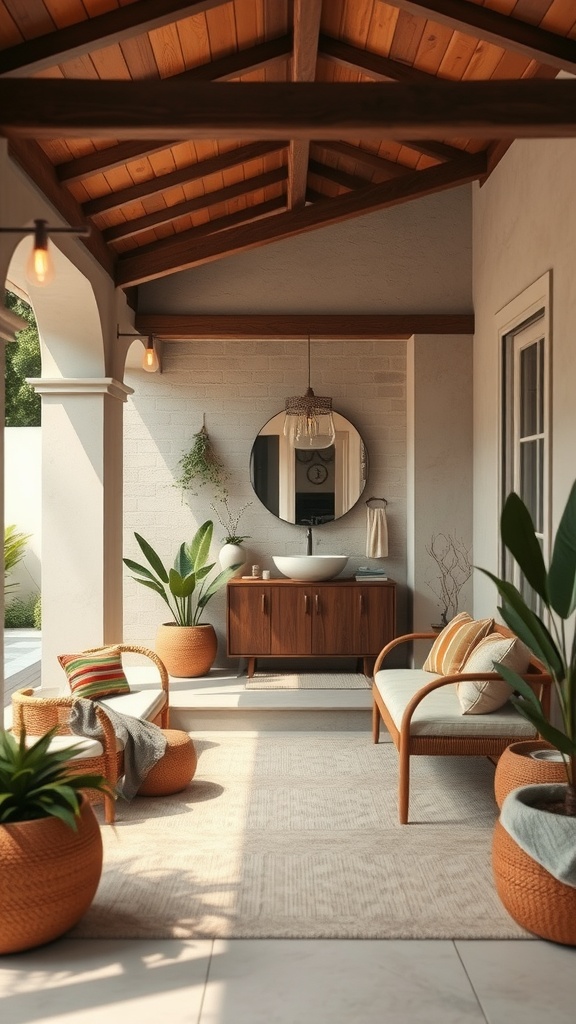
Adding a place to sit changes how the space gets used. A small lounge corner turns it into somewhere you can pause, not just move through.
Outdoor safe cushions and a simple chair work well in tighter layouts. Even one seat with a small table can make the setup feel more complete.
Soft lighting and wood overhead add warmth in the evening. One thing people miss is fabric choice; materials that hold water can stay damp and need more upkeep.
Incorporating Artwork and Decor
Adding a place to sit changes how the space gets used. A small lounge corner turns it into somewhere you can pause, not just move through.
Outdoor safe cushions and a simple chair work well in tighter layouts. Even one seat with a small table can make the setup feel more complete.
Soft lighting and wood overhead add warmth in the evening. One thing people miss is fabric choice; materials that hold water can stay damp and need more upkeep.
Using Color Palettes to Enhance the Mood
Color can shift the feel of the space quickly. A warm wall paired with a cooler accent creates contrast that feels lively without overwhelming the area.
Limiting bold colors to one or two surfaces keeps things balanced, especially in smaller layouts. Letting plants sit between tones helps soften the transition naturally.
Repeating one small color detail ties the look together. One thing people miss is light impact; strong colors can feel heavier in low light and change the overall mood.
Choosing Non-Slip Flooring Options
Wet surfaces can turn risky fast, especially in outdoor setups. Flooring needs to handle moisture without losing grip.
Textured tiles or natural stone with a rough finish provide better traction than glossy surfaces. This matters more in areas where water is used often.
Drain planning affects how safe the floor feels. Even good materials can feel slippery if water collects instead of flowing away.
Incorporating Fire Elements for Warmth
Fire features shift the space right away, especially in cooler evenings. A small flame adds warmth and gives the area a clear focal point.
Stone or metal around the fire zone handles heat better and keeps the setup safer. In tighter layouts, a compact fire bowl works without taking over the space.
Distance matters for safety and comfort. Keeping towels and nearby items away from heat reduces risk, and wind exposure can affect how steady the flame feels.
Incorporating Functional Storage Solutions
Outdoor bathrooms get messy faster than expected. Wind, moisture, and daily use can make even a nice setup look cluttered.
Wall shelves lift everything off the floor, which helps keep the space cleaner. Using baskets to group items makes it easier to grab what you need without digging around.
Covered storage protects things that should stay dry. One small mistake is sealing everything too tightly; trapped moisture can lead to damp smells over time.
Utilizing Outdoor Lighting for Safety
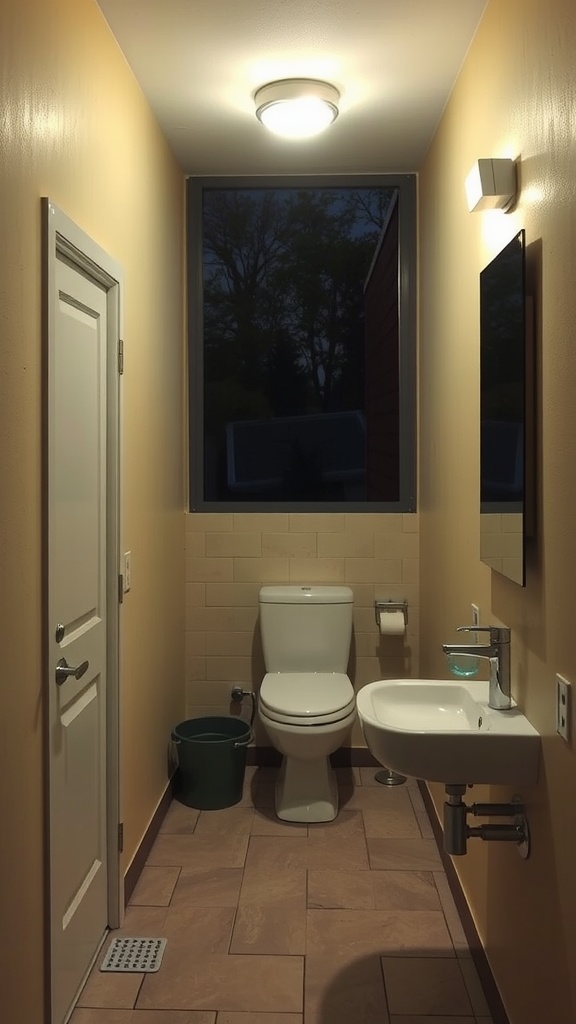
Night use can feel uneasy without the right setup. A mix of overhead light and a focused mirror light makes movement easier without making the space too bright.
Pathway lighting helps guide the way, especially in uneven or garden areas. Small solar lights or motion sensors add visibility without needing constant power.
Warm tones keep the space comfortable while still functional. One thing people miss is placement; poor angles can create shadows that make simple tasks harder.
Enhancing Views with Strategic Placement
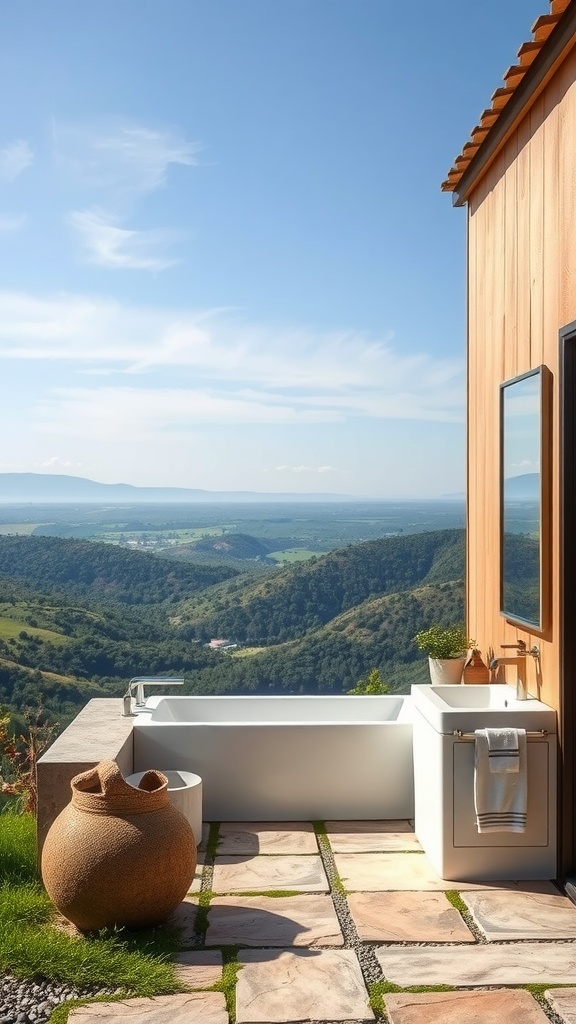
Sometimes the view does most of the work. Positioning the tub or main fixture toward a natural focal point makes the space feel more intentional.
Keeping decor minimal helps the view stay central. In smaller layouts, too many items can pull attention away from what matters.
Wind and sun exposure affect comfort during use. A partial screen can reduce harsh gusts while still keeping the space open and connected.
Personalizing Your Outdoor Bathroom Space
Some spaces feel more comfortable when they reflect how you actually use them. Clean tile with wood accents keeps the base simple while adding warmth.
Adding a few daily-use items makes the space feel more natural. A basket, a shelf, or a plant you already maintain helps avoid unnecessary clutter.
Warm lighting improves the feel as daylight fades. One detail people miss is storage balance; too little creates a mess, while too much can make the space feel crowded.
Inspiring Layouts for Different Sizes
Not every outdoor bathroom needs a large footprint. Smaller layouts can still feel complete with the right placement.
Wall-mounted fixtures free up floor space, which makes cleaning easier in outdoor conditions. Keeping key elements along one wall also helps maintain a clear flow.
Partial separation adds privacy without closing the space. One thing people miss is spacing; placing items too close together can make the layout feel tighter than it is.
Designing for Year-Round Use
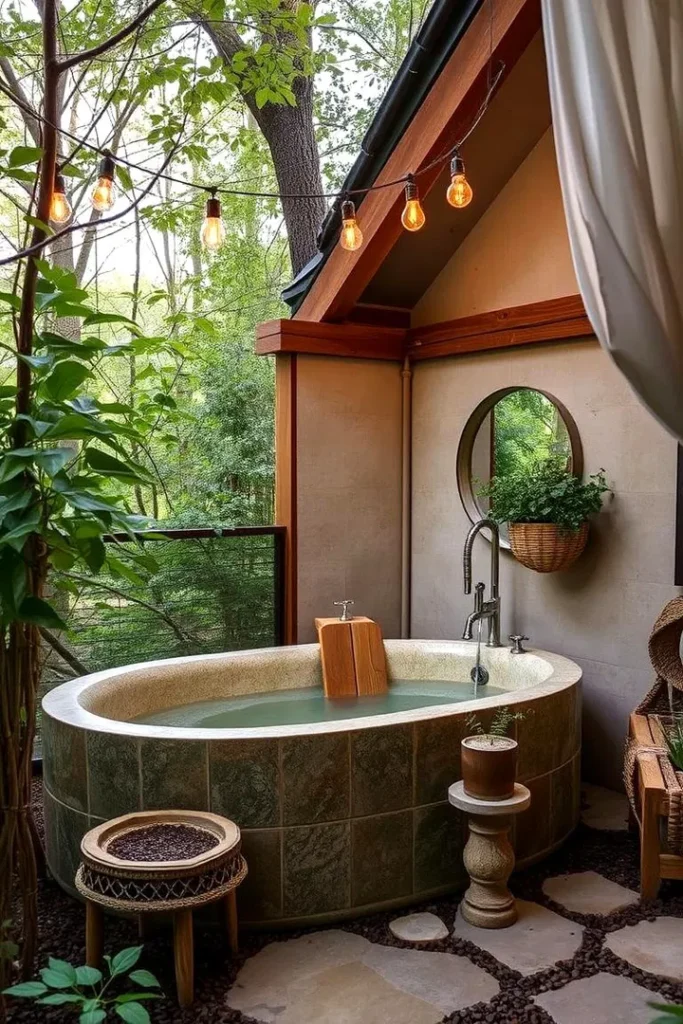
Outdoor bathrooms can feel limiting when the weather shifts. With the right setup, they stay usable beyond just warm months.
In colder climates, partial enclosure and weather-resistant materials help block wind and retain warmth. Adding a small heater or insulated surfaces improves comfort during use.
Comfort details matter more in low temperatures. A bench and a dry towel spot make a real difference, while poor insulation can make the space feel too cold to use consistently.
Natural Privacy Screens for Outdoor Bathrooms
Some privacy setups feel lighter when they blend into the surroundings. A wooden slat screen with plants creates coverage without making the space feel closed.
In open layouts, combining slatted panels with climbing or tall plants helps fill gaps over time. This works well for areas around tubs where privacy matters more.
Leaving a bit of space between greenery and the main area improves comfort during use. When plants grow too close, moisture and contact can make the space harder to maintain.
FAQ
What Should You Consider Before Building an Outdoor Bathroom?
Start with location, drainage, and privacy. These three affect how comfortable the space feels daily. Think about water flow, sun exposure, and how visible the area is from nearby spots. Choosing materials that handle moisture and weather will also reduce long-term maintenance.
How Do You Maintain an Outdoor Bathroom Easily?
Regular cleaning and smart material choices make a big difference. Use sealed wood, non-slip flooring, and moisture-resistant fixtures. Keep drainage clear so water does not collect. Wipe down surfaces often and trim nearby plants to avoid excess debris and damp buildup.
What Materials Work Best for Outdoor Bathrooms?
Materials that handle humidity and weather exposure perform better. Stone, treated wood, concrete, and textured tiles are common choices. These surfaces last longer and require less upkeep compared to untreated finishes that can wear quickly outside.
How Can You Make an Outdoor Bathroom Private Without Walls?
Layering elements works well. Use plants, screens, or slatted panels instead of solid walls. Position the bathroom in a corner or behind natural barriers. Angled layouts and partial dividers can also block direct views while keeping the space open.
Are Outdoor Bathrooms Practical for Daily Use?
They can be, if designed with comfort and function in mind. Adding proper lighting, storage, and weather protection makes them easier to use regularly. Without these details, they often end up being used only occasionally instead of daily.