Living Room Decor Themes That Don’t Feel Like a Catalog (And What I’d Copy Again)

If you have ever stood in your living room, loved five different styles, and somehow committed to none, you are not alone. The living room is the hardest room to “pick a vibe” for because it is not just a room. It is the room.
It is where people land. Where snacks happen. Where the dog claims the good spot. Where one chair becomes the official laundry chair, and nobody knows how it happened. And because we actually live in here, it is easy to overthink it.
So this is a real-life walkthrough of the most common living room decor themes, what they actually feel like to live with, and how to choose one without spiraling or buying the wrong rug again.
I will also share what I would copy again because I have made mistakes, and rugs are expensive.
Choose a Living Room Theme Without Spiraling
Before you even think about “modern vs boho,” ask yourself three questions that actually matter in real houses.
First, how much natural light does your room get on a normal day, not the one sunny hour you keep remembering? Light decides whether a theme feels cozy or just kind of sad.
Second, how forgiving does the room need to be?
Kids, pets, clumsy friends, you eating crackers on the sofa, all of this changes what is realistic.
Third, what do you want the room to feel like when you walk in at the end of the day? Calm. Cozy. Energizing. A little dramatic. “I can breathe in here.” That feeling matters more than the label.
If you want a quick mental shortcut, here is the honest map.
Boho and Scandi are the most forgiving. They tolerate mess and still look intentional.
Modern and Minimalist are the calmest for your brain, but they require editing.
Industrial and Glam are moodier and more dramatic, but lighting has to be handled or it gets heavy fast.
Coastal and Scandi are great when you want light and relaxed, especially in smaller rooms.
Now let’s walk through the themes with the real-life version of each one.
Modern Living Room Theme (clean, but not cold)
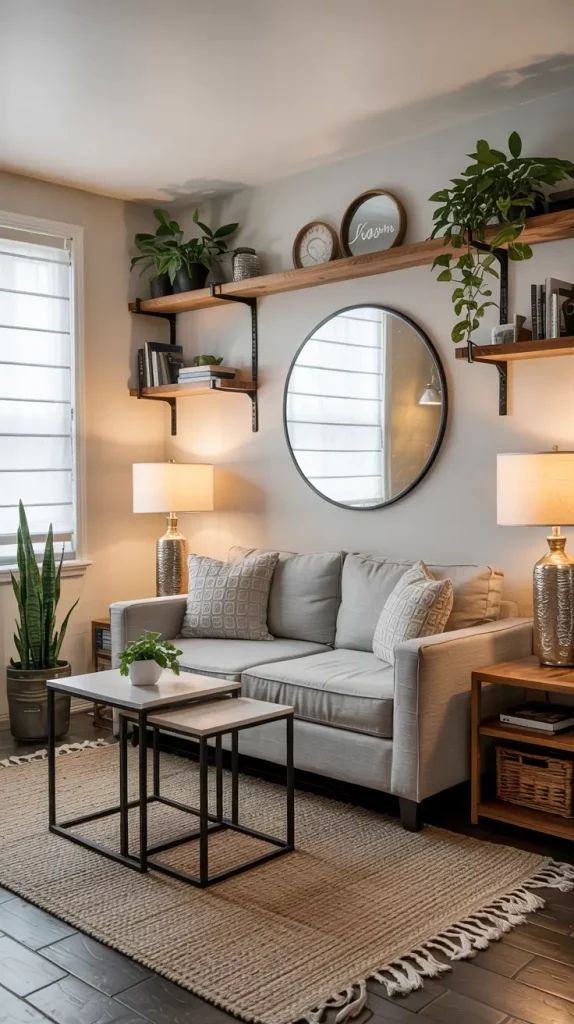
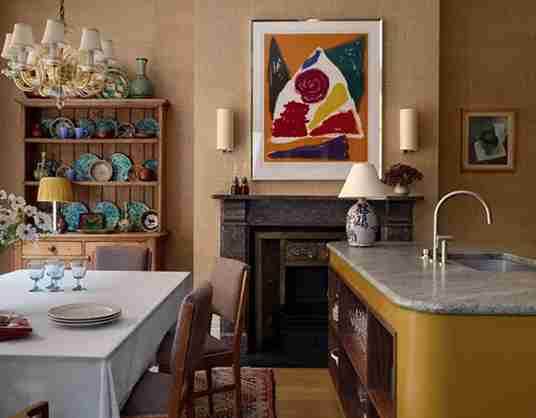
Modern style gets a bad reputation because people confuse it with sterile. Real modern living rooms are not empty. They are just edited.
In real life, modern works best when you want the room to feel calm and pulled together, especially in open concept layouts where you can see the kitchen. Modern reduces that “everything is happening at once” feeling. It is like turning down the visual volume.
The easiest modern formula is: a comfortable sofa with clean lines, one strong wood piece, and lighting that warms it up.
If you are shopping, pay attention to seat depth. I have learned that anything under about 22 inches deep can start to feel like polite waiting room seating, especially if you like to lounge. A lot of decent modern sofas land around $1,200 to $2,800, and yes, that hurts. If you are on a budget, keep the sofa and upgrade the supporting cast: rug, coffee table, and lamps.
A solid oak or walnut coffee table does heavy lifting in modern spaces. That one piece can make the whole room feel more “intentional adult.” Wall color matters too. Warm white, soft greige, or mushroom tones keep modern from going icy.
Modern fails when it looks flat or cold. The fix is always texture and warmth. Linen pillows, a wool rug, warm bulbs, and one organic piece, like a wood table or a curved chair.
Modern is best for people who hate visual clutter, and for rooms where the living room and kitchen are basically roommates.
Minimalist Living Room Theme (simple, but emotionally supportive)
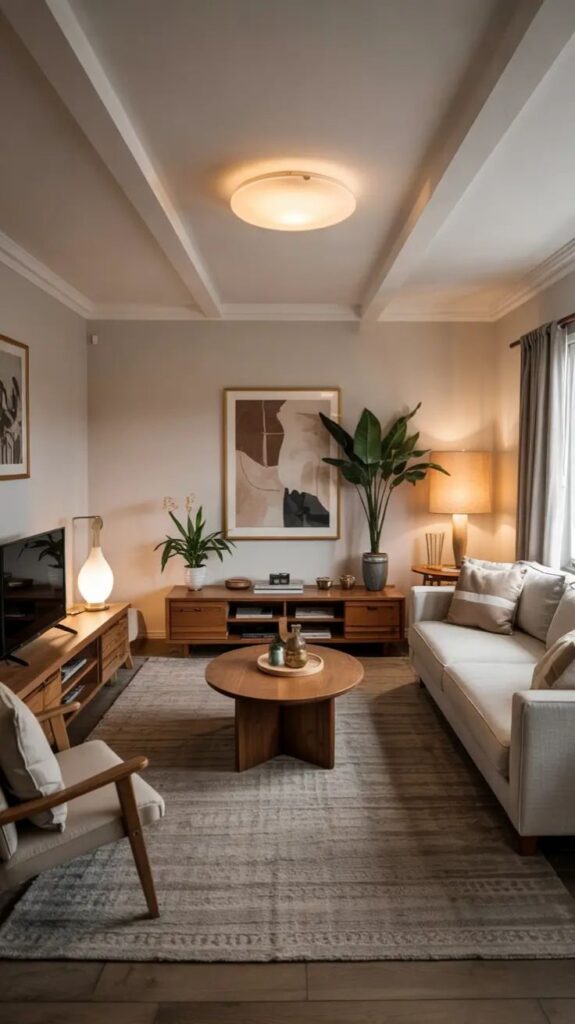
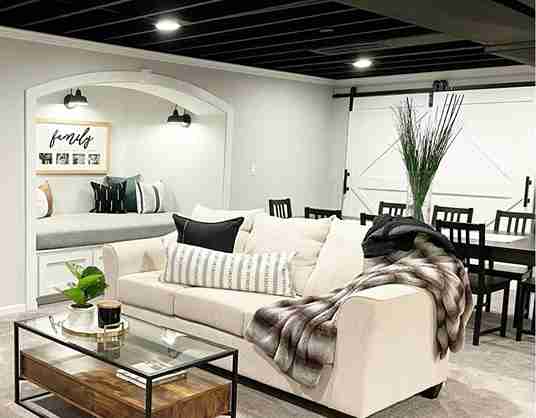
Minimalist is not “nothing.” It is “only what I actually like.” Minimalism is a relief theme. People usually crave it when their brain feels loud.
In real life, minimalist living rooms rely on big surfaces: the sofa, the rug, the walls. If those are right, the room already feels good. If those are wrong, the room feels empty and echo-y no matter what you add later.
The palette stays tight. Soft white, pale wood, muted taupe, maybe one charcoal element. The shapes stay calm too. Low silhouettes, gentle curves, nothing busy.
The biggest mistake in minimalist rooms is adding lots of small decor to fill the “emptiness.” That creates visual noise and defeats the whole point. Instead, go bigger and fewer. One large art piece. One oversized vase. One plant that you remember to water sometimes.
A good wool or wool blend rug is worth it here because it grounds the room. If the rug is thin or too small, minimalist starts to feel like a waiting area. This theme is best for small rooms and anyone who gets overstimulated by too much stuff.
If minimalism feels sterile, the fix is softness. Curtains, a textured throw, warm lighting, and one natural material like wood or woven texture.
Boho Living Room Theme (layered, cozy, and forgiving)
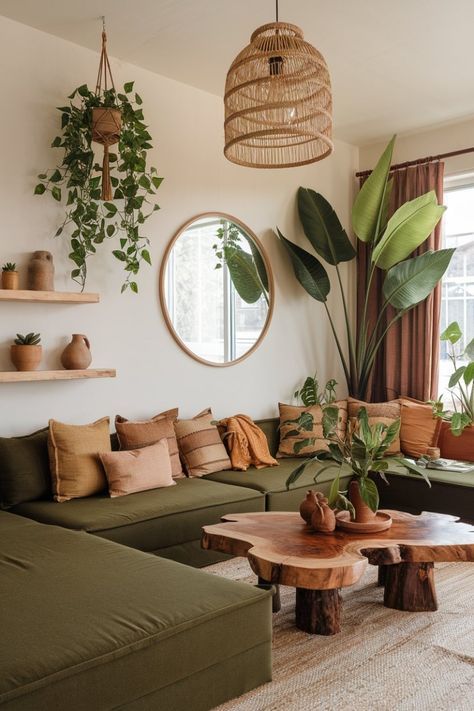
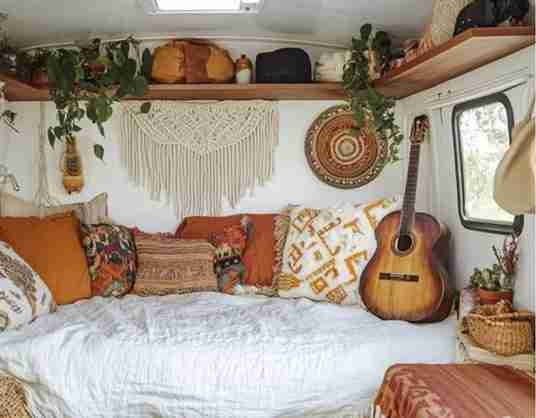
Boho is the theme I recommend when life is chaotic. Kids, pets, messy weekends, you want cozy without pressure. Boho is forgiving because it already expects texture and layers. It does not require perfection.
In real living rooms, boho usually starts with the rug. A warm, vintage look rug in faded rust, olive, cream, and clay tones instantly sets the mood. Then you keep the sofa neutral so the layers can breathe.
Boho is also the theme that plays nicest with thrifted pieces. A mismatched side table, a vintage coffee table, a weird little stool you found, boho can absorb all of it and still look intentional.
The line between “cozy layered” and “messy” is pattern control. Boho looks best when one thing is the star and everything else supports it. If the rug is the star, keep the pillows calmer. If pillows are bold, keep the rug simpler. When boho starts feeling chaotic, it is usually because every textile is trying to be the main character.
Boho is best for renters, too, because you can change the whole vibe with textiles and lighting without painting or buying expensive furniture.
Industrial Living Room Theme (moody, but easy to overdo)
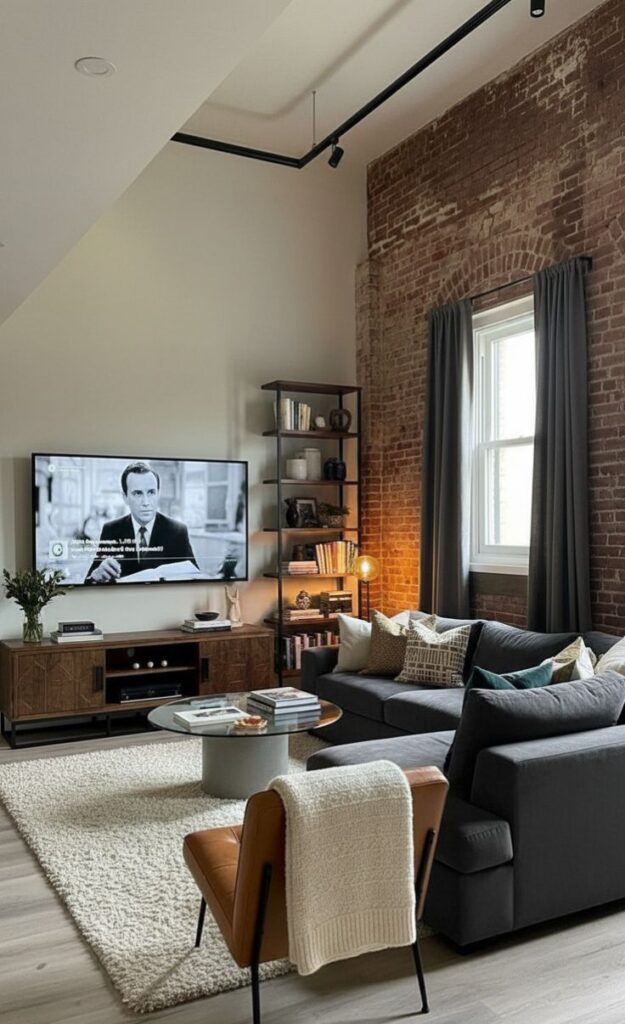
Industrial is the dramatic one. It is strong shapes, darker tones, leather, metal, reclaimed wood. It can look insanely good, but it can also get cave-like fast if the room is low light.
Industrial rooms need softness on purpose. If you do leather, add a rug that warms it up. If you do metal, add textiles that soften the edges. Industrial without softness starts to feel like you live inside a charcoal sketch.
In real life, the easiest industrial anchor is a warm-toned leather sofa, think cognac or saddle, not cold espresso brown. Then you add a wood coffee table with metal legs, and a large rug that softens everything.
Lighting is non-negotiable here. Two to three lamps minimum. Warm bulbs. Soft shades. Industrial rooms are where I see the biggest lighting mistakes because people rely on overhead lighting and then wonder why it feels harsh.
This theme is best for tall walls, big windows, and people who love a moody vibe. If your room is small or dim, keep the palette lighter and use industrial elements as accents instead of going full warehouse.
Coastal Living Room Theme (light, relaxed, not nautical)
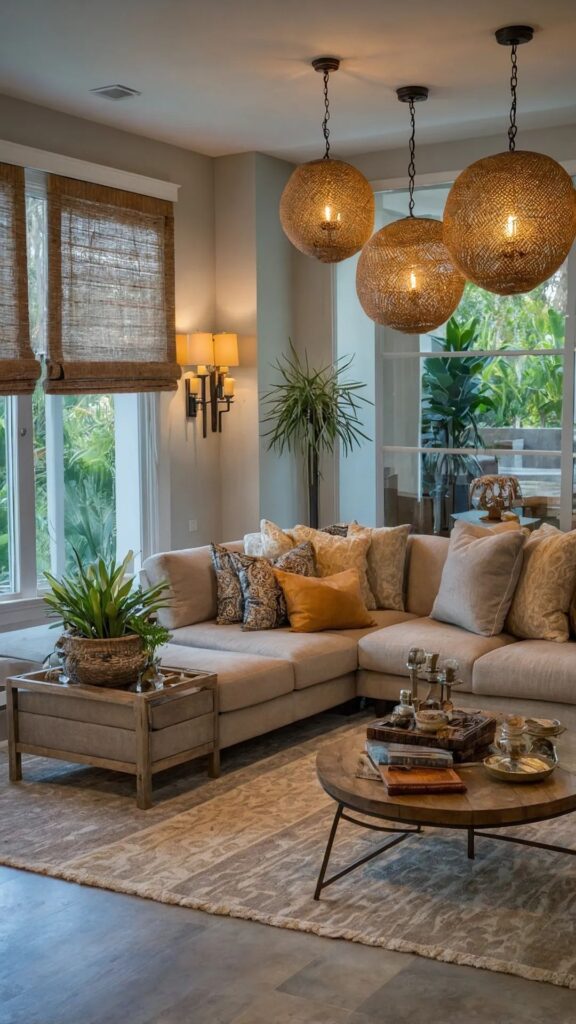
Coastal should feel breezy, not themed. Real coastal is more about palette and texture than it is about “beach stuff.” You want your living room to feel like you can breathe in it.
The palette is soft white, sandy beige, pale blues, and light wood. Fabrics feel casual: linen, cotton, slipcovered looks. Rugs are often jute or flatweave because they hide life and feel relaxed.
The biggest coastal mistake is going too literal. No rope art. No anchors. No giant “beach” sign. If you want coastal without cringe, keep it abstract: texture, light, and a calm palette.
Coastal is great in small rooms and for people who want a calm space without going minimalist. If the room starts to look washed out, add one grounding element like a darker wood table, a muted navy pillow, or black frames for art.
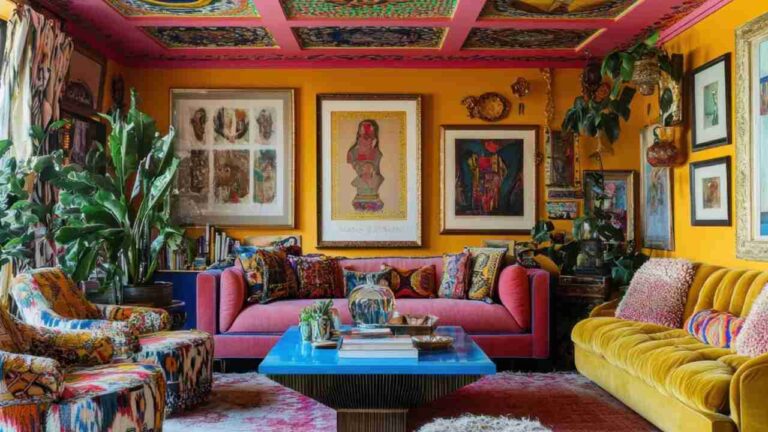
Glam Living Room Theme (soft meets shiny)
Glam is plush plus shine. It is the theme for people who want their living room to feel like a moment, even if they are wearing sweatpants.
Glam works best with contrast. Velvet next to brass. Soft textiles next to reflective surfaces. Curves next to clean lines. If everything is shiny, it looks busy. If everything is soft, it looks sleepy. The magic is mixing them.
In real life, glam usually starts with one hero piece: a velvet chair, a velvet sofa, or a statement light. Then you keep the rest controlled. A patterned rug helps ground it so it does not feel like the furniture is floating.
The easiest glam mistake is buying too many shiny decor objects and no grounding texture. The fix is always matte texture: a ceramic vase, a chunky throw, a woven basket, a warm rug.
Glam is best for people who want drama without committing to dark paint, and for rooms that need a little extra personality.
Scandi Living Room Theme (quiet, warm, intentional)
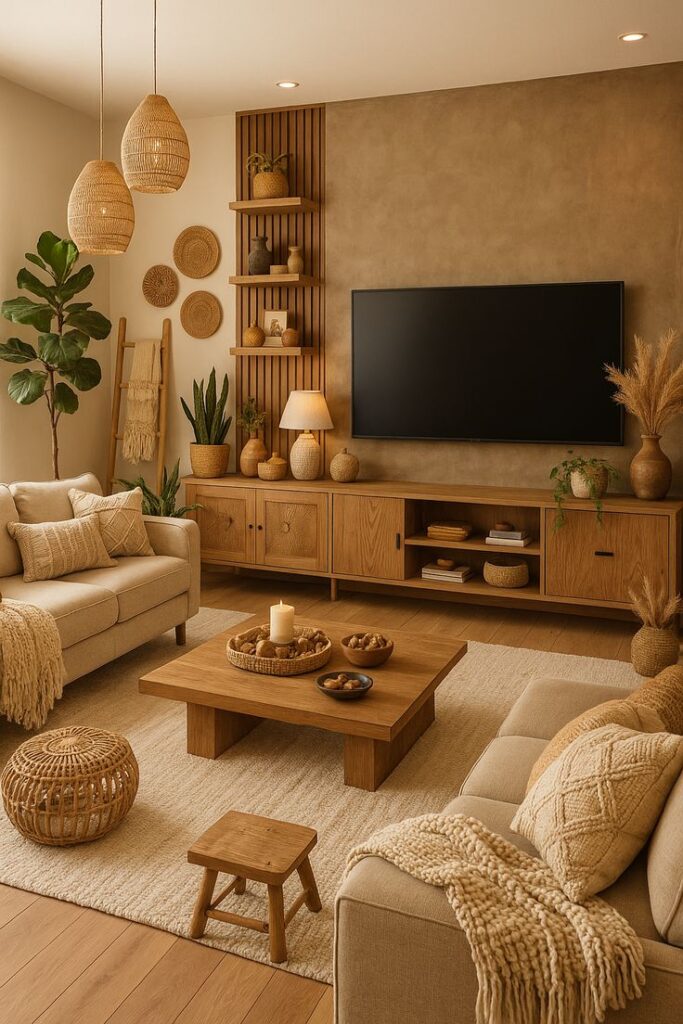
Scandi is bright but not sharp, cozy but not cluttered. It is honestly one of the easiest themes to live with because it balances clean lines with warmth.
The palette is warm white, pale wood, soft grays, muted blues or greens. The textures are the hero: wool rugs, cozy throws, soft pillows, and natural wood. Scandi rooms feel calm because the clutter is controlled, but they still feel human because of the warmth.
Lighting is a big deal in Scandi spaces. Multiple lamps at different heights make it feel cozy at night. If you have one overhead light and nothing else, Scandi can feel a little flat. Add a table lamp and suddenly the whole room glows.
Scandi is best for small rooms, renters, and anyone who wants cozy without heavy layers.
How to Match a Theme to Your Actual Room
Here is the truth: your room’s light level and layout matter more than the theme label.
If your room is dark, lean into themes that look good with warmth and texture, like boho, glam, or warm modern. You can still do minimalist or industrial, but you have to build the lighting layers or it will feel heavy.
If you have tall walls, scale matters. A tiny frame floating on a big wall looks accidental. Go bigger with art, or use curtains hung higher to give the room height.
If your room is open concept, modern, minimalist, and Scandi help calm the visual noise. They make the space feel cohesive even if someone left a cereal bowl out.
If your house is chaotic, pick forgiving themes. Boho and coastal are the least judgmental.
The easiest way to switch themes without redoing everything
If you love multiple styles, do not force yourself to pick one forever. Build a flexible base.
A neutral sofa, a rug that plays well with more than one palette, warm bulbs, and a few classic wood pieces. Then you can shift the vibe with the smaller stuff: pillows, throws, lampshades, art.
This is how you can go from Scandi to boho in an afternoon without buying a new sofa. It is also how you can “try” glam with one velvet chair instead of committing your whole room to shiny everything.
My personal regret, since we are being honest, is rug sizing. I have bought rugs that were slightly too small because I tried to save money, and I regretted it every time. A slightly too small rug makes a room feel unfinished in a way you cannot unsee once you see it.