The 5 Key Elements of Modern Kitchen Decor (Plus the Rules That Save You From Regret Later)

Modern kitchen decor sounds simple until you’re standing in your kitchen holding three “warm white” paint chips that somehow all look identical, and you’re trying to picture what your cabinets will look like at night under your current yellow bulbs. I’ve done that.
More than once.
What people usually mean by “modern” is not cold or sterile. It’s calm. Edited. Easy to live with. A kitchen that looks good on a random Tuesday when the dishes are out and you’re rushing.
So instead of chasing trends, I focus on five core elements that show up in every modern kitchen that actually works long term. I’ll give you practical rules, the decisions that matter most, where mistakes happen, and realistic costs so you can plan without getting stuck in analysis mode.
Quick Start: What To Prioritize By Budget
I always start here because a kitchen does not need a full renovation to feel modern. Small, high impact changes can completely shift how the space feels if you focus on the right moves.
Under $300: Visual Cleanup And Better Light
This budget tier is all about calming the space quickly. You are not changing layouts or materials, you are reducing visual noise and improving how the kitchen feels day to day.
Swap cabinet hardware
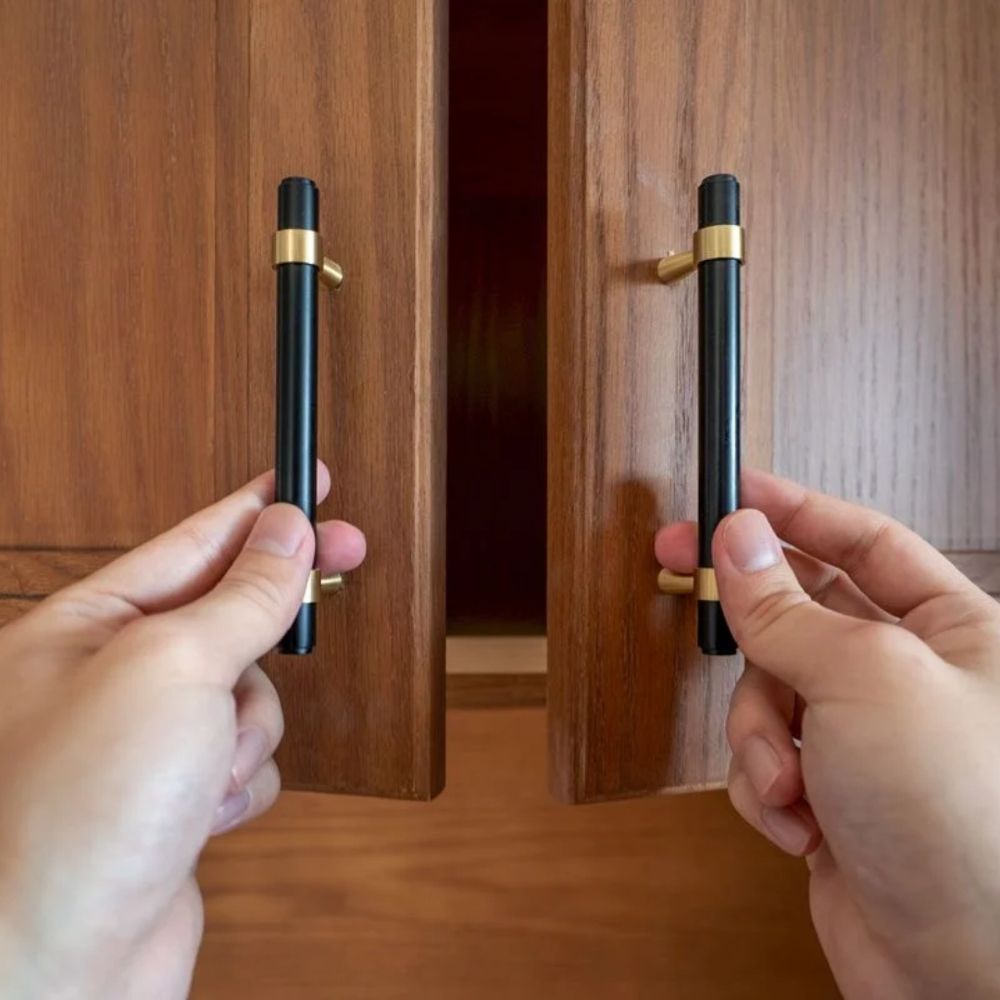
Replacing knobs with elongated pulls instantly makes cabinets look cleaner and more modern. It is one of the fastest upgrades you can make.
Typical cost runs about $3 to $12 per pull, including screws. In a kitchen with around 20 doors and drawers, you can usually land somewhere between $80 and $250 depending on finish and quality.
Stick to simple shapes in black, brushed nickel, or champagne bronze for the most modern effect.
Upgrade the lighting with better bulbs
Lighting changes how everything else looks. Swap existing bulbs for warm, dimmable LEDs in the 2700K to 3000K range. This softens harsh light and makes finishes look richer instead of flat.
Most LED bulbs cost between $3 and $10 each, and the difference is immediate. Even older kitchens feel more intentional with the right lighting temperature.
Create one intentional countertop moment
This step controls clutter without hiding it. Choose one small zone and style it deliberately so everything else feels less chaotic by comparison.
A low tray, a utensil crock, or a ceramic bowl for fruit works well. When items are grouped intentionally, the kitchen looks styled even when it is actively being used.
This is the level where people say, “My kitchen stopped feeling messy even when it is messy.” It is not about perfection; it is about visual calm.
$300 To $1,500: The Biggest “Feels New” Zone
This is the budget range where a kitchen starts to feel redesigned instead of just refreshed. You are still avoiding major construction, but the changes have enough presence that the space feels noticeably different.
Add under-cabinet LED lighting
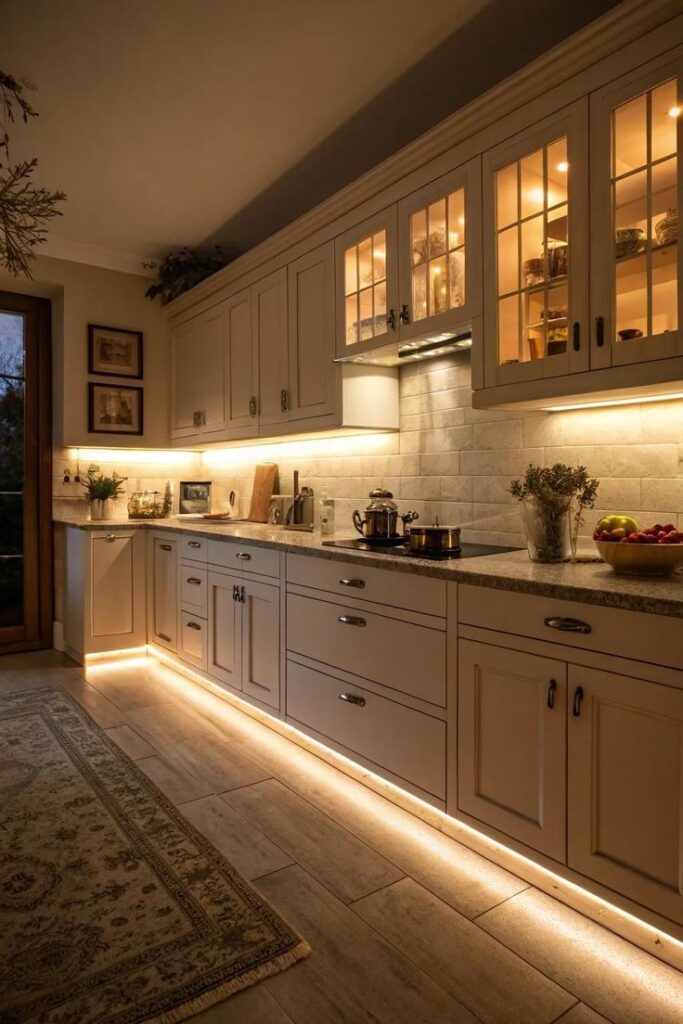
Under-cabinet lighting is one of the highest impact upgrades you can make. It improves task lighting, adds depth, and makes countertops and backsplash materials look more intentional.
Plug-in LED strip kits are the most affordable and easiest to install. They work well for renters or quick upgrades. Hardwired systems cost more but look cleaner because there are no visible cords.
Typical cost ranges from $50 to $300 for DIY plug-in kits. Professionally installed hardwired lighting usually runs between $300 and $900, depending on the length of the run and the electrician’s time.
Upgrade the kitchen faucet
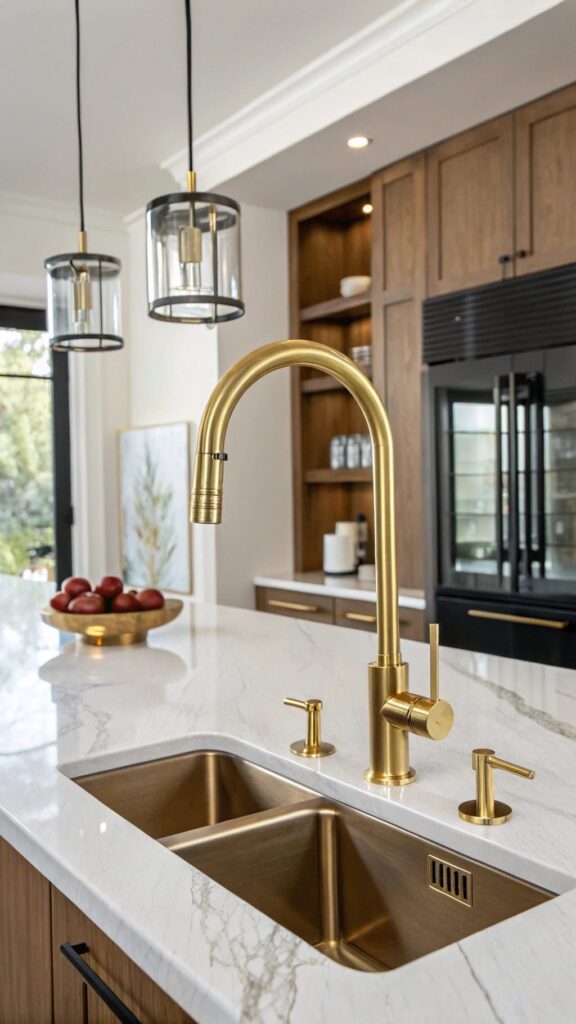
A new faucet changes the entire feel of the sink area, which is one of the most used spots in the kitchen. Swapping to a modern silhouette with a simple curve or pull-down sprayer instantly updates the space.
A solid mid-range faucet usually costs between $150 and $600. This upgrade is functional as well as visual, which makes it especially satisfying.
Paint the walls in a warm neutral
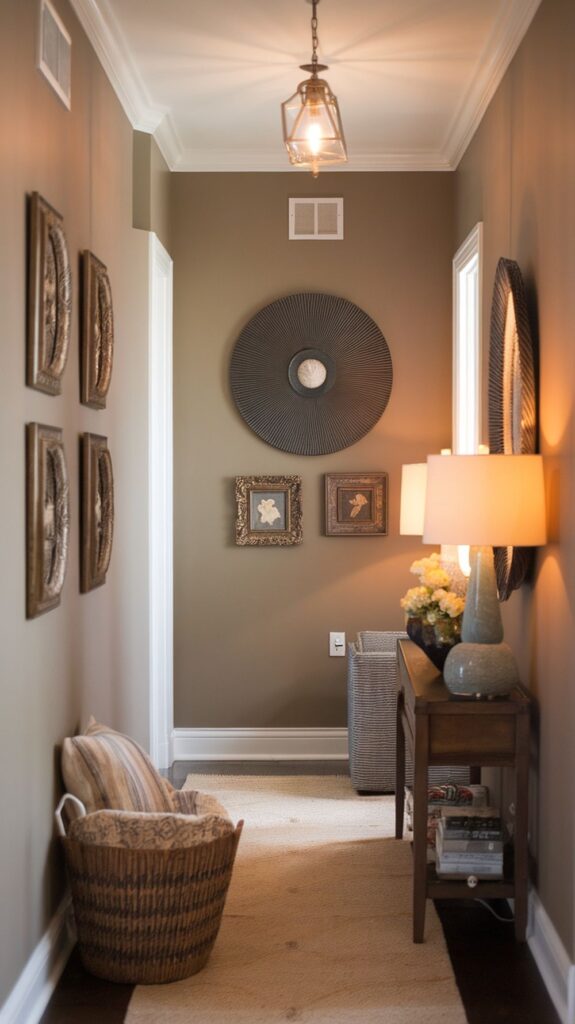
Wall color has a bigger impact than most people expect. Choosing a warm neutral that works with the undertones of your cabinets helps everything feel more cohesive.
Paint costs typically fall between $50 and $200 for a DIY job, depending on paint quality, prep work, and the size of the space. The right color can make existing cabinets and counters look more expensive without changing them.
At this level, the kitchen starts to feel intentional and updated. The layout stays the same, but the experience of using the space improves in ways you notice every day.
$1,500 To $8,000: Function Meets Style
This is the range where the kitchen starts working better, not just looking better. These upgrades change how the space functions every single day, which is why they tend to feel the most satisfying long-term.
Backsplash upgrade
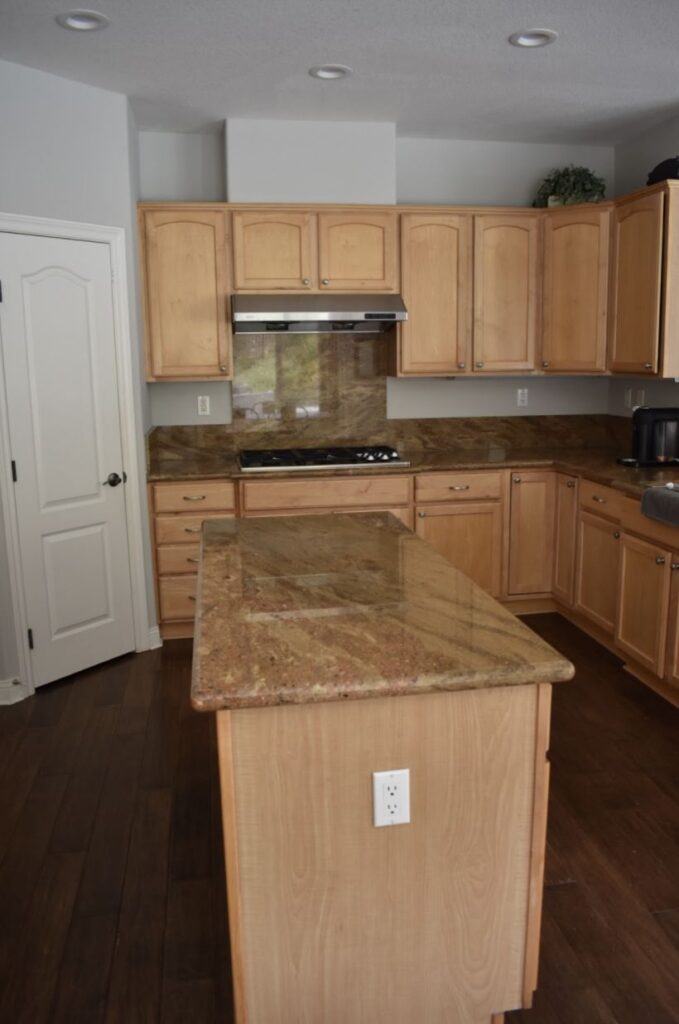
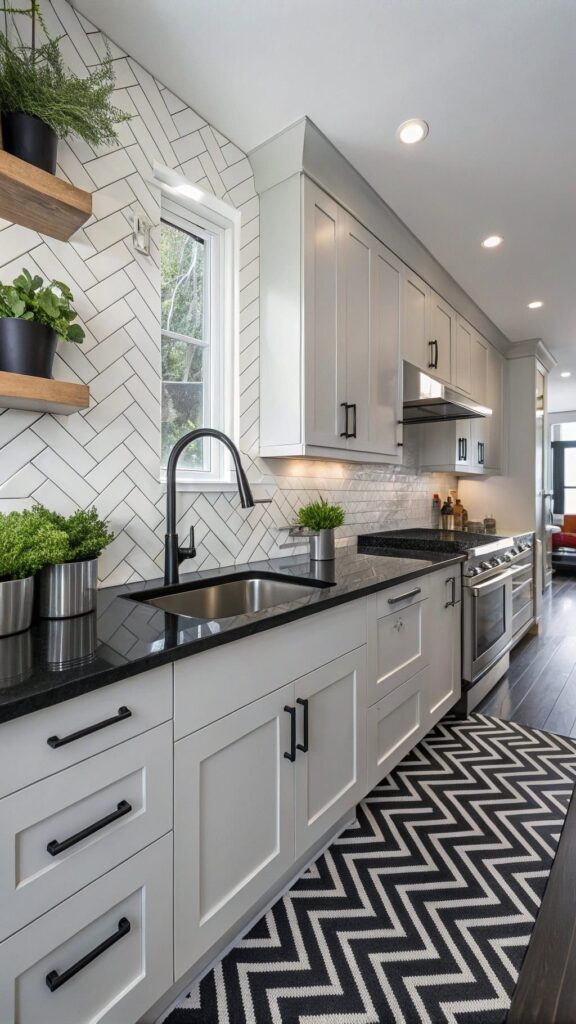
Updating the backsplash immediately modernizes the kitchen because it sits right at eye level. Vertical stacked tile, large format tile, or slab look porcelain all create a cleaner, more current feel than small, busy tile.
Cost usually falls between $800 and $3,500, depending on material choice, square footage, and labor. This upgrade is mostly visual, but it has a huge impact on how finished the kitchen feels.
Workstation sink
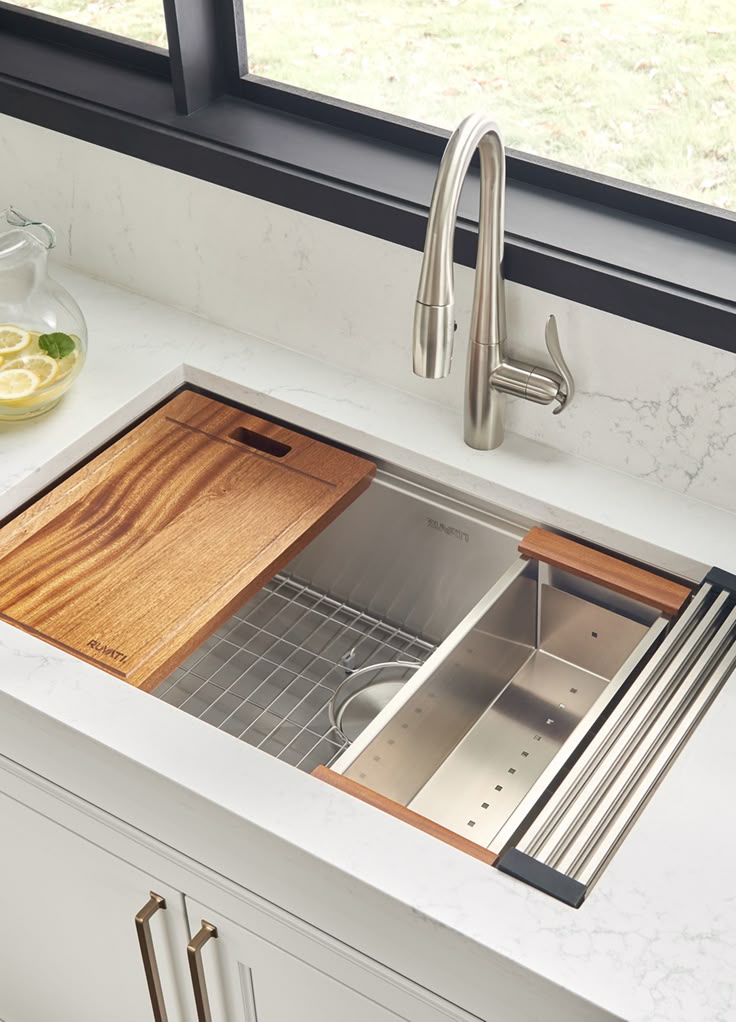
A workstation sink turns the sink area into a true prep zone. Built-in ledges for cutting boards, drying racks, and colanders make everyday tasks easier and reduce the need to spread prep work across the counters.
Expect costs around $400 to $1,500 for the sink and accessories, plus installation. This is one of those upgrades you feel every day, especially if you cook often.
Lighting upgrades with dimmers
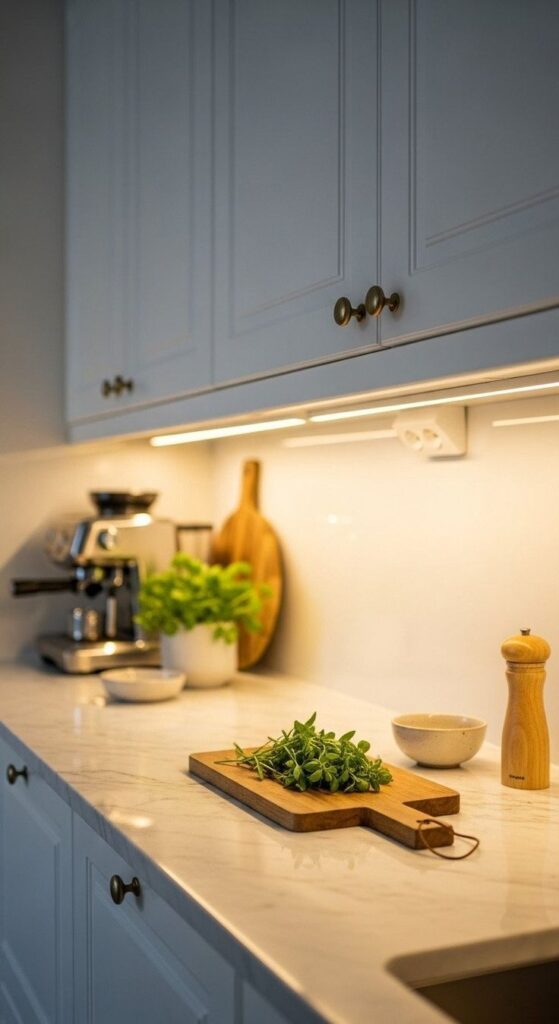
Replacing outdated fixtures and adding dimmers can completely change the mood of the kitchen. New pendants over an island, improved task lighting, and dimmable controls make the space more flexible from morning to night.
Costs typically range from $500 to $3,000, depending on the number of fixtures and wiring needs. Good lighting often makes existing finishes look better without replacing them.
$8,000 And Up: Foundational Changes
This tier is about changing the bones of the kitchen. These upgrades are less about quick wins and more about long-term structure and value.
Countertops
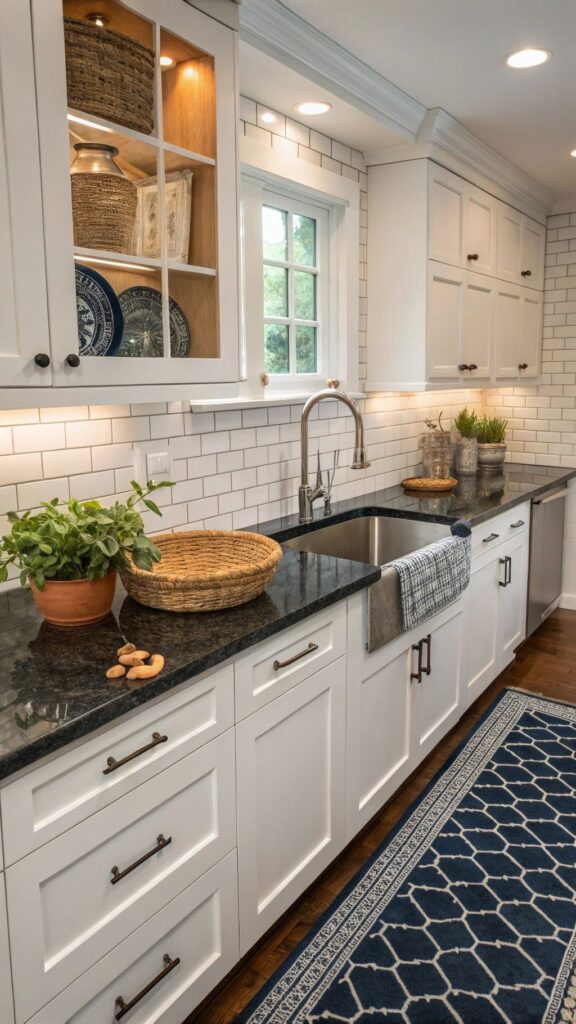
Replacing countertops has a major visual and functional impact. Quartz, quartzite, and porcelain slabs are the most common choices for modern kitchens because they balance durability and appearance.
Costs often range from $2,500 to $10,000 or mor,e depending on kitchen size, edge profiles, cutouts, and material selection.
Cabinet refacing or new doors
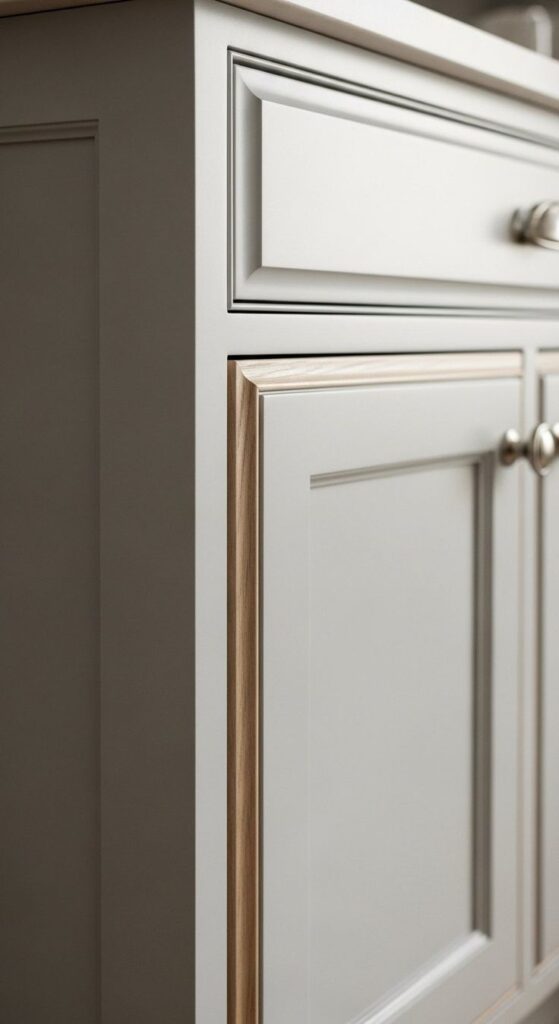
If cabinet boxes are in good shape, refacing or replacing doors can dramatically update the kitchen without a full teardown. Flat panel or slim shaker styles feel current and flexible.
Refacing typically runs $5,000 to $15,000 or more. Full cabinet replacement can exceed that quickly, especially with custom work.
Layout improvements
This is where budgets can jump fast. Resizing or adding an island, improving clearances, or moving appliances can transform how the kitchen functions, but it also introduces plumbing, electrical, and structural considerations.
Costs vary widely, but layout changes are often the most impactful and the most expensive decisions in a remodel.
The Few Rules That Actually Prevent Regret
You do not need to memorize every kitchen guideline ever written. In real life, these are the rules that matter most because they affect daily comfort.
Prioritize lighting earlier than you think. A well-lit kitchen always feels more expensive and more usable than a dark one with new finishes.
Protect counter space. Every appliance or design choice that eats into usable prep area should be questioned carefully.
Function beats trend. If something looks good but makes cooking harder, you will resent it quickly.
Upgrade in layers. Visual calm first, then lighting, then function, then structure. Skipping straight to big changes often leads to missed basics.
Design for how you live now, not an ideal version of yourself. The best kitchen is the one that supports your real routines.
When budgets are spent with these rules in mind, kitchens age better, feel better, and rarely trigger that wish I had done this differently feeling later.
Island Clearance
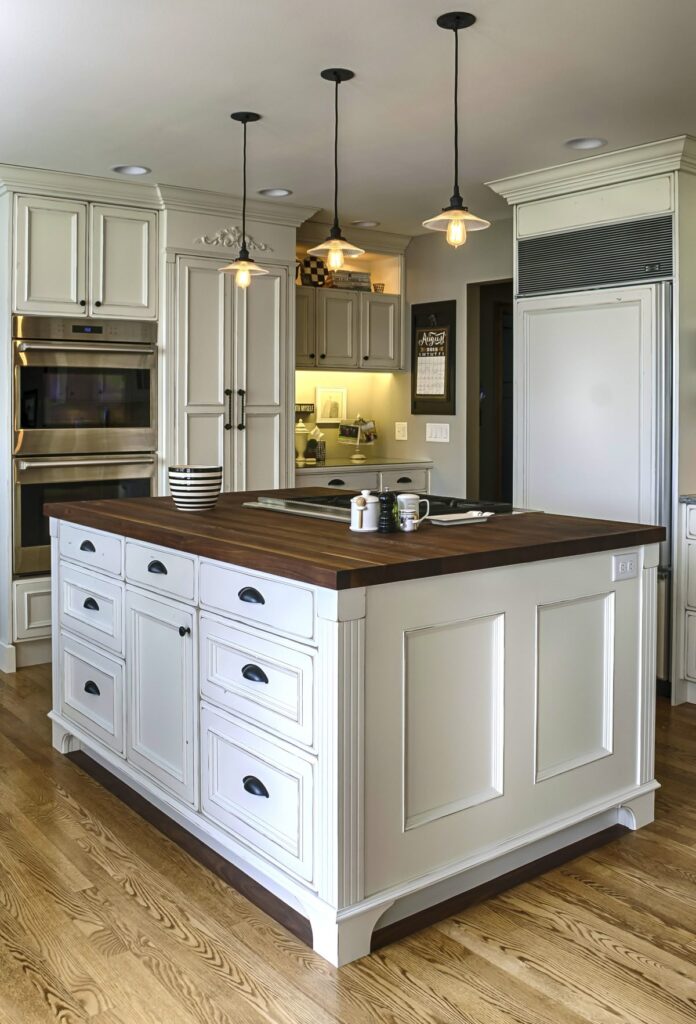
Clearance around an island affects daily comfort more than almost any visual decision.
Thirty-six inches is the absolute minimum when space is tight. It works, but it feels narrow, especially when appliance doors are open.
Forty-two inches is the comfortable everyday standard. It allows one person to work while another passes through without constant bumping.
Forty-eight inches is ideal when more than one person cooks, or when a dishwasher, oven, or refrigerator opens into that walkway. This spacing prevents traffic jams and awkward pauses.
If you remember one thing, remember this: a gorgeous island that blocks a dishwasher will annoy you every single day, no matter how good it looks in photos.
Pendant Height Over An Island
Pendant height is about sightlines as much as style.
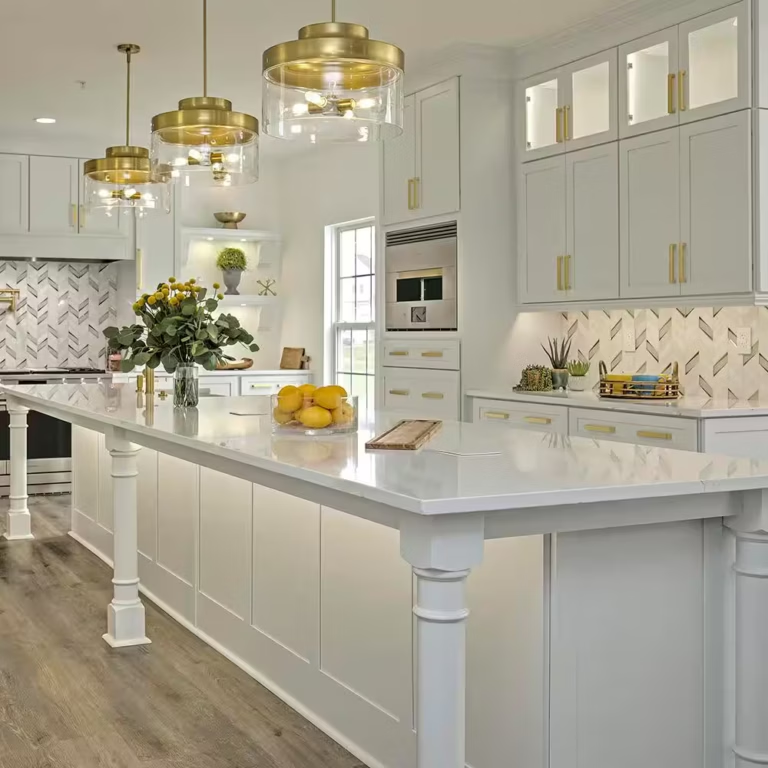
The bottom of the pendant should sit roughly thirty to thirty six inches above the countertop. This range gives enough light without cutting across your view.
If pendants hang lower than this, they block sightlines and feel intrusive. If they hang higher, they tend to float awkwardly and lose their visual connection to the island.
Consistency matters too. Pendants should hang at the same height and align visually with nearby elements so the kitchen feels balanced.
Cabinet Pull Sizing
If you want a modern look, undersized hardware is one of the fastest ways to miss the mark.
Modern kitchens typically use longer pulls that feel proportional to the cabinet doors and drawers. Common modern sizes include one hundred sixty millimeters, one hundred ninety two millimeters, and two hundred twenty four millimeters measured center to center.
For wide drawers, pulls in the ten to eighteen inch range often look best and feel easier to use. Longer pulls visually ground large drawers and reinforce clean lines.
When in doubt, size up. Hardware that feels slightly oversized almost always looks more intentional than hardware that is too small.
Workflow And Kitchen Zones
The traditional work triangle still has value, but modern kitchens function even better when organized into zones.
A prep zone for chopping and assembling ingredients
A cook zone for the stove, oven, and nearby utensils
A clean zone for the sink, dishwasher, and trash
A storage zone for pantry items, cookware, and dishes
A serving zone for plating and passing food
If you can create or clarify these zones using what you already have, the kitchen often starts to feel more modern even before any finishes are changed. Good workflow is one of the most underrated upgrades you can make.
The 5 Key Elements of Modern Kitchen Decor
1. Clean Lines and Simplicity
Clean lines are the backbone. If this part is right, your kitchen reads modern even with modest materials. If it’s wrong, even expensive finishes can feel noisy.
What “clean lines” means in real life
- One cabinet door style throughout the kitchen
- Less decorative trim
- Fewer competing shapes
- A simple hood style
- Backsplash and counters that don’t fight each other
Cabinet door styles that read modern
- Flat panel: most modern and architectural
- Slim shaker: modern but warmer, more forgiving
Where people accidentally go dated is with wide, traditional shaker rails. That pushes the kitchen toward transitional fast, even if everything else is modern.
Easy ways I simplify a kitchen visually
- Remove clutter from countertops and give everything a home
- Choose one main metal finish for hardware and faucet
- Avoid mixing too many statement items at once
My personal rule: pick one hero.
If you want bold pendants, keep the backsplash calm.
If you want a dramatic backsplash, keep lighting and hardware simple.
2. A Neutral Foundation That Does Not Feel Builder-Grade
Neutral does not mean cold gray anymore. The modern kitchens that feel best to me are built on warm neutrals and natural materials.
Neutral palette that holds up long term
- Warm whites
- Soft beige
- Mushroom
- Warm greige
- Natural wood tones like oak or walnut
Warm neutrals do something important: they stay stable across lighting changes. Morning sun, rainy afternoon, warm bulbs at night. Cool tones can swing harsh or flat depending on light.
Cabinet color hierarchy I trust
If you want flexible and modern for years:
- Warm white or soft beige
- Stained wood (white oak and walnut are especially timeless)
- Muted greens (olive, forest) if you want personality without chaos
My practical paint tip
Before you commit, look at samples in three conditions:
- Morning daylight
- Evening with lights on
- A cloudy or shaded moment
A color that looks perfect at noon can look totally different at 8 pm.
3. Hardware and Fixtures That Do Quiet Heavy Lifting
Hardware is one of the most underrated modern upgrades. It’s cheap compared to cabinets, but it changes the entire read of the kitchen because you see and touch it constantly.
What looks modern right now
- Elongated pulls
- Simple profiles
- Comfortable grip depth
- Consistent placement
Finishes that feel modern and livable
- Brushed brass or burnished brass
- Matte black
- Warm stainless
- Champagne tones
I choose based on what else is in the kitchen. If you have stainless appliances, warm stainless hardware often feels the most natural.
Hardware rules I follow
- Pulls on drawers almost always
- One pull style throughout the kitchen
- Size up if unsure
- Don’t mix knobs and pulls randomly unless there’s a clear plan
Common mistake I see: tiny pulls on wide drawers. It reads timid, not modern.
Faucet: the fastest “new kitchen” feeling
A faucet is the jewelry of the sink wall.
A modern faucet usually has:
- A clean arc or angular silhouette
- A pull-down sprayer that tucks in neatly
- A finish that matches or intentionally contrasts the hardware
If you touch the sink area all day, this upgrade is worth it.
4. Minimalist Surfaces That Still Feel Warm
Modern kitchens feel modern because the surfaces are edited. Not empty. Not staged. Just not chaotic.
The trick is separating what is truly daily-use from what is just living on the counter.
My “countertop edit” system
I split things into three categories:
- Daily use: coffee maker, knife block, cooking oils
- Weekly use: air fryer, blender, stand mixer
- Rare use: waffle maker, big pots, holiday stuff
Daily use can live out, but I keep it contained. Weekly use gets a cabinet zone. Rare-use gets stored higher or deeper.
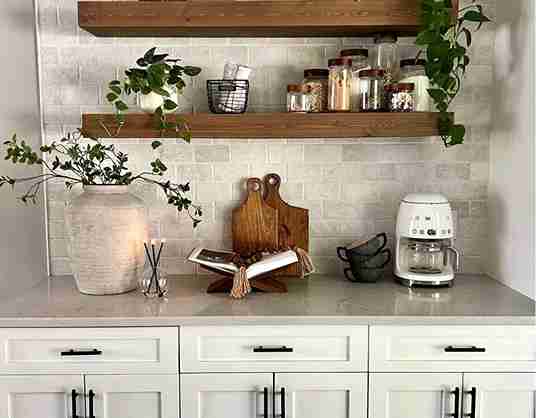
The one styling move that makes counters look intentional
I group daily items on a tray.
- Oils and salt on one tray
- Coffee supplies on one tray
- Utensils in one crock
It makes the kitchen look calmer instantly because the clutter looks like a choice.
Islands need a job
The island is the emotional center of the kitchen. It should have a role:
- Prep island: trash pull-out, deep drawers
- Seating island: generous overhang, comfortable leg space
- Storage island: hides weekly-use appliances
A massive island is not automatically better. Clearance matters more than size.
5. Lighting That Makes the Kitchen Work
Lighting is what makes a modern kitchen feel finished instead of flat. I think of lighting in layers.
The three layers
- Ambient: recessed lights or ceiling fixtures
- Task: under-cabinet LEDs, focused light at sink and prep areas
- Accent: pendants, toe-kick lighting, interior cabinet lighting
If you only have overhead lighting, the kitchen will feel harsher and less modern, even with great finishes.
Bulb temperature rule
Pick warm and stay consistent:
- 2700K to 3000K
Mixing temperatures is one of the fastest ways to make a kitchen feel off. Warm cabinets under cool bulbs can look dull and weird.
Dimmers are not a luxury
Bright for cooking, soft for evenings. Dimmers make the kitchen adaptable, which is a huge part of “modern” now.
Countertop Comparison That Helps You Decide
Here is a practical way to think about the most common modern countertop options, without overcomplicating it.
| Material | Look | Durability | Maintenance | Typical Cost Range |
|---|---|---|---|---|
| Quartz | Clean, consistent, modern | Very strong | Easy | Medium to high |
| Quartzite | Natural stone with visible movement | Strong but varies by slab | Needs sealing | High |
| Porcelain Slab | Sleek, modern, can mimic stone | Very durable | Easy | Medium to high |
| Granite | Natural and classic | Strong | Needs sealing | Medium |
| Laminate | Budget friendly | Decent for daily use | Easy | Low |
My practical take
If you want something low maintenance that looks polished and modern, quartz or porcelain is usually the safest choice. They hold up well, clean easily, and do not require ongoing sealing.
If you love natural stone with visible movement and character, and you are okay with a bit of upkeep, quartzite delivers that high-end, organic look better than most options.
The best countertop is not the most expensive one. It is the one that fits how you actually live and how much maintenance you want to deal with long-term.
Three Finished Modern Kitchen Style Recipes
Sometimes you need to see a full “recipe” to make decisions easier.
Modern Scandinavian
- Warm white cabinets
- White oak accents
- Matte black hardware and faucet
- Vertical stack of off-white tile
- Quiet quartz counters
- Simple globe or dome pendants
- Under-cabinet LED strips
This style feels calm and bright without being cold.
Modern Organic
- Putty or warm greige cabinets
- Porcelain slab counters with a stone look
- Warm brass hardware
- Textured ceramic backsplash
- Wood accents for softness
- Lots of layered lighting
This is my favorite for homes that want modern but cozy.
Modern Urban
- Flat panel cabinets
- Black is used intentionally, not everywhere
- Polished nickel or chrome for lift
- Slab backsplash
- Calm quartz or porcelain counters
- Linear bar pendants
- Very edited surfaces
This one looks sharp and architectural.
Common Modern Kitchen Mistakes I Keep Seeing
These are the ones that create regret later.
- Doing every trend at once
Pick one statement. Keep the rest quiet. - Ignoring workflow
A pretty kitchen that is annoying to cook in stops feeling modern fast. - Choosing finishes separately
Always view cabinet color, countertop, backsplash, and hardware together. - Going too cool and trying to warm it up later
It’s hard. Start warm if you want cozy modern. - Oversizing an island without clearances
Clearance beats size every time.
FAQ
How can I make my kitchen look more modern without remodeling?
I start with hardware, lighting (especially under-cabinet LEDs), a modern faucet, and editing countertops. Those four moves can change the whole feel without touching cabinets.
What is trending in kitchen design for 2026?
Warm neutrals, stained wood, slim shaker or flat panel cabinets, vertical or slab backsplashes, workstation sinks, and layered LED lighting with dimmers.
What cabinet colors feel modern right now?
Warm whites, soft beiges, light woods, and muted greens like olive or forest.
What backsplash will not feel dated quickly?
Simple tile with good proportions (like vertical stack) or a calm slab backsplash.
Knobs or pulls?
Pulls feel more modern and are easier on drawers. I still use knobs sometimes on upper cabinets if it fits the style, but pulls are the safer modern choice.
Modern Kitchen Checklist
- Warm neutral base palette
- Flat panel or slim shaker cabinets
- Elongated pulls in a warm metal or matte black
- Quartz, quartzite, or porcelain counters
- Vertical stack or slab backsplash
- Clear zones and good clearances
- Workstation sink if budget allows
- Layered lighting with dimmers
- Consistent warm bulb temperature
- Edited surfaces with storage doing the work
The Real Takeaway
Modern kitchen decor is not about chasing trends. It’s about clarity. Clean lines, warm neutrals, hardware that feels good in your hand, surfaces that are edited but still livable, and lighting that makes everything look better.
If you do those five things, your kitchen will feel modern in a way that lasts. And you’ll stop second-guessing every decision at night, which honestly is the most valuable upgrade of all.