I Finally Tried Indoor Herb Garden Ideas That Make Any Kitchen Feel Fresh

Fresh herbs can make cooking feel better, but growing them indoors is not always as simple as it sounds. Without the right setup, plants can wilt, take up too much space, or become hard to maintain.
Many people try to keep herbs in random pots or corners, but poor light and messy arrangements often lead to disappointing results. It ends up feeling like more effort than it should be.
The good news is you don’t need a large space or perfect conditions to grow herbs successfully. With a few smart ideas, you can create a setup that looks good and works well.
This article brings you 15 indoor herb garden ideas to help you grow fresh herbs at home. Simple, practical setups for everyday use.
Let’s jump in!
How Do You Grow Herbs Indoors Without the Hassle?
Even a small setup can fail if herbs don’t get enough light or proper care. People notice quickly when plants start looking weak or uneven.
The key is to choose the right spot and setup. Windowsills, wall planters, or compact shelves can help maximize space while keeping herbs within reach.
You can also group herbs with similar needs and use proper containers for drainage. With the right approach, your indoor herb garden stays healthy, organized, and easy to maintain.
1. Window Sill Herb Garden
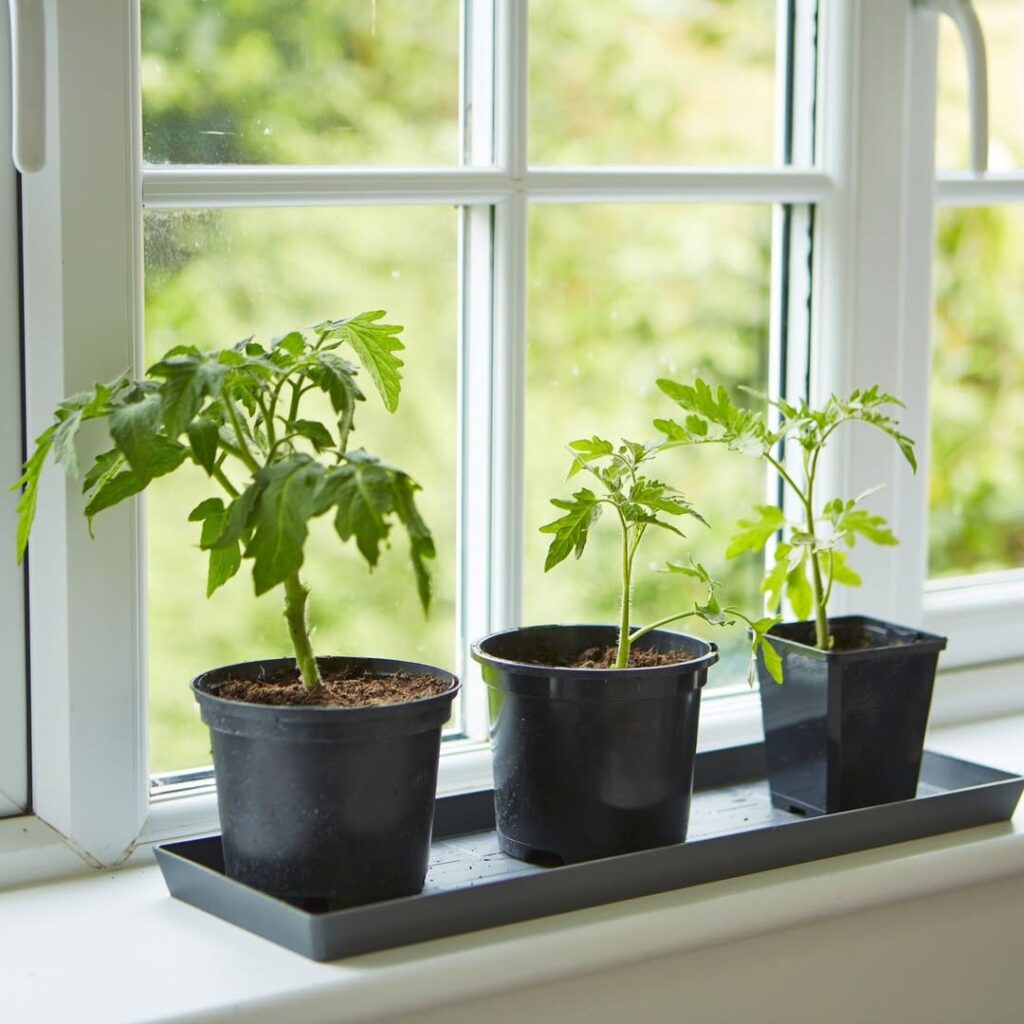
A windowsill setup works because it uses the light you already have, but it behaves differently if your window faces north or gets only a few hours of sun. Herbs like basil struggle there, while parsley or mint hold up better. Keep pots small and consistent in finish, like matte ceramic, so they do not reflect too much glare near glass.
Lining them in a row keeps things tidy, but spacing matters more than most expect. If leaves touch the glass, they can burn during peak sunlight. Rotating the pots every few days helps balance growth, one side turns leggy and weak.
What you get is a clean, accessible setup that stays low effort. It makes daily use easier since herbs are within reach, and the visual line of green softens the kitchen without adding clutter.
2. Hanging Herb Planters
Hanging planters solve space issues, but ceiling height changes how practical they feel. In a low-ceiling kitchen, they can feel intrusive and block movement, while higher ceilings give a lighter, open look. Using lightweight metal or fabric planters keeps the setup from feeling heavy overhead.
Placement is everything here. Hanging them too far from a window reduces growth, so keep them within direct or indirect light range. If you rely on artificial lighting, a warm LED positioned slightly above works better than placing it too far to the side.
This setup frees your counters completely, which makes cooking smoother. It also creates a layered look, though you will notice watering takes a bit more care to avoid dripping onto surfaces below.
3. Mason Jar Herb Garden
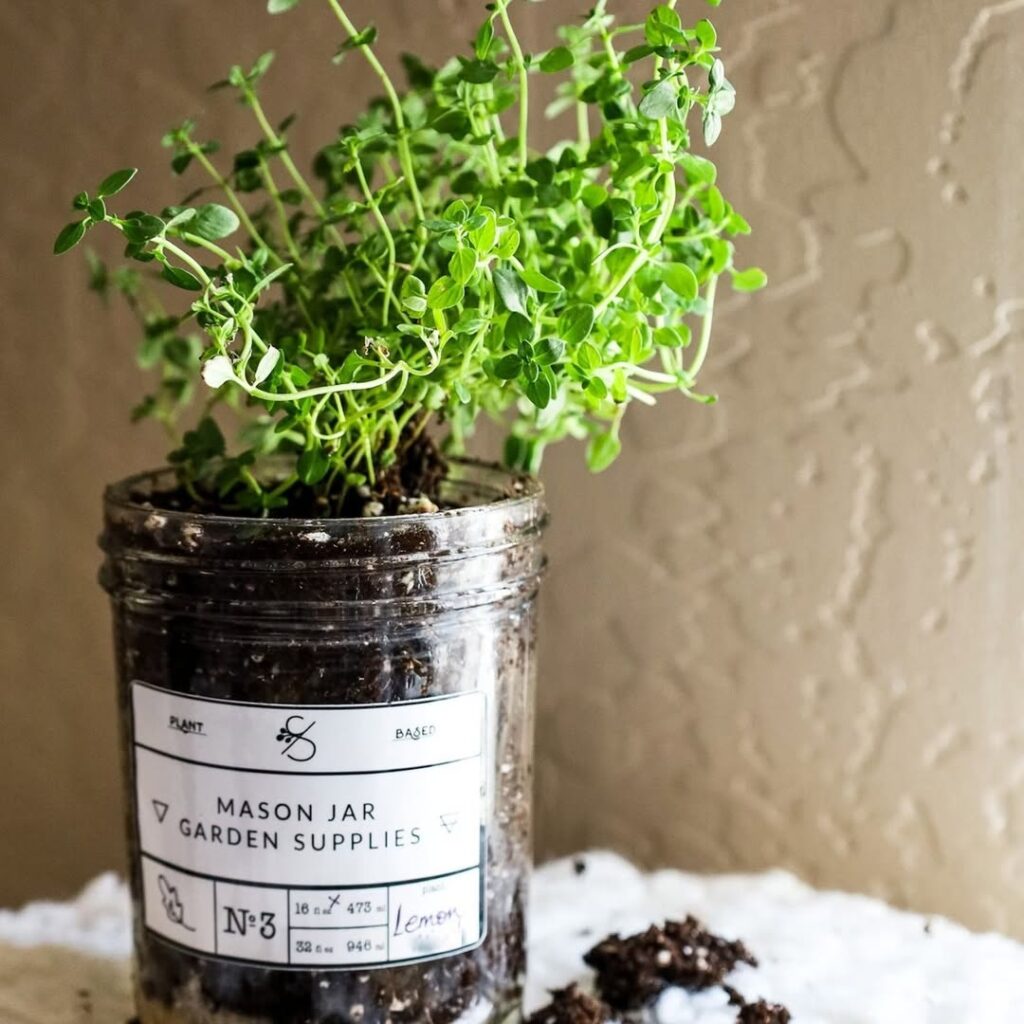
Mason jars look simple, but they behave differently because they trap moisture. In humid kitchens, this can lead to soggy roots if drainage is not handled properly. Adding a thin layer of pebbles at the base helps control excess water without changing the look.
They work best for smaller herbs since root space is limited. Placing them near a window or on a counter keeps them accessible, but clear glass can expose roots to light, which some herbs do not tolerate well over time.
The result is a compact, decorative setup that blends into most kitchens. It feels intentional and easy to manage, though you will need to monitor watering more closely than with traditional pots.
4. Vertical Herb Garden
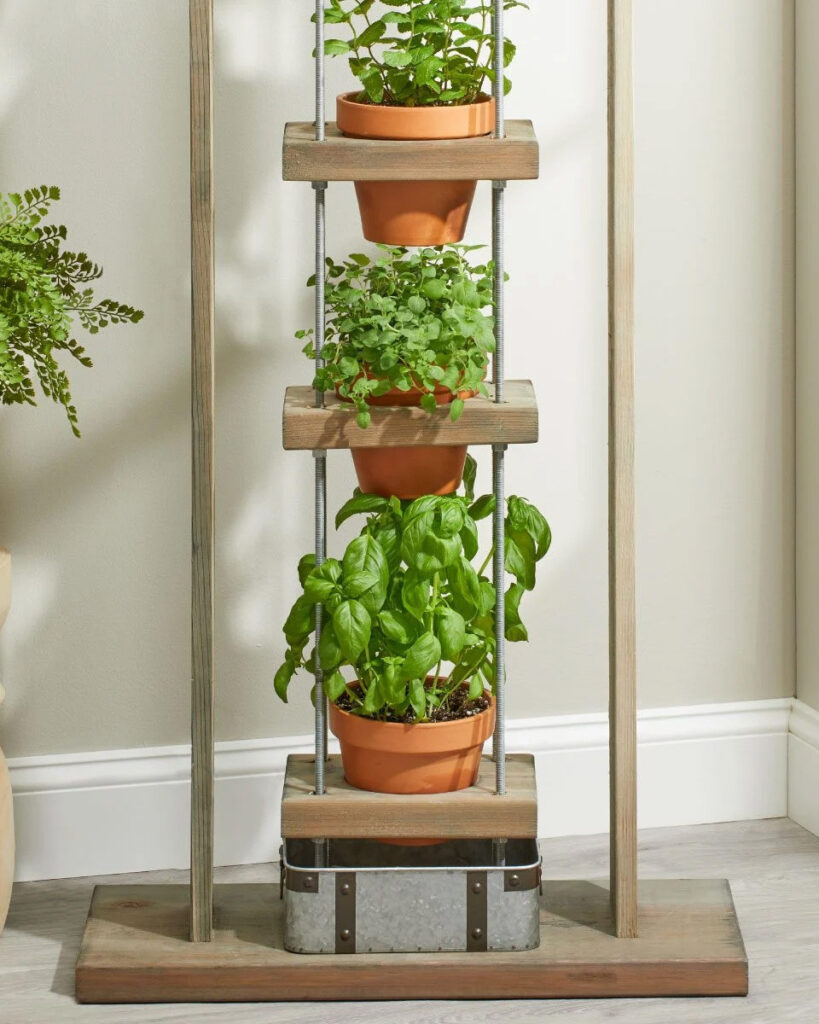
A vertical garden is useful when floor space is tight, but light distribution becomes uneven across levels. The top herbs usually get more light, while the lower ones can lag unless you rotate or adjust placement. Using staggered shelves or angled pockets helps improve exposure.
Mounting it near a bright window makes a big difference. If the wall is slightly recessed or shaded, growth slows quickly. Materials like wood or metal frames affect how heavy the structure feels, so balance is important in smaller kitchens.
Over time, this setup creates a strong visual feature while staying practical. It keeps herbs organized and visible, though regular repositioning is needed to maintain even growth.
5. DIY Herb Garden on a Ladder
A ladder setup looks creative, but spacing between steps affects how usable it is. Narrow gaps can block light from reaching lower pots, especially in dim rooms. Choosing a ladder with wider rungs and a slightly angled lean improves both light and access.
Position matters more than design here. If placed too far from a window, only the top level thrives while the rest struggle. Moving it closer or adjusting angles occasionally keeps growth more balanced.
This setup adds character without taking much effort to build. It works well for flexibility since you can shift it around, though stability and even lighting are the two things that need attention.
6. Hydroponic Herb Garden
Hydroponics removes soil completely, which changes how herbs respond to their environment. In homes with uneven power supply, growth can slow since most systems depend on consistent LED lighting panels rather than natural light alone.
Instead of worrying about soil quality, the focus shifts to water and nutrients. Even a slight imbalance in the solution can affect leaf color or taste, something many beginners notice only after a few weeks.
What stands out is the speed and cleanliness. Herbs grow faster and look more uniform, though the system itself needs occasional adjustment to keep everything stable.
7. Herb Garden in a Wooden Tray
Using a tray keeps things contained, but the surrounding environment changes how it performs. In kitchens with higher humidity, wood can absorb moisture unless you choose a sealed tray with a smooth finish.
Placing multiple pots together looks organized, yet airflow often gets restricted. When pots sit too close, soil stays damp longer than expected, which can affect root health over time.
This setup feels grounded and easy to move around. It keeps everything in one place, making it simple to shift the whole garden closer to light when needed.
8. Self-Watering Herb Garden
These systems are designed to simplify care, though indoor temperature plays a bigger role than most expect. In cooler rooms, water stays in the soil longer, especially with wick-based reservoirs, which can lead to over-saturation.
You still need to check occasionally. Many people assume it runs on its own, but adjusting the water level every few days helps avoid slow root damage that is not immediately visible.
It creates a steady growing environment with less daily effort. The herbs stay hydrated consistently, though small tweaks make the difference between healthy growth and overly wet soil.
9. Repurposed Spice Rack Garden
Turning a spice rack into a herb setup works best in narrow spaces, though light becomes the limiting factor. If the rack sits away from windows, adding a small directional light above the shelves helps maintain growth.
The containers used here are usually shallow, so the soil dries faster than in standard pots. This means herbs may need watering more frequently, especially near heat sources like stoves.
It keeps everything structured and easy to access while cooking. The layout feels efficient, but staying consistent with watering is what keeps it from drying out too quickly.
10. Terrarium Herb Garden
Glass containers create a controlled space, but they also trap moisture. In enclosed setups, humidity builds up quickly, so using a container with a slightly open top helps balance airflow.
Sunlight passing through glass can intensify heat inside the terrarium. Placing it near indirect light instead of direct exposure keeps leaves from overheating and curling.
This approach adds a decorative layer to your space while still being usable. It looks compact and refined, though keeping humidity in check is what makes it sustainable long term.
11. Countertop Herb Garden
Keeping herbs on the counter makes them easy to use, but light direction changes how well they grow. If your counter sits away from windows, even bright kitchens can leave herbs underlit. Placing them near a south-facing window with ceramic pots improves consistency.
Container choice affects daily use more than expected. Glossy surfaces can show water stains quickly, while matte finishes stay cleaner over time. Spacing pots slightly apart also helps prevent moisture buildup around the base.
This setup keeps everything within reach while cooking. It feels practical and integrated into your routine, though light positioning is what determines how well it holds up.
12. Smart Herb Garden
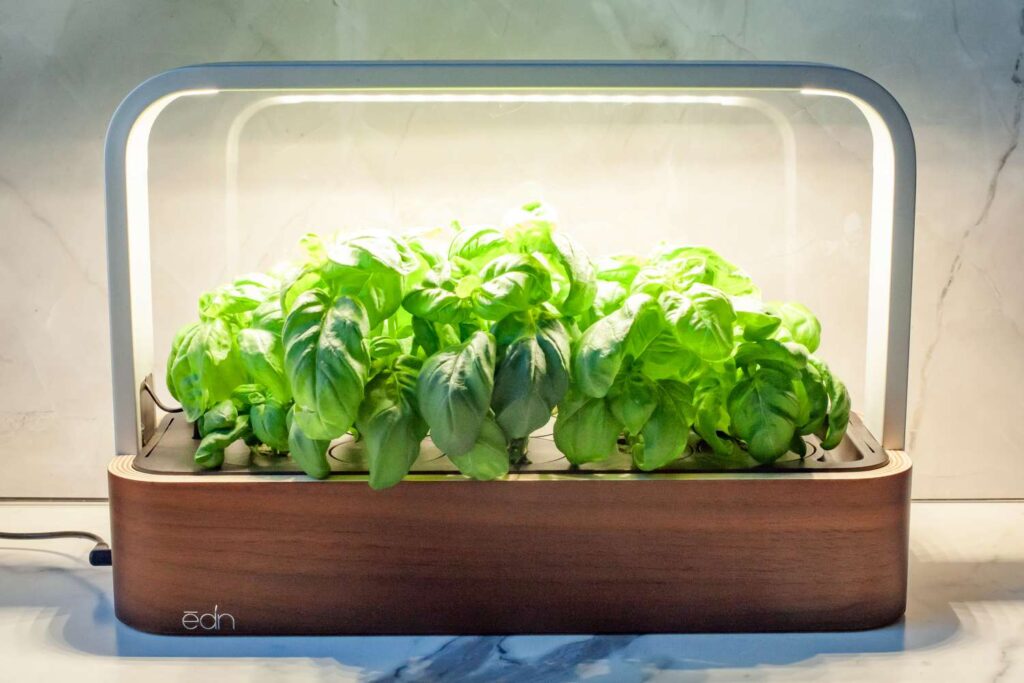
Smart systems control most variables, but room temperature still affects performance. In warmer spaces, water evaporates faster even with automation, especially in units with compact LED panels and enclosed reservoirs.
These systems reduce guesswork, though they are not fully hands-off. Occasionally checking water levels and cleaning the tank prevents buildup that can affect plant health over time.
The outcome is consistent growth with minimal effort. Herbs look uniform and healthy, and the setup blends well into modern spaces, though small maintenance steps keep it running smoothly.
13. Shelf Herb Garden
Using shelves saves space, but light distribution varies across levels. The top shelf often receives stronger light, while lower levels may struggle unless positioned carefully. A narrow wall-mounted shelf with staggered spacing helps improve exposure.
Container weight matters here. Heavier pots on higher shelves can feel unstable, especially in smaller apartments. Keeping lighter containers above and heavier ones below adds balance.
This setup keeps herbs organized without using floor space. It works well visually, though adjusting plant placement over time helps maintain even growth.
14. Grow Light Herb Garden
Grow lights solve low-light issues, but placement distance changes results. Lights placed too close can stress leaves, while placing them too high reduces effectiveness. Keeping a balanced gap using adjustable LED fixtures improves growth.
Timing also plays a role. Running lights too long can dry out soil faster than expected, especially in smaller pots. A consistent schedule helps maintain stable conditions.
This setup gives flexibility in any room. Herbs grow steadily without relying on windows, though managing light distance and timing makes the biggest difference.
15. Herb Garden in an Upcycled Wooden Box
Using a wooden box adds character, but moisture retention changes how soil behaves. In humid kitchens, wood can hold dampness longer, so lining the inside with a thin protective layer or tray insert helps control excess moisture.
Filling the box directly with soil looks simple, though drainage becomes harder to manage. Using smaller pots inside keeps roots healthier and makes repositioning easier if light changes.
The result feels rustic and intentional. It adds texture to the space while keeping herbs grouped, though moisture control is what keeps the setup working long term.
FAQ
1. Which herbs are the easiest to grow indoors?
For beginners, basil, mint, parsley, and chives are the best choices. They are relatively hardy and adapt well to the indoor environment. If you have a particularly sunny spot, rosemary and oregano are also great additions, though they prefer a bit more light than leafy greens.
2. How much sunlight do indoor herbs actually need?
Most herbs need about 6 to 8 hours of sunlight daily. South-facing windows typically provide the best light. If your home is a bit dark, don’t worry—you can supplement with an LED grow light to keep your plants from getting “leggy” or weak.
3. How often should I water my indoor herb garden?
The “finger test” is your best friend. Stick your finger about an inch into the soil; if it feels dry, it’s time to water. Over-watering is the most common way indoor herbs die, as it leads to root rot. Ensure your pots have drainage holes so excess water can escape.
4. Can I use regular garden soil for indoor pots?
It’s actually better to use a high-quality potting mix designed for indoor plants. Regular garden soil is often too heavy and can contain pests or diseases. Potting mix is lighter, provides better aeration for roots, and usually contains the right balance of nutrients.
5. Do I need to fertilize my herbs?
Yes, but sparingly. Since indoor herbs have a limited amount of soil, they can run out of nutrients. Use a liquid organic fertilizer at half-strength about once a month during the growing season (spring and summer) to keep them vibrant and flavorful.
Conclusion
Indoor herb gardens are more than just a source of fresh ingredients; they are a way to bring a piece of the natural world into your daily life. Whether you live in a high-rise apartment or a cozy cottage, there is an indoor gardening style from high-tech smart gardens to rustic upcycled boxes that can fit perfectly into your routine.
By choosing the right containers, ensuring your plants get enough light, and paying attention to their water needs, you can transform your kitchen or living space into a thriving oasis. There is nothing quite as satisfying as reaching over to your windowsill to snip a bit of fresh basil for your dinner.