
How High to Hang a Mirror Over a Nightstand? Step-by-Step Guide

A mirror over your nightstand can completely change the way your bedroom feels.
It is not just a place to check your hair before heading out. When placed correctly, it becomes a design feature that adds height, light, and balance to your bedside area.
The general rule is simple:
Hang the mirror 4 to 6 inches above the top of your nightstand.
That said, the perfect height depends on your nightstand size, mirror dimensions, ceiling height, and the decor around it. Let’s walk through it properly so it looks intentional, not random.
Start With the Height of Your Nightstand
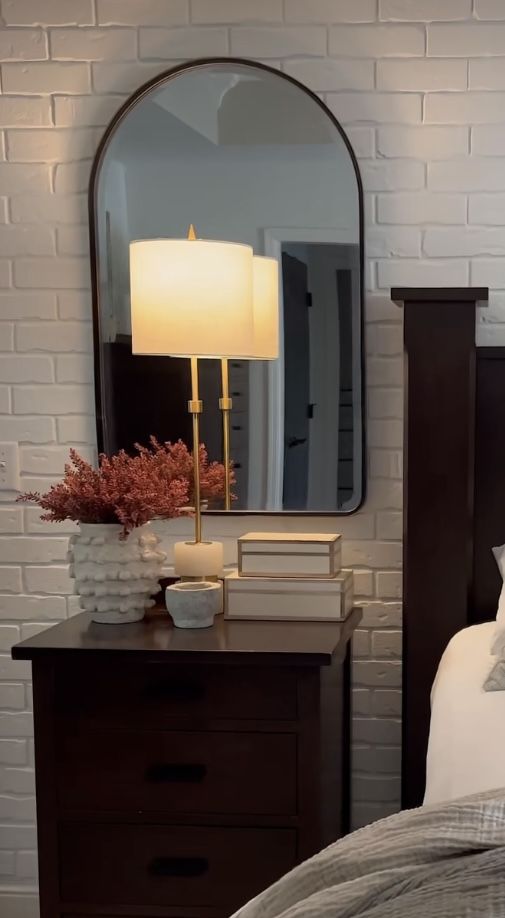
Before you grab a drill, measure your nightstand from the floor to the top surface.
Most nightstands range between 24 and 30 inches tall. Once you know that number, you can apply the standard spacing rule.
The mirror should usually begin 4 to 6 inches above the nightstand’s surface. This spacing keeps everything visually connected without crowding.
Quick checklist before moving forward:
- Is there enough wall space above?
- Will a lamp block the mirror?
- Can you comfortably see yourself in it?
- Does it line up nicely with your headboard?
These details matter more than exact numbers.
Choose a Mirror Style That Matches Your Bedroom
Before calculating height, think about the mirror’s shape and vibe.
Mirror Shape and Style Guide
Round mirrors feel soft and modern.
Rectangular mirrors feel classic and structured.
Beveled mirrors add elegance and dimension.
If your bedroom leans minimalist, a simple round mirror works beautifully.
If your space is more traditional, a rectangular or framed mirror fits naturally.
The frame thickness also affects placement. Thicker, bold frames visually take up more space, so you may want slightly more breathing room above the nightstand.
Pick the Right Mirror Size
Size changes everything.
A mirror that is too large can overwhelm the nightstand. Too small and it looks disconnected.
Here is a good rule:
- The mirror should be about 60 to 75 percent the width of your nightstand.
- If your nightstand is 24 inches wide, aim for a mirror around 14 to 18 inches wide.
If you have a large bedroom and oversized nightstands, you can go bigger. In compact rooms, keep it proportional.
Large mirrors often look better hung slightly higher so they do not feel heavy. Smaller mirrors can sit a bit lower to keep the space feeling intimate.
Step-by-Step: How to Calculate the Ideal Height
If you want to be precise, follow this method.
Step 1: Find the Center of the Nightstand
Measure the width of your nightstand and divide by two.
Mark that center point lightly on the wall above it.
This keeps the mirror perfectly aligned.
Step 2: Measure From Floor to Nightstand Top
Measure from the floor to the top surface of your nightstand.
Example:
Nightstand height = 26 inches.
Step 3: Add the Spacing
Add 4 to 6 inches above the nightstand.
Example:
26 inches + 5 inches = 31 inches.
This is where the bottom of your mirror should begin.
Step 4: Factor in Mirror Height
If your mirror is 24 inches tall, add that to the bottom placement:
31 inches + 24 inches = 55 inches.
That means the top of your mirror will sit 55 inches from the floor.
Mark that top point lightly with a pencil and double-check with a level.
Mark the Wall Before Drilling
Before committing to nails or anchors, use painter’s tape to outline the mirror’s shape on the wall.
Step back and look at it.
Ask yourself:
- Does it feel balanced next to the headboard?
- Does it look centered visually, not just mathematically?
- Is it too high compared to the bed height?
Sometimes adjusting by even one inch makes a big difference.
Hang the Mirror Securely
Use proper wall anchors if you are not drilling into a stud.
If the mirror is large or heavy, get help. It is much easier to hold it steady while securing hardware.
Once hung, check again with a level and step back from multiple angles.
When to Break the 4 to 6 Inch Rule

The 4 to 6 inch guideline works most of the time, but here are exceptions:
High Ceilings
If your ceiling is tall, you can raise the mirror slightly higher to avoid a cramped look.
Large Headboards
If your headboard is tall and dramatic, the mirror may need to sit higher to avoid visual crowding.
Statement Mirrors
If you are using an oversized mirror as art, treat it more like wall decor and focus on visual balance rather than strict spacing.
FAQ
Should a Mirror Over a Nightstand Be Centered?
Yes. It should be centered over the nightstand, not the bed. Even if the bed is large, the mirror visually connects to the furniture directly below it. Centering keeps the layout balanced and prevents the space from looking awkward.
Can I Hang Two Mirrors Over Two Nightstands?
Absolutely. This works beautifully in symmetrical bedrooms. Just make sure both mirrors are the same height and spacing above each nightstand to maintain visual harmony.
How High Should a Mirror Be Compared to the Bed?
The bottom of the mirror should not feel disconnected from the nightstand. If it floats too high, it looks like wall art instead of part of the bedside design. Keeping it 4 to 6 inches above the nightstand typically keeps it aligned properly with the bed height as well.
What If My Nightstand Is Very Tall?
If your nightstand is unusually tall, you can reduce the spacing slightly to 3 to 4 inches. The goal is visual closeness without crowding.
Does Ceiling Height Matter?
Yes. High ceilings allow you to scale up with larger mirrors and slightly higher placement. Lower ceilings benefit from keeping the mirror closer to the nightstand to avoid vertical stretching that makes the room feel shorter.
Final Thoughts
Hanging a mirror over your nightstand is one of those small design moves that can instantly elevate your bedroom.
Stick with the 4 to 6 inch rule as your starting point.
Keep proportions in mind.
Check alignment visually, not just with a measuring tape.
If it feels balanced and natural in your space, you got it right.
If this guide helped you, share it with friends or family who are styling their bedroom and need a little placement confidence.