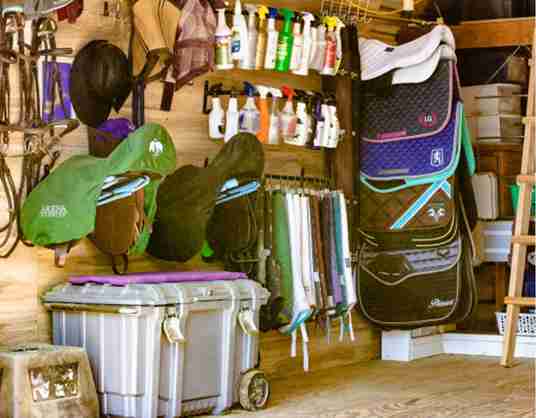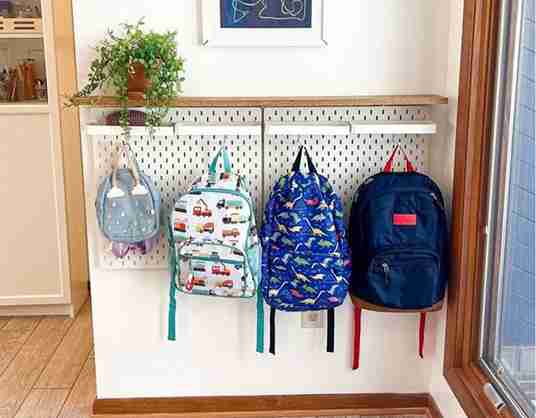
Homeschool Organization Ideas That Finally Fix the Daily Learning Chaos

You usually don’t think about organization until homeschool materials start spreading into every corner of your home. Books stack up, supplies go missing, and the space that once felt calm starts to feel chaotic.
You try to tidy things up, but without a simple system, it never really stays that way. It can get frustrating, especially when you are trying to keep learning on track at the same time.
This article shares 21 homeschool organization ideas to help you create a space that feels structured, functional, and easier to manage. Simple setups, practical storage, and ideas that actually hold up in daily use.
Let’s jump in!
What Are the Best Homeschool Organization Ideas for Your Space?
It can be hard to keep everything organized when your homeschool area overlaps with everyday living. One space ends up doing multiple jobs, and things quickly get out of place.
Without a clear setup, supplies become harder to find and routines feel less consistent. That is where a few smart changes can make a big difference.
You don’t need a dedicated room or expensive furniture. With better storage, defined zones, and simple habits, you can build a homeschool space that stays organized and supports a smoother daily flow.
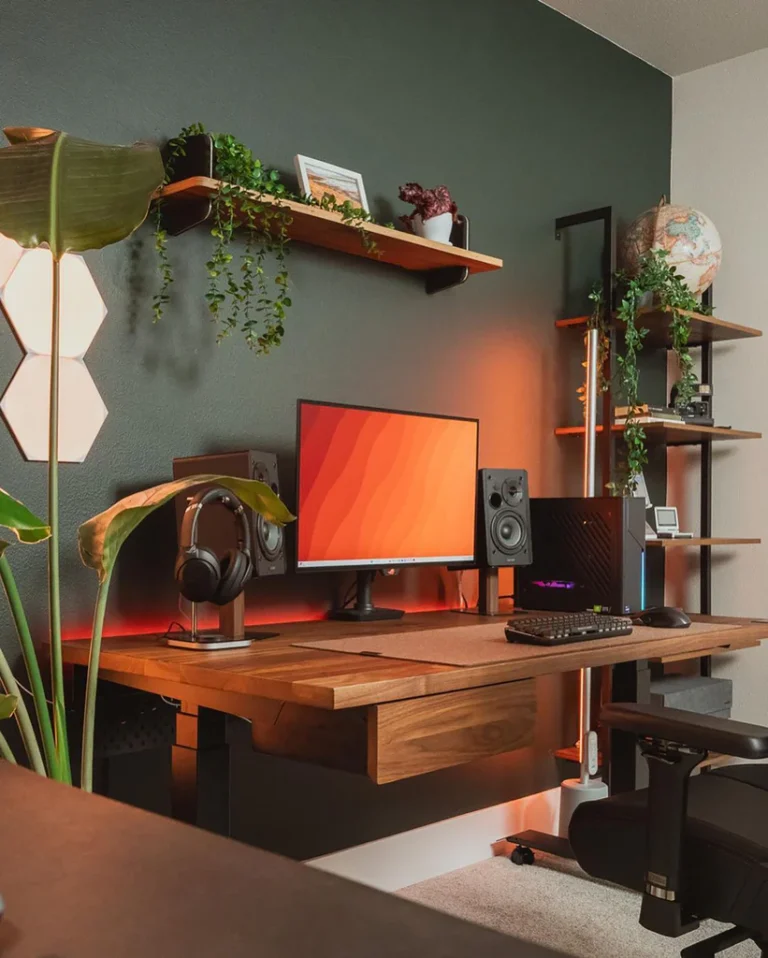
1. Create a Dedicated Homeschool Space
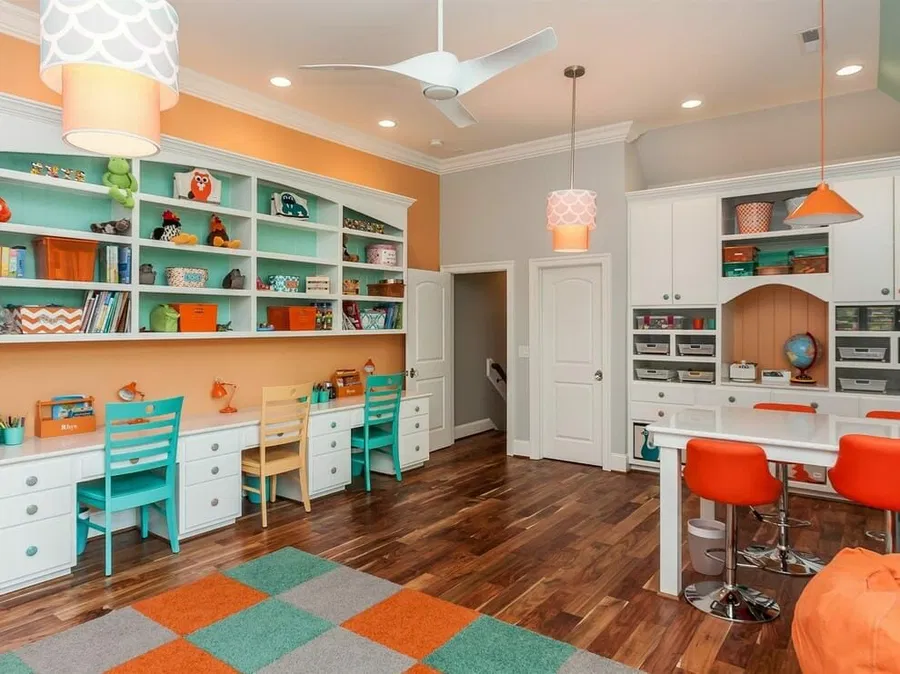
Trying to study in a busy room can break focus fast. Noise, movement, and daily chores all compete for attention. A small, defined learning area helps reduce that chaos and brings structure to the day.
Set up a simple desk, a corner shelf, or even a window spot. A soft lamp or small plant can make it feel more inviting. Clear boundaries help kids shift into learning mode without constant reminders.
2. Use Storage Bins for Easy Access
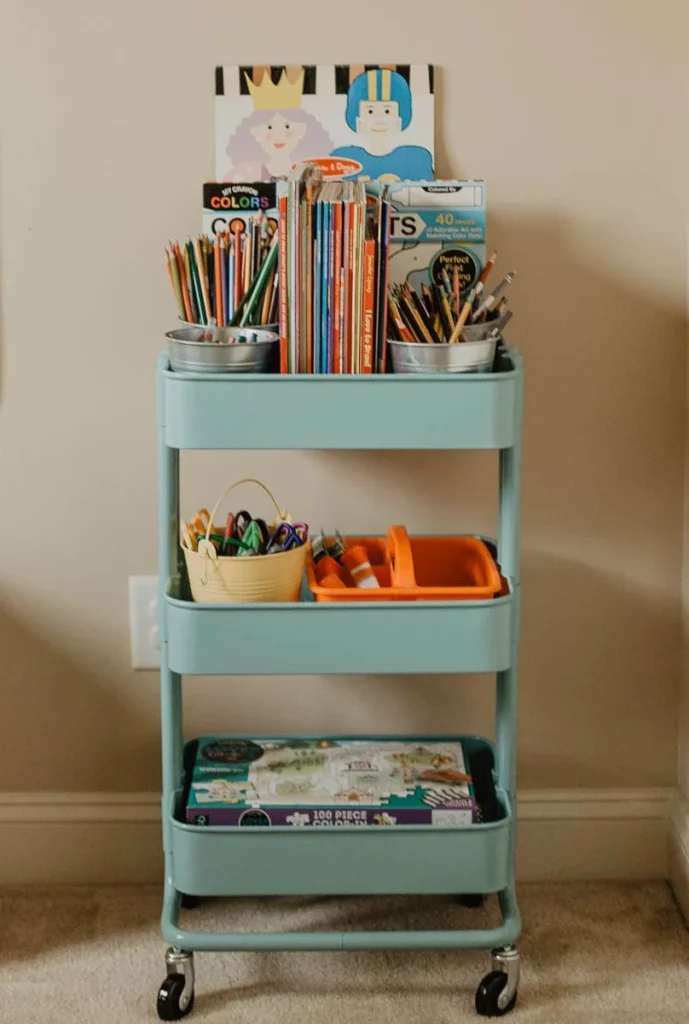
Loose supplies can slow everything down during lessons. Searching for glue, markers, or notebooks breaks focus and wastes time.
Clear storage bins keep items visible and easy to grab. Sort each bin by subject or student to stay organized. Smaller containers inside larger bins stop things from turning into a messy pile.
3. Set Up a Weekly Schedule
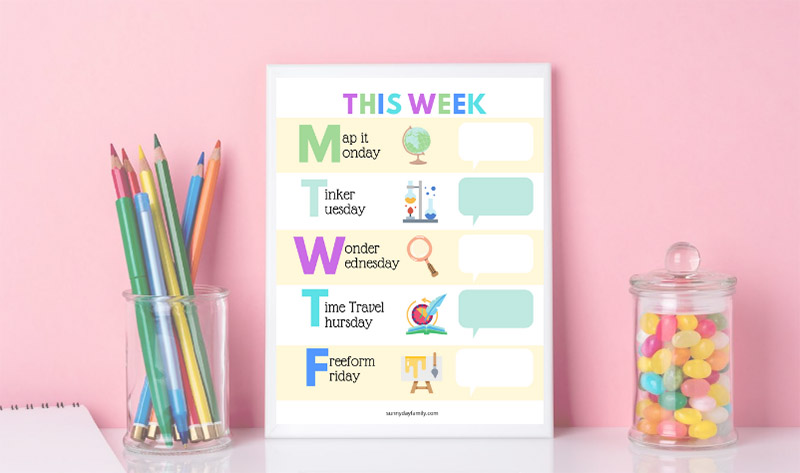
Unplanned days can feel long and unfocused. Without structure, it becomes harder to keep lessons on track.
A simple weekly schedule brings clarity to each day. Hang it somewhere visible so everyone knows what comes next. A bit of breathing room between subjects keeps the day from feeling rushed.
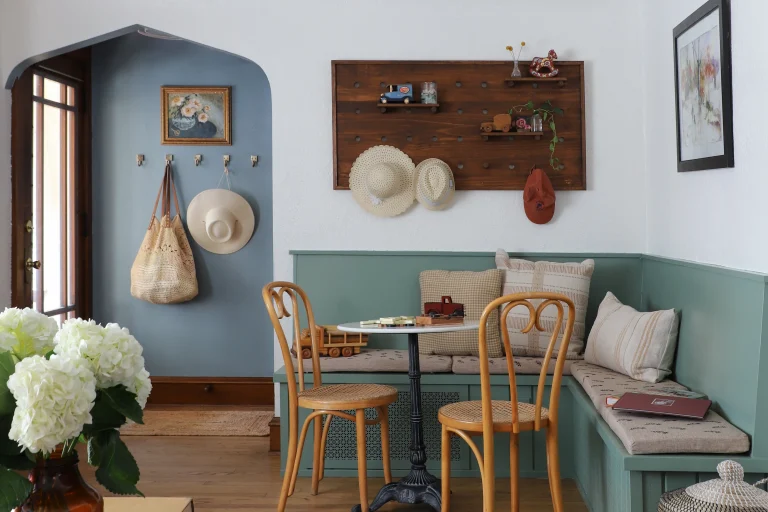
4. Invest in Vertical Storage

Limited floor space can make a homeschool area feel crowded fast. Supplies start piling up when there is nowhere clear to store them.
Tall shelves, wall hooks, or door organizers free up space. Arrange books by subject or level to keep things easy to find. When everything has a place, cleanup becomes less of a battle.
5. Create a Rotating System for Learning Materials

Too many materials on display can overwhelm kids and reduce interest. Over time, even good resources start to feel repetitive.
Swap books and activities every few weeks to keep things fresh. Keep extra items out of sight to avoid visual clutter. Bringing them back later often makes them feel new again.
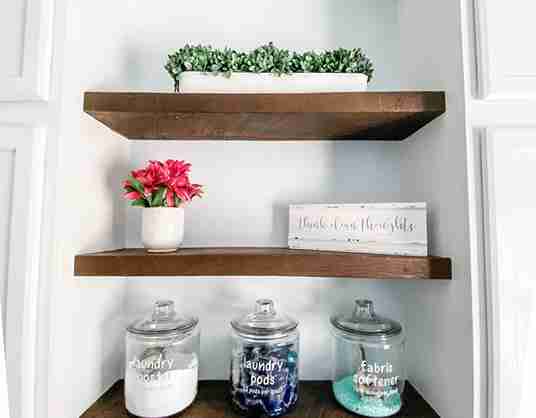
6. Label Everything Clearly
Unclear storage can lead to confusion and a constant mess. Kids often avoid putting things back when they are unsure where items belong.
Simple, easy-to-read labels on shelves, drawers, and bins help. Picture labels can support younger kids who cannot read yet. Clear labeling builds habits without constant reminders.
7. Use a Filing System for Paperwork
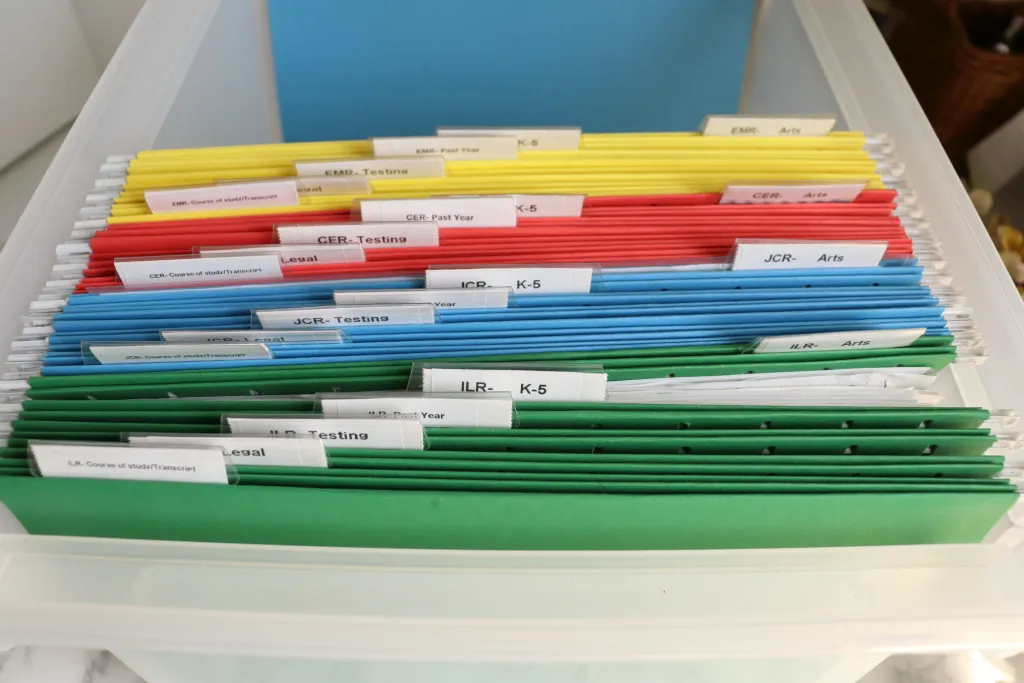
Paper can pile up fast during homeschool days. Worksheets, notes, and reports often get lost without a clear system.
Folders or file boxes can be sorted by child and subject. Keep everything in one place so it is easy to find later. This also makes progress checks and records far less stressful.
8. Make a Homeschool Calendar

Busy weeks can feel overwhelming when plans overlap. Without a clear view, lessons and activities can clash.
A homeschool calendar keeps everything in one place. Track field trips, lessons, and important dates together. Color coding helps you spot heavy days before they get out of hand.
9. Incorporate Time Management Tools

Lessons can stretch longer than planned without clear time limits. This often leads to fatigue and loss of focus.
Simple tools like timers can guide each activity. Visual timers work well for younger kids, while older students can follow a phone timer. Clear limits help keep the day moving without pressure.
10. Keep a Daily Weekly Planner for You
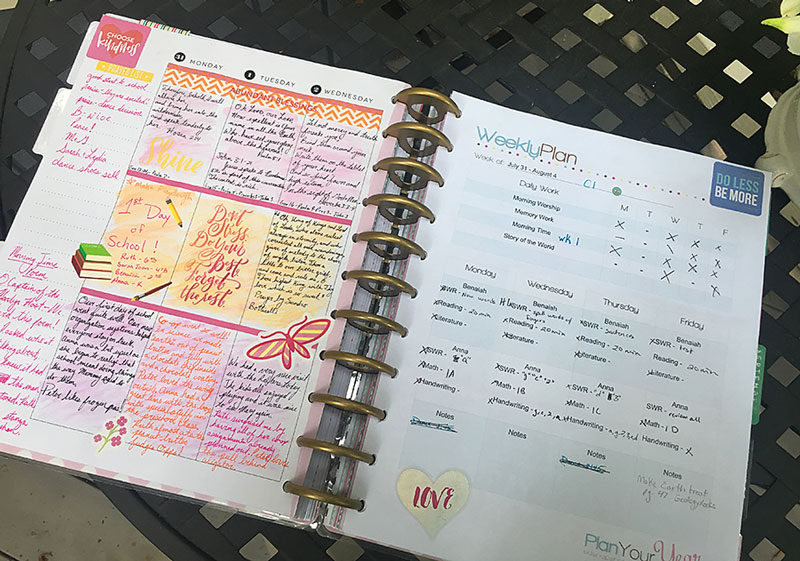
Managing lessons, tasks, and home life can feel overwhelming without a clear plan. Important details are easy to forget during busy days.
A planner or simple notebook can hold everything in one place. Write down lessons, appointments, and daily priorities. Focusing on a few key tasks keeps you from trying to do too much at once.
11. Create an Activity Jar for Breaks
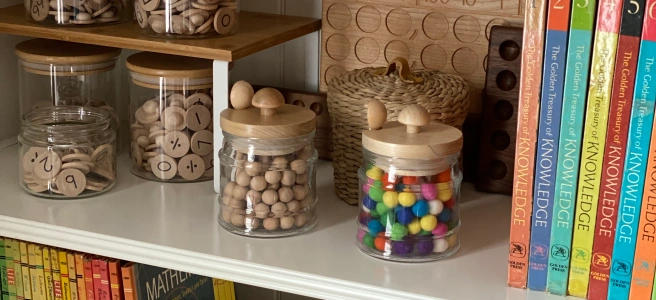
Energy dips can make lessons feel slow and unfocused. Unplanned breaks often turn into distractions that are hard to control.
A simple activity jar can hold quick break ideas inside. Add options like stretching, drawing, or short outdoor time. It turns breaks into something expected instead of chaotic.
12. Use Binders for Each Subject
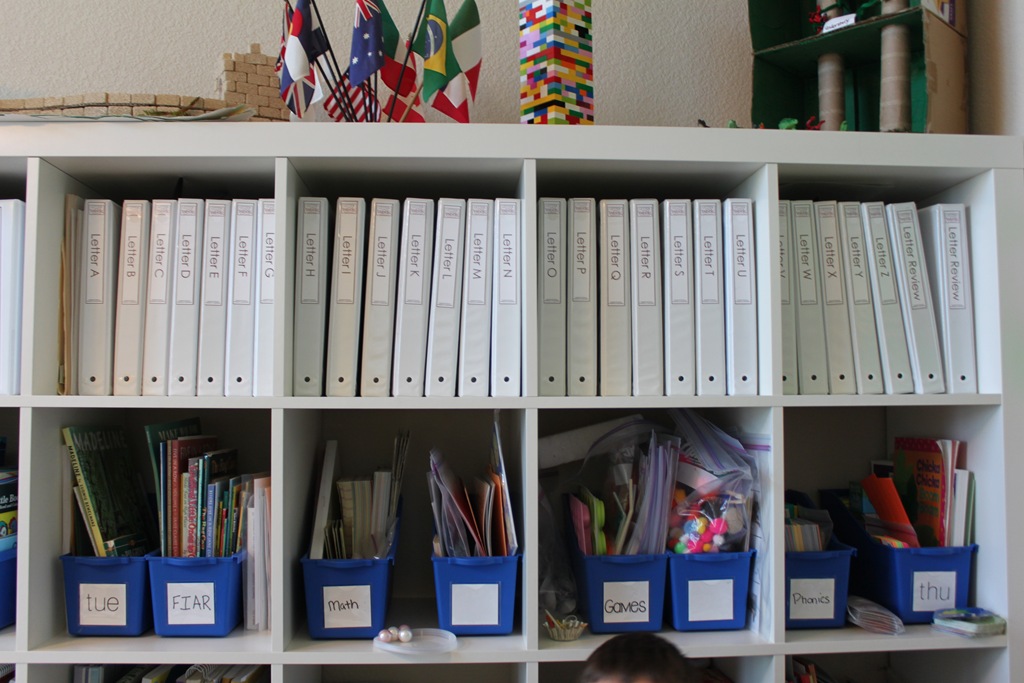
Loose papers can quickly turn into clutter. It becomes hard to track lessons when everything is scattered.
One binder for each subject helps keep things organized. Add dividers and front pockets for current work. Move finished pages to another binder so the daily one stays light and easy to handle.
13. Set Up an Easy-to-Use Art Station
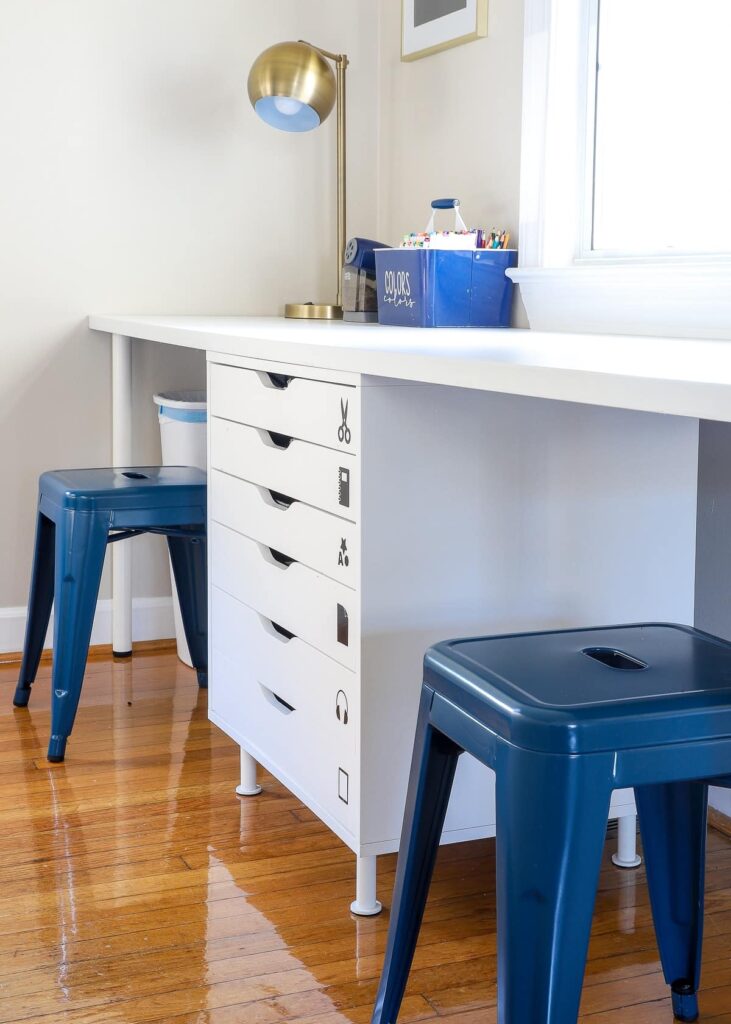
Art supplies can quickly turn into clutter when they are scattered. Kids may lose interest if getting started feels like too much effort.
A rolling cart or small station keeps everything in one place. Group items by type or project so they are easy to grab. Keeping cleanup simple with a nearby bin and mat helps maintain order.
14. Organize by Learning Style
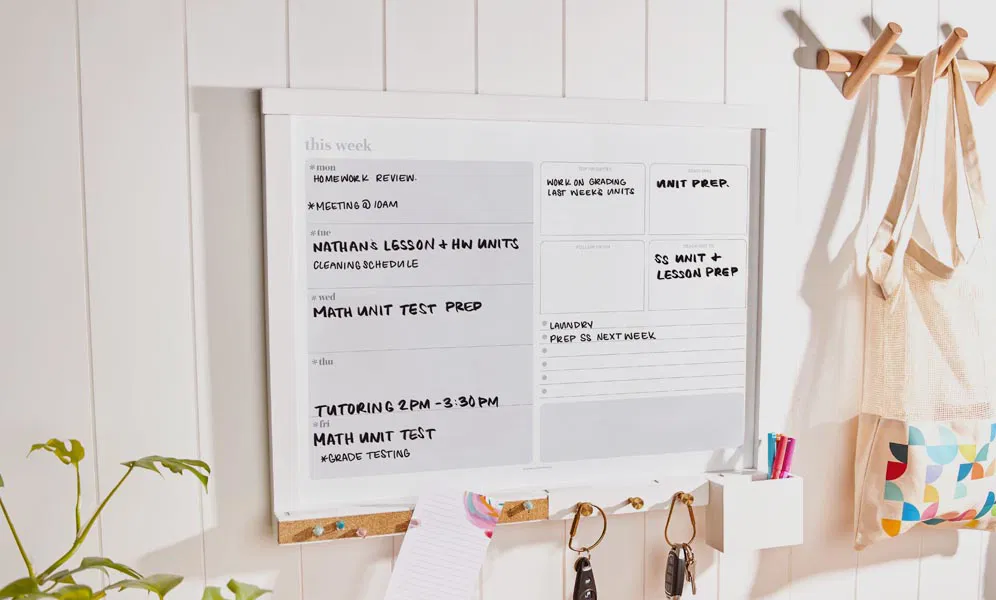
Not every child learns in the same way. A setup that works for one may slow another down.
Arrange materials based on how your child absorbs information best. Keep visuals, hands-on tools, or audio resources within easy reach. A small basket for each style can make lessons smoother and reduce frustration.
15. Repurpose Household Items for Learning Tools
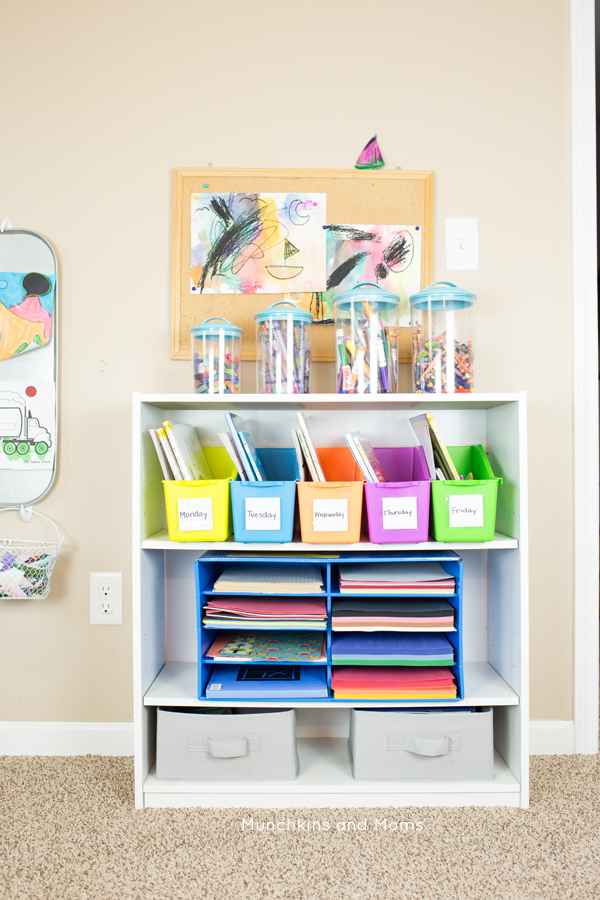
Buying new materials for every lesson can add up quickly. Many useful tools are already around your home.
Common items like measuring cups, jar lids, or boxes can support learning. Keep a small bin for reusable objects you might need later. It saves money and shows kids that learning tools can come from everyday life.
16. Create a Homework Station for Older Kids
As kids grow, they need a space that supports independence. Constantly searching for supplies can break their focus.
A small desk with essentials within reach makes a big difference. Add items like headphones and a charger in one spot. A simple reset checklist nearby helps them stay organized without reminders.
17. Implement a One In One Out Rule
Materials can build up quickly over time. Extra books and supplies often take up space without being used.
When something new comes in, remove one item that is no longer needed. Donate, recycle, or store it elsewhere. This habit keeps shelves manageable and makes cleanup feel less overwhelming.
18. Use a Digital Organization System
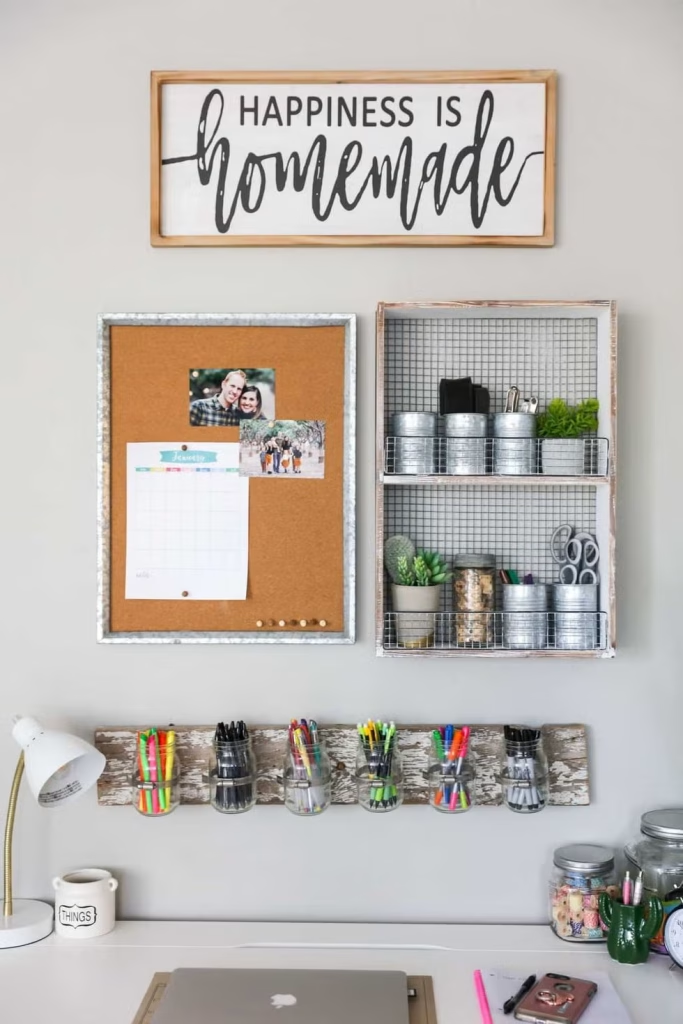
Paper systems can feel limiting when you need quick access. Important files are harder to manage across different locations.
Digital storage keeps lesson plans and materials easy to find. Create folders for each child and subject to stay organized. Keeping the system simple makes it easier to maintain over time.
19. Make Use of Color Coding
Sorting materials can take time without clear visual cues. Kids may hesitate when they are unsure where items belong.
Color coding creates quick recognition across subjects. Assign one color to each subject for folders, bins, or notebooks. It helps kids stay organized and makes cleanup faster without constant guidance.
20. Organize Group Learning Supplies
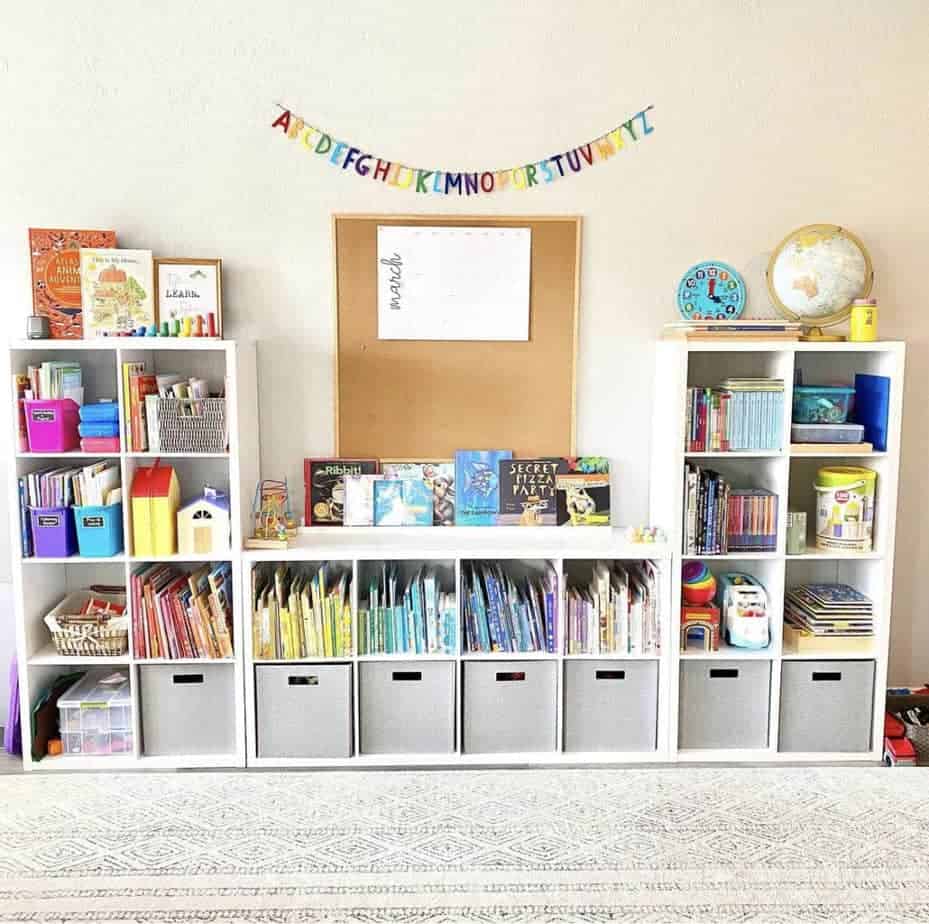
Shared supplies can quickly become disorganized in multi-child setups. Items often go missing when there is no central place for them.
Keep group materials in one shared location for easy access. Trays or bins can separate ongoing projects and prevent pieces from getting lost. This makes it easier to pause and continue activities later.
21. Involve Your Kids in the Organization Process
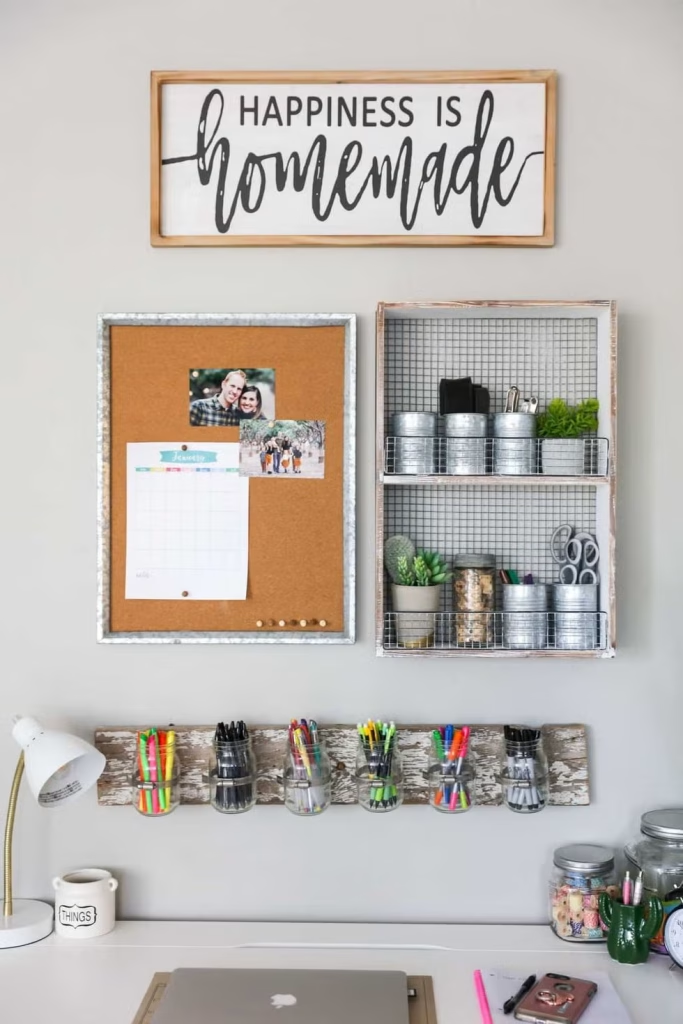
Systems often fail when kids are not part of them. They are less likely to follow rules they did not help create.
Let kids help decide where items go and how things are labeled. Small choices make them more likely to stay consistent. A short weekly reset routine keeps the space organized without much effort.
Frequently Asked Questions
How Do I Organize Homeschool Materials in a Small Space?
Start by focusing on vertical storage instead of adding more furniture. Wall shelves, hooks, and door organizers can free up a lot of room. Keep only daily essentials within reach and store extra materials out of sight.
Using labeled bins and rotating supplies also helps prevent clutter. A small, defined learning corner works better than trying to spread everything across the house.
What Is the Best Way to Keep Homeschool Paperwork Organized?
A simple filing system works best for most families. Sort papers by child and subject using folders or file boxes. Keep current work easy to access, and move older materials into an archive folder.
Binders can also be used daily. Staying consistent with where you place papers each day makes a bigger difference than having a complex system.
How Can I Keep My Kids Organized Without Constant Reminders?
Clear systems make a big difference. Labels, color coding, and easy access storage help kids know where things belong. Involving them in setup also improves follow-through.
Keep routines simple, like a quick daily reset or a short weekly cleanup. When the system feels easy to use, kids are more likely to stick with it on their own.
Do I Need to Buy Special Supplies to Stay Organized?
Not at all. Many effective tools are already in your home. Containers, jars, boxes, and even old folders can work well for organizing. The goal is function, not appearance.
Starting with what you have helps you test systems before investing in anything new. Over time, you can upgrade only the pieces that truly make your routine easier.
How Do I Balance Structure and Flexibility in Homeschooling?
A light structure works better than a strict one for most families. Use a weekly schedule or planner as a guide, not a rulebook.
Build in extra time between subjects and leave room for changes when needed. Having a clear plan helps reduce stress, but flexibility keeps learning from feeling forced or overwhelmed.
Conclusion
Homeschool organization does not need to be complicated. Small systems that fit your daily routine can make a noticeable difference over time.
When everything has a place, and the setup feels easy to follow, learning becomes more focused and less stressful.
Save these ideas and share them with someone who is setting up their homeschool space.