21+ Creative Corner Fence Landscaping Ideas to Enhance Your Garden

Corner fence spaces are often overlooked. Most homeowners walk past them without a second thought. But these small, awkward spots hold real potential.
With the right plants, structures, or decor, a bare fence corner can become the most eye-catching part of your yard.
Good landscaping does not need to be complicated. Simple choices make a big impact. A few well-placed plants or stones can completely change how a space feels. Corner fence areas also help define boundaries and add privacy.
This guide will walk you through real, creative ideas to help you transform every forgotten corner into something worth noticing.
Corner Fence Seating Nook with Vertical Garden Wall
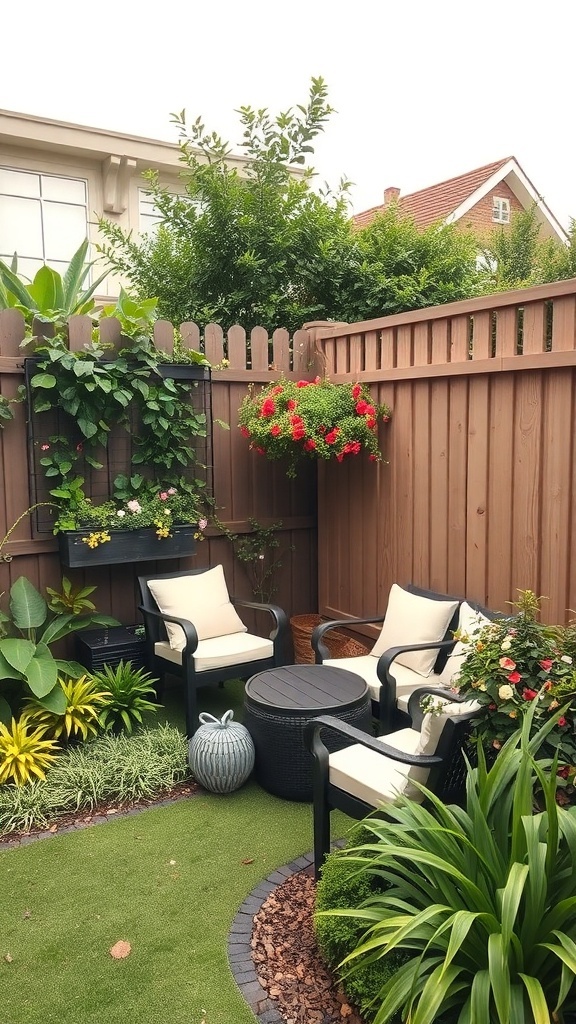
A brown wooden fence forms the backdrop for this cozy corner seating area. Three black chairs with cream cushions surround a small round table, creating a relaxed outdoor lounge. Hanging baskets filled with red flowers and wall-mounted planters add color and life to the fence itself.
Lush greenery fills every edge of this space. Tropical plants, ornamental grasses, and flowering shrubs frame the seating area naturally. Artificial turf keeps the ground clean and low-maintenance, making this corner both beautiful and functional year-round.
White Picket Fence Corner with Autumn Foliage Planting
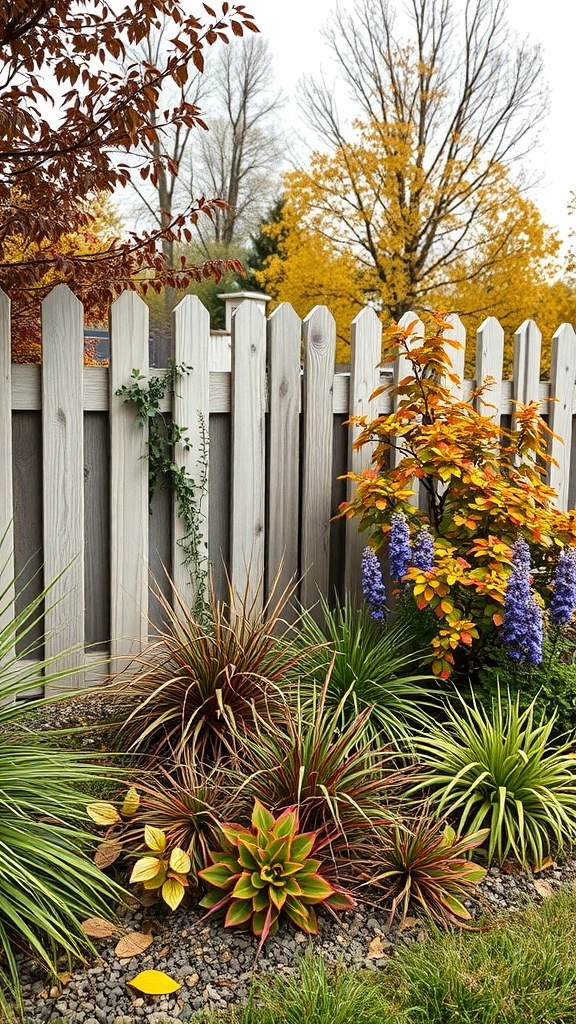
A weathered white picket fence anchors this corner garden bed filled with rich fall color. Ornamental grasses with deep burgundy and bronze tones grow low at the base, giving the space texture and movement. Purple flowering spikes and a fiery orange shrub add bold contrast against the pale fence panels.
Gravel mulch covers the ground, keeping maintenance simple while letting plants stand out. Tall trees with golden autumn leaves in the background pull the whole scene together. This look works especially well for homeowners who want seasonal color without heavy upkeep.
Corner Fence Fountain with Climbing Vines and Potted Flowers
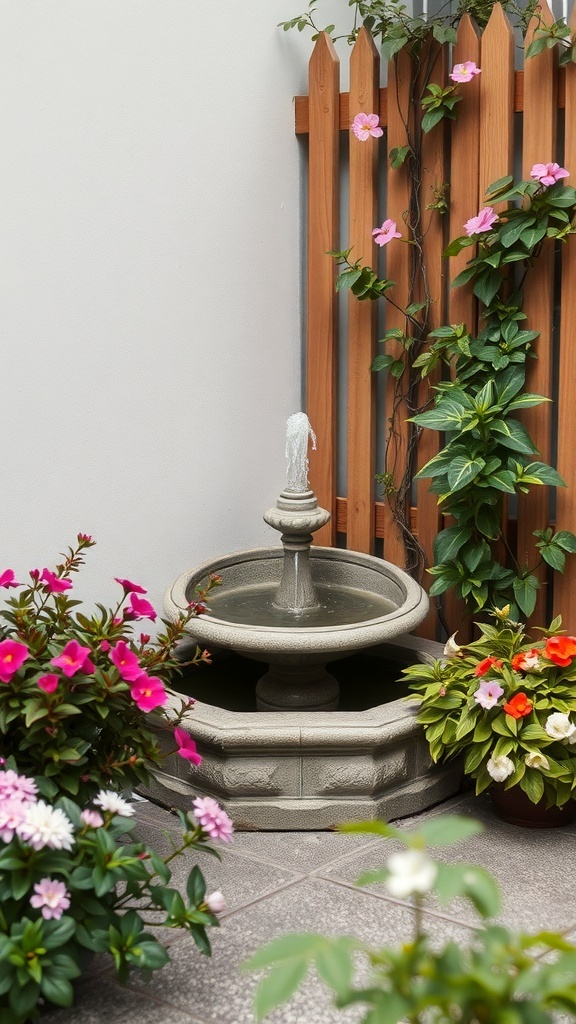
A classic stone birdbath-style fountain sits at the center of this fence corner, adding gentle sound and visual calm. Pink and orange flowering vines climb naturally up the wooden picket fence behind it, softening the structure beautifully. Bright magenta and white blooms in potted plants frame both sides of the fountain.
Tiled paving beneath the fountain keeps the area neat and defined. The combination of running water, climbing greenery, and colorful blooms creates a garden corner that feels refreshing and serene. This setup suits smaller yards where space is limited, but impact still matters.
Corner Fence Garden with Outdoor Wall Art and Raised Flower Bed
Bold, colorful art panels mounted on a white wall bring a gallery feel to this outdoor corner. A tall, full green shrub anchors the space behind a neatly framed wooden raised bed. Yellow marigolds, lavender, pink blooms, and white mounding flowers fill the bed with vibrant, layered color.
Large pavers create a clean border around the garden area, keeping everything organized. The mix of living plants and decorative art makes this corner feel curated and intentional. Homeowners who enjoy creative expression will find this approach both rewarding and easy to personalize.
Corner Fence with String Lights and Climbing Vines at Night
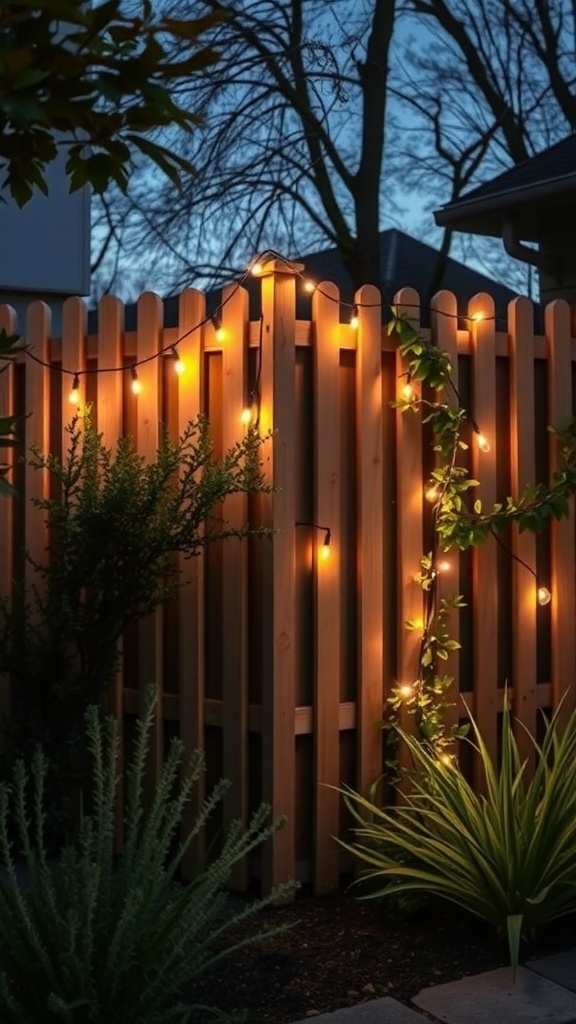
Warm string lights draped across a natural wood picket fence transform this corner into a cozy evening retreat. Climbing vines wind organically up one side of the fence, adding softness to the warm glow. The deep blue dusk sky in the background makes the amber light stand out beautifully.
Low-growing shrubs and spiky ornamental plants fill the base of the corner, adding layers of texture in the dim light. This idea works well for those who enjoy spending time outdoors after sunset. A simple strand of lights can completely change the mood of any fence corner.
Overflowing Hanging Flower Basket on Wooden Fence
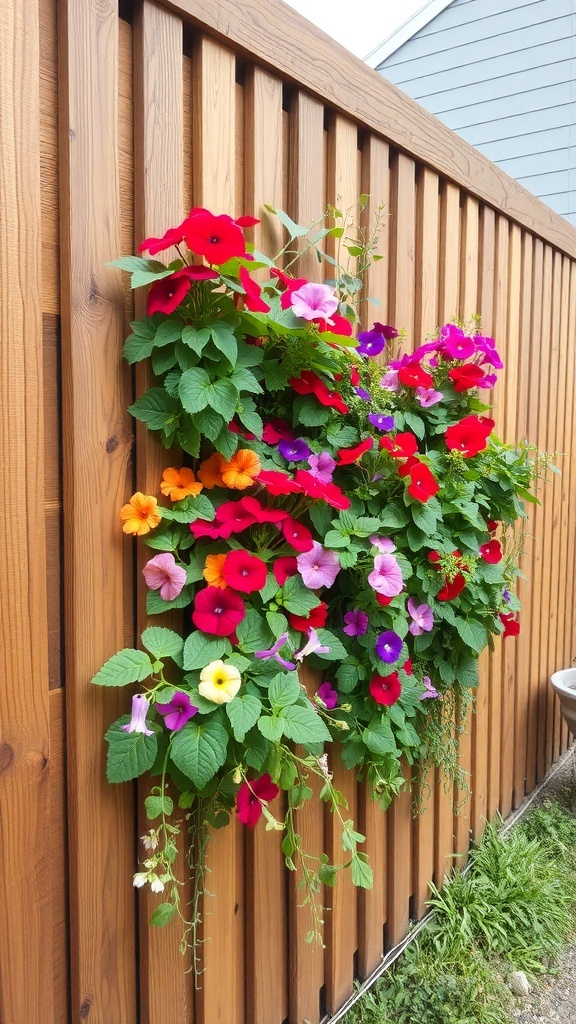
A large, lush hanging basket mounted directly on a cedar fence bursts with color from every angle. Red, pink, purple, orange, and yellow blooms spill outward and downward, creating a waterfall effect of mixed flowers. Trailing vines and foliage drape below the basket, adding extra length and movement.
This approach turns a plain fence panel into a living focal point with very little effort. Petunias, impatiens, and morning glory varieties all thrive together in a mixed planting like this. Homeowners with limited ground space will find wall-mounted baskets a great way to bring color up to eye level.
Decorative Wrought Iron Corner Fence with Hanging Pots and Garden Decor
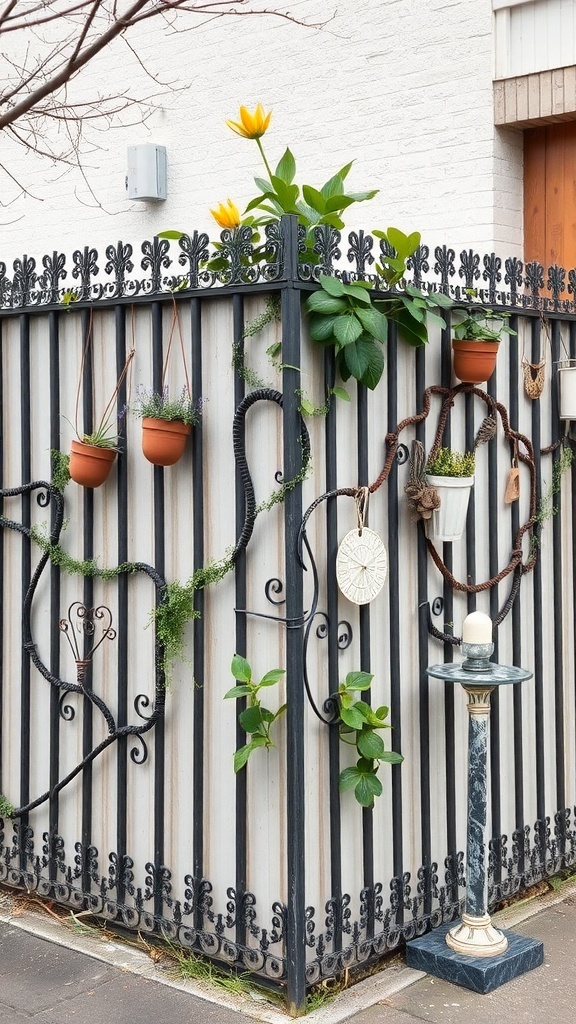
A bold black wrought iron fence with ornate fleur-de-lis detailing forms this striking corner display. Terra cotta pots hang from both fence panels, holding small plants and air plants at varying heights. Climbing vines weave through the ironwork naturally, softening the strong geometric lines.
Rustic rope garlands, a small sundial pendant, and a marble pedestal add charming decorative touches throughout the corner. Yellow tulips bloom from the top of the post, drawing the eye upward. This style suits homeowners who love mixing vintage garden decor with live plants for an eclectic, collected look.
Dark Stained Fence Corner with Layered Climbing Vines and Ground Plants
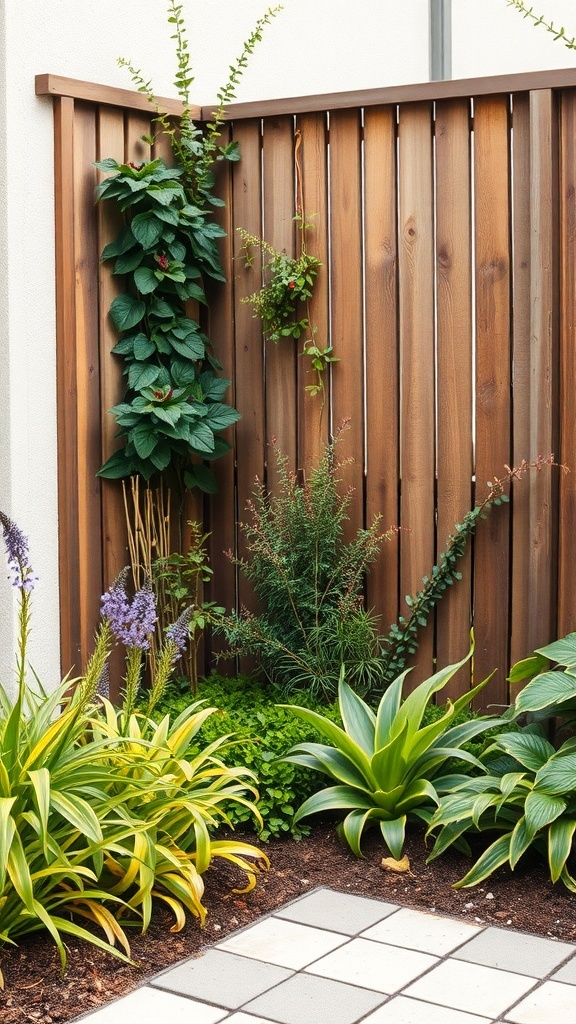
A dark walnut-stained wooden fence forms a clean, modern backdrop for this naturally layered corner garden. Bold leafy vines climb vertically along the left panel, while lighter trailing plants wind loosely up the right side. The contrast between the rich fence tone and bright green foliage makes each plant stand out clearly.
At the base, broad-leaved hostas, variegated grasses, and purple flowering spikes fill the ground in overlapping layers. Bare soil mulch keeps the planting area tidy without competing with the plants visually. This corner shows how climbing and ground-level plants can work together to fill vertical and horizontal space at the same time.
Corner Fence with Dense Evergreen Shrubs and Tropical Trees
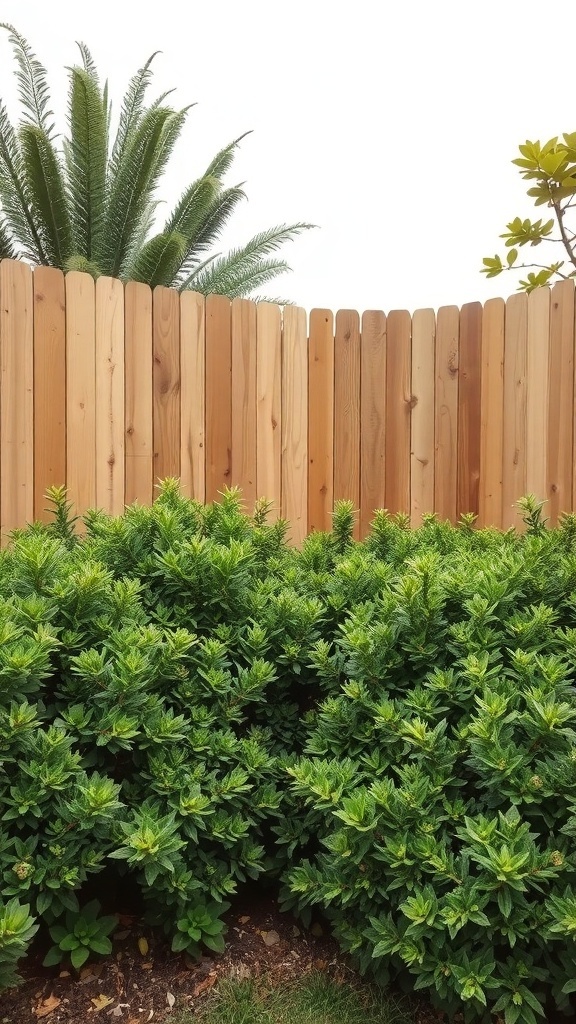
A fresh cedar wood fence curves along this corner, providing a warm, natural backdrop for dense green shrubs planted at its base. The shrubs grow thick and full, creating a solid privacy buffer without needing any additional structure. Palm fronds rise above the fence line, adding a relaxed tropical feel to the overall look.
This simple approach relies entirely on plant volume rather than decor. Evergreen shrubs like these stay lush year-round, meaning the corner always looks full and well-kept. Homeowners seeking a low-effort, high-privacy corner solution will find this dense planting style both practical and visually clean.
Corner Fence Transformed with Bold Hand-Painted Mural Art

Every slat on this wooden picket fence is painted a different color, turning the entire corner into a large-scale outdoor mural. Bold graphic shapes, lettering, and vivid tones of pink, yellow, teal, red, and green cover both fence panels completely. The artwork wraps around the corner, making the whole structure feel like one continuous canvas.
Grass grows naturally at the base, keeping the ground simple so the painted fence stays the clear focal point. This idea works especially well for community spaces, playful backyards, or creative homeowners who want a corner that makes a strong visual statement. No plants are needed when the fence itself becomes the art.
Modern Corner Fence with Stepping Stone Path and Gravel Landscaping
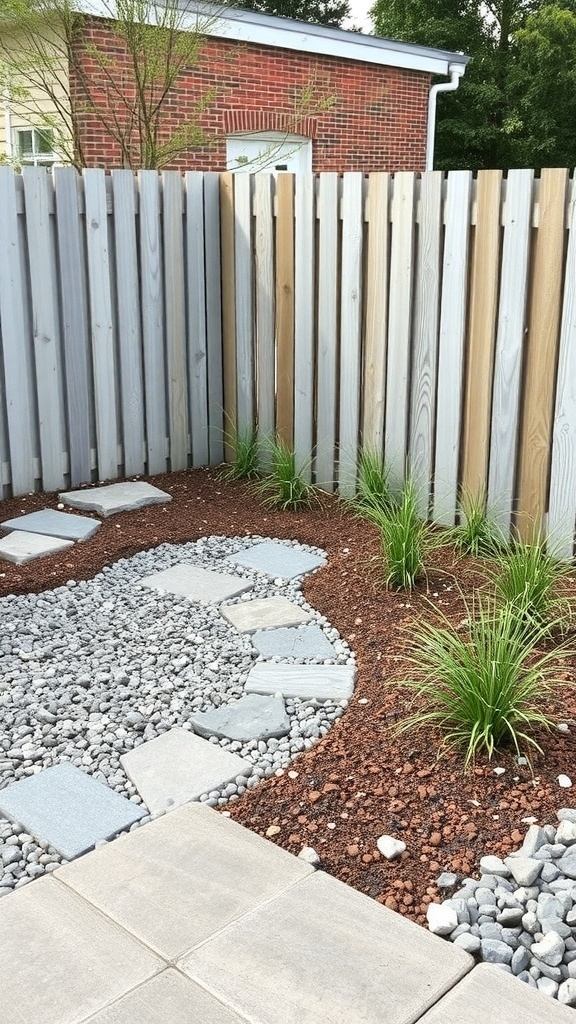
A gray-toned wooden fence wraps this corner around a clean, low-maintenance landscape design. Flat stepping stones curve through a mix of white river pebbles and red bark mulch, creating a simple path with strong visual flow. Clumps of ornamental grass planted along the fence line add soft, natural texture to the otherwise minimal space.
Large concrete pavers at the front edge anchor the design and transition it from patio to garden seamlessly. No flowers or bright colors are needed here — the contrast between stone, gravel, and grass does all the work. This style suits homeowners drawn to a calm, contemporary outdoor aesthetic with very little ongoing maintenance.
Rustic Corner Fence Garden with Wagon Wheel and Cottage Flowers
A large wooden wagon wheel mounted on the fence immediately gives this corner a charming farmhouse character. White daisies, hostas, and a round stone birdbath create a soft cottage garden feel along the fence base. A teal green shepherd’s hook holds a decorative white birdcage, adding a whimsical vintage touch.
Natural stone edging curves along the lawn, defining the garden bed with a relaxed, informal shape. Tall trees overhead provide dappled shade, keeping the space cool and lush. This corner proves that a few well-chosen rustic accents can turn a simple fence into a warm, storybook-style garden display.
Corner Fence Vegetable Garden with Raised Wooden Beds
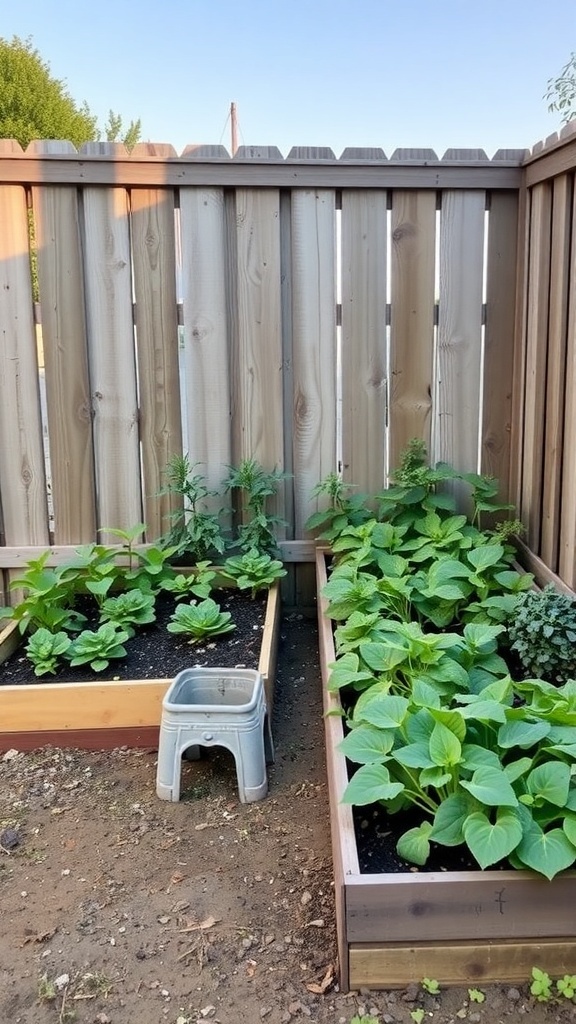
Two wooden raised garden beds sit neatly in this fence corner, making great use of an otherwise empty space. Large-leafed vegetable plants, likely sweet potatoes and leafy greens, fill both beds with healthy, vigorous growth. A gray step stool placed between the beds makes tending the plants easier and more comfortable.
Dark soil mulch fills each bed, providing rich nutrients while keeping weeds under control. The natural gray fence wrapping the corner reflects sunlight back onto the plants, supporting steady growth. This layout shows how a simple corner can be converted into a productive home garden without taking up much yard space at all.
Eclectic Fence Gallery Wall with Mixed Garden Art and Ornaments
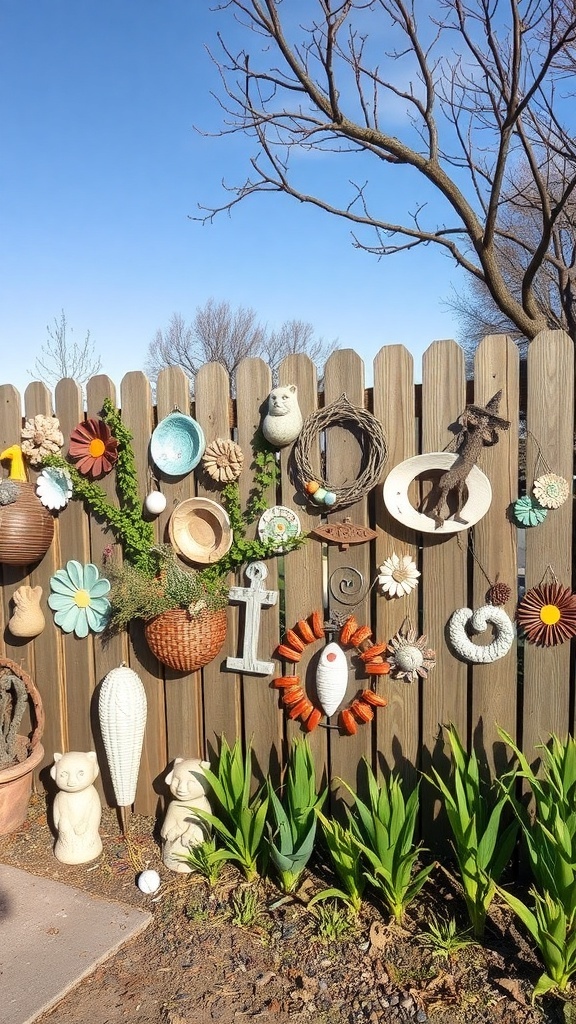
Dozens of handcrafted and found objects cover this gray picket fence, turning it into a full outdoor gallery display. Ceramic flowers, woven baskets, animal figurines, a grapevine wreath, a crescent moon, and a metal fish piece are all arranged across the fence in a layered, collected style. Each item carries its own character, yet everything works together as one unified wall of art.
Small ceramic cat statues stand at the base alongside emerging tulip shoots, grounding the display with living plants. Bare winter trees stretch above the fence against a bright blue sky, adding natural contrast. This fence style suits creative personalities who enjoy curating one-of-a-kind outdoor spaces using meaningful objects collected over time.
Corner Pergola Lounge with Horizontal Slat Privacy Screen and Gravel Base
A dark charcoal pergola anchors this sleek corner seating area, providing overhead structure without fully blocking the sky. A horizontal wood slat privacy screen runs along the back, creating a modern backdrop that separates the lounge from the rest of the yard. Dark gray sectional furniture and a low coffee table keep the furniture palette clean and cohesive.
Pea gravel covers the ground within a curved cobblestone border, replacing grass and eliminating mowing in that zone entirely. Black square planters with lush green shrubs soften the hard edges on both sides of the sofa. This corner setup delivers a polished, resort-style outdoor room that feels both private and open at the same time.
FAQ
How Do I Landscape A Corner Fence Without Making It Feel Crowded
I always start by treating the corner like its own little zone instead of trying to fill every inch. Taller plants go right into the corner, then I layer down with medium and low plants as they spread out. Leaving a bit of breathing room actually makes the space feel bigger and more intentional, not stuffed.
What Plants Work Best For Fence Corners
Fence corners usually get tricky light, so I pay close attention to sun patterns first. Shrubs, ornamental grasses, climbing plants, and hardy perennials tend to do really well here. I love mixing one strong anchor plant with softer fillers around it. That balance keeps the corner from looking flat or forgotten.
Can I Landscape A Fence Corner On A Budget
Yes, and honestly some of my favorite corners were done slowly. I started with one or two plants and added more over time. Using cuttings, dividing existing plants, or choosing fast growing varieties helps a lot. Mulch and edging alone can already make the corner look cleaner and more finished.
How Do I Make A Fence Corner Look Decorative
Texture and layers change everything. I like adding stones, small planters, trellises, or even a simple garden statue. Climbing plants on the fence instantly soften hard lines. When the fence stops feeling like a wall and starts feeling like part of the garden, the whole yard looks better.
Should Fence Corners Be Symmetrical Or Natural
I usually lean toward a more natural look. Slightly uneven plant heights and organic shapes feel more relaxed and garden like. That said, if the rest of your yard is structured, symmetry can work beautifully too. The key is making the corner match the overall vibe of your garden.
Conclusion
Fence corners are often overlooked, but they have so much potential. With a little thought and creativity, they can become one of the most charming parts of your garden. These 21+ Creative Corner Fence Landscaping Ideas to Enhance Your Garden are meant to help you turn an awkward edge into something intentional and inviting.
If this list sparked an idea or made you look differently at your own garden corners, share it with friends or family. Sometimes all it takes is one fresh idea to completely change how a space feels.