Apartment Decorating Styles That Actually Work (When Your Living Room Has to Be a Living Room, Office, Dining Room, and Emotional Support Zone)

If you’ve ever stood in your apartment at night holding a pillow like it’s a legal contract, welcome. Small spaces do this to us. Every choice shows up louder, and every “oops” purchase feels like it has front-row seating in your life.
This is my real-life guide to decorating styles for apartments, but in a way that fits how people actually live. Not fantasy square footage. Not a pretend budget. Not a room that stays clean for more than 14 minutes.
We’re going to talk styles people actually want, how to translate them to compact rooms, and how to stop one room from trying to be four aesthetics at once. Because that’s when everything starts feeling messy, even if all the pieces are cute.
The Night I Finally Stopped Trying to Make One Room Be Four Aesthetics at Once
This was the exact moment I gave up on “just vibe it out.”
It was late. I’d opened a bunch of tabs, convinced I could blend modern, boho, coastal, and vintage into one magical apartment look. I had:
- a clean-lined sofa
- a woven rug that leaned boho
- a “coastal” art print (it was basically foggy water)
- a vintage brass lamp I was obsessed with
And somehow, instead of looking curated, my living room looked like four different Pinterest boards had a group chat fight.
That’s when I realized the apartment rule: your room needs one main story.
Everything else can be side characters. Cute side characters. But still side characters.
Once I picked one base direction, everything got easier. Shopping got easier. Styling got easier. Even cleaning got easier because I wasn’t constantly “fixing” the room with more stuff.
Quick Style Picker (So You Don’t Spiral)
Pick the one that feels like “yes, that’s me” on a normal Tuesday.
- If you like calm and clean: Modern (warm) or Minimalist (cozy)
- If you like cozy and collected: Boho (edited) or Vintage-leaning Transitional
- If you like gritty and graphic: Industrial (softened)
- If you like airy and light: Coastal (no seashells)
- If you like playful and layered: Eclectic (controlled chaos)
And if you’re stuck between two, don’t panic. You can mix. You just need a base.
The Apartment Rule Before You Pick a Style
Pick the function first, then the vibe.
In an apartment, the room has a job. Style is the outfit it wears while doing it.
Before you commit to anything, do this once:
The doorway test (my favorite reality check)
Stand at the doorway and imagine a normal day:
- you walk in carrying groceries
- you drop your bag
- you need a place to put keys
- you need a spot to sit
- you might eat dinner on the couch
- the dog or kids or roommate is moving through the same space
Where are the choke points? Where do you naturally want to walk? If the layout is fighting your body, no style will feel right.
When movement feels easy, decorating feels fun again. When movement feels annoying, everything feels like clutter.
Modern Style for Apartments (Without the Cold Showroom Vibe)
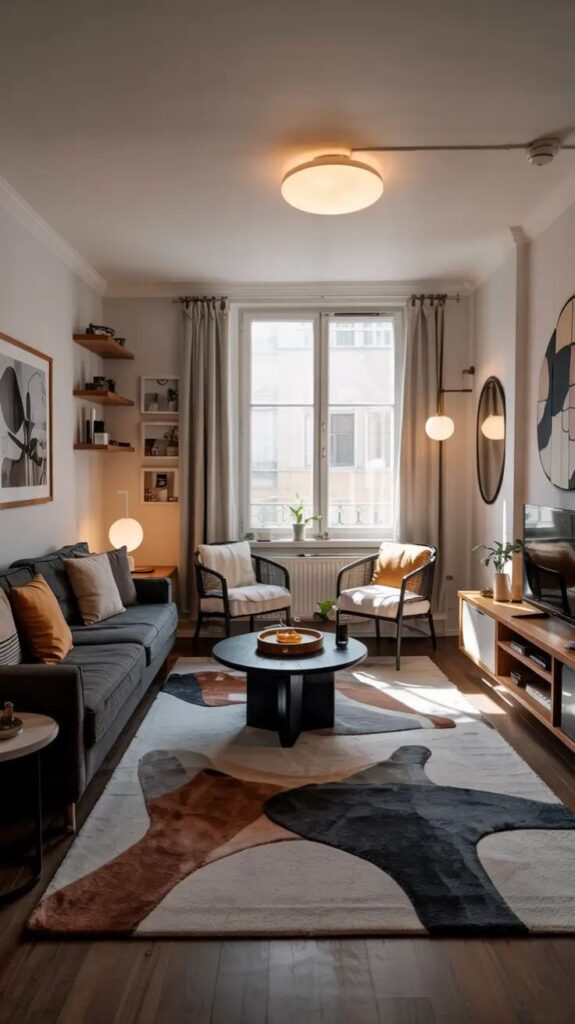
Modern is one of the easiest apartment styles because it’s visually quiet. Clean lines, simple shapes, fewer objects. Great for small spaces.
The problem is people take “modern” and accidentally make it feel sterile. The fix is always the same: warmth.
What I do to make modern feel livable
- I choose warm neutrals instead of icy white
- I add wood tones (oak, walnut, even warm-toned laminate counts)
- I use soft texture so it doesn’t feel flat
- I keep one bold focal point so it doesn’t feel boring
Modern apartment “recipe”
- Sofa: 80–84 inches with legs (lighter visual weight)
- Rug: as big as you can manage (small rugs make rooms feel smaller)
- Palette: warm neutral + black accent + one art color
- Materials: oak + linen look fabric + matte metal
- Art rule: one oversized piece instead of five tiny frames scattered around
Friendly extra: If your apartment gets gloomy at night, modern needs layered lighting or it can feel kind of sad. Add two lamps and warm bulbs and suddenly it feels like a real home, not a waiting room.
Minimalist Style (That Still Feels Like a Person Lives There)
Minimalist is not “empty.” It’s “edited.” It’s the relief of not having to visually process 10 things at once when you’re trying to relax.
This style works insanely well in apartments, but only if you lean into the real secret: closed storage.
The minimalist mistake
Open shelving everywhere. It looks cute online, but in real life it becomes a stress display. If your daily stuff is always visible, your brain never rests.
Minimalist apartment “recipe”
- Anchor piece: clean-lined sofa or bed
- Rug: subtle texture over busy pattern
- Palette: two neutrals + one soft accent
- Materials: linen + light wood + matte ceramic
- Storage wins: ottoman with storage, console with doors, bed drawers
Friendly extra: Minimalist doesn’t mean you can’t have personality. It just means your personality doesn’t need to be on every surface at once. One sculptural lamp or one piece of art can carry the vibe.
Boho Style, Edited (So It Doesn’t Turn Into Visual Static)
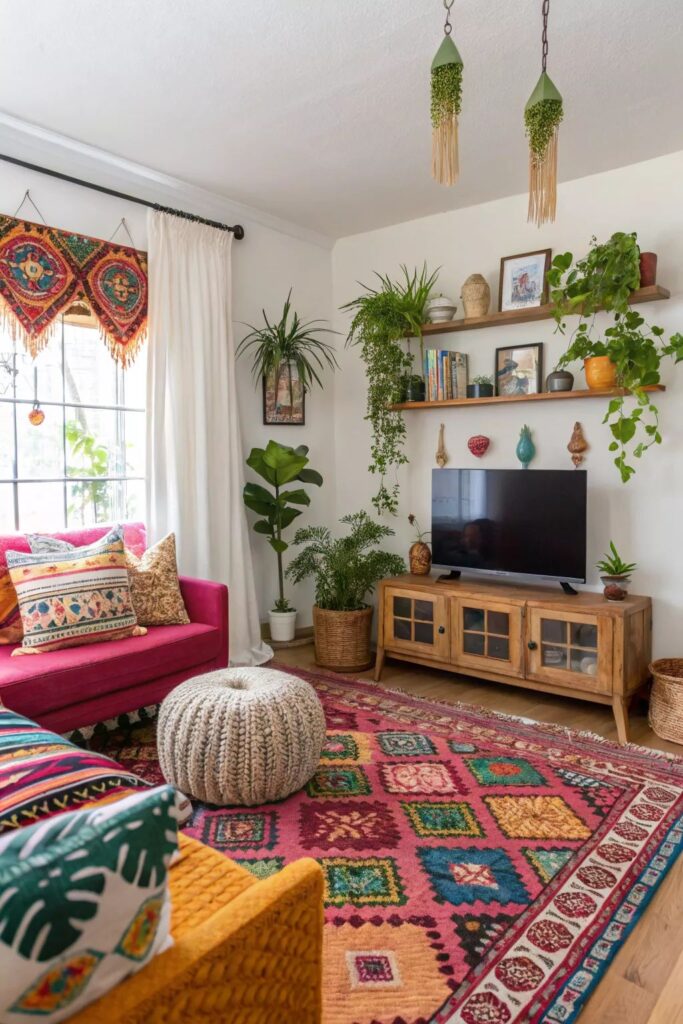
Boho is cozy by nature. Textures, warmth, collected pieces. People love it because it feels lived-in.
But in a small apartment, boho can get chaotic fast if everything is layered without a plan.
The edited boho rule I swear by
One hero textile, everything else supports it.
Usually, the rug is the hero. Then pillows and throws echo the colors, not compete.
Boho editedthe apartment “recipe.”
- Sofa: simple shape in a neutral fabric
- Rug: one patterned rug OR one heavily textured rug (not both)
- Palette: warm neutrals + one earthy color (olive, clay, rust)
- Materials: jute + rattan + washed cotton + aged wood
- Decor rule: fewer bigger pieces, not a hundred tiny trinkets
Friendly extra: If you want boho but you hate clutter, keep surfaces calm and put the boho energy into textiles and lighting. A woven pendant or a warm lamp shade goes a long way.
Industrial Style, Softened (For People Who Also Like Comfort)
Industrial can look amazing in apartments, especially loft-style spaces or anywhere with exposed brick or concrete vibes.
But full industrial can feel harsh, like your home is a start-up office that serves cold brew and anxiety.
My softened industrial approach
I keep one gritty moment, then I wrap it in warmth.
Industrial softened apartment “recipe”
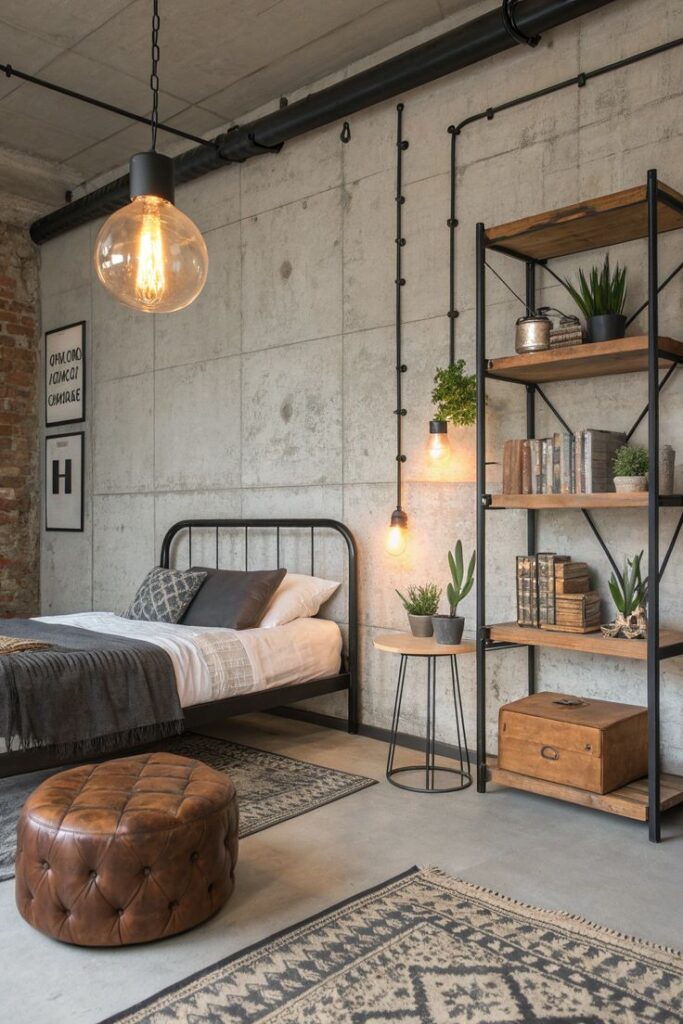
- Anchor: one black metal piece (not five)
- Rug: vintage pattern or low-pile texture to soften lines
- Palette: charcoal + warm wood + creamy neutral
- Materials: black metal + reclaimed wood + concrete accent
- Lighting: warm bulbs only (this is non-negotiable)
Friendly extra: If you love industrial but it feels too severe, add one soft element that’s clearly intentional: a textured throw, a warm rug, or even a big linen curtain. Suddenly the room feels human again.
Coastal Style Without Seashells, Rope, or Regret
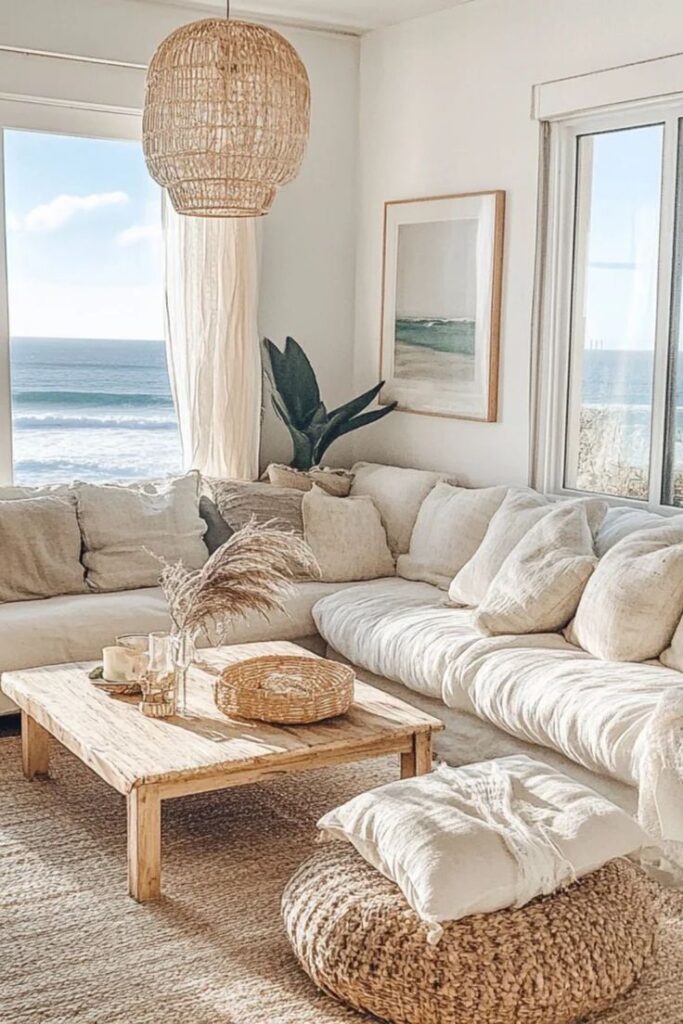
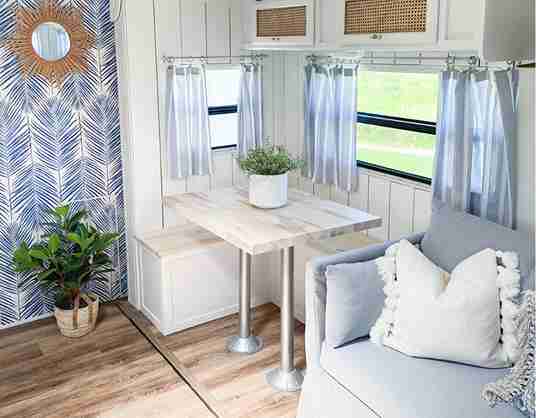
Coastal is one of the best apartment styles because it naturally makes a space feel brighter and bigger.
But “coastal” does not need literal beach props. The goal is ease, not theme.
The coastal vibe that works in real apartments
- airy curtains
- light woods
- creamy whites (not stark)
- relaxed textures
- soft blue or soft green accents
Coastal apartment “recipe”
- Sofa: light upholstery or slipcover vibe
- Rug: flatweave or subtle stripe
- Palette: warm white + sand + misty blue
- Materials: linen + cane + light wood + woven texture
- Rule: texture does the work, not décor that screams “beach”
Friendly extra: Coastal looks best when it feels like exhaling. If you walk in and feel calmer, you nailed it.
Eclectic Style (The Controlled Chaos Version)
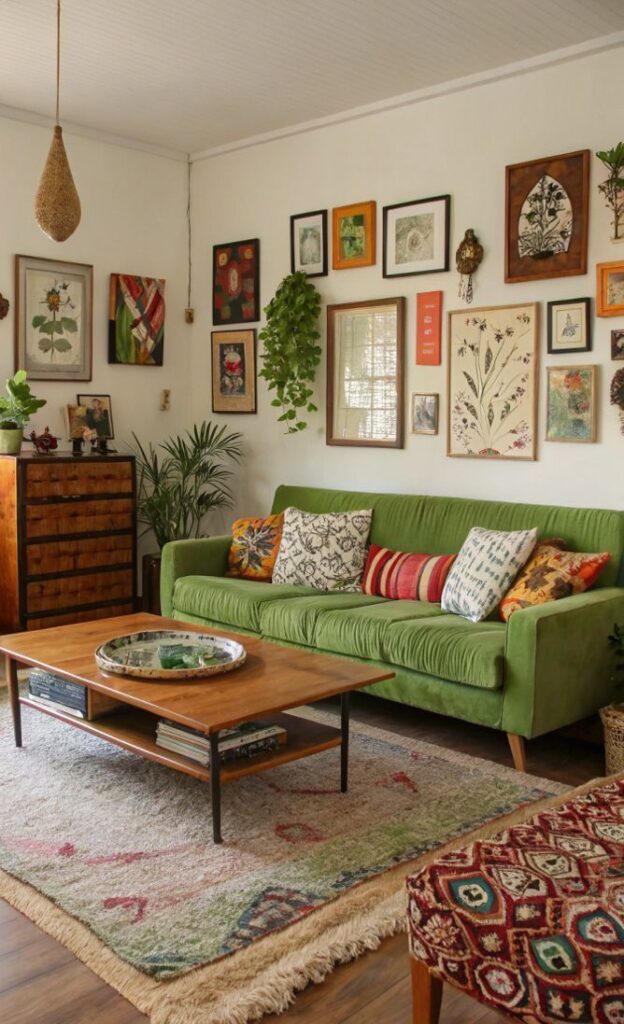
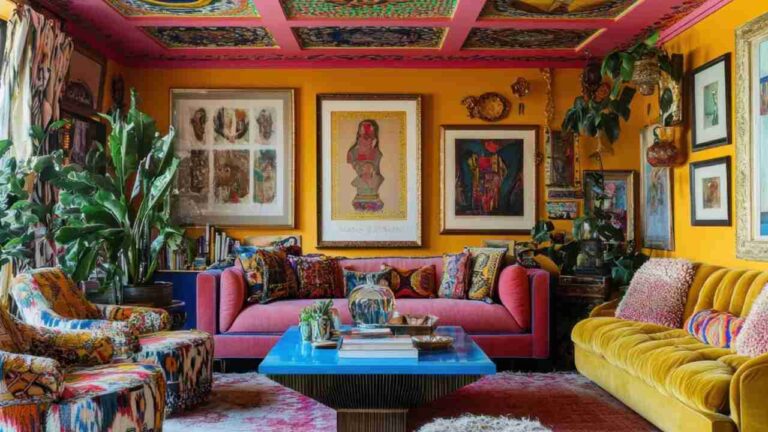
Eclectic is for people who love personality. Mixed eras, fun finds, color, art. It can look incredible in an apartment if you give it structure.
Eclectic rule that saves you
Repeat one thing three times.
One color, one metal finish, one shape. Something has to repeat so your brain sees a pattern.
Eclectic apartment “recipe”
- Base: neutral sofa or neutral walls
- Hero: one bold rug or one bold art piece
- Repeat: one metal finish (brass or black) in 3 places
- Textures: mix at least 2 (wood + textile, ceramic + woven)
- Containment: use trays and baskets so small stuff doesn’t look messy
Friendly extra: Eclectic gets messy-looking when accents are scattered evenly like confetti. Put bold moments where the room already wants attention: the sofa wall, the bed wall, the dining corner.
How to Adapt Any Style for a Small Apartment Without Making It Feel Smaller
This is the part that matters no matter what style you pick.
1) Make walking paths first, then decorate
A room feels bigger when your body moves easily through it. I’m serious. Flow is everything.
2) Choose furniture with legs when possible
Seeing floor space makes a room feel larger. Legs = breathing room.
3) Keep tall pieces against walls
Tall shelves in the middle can chop a room up. Against the wall, they feel intentional.
4) Go bigger on the rug than you think
A too-small rug makes everything look like it’s floating. Bigger rugs unify space.
5) Limit “tiny clutter objects”
A few strong pieces look curated. Many small pieces look like chaos, even if they’re cute.
Furniture and Decor Scaling (So Your Apartment Looks Intentional)
Apartments don’t hide proportion mistakes. They highlight them.
My basic scaling cheat
- Sofa: around 80–84 inches for most apartments
- Coffee table: slimmer is better, or use nesting tables
- Rug: big enough for front legs of sofa on it
- Art: one larger piece beats several tiny ones in random spots
- Storage: closed storage keeps your space calm
Friendly extra: The “I’ll just buy small things because it’s a small room” idea backfires. Small spaces usually look better with fewer, bigger, clearer choices.
Mixing Styles Without Turning Your Apartment Into a Pinterest Fight
Here’s the method that keeps your room from feeling confused:
Pick a base style + one accent style
Base style controls:
- sofa shape
- main rug vibe
- biggest furniture finishes
Accent style shows up in:
- textiles
- art
- lighting
- one statement chair
- decor
The repetition trick
Repeat:
- 1 wood tone
- 1 metal finish
- 1 accent color
If your metals and woods are fighting, the room will always feel “off” no matter how cute the pieces are individually.
Renter Friendly Moves That Feel Custom
You can make an apartment feel personal without destroying your deposit.
My favorite renter upgrades
- plug-in sconces or rechargeable lamps
- removable wallpaper in one zone (not the entire room at midnight)
- peel and stick backsplash tiles in a small area
- swapping cabinet hardware (save the old ones)
- oversized art with Command strips (test first)
Lighting is the real glow-up
If your overhead light is harsh, don’t fight it. Just stop using it as your main light.
Two lamps with warm bulbs can make a room feel 10 times more expensive and 50 times cozier.
The Little Details That Make Apartments Feel Finished
This is the part where your room starts feeling like yours.
Small finishing touches that actually matter
- one tray to corral daily clutter
- one throw blanket you actually use
- two pillows per seat (you don’t need 9)
- one piece of art that makes you feel something
- a candle or diffuser for nighttime mood
Plants: real or fake, I’m not judging
If your light is bad, fake plants are fine. Choose a shape that looks sculptural and keep the planter simple.
One taller plant in a corner can do more than five tiny plants scattered everywhere.
FAQ
What is the best decorating style for a small apartment?
Modern, minimalist, coastal, and edited boho all work really well because they don’t require a ton of objects to feel finished. The best one is the one you can maintain without getting annoyed.
How do I make my apartment look cohesive if I like multiple styles?
Pick one base style, then bring the other style in as accents. Repeat one wood tone, one metal finish, and one accent color so everything feels connected.
What makes an apartment feel cluttered even when it’s decorated nicely?
Too many small items on surfaces, too much open storage, and not enough visual “rest.” Bigger anchor choices and closed storage calm a room fast.
What’s the fastest way to make an apartment feel more “designed”?
Lighting. Two lamps with warm bulbs, plus one strong focal point (big art or a rug), and suddenly the room looks intentional.