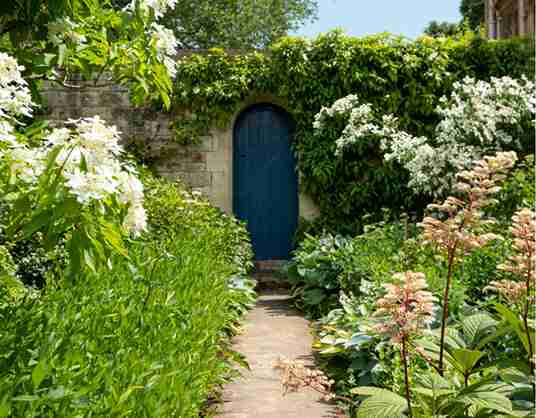
The Garden Brick Wall That Felt Like a Giant Red “Stop Sign”…Until I Learned How to Style It

A garden brick wall can feel heavier than it needs to. In some yards, it reads as strong and architectural. In others, it becomes a long, flat expanse that dominates the view and reflects heat and light in ways that make the space feel stark.
The good news is that brick rarely needs to be replaced to feel better integrated. Most of the time, the solution is thoughtful layering rather than renovation. By introducing greenery, lighting, and one well-chosen focal element, a brick wall can shift from looking like a boundary to functioning as a backdrop.
This guide walks through practical ways to style a garden brick wall using vertical planting, lighting strategies, mounted decor, and surface treatments. Each option includes considerations for sun exposure, budget, and installation difficulty so you can choose what works for your space.
Why Garden Brick Walls Often Feel Harsh
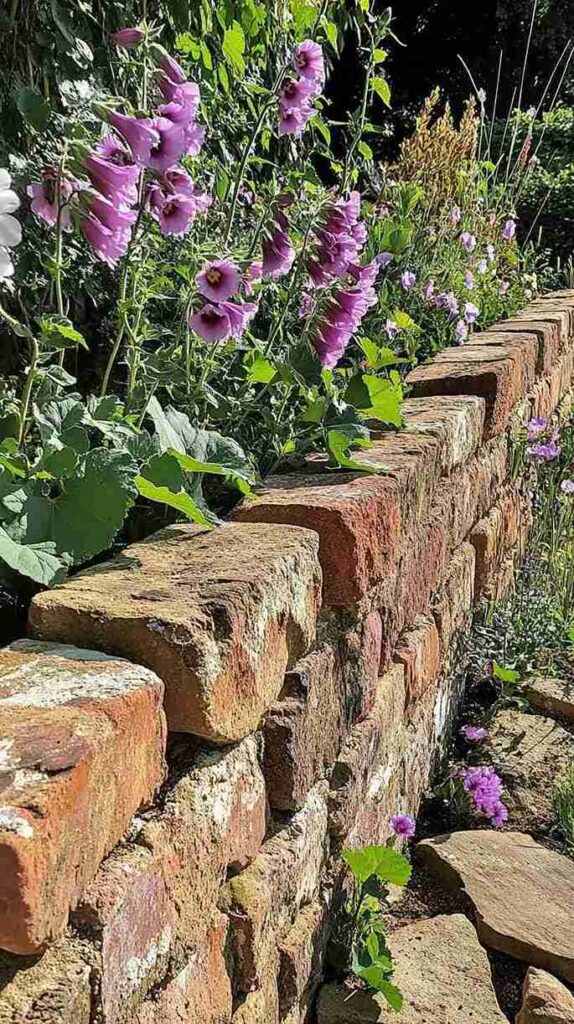
Brick walls tend to feel overwhelming for three main reasons:
- They are a single, uninterrupted plane.
- The texture repeats across a large surface.
- The color can intensify in full sun and look dull in shade.
When there is nothing breaking up that plane, the eye has nowhere to rest. The wall becomes the dominant visual element rather than a supporting one.
The most effective approach is to introduce contrast in at least two of these ways:
- Add greenery to soften and interrupt the surface.
- Use lighting to highlight texture and create dimension at night.
- Install one strong focal feature to anchor the wall visually.
Resist the urge to scatter many small decorative pieces. A few well-placed elements will look intentional, while too many can feel cluttered.
Before You Start: Basic Wall Preparation
Before mounting or hanging anything, take time to prepare the surface.
- Brush the wall thoroughly to remove dust and debris.
- If needed, scrub with plain water and a stiff brush.
- Allow the brick to dry completely before installing decor.
- Inspect mortar joints for crumbling or loose areas.
- Plan mounting locations in mortar joints when possible.
Brick is porous and textured, which means adhesives may not perform reliably, especially outdoors. For anything beyond very lightweight decor, mechanical fastening is typically the safer option.
Vertical Garden Options
Vertical planting is one of the most effective ways to soften a brick wall. Plants introduce movement, shadow, and seasonal change, all of which reduce the visual weight of masonry.
Trellis and Climbing Plants
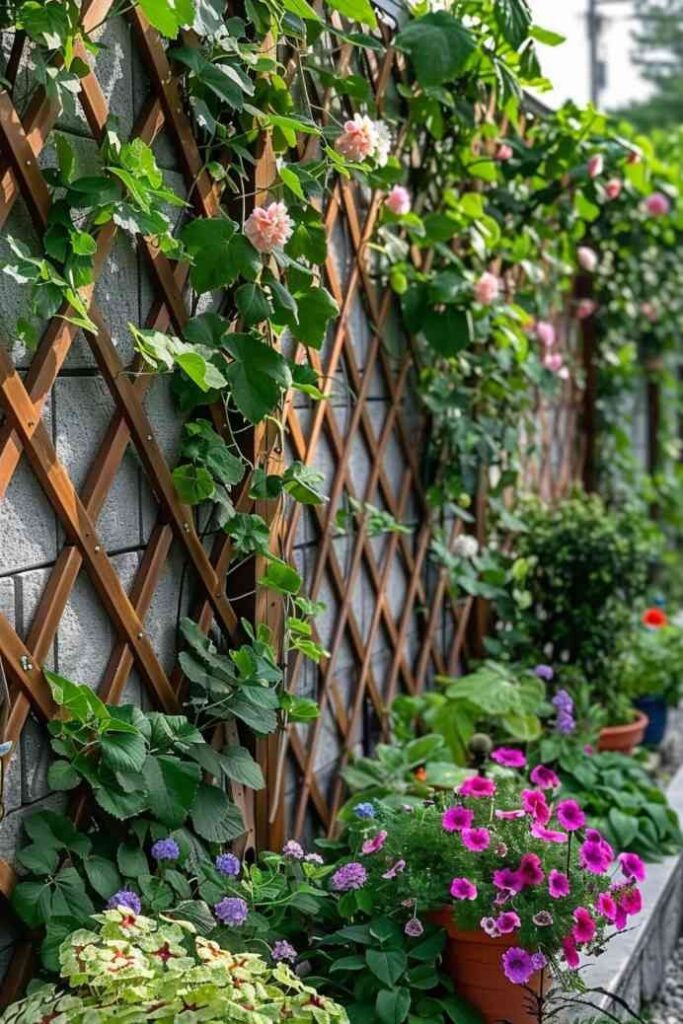
A trellis paired with climbing plants transforms a wall into a living backdrop.
Best for:
- Full sun walls
- Larger surfaces
- Traditional or cottage-style gardens
Suitable plants for full sun:
- Climbing roses
- Star jasmine
- Lantana
- Ivy geraniums
When installing a trellis, leave a small air gap (about ½ to 1 inch) between the trellis and the brick. This allows airflow and gives vines room to weave naturally. Whenever possible, drill into mortar joints rather than the brick face.
Cost range:
- Trellis: $25 to $120 (premium metal designs may exceed $200)
- Climbing plants: $20 to $50 each
Wall-Mounted Planters
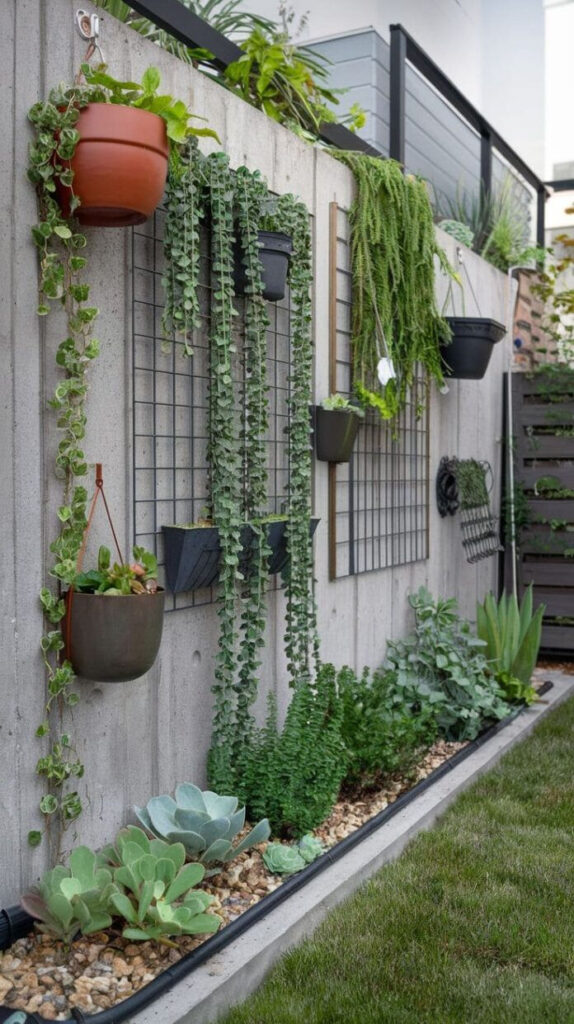
Wall-mounted planters create depth without using valuable patio space.
Best for:
- Small patios
- Narrow yards
- Sun or shade (depending on plant selection)
Plants for shade:
- Ferns
- Heuchera
- Creeping Jenny
- Coleus
Drainage is critical. Planters without proper drainage can cause staining on brick and lead to plant health issues.
Cost range:
- $15 to $60 per planter
- $60 to $180 for coordinated sets
Modular Living Wall Systems
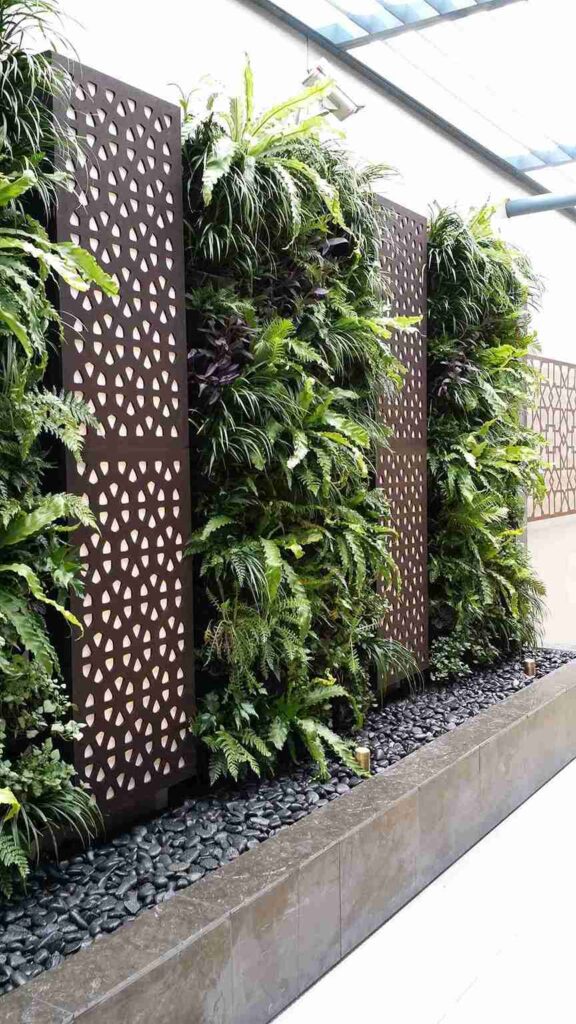
Modular systems offer a more contemporary look and allow for plant rotation.
Best for:
- Modern garden designs
- Homeowners who enjoy seasonal updates
Keep in mind that smaller planting pockets dry out quickly. Start with hardy, low-maintenance plants during the first season.
Cost range:
- $80 to $250 to start
- Larger systems may exceed $300
Faux Greenery Panels
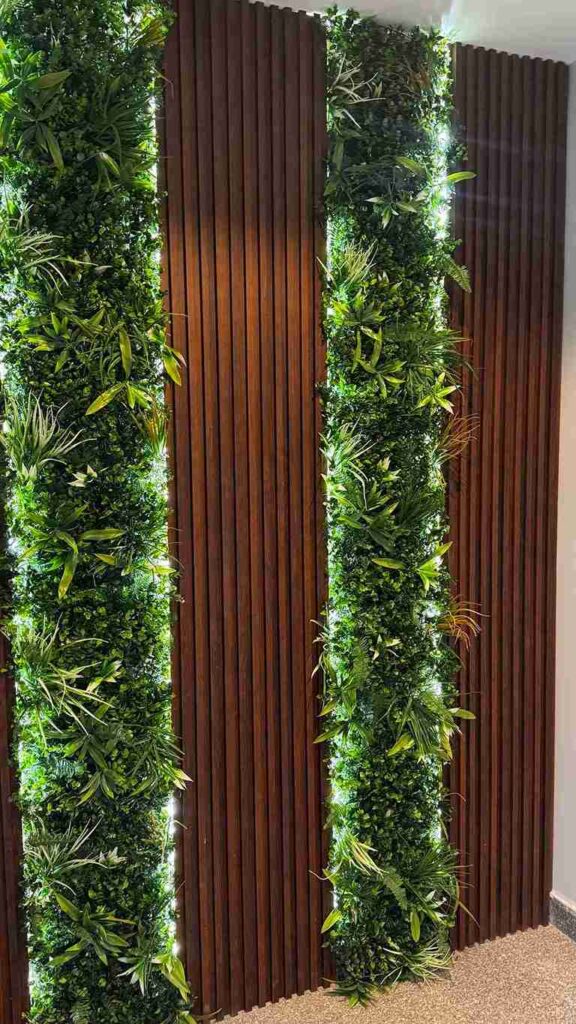
High-quality UV-rated panels can be appropriate in certain conditions.
Best for:
- Rental properties
- Intense sun exposure
- Low-maintenance setups
If considering this route, test one panel outdoors for several weeks to evaluate fading and durability.
Cost range:
- $40 to $120 per panel
- Premium UV-rated panels: $150+
Lighting Strategies for Brick Walls
Lighting can dramatically change how brick appears, especially in the evening. Properly placed lighting highlights texture and adds depth.
Ground Uplights
Uplights are one of the most effective and affordable improvements.
Installation guidelines:
- Position lights 12 to 24 inches from the wall.
- Angle them upward at 30 to 45 degrees.
- Use warm white light for a softer effect.
- Avoid directing beams into seating areas.
Start with two lights and adjust as needed.
Cost range:
- $15 to $60 per light
- Complete kits: $60 to $200
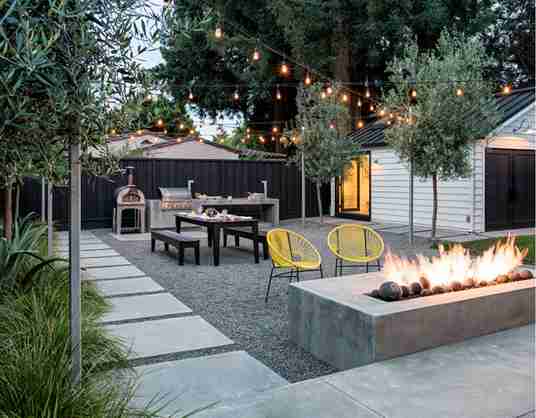
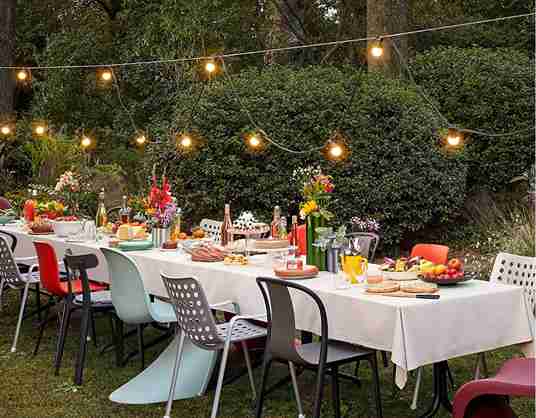
String or Café Lights

String lights create a softer, more casual atmosphere.
Best for:
- Seating zones
- Entertaining areas
They can be strung from house to wall, wall to pole, or overhead in a zigzag pattern.
Cost range:
- $25 to $120
- Premium sets: $150+
Wall Sconces
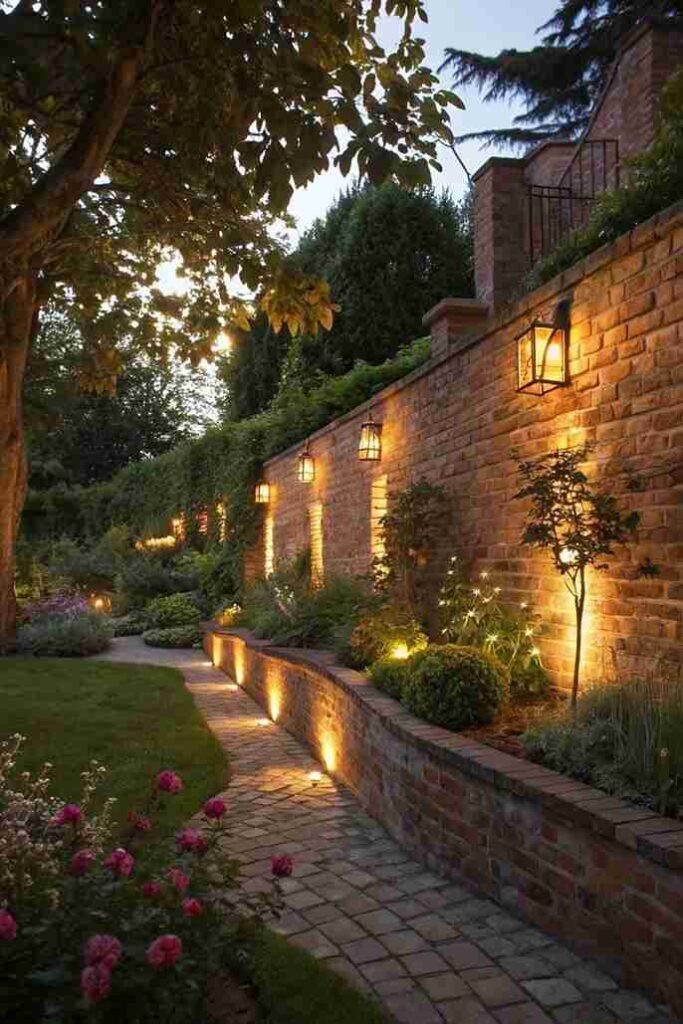
Outdoor-rated sconces provide a more architectural look.
Best for:
- Flanking doors or gates
- Framing a seating area
Install at a height that illuminates both the wall and nearby surfaces.
Cost range:
- $40 to $180
- Premium designs: $250+
Solar Accent Lights
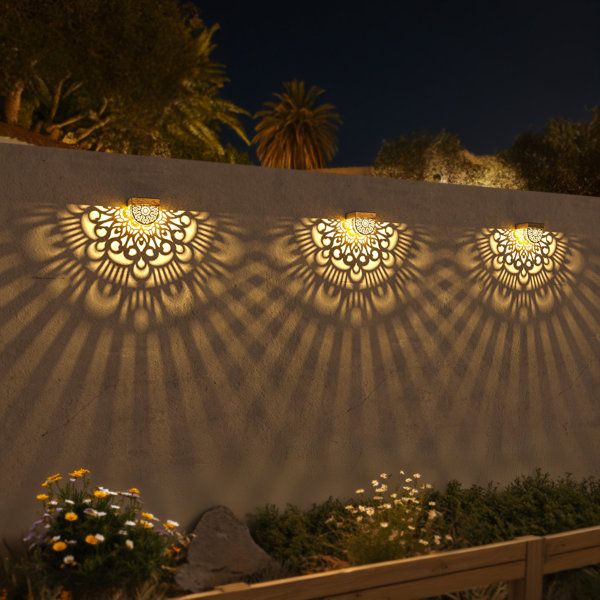
Solar lighting is ideal for low-commitment enhancements.
Ensure the solar panel receives adequate sunlight, even if the wall itself is shaded.
Cost range:
- $15 to $60
- Brighter models: $80+
Wall-Mounted Decor
When selecting decor, consider weight, weather exposure, and mounting method.
Outdoor Metal Art
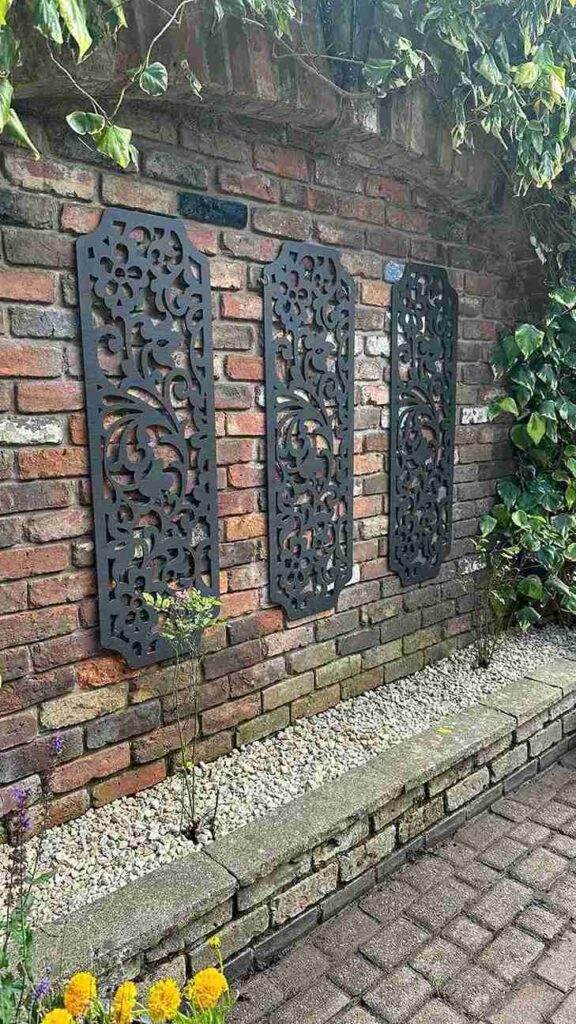
Metal pieces contrast beautifully with brick’s rigid grid.
- Ensure the finish is outdoor-rated.
- Mount using masonry screws into mortar joints.
Cost range: $40 to $200
Mirrors (Outdoor Rated Only)
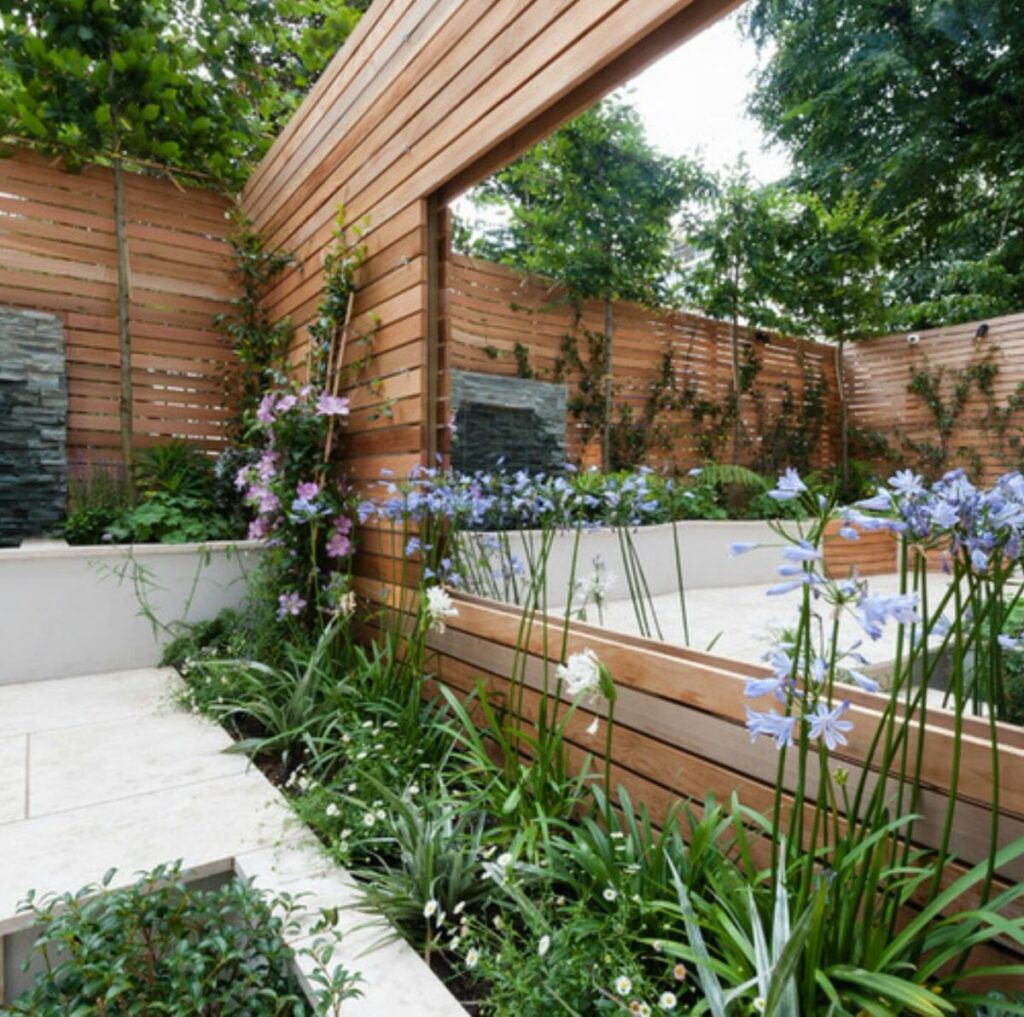
Mirrors reflect greenery and visually expand small spaces.
- Use sealed, outdoor-rated mirrors.
- Secure mechanically; do not rely solely on adhesive.
Cost range: $50 to $180
Shelving and Niches
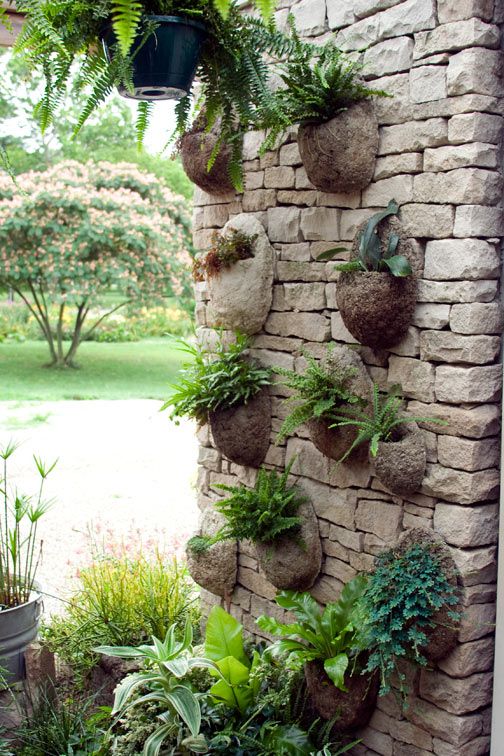
Shelves allow for layered styling with lanterns or potted plants.
- Use exterior-grade materials.
- Anchor securely into mortar.
Cost range: $30 to $150
Mixing Materials for a Balanced Look
Combining brick with another material can soften or modernize the space.
- Brick + Wood: Adds warmth and contrast.
- Brick + Metal: Creates a contemporary aesthetic.
- Brick + Stone: Introduces architectural depth.
- Brick + Mirrors: Enhances light and openness.
Choose one complementary material rather than combining several at once.
Surface Treatments and Paint Options
If you want a more significant visual change, surface treatments may be worth considering.
Limewash
- Soft, chalky appearance
- Semi-reversible
- $40 to $70 per gallon
Whitewash
- Lightens brick while preserving texture
- $30 to $60 per gallon
Exterior Masonry Paint
- Solid color finish
- Highly durable
- $30 to $60 per gallon
Always test a small area in natural daylight before committing to the entire wall.
Common Mistakes to Avoid
- Using indoor adhesives outdoors
- Drilling directly into the brick when the mortar joints are sufficient
- Ignoring the planter drainage
- Hanging heavy decor without anchors
- Mixing too many decorative styles
- Overlighting the wall
A Simple Starting Plan
If the wall feels overwhelming, begin with this approach:
- Choose one primary enhancement (trellis, large art piece, or uplights).
- Add lighting to define the wall at night.
- Evaluate the result before adding additional layers.
Once the wall serves a clear purpose, further styling decisions become more straightforward.
Frequently Asked Questions
How Can I Make a Garden Brick Wall Look More Attractive?
Break up the flat surface with greenery or lighting. Adding one well-proportioned focal element often makes a significant difference.
What Decor Works Best on Brick?
Large-scale elements with contrast, such as metal art, trellises, or mirrors, tend to perform best. Avoid small, scattered pieces.
How Do I Mount Items Safely on Brick?
For medium to heavy items, drill into mortar joints using masonry screws or anchors. Adhesives are typically unreliable on textured brick surfaces.
Is Painting Brick a Good Idea?
It can be effective if done correctly. Limewash or whitewash offers a softer alternative to solid masonry paint.
Final Thoughts
A garden brick wall does not have to dominate your outdoor space. With strategic layering, thoughtful lighting, and one intentional focal point, it can become an integrated design feature rather than a visual obstacle.
Start with one change. Observe how it shifts the space. Then build from there.