21 Minimalist Living Room Essentials for a Chic and Clutter-Free Space

A minimalist living room sounds peaceful in theory. Clean lines. Open space. Nothing unnecessary. But in real life, it is easy for clutter to creep back in.
Mail lands on the coffee table. Throw blankets pile up. Decorative pieces multiply. Before long, the room that was supposed to feel calm starts feeling busy again.
Minimalism is not about having less for the sake of less. It is about choosing pieces that serve a purpose and contribute to a cohesive look. When every item earns its place, the room feels lighter and more intentional.
The challenge is editing carefully. Instead of filling every corner, minimalist design relies on thoughtful furniture selection, balanced proportions, and subtle layering. A well-placed sofa, a streamlined coffee table, and controlled decor can create more impact than a room packed with accents.
Texture also plays a critical role. In a pared-back space, materials do the talking. Linen upholstery, natural wood, matte finishes, and soft rugs add warmth without visual noise.
Why Minimalist Living Rooms Feel So Refined
Clutter competes for attention. When it is removed, your eye can rest.
Negative space allows key elements to stand out. Light flows more freely. The room feels organized even when it is actively used. Minimalism also makes cleaning and maintenance easier, which helps the space stay consistent over time.
The result is not sterile. It is balanced.
Can You Achieve Minimalism Without Starting Over?
Yes. You do not need to replace everything at once.
Start by removing excess decor. Edit shelves so only a few intentional pieces remain. Choose storage that conceals everyday items. Replace bulky furniture with streamlined alternatives when possible.
Focus on quality over quantity. A single large art piece can be more impactful than a busy gallery wall. One structured plant can add life without overwhelming the space.
21 Minimalist Living Room Essentials to Guide Your Design
Below, you will find essential elements that support a clean, chic, and clutter-free aesthetic.
From foundational furniture pieces to subtle styling choices, these minimalist living room essentials highlight how thoughtful design can create a calm and polished space without sacrificing comfort.
Embracing Neutral Color Palettes
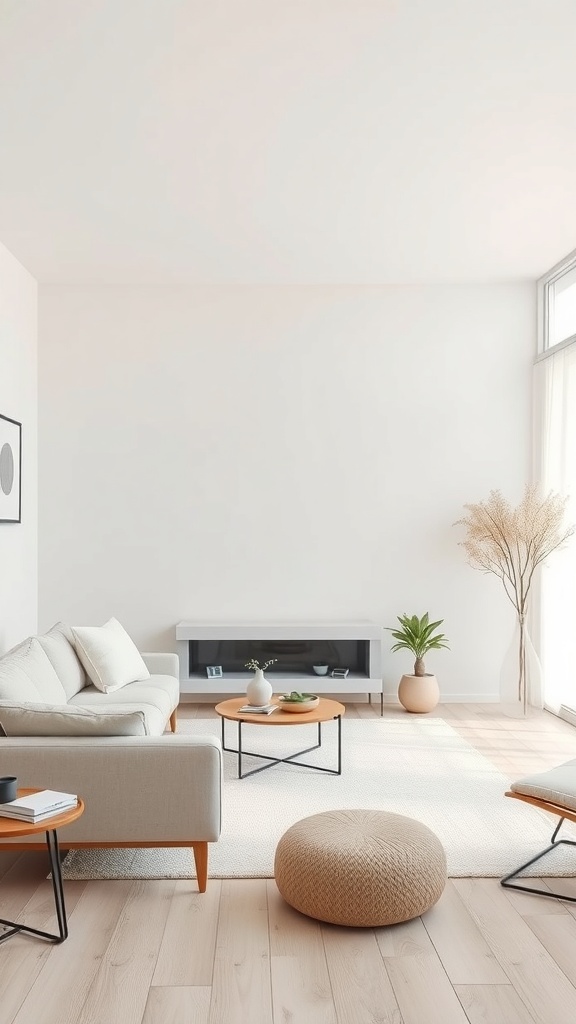
Neutral palettes are basically the cheat code for making a minimalist living room feel calm. The soft whites and light wood tones in this space keep everything feeling open, like the room can actually breathe.
I also like that the furniture stays simple but not boring. The light sofa feels clean and easy, while the wood tables add warmth so it does not feel sterile. That round pouf is smart too because it gives you extra seating without adding visual noise.
If you ever worry neutrals will feel flat, texture is the fix. Think woven baskets, linen curtains, a chunky throw, or one interesting ceramic piece on the table. Small details stand out more in a neutral room, so you do not need many of them.
The best part is how flexible it is. You can switch out pillows, art, or even one vase season to season and the whole room still feels pulled together without you having to redo everything.
Incorporating Natural Light
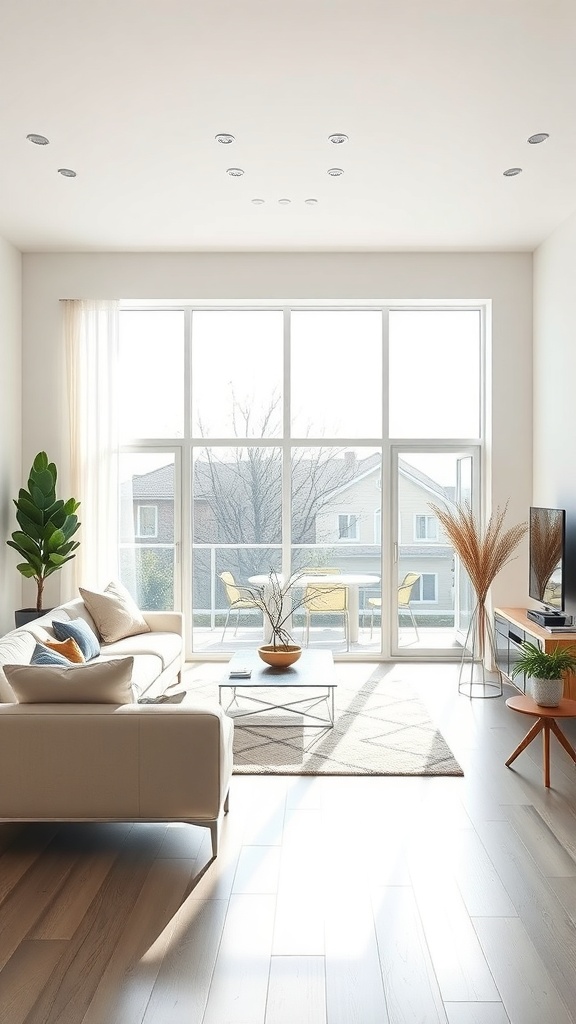
You know that feeling when sunlight hits your living room and suddenly everything looks nicer? This is that. Big windows do so much work in minimalist spaces because they make the room feel bigger without you buying a single extra thing.
The light bouncing off pale walls and wood floors keeps the whole space feeling fresh. I also like how the plants sit quietly in the background, like they are part of the architecture instead of just decor.
Sheer curtains are such a good middle ground. You get privacy, but you still keep that soft daylight. If you want it to feel even more airy, keep the window area uncluttered and avoid heavy furniture that blocks the view or shadows the floor.
Textured Fabrics for Warmth
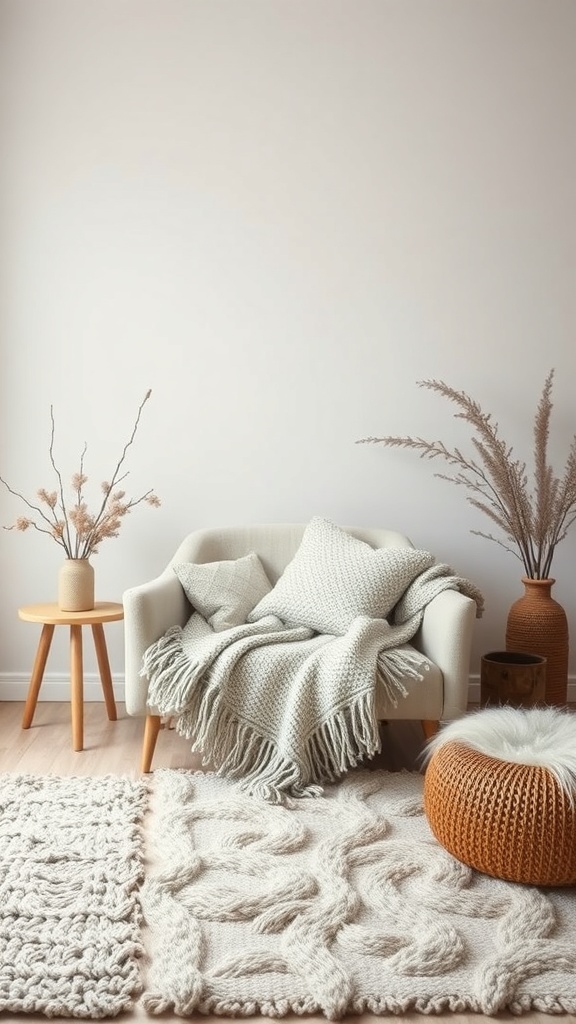
This is the kind of minimalist room that still feels like you can curl up and actually live in it. The knitted blanket is doing a lot here, not just for comfort but for that soft, cozy look that keeps minimalism from feeling too sharp.
The rug adds that grounded feeling, like the room has a little weight and warmth to it. I love when a rug has texture or subtle pattern because it adds interest without turning into the main character.
If your living room ever feels a little plain, layering fabrics is the easiest fix. One chunky throw, one textured pillow, and a rug with depth can make the space feel finished. Natural touches like dried florals or a woven pouf also help it feel relaxed instead of showroom clean.
Artful Minimalist Decor
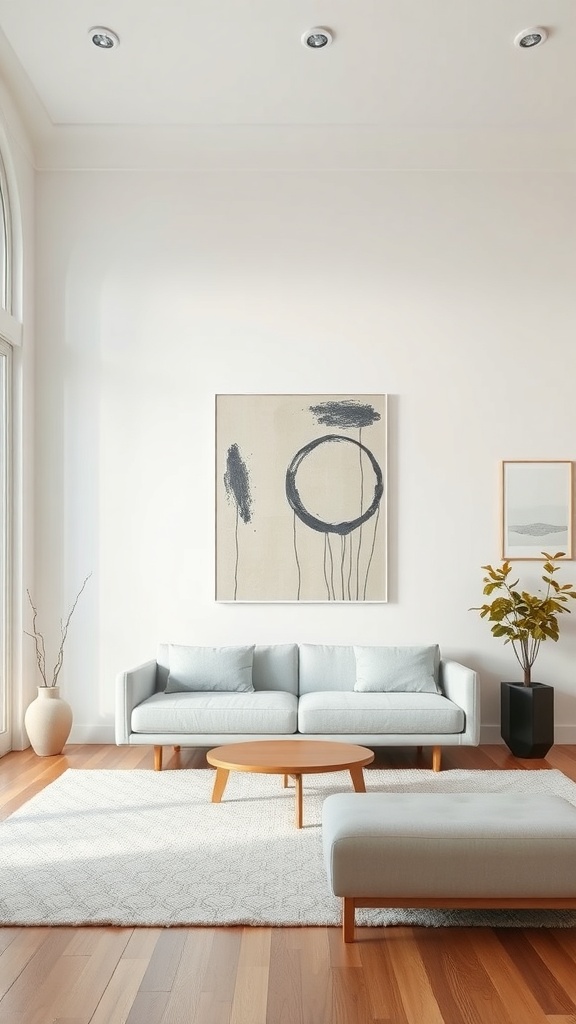
Minimalism gets way more interesting when the decor feels intentional instead of empty. The wall art here is a good example. It adds personality, but it is not competing with everything else in the room.
I like how the shapes and soft tones keep the mood calm, while still giving your eyes something to land on. It makes the space feel styled without feeling busy.
If you are picking art for a minimalist living room, go for something you can look at daily without getting tired of it. One larger piece often works better than lots of small frames. And if the room is mostly neutral, a bit of contrast in the art can make everything feel more layered.
The plant in the corner is doing its own quiet job too. Greenery balances out all the neutrals and makes the room feel more human.
Functional Furniture Choices
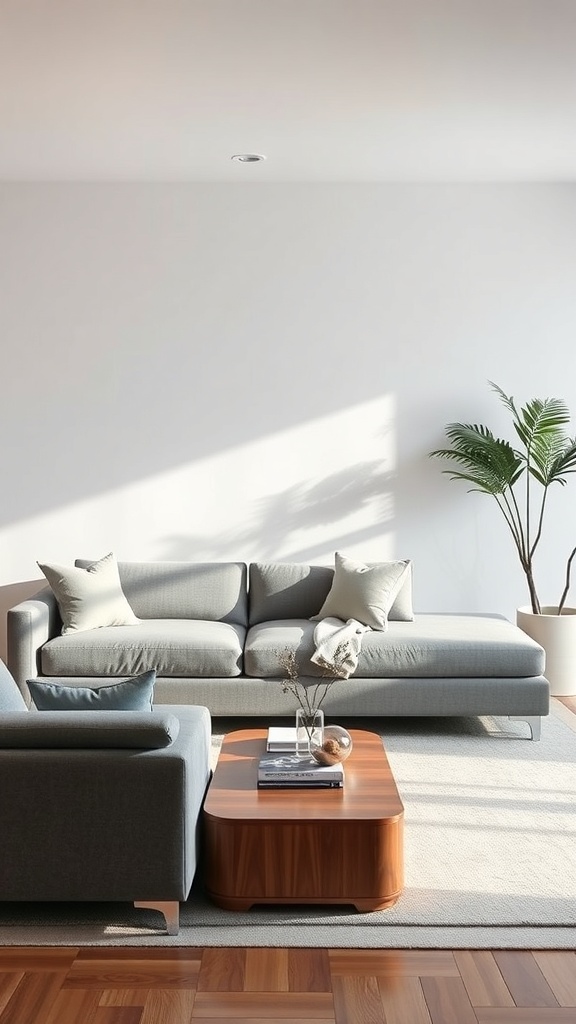
Minimalist furniture has to earn its keep. This room gets it right because every piece feels useful, but the layout still feels relaxed and easy to move through.
The sofa is simple, but it looks comfortable, like you can actually sink into it. The neutral color keeps it visually quiet, and the cushions add softness without making it look bulky.
That coffee table is such a good choice because it brings warmth and shape without feeling heavy. In minimalist rooms, I usually aim for one standout furniture detail, like a table with interesting legs or a unique finish, and keep everything else clean.
Plants help too, especially when the furniture is neutral. Even one pot in the corner makes the room feel fresher and more balanced.
Indoor Plants for Freshness
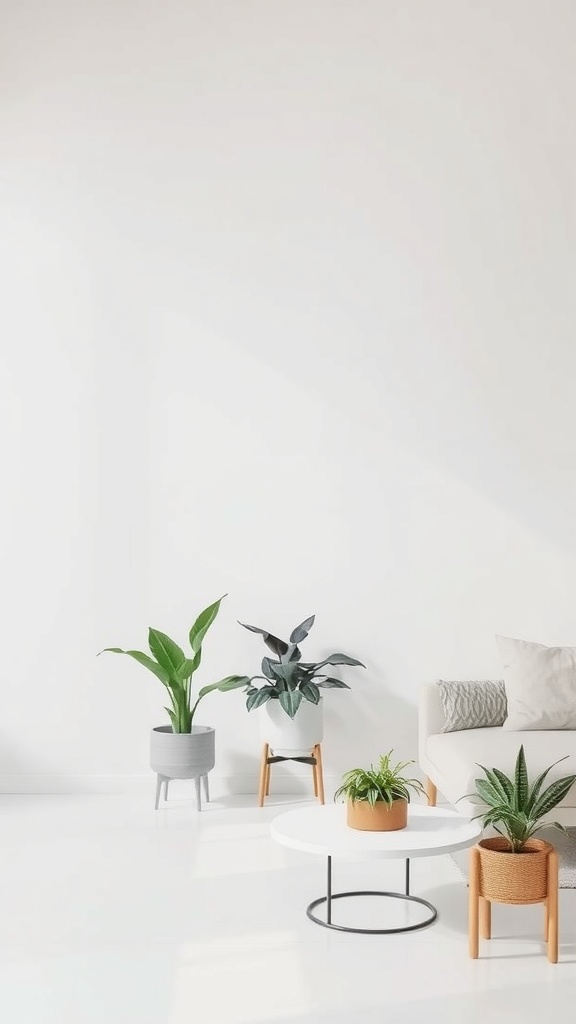
If a minimalist room ever feels too clean or too blank, plants fix that fast. They add life without adding clutter, and they make the space feel healthier too.
I like the mix here, one taller plant for height, then smaller greenery to soften the edges of the room. The pots matter more than people think. Simple, consistent planters help the room stay cohesive even if the plants are different.
If you want low maintenance, go for snake plants, pothos, or ZZ plants. They do not act dramatic if you forget them for a bit, and they still look good. Place one near a window, one near the seating area, and you will notice the whole room feels more relaxed.
The best part is you can keep it minimal. Two or three plants placed well usually looks cleaner than a bunch of tiny ones scattered around.
Open Floor Plan Integration
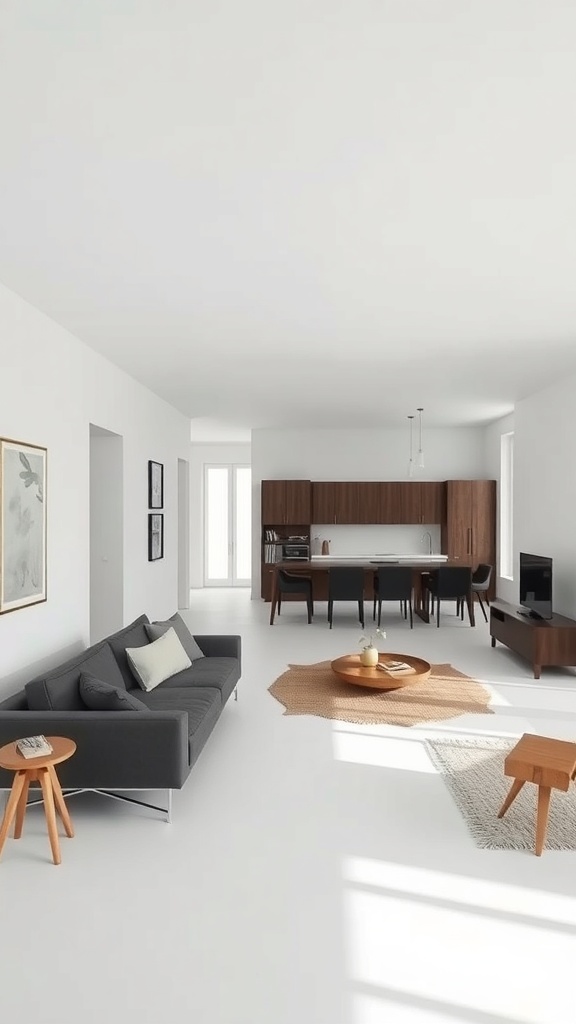
Open floor plans are made for minimalist design because they already give you that spacious feeling. This layout flows cleanly from the living room into the kitchen, so it feels connected without feeling crowded.
The trick is keeping the furniture shapes simple so your eye moves easily through the space. The sofa and tables here are clean lined, and the wood tones keep it warm instead of echoey.
One thing that helps in open layouts is repeating materials. If you have wood in the living room, echo it in the kitchen with stools or shelving. That repetition makes everything feel intentional, like it was planned as one space instead of separate rooms shoved together.
Minimalist decor works well here because it keeps the view clear. You can still host people, still live normally, but the room is not fighting for attention.
Decluttering for Serenity
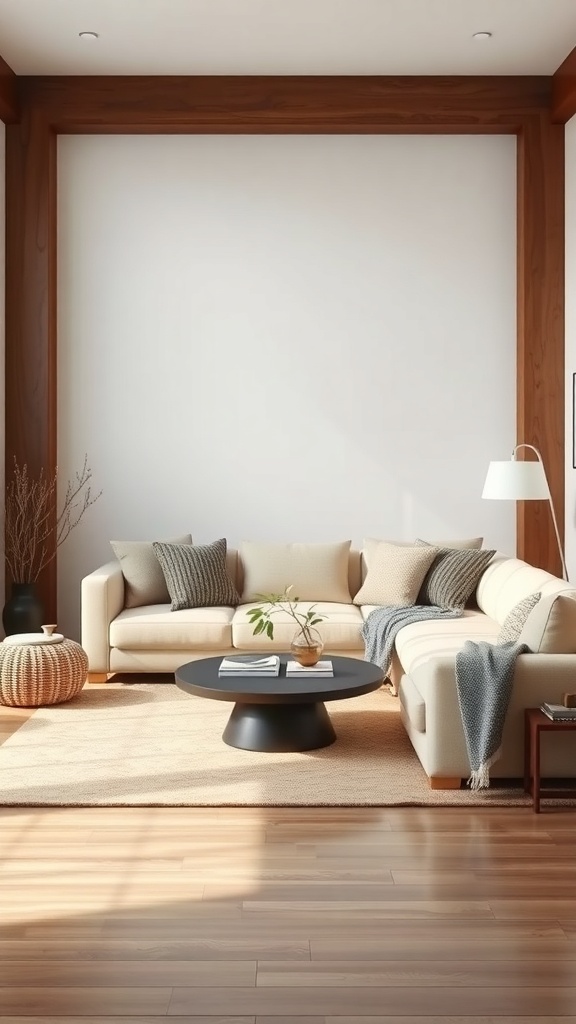
This room feels peaceful because nothing is competing for attention. Decluttering is not about having nothing, it is about having less to manage and more space to breathe.
The sectional looks cozy and practical, and it is not overloaded with accessories. Just a few pillows with texture, enough to feel comfortable, not enough to feel busy.
If you are trying to declutter your living room, start with surfaces. Clear the coffee table, then decide what actually belongs there. I usually keep one tray, one book, and one small object or plant. That is it. The room instantly feels calmer when surfaces are not collecting random stuff.
Sustainable Material Choices
Minimalist spaces tend to highlight materials more, which is why sustainable choices feel extra meaningful here. When you are not distracted by a lot of decor, the wood grain, fabric texture, and overall quality stand out.
I love seeing natural wood pieces like this because they bring warmth and age well. If you can, look for solid wood or responsibly sourced options. Even thrifted pieces fit minimalist style nicely when the shapes are simple.
Textiles matter too. Organic cotton, linen, or recycled fabrics keep the space soft without feeling heavy. Add a plant or two and you get that fresh, healthy atmosphere that makes the room feel good to be in, not just nice to look at.
Minimalist Window Treatments
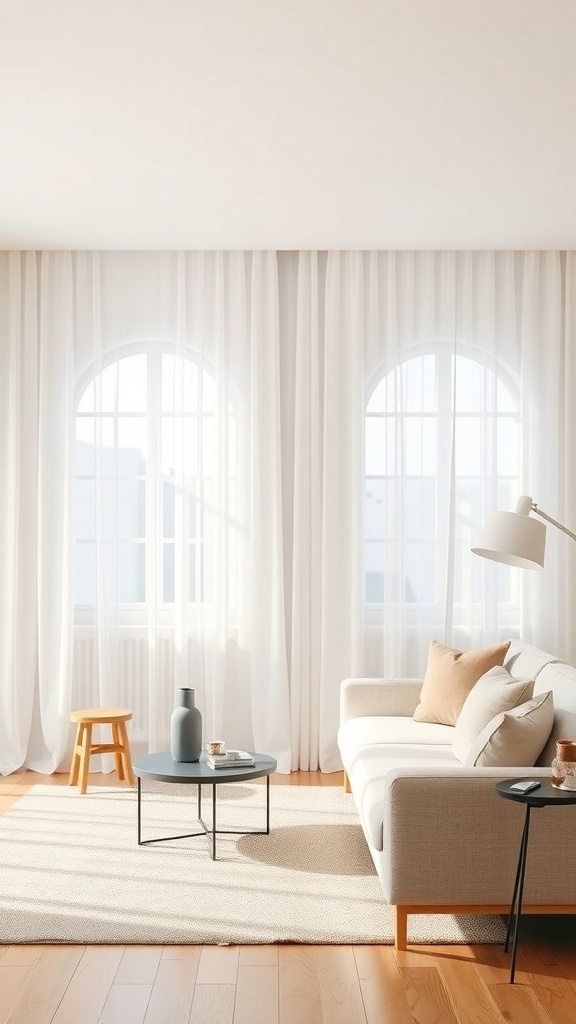
Window treatments can quietly make or break a minimalist living room. These sheer curtains keep everything soft while still letting in light, which is exactly what you want in a clean, airy space.
I like how the fabric frames the window without pulling attention away from the room. It feels calm, not dramatic. And because the curtains are light in color, they blend into the walls and keep the room visually open.
If you want your living room to look taller, hang curtains a little higher than the window frame and let them fall closer to the floor. It is a small trick, but it changes the whole feel of the room without adding anything extra.
Strategic Lighting Solutions
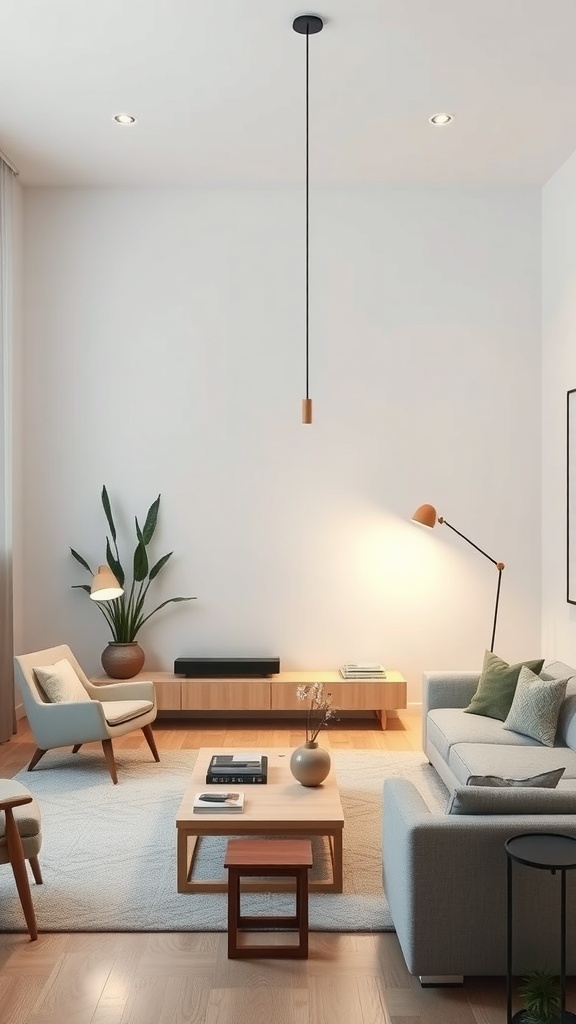
Lighting is what keeps minimalist spaces from feeling flat. This room feels balanced because it uses different sources instead of relying on one harsh overhead light.
The pendant light gives structure and a focal point, while the floor lamp adds that softer glow for evenings. Recessed lights keep the ceiling clean and bright without drawing attention to themselves.
A good approach is layering. Use overhead lighting for general brightness, then add one warm lamp near the sofa for cozy nights. If you want the room to feel calmer, aim for softer lighting in the corners so the space feels gentle instead of spotlighted.
Natural light from the windows ties it all together. Daytime feels airy, nighttime still feels warm.
Maximizing Vertical Space
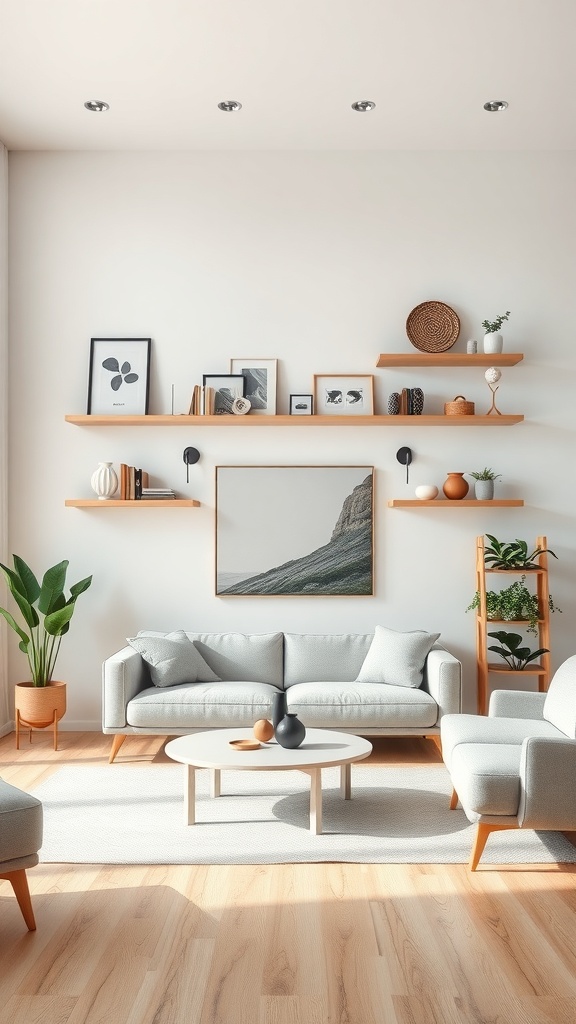
When you want a minimalist room to feel organized, vertical space is your friend. Wall shelves keep the floor clear, and that alone makes a room feel less crowded.
I like how these shelves keep the decor up high, so the room feels taller. The light wood against white walls also helps everything feel airy instead of heavy.
Keep shelf styling simple. A small stack of books, one piece of pottery, and one plant is usually enough. Leaving some empty space is part of the look, and it helps the room feel intentional instead of overfilled.
Creating Zones in Small Spaces
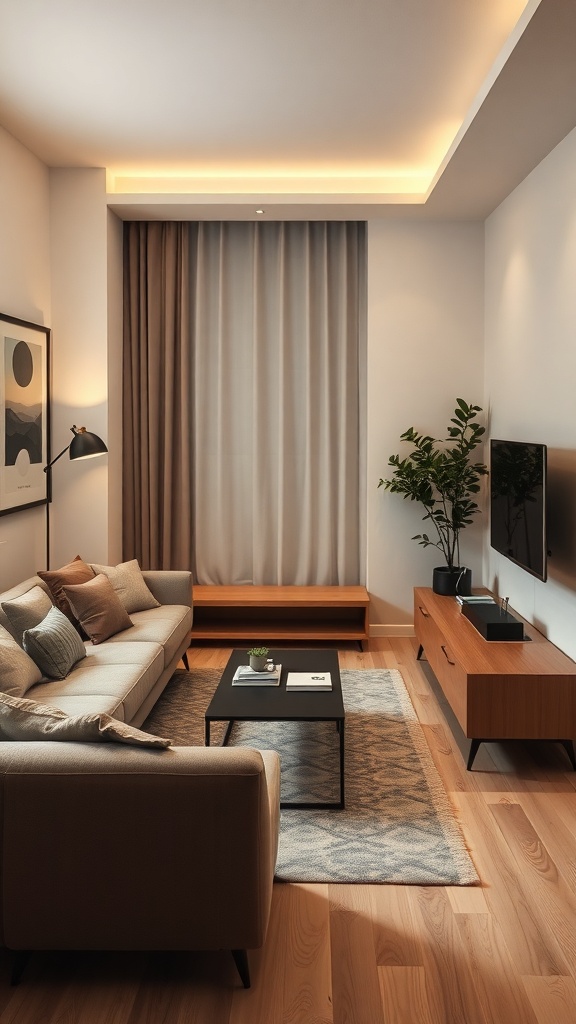
Small minimalist living rooms feel better when the layout is clear. Creating zones helps your brain relax because the room feels organized, not random.
The sofa and coffee table define the main seating area, and the rug underneath acts like a visual boundary. It is subtle, but it tells your eye where the living room starts and ends.
Soft lighting helps separate zones too. A lamp near the seating area makes it feel like its own little corner, even if the room is small. And that plant adds just enough life so the space does not feel too plain.
Another small trick is drawing the eye upward. Curtains, wall art, and taller elements make the room feel taller, which can help small spaces feel less tight.
Personalized Minimalism
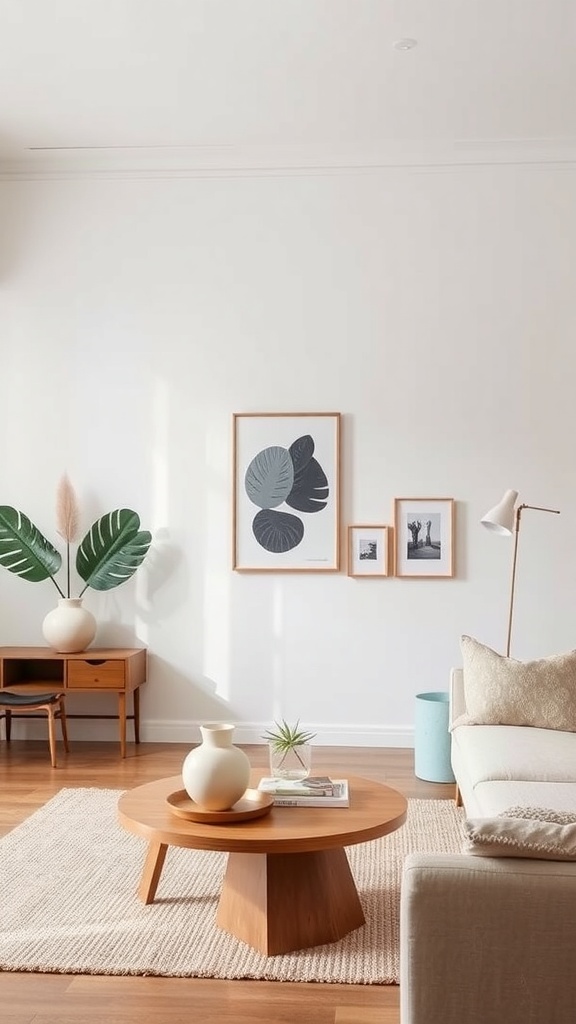
This is the kind of minimalism I like most, clean but still personal. It does not feel empty, it feels edited.
The big leafy plant adds freshness, and the wall art adds personality without clutter. It feels like someone chose what they love and skipped the rest.
The coffee table is simple, but it has warmth and texture, which matters in a neutral room. The rug and cushions bring softness, so the space feels comfortable instead of strict.
If you want personalized minimalism, keep items that mean something. One photo, one art piece, one object from a trip, and give it space to stand out instead of stacking it with other things.
Cohesive Design Elements
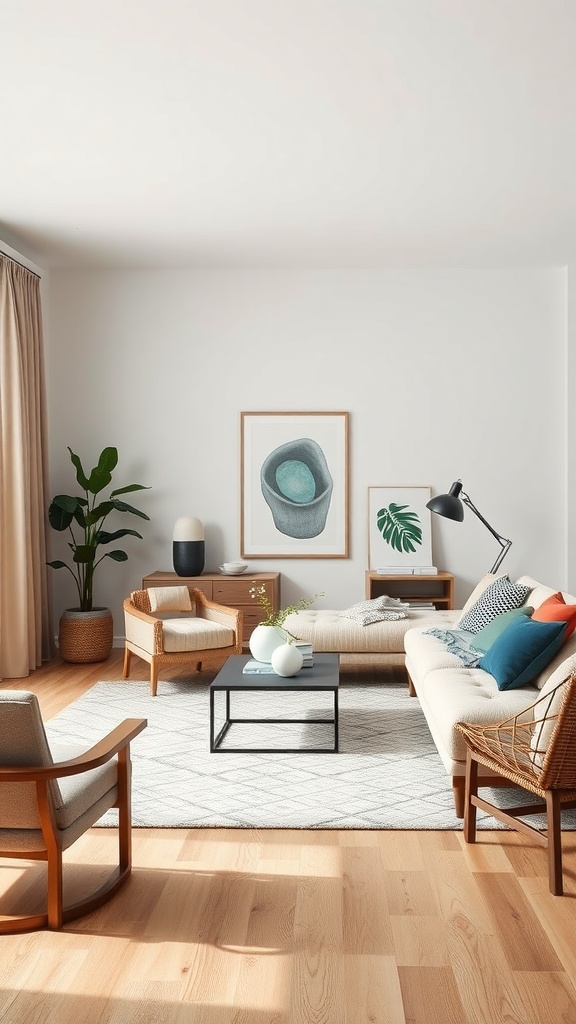
This room feels cohesive because everything speaks the same quiet design language. Light wood floors, neutral walls, and soft seating all work together instead of competing.
I like how the rug defines the seating area and adds texture without overpowering the room. The sofa looks inviting, and the accent chairs add warmth through natural materials. It feels balanced, not staged.
The art is subtle but intentional, and the colors in the cushions echo it just enough to make the room feel pulled together. Plants add freshness, and that touch of green keeps the neutrals from feeling flat.
Lighting finishes the look. A floor lamp gives practical light and a little style, while still keeping the overall vibe clean and calm. When everything repeats tones and materials like this, the room feels easy to maintain and easy to live in.