Struggling With a Sloped Yard? These Steep Hill Landscaping Ideas Actually Work

This post contains affiliate links, and we will be compensated if you buy after clicking on our links. Read our disclaimer.
Read our editorial process
Struggling to figure out what to do with a steep hill in your yard? These landscaping ideas show how even challenging slopes can be turned into beautiful, functional outdoor spaces.
Steep hills are often seen as problem areas in a landscape, especially when erosion, drainage, or uneven ground comes into play. Many homeowners leave them untouched because they feel difficult or expensive to manage.
With the right approach, a sloped yard can become one of the most visually striking features of your outdoor space. Thoughtful landscaping can improve stability, create usable areas, and add depth and character to your garden.
From terraced plantings to retaining walls, ground covers, and creative pathways, there are many ways to work with the natural slope instead of fighting against it.
Here are 17 steep hill landscaping ideas that transform slopes into stunning outdoor spaces and help you make the most of every inch of your yard.
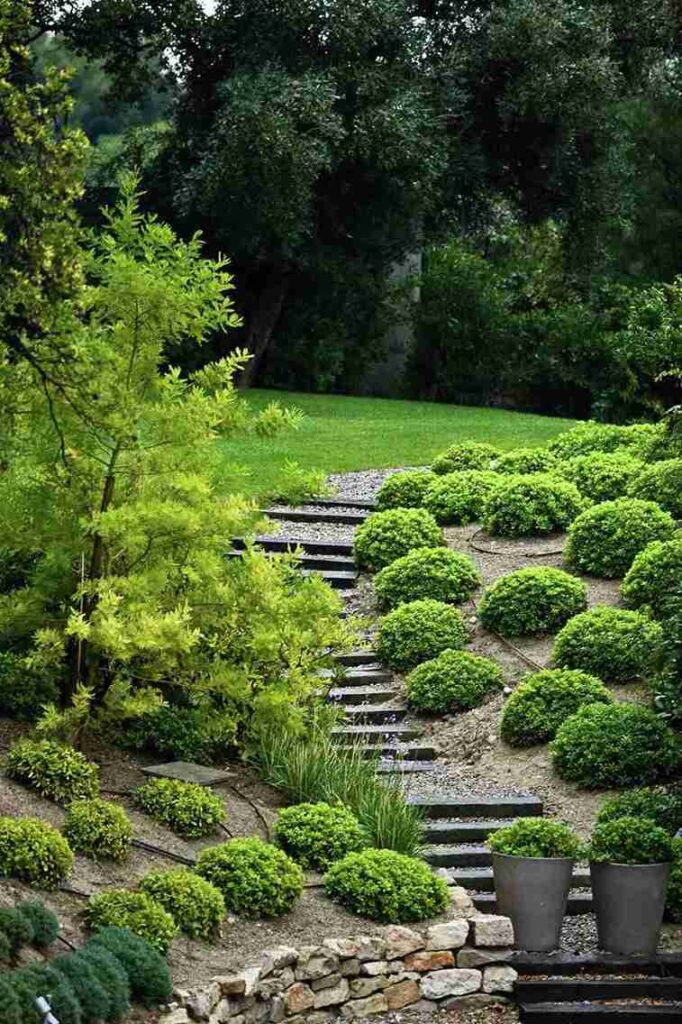
1. Terraced Garden Beds
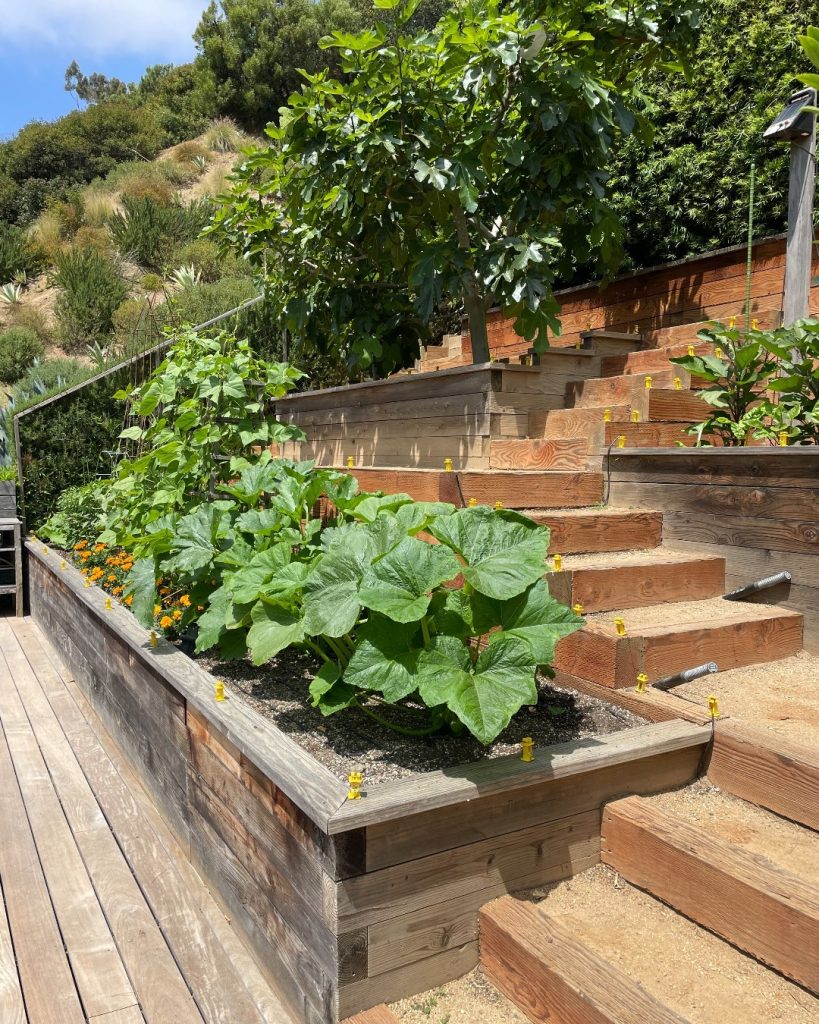
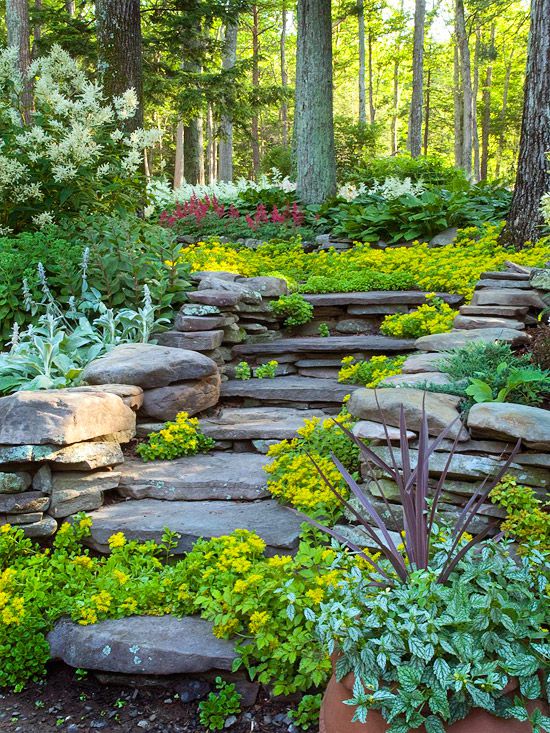
Terracing breaks a steep slope into a series of flat, usable levels. Each level is held in place by a short retaining wall made from stone, timber, or concrete block.
This reduces erosion, controls runoff, and gives you dedicated zones for flowers, shrubs, herbs, or vegetables. Each tier can serve a different purpose depending on sun exposure and soil depth.
Retaining wall costs range from $35 to $65 per square foot installed, according to HomeGuide. Stone walls sit at the higher end of that range. Concrete block and timber stay lower.
Keep individual walls under four feet tall to avoid engineering requirements and permit fees. Taller walls need structural drawings, which add $500 to $2,000 to your project.
2. Sloped Rock Garden
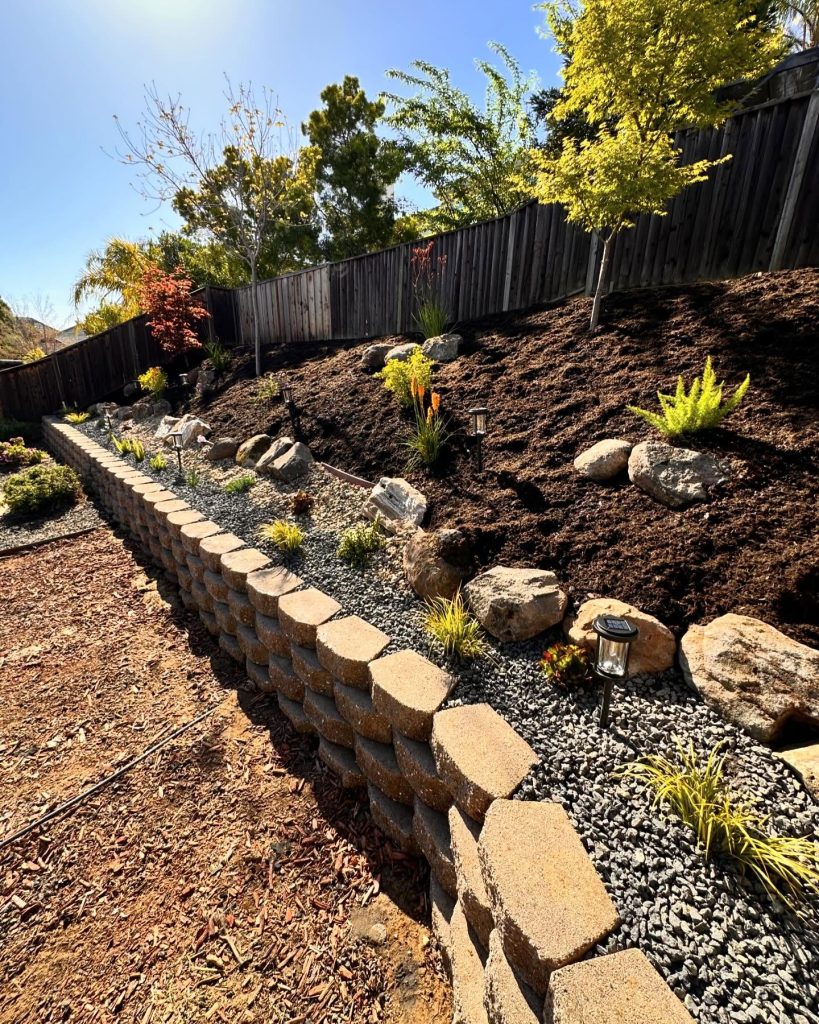
A rock garden works with your slope rather than flattening it. Large boulders anchor the design while smaller stones fill the gaps between them.
Drought-tolerant plants like lavender, sedum, and ornamental grass tuck into the pockets between rocks. These plants thrive in poor, fast-draining soil that most slope areas naturally have.
This is one of the lowest-maintenance options for a steep hill. No mowing. No irrigation system needed once plants establish.
Choose plants rated for your USDA hardiness zone to cut down on replacements. Add a narrow gravel path through the center, and it becomes a space you actually use, not just look at.
3. Hillside Waterfall Feature
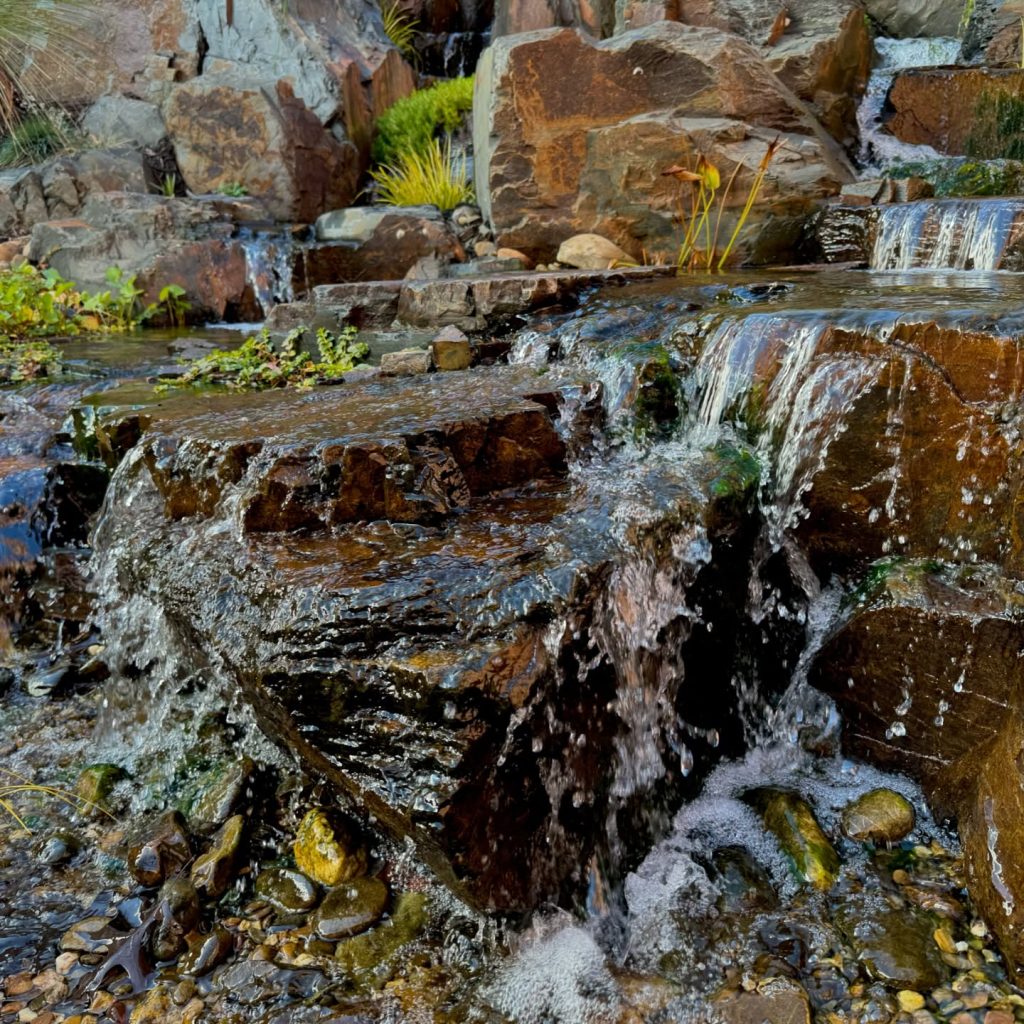
Moving water and a natural slope are a strong combination. A recirculating stream uses the grade of your hill to create a realistic flow without complex engineering.
Water moves from a reservoir at the top down through rocks and small pools before collecting in a basin at the bottom. The slope does most of the structural work for you.
Work with a licensed landscaper for any water feature over 50 gallons to ensure proper pump sizing and drainage. Position the feature where it is visible from your main seating area.
Native ferns, hostas, and river iris planted around the edges soften the look. They also reduce erosion on the surrounding slope and lower long-term maintenance.
4. Tiered Retaining Walls with Seating
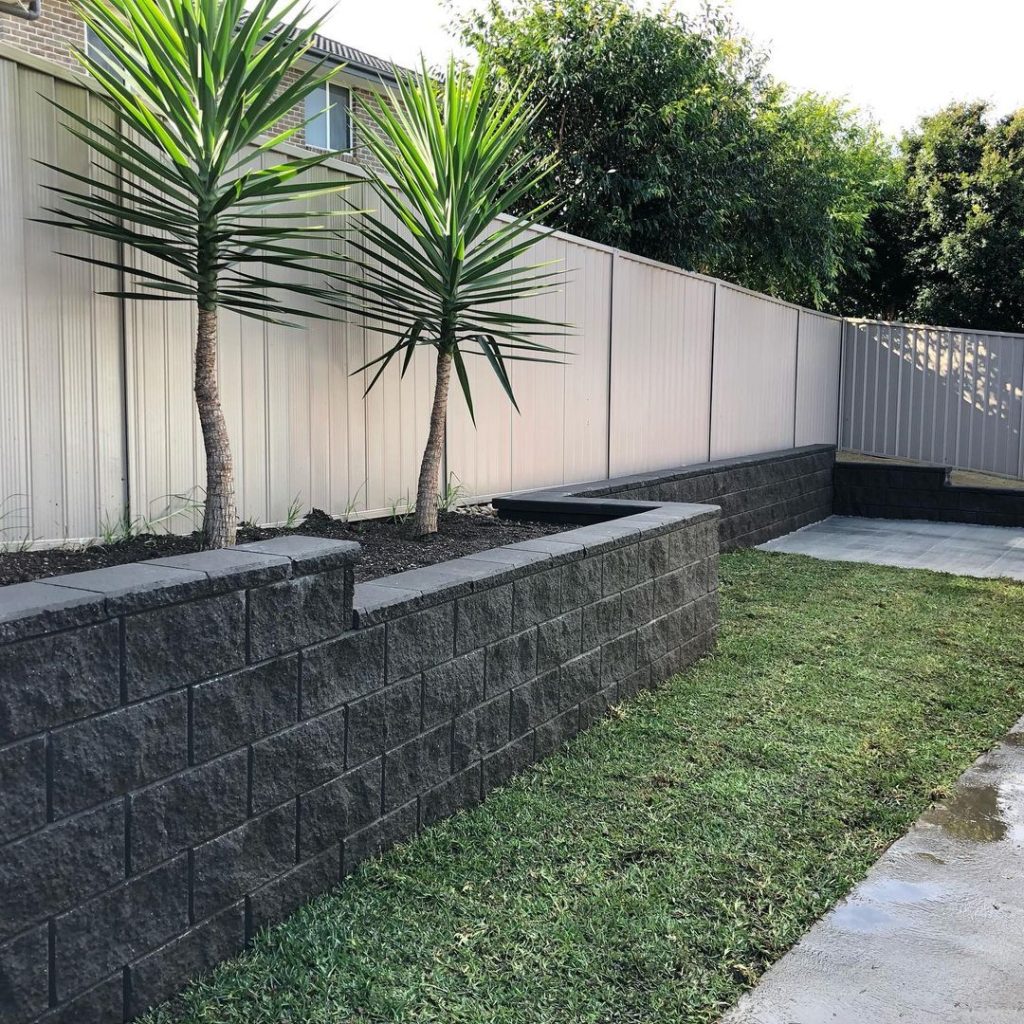
Retaining walls do not have to be purely functional. Build them in staggered tiers, and the flat tops become natural bench surfaces.
Use flagstone or smooth concrete caps on top of each wall, and you have seating that costs nothing extra to add. The wall does double duty without any additional construction.
Each tier also creates a planting zone for low shrubs, grasses, or seasonal color. Hire a licensed hardscape contractor and get at least three quotes before committing.
Labor makes up 40 to 60 percent of your total retaining wall budget, according to HomeGuide. Ask your contractor about drainage before work starts. Poor drainage behind a wall causes bowing and cracking within a few years.
5. Outdoor Stairs with Integrated Planters
Steps across a steep slope need to serve two jobs at once. First, they give safe access across grade changes.
Second, they can double as a visual feature when designed well. Use natural stone, poured concrete, or wide timber risers with planters set into each landing.
Flank each step with creeping thyme, compact lavender, or trailing vines that spill over the edges. Good lighting along the risers adds safety at night and turns the stairs into a focal point after dark.
Keep step risers between six and seven inches high and treads at least 12 inches deep. That proportion gives a comfortable footing on a slope for people of all ages.
6. Natural Hillside Meadow
A native meadow is the most cost-effective approach for large slopes. Seed the area with native grasses and wildflowers suited to your region.
Native plants have root systems adapted to local soil and rainfall. They hold slopes more effectively than turfgrass and require no supplemental watering once established.
Native plantings also support local pollinators, including bees, butterflies, and birds. Mow once a year in late winter to reset the meadow and remove dead material.
For slopes over 30 feet wide, this approach saves significantly on labor and maintenance compared to terracing. Contact your local county extension office for a free list of native species recommended for your specific region.
7. Elevated Deck or Platform
An elevated deck built into a hillside creates a usable flat space where none existed before. It sits above the slope and gives you views that ground-level patios cannot offer.
Use pressure-treated lumber, composite decking, or hardwood depending on your budget and climate. All three handle outdoor conditions well with proper installation.
A well-built elevated deck adds livable square footage to your home without any excavation or grading. Furnish it simply with a dining set or lounge chairs to let the elevation do the work.
Add a pergola above the deck for shade during warmer months. String lights below the pergola extend the space into evenings and make it feel finished from the yard below.
8. Slope-Side Fire Pit Lounge
Carve a level platform into the lower section of your slope and build a fire pit lounge around it. The hill behind the seating area acts as a natural windbreak.
This makes an elevated hillside fire pit warmer and more protected than one placed on open flat ground. The surrounding slope also creates a sense of enclosure that feels intentional.
Build low stone benches directly into the hillside around the pit for a permanent, low-maintenance seating setup. Add a gravel or decomposed granite surface underfoot to keep the area clean and stable.
Keep all combustible materials at least 10 feet from the fire pit opening per standard fire safety guidelines. That includes wood decking, outdoor furniture, and mulch beds.
9. Cascading Plant Beds
Cascading beds follow the natural descent of your hill rather than fighting it. Plants are arranged in layered heights that guide the eye downward across the slope.
Use a mix of evergreen shrubs at the back, mid-height perennials in the center, and low ground cover at the front of each bed. This creates depth and holds soil at multiple levels simultaneously.
Edge each bed with metal or natural stone borders to define the shape and prevent soil from washing onto paths. Add simple drip irrigation along the upper edge of each bed to water efficiently without runoff.
This approach works especially well on slopes between 10 and 25 percent grade. Steeper slopes may need retaining walls between bed levels to keep soil stable during heavy rain.
10. Spiral Path with Sculptural Features
Walking straight down a steep hill can feel awkward and rushed. A winding path slows the movement and turns the slope into something people actually want to explore.
Flagstone, gravel, or concrete pavers work well because they create stable footing while following the natural shape of the land. Large boulders, ceramic planters, or a small water basin placed along the curves add visual interest and help guide the eye through the landscape.
Plant low growing perennials on both sides to soften hard edges and blend the path into its surroundings. The result feels less like a steep hillside and more like a garden journey.
11. Multi-Level Outdoor Living Spaces
One advantage of a hillside is the ability to create separate outdoor zones without building walls or dividers. The elevation change naturally defines each space.
An upper terrace can hold a dining area while lower sections become a lounge, fire pit, or garden retreat. Each level feels connected but still has its own purpose and atmosphere.
Wide steps, stone walkways, and soft lighting make transitions feel smooth and safe. This layered approach also adds privacy since every platform enjoys a slightly different view.
12. Hillside Vegetable Garden with Raised Beds
Many gardeners overlook slopes, but they can be surprisingly productive when planned correctly. Raised beds help organize the hillside and make planting much easier.
Positioning beds across the contour of the slope encourages good drainage while keeping soil from washing away. Cedar and galvanized steel frames both provide long-lasting structures for growing vegetables.
Mulched or gravel pathways between rows create stable access and reduce erosion. The finished garden feels neat, efficient, and far easier to maintain throughout the season.
13. Sloped Zen Garden Retreat
A Zen garden turns a difficult slope into a deliberate, peaceful space. The core elements are gravel or decomposed granite beds, carefully placed natural stones, and a clear sense of order.
Small pockets leveled into the slope hold the raked gravel areas. You do not need fully flat ground to make this work.
Add stepping stones made from thick natural slate or large concrete pavers cut to a consistent size. Plant moss, low ferns, or bamboo in the beds between stone features to add living texture without high maintenance.
Keep color minimal and avoid mixing too many plant species. The focus is texture, form, and stillness rather than variety or seasonal color.
14. Hillside Play Area for Kids
Children often see a hillside as a place for adventure rather than a landscaping challenge. That natural elevation can become part of the fun.
Slides built into the slope feel more connected to the landscape and often require less structure than traditional playground equipment. Platforms and climbing features add even more play opportunities.
Using impact-absorbing materials beneath activity areas improves safety, while durable ground covers help protect the surrounding soil. The result is an active space that makes full use of the terrain.
15. Dry Creek Bed for Drainage and Style
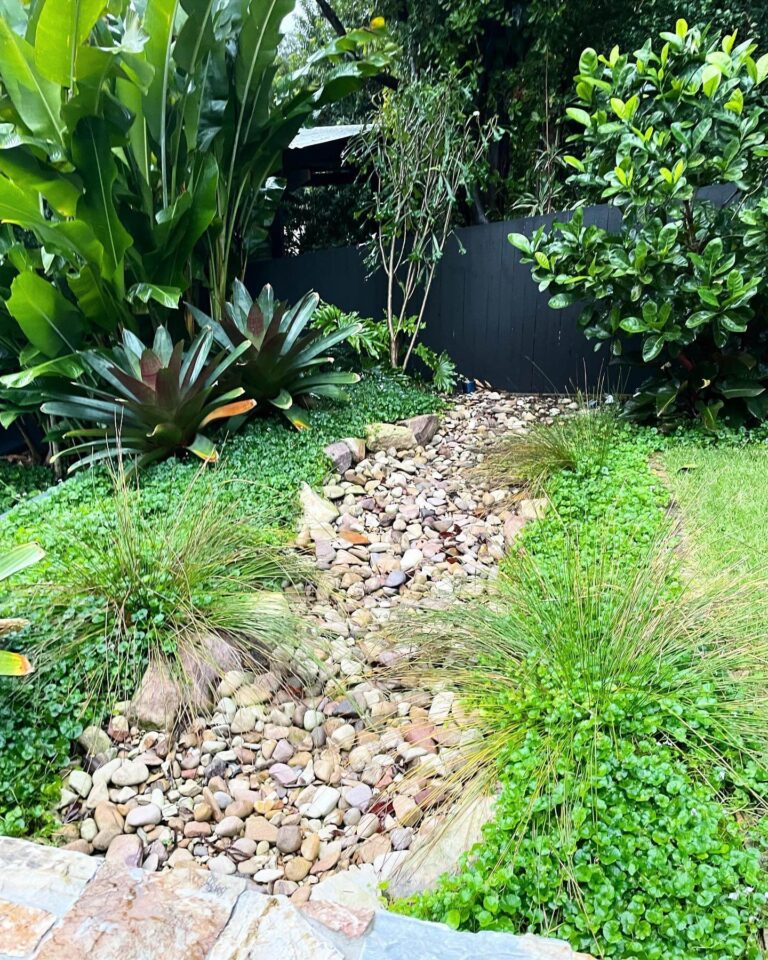
Managing water runoff is one of the biggest concerns on a steep slope. A dry creek bed addresses that problem while adding a natural design feature.
The stone-lined channel directs rainwater safely downhill and helps reduce erosion during heavy storms. Larger rocks along the edges, combined with smaller stones in the center, create a realistic streambed appearance.
Even when dry, the feature introduces texture, movement, and contrast across the hillside. It serves a practical purpose while improving the overall look of the landscape.
16. Hillside Pergola Lounge
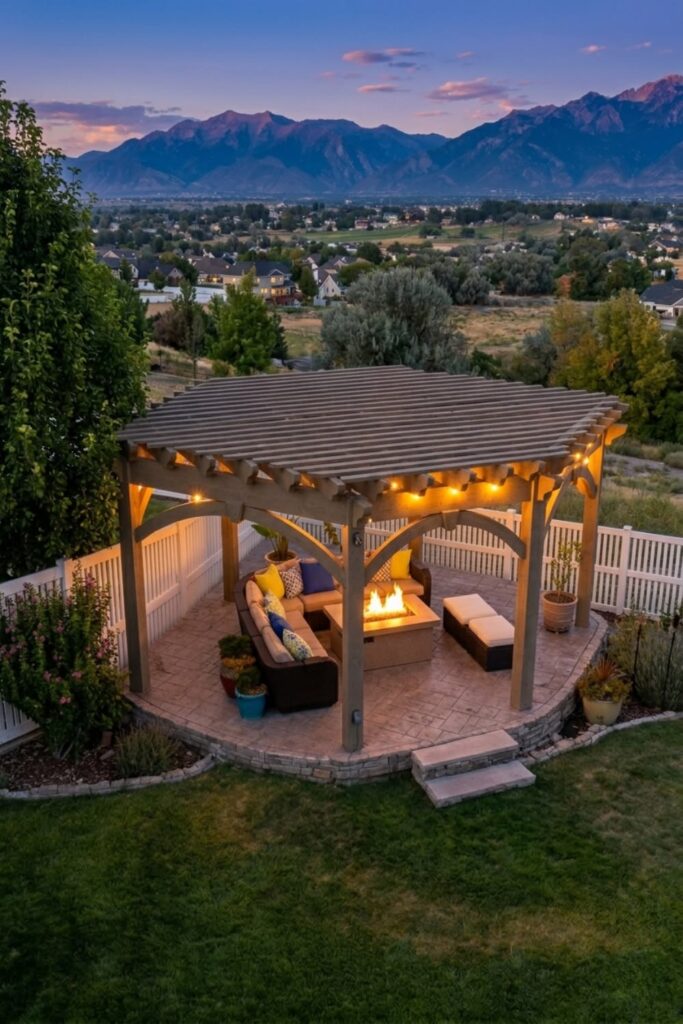
A pergola anchored into a leveled section of your slope creates a shaded destination that flat yards rarely offer. Choose cedar or powder-coated aluminum for the frame since both handle outdoor exposure well.
Set the pergola on a concrete pad poured into the hillside for a stable, level base. This keeps the structure secure even on a steep grade.
Train climbing plants up the posts over time. Wisteria, jasmine, and climbing roses all work well in warmer climates and soften the structure as they grow.
Add a ceiling fan and string lights to extend the usable season into evenings and early fall without any additional construction. Furnish the space simply so the view and the shade carry the design.
17. Sculptural Garden Steps and Lighting
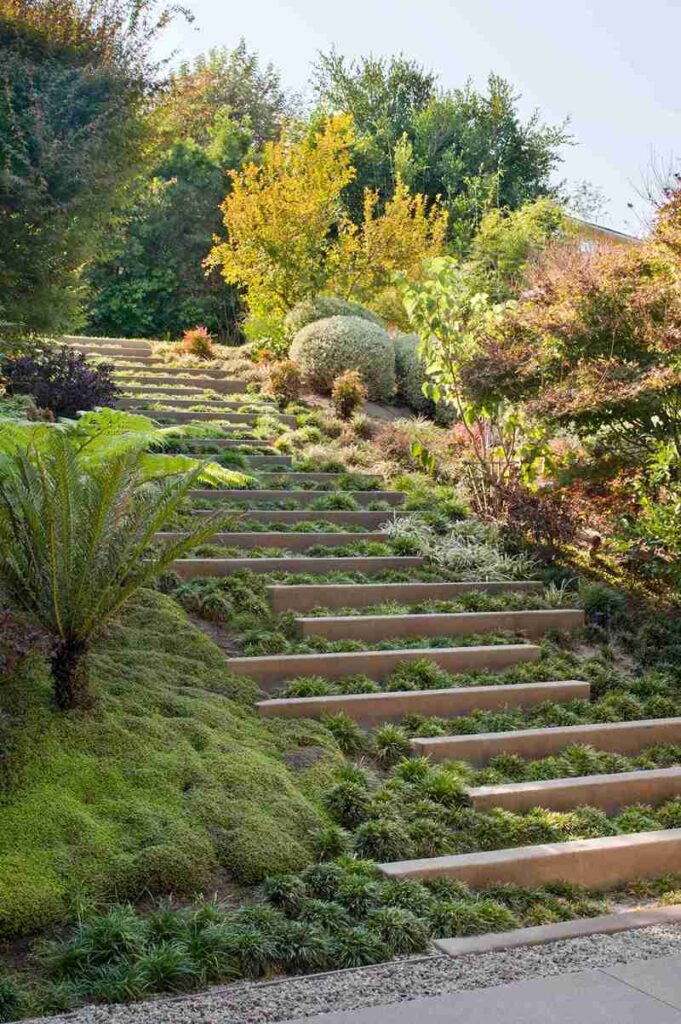
Steps across a hill become a design feature when you treat them that way from the start. Use curved stone, wide timber, or poured concrete shaped to follow the natural contour of the slope.
Avoid straight runs of uniform steps on a curved hillside. They fight the natural line of the land and always look out of place.
Integrate low-voltage LED lighting under each riser or along the side rails for safety and visual impact after dark. Metal planters, topiaries, or clean-lined sculptures placed along the edges add depth to the stairway as a whole.
Keep the surrounding landscape minimal around the statement steps. A simple ground cover or gravel border keeps the focus on the shape and flow of the stairs themselves.
Frequently Asked Questions
What is the best ground cover for a steep slope?
Native grasses, creeping juniper, English ivy, and crown vetch all root deeply and stabilize steep slopes effectively. Choose species suited to your USDA hardiness zone. Avoid turfgrass on slopes steeper than 25 percent. It erodes more easily and requires mowing at an unsafe angle.
Do I need a permit to build a retaining wall on a slope?
Most cities require a permit for retaining walls taller than three to four feet. Walls over four feet also require engineering drawings. Permit fees typically run $50 to $450, depending on your location. Check with your local building department before any work starts.
How do I stop erosion on a steep hill?
Plant dense ground cover with deep root systems. Add a dry creek bed to channel runoff safely. Build retaining walls to hold soil in place. Apply a thick layer of mulch to bare soil between plants. All four methods used together give the strongest erosion protection.
How much does it cost to terrace a sloped yard?
Expect to pay $35 to $65 per square foot for professional retaining wall installation, according to HomeGuide. A small terraced area with two or three short walls typically runs $3,000 to $8,000 total. Larger or more complex projects cost significantly more, depending on materials and site access.
Can I landscape a steep hill without a retaining wall?
Yes. Native meadows, rock gardens, and deep-rooted ground cover plants all stabilize slopes without structural walls. These options cost less and require less labor. They work best on slopes under 30 to 40 percent grade. Steeper slopes generally need some form of structural support.
Conclusion
A steep hill is not a problem to solve. It is a design opportunity most flat yards never get.
The best approach starts with your slope angle, drainage pattern, and budget. Pick one or two ideas from this list that match those three factors.
Build in stages if needed. A terraced bed today can become a full multi-level outdoor space over time.
Start with the feature that solves your biggest current problem. Everything else builds from there.
Solve Challenging Yard Designs
• Backyard Layout Ideas
• Pea Gravel Patio Ideas
• Front Porch Step Ideas
• Star Jasmine Trellis Ideas