How To Use Space Between Kitchen Cabinets And Ceiling? Maximizing Vertical Storage In Your Kitchen

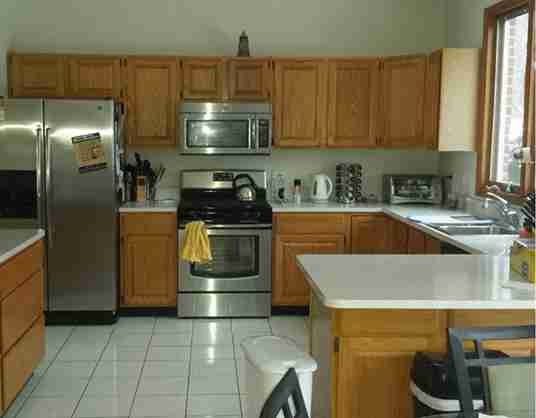
I used to pretend that gap above my kitchen cabinets didn’t exist.
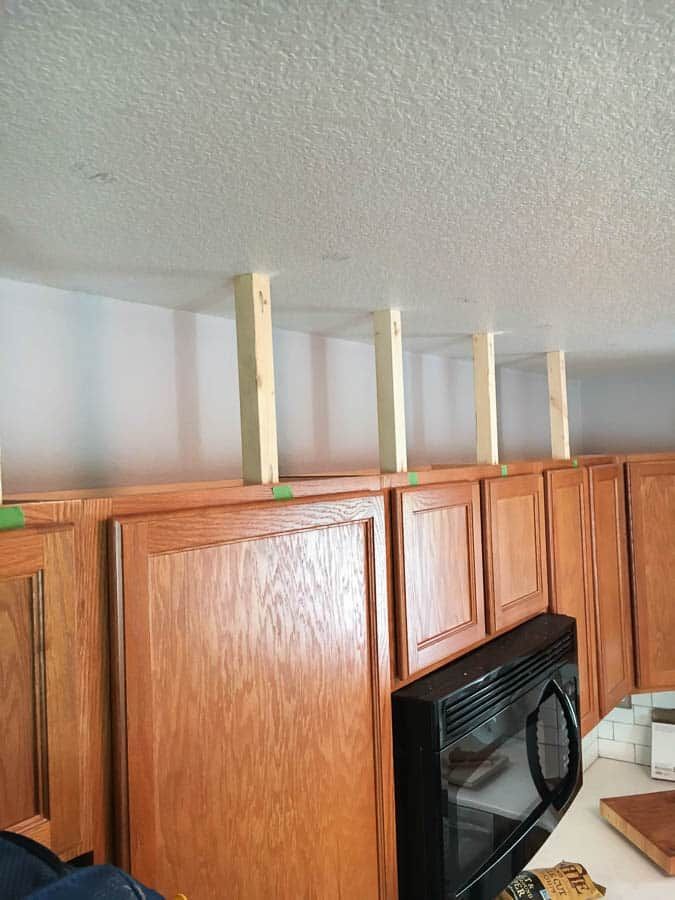
You know the one. That awkward strip of space where nothing seems to belong. Not tall enough to feel dramatic. Not short enough to ignore. Just sitting there collecting dust and passive judgment.
For almost two years, I left it empty. Then one weekend while deep-cleaning (and slightly annoyed at my lack of storage), I grabbed a stool, looked up properly, and realized I was wasting vertical real estate.
If you’re wondering how to use the space between kitchen cabinets and ceiling without making your kitchen look cluttered or outdated, here’s what actually works, what doesn’t, and what I learned the hard way.
First: Measure the Gap Like You Mean It
Before buying anything, measure carefully. Height matters more than you think.
In my kitchen, the gap was just under 13 inches. That ruled out tall decor but opened the door for slim storage bins.
Here’s a quick breakdown to guide you:
| Gap Height | Best Approach |
|---|---|
| Under 6 inches | Add crown molding or leave clean |
| 6–10 inches | Slim decor pieces or shallow baskets |
| 10–16 inches | Lidded bins, stackable trays, cookbook storage |
| 16+ inches | Floating shelves or styled display |
Also pay attention to ceiling height. If you have 8-foot ceilings, heavy decor up there can feel cramped. If you have taller ceilings, you have more freedom to style.
Option 1: Use Matching Storage Baskets (Most Practical)
This was the first solution I tried, and honestly, it solved more problems than I expected.
I bought matching woven baskets and used them for:
- Extra paper towels
- Backup pantry items
- Seasonal bakeware
- Serving platters I only use on holidays
The key is uniformity. When everything matches, it looks intentional. When it doesn’t, it looks like overflow storage.
Here’s what works best:
| Basket Type | Look | Maintenance |
|---|---|---|
| Woven natural fiber | Warm and cozy | Dust occasionally |
| Matte black wire | Modern and minimal | Easy wipe-down |
| Lidded canvas bins | Clean and hidden | Best for clutter control |
Pro tip from experience: choose baskets with lids if you hate dust.
Option 2: Install Shallow Floating Shelves
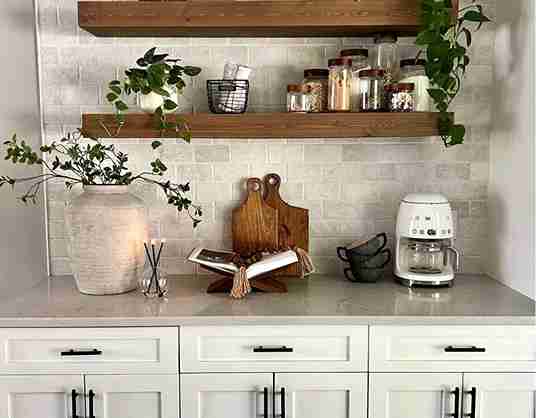
If your gap is taller and you want it to feel designed, not accidental, adding slim floating shelves changes everything.
I helped a friend install two 8-inch deep shelves above her cabinets. We styled them with:
- Neutral ceramic bowls
- A few cookbooks stacked horizontally
- One trailing pothos plant
- A wooden cutting board leaned vertically
It instantly looked custom and layered.
But this option only works if:
- You’re okay with light dusting
- You commit to minimal styling
- Your kitchen doesn’t already feel visually busy
Floating shelves up high require restraint. Too many items and it starts looking chaotic.
Option 3: Create a Styled Decorative Moment
Let me say this clearly: random small decor does not work up there.
I tried it once. It looked like a clearance aisle exploded above my cabinets.
Instead, think large-scale and cohesive.
Here are combinations that work:
| Kitchen Style | Above-Cabinet Styling |
|---|---|
| Modern | 2–3 oversized matte vases |
| Farmhouse | Matching woven baskets + wooden trays |
| Minimal | Leave empty or add subtle molding |
| Transitional | Large ceramic bowls + framed art leaned back |
Group items in odd numbers. Keep the color palette tight. Avoid tiny clutter.
The higher something sits, the bigger it needs to be.
Option 4: Extend Cabinets to the Ceiling
If you’re renovating or planning a remodel, this is the cleanest long-term solution.
Cabinets that go to the ceiling:
- Eliminate dust traps
- Add true storage
- Instantly look higher-end
Even adding crown molding to bridge the gap can visually close the space without replacing cabinetry.
When I toured newer builds, full-height cabinets always made kitchens feel more polished and intentional.
Option 5: Add Soft LED Lighting Above Cabinets
This one surprised me the most.
I added a warm LED strip above my cabinets, and suddenly that awkward gap felt architectural instead of forgotten.
The light:
- Makes ceilings feel taller
- Adds ambiance at night
- Highlights texture and decor
It’s subtle but powerful.
If your kitchen feels flat, lighting alone can shift the entire mood.
What Not To Do (From My Own Mistakes)
Here’s what made my early attempts look off:
- Mixing decor styles
- Overfilling the space
- Using small random objects
- Ignoring dust buildup
- Choosing items too short for the height
Above-cabinet space needs visual calm. If it feels busy from the floor, it will feel chaotic up close.
Storage vs. Style: Decide Your Goal First
Before you start filling the gap, ask yourself what you actually need.
| Your Need | Best Solution |
|---|---|
| More hidden storage | Lidded baskets |
| Visual interest | Floating shelves |
| Cleaner look | Crown molding |
| Cozy ambiance | LED lighting |
| Minimal maintenance | Leave it empty |
There’s no rule that says you must fill the space. Sometimes negative space feels cleaner.
My Final Take After Living With It
The space between kitchen cabinets and ceiling is either:
- A wasted opportunity
- A dust magnet
- Or a smart vertical storage solution
It depends entirely on how intentional you are.
For me, matching woven baskets were the sweet spot. They hid clutter, made the kitchen feel finished, and gave me back cabinet space below.
Sometimes the most overlooked areas are the ones that quietly solve your biggest storage problems.
If you’re standing in your kitchen right now staring at that gap, grab a stool and measure it. You might be sitting on more usable space than you think.