Do You Need a Rug Pad Under Your Bed?

When I first started layering rugs in bedrooms, I honestly thought a rug pad was optional. If the bed is heavy enough, won’t it just hold everything down? That was my logic.
But after seeing rugs slowly shift, edges curl up, and hardwood floors develop faint marks, I realized there is more to it. A rug pad under your bed is not always mandatory, but in many cases, it makes a noticeable difference in comfort, durability, and floor protection.
Whether you need one depends on your flooring, rug size, how much of the rug is exposed, and how your bedroom is used daily. Here is a practical breakdown to help you decide.
When You Might Not Need a Rug Pad
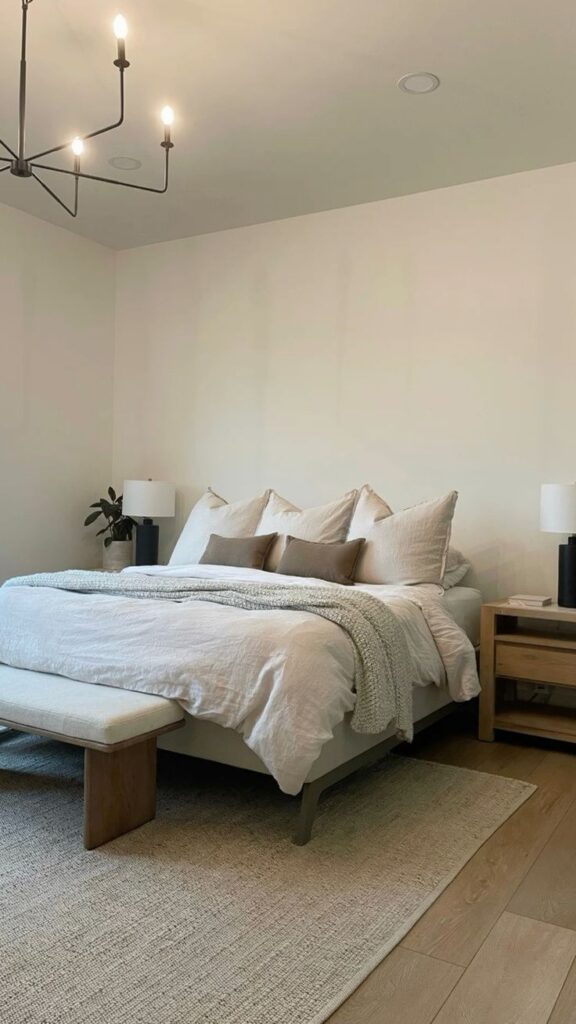
Let’s start with the simplest scenario. If your bed is large and covers most of the rug, that weight can anchor the center.
For example, a king bed sitting fully on a large 9×12 rug often prevents major shifting. If only a small border of rug is visible on the sides and foot, movement may be minimal.
In fully carpeted bedrooms, a decorative rug layered on top of wall-to-wall carpet usually has enough friction to stay in place. In that case, a pad may not be necessary unless you notice bunching.
Heavy wool rugs or thick hand-knotted rugs can also stay relatively stable without extra grip.
That said, stability is only one part of the decision.
When a Rug Pad Makes a Big Difference
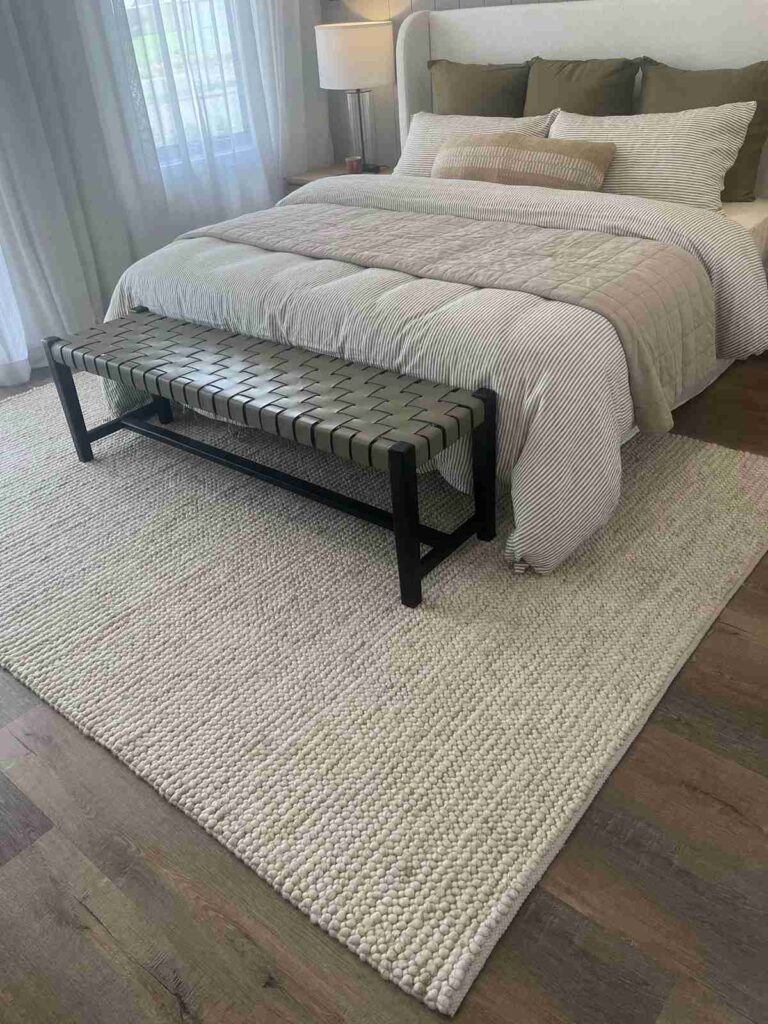
If you walk across exposed rug edges every day, especially at the foot of the bed, those areas can slowly creep forward or curl.
Making the bed, vacuuming, or shifting nightstands can also pull at the rug slightly. Over time, that movement adds up.
In hardwood, laminate, tile, or vinyl floor bedrooms, a rug pad provides friction that prevents sliding. It also protects the flooring surface from scratches caused by the rug backing.
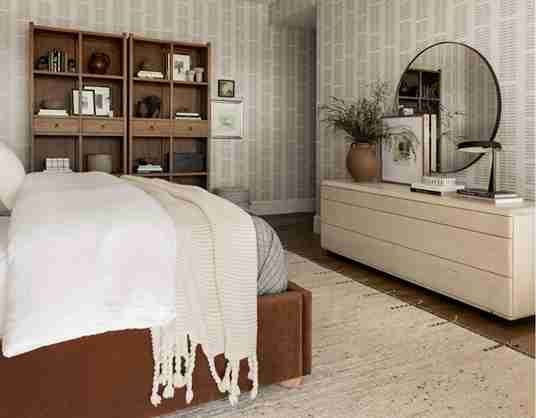
If your rug extends 18 to 24 inches around the bed, which designers often recommend for balance, those visible areas benefit from the extra stability.
Even if the bed anchors the middle, the outer edges still experience foot traffic.
What Exactly Does a Rug Pad Do?
A rug pad is a thin layer placed between the rug and the floor. It is usually made from felt, rubber, or a combination of both.
Its primary functions are:
- Preventing slipping and shifting
- Adding cushioning underfoot
- Protecting flooring from scratches or dye transfer
- Extending the life of the rug
On hard flooring, rubber creates grip. Felt adds density and support. A felt rubber blend is often the most balanced choice for bedrooms.
It is a small addition, but it affects how the rug feels and performs long-term.
Floor Protection Matters More Than You Think
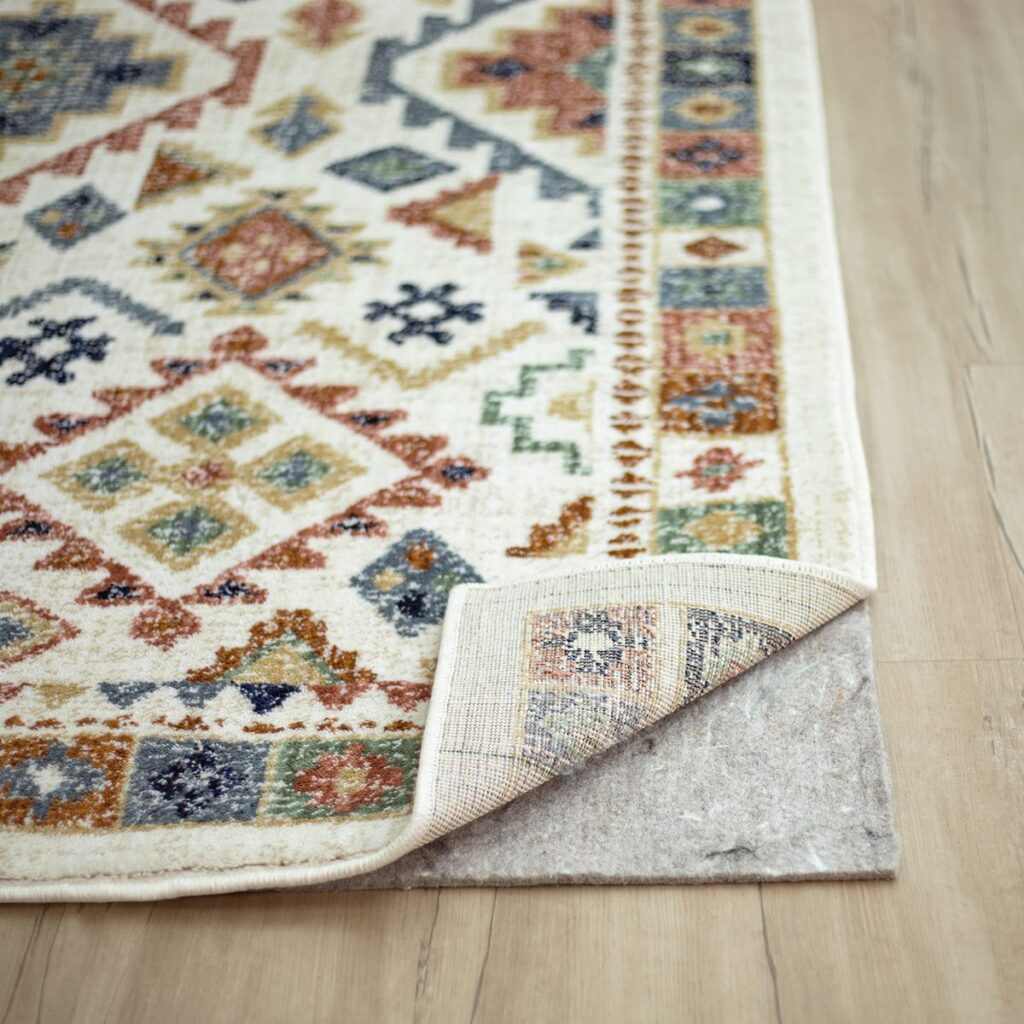
This is the part most people overlook.
Some rug backings can react with certain floor finishes over time. Rubber or synthetic materials may leave marks. Some rug dyes can transfer onto hardwood or lighter floors.
A quality rug pad acts as a buffer. It prevents direct contact between the rug backing and the floor surface.
If you are renting, this matters even more. Minor floor damage can affect your deposit. A rug pad is inexpensive compared to refinishing hardwood.
Under heavy beds, pressure can cause rug fibers to compress unevenly. A pad helps distribute that weight more evenly, reducing visible wear patterns.
Comfort and Cushioning
There is also a noticeable comfort upgrade.
When you step out of bed in the morning, that extra 1/4 inch of padding feels softer and warmer.
In colder climates, rug pads add insulation between your rug and the floor. Bedrooms often feel cozier with that subtle layer underneath.
They also reduce noise. If your bedroom is upstairs or in an apartment, a rug pad can help dampen footstep sounds.
For something you barely see, it makes a meaningful difference in daily use.
Choosing the Right Thickness
Under a bed, you do not usually need a very thick pad.
A thickness between 1/4 inch and 3/8 inch is typically enough. Thicker pads may interfere with door clearance or make furniture slightly uneven.
Since the bed already provides weight, grip is less important than support and floor protection.
Look for:
- Felt rubber blends
- Dense construction
- A pad cut about one inch smaller than the rug on all sides
The smaller size ensures the pad stays hidden and prevents edges from peeking out.
Eco-Friendly Options for Bedrooms
Bedrooms are spaces where you spend long hours. Indoor air quality matters.
Some low-quality pads contain PVC, latex, or adhesives that release odors or chemicals. For bedrooms, I prefer non-toxic options.
Look for:
- Natural rubber
- 100 percent felt made from recycled materials
- No adhesives
- Certifications for indoor air quality
These options may cost slightly more, but they are safer and typically last longer.
Rug Pads and Different Bed Types
Platform Beds
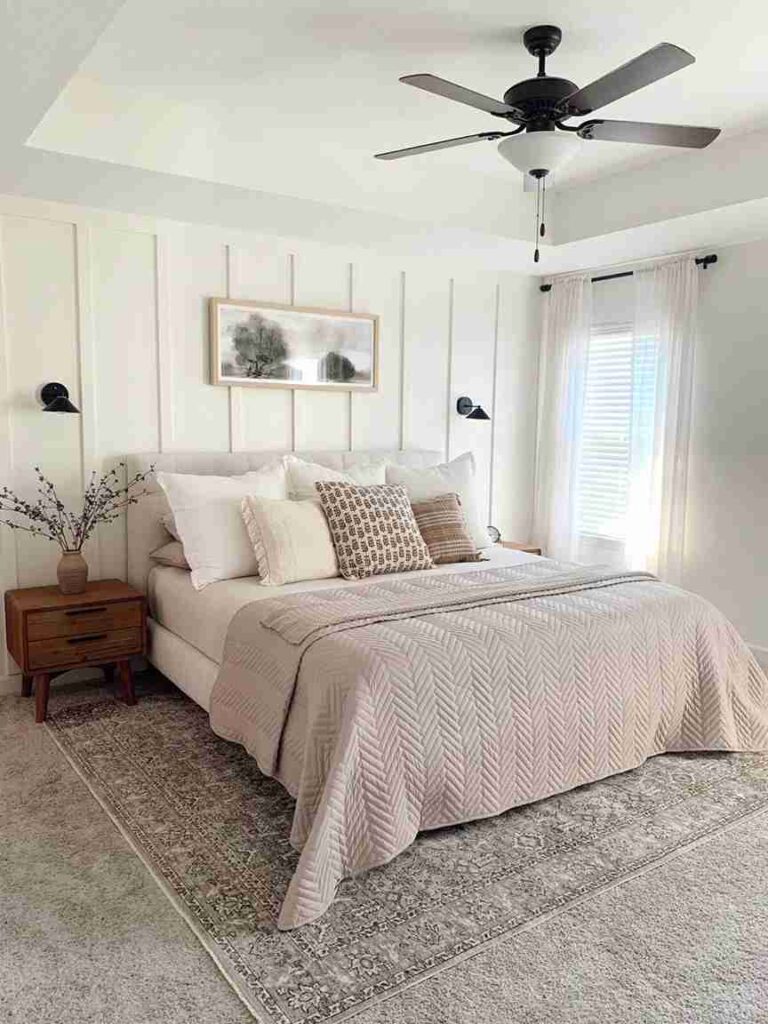
Platform beds are lower to the ground and often have storage drawers.
If you use a rug pad, make sure the thickness does not interfere with the drawer function. A thinner, dense pad works best here.
Because platform beds sit lower, visible rug edges are more noticeable. Stability becomes more important in those exposed areas.
Adjustable Beds
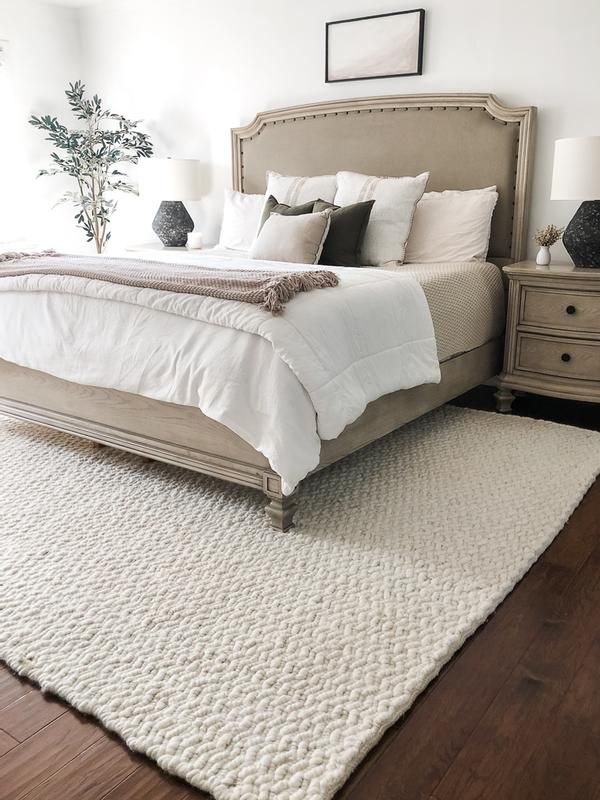
Adjustable beds move. When the frame shifts, it can slightly tug at the rug underneath.
A non-slip pad with moderate grip helps keep everything aligned. Thin profiles under 1/2 inch work best to avoid uneven movement.
Memory Foam Mattresses
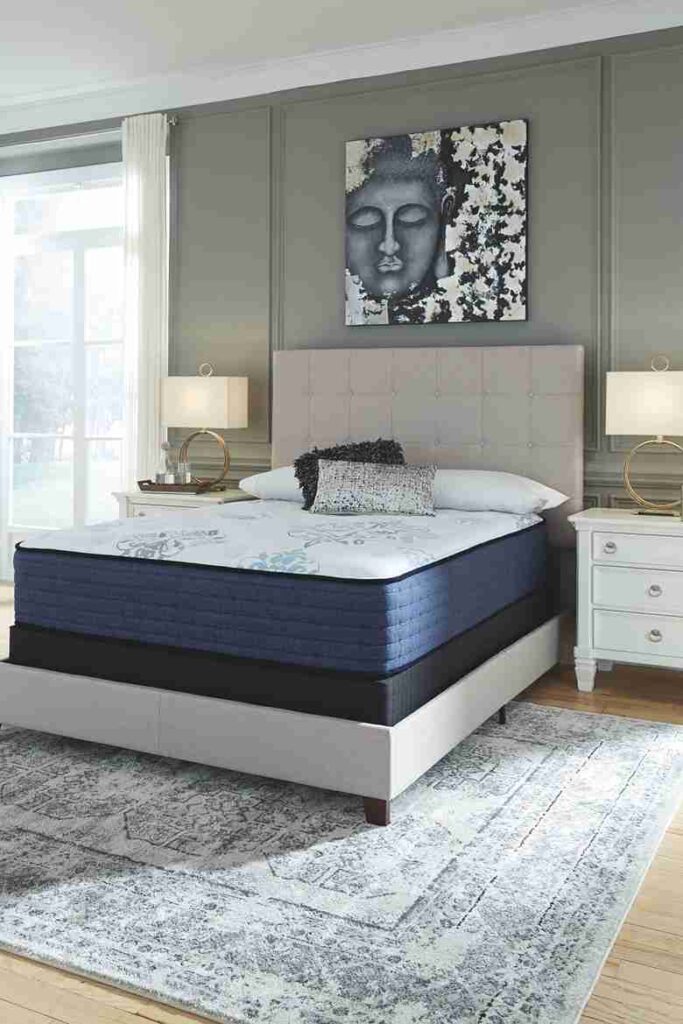
While the mattress itself does not directly interact with the rug pad, breathable materials are helpful in bedrooms with memory foam beds.
Natural felt allows better airflow and does not trap heat near the floor. Thin pads are usually sufficient.
Carpeted Bedrooms
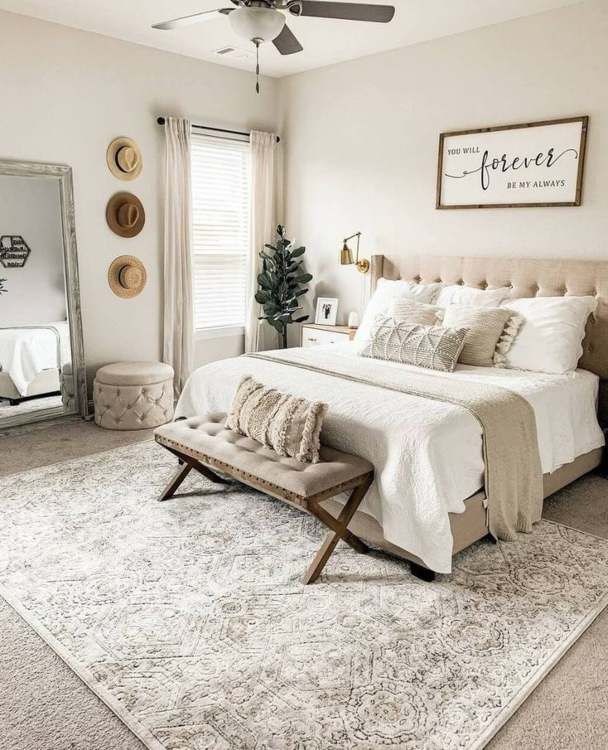
If your bedroom already has wall-to-wall carpet, the decision changes.
Carpet provides both cushioning and grip. In many cases, a decorative rug layered over carpet does not need a pad.
However, if the rug bunches or shifts slightly over time, a thin pad designed specifically for carpet-to-rug use can help.
Avoid thick plush rugs layered on plush carpet. That combination tends to create uneven surfaces.
Flat weave or low-pile rugs perform better in this situation.
Heavy Beds and Natural Anchoring
King and queen beds are heavy. In many setups, they anchor the center of the rug effectively.
If your rug sits entirely under the bed and nightstands, and only a minimal border is exposed, you might not notice movement.
But if the rug extends far beyond the bed at the foot or sides, those uncovered areas still benefit from stabilization.
I usually assess how much of the rug is walked on daily. If exposed areas see frequent traffic, I use a pad.
Maintenance and Routine Checks
Even if you install a rug pad, it is not completely set and forget.
Every six to twelve months, shift the bed slightly and check underneath.
Look for:
- Flattened areas
- Crumbling material
- Discoloration
- Moisture buildup
If the pad feels brittle or stiff, it may be time for replacement.
Rotating the rug occasionally can also distribute wear more evenly.
Small Bedroom Layout Considerations
In smaller bedrooms, full size rugs can overwhelm the space.
Instead of one large rug, runners placed on each side of the bed provide comfort without crowding. These usually do benefit from rug pads, since they are not anchored by furniture.
A smaller rug at the foot of the bed also requires a pad, as it is fully exposed and prone to slipping.
When space is tight, balance practicality with proportion.
King Size Bed Layout

With a king bed, a 9×12 rug is typically ideal. It allows about 24 to 36 inches of visible rug on each side and at the foot.
In this configuration, a rug pad is strongly recommended because significant portions of the rug are exposed.
If budget is a concern, placing the rug under only the lower two-thirds of the bed is an option. Even then, the exposed section at the foot benefits from a pad.
So, Do You Actually Need One?
Here is the honest answer: not always, but often yes.
You may not need a rug pad if:
- The bed covers nearly the entire rug
- The bedroom is fully carpeted
- The rug is very heavy and stable
You likely should use one if:
- The rug sits on hardwood, tile, laminate, or vinyl
- Large portions of the rug are exposed
- You want extra cushioning
- You want to protect your floors
- You want the rug to last longer
It is a small investment that supports both comfort and longevity.
In my experience, once I started using rug pads in bedrooms, I noticed fewer shifting edges, less wear, and better floor protection. It is not flashy or visible, but it improves the way the room functions over time.