Painting Bathroom Tile Floor: Easy Steps for a Fresh Look

Okay, be honest. Have you ever walked into your bathroom, looked down at that tired old tile, and thought, “Yeah… we need a change”? Same. I’ve had that moment where the floor just felt dated no matter how clean it was.
Here’s the good news: you don’t have to rip everything out or spend a wild amount of money to fix it. Painting your bathroom tile floor is actually doable. Like, regular-person-with-a-weekend doable. And when it’s done right? It completely shifts the vibe of the room.
I tried it myself after putting it off forever, and I’m not exaggerating when I say it made the whole bathroom feel newer. If you’re curious, slightly nervous, or already holding a paint swatch, let’s walk through it together.
First Things First: Is Tile Paint Actually Worth It?
Short answer? Yes — if you prep properly.
Painting tile isn’t some hack that falls apart in two weeks. It just needs patience. Bathrooms deal with water, steam, and constant foot traffic, so the secret is doing the boring prep work well.
If you rush it, you’ll regret it. If you take your time? You’ll be lowkey obsessed every time you walk in.
Step 1: Deep Clean Like You Mean It
I know. Cleaning isn’t the fun part. But this step makes or breaks everything.
Sweep up dust and random hair first. Then scrub the tiles with warm water and a strong degreasing cleaner. TSP works great, but even dish soap will do in a pinch.
Get into the grout lines. Around the toilet. Behind the door. That weird corner no one looks at.
If you’ve ever had shampoo spill and dry on the floor, that residue will mess with your paint. So rinse thoroughly and let it dry completely. Not “mostly dry.” Completely dry.
Step 2: Sand It (Don’t Skip This)
Tile is glossy. Paint hates glossy.
Grab 120–220 grit sandpaper and lightly scuff the entire surface. You’re not trying to destroy the tile — just dull it enough so the primer has something to grip.
When I did this, I thought it looked fine before sanding. Then I saw how much better the primer stuck after. Totally worth the extra 30–40 minutes.
Wipe up all the dust with a damp cloth and let it dry again.
Step 3: Tape and Protect Everything
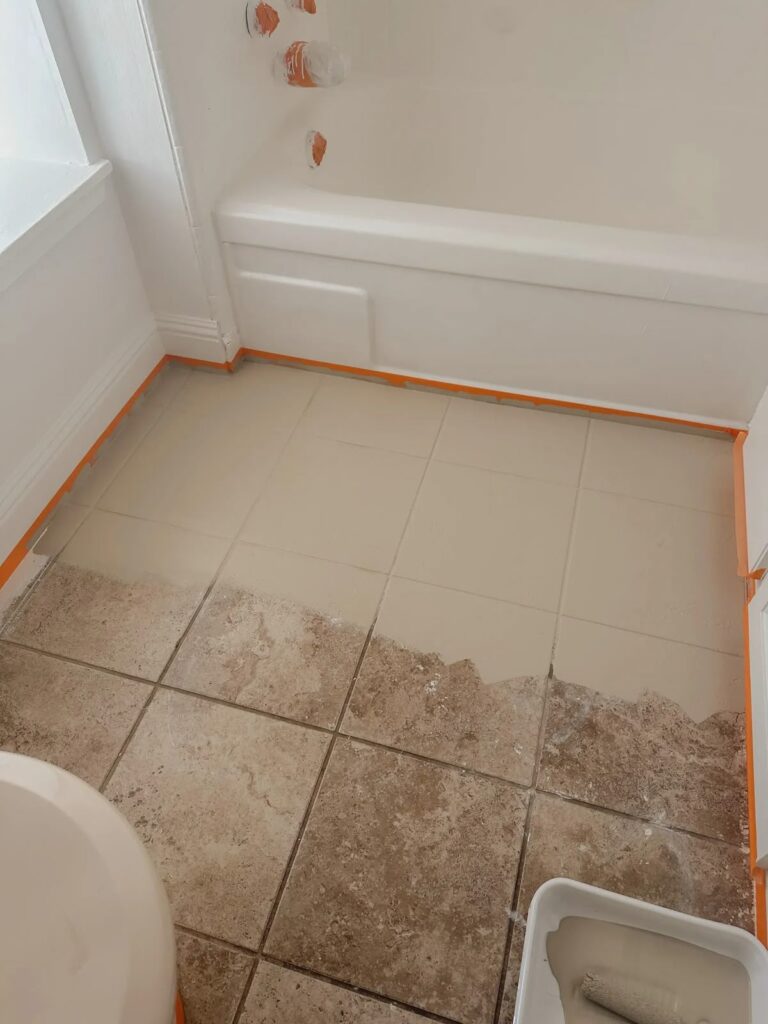
Before you open that paint can, tape off baseboards, the tub, vanity edges, and anything else you don’t want painted.
Lay down drop cloths. I once skipped this in a small corner and spent way too long scrubbing dried paint off trim. Learn from me.
Future-you will be grateful.
Step 4: Prime Like a Pro
This is not the place to wing it.
Use a bonding primer made specifically for tile or glossy surfaces. That’s what makes the paint actually stay put.
Use a small foam roller for the tile faces and a brush for grout lines and edges. Take your time.
Let it dry fully. Go grab coffee. Watch a show. Just don’t rush to the next step.
Step 5: Choosing Your Paint (Epoxy vs. Latex)
Here’s the real talk:
Epoxy Paint
Super durable. Water-resistant. Feels professional.
Downside? Strong smell and longer curing time.
If this is your main bathroom and gets heavy use, epoxy is a solid move.
Latex Floor Paint
Easier to apply. Dries faster. More color options.
Not quite as tough as epoxy, but still works well with a good primer and sealer.
If you love switching things up every few years, latex is less intimidating.
And please — do not use wall paint. I’ve seen it peel. It’s not cute.
Step 6: Apply the Base Coat
Start at the farthest corner and work toward the exit. You do not want to trap yourself in the bathroom. Ask me how I know.
Roll evenly. Don’t overload your roller. Light, smooth passes look way better than thick globs.
Let the first coat dry fully before adding the second. Most paints need at least 6–8 hours between coats.
Patience here = smooth finish later.
Step 7: Want a Pattern? Go For It.
This is where it gets fun.
If you’re into stencils or subtle patterns, wait until the base coat dries completely. Tape your stencil down securely and use a nearly dry roller so paint doesn’t bleed underneath.
I’ve seen simple geometric designs totally change the personality of a small bathroom. Even just painting the grout lines a contrasting shade can look surprisingly good.
Try it on a lazy weekend when you’re feeling creative.
Step 8: Seal It
Bathrooms equal water. Water equals trouble if you skip sealing.
After the final coat dries, apply a clear polyurethane sealer made for floors. Two to three thin coats usually does the trick.
If you’re worried about slipping, look for a non-slip version. Nobody wants to slide across the bathroom after a shower.
Drying & Curing Time
You might be tempted to step on it “just for a second.” Don’t.
Let it cure at least 24–48 hours before walking on it. Longer if the humidity is high.
Open windows, run a fan, give it airflow. The longer you let it cure properly, the longer it’ll last.
How to Make It Last
A few little habits go a long way:
- Put a bath mat near the shower or tub.
- Sweep regularly so dirt doesn’t scratch the surface.
- Use gentle cleaners only. No bleach.
- Keep leftover paint for touch-ups later.
High-traffic spots near the sink will show wear first. That’s normal. Quick touch-ups every couple of years are still way cheaper than replacing tile.
FAQ
What’s the Best Paint for Ceramic Tile Floors?
Go with tile-specific epoxy or high-quality latex floor paint designed for moisture and heavy traffic. Skip wall paint completely. And always use bonding primer first. That combo makes the difference between a floor that lasts and one that flakes.
How Do You Waterproof Painted Bathroom Tiles?
After the paint dries, apply multiple thin coats of a water-resistant floor sealer. Let each coat dry fully before adding the next. If your bathroom stays humid, ventilation and curing time matter just as much as the sealer itself.
Does Painted Tile Really Hold Up?
With proper prep and sealing, it can last a few years — sometimes longer. High-traffic areas may wear faster, but touch-ups are simple. It’s not permanent like new tile, but it’s affordable, customizable, and way less stressful than a full renovation.
Final Thoughts
If your bathroom floor is driving you crazy but a full remodel isn’t happening anytime soon, painting the tile is such a solid middle ground.
It’s not instant. It takes a little effort. But the feeling of walking into a space that finally reflects your style? That’s worth a weekend project.
And honestly, if you mess up? You can sand it down and try again. That’s the beauty of DIY.
So if you’ve been staring at that tile thinking “one day,” maybe this is your sign. Grab the primer. Open a window. Put on a playlist. You’ve got this.