The Most Relaxing Neutral Bathroom Decor Ideas I’ve Seen

Neutral bathrooms never go out of style. They feel calm, clean, and timeless all at once. A well-designed neutral space uses soft tones, natural textures, and simple lines to create a room that feels like a retreat.
Beige, white, taupe, and warm gray work together without competing. These colors also make a small bathroom feel larger and more open. The best part? Neutral decor is easy to update with small accessories.
You do not need a full renovation to refresh the look. This guide walks through 21 real ideas to help you design a bathroom you will love every day.
1. Warm Neutral Bathroom With Freestanding Soaking Tub
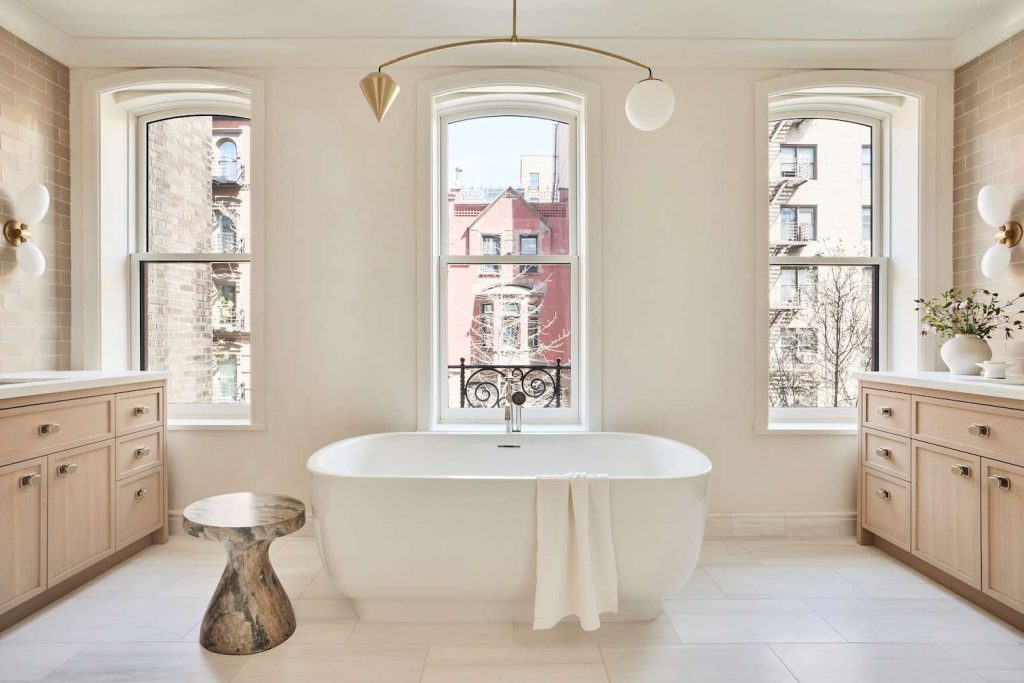
A white freestanding soaking tub sits at the center of this bathroom, framed by three arched windows that flood the space with natural light.
Light wood vanities on both sides add warmth without overpowering the soft, creamy walls and large-format floor tiles.
The balance between organic and refined makes the room feel open and serene. Brass pendant lighting with a globe and cone shape hangs above the tub as a sculptural focal point.
A natural stone side table adds an earthy touch beside the tub, while a simple white vase with greenery brings life to the corner. Every element works quietly together to create a calm, layered neutral space.
2. Earthy Neutral Bathroom With Woven Texture Details
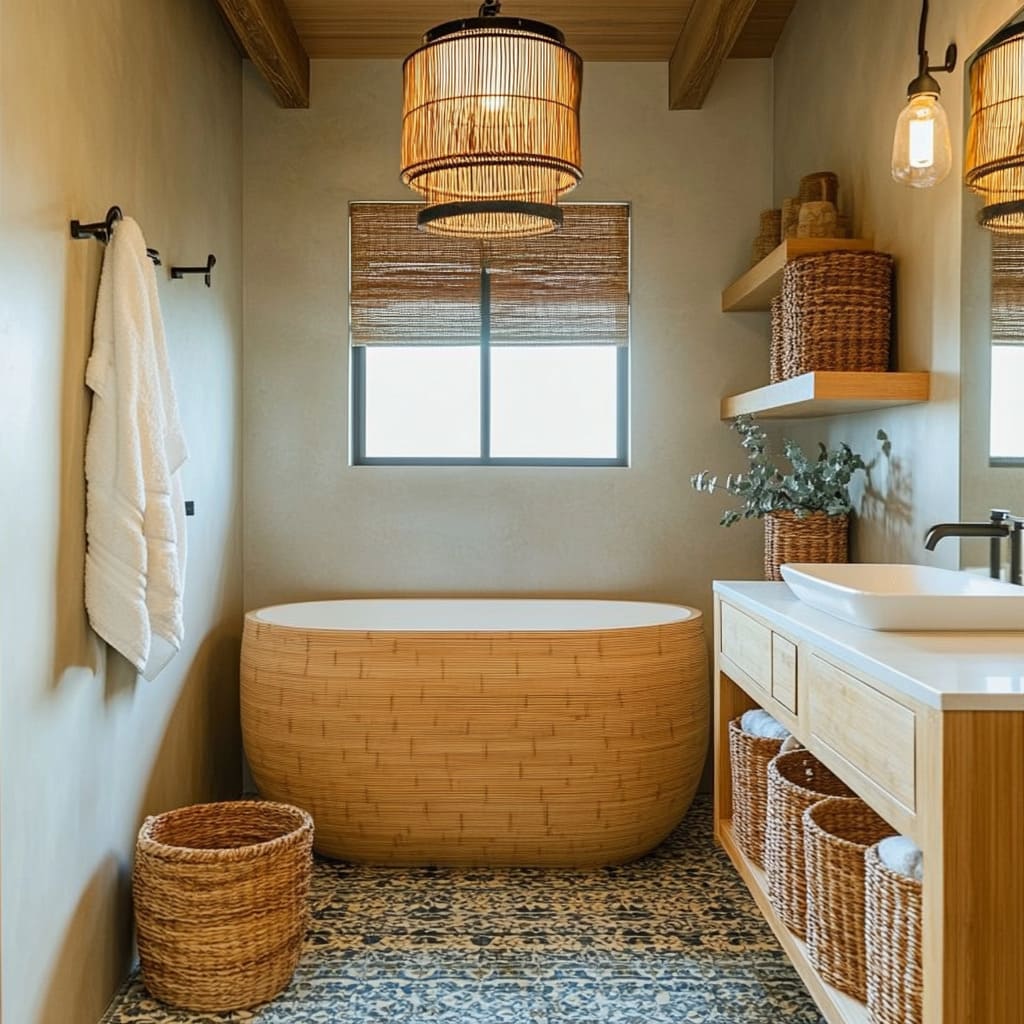
A bamboo wrapped soaking tub anchors this cozy bathroom with rich, natural texture that feels warm and grounded.
Woven rattan pendant lights hang from exposed wood beams overhead, casting a soft amber glow across the taupe plaster walls.
A bamboo roller shade on the window filters light gently, keeping the earthy mood intact throughout the space.
Open wood shelving along the right wall holds wicker baskets for storage, keeping the look tidy without feeling sterile. Patterned mosaic floor tiles add subtle visual interest underfoot while staying within a warm, neutral color range.
Every natural material in this room tells the same story — simple, organic, and beautifully calm.
3. Neutral Bathroom With Vintage Wood Vanity and Stone Tile
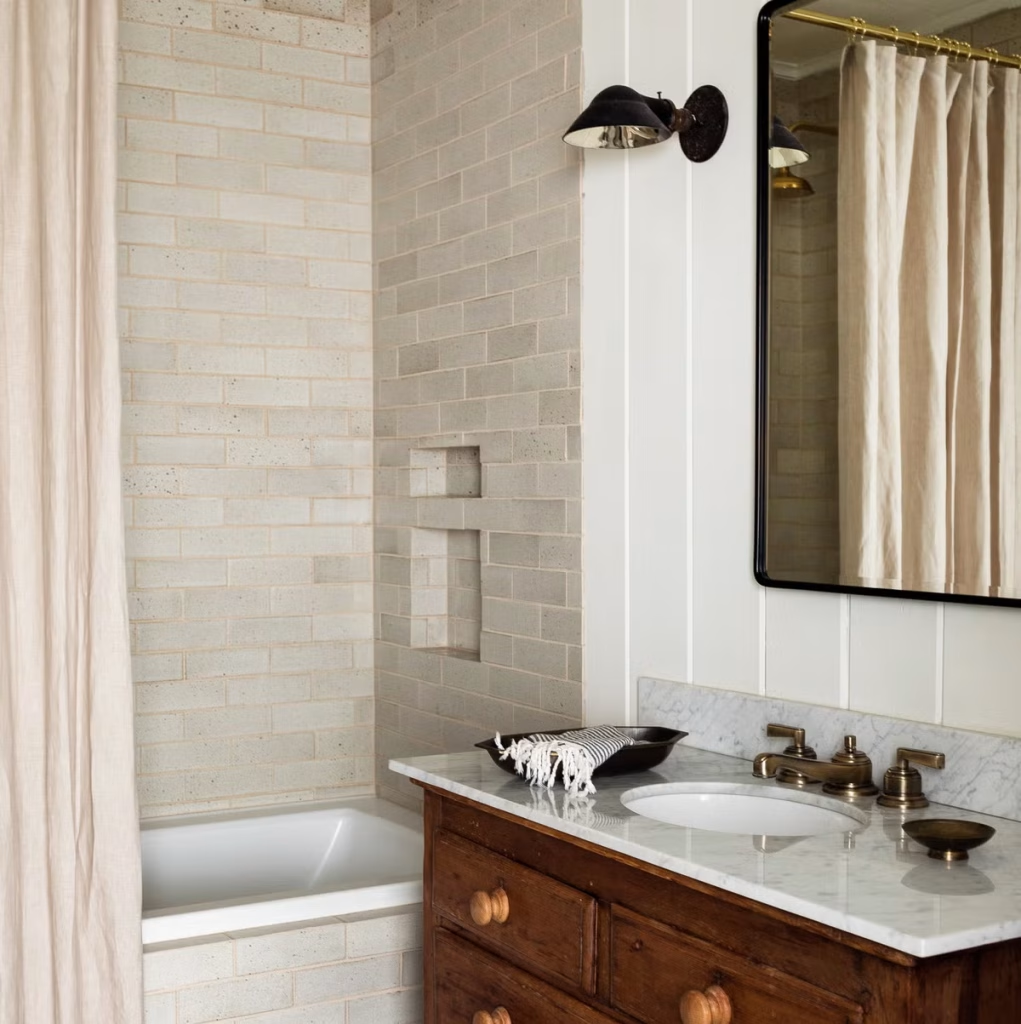
Cream speckled subway tiles cover the tub surround from floor to ceiling, giving this bathroom a handcrafted, textured feel that stays firmly within a neutral palette.
A built-in tile niche adds practical storage inside the shower wall without breaking the clean visual flow of the space. Soft linen curtains hang on a brass rod beside the tub, adding a relaxed, lived-in warmth to the room.
A dark-stained antique wood dresser repurposed as a vanity sits beneath a white marble countertop with aged brass fixtures. A black-framed rectangle mirror anchors the vanity wall, while a small black iron wall sconce adds moody, focused light.
These contrasting tones of wood, marble, and black metal layer beautifully together without stepping outside the neutral comfort zone.
4. Boho Neutral Bathroom With Live Edge Wood Vanity
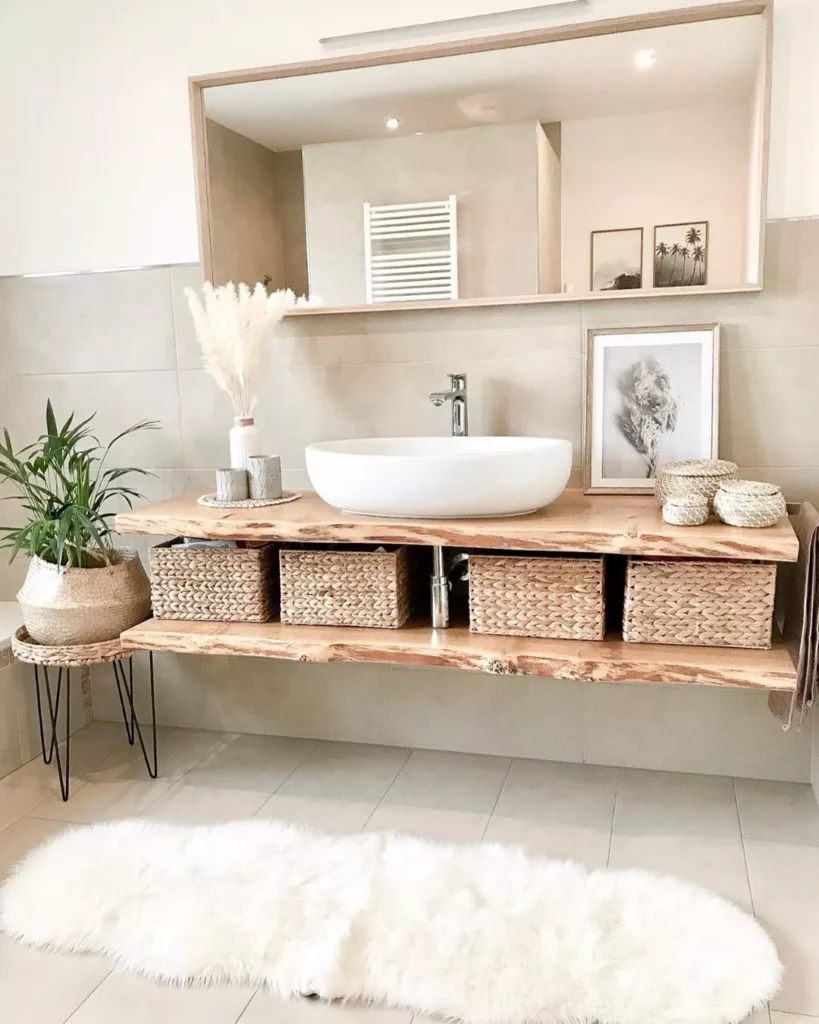
A live-edge wood floating shelf serves as the vanity countertop, bringing raw, natural character to this soft beige bathroom. Four woven seagrass baskets sit neatly underneath, offering open storage that looks stylish while staying completely functional.
A round white vessel sink rests on top, paired with a simple chrome faucet that keeps the look clean and unfussy.
Dried pampas grass in a white vase adds height and soft texture beside the sink, while a green potted plant in a woven basket brings freshness to the left corner.
A large wood-framed mirror reflects the room and amplifies the natural light from the beige tiled walls. A fluffy white bath rug on the light tile floor ties every soft, neutral element in the room together effortlessly.
5. Neutral Bathroom With Neatly Stacked Linen Gray Towels
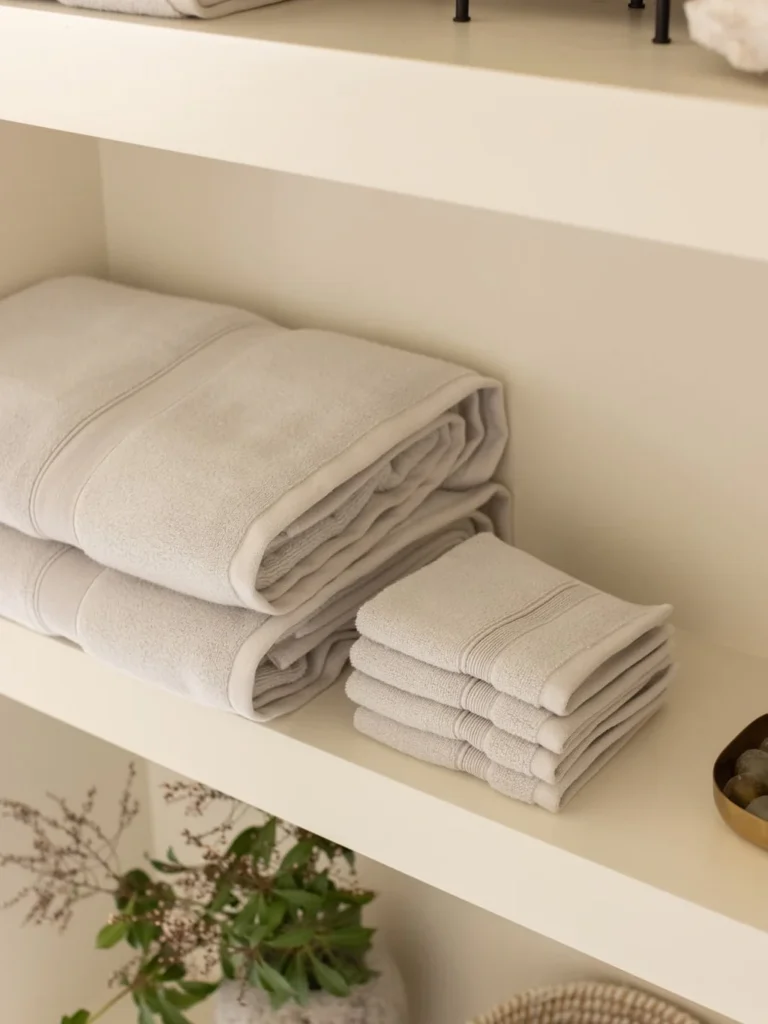
Soft gray towels folded and stacked on cream open shelving create a clean, spa-like display that feels both organized and inviting.
Matching bath towels, hand towels, and washcloths sit together in a tidy arrangement, showing how a single neutral tone can look polished without any extra effort.
Keeping all towels in the same color family is one of the simplest ways to bring visual calm to a bathroom.
A small green botanical stem peeks in from the lower shelf, adding a soft touch of nature without disrupting the quiet, neutral mood.
A brass dish with smooth stones rests on the right corner of the shelf, serving as a subtle decorative accent.
This styled shelf proves that good storage and good decor can exist in the same space at the same time.
6. Bright White Bathroom With Oak Double Vanity and Black Accents
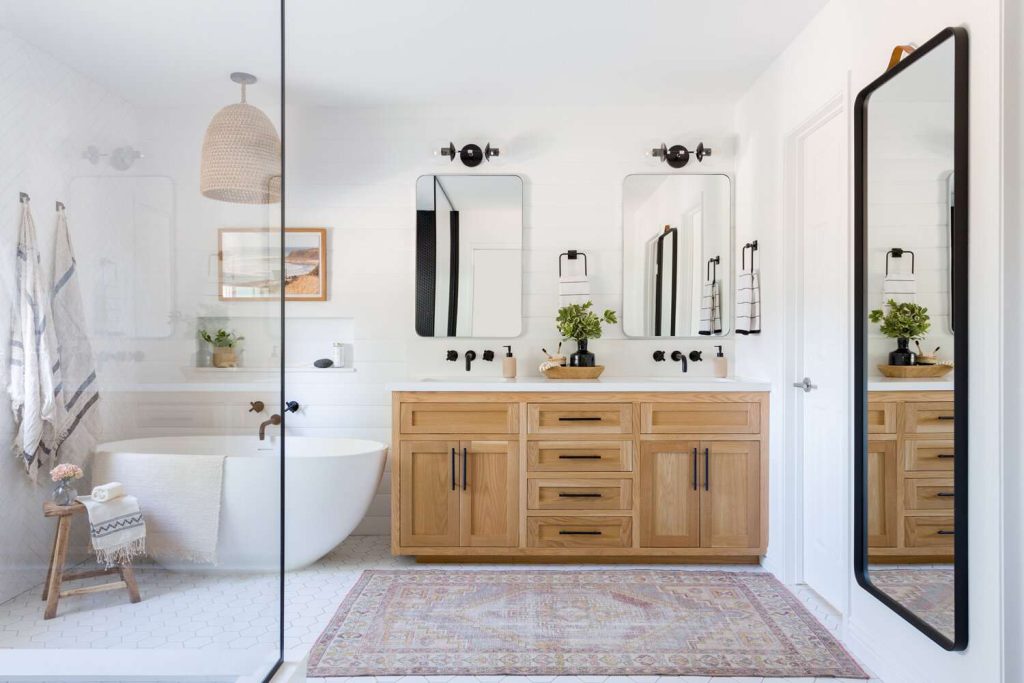
A warm oak double vanity with black hardware anchors this crisp white bathroom, striking a clean balance between natural wood and modern contrast.
Two black framed rounded rectangle mirrors hang above each sink, paired with matching black wall sconces that add definition to the all white shiplap wall behind them.
Small green plants in dark vases sit on the counter, bringing just enough life to the space without adding color noise.
Through a glass partition, a white freestanding soaking tub sits on hexagon tile floors beside a small wood stool and a woven pendant light overhead.
A vintage style muted pink and beige rug in front of the vanity adds softness and subtle warmth to the otherwise bright room.
This bathroom shows how black hardware used consistently across mirrors, faucets, and handles can sharpen a neutral space without making it feel cold.
7. Elegant Neutral Bathroom With Gray Vanity and Marble Stone Wall
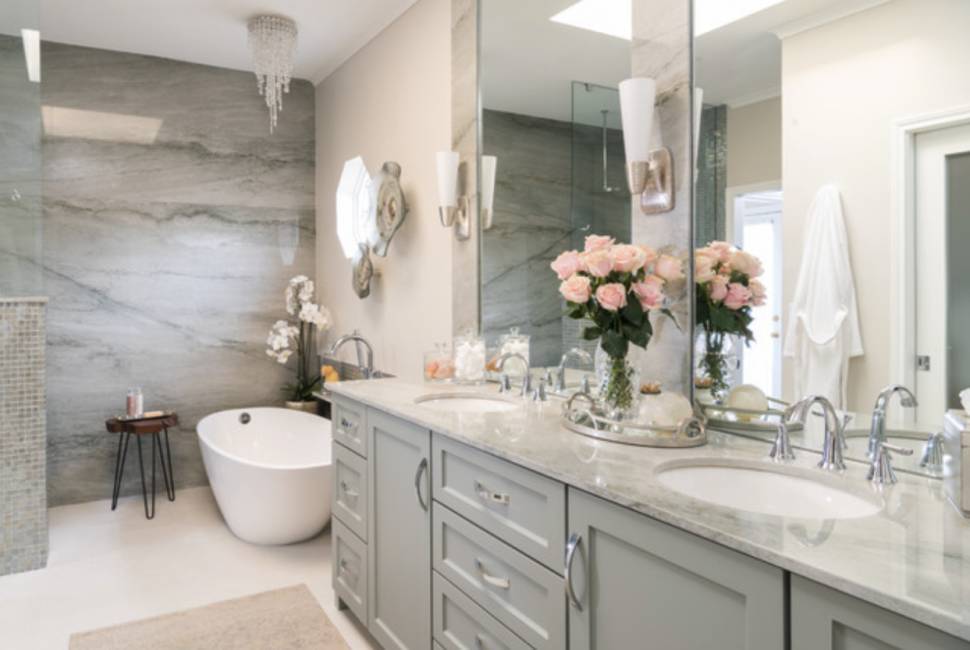
A soft gray double vanity with chrome hardware runs along one wall, topped with a veined gray and white marble countertop that feels luxurious yet firmly neutral.
Large format marble slab tiles cover the back wall from floor to ceiling, creating a dramatic but cohesive backdrop for the white oval freestanding tub positioned in front of them.
Silver wall sconces with white cylindrical shades flank the full length mirror, casting an even, flattering light across the vanity area.
A glass vase filled with blush pink roses sits centered on the counter, offering a soft pop of warmth without pulling the room away from its neutral base.
Cotton ball jars, a silver tray, and small decorative objects keep the counter styled without feeling cluttered or overdone.
A crystal chandelier overhead adds a quiet touch of glamour that feels right at home in this polished, gray-toned space.
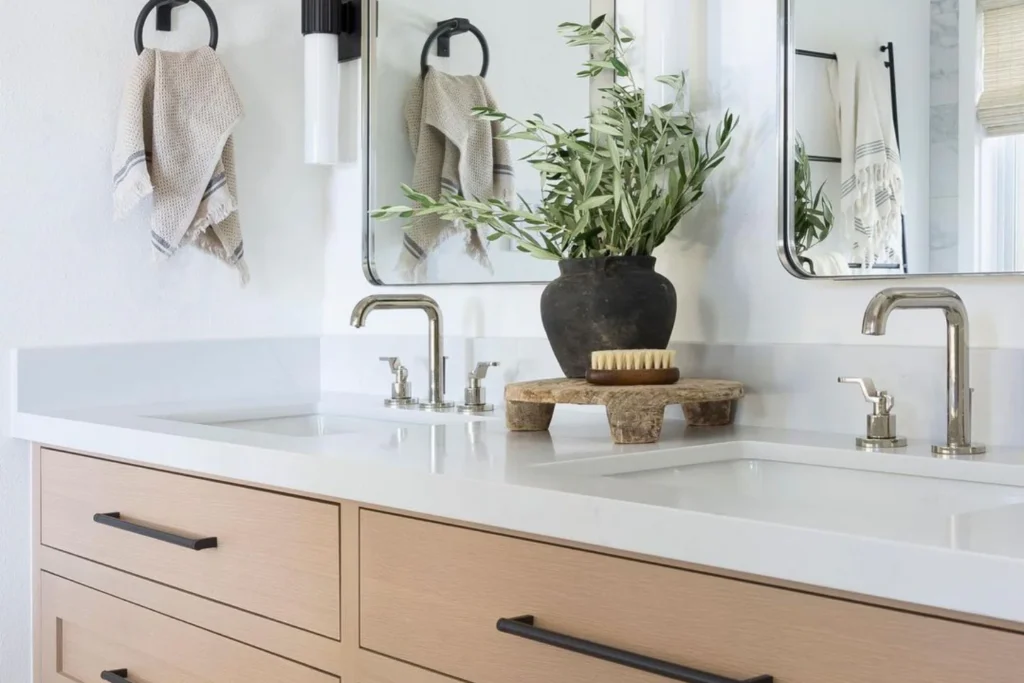
8. Modern Neutral Bathroom With Light Wood Vanity and Olive Branch Styling
A light oak flat panel double vanity with long black bar pulls sits beneath a crisp white quartz countertop, keeping this bathroom clean, modern, and grounded in warm neutrals.
Two black framed rounded mirrors hang above each sink area, reflecting the soft white walls and natural light that fills the space.
Polished nickel widespread faucets add a subtle shine to the counter without competing with the matte black hardware on the cabinets below.
A dark textured clay pot holding a tall olive branch stem serves as the centerpiece of the counter, bringing organic height and a natural green tone into the room.
Placed beneath the vase, a raw wood riser adds an earthy, artisan layer that lifts the styling off the flat white surface.
Woven fringe hand towels hung on black ring holders complete the look with relaxed, tactile texture that stays true to the neutral palette.
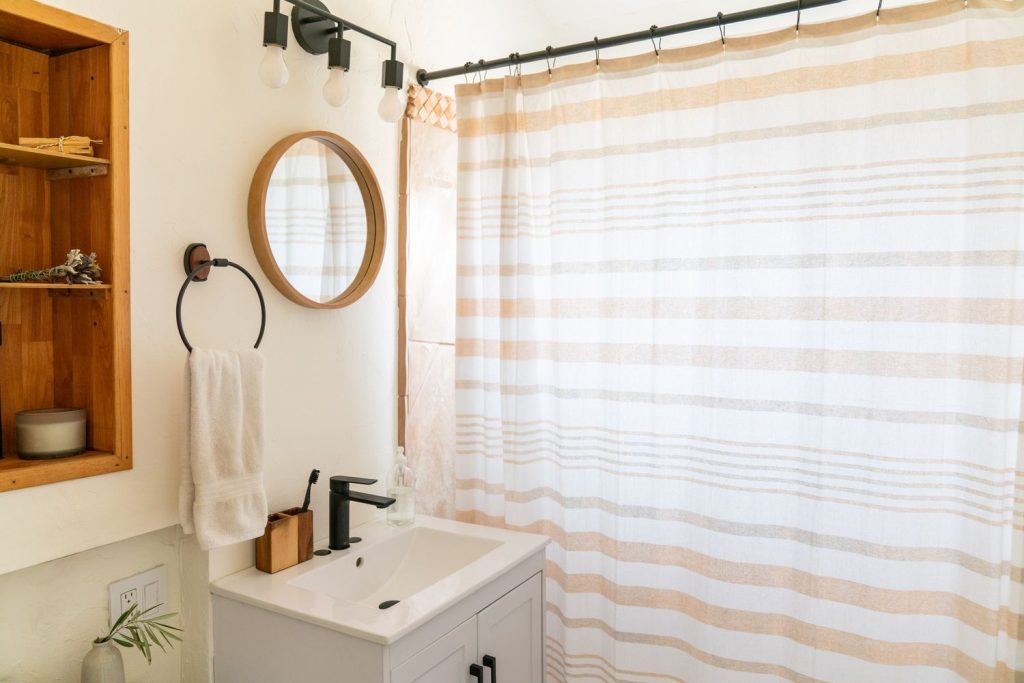
9. Opt for Minimalist Ceramic Sink Fixtures
Ceramic fixtures support the clean, quiet look that neutral bathrooms do best. White and soft gray ceramic sinks feel timeless, and the smooth surface helps the vanity area look uncluttered.
For a modern feel, a simple undermount sink keeps lines minimal and makes the countertop easier to wipe down. Vessel sinks can also work, especially if the surrounding surfaces are kept simple and the faucet choice is understated.
To add gentle contrast, pair ceramic with a matte black or brushed brass faucet. The hardware becomes a controlled focal point without overwhelming the space.
Keep the styling around the sink minimal as well. A tray, soap dispenser, and one small container is often enough to keep the look intentional and calm.
10. Moody Neutral Bathroom With Stone Tile Walls and Copper Fixtures
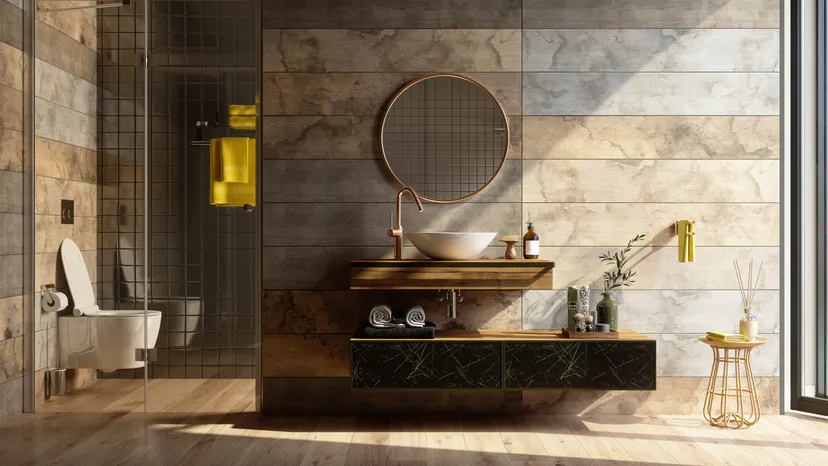
Large format stone effect tiles in warm beige and deep charcoal cover the walls in horizontal layers, creating a bold yet earthy backdrop that anchors the entire room.
A floating vanity combines a warm wood open shelf with dark black marble drawer fronts trimmed in gold, giving the piece a rich, layered look that still reads within a neutral tone.
A round copper framed mirror hangs centered above the white vessel sink, paired with a matching copper gooseneck faucet that brings warmth and continuity to the wall.
Light wood plank flooring runs across the entire space, softening the heavier stone wall textures and connecting the room with a grounded, natural feel.
A slim gold side table beside the window holds a reed diffuser and candle, adding a quiet finishing touch to the right side of the room.
Yellow hand towels on the glass shower panel introduce the only true accent color here, proving that even one small pop can energize a neutral space without overwhelming it.
11. Serene Neutral Bathroom With Vertical Finger Tiles and Brass Fixtures
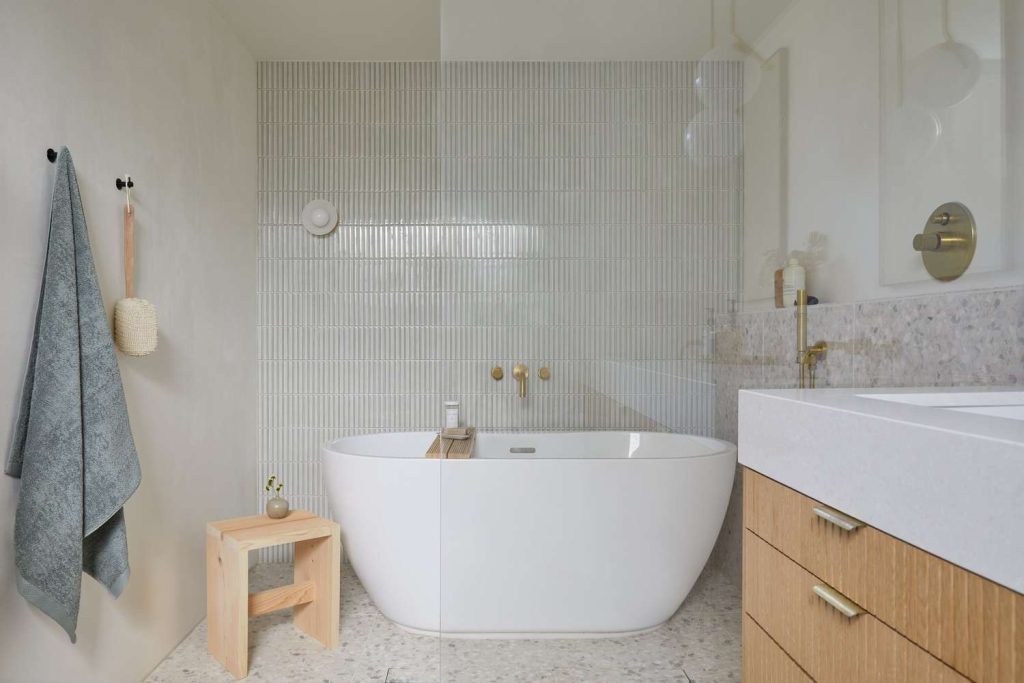
Slim vertical sage green finger tiles cover the tub wall from floor to ceiling, creating a soft ribbed texture that draws the eye upward and adds quiet depth to the space.
A white oval freestanding tub sits centered in front of the tiled wall, with brushed brass wall mounted faucets that stand out warmly against the cool, pale tile behind them.
Terrazzo flooring in light gray and white speckle runs across the floor, adding subtle pattern underfoot without competing with the tiled feature wall.
A raw pine wood step stool beside the tub holds a small bud vase with a single stem, keeping the styling minimal and intentional.
On the right side, a textured oak floating vanity with brushed brass pulls sits beneath a speckled stone backsplash and a clean white countertop.
A sage blue towel and a woven loofah hang from a simple black hook on the plaster wall, finishing the room with a relaxed, understated touch.
12. Small Neutral Bathroom With Fluted Accent Wall and Skylight
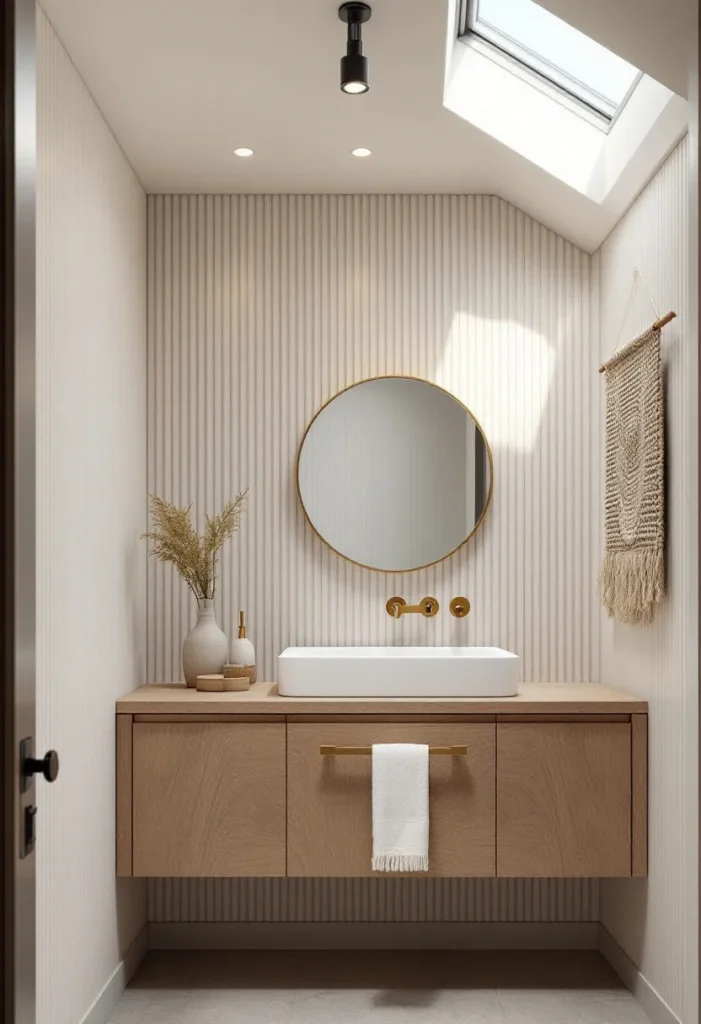
A cream fluted panel accent wall runs behind the vanity, adding soft vertical texture to this compact bathroom without using a single drop of color.
A round brass-framed mirror hangs centered on the wall, complemented by brushed gold wall-mounted faucets that keep the plumbing clean and minimal on the counter surface.
Natural light pours in from a slanted skylight above, making the small space feel open, airy, and far larger than it actually is.
A floating light oak vanity with a brass towel bar pulls double duty as both storage and a practical hanging spot for a white fringe hand towel.
A rectangular white vessel sink sits on top of the wood counter, flanked by a white ceramic vase with dried grass stems and a small soap dispenser.
A woven macrame wall hanging on the right side adds handcrafted warmth and bohemian texture that ties beautifully into the natural, neutral theme.
13. Add Greenery for Freshness

Plants add life to neutral bathrooms without disrupting the calm palette. Even one small plant can soften the look of tile, stone, and metal finishes.
Bathrooms tend to be humid, which works well for plants like pothos, ferns, snake plants, and spider plants. If natural light is limited, choose low light options like ZZ plants, or place greenery near a window.
Keep pots simple so the green stays the focus. White ceramic, stone, and natural clay planters blend easily with neutral decor and feel more intentional than bright plastic containers.
Use plants in small groupings on shelves, near the tub, or by the vanity to create balance without clutter.
14. Add Pattern with Neutral Rugs
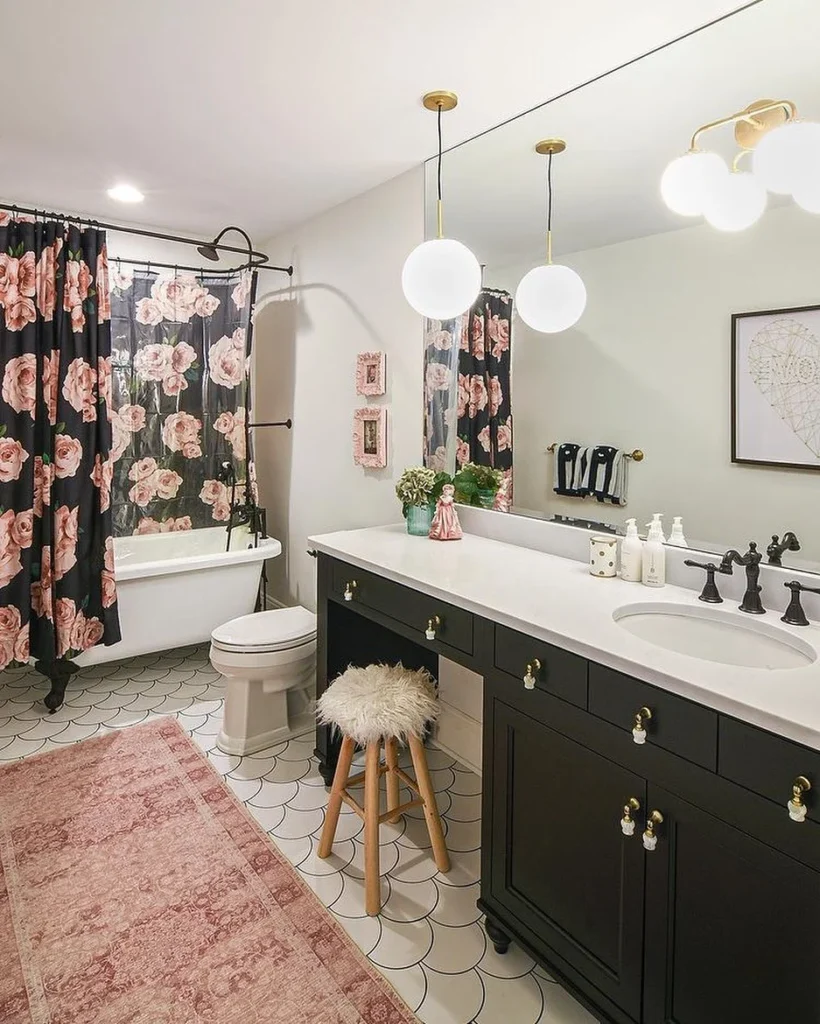
A rug introduces softness and helps a bathroom feel less echoing and cold. In a neutral space, a subtle pattern or woven texture adds interest without changing the overall calm mood.
Look for rugs in ivory, sand, taupe, or light gray. Small geometric patterns, simple stripes, or tone-on-tone designs add depth while still feeling understated.
Choose a material that works in a bathroom setting. Cotton is easy to wash, while wool and bamboo blends can feel more elevated if they are designed to handle moisture.
To keep it looking tidy, use a rug pad underneath and choose a size that fits the space rather than one that gets pushed into corners.
15. Use Neutral Stone Flooring
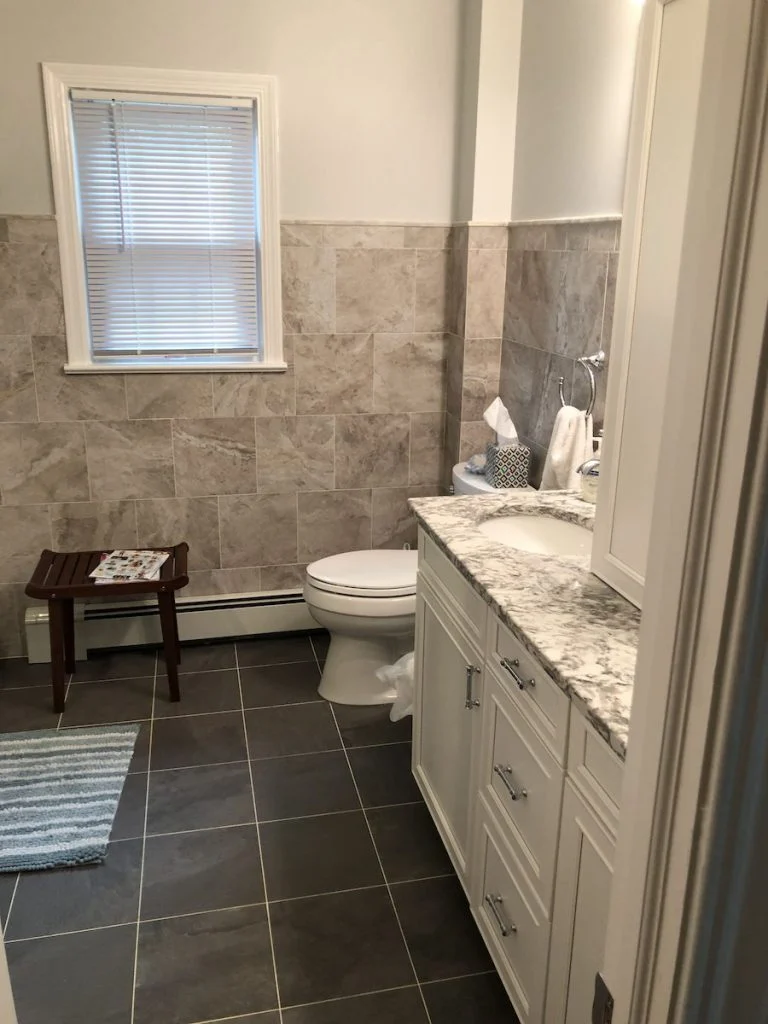
Stone flooring brings texture and a natural finish that works especially well in neutral bathrooms. Materials like marble, limestone, and travertine feel timeless and add subtle variation through natural patterning.
If you want a crisp, classic look, marble in soft white or gray creates an elegant foundation. For warmer spaces, limestone and travertine offer beige and sand tones that pair well with wood and woven accents.
Stone also works well with radiant floor heating, which makes the room feel more comfortable in cooler seasons.
For easier maintenance, choose a finish that fits your lifestyle. Honed stone feels softer and less slippery, while polished stone reflects more light and looks more formal.
16. Opt for Sleek, Neutral Bathroom Storage
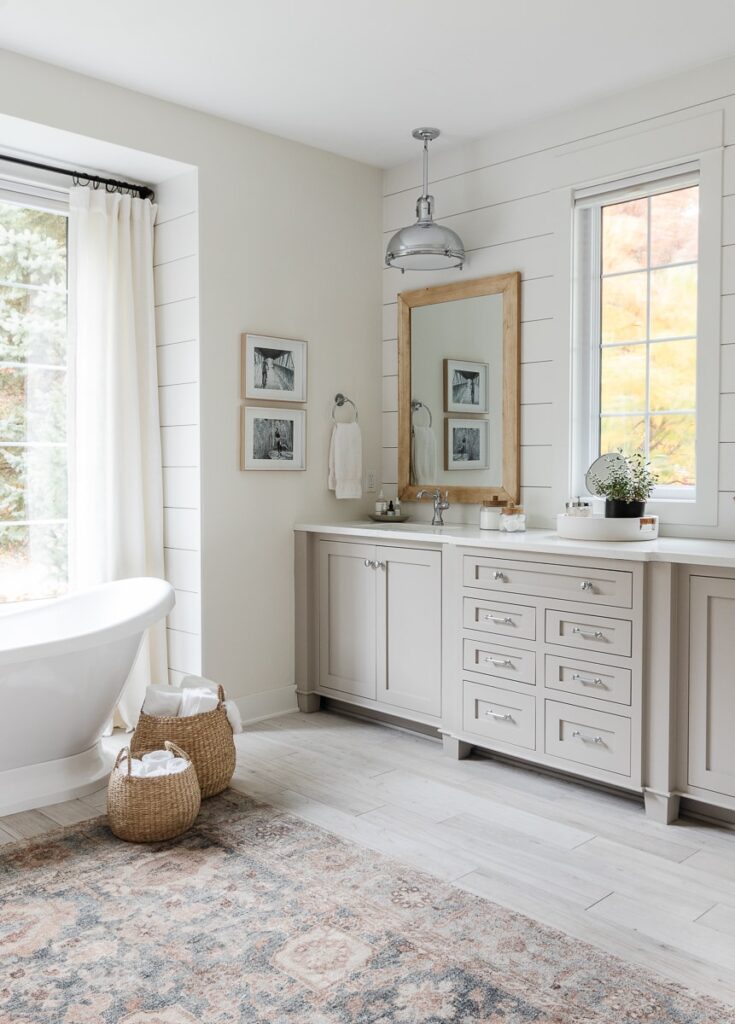
Neutral bathrooms look best when surfaces stay clear. Storage choices help keep the room calm and functional at the same time.
Floating vanities and wall mounted shelves make the room feel more open by freeing up the floor. Closed cabinets work well if you prefer a cleaner look, especially for everyday items that can make counters feel crowded.
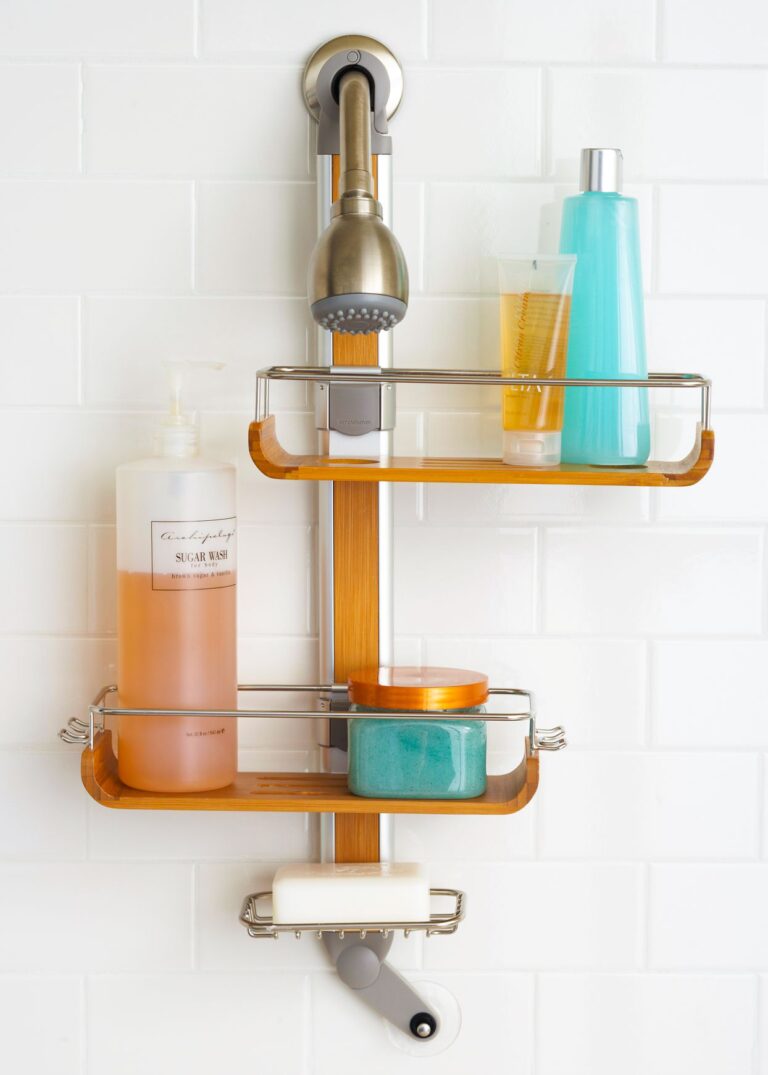
In showers, built in niches keep bottles off the tub ledge and reduce visual clutter. For smaller bathrooms, slim shelving and stacked storage can add function without overwhelming the layout.
Keep bins and organizers neutral as well. Matching containers in white, clear acrylic, or woven tones help storage look intentional rather than improvised.
17. Create a Relaxing Bath Nook
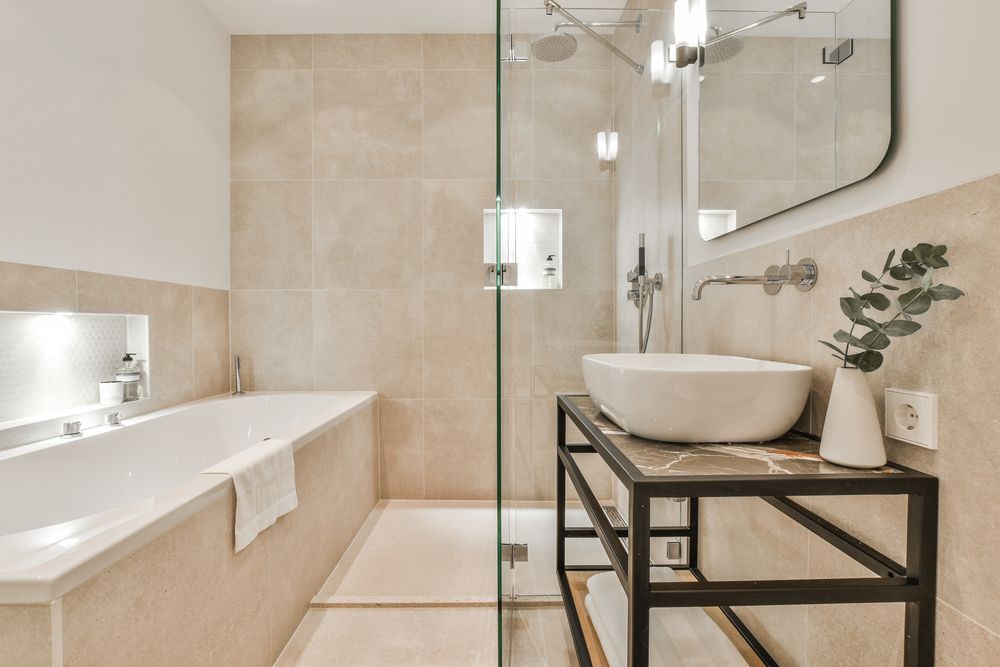
A bath nook is less about adding furniture and more about creating a small zone that feels restful. If space allows, a chair or stool near the tub can make the room feel more like a retreat.
Keep the nook simple. A small side table, a folded towel, and a candle or book can make the area feel inviting without adding clutter.
If you do not have room for a chair, a bath tray across the tub can serve the same purpose. It creates a place for small essentials and makes the bath area feel more intentional.
Stick to soft neutral tones for textiles and accessories so the nook blends in with the overall palette rather than looking like a separate style.
18. Pair Neutral Shades with Metallic Accents
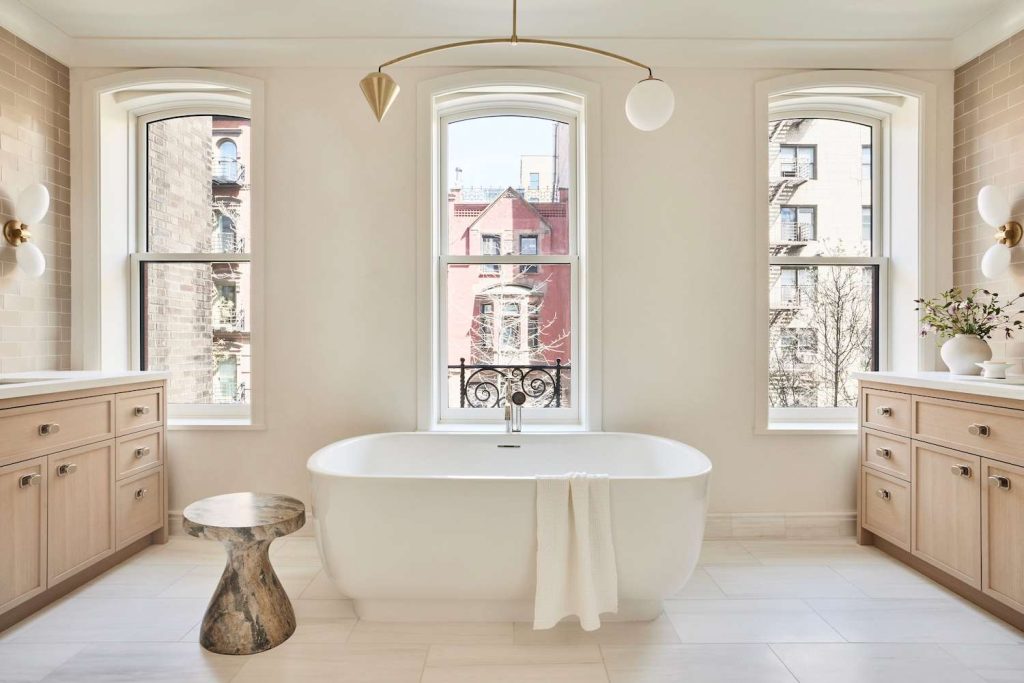
Metallic finishes add contrast in a way that still feels refined. In neutral bathrooms, they help highlight fixtures and define key areas without relying on color.
Brass and gold finishes bring warmth, brushed nickel feels classic, and matte black adds a crisp modern edge. Choose one main metal finish and repeat it across the faucet, lighting, and accessories for a cohesive look.
If you like a more layered feel, you can mix finishes, but keep it controlled. For example, matte black hardware with a brass mirror frame can work if the rest of the palette stays simple.
Small details like towel bars, hooks, and soap dispensers are often enough to bring in metallic contrast without making the space feel busy.
19. Choose Natural Stone Bathroom Accessories
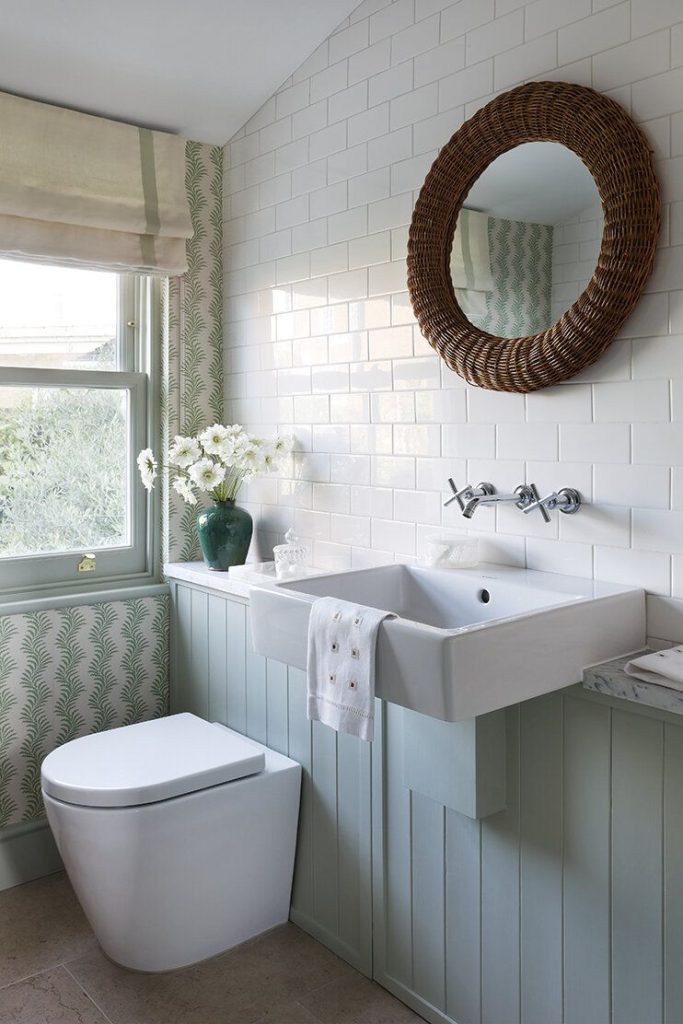
Accessories make a neutral bathroom feel complete, and natural stone pieces keep the look elevated without adding visual noise. Marble, travertine, and slate work well because they introduce subtle movement and texture.
A stone tray on the vanity can corral everyday items like soap, lotion, and a small container, which keeps surfaces looking cleaner. Soap dishes, toothbrush holders, and canisters in stone add the same effect in smaller doses.
To keep the space cohesive, stick to one stone tone or family of tones. Cool gray marble pairs well with crisp whites, while warmer beige stone blends easily with taupe, wood, and woven textures.
These pieces are small, but they can make the room feel more intentional and finished, especially in minimalist spaces.
20. Use Neutral Wallpaper for Subtle Interest
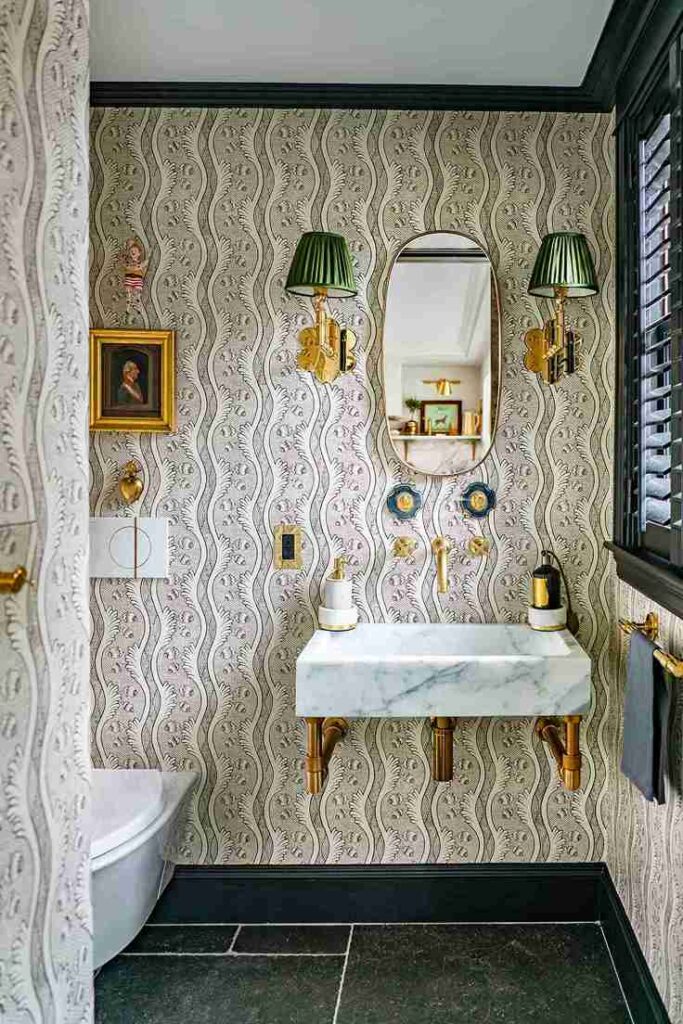
Wallpaper can add depth to a neutral bathroom in a way paint cannot, especially when the pattern is subtle and the color stays restrained. It is a good option for powder rooms or feature walls where you want a bit more personality without changing the palette.
Look for soft patterns like тонe-on-tone stripes, small geometrics, or delicate botanicals in light gray, beige, or cream. Textured wallpaper, such as linen-effect finishes, adds warmth and helps the room feel less flat.
Use wallpaper strategically. A single accent wall behind the vanity or above wainscoting can feel refined without overwhelming the space. If the bathroom is small, keep the pattern fine so it reads calm rather than busy.
Pair wallpaper with simple mirrors and lighting so the wall finish can stand out quietly on its own.
21. Create a Relaxed Atmosphere with Neutral Paintings
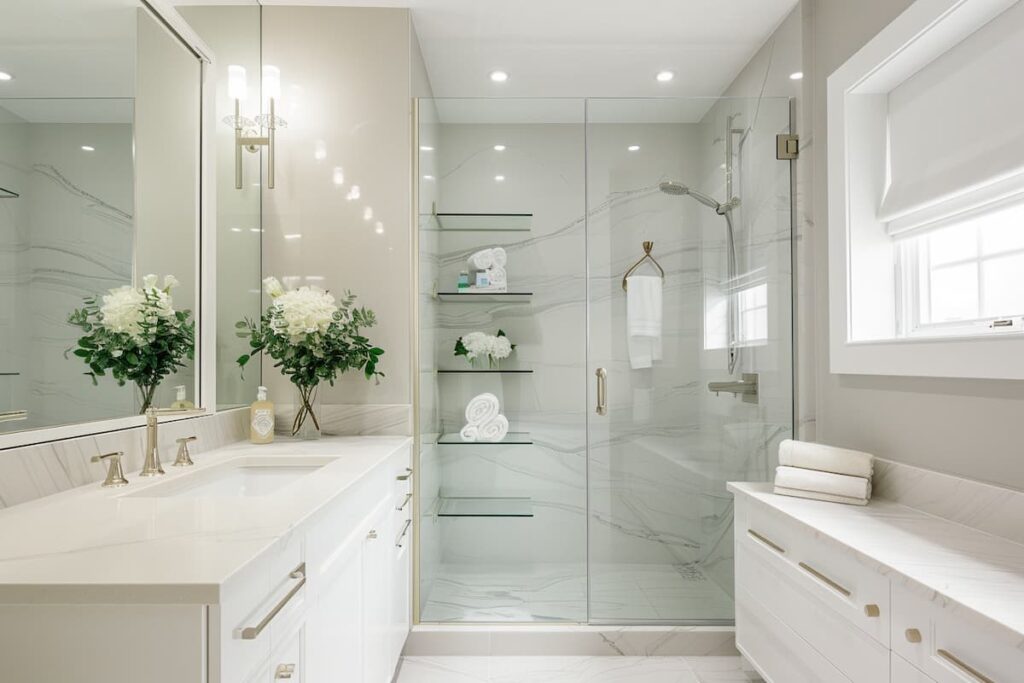
Art in soft tones helps a neutral bathroom feel calmer and more complete. The right piece adds personality without introducing strong contrast or disrupting the overall mood.
Choose artwork with muted landscapes, abstract shapes, or minimalist botanical prints. Look for colors that stay within the same palette as the room, such as warm beige, soft gray, off white, and gentle charcoal.
Placement matters. A single piece above the tub or toilet can make the room feel finished, while a small gallery of two or three framed prints can work in larger bathrooms. Keep frames simple so they complement the design rather than compete with it.
If your bathroom has limited wall space, lean on smaller framed pieces placed on a shelf or ledge to add the same effect without needing extra hanging room.
Conclusion
Designing a neutral bathroom is less about choosing one perfect shade and more about building a space that feels balanced, comfortable, and easy to live with. When the palette is quiet, details like texture, light, and material choices become more noticeable, and the room starts to feel more intentional.
From warm taupe walls and classic tile to wood accents, soft textiles, and simple storage, the best neutral bathrooms use contrast in subtle ways. A few thoughtful upgrades can add depth without making the room feel busy or trend-driven.
If you are updating your space, start with one or two changes that will make the biggest difference, such as lighting, textiles, or storage. Over time, you can layer in the details that make the space feel finished and personal.
This concludes our guide on 21 neutral bathroom decor ideas. Use the ideas that fit your space and layout, and focus on keeping the room calm, cohesive, and comfortable for everyday use.