My First Apartment Renovation (Before and After Transformation)

Buying my first apartment was not just exciting. It was overwhelming.
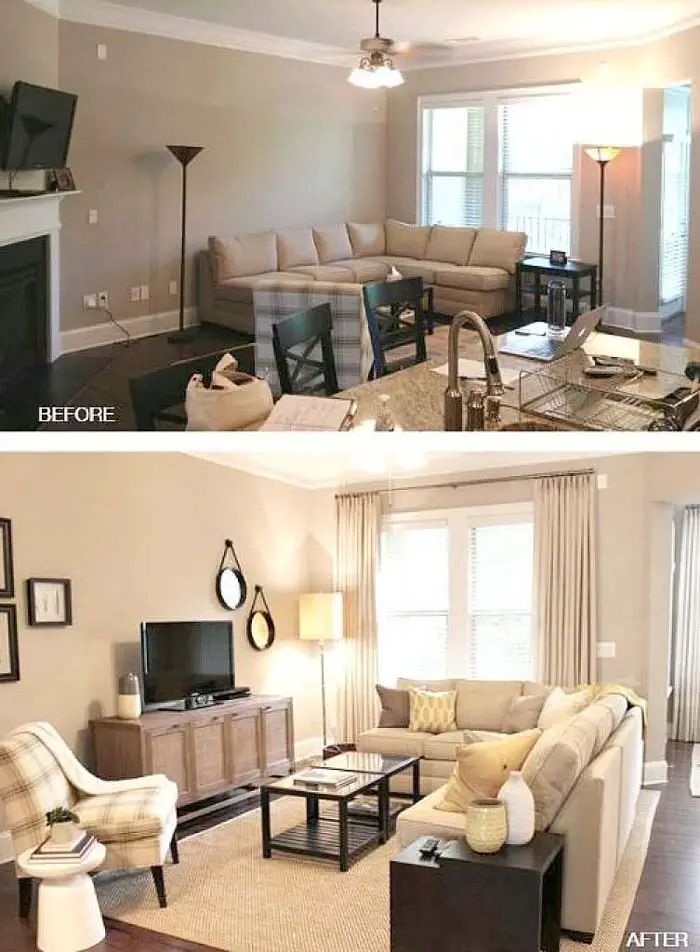
At 22, owning a property felt surreal. But when I walked into the apartment for the first time, excitement quickly mixed with doubt. The layout was awkward. The rooms were small. The bathroom felt cramped. It was far from the dream home I had imagined.
Still, I saw potential.
This is the full story of how I transformed that apartment from outdated and poorly divided into a modern open-concept home that fits my lifestyle perfectly. I will also share what I would do differently and what actually mattered most during the process.
The Original Layout: Small Rooms and Poor Flow
When I first viewed the apartment, here is what I noticed:
- Multiple small rooms with unnecessary walls
- Limited natural flow between spaces
- A tiny bathroom
- A separate kitchen that felt disconnected
- An overall dated look
At first glance, it did not look promising.
But there was one detail that changed everything. A large tree outside the living room window brought in natural greenery and light. That view made me pause. I realized the problem was not the location. It was the layout.
Instead of focusing on what existed, I started analyzing what could be changed.
Key Question I Asked Immediately
Which walls are load-bearing?
That single question determined whether the renovation would be cosmetic or transformational.
Once I confirmed that one major wall could be removed, the entire vision became clear.
The Big Structural Decision: Creating an Open Concept
The most important change was demolishing the wall between the living room and one bedroom.
That single move:
- Doubled the perceived space
- Allowed natural light to travel
- Created room for a combined living room and kitchen
It was messy, loud, and disruptive. During demolition, the apartment looked worse than ever. Dust covered everything. Pipes were exposed. The place felt chaotic.
This stage is emotionally difficult because the progress is invisible. You only see destruction.
But this is where long-term vision matters most.
Plumbing and Technical Adjustments
Because the kitchen was relocated, we had to extend plumbing from the bathroom area.
This involved:
- Cutting into flooring
- Running new water pipes
- Planning drainage slope carefully
- Coordinating appliance placement
If you are relocating a kitchen in an apartment, always confirm building regulations and drainage feasibility first. Plumbing mistakes are expensive to correct.
This step required precision more than aesthetics.
Expanding the Bathroom
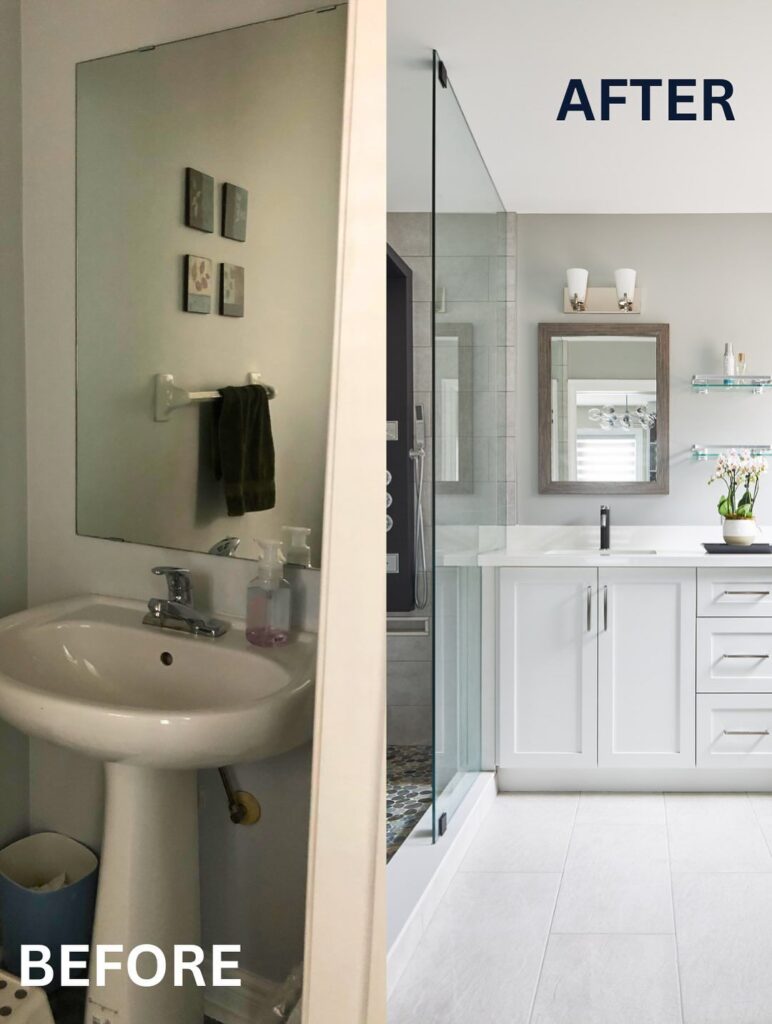
Another important improvement was enlarging the bathroom slightly.
Even small expansions in compact apartments make a noticeable difference. We reconfigured walls to improve layout efficiency.
If I had not done this during the demolition phase, it would have been much harder later. Structural changes are best handled at once rather than in phases.
Choosing Colors and Flooring
Once construction was complete, the emotional shift began.
I selected light beige for the walls. This added warmth while keeping the apartment bright.
For flooring, I chose marble tiles. They reflect light and create visual continuity across open spaces. In smaller apartments, cohesive flooring makes everything feel larger.
The combination of beige walls and marble flooring created a calm foundation that allowed darker furniture to stand out.
Designing the Kitchen
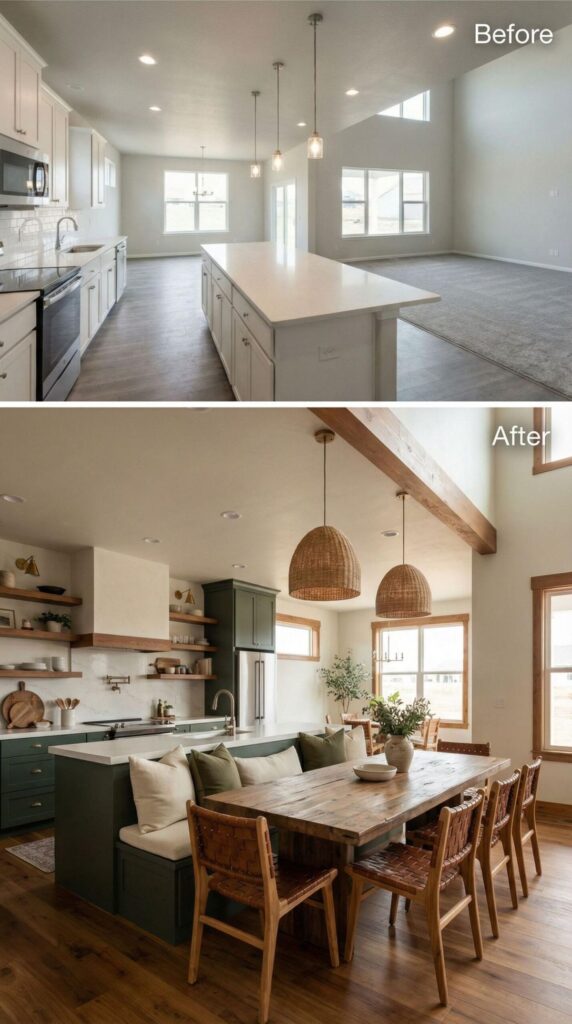
The kitchen was the focal point.
I chose graphite cabinetry paired with wood accents. The darker tone added depth, while the wood softened the design.
All appliances were built in:
- Refrigerator
- Freezer
- Dishwasher
- Microwave
- Hob
- Oven
Integrated appliances make small kitchens feel streamlined rather than crowded.
I also added a countertop extension to act as a visual divider between the kitchen and the living room. It created zoning without blocking light.
Under that counter, I hid the washing machine and dryer. In small apartments, hidden functionality is everything.
The Living Room Layout
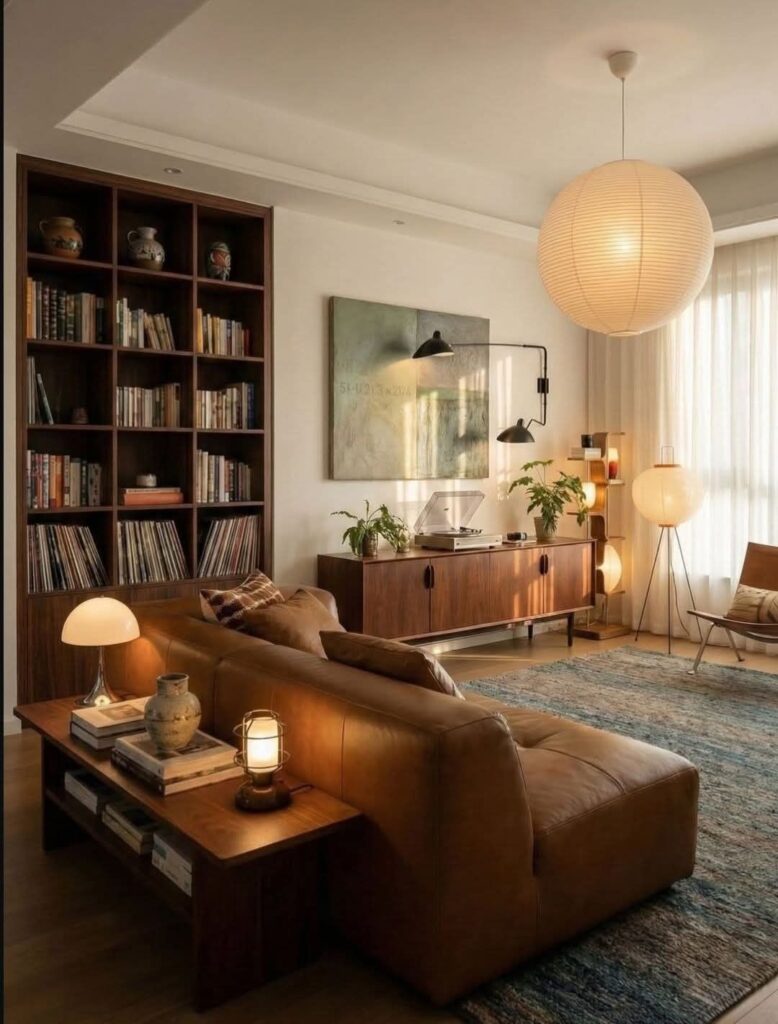
The sofa was my anchor piece.
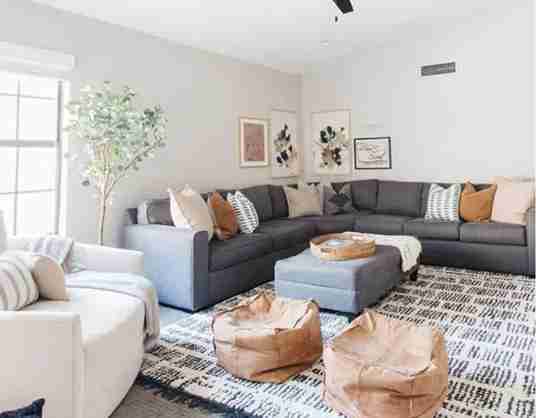
I chose a dark gray sectional that is large enough for guests but proportionate to the space. Before purchasing, I measured walking paths carefully to avoid overcrowding.
In front of it, I placed a white glossy coffee table with concealed lower storage. I prefer visual calm when entering a room, so hidden storage was intentional.
The television was mounted on the wall to free floor space, and a white cabinet below it provided balanced contrast.
Dining Area and Cohesion
The dining table is solid wood with matte black legs. I intentionally repeated black accents across the apartment to create visual unity.
Finding chairs took time. Comfort was non-negotiable. Eventually, I chose soft gray upholstered chairs that balanced the darker tones.
A gray rug under the table defined the dining zone and prevented the space from feeling disconnected within the open layout.
Lighting Strategy
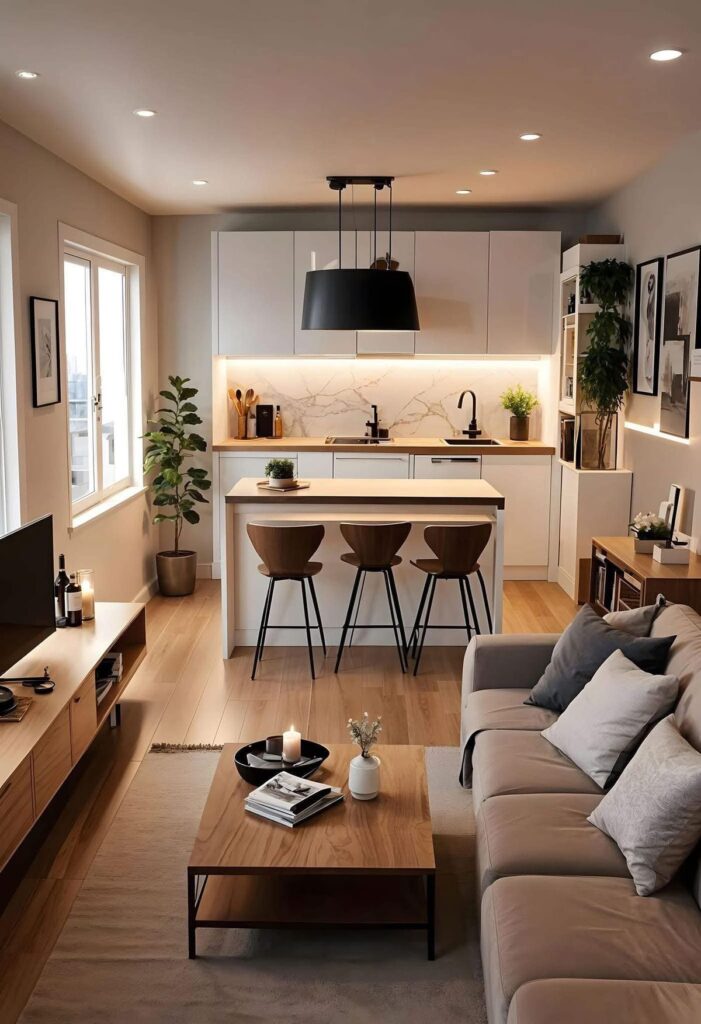
Lighting determines mood more than most people realize.
I installed:
- Pendant lights above the dining table
- Focused lighting above the kitchen counter
- A central statement ceiling light
- Layered ambient lighting along the apartment
Layered lighting allows flexibility. Bright for cooking. Soft for evenings.
Before and After: What Truly Changed
Originally, the apartment felt:
- Compartmentalized
- Dark
- Inefficient
- Outdated
After renovation, it feels:
- Open
- Airy
- Cohesive
- Functional
- Aligned with my personal style
The transformation was not only visual. It changed how I experience the space daily.
Lessons I Learned From My First Renovation
If you are planning a renovation, here is what mattered most:
- Always verify structural limitations before dreaming too big.
- Plan plumbing carefully if relocating kitchens.
- Do structural changes all at once.
- Measure furniture multiple times before ordering.
- Build in storage wherever possible.
- Cohesive flooring makes small spaces feel larger.
- Integrated appliances improve visual clarity.
- Budget extra for unexpected costs.
Final Thoughts
My first apartment renovation was intense, stressful, and deeply rewarding.
The space I almost dismissed became the home I had envisioned for years.
The most important shift was not cosmetic. It was learning to see potential beyond flaws.
If you are standing inside an outdated apartment wondering whether it is worth the effort, ask yourself one question:
Can the layout be improved?
If the answer is yes, the rest is just work and vision.
And vision changes everything.