My Take on Japanese Garden Decor After Way Too Much Research

A backyard can look perfectly fine and still feel visually busy. You may have healthy plants, a usable patio, and enough green to call it a garden, yet the space never quite reads as restful. Japanese garden decor is often appealing in this situation because it relies on restraint, natural materials, and a slower sense of movement rather than adding more objects.
This is not a guide to building a traditional Japanese garden in the historical sense, and it is not meant to be a strict replica of any one style. Instead, it is a practical approach to incorporating Japanese garden design principles in a way that feels livable in a typical yard or patio. You will see the recurring themes of edited planting, calm paths, stone placement, and quiet water features that create a more settled atmosphere without requiring a full renovation.
What Makes a Garden Feel Japanese
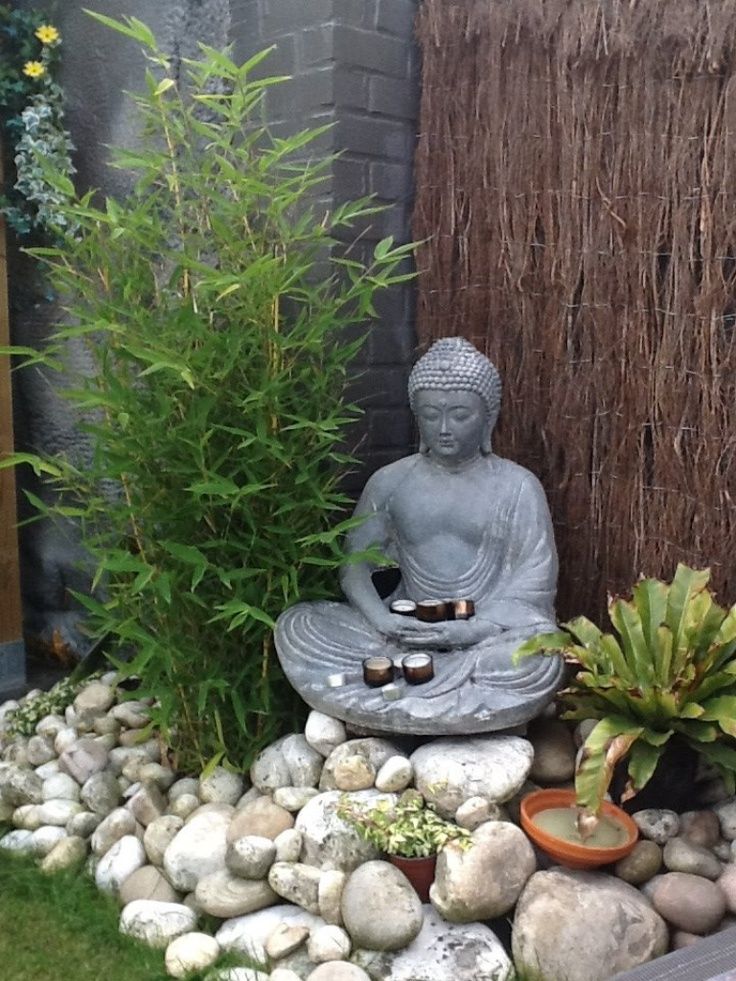
A Japanese-inspired garden tends to feel distinctive because it is composed, not crowded. It uses negative space as an active design element, allowing the eye to rest between focal points. The arrangement is often asymmetrical, and the materials feel natural and timeworn rather than polished.
Several design cues show up consistently:
- Editing and restraint: fewer elements, used with intention
- Natural materials: stone, wood, gravel, water, and plants in muted tones
- Asymmetry: balance without mirroring
- Hide and reveal: partial views that unfold as you move
- Wabi-sabi: beauty in imperfection and aging materials
It can help to distinguish between broad Japanese garden styles and the specific concept of a Zen garden.
Japanese Garden vs Zen Garden (Karesansui)
Two beautiful styles, one big difference: one invites you to wander, the other invites you to pause.
| Feature | Japanese Garden | Zen Garden (Karesansui) |
|---|---|---|
| Core feel | Naturalistic and layered, designed to feel organic and lived in | Minimal and abstract, focused on calm and meditation |
| Overall purpose | Create harmony with nature and seasonal change | Encourage stillness, contemplation, and mental clarity |
| Water | Often includes real water such as ponds, streams, or waterfalls | Water is symbolic, represented by raked gravel or sand |
| Planting style | Trees, shrubs, moss, and seasonal plants that change through the year | Very limited planting, often moss or a single accent plant |
| Color palette | Earthy and varied, shifting with the seasons | Restrained and neutral with subtle contrast |
| Movement | Designed for walking and discovering shifting views | Usually meant to be viewed from one fixed position |
| Layout approach | Asymmetrical and layered to feel natural | Highly controlled, intentional, and simplified |
| Materials | Stone, wood, water, and living plants | Stone, gravel, and negative space |
| Maintenance | Regular pruning and seasonal care | Raking and maintaining clean lines |
| Best for home gardens | Works well for larger yards or immersive outdoor spaces | Ideal for small courtyards, patios, or quiet corners |
For many home gardens, the most realistic approach is to borrow elements from both styles, keeping the overall design quiet, intentional, and visually cohesive.
Start With Movement: Paths That Slow You Down
One of the clearest ways to change how a garden feels is to change how you move through it. Straight paths communicate efficiency. Curved, stepping-stone paths communicate a slower pace.
Stepping Stones
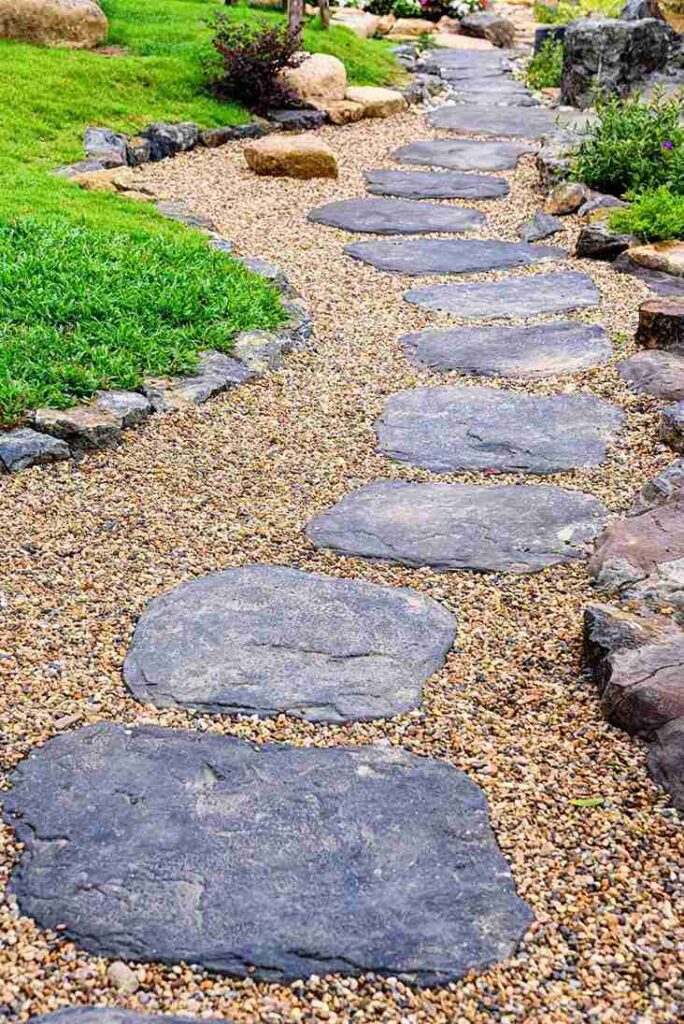
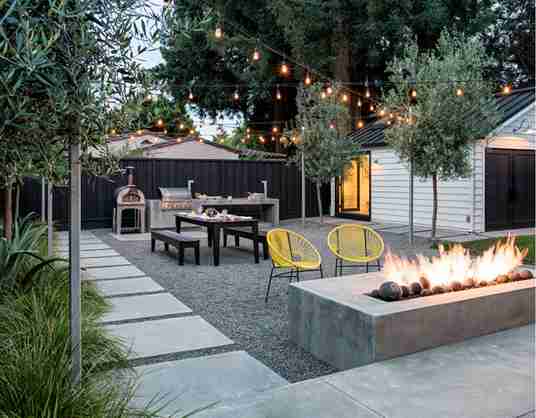
Stepping stones work well in Japanese garden decor because they introduce rhythm and intentional spacing. They also help a space feel designed without needing many decorative objects.
Material options
- Natural stone: durable, grounded, ages well
- Concrete pavers: workable for budgets, best kept simple and unpatterned
Spacing tip
The most practical method is to test-walk the layout. Place stones temporarily, walk the path with your normal stride, and adjust until the steps feel natural.
Finish detail
Leaving small gaps between stones for moss, gravel, or fine groundcover softens the edges and prevents the path from feeling like leftover patio material.
Gravel Areas That Add Calm Without Extra Maintenance
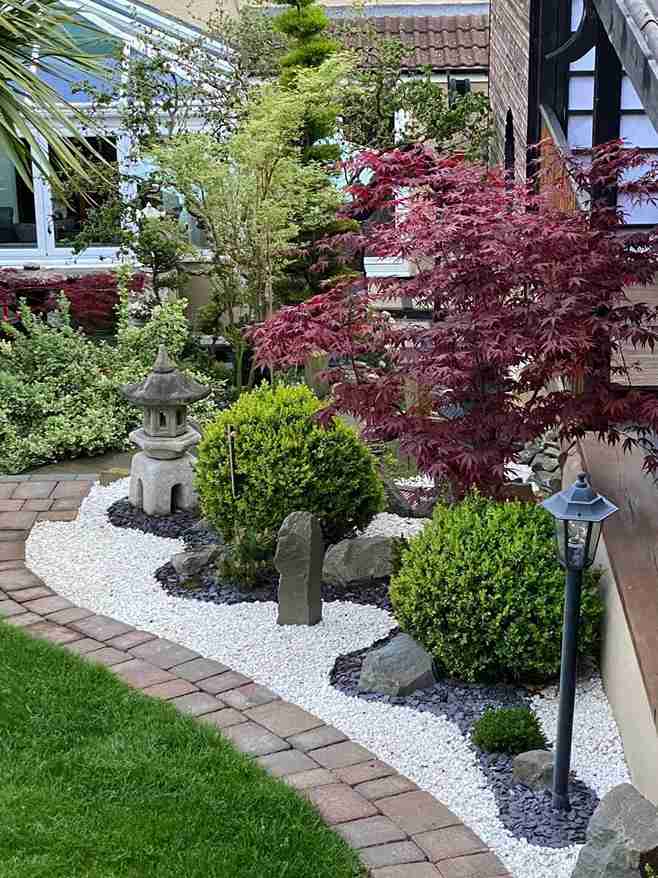
A small gravel zone is one of the simplest ways to create a quiet garden moment. It can function like a Zen garden corner, even in a compact patio, because it reads as intentional negative space.
How to Make Gravel Look Designed
The difference between calming gravel and messy gravel comes down to containment.
- Use one gravel type consistently
- Install edging so the boundary stays crisp
- Level the base so it feels stable underfoot
- Use weed barrier beneath
- Rake occasionally, but keep the pattern simple
A wooden rake makes raking feel less like a chore and more like a quick reset. If you want the meditative effect, keep the gravel area small enough that maintaining it feels manageable.
Stone Placement That Creates Structure
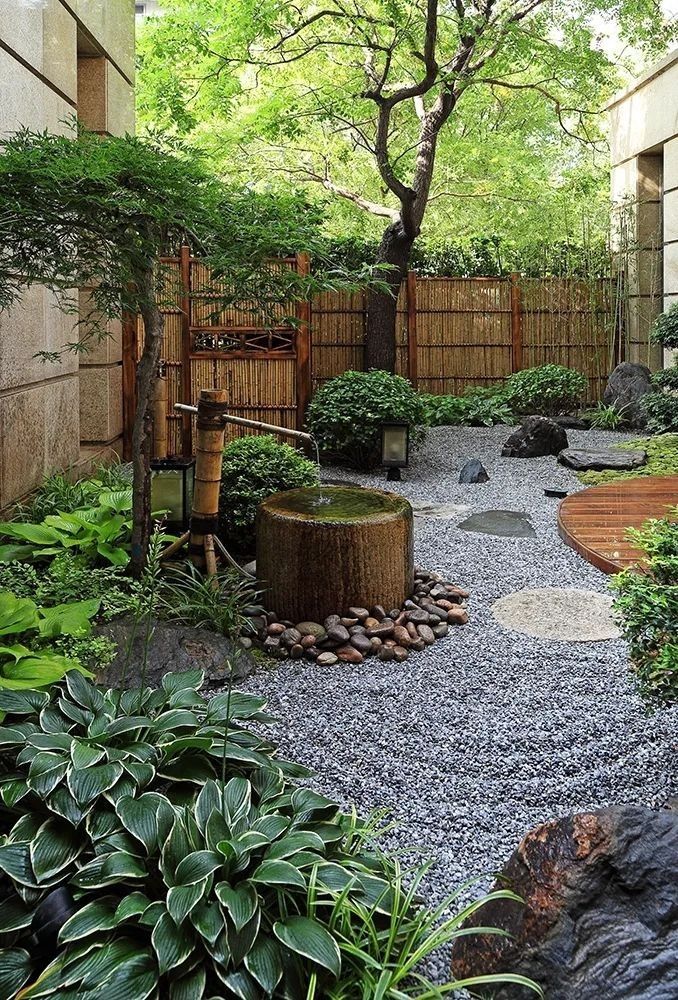
In Japanese garden decor, rocks are not filler. They act as visual anchors. A well-placed stone grouping can make the entire garden feel grounded, even if the plantings are still young.
Key Rule: Bury the Base
A rock that sits on top of soil reads like a prop. A rock that is partially sunk into the ground reads like it belongs. Setting stones so the base is buried slightly helps them look established.
Balance Without Symmetry
Instead of creating matching pairs, aim for visual balance:
- Mix vertical and horizontal stones
- Group stones in odd numbers
- Leave space around the grouping so it reads as a focal point
If you like symbolism, rocks are often interpreted as mountains, islands, or earth forms, but practical placement and proportion matter more than memorizing meanings.
Minimal Planting That Still Feels Lush
A Japanese inspired planting style is not empty. It is curated. The garden feels calm because there are fewer plant types, repeated thoughtfully, and shaped intentionally.
A Simple Planting Structure
- Structure layer: evergreen forms that hold the garden together year-round
- Softness layer: groundcovers and grasses that add movement
- Seasonal layer: one or two plants that provide bloom or fall color
A useful rule of thumb is a 70/30 balance: 70 percent structure, 30 percent seasonal interest. This keeps the garden from feeling chaotic as seasons change.
Good Structure Alternatives
Classic Japanese pines are not realistic everywhere, and forcing “authentic” plants in the wrong climate often leads to stress and constant maintenance. Instead, prioritize shape and longevity.
Depending on region and conditions, structure can come from:
- Compact conifers
- Junipers
- Yew or holly in suitable climates
- Well-shaped shrubs that tolerate pruning
For softness:
- Hakone grass or sedges
- Ferns in shade
- Moss where moisture is consistent
- Low groundcovers that do not require frequent trimming
Seasonal highlights can be as simple as:
- A Japanese maple placed as a focal plant
- Azaleas or camellias where they thrive
- A restrained bloom moment rather than many competing flowers
Pruning matters more than quantity. In this style, the garden looks calm because forms are maintained.
Bamboo: Use It Carefully
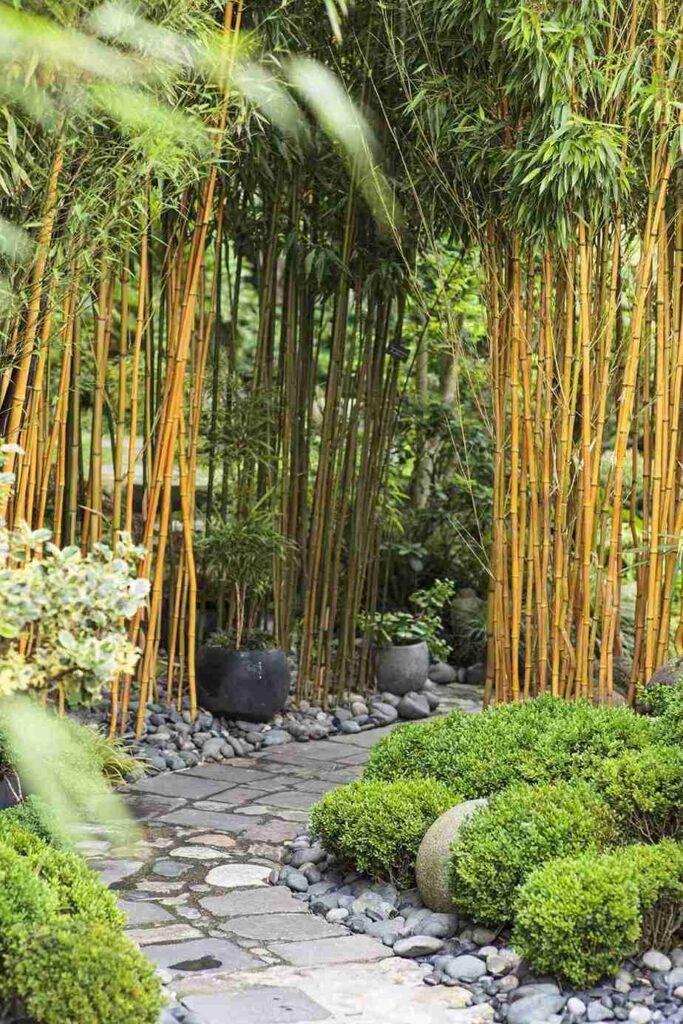
Bamboo can contribute privacy, vertical rhythm, and a quiet backdrop, but it requires restraint and containment.
- Favor clumping bamboo over running varieties
- Avoid planting running bamboo directly in open ground without a barrier
- Consider bamboo screens for the look without underground spread
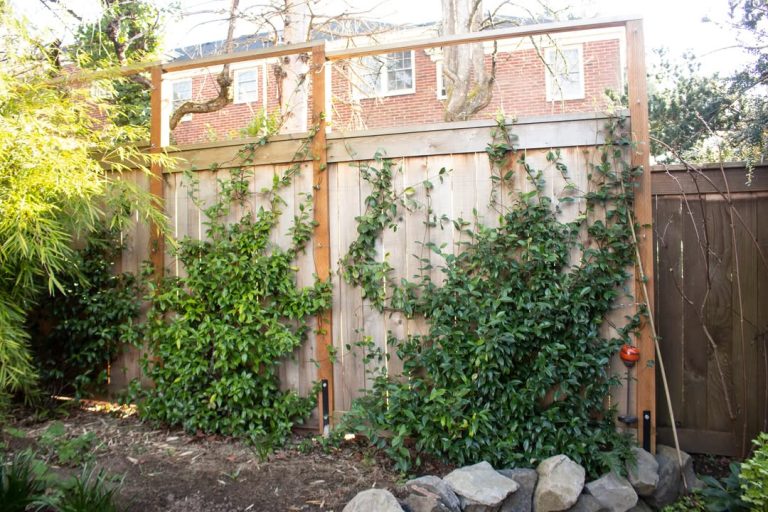
A bamboo screen can provide the visual effect of seclusion and hide and reveal, especially along fencing, without creating long-term issues.
Water Features That Feel Soothing, Not Demanding
Water changes the atmosphere immediately. Even a small, simple feature can make a garden feel calmer because sound and movement become part of the experience.
Tsukubai Style Basin
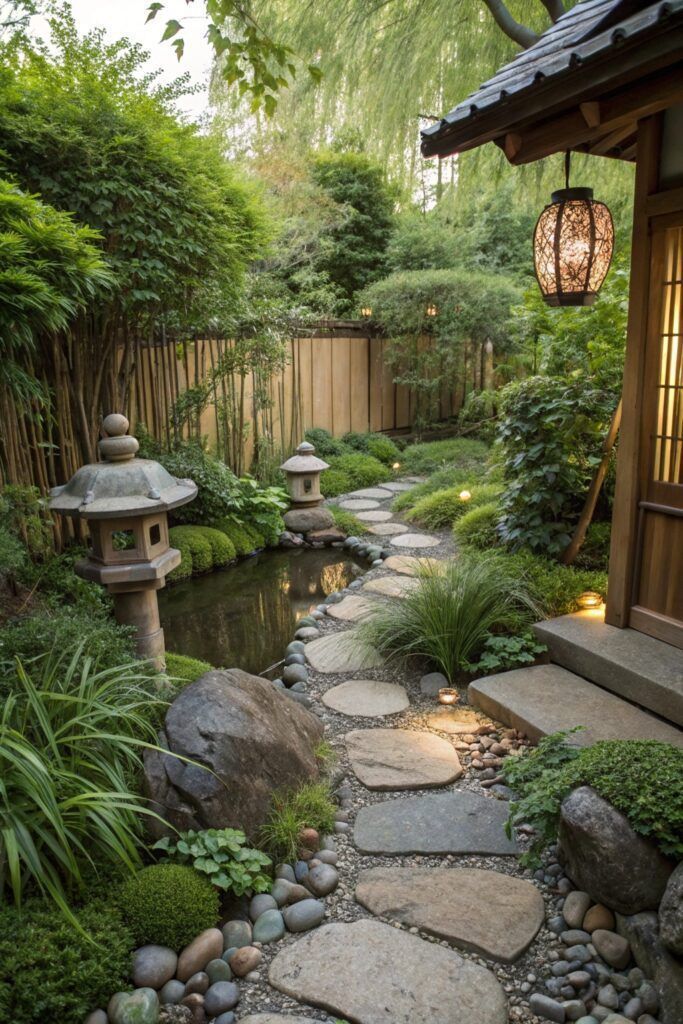
A basin feature is one of the most accessible ways to introduce water without building a pond. The most important quality is the sound, not the size.
- Choose a basin that looks substantial
- Use a hidden reservoir and small pump for circulation
- Position it where you will hear it from seating or an entry path
Birdbaths as a Low-Commitment Option
A Japanese-style birdbath or low basin works well because it keeps the form grounded. It also brings in natural movement through birds, which often adds to the quiet mood.
Practical Note on Pumps
Pump noise can undermine the entire point of a water feature. If you are sensitive to sound, prioritize a quieter, adjustable-flow pump.
Ornaments: Use One or Two, Not a Collection
Japanese garden decor often includes lanterns, pagodas, or statues, but these elements work best when treated as focal points rather than accessories.
Stone Lanterns
A lantern can act as an anchor near:
- A path turn
- A water feature
- A seating area edge
Statues and Figurative Elements
If you use a statue, placement matters more than the statue itself. The most natural look comes from partially tucking it into planting so it feels discovered, not staged.
The goal is to avoid the souvenir shop effect. One meaningful piece will read more refined than many small items.
Boundaries and Thresholds: The Realistic Version of “Japanese Buildings”
You do not need a teahouse to create Japanese garden rhythm. What often matters more is a threshold.
- A simple wooden gate
- A screen that creates a partial view
- A pergola in natural wood tones
- A path entry that shifts pace
These elements create the feeling of moving into a calmer zone. That transition is part of what makes the space feel intentional.
Three Layout Recipes With What Goes Where
These are not strict plans. They are starting structures that reduce decision overload.
Small Patio or Small Yard
- One stepping-stone path along an edge
- One gravel corner contained with edging
- One focal plant, such as a small maple or shaped evergreen
- One basin or low birdbath near the destination point
- Optional: one lantern near the turn in the path
This works because the garden has a slow route and a calm endpoint.
Medium Yard
- Curved stepping-stone path that avoids straight lines
- A small water feature placed so you hear it before you see it
- Evergreens along boundaries for structure
- Soft groundcover or grasses inside the structure
- A bamboo screen or partial fence panel to create hide and reveal
This layout is often the most livable because it balances movement and seating.
Larger Yard
- Multiple zones: path zone, seating zone, and feature zone
- One rock grouping as a long-distance focal point
- Water feature scaled to your willingness to maintain
- Planting used to frame views and create partial visibility
In larger spaces, distance is your design tool. Place focal elements so they are seen gradually.
Common Mistakes That Make “Japanese Garden Decor” Feel Off
Most issues come from excess rather than lack.
- Too many ornaments competing for attention
- Too many plant varieties instead of repetition
- Straight, fast paths with no pause points
- Dyed mulch or overly bright materials
- Overlighting at night
- Ignoring pruning and shape
- Running bamboo planted without a containment plan
When the garden feels busy, the fix is usually to remove or simplify, not to add.
FAQs
How Do I Make My Garden Look More Japanese Without Rebuilding Everything?
Start by editing. Reduce the number of decorative items and plant varieties, then introduce one slow path and one focal point such as a stone grouping or basin. Use natural materials and muted colors. When the space has clear structure and negative space, it begins to read calmer without needing major construction.
What Are the Essential Elements of Japanese Garden Decor?
Stone, planting, and either real or symbolic water are the most consistent elements. Stone provides structure, planting provides softness and seasonal change, and water or gravel adds movement or visual calm. You do not need large quantities of any of these. Balance and placement matter more than scale.
What Is the Difference Between a Japanese Garden and a Zen Garden?
A Zen garden is typically a karesansui dry landscape with raked gravel representing water and minimal planting. A broader Japanese garden may include ponds or basins, more layered planting, and a path designed for strolling. Many home gardens combine elements, using Zen style gravel areas with Japanese style planting and stone.
What Plants Make a Garden Feel Japanese?
Evergreen structure, restrained groundcovers, and one or two seasonal highlights create the effect. Depending on region, you can use compact conifers, junipers, well-shaped shrubs, grasses, ferns, and a single Japanese maple. The goal is repetition and form, not collecting every plant associated with Japanese gardens.
How Do I Keep the Look From Feeling Themed or Overdone?
Limit ornaments to one or two pieces and choose natural, weatherable materials. Keep the palette muted, avoid bright mulch and busy patterns, and prioritize form and spacing. If you are unsure, simplify first and add only after the layout and planting feel coherent.
Final Thoughts
Japanese garden decor is compelling because it does not rely on more objects to create a stronger feeling. The calm comes from structure, spacing, and materials that feel grounded. A slow path, a restrained plant palette, and one stone or water focal point can change the entire atmosphere of a yard.
Start small and let time finish the design. Notice where light falls, where you naturally pause, and which views you want to soften. In this style, the garden improves through gentle refinement, not through adding more.