How I Unclog My Shower Drain When It Starts Flooding My Feet

I always know it’s coming when the water stops disappearing right away. At first it drains… just slower than usual. Then one morning I’m standing there with water creeping up around my ankles, wondering how it got this bad again.
Every single time, the cause is the same. Hair. Mixed with soap. Stuck together like it planned this.
I’ve unclogged my shower drain more times than I care to admit, and after a lot of trial and error, I’ve figured out what actually works. I always start simple, avoid harsh chemicals unless I have to, and work my way down the list until the water finally runs like it should.
What I Pull Out from Under the Sink First
Before I touch the drain, I grab everything I might need. Trust me, you don’t want to stop halfway through to hunt for tools with wet sleeves.
- Rubber gloves
- Screwdriver
- Flashlight
- Drain claw or a wire hanger I don’t care about
- Pliers
- Baking soda
- White vinegar
- A kettle or pot for hot water
- Toilet plunger
- Handheld drain snake
- Plastic bag for the gross stuff
Step 1: I Always Check the Obvious First
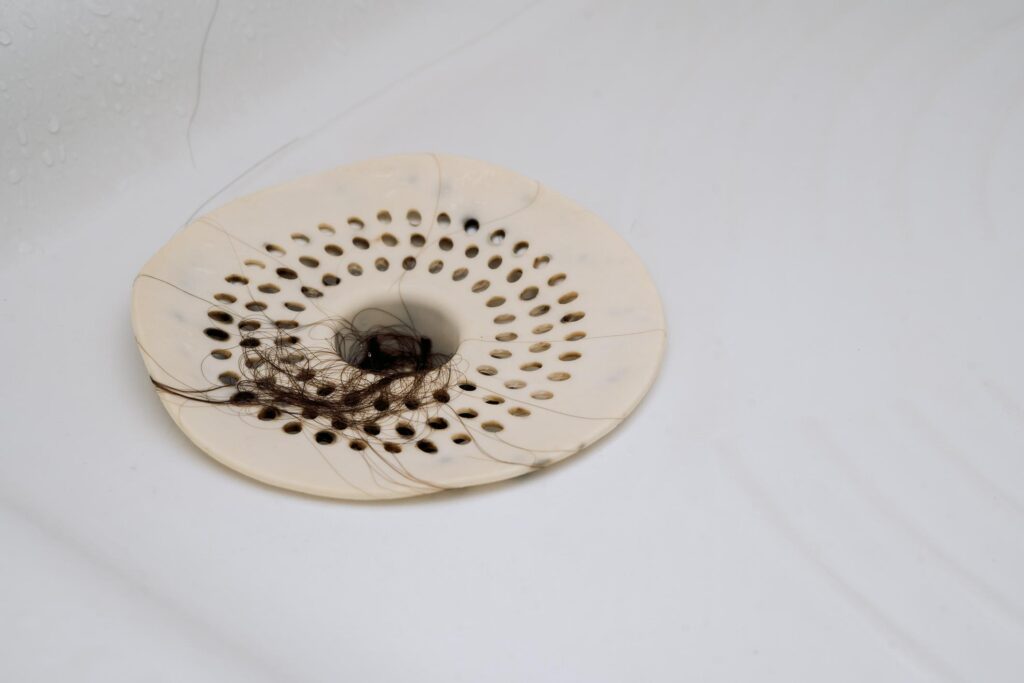
Most of the time, the clog is right there, just hiding under the drain cover.
I unscrew the cover, shine a flashlight down the drain, and brace myself. If I can see hair, I know I’m about to win this round pretty quickly.
I bend a hook into a wire hanger or use a drain claw and slowly pull everything out. It’s never cute, but it’s satisfying. Once nothing else comes up, I run hot water to see if the drain keeps up.
Sometimes that’s all it takes. When it is, I stop right there and celebrate quietly.
Step 2: When That’s Not Enough, I Grab the Plunger
If the water still lingers, I move on to pressure.
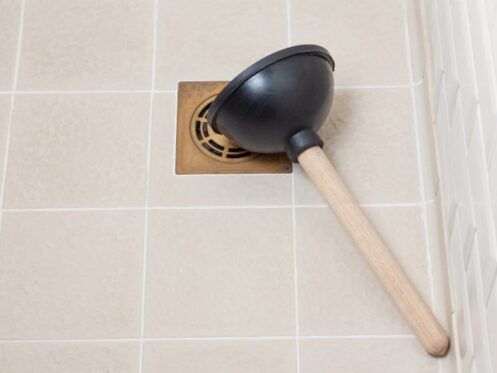
I place the plunger over the drain, add just enough water to seal it, and start pumping. I usually give it a good minute or two. You can actually feel when the clog loosens. The water suddenly starts moving again, and that’s when I know it worked.
I finish by flushing the drain with hot water and watching very closely to make sure it stays clear.
Step 3: The Drain Snake Comes Out for Stubborn Clogs
This is the step I try to avoid, but it gets the job done.
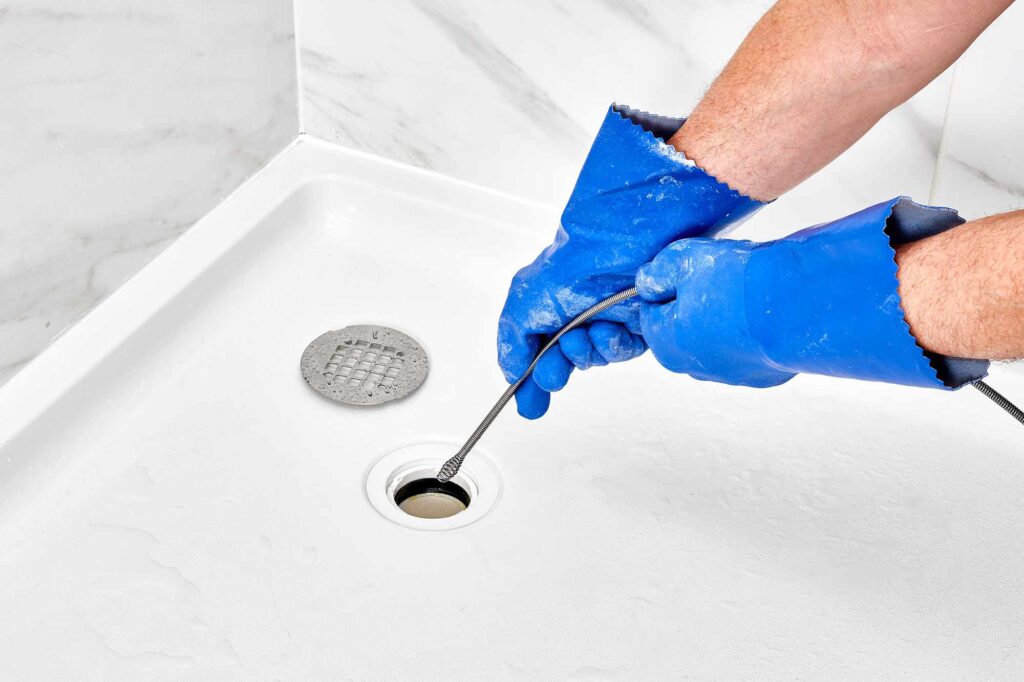
I feed the snake into the drain until it won’t go any farther. Then I twist the handle slowly and pull it back up. The first pull is usually… impressive. I clean the snake, repeat the process, and keep going until nothing else comes out.
Once I’m done, I run hot water for a full minute to make sure everything is gone.
Step 4: My Favorite Low-Effort Fix with Baking Soda and Vinegar
When the drain isn’t fully blocked but feels sluggish, this is my go-to.
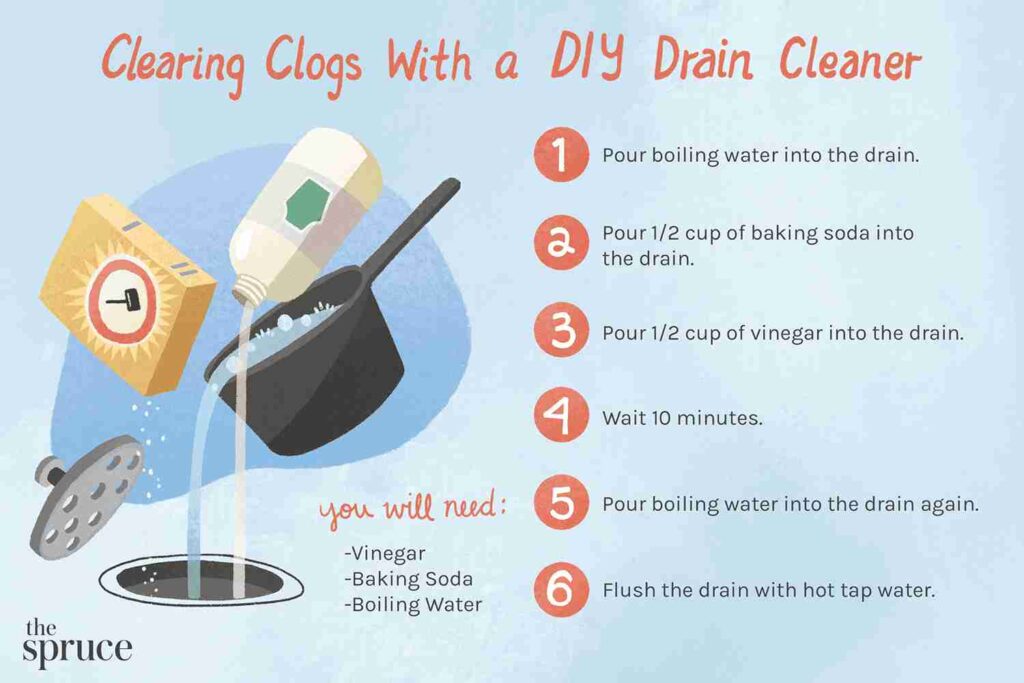
I pour boiling water down the drain first, then add a cup of baking soda followed by a cup of white vinegar. It starts bubbling right away, which always makes me feel like something useful is happening.
I let it sit for about 15 minutes, then flush it with more boiling water. If I want extra power, I block the drain, fill the shower with hot water, wait a bit, and let it all rush out at once.
Step 5: Chemical Drain Cleaner Is My Absolute Last Resort
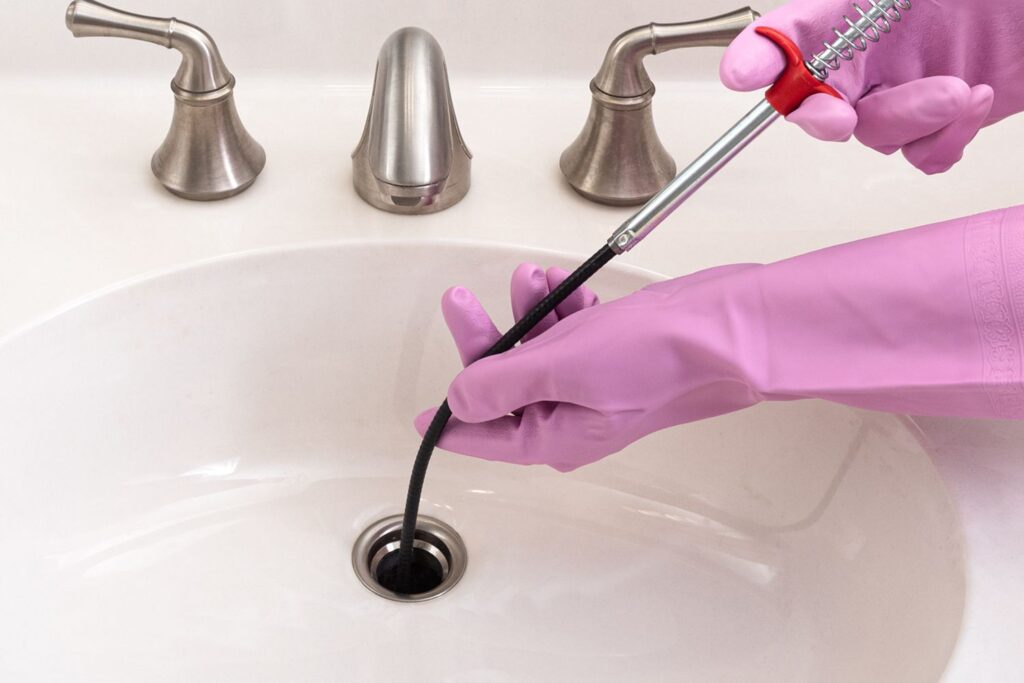
I only use drain cleaner if nothing else works. I remove any visible hair first, wear gloves, and follow the instructions exactly. I avoid using it regularly because I don’t want to ruin my pipes just to fix one clog.
What I Do Now to Keep This from Happening Again
I learned the hard way that prevention matters.
- I use a hair catcher every time
- I pull hair out after a few showers
- I flush the drain with hot water once a week
- I do a baking soda and vinegar clean once a month
Since sticking to this routine, I deal with way fewer clogs, and when one does pop up, I know exactly how to handle it.
If you’ve ever stood in a slowly flooding shower wondering where you went wrong, you’re not alone. A little patience, the right tools, and a few DIY tricks go a long way.