
How to Clean a Mattress at Home: Simple Steps for a Fresh Bed

I used to think cleaning a mattress meant calling professionals or dragging it outside and spraying it down like a rug. Turns out, it’s way simpler than that. Once I figured out a realistic routine, it became one of those chores that feels satisfying instead of overwhelming.
If you’ve ever stripped your sheets and thought, “Should I be doing more?” — this guide is for you. I’m going to walk you through exactly how I clean my mattress at home, what actually works, what doesn’t, and how to keep it fresh long term without overcomplicating it.
Why Cleaning Your Mattress Is Not Optional
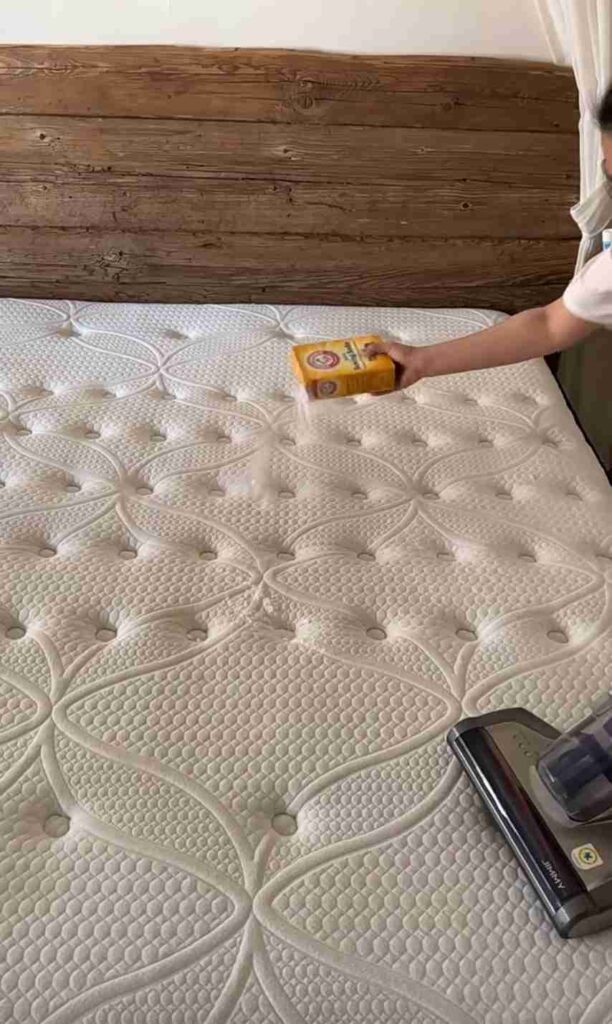
Your mattress absorbs more than you realize.
Every night, your body sheds dead skin cells. You sweat — even if you don’t notice it. Dust settles. If you have pets, their dander ends up there, too. If you snack in bed (no judgment), crumbs add to the mix.
Over time, this creates:
- Odor buildup
- Dust mite growth
- Allergen accumulation
- Fabric discoloration
- Bacteria growth
When I started cleaning my mattress regularly, I noticed:
- Less morning congestion
- Fewer random skin breakouts
- Fresher-smelling room
- Sheets are staying cleaner longer
A mattress isn’t just furniture — it’s something you spend 6–8 hours on every night. It deserves maintenance.
How Often Should You Clean a Mattress?
This is a realistic, low-stress schedule that keeps a mattress fresh without turning it into a major chore. Consistency matters more than intensity.
Weekly
Wash sheets and pillowcases. This is your first line of defense against sweat, oils, and dust. Clean bedding protects the mattress underneath and keeps allergens from building up.
Monthly
Vacuum the mattress surface using the upholstery attachment. This removes dust, skin cells, and debris that settle through sheets over time.
Wash the mattress protector so it can keep doing its job properly.
Every 2 to 3 Months
Sprinkle baking soda over the mattress, let it sit for at least thirty minutes, then vacuum it off. This helps neutralize odors naturally.
Do a quick spot check for stains or moisture marks and address them early before they set.
Twice Per Year
Do a full deep clean, including spot treatment if needed.
Rotate or flip the mattress if the manufacturer allows it. This helps prevent uneven wear and sagging.
Sticking to this routine keeps your mattress cleaner, fresher, and longer lasting, and it prevents the need for aggressive cleaning later.
Tools You Actually Need (Nothing Fancy)
You do not need professional steamers or specialty sprays. Here’s what I use:
- Vacuum with upholstery attachment
- Baking soda
- Mild dish soap or laundry detergent
- White vinegar
- Hydrogen peroxide (for tough stains)
- Enzyme cleaner (for pet or urine stains)
- Clean white cloths
- Spray bottle
- Fan or open windows
- Mattress protector
Optional:
- Essential oils
- Clothing steamer (used carefully)
Step By Step: How I Clean My Mattress
Step 1: Strip Everything
Start by removing everything so you are working with a fully exposed mattress surface.
Remove: sheets, pillowcases, the mattress protector, and the bed skirt if you use one.
Wash the bedding right away. If the fabric care label allows it, hot water helps reduce dust mites and breaks down oils and sweat. Even if you cannot use hot water, a full wash cycle is still worth it because clean bedding keeps the mattress cleaner longer.
Once the bed is stripped, you can actually see what you are dealing with, and cleaning becomes much easier.
Step 2: Vacuum Thoroughly
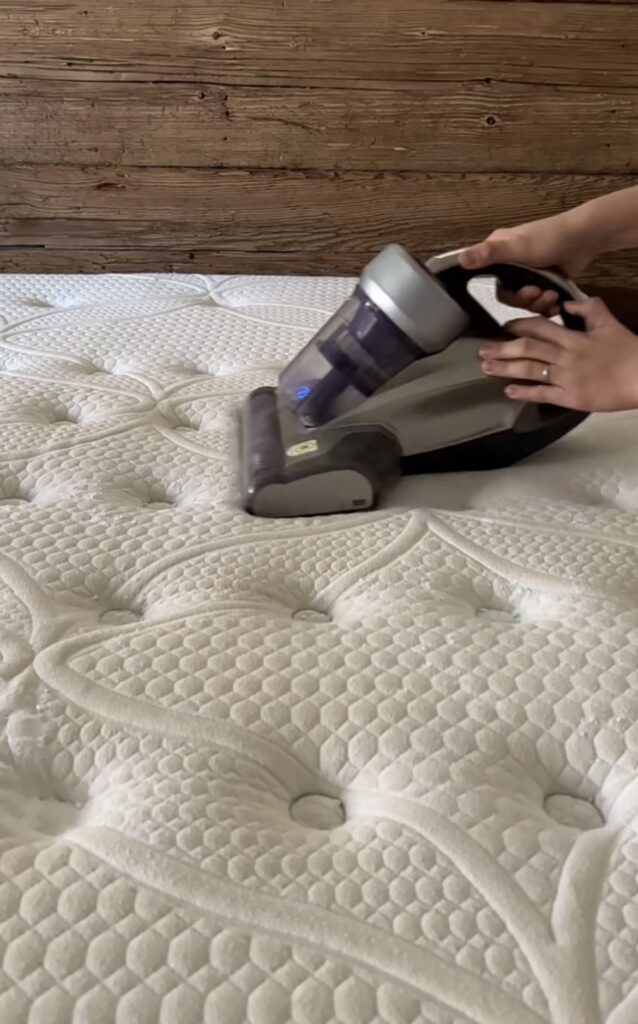
This step is the difference between a mattress that is truly cleaner and one that only smells better.
Vacuum the entire top surface, then move to the sides, edges, seams, and any tufting. Use slow, overlapping strokes like you are mowing a lawn. The seams matter most because that is where dust, crumbs, hair, and debris collect and hide.
If you skip vacuuming or rush it, the baking soda step will not work as well because the powder ends up sitting on top of the dust instead of reaching the surface where odors live.
Step 3: Deodorize With Baking Soda
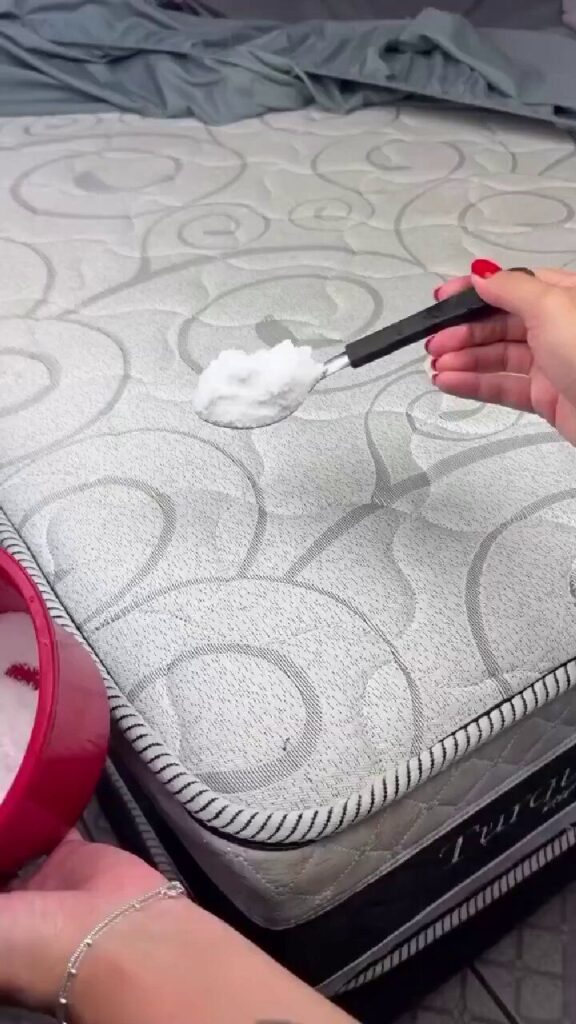
Baking soda is one of the safest and most reliable ways to freshen a mattress without harsh chemicals.
Sprinkle a generous, even layer across the entire surface. You want coverage, not piles, so it can absorb odor and moisture evenly.
If you like a light scent, you can mix five to ten drops of lavender or tea tree oil into the baking soda first. Shake it in a container so the oil distributes evenly. This keeps the scent subtle and prevents wet spots.
Let it sit for at least thirty minutes. One to two hours is ideal, and up to four hours is even better if you have time. The longer it sits, the more moisture and odor it can pull from the fabric.
If possible, open windows while it rests. Air circulation helps everything dry and freshen faster.
Step 4: Vacuum Again
Once the baking soda has had time to work, vacuum thoroughly again.
This second pass removes the powder along with loosened dust and fine debris that was pulled up during deodorizing. Take your time here, especially along seams and edges, so you do not leave residue behind.
By the end of this step, the mattress usually smells noticeably fresher and feels cleaner even before you add the bedding back on.
Spot Cleaning Different Types of Stains
The most important rule to remember is simple: never soak your mattress. Always blot instead of scrubbing or saturating. Too much moisture can get trapped inside the mattress and lead to mold or lingering odors.
Sweat And Yellowing
Sweat stains are common and usually respond well to gentle cleaning.
Mix together:
- 1 cup warm water
- 2 tablespoons white vinegar
- 1 teaspoon mild detergent
Lightly mist the stained area. Do not drench it. Blot gently with a clean cloth until the stain begins to lift.
Once the area is slightly damp, sprinkle baking soda over it. Let it dry completely, then vacuum. This step helps remove both discoloration and odor.
Blood Stains
Always use cold water for blood stains. Warm water can set protein stains permanently.
Blot the area with cold water first. If the stain remains, apply a small amount of hydrogen peroxide. Bubbling is normal and means it is working.
Blot gently until the stain lifts. Allow the area to air dry fully before covering it again.
Urine Or Pet Accidents
This is where an enzyme cleaner is essential. Enzyme cleaners break down the bacteria that cause odor instead of masking it.
Steps to follow:
- Blot excess liquid immediately
- Apply enzyme cleaner lightly according to instructions
- Let it sit for the recommended time
- Blot again with a clean cloth
- Allow to air dry completely
Do not try to cover urine odor with fragrance. If bacteria are not broken down, the smell will return.
Vomit Stains
Blot immediately to remove as much moisture as possible.
Mix equal parts water and white vinegar. Blot gently until the stain lifts. Avoid rubbing.
Afterward, sprinkle baking soda over the area to absorb remaining odor. Once dry, vacuum thoroughly.
How To Deep Clean A Mattress Twice Per Year
When I do a full reset, I follow the same order every time so nothing gets missed.
- Strip the bed completely
- Wash all bedding
- Vacuum the mattress thoroughly
- Spot clean any visible stains
- Apply baking soda and let sit for at least two hours
- Vacuum again
- Rotate the mattress
- Let it air out near a window
If possible, stand the mattress upright near a sunny window for several hours. Sunlight helps reduce bacteria and odors naturally and gives the mattress a true refresh.
Sticking to this process a couple of times per year keeps the mattress fresh, extends its lifespan, and prevents buildup that is much harder to remove later.
Sanitizing Without Overdoing It
People often ask about disinfecting sprays, especially after illness or allergy flare ups.
You can lightly mist a diluted vinegar solution using a fifty fifty mix of water and vinegar. This helps neutralize bacteria and odors without harsh chemicals. A light application of a disinfectant spray is also fine if it is labeled safe for soft surfaces.
The key is restraint. Never soak the mattress or spray until damp. Moisture trapped inside foam layers can lead to mold growth and lingering smells that are difficult to fix.
One of the safest and most effective natural sanitizers is sunlight. Letting the mattress air out near a sunny window helps reduce bacteria and freshen fabric without adding moisture or chemicals.
How To Clean A Memory Foam Mattress
Memory foam mattresses need gentler care than traditional innerspring mattresses because the foam absorbs moisture easily and dries slowly.
Never soak a memory foam mattress.
Avoid heavy steam cleaning and do not use harsh chemicals. Excess moisture can become trapped inside the foam layers and lead to odor, mold, or structural damage.
For routine cleaning, start by vacuuming gently to remove dust, hair, and debris. Use an upholstery attachment and avoid pressing down too hard.
When treating stains, blot lightly with a barely damp cloth. Do not scrub and do not oversaturate the area. Less moisture is always better with foam.
For odor control, sprinkle baking soda evenly across the surface and let it sit for at least thirty minutes, or longer if possible. Vacuum thoroughly afterward.
Always allow extended drying time before putting bedding back on. Good air circulation is important. If possible, open windows or use a fan to speed drying.
Avoid steam cleaners unless the manufacturer explicitly approves their use. Steam can damage the internal foam structure and shorten the life of the mattress.
Removing Odors Without Harsh Chemicals
If your mattress smells stale but does not have visible stains, simple methods usually work best.
Start by sprinkling baking soda evenly over the entire surface. Let it sit for at least four hours so it can absorb odors and moisture. Afterward, vacuum thoroughly using an upholstery attachment. Once finished, air out the mattress with a fan or open windows to help refresh the fabric.
For stronger odor control, you can use a very light misting solution. Mix one cup of water with one tablespoon of white vinegar and add five drops of an essential oil if you like a subtle scent.
Lightly mist the surface and allow it to air dry completely. Do not oversaturate the mattress. Moisture should evaporate quickly rather than soak in.
These methods neutralize odors without harsh chemicals and help keep the mattress fresh without damaging the materials.
Dust Mite and Allergen Control
Dust mites thrive in mattresses.
To reduce them:
- Wash bedding weekly in hot water
- Vacuum monthly
- Use a mattress protector
- Keep bedroom humidity below 50%
Since adding monthly vacuuming, my allergy symptoms improved noticeably.
Bed Bug Prevention and Response
If you suspect bed bugs:
- Strip all bedding
- Wash on hot
- Vacuum mattress thoroughly
- Check seams for black specks
- Consider professional treatment
Steam can help kill bed bugs, but memory foam may not tolerate heavy steam.
Use caution and follow manufacturer guidelines.
Airing Out Your Mattress Properly
Airing out is underrated.
- Open windows
- Run a fan
- Leave the mattress uncovered for several hours
If possible, lean the mattress upright.
Fresh air removes trapped moisture and odors.
Protecting Your Mattress After Cleaning
The best cleaning strategy is prevention.
I always use a mattress protector now.
A good protector should be:
- Waterproof
- Breathable
- Machine washable
I wash mine monthly.
It protects against:
- Sweat
- Spills
- Dust
- Pet accidents
After one iced coffee disaster, I never skip it.
Rotating and Flipping
Rotating every 3–6 months prevents uneven wear.
Some mattresses cannot be flipped, so check the manufacturer’s instructions.
Rotation extends mattress lifespan significantly.
What Not to Do
Here’s what I’ve learned to avoid:
- Never soak the mattress
- Never use harsh bleach
- Never scrub aggressively
- Never remake the bed before fully dry
- Never ignore a persistent odor
Moisture is the biggest enemy.
Signs Your Mattress Needs Immediate Cleaning
- Visible yellowing
- Persistent odor
- Allergy flare-ups
- Recent spill
- Musty smell
If any of these happen, don’t delay.
When Professional Cleaning Makes Sense
If you have:
- Severe staining
- Mold suspicion
- Bed bug infestation
- Deep odor issues
Professional cleaning may be worth it.
But for routine maintenance, home cleaning works perfectly well.
The Realistic Routine That I Actually Stick To
This is the routine that keeps my mattress fresh without turning cleaning into a full-day project. It is simple, repeatable, and realistic.
Monthly
I vacuum the mattress using an upholstery attachment and wash the mattress protector. This alone prevents most buildup and keeps odors from settling in.
Quarterly
I do a baking soda treatment to deodorize the surface and follow it with a thorough vacuum once it has had time to sit.
Twice per year
I do a full deep clean and rotate the mattress. This helps with both hygiene and even wear over time.
The total hands-on effort is about forty-five minutes. The rest of the process is just waiting while the baking soda works or the mattress airs out.
Final Thoughts
Cleaning your mattress at home isn’t complicated. It just requires consistency and smart technique.
Strip the bed. Vacuum thoroughly. Use baking soda. Spot clean gently. Let it dry fully. Protect it afterward.
Once you build it into your routine, it becomes simple.
And honestly? Crawling into a freshly cleaned bed at night feels completely different. Cleaner air. Fresher sheets. Better sleep.
It’s one of those small home habits that quietly improve everything.