How to Choose Bathroom Tiles Without Regretting It Later (A Calm, Honest Decision Guide)

Bathroom tile feels like a fun decision right up until you remember you’re choosing something you’ll step on wet, scrub half-asleep, and stare at every day for years. It’s not a pillow. It’s not a “we can swap it later” situation. It’s heavy, expensive, and permanently attached to your life.
So if you’re in that moment where you’ve narrowed it down to a few options but your gut feels weird, that is not you being dramatic. That’s your brain trying to protect you from future regret.
Here’s the mindset shift that makes tile decisions easier:
Tile is not just style. Tile is behavior.
How it grips when wet. How it stains. How it cleans. How it ages. How it looks in your lighting at 7 AM when you’re tired and honest.
This guide is built to help you decide without spiraling or ending up with a bathroom that photographs well but annoys you daily.
And we’re doing it in the order that actually prevents regret:
- Where the tile goes
- Safety
- Maintenance
- Style
- Budget
That order saves you.
Tile Placement Cheat Sheet (Save This)
If you only read one part, make it this. Tile placement is where people accidentally create long-term problems.
Shower Floor
- Best: small porcelain mosaic (2 inch or smaller), matte or textured
- Why: more grout lines = more traction and better slope to drain
- Avoid: large glossy tiles (slippery and hard to slope)
Shower Walls
- Best: porcelain or ceramic, larger format is great
- Finish: satin or glossy is fine
- Why: easier to wipe down, fewer grout lines, reflects light
Main Bathroom Floor
- Best: matte or lightly textured porcelain
- Format: medium to large depending on how flat the subfloor is
- Why: porcelain handles water and traffic without drama
Backsplash + Niches
- Best: ceramic or porcelain; glass or mosaic for accents
- Why: these are “detail zones” where small tile looks intentional
If you place the right tile in the right place, you can make almost any aesthetic work. If you ignore placement, even the prettiest tile becomes a regret project.
Step 1: Decide What You Need the Tile to Survive
Before color, before pattern, ask these:
- Is this a kids-and-chaos bathroom or an adult spa situation
- Is the shower used daily or occasionally
- Will you be cleaning this weekly or… whenever you remember
- Do you hate grout lines or do they not bother you
- Do you walk barefoot and hate cold floors
- Is this your forever home or a resale timeline situation
Your answers don’t have to be “right.” They just need to be honest.
Step 2: Choose the Tile Material First (This Controls Regret)
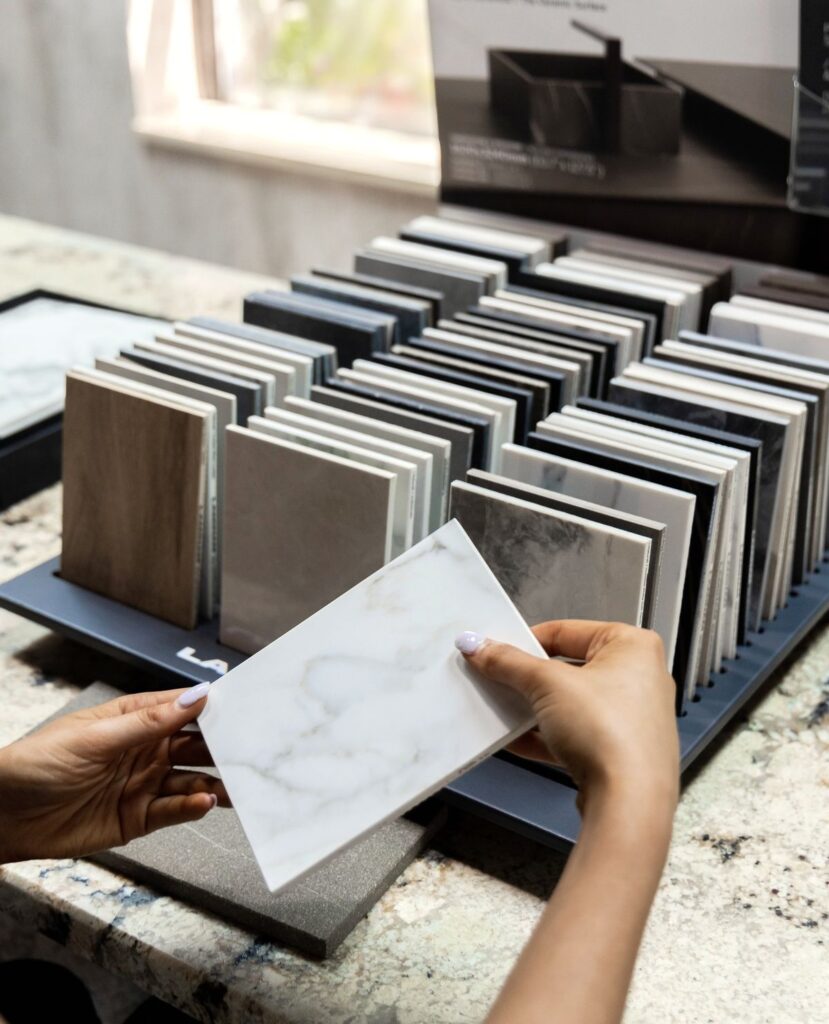
Material decides durability, water behavior, and how much maintenance you’re signing up for.
Porcelain Tile (The Safest All-Around Choice)
If I had to recommend one material for most bathrooms without knowing anything else, it would be porcelain.
Best for: floors, shower floors, shower walls, basically all wet zones
Maintenance reality: dense, water-resistant, no sealing required, holds up long-term
Price range: usually $3 to $10 per square foot, with a strong sweet spot around $4 to $6
Porcelain is the calm choice. It’s the tile that quietly handles life without asking you to become a maintenance person.
And modern porcelain can look like marble, limestone, concrete, terrazzo, even wood. You can get the vibe without the upkeep baggage.
Ceramic Tile (Budget-Friendly With Boundaries)
Ceramic is great, but it’s not the same as porcelain.
Best for: walls, backsplashes, some floors if floor-rated and low traffic
Maintenance reality: easy to clean, but more prone to chips and wear
Price range: often $1 to $4 per square foot
If you want classic subway tile walls or a clean backsplash, ceramic is a great move. For busy main floors, porcelain usually wins.
Natural Stone (Marble, Limestone, Slate)
Stone is beautiful. It’s also honest. It will show wear and react to water and cleaners.
Best for: feature walls, low-traffic floors, primary baths where upkeep is expected
Maintenance reality: requires sealing and resealing, can stain and etch, cleaners must be gentle
Price range: often $8 to $25+ per square foot plus higher install cost
Some people love stone because it ages with “character.” Other people feel haunted by one dark spot that appears near the drain and never leaves. Both reactions are valid.
Stone is not wrong. It’s just demanding.
Glass Tile and Mosaics (The Jewelry)
Glass mosaics are beautiful but high maintenance in large areas.
Best for: niches, accents, backsplashes, feature strips
Maintenance reality: more grout lines, water spots show, scrubbing increases
Price range: around $7 to $20 per square foot
Use it like jewelry. A little sparkle in the right spot feels special. Too much becomes work.
Wood Look Porcelain (Warm Without Water Stress)
This is one of the best modern options for people who want warmth but fear water.
Best for: bathroom floors, powder rooms, spa and Japandi vibes
Maintenance reality: behaves like porcelain, very forgiving
Price range: around $4 to $9 per square foot
Just be careful with shower floors. Not all wood look tile has the traction you want when wet.
Step 3: Safety First (Because Wet Tile Is Not a Mood)
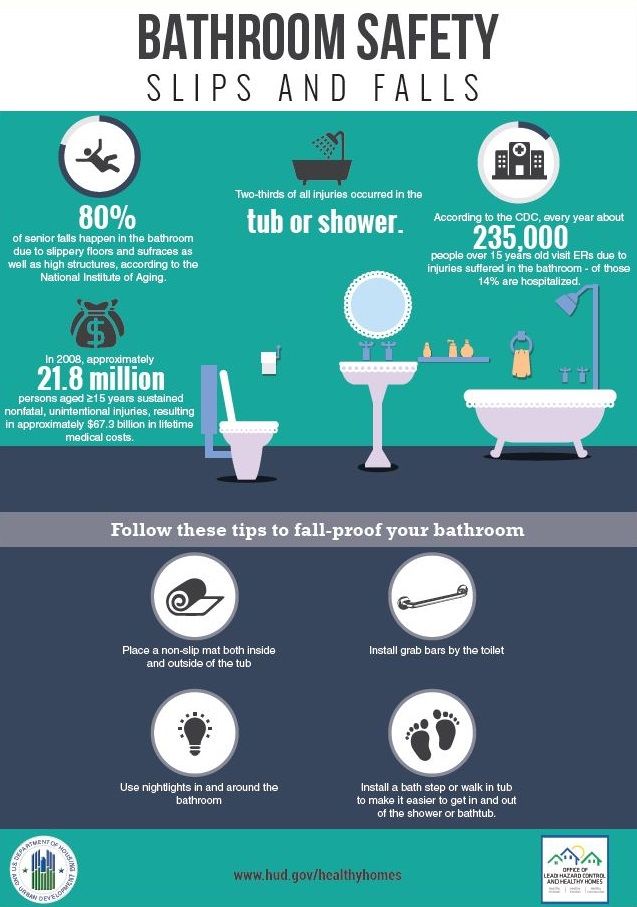
Slip resistance is boring until it isn’t.
If a tile is smooth and glossy, it will be slippery when wet. Period.
Finish Guide: Matte vs Satin vs Polished
- Matte: best for floors, hides spots, usually better traction
- Satin or honed: middle ground, softer sheen, can work on floors if traction is good
- Polished or glossy: great for walls, not for floors
Shower Floors Need Extra Grip
The safest shower floor tile is:
- small format
- matte or textured porcelain
- lots of grout lines for traction
Yes, more grout lines means more cleaning. But grout is also grip. Bathrooms are all about tradeoffs.
Step 4: Maintenance and Grout (This Is Where Daily Life Happens)
People obsess over tile, then accidentally choose grout that ruins their peace.
Tile Size vs Grout Cleaning
- Larger tile: fewer grout lines, easier cleaning, calmer look
- Smaller tile or mosaics: more grout lines, better traction, more scrubbing
If you hate cleaning, go larger and choose grout that doesn’t show everything.
Grout Color Guide (Save Yourself Later)
- Matching grout: calm, seamless, forgiving
- Mid-tone grout: the most realistic for daily life
- White grout: classic but stains easily
- Dark grout: dramatic but shows soap residue fast, especially in showers
If you want a clean look without constant maintenance, mid-tone grout is usually the sweet spot. It hides both dirt and soap marks better than extremes.
Grout Type Matters Too
If you can choose, ask about stain-resistant grout or epoxy grout options. Epoxy grout can be harder to install but more resistant to staining in wet zones. Not every budget or installer prefers it, but it’s worth discussing.
Step 5: Waterproofing Clarification (This Prevents Future Panic)
This is the part people skip because it feels “behind the scenes.”
Tile and grout are not waterproof. The waterproofing system behind them is.
For showers, ask your installer:
- What waterproofing method are you using
- How are seams treated
- Is the shower pan system part of the waterproofing plan
- How is the niche waterproofed
- What brand system is being installed
If the answer is vague, keep asking. You’re not being difficult. You’re protecting your walls.
Step 6: Pattern and Layout (Where Great Tile Choices Get Ruined)
You can choose the perfect tile and still hate the final look if layout decisions are sloppy.
The 1/3 Offset Rule
Many rectangular tiles have a slight bow. If installed in a 50 percent offset, high points meet and create lippage, that uneven edge you feel underfoot.
A 1/3 offset reduces that risk and usually looks calmer. This is not a trend choice. It’s tile physics.
Why 50 Percent Offset Is Often Discouraged
It’s not “wrong.” It’s risky, especially with large format tiles. Unless your tile is very flat and your floor is prepped well, it can look wavy or feel uneven.
You might not notice it immediately. You’ll notice it later when light hits it sideways or your sock catches a tiny ledge.
Large Format Tile Reality
Large tiles:
- reduce grout lines
- can make rooms feel bigger
- look clean and modern
But they demand a flatter subfloor, which often increases labor costs. That’s why people pick large tile to avoid grout and then gasp at the install quote.
Step 7: Color (This Is Emotional, So Treat It Carefully)
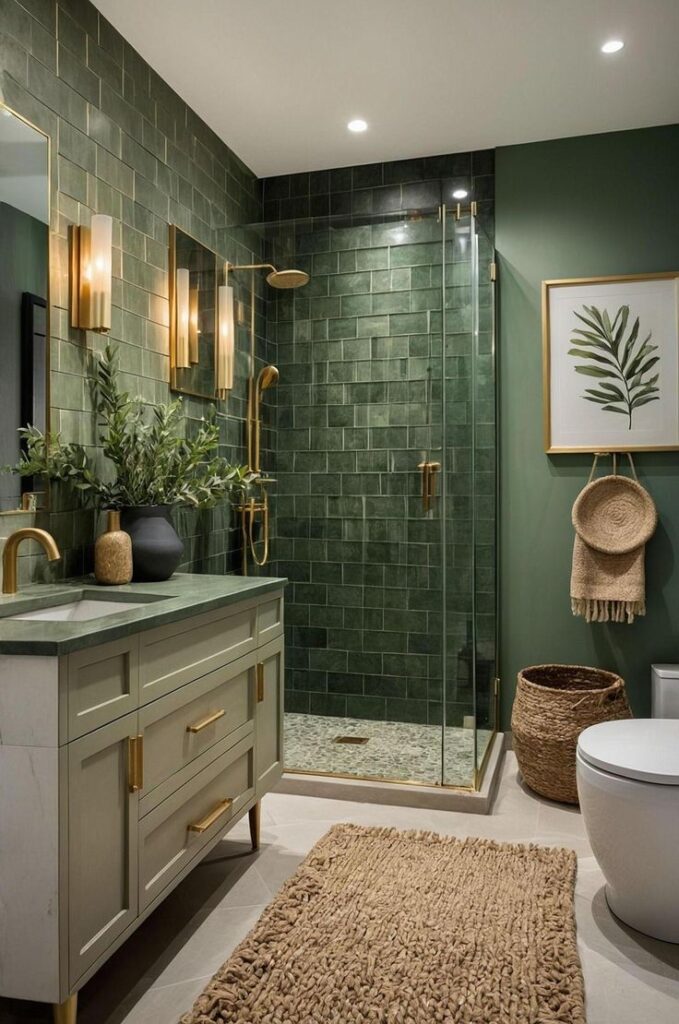
Color choices are where people get seduced. And then slowly annoyed.
Light Tile
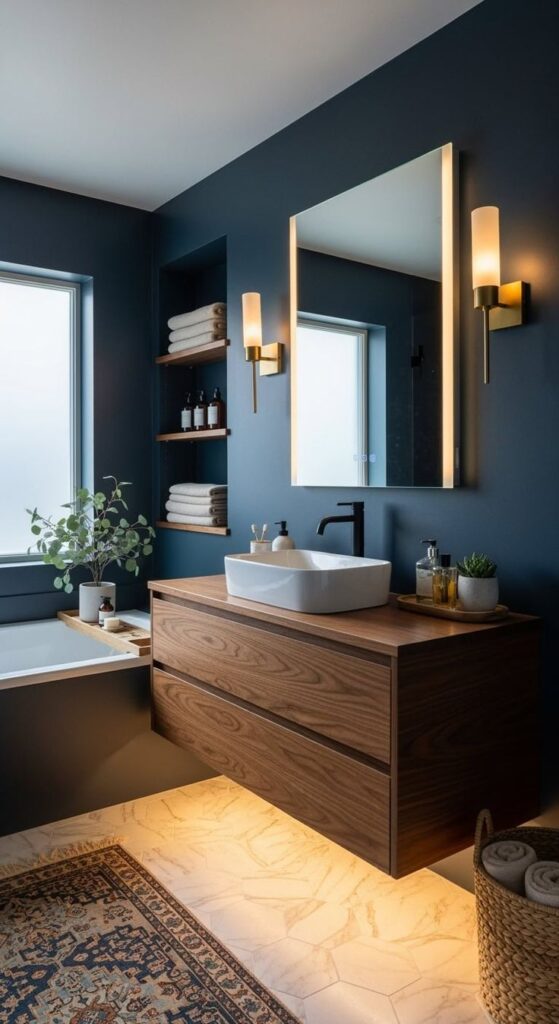
- makes bathrooms feel bigger and brighter
- tends to be more forgiving with dust
- usually reads cleaner longer
Dark Tile
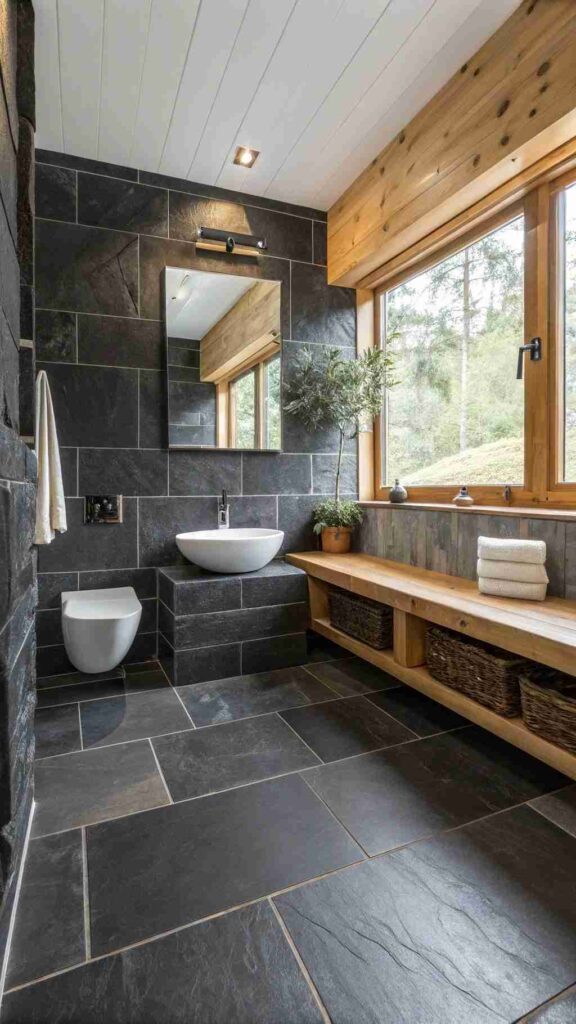
- dramatic and cocoon-like
- can show water spots, hair, and soap residue more easily
- needs intentional lighting to avoid feeling heavy
Dark tile is not bad. It’s just honest.
Lighting Changes Everything
A tile that looks warm in the store can look cold at home under your bulbs. North-facing bathrooms can make cool tones feel icy. Warm bulbs can soften neutrals and keep them from feeling flat.
Also: grout color changes tile perception more than people expect.
Step 8: Matching Tile to Your Style (Reliable Recipes)
These are not rules. These are safe combos that prevent “too many ideas” syndrome.
Modern
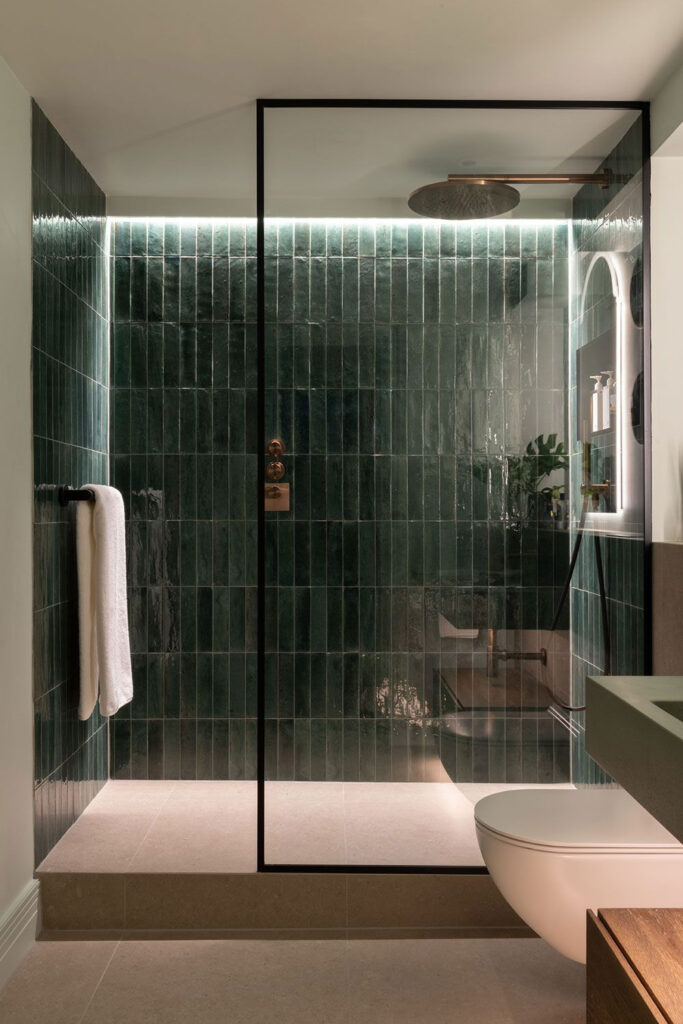
- Floor: large-format matte porcelain, concrete-look or stone-look
- Wall: simple, clean shapes
- Avoid: too many competing patterns
Minimal
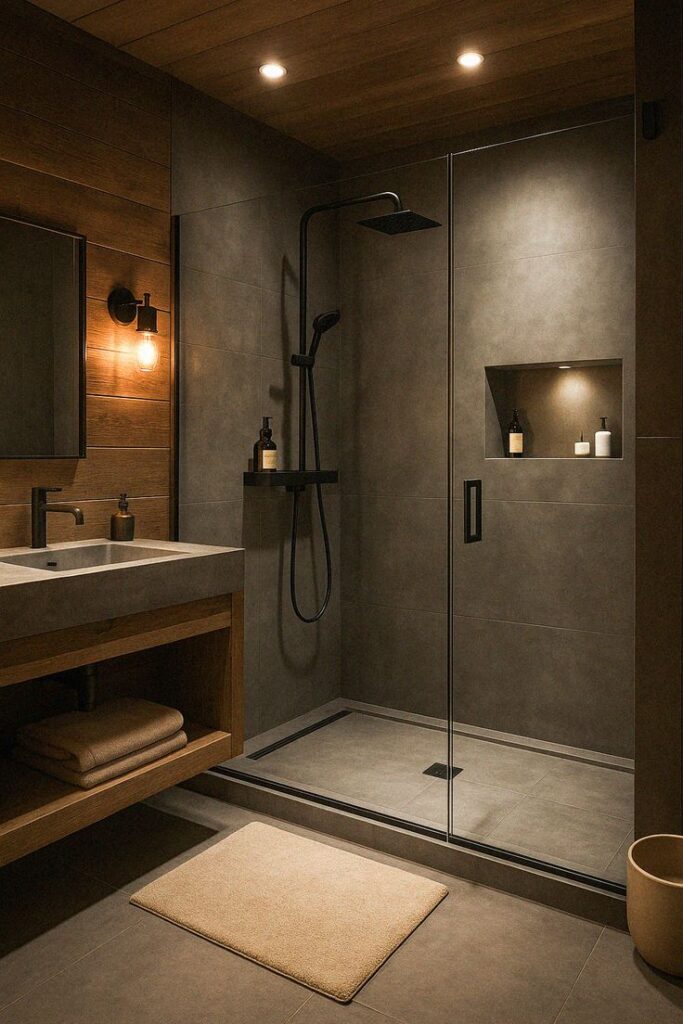
- Floor: large matte porcelain in warm neutral
- Wall: stacked rectangular tile with subtle grout
- Avoid: high-contrast grout everywhere unless you want a grid vibe
Spa or Japandi
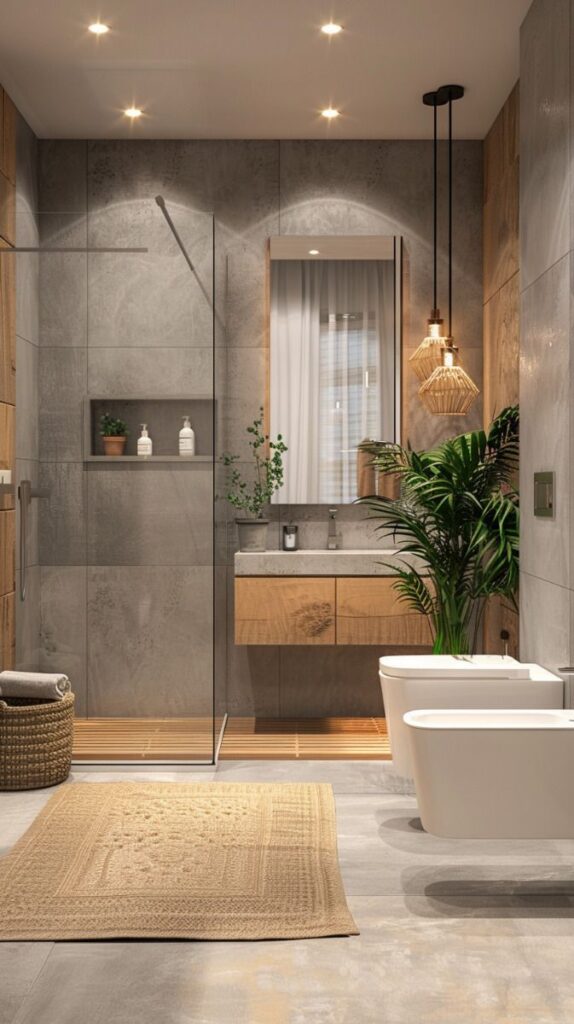
- Floor: wood-look porcelain
- Wall: warm stone-look porcelain or soft textured off-white
- Avoid: glossy everything
Classic
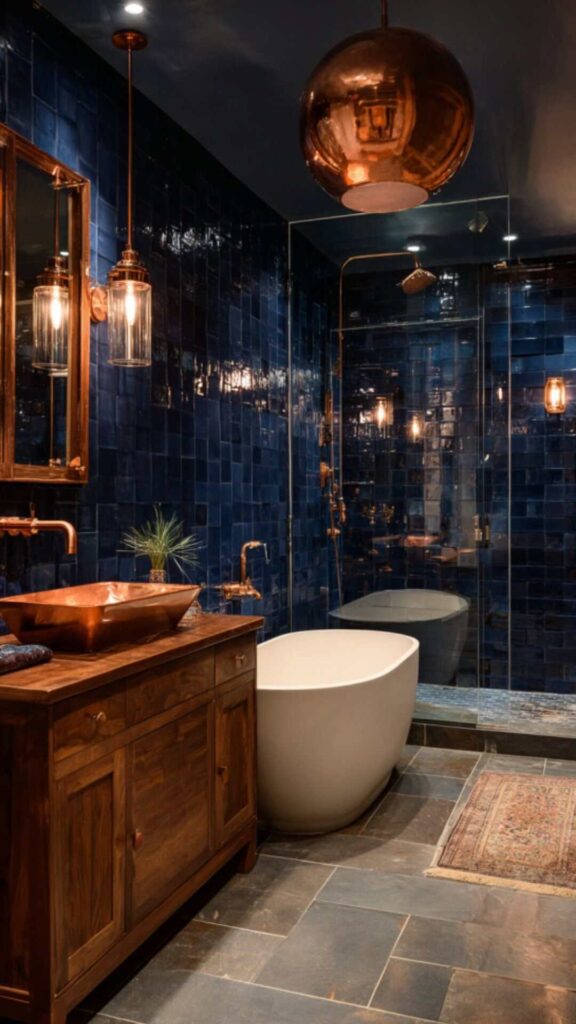
- Floor: small hex porcelain or marble-look porcelain
- Wall: subway tile with calm grout
- Avoid: trend-heavy colors as your main tile
Farmhouse
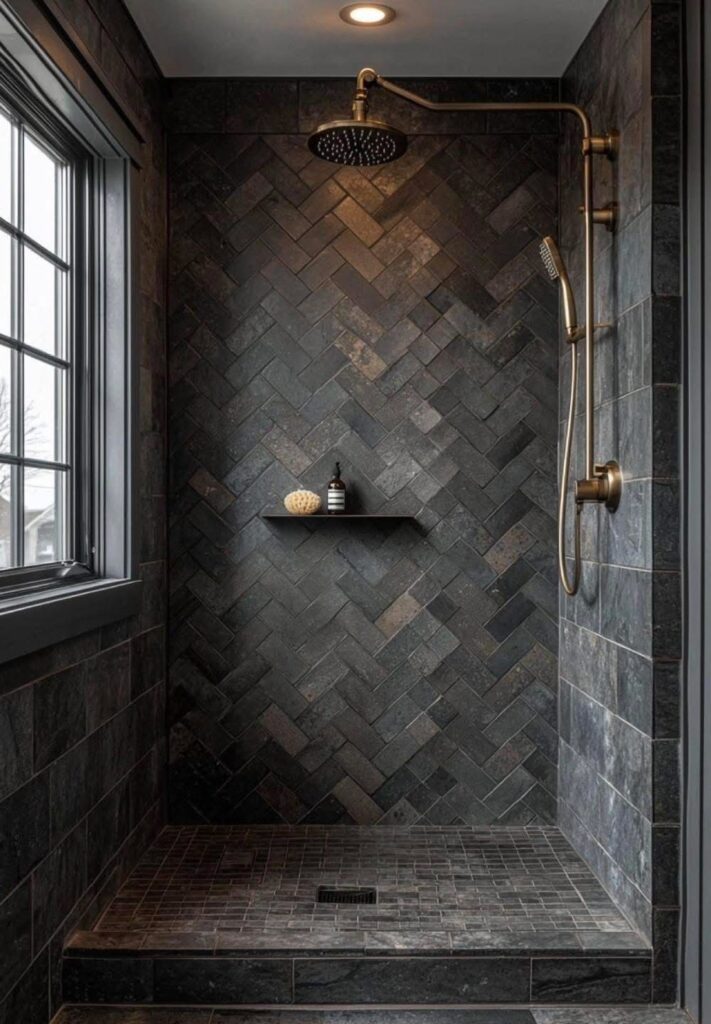
- Floor: stone-look porcelain with variation
- Wall: handmade-look ceramic with warm grout
- Avoid: overly perfect tile plus harsh lighting that feels costume-like
Luxury Hotel
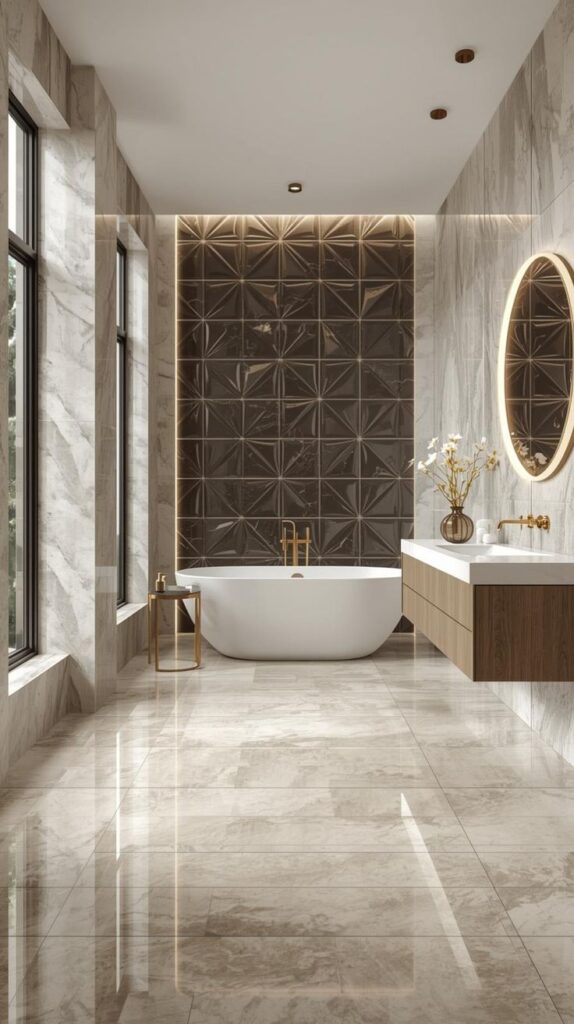
- Floor: large-format porcelain that mimics dramatic stone
- Wall: big simple tile, polished on walls only
- Avoid: multiple statement tiles at once
Tile vs LVP vs Laminate in Bathrooms (Quick Reality Check)
Not everyone wants tile everywhere. That’s fair.
Tile
Most durable and best for wet zones and showers, when installed with proper waterproofing. Can be cold and hard underfoot.
LVP
Great for main bathroom floors outside the shower if you want warmth and quicker install. Not ideal inside showers.
Water-Resistant Laminate
Can work in powder rooms or low-splash spaces but riskier in truly wet bathrooms. Water-resistant is not waterproof.
A common practical combo: tile in the shower, LVP on the main floor, if transitions are planned well.
The Golden Rules of Bathroom Tile (Keep These)
- Choose tile by location first
- Floors need traction, walls can be glossy
- Tile and grout aren’t waterproof, the system behind them is
- Grout choice affects your cleaning life more than you expect
- Avoid tiny sliver cuts
- Large tiles reduce grout but demand a flatter subfloor
- 1/3 offset is often safer than 50 percent
- Labor can cost more than tile, especially with patterns and mosaics
FAQ
What Is the Best Tile for a Bathroom Floor?
Porcelain is the safest choice for bathroom floors because it’s durable, water-resistant, and does not need sealing. Go with a matte or lightly textured finish for better traction and fewer visible water spots. If you want a warmer look, wood-look porcelain is a smart option that still performs like tile.
What Bathroom Tile Never Goes Out of Style?
Neutral porcelain with a calm layout ages the best. Warm whites, soft stone looks, and subtle textures tend to work with changing fixtures and decor over time. Timeless tile is more about choosing a quiet base than chasing one specific shape. You can add personality with paint and accessories instead of ripping out tile later.
What Color Tile Is Best for a Bathroom?
The best color is the one that works in your lighting and feels good at real-life times, like early morning. Warm neutrals are usually the safest long-term because they flatter skin tones and match most finishes. Cool tones can work too, but they often need warmth from lighting, wood accents, or brass to avoid feeling sterile.
Are Dark or Light Bathrooms More Stylish in 2026?
Both are popular. Dark bathrooms feel moody and dramatic, and light bathrooms feel airy and classic. The bigger question is maintenance. Dark tile can show water spots and dust, especially in glossy finishes. Light tile is often more forgiving day to day, especially with mid-tone grout.
What Is the Safest Tile for a Shower Floor?
Small-format matte or textured porcelain is the safest option because it gives more grout lines for traction and handles slope toward the drain better. Avoid polished or glossy tile on shower floors. If you want something bolder, focus on pattern or color, but keep the finish grippy.
What Is the 1/3 Rule for Tile Layout?
Many rectangular tiles have slight bowing, so a 50 percent offset can line up high points and create lippage, which feels uneven underfoot. A 1/3 offset reduces that risk and creates a smoother surface. It’s less about the look and more about avoiding the “why does this feel bumpy” problem later.
Closing Thought
If you take nothing else from this guide, take this: tile isn’t just about how it looks today. It’s about how it behaves on your worst Tuesday.
Wet floor. Hair everywhere. Toothpaste splatter. Someone forgot to run the fan. You’re barefoot and tired and suddenly very aware of the choices you made.
Pick the tile that future-you won’t be annoyed by. That’s the actual win.