How I Decorated My Small Balcony (Step-by-Step for a Really Tight Space)

I used to treat my balcony like a holding zone. Mop bucket. Random planter. One lonely chair that somehow blocked the door, no matter where I put it.
It wasn’t ugly. It just felt awkward. Every time I stepped outside, I had to turn sideways to avoid bumping into something. And because it felt cramped, I barely used it.
So I stopped trying to “decorate” it and started treating it like a tiny room with rules.
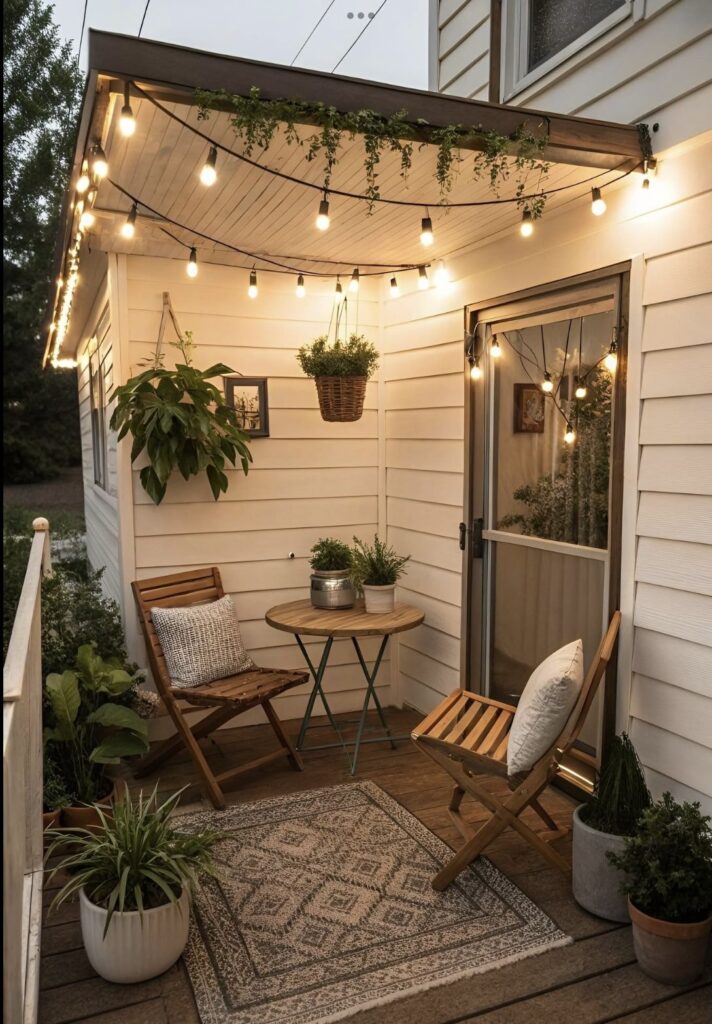
Here’s exactly how I turned my small balcony into a space I actually use, what worked, what didn’t, and what I’d do again in a heartbeat.
Step 1: I Measured the Door Swing First (Because That Was the Problem)
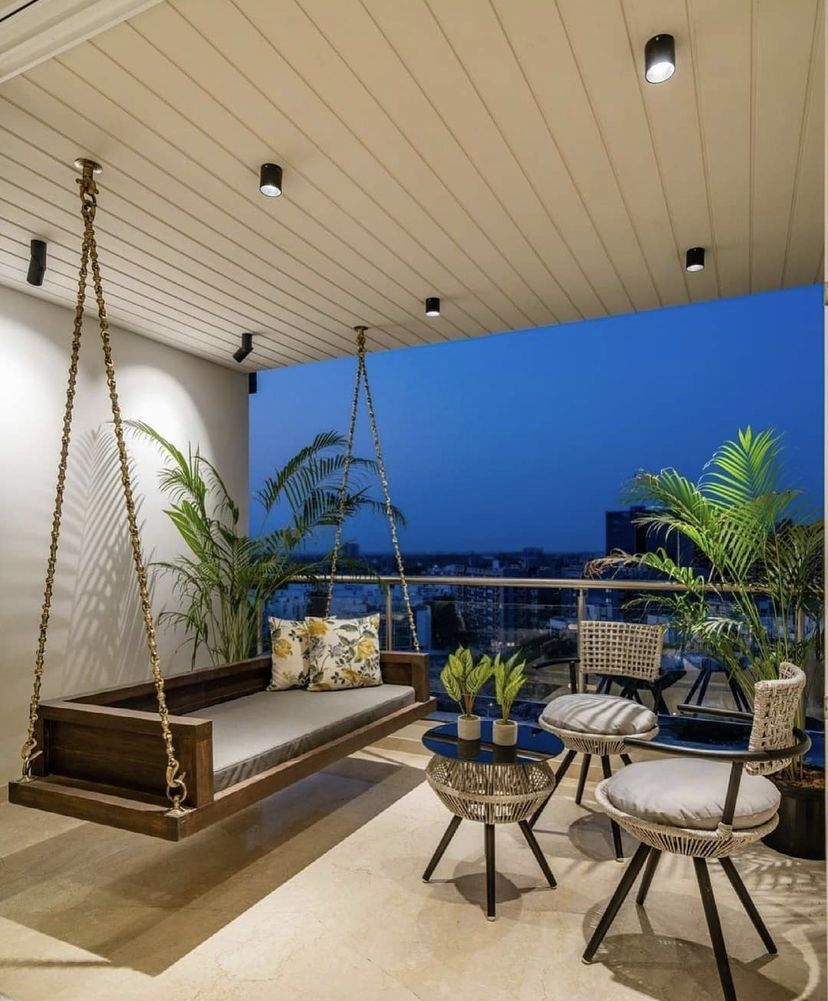
I used to eyeball everything. Big mistake.
The real villain wasn’t my furniture. It was the door swing. Every layout I tried looked fine until I opened the door fully and realized the chair was in the way.
So I grabbed painter’s tape and marked:
- The full door swing arc
- The spot where my feet naturally land
- A straight walking path to the railing
Seeing it taped out on the floor changed everything. I finally understood how little usable space I actually had. And that clarity made the next decisions easier.
If you do one thing today, tape your door swing. It’s humbling but helpful.
Step 2: I Picked One Purpose (Instead of Trying to Make It Do Everything)
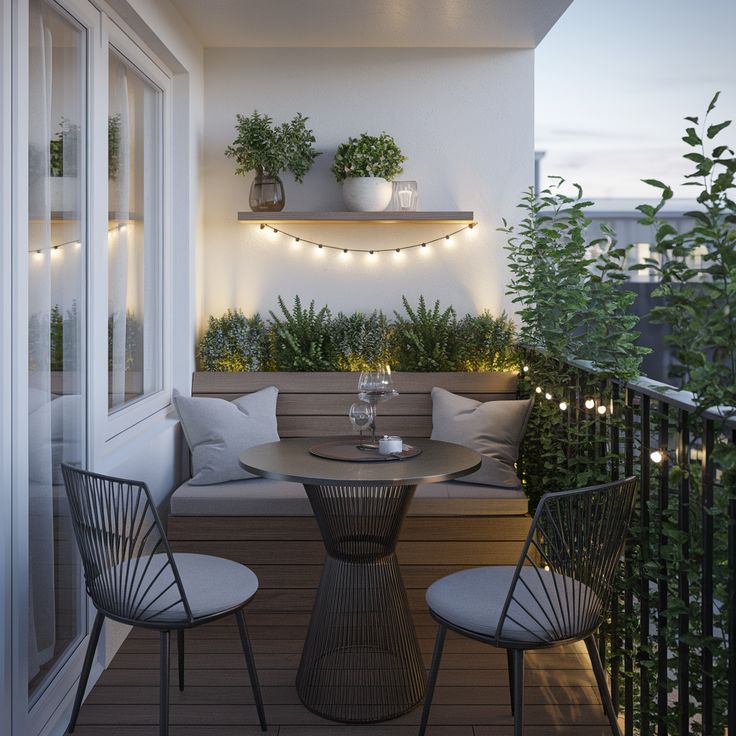
At first, I wanted:
- A dining space
- A lounge zone
- A plant jungle
- And maybe a mini yoga corner
That’s how small balconies turn into chaos.
So I asked myself one honest question:
What would actually make me step outside tomorrow?
For me, it was morning coffee. Not dinner parties. Not full lounging. Just coffee and quiet.
So I chose the coffee nook first.
Everything else became secondary.
That decision alone made the space feel calmer.
Step 3: I chose a Layout That Didn’t fight the Space
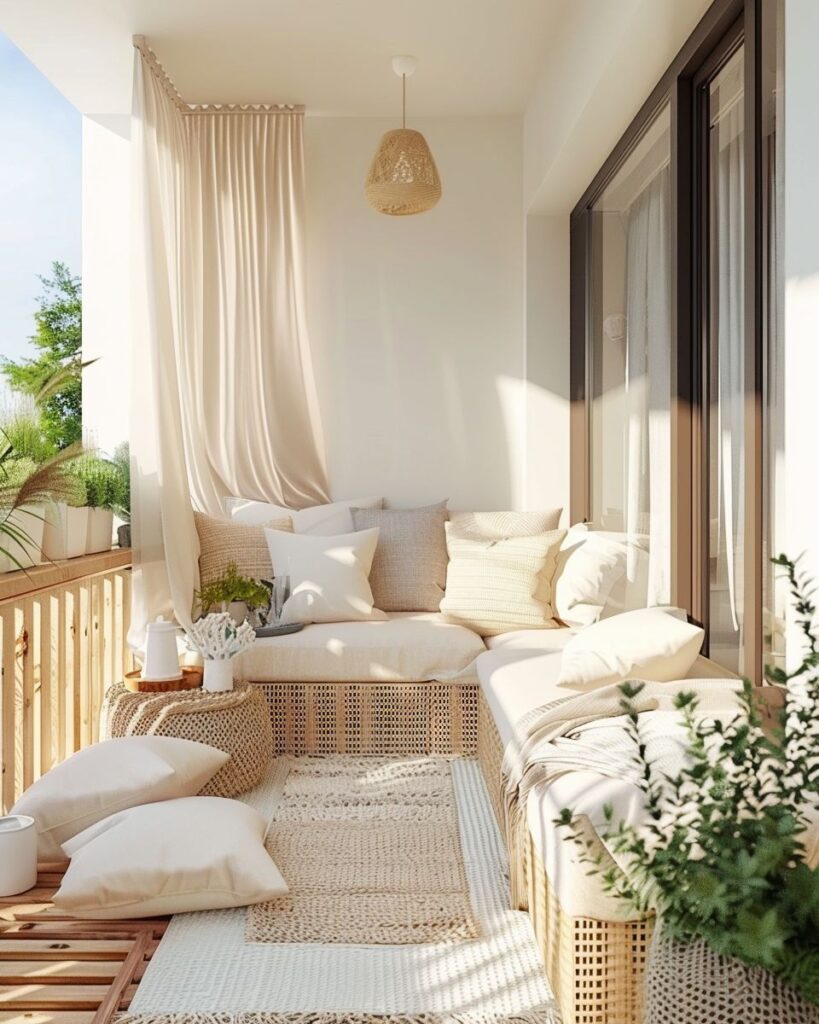
My balcony is long and narrow. Basically, a walkway with ambitions.
So I went with what I now call the “lounge strip” layout:
- Slim bench along the long wall
- Tiny side table near the seat
- Clear center walkway
Before buying anything, I taped the furniture footprints on the floor. I pretended to walk in and out. I pretended to sit. I pretended to carry a drink.
If it felt annoying during the test, I didn’t buy it.
That one habit saved me from returning something bulky.
Step 4: I Bought Slim, Foldable Furniture (Not Cute but Deep)
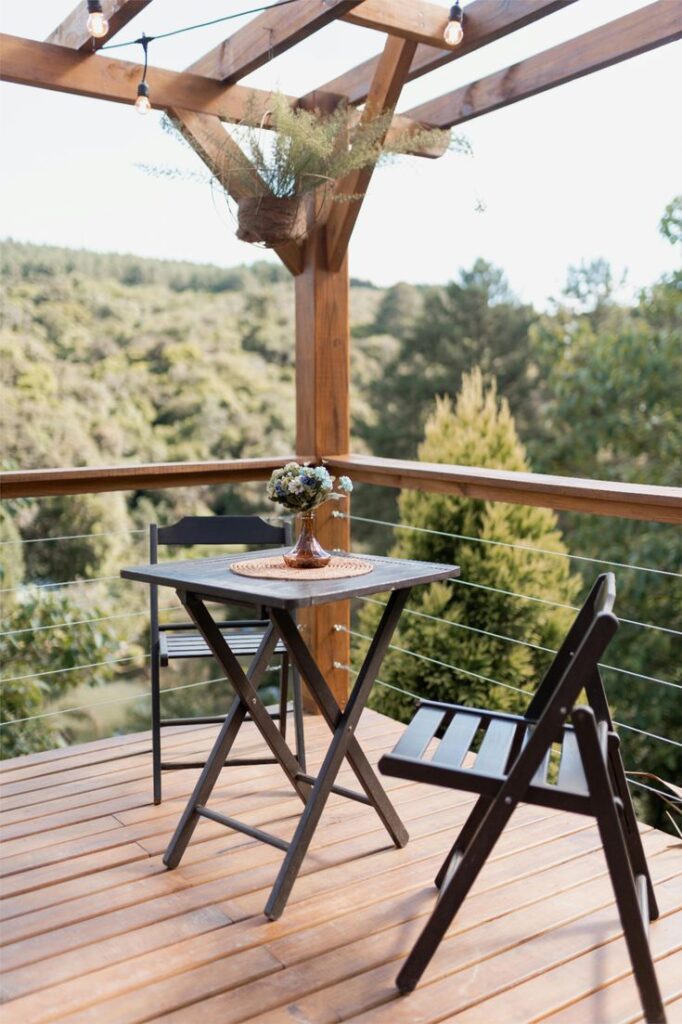
I almost bought a chunky outdoor chair I loved online.
Then I measured the depth.
It would have eaten half my balcony.
Instead, I chose:
- A slim bench with hidden storage
- A small C-table that slides in and out
- No extra stools
It’s not dramatic. But it fits.
And because it fits, I actually use it.
That was the turning point.
Step 5: I Added a Rug (And It Instantly Felt Like a Room)
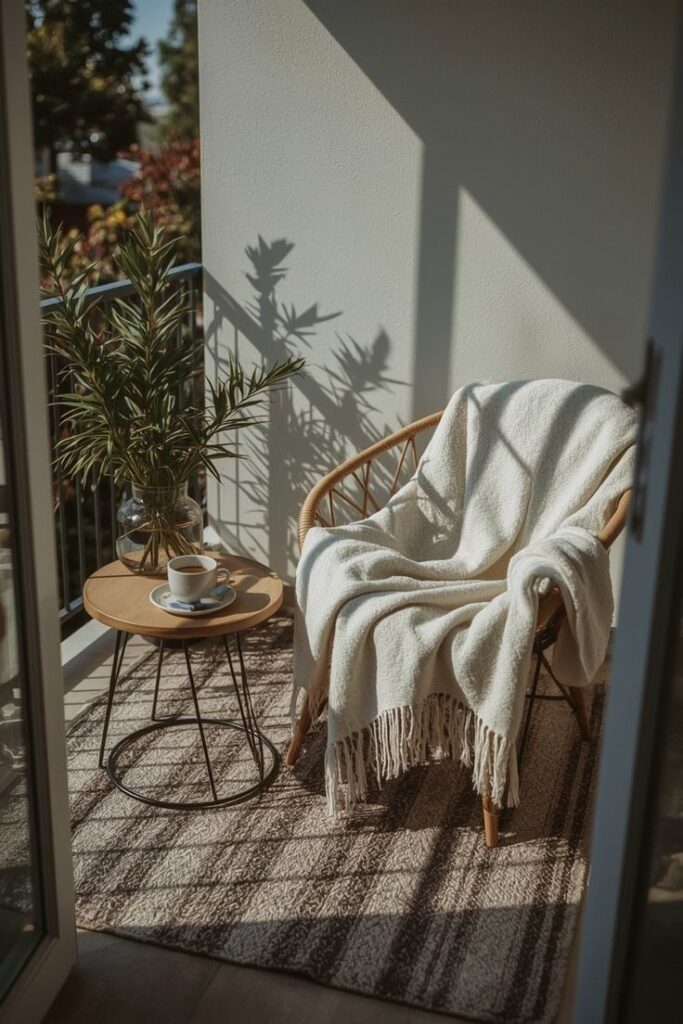
This part surprised me.
I added a narrow outdoor runner and suddenly the balcony stopped feeling like “outside hallway” and started feeling like “tiny outdoor room.”
The rug:
- Anchored the seating
- Made the space feel warmer
- Visually stretched the length
I lift it after heavy rain so moisture doesn’t get trapped underneath. That small maintenance step keeps it from feeling gross over time.
If your balcony still feels unfinished, it probably needs a floor layer.
Step 6: I Stopped Putting Plants on the Floor
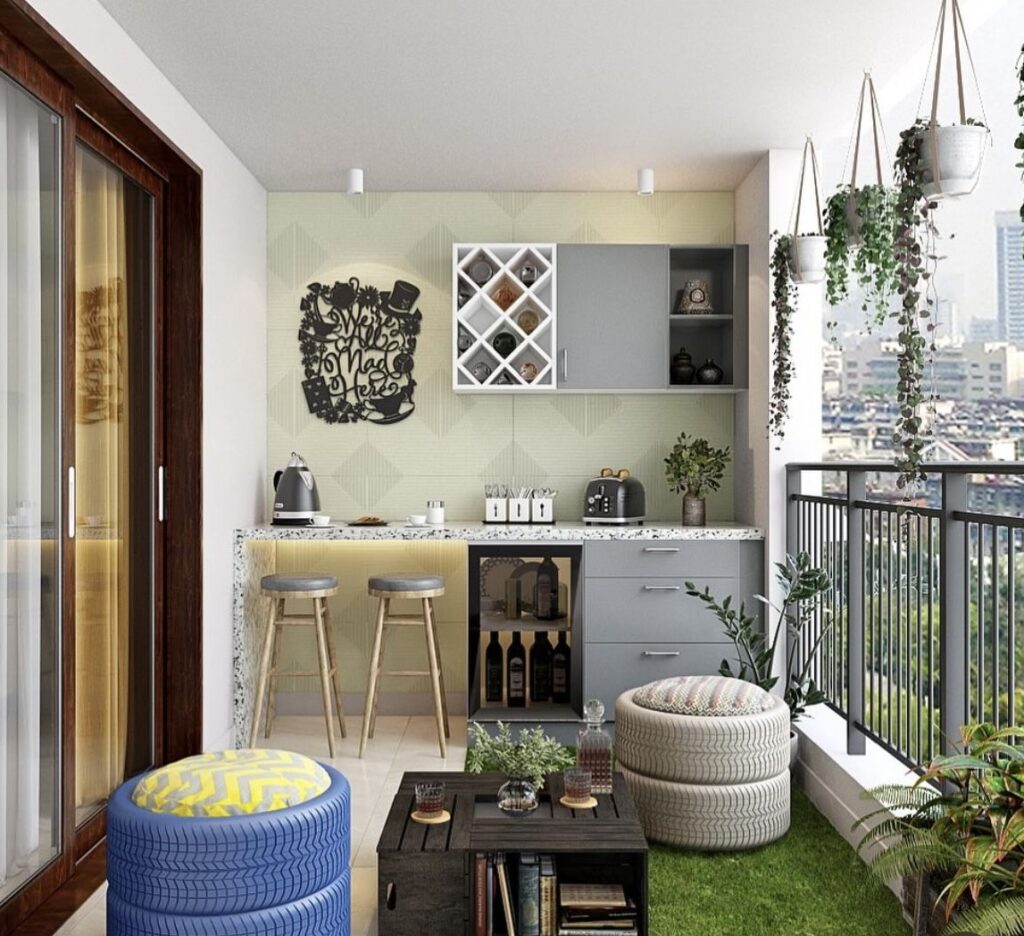
This was my biggest mistake early on.
I kept buying cute pots and lining them along the railing. And then I’d trip over them every time I stepped outside.
So I changed the strategy.
I created one plant zone instead of scattered pots.
I used:
- Rail planters
- One taller plant in the corner
- One trailing plant
Tall, medium, trailing. That’s it.
The floor stayed clear. The balcony felt bigger immediately.
If you love plants as I do, go up, not out.
Step 7: I Added Privacy in One Direction Only
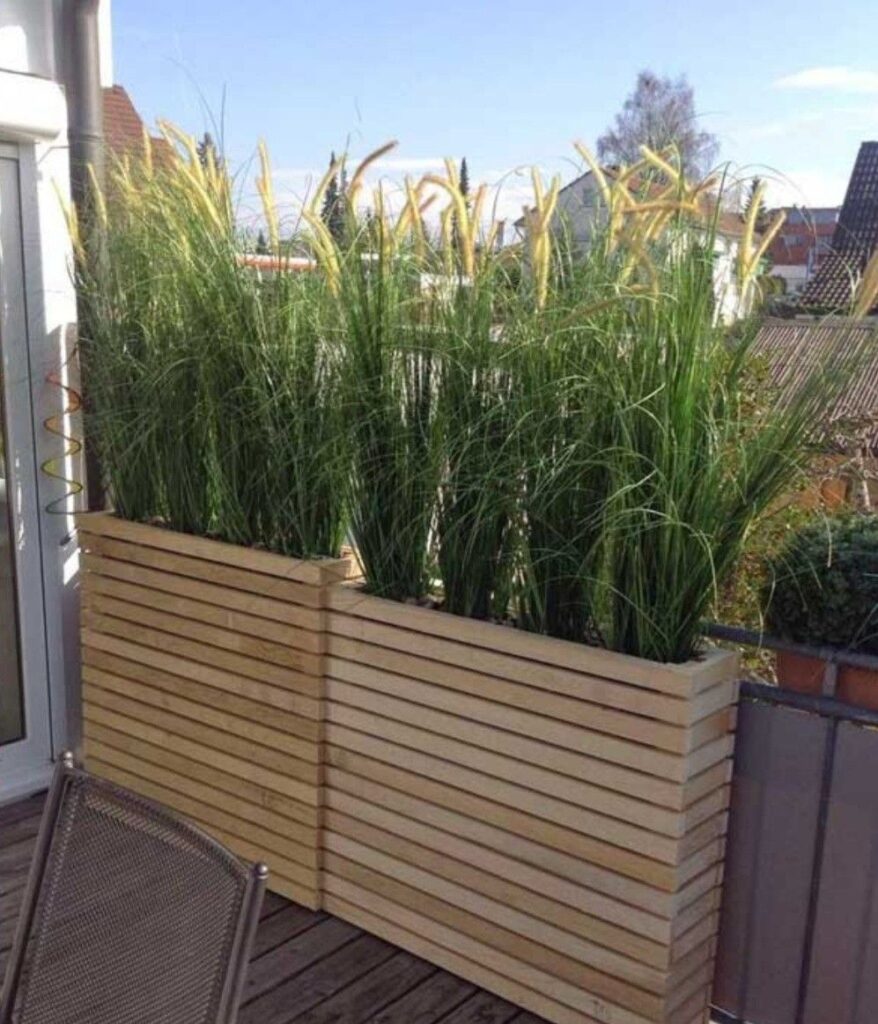
I don’t need a fortress. I just needed to block one neighbor’s view.
I zip-tied a simple reed screen along that side and secured it at the top, middle, and bottom so it wouldn’t flap in the wind.
Then I added greenery in front of it.
Suddenly, the space felt tucked in instead of exposed.
Privacy doesn’t have to be dramatic. It just has to reduce that “I’m on display” feeling.
Step 8: I Solved Shade Before I Added Pretty Stuff
My balcony gets intense afternoon sun.
I realized something important: no amount of styling matters if you’re overheating.
So I added a compact half parasol that sits closer to the wall. It shades the bench without taking up precious center space.
Now I can actually sit outside longer than five minutes.
Comfort beats aesthetics every time.
Step 9: I Added Lighting in Three Small Layers
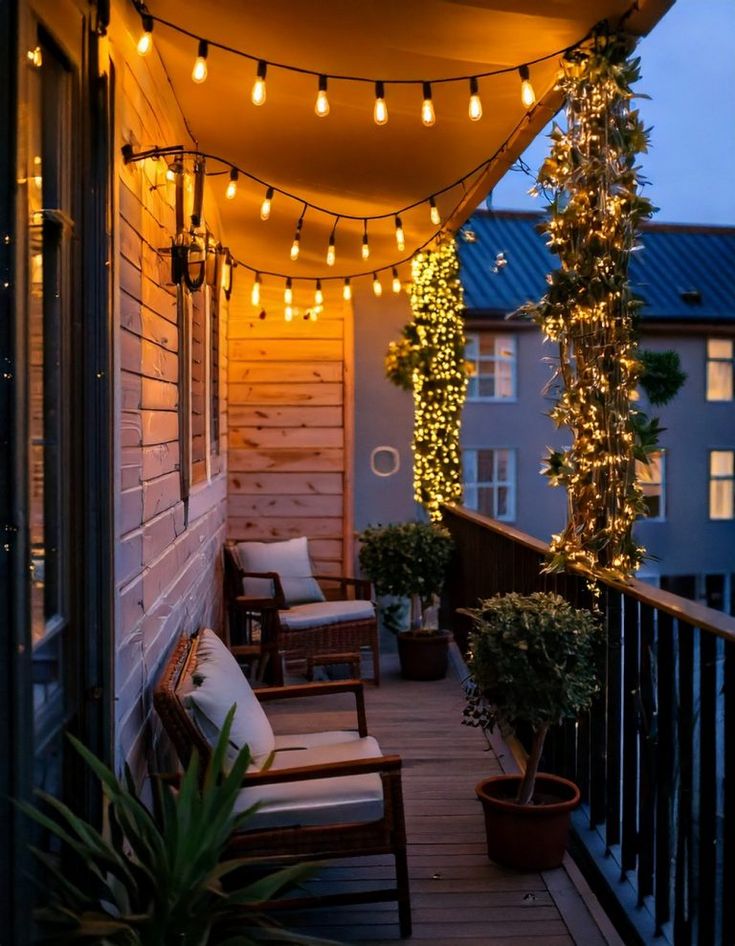
I used to rely on one harsh outdoor light. It made everything feel flat.
Now I use:
- A simple string light line along the railing
- One rechargeable lantern on the table
- A tiny accent light near my plant corner
The effect is soft and glowy, not bright.
It makes me want to stay outside after sunset. That’s the whole point.
Step 10: I Gave Everything a Home (So It Stays Cute)
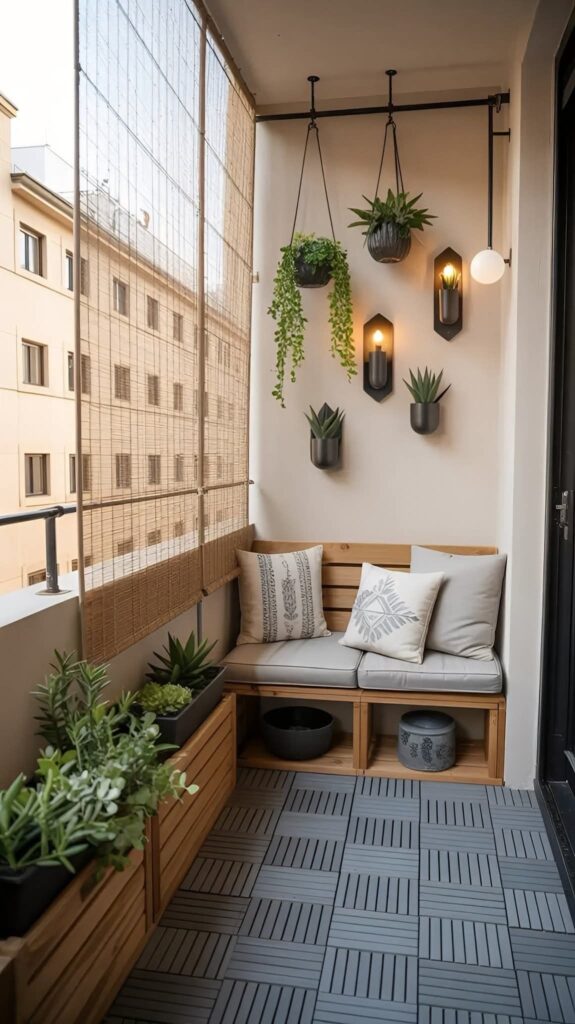
The balcony only stayed nice once I added storage.
I use:
- The storage bench for cushions
- A small bin for watering tools
- Clips for windy days
Now, when the weather changes, I can pack everything away in two minutes.
That’s what keeps it from sliding back into “mop storage zone.”
What I Learned From Decorating a Small Balcony
- The door swing controls everything.
- One clear purpose is better than three vague ones.
- Slim furniture beats oversized comfort every time in tight spaces.
- A rug changes the entire mood.
- Plants belong vertically, not scattered.
- Shade and wind planning are not optional.
- Storage keeps the space from unraveling.
The biggest shift wasn’t buying better decor.
It was editing.
FAQ
How did you make your small balcony feel bigger?
I kept the center walkway clear and moved plants up instead of out. Slim furniture with open legs helped too. Once I added a runner and limited the color palette, it stopped feeling cluttered and started feeling intentional.
What was the single best upgrade?
Honestly? The rug. It visually grounded everything and made the space feel like a room instead of an exterior landing.
Did you drill anything?
No. I used zip ties, rail planters, and freestanding pieces. Everything is renter-friendly and removable.
How do you deal with wind?
I secure lightweight items, use heavier planters, and keep cushions stored when I’m not using them. If something needs constant adjusting, I remove it.
What would you skip next time?
Overbuying small decor. Tiny items multiply fast and make the balcony feel crowded. Fewer, larger pieces work better.
Final Thoughts
My balcony didn’t need more stuff.
It needed a layout, a purpose, and restraint.
Now it’s the first place I sit in the morning and sometimes the last place I step before bed. It’s not huge. It’s not styled like a catalog.
But it works.
If you’re staring at your small balcony right now, start with the door swing and one purpose. Once that’s clear, everything else gets weirdly simple.
And if you want, tell me your balcony dimensions and sun direction. I’ll tell you exactly how I’d lay it out.