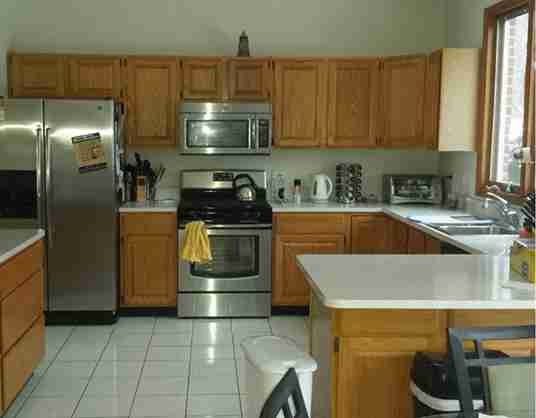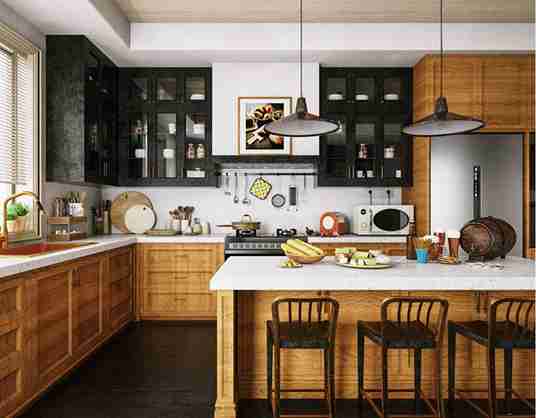
Should You Decorate or Close the Top of Your Kitchen Cabinets?

A practical, real-life guide to choosing what actually looks finished and stays functional
That space above your kitchen cabinets will either be the reason your kitchen feels finished and intentional, or the reason it always feels slightly off no matter how clean or expensive everything else is. Most people underestimate how much visual weight that strip of space carries until they live with it day after day.
I have lived with all versions of it. Empty cabinet tops that quietly collected dust and grease. Decorated cabinet tops that looked cute for six months and then felt dated and annoying to clean. And finally, cabinets that were visually closed to the ceiling immediately made the entire kitchen feel calmer and more put-together.
After seeing all three in real kitchens, not showrooms, the right choice almost always comes down to two things that matter more than trends or Pinterest photos: your ceiling height and how much storage you actually need.
If you want one simple rule that prevents regret later, it is this. When the gap is small, close it or make it clearly intentional. When the gap is large, decorate it thoughtfully or turn it into real storage. Leaving it empty and hoping it looks fine usually makes the kitchen feel unfinished.
First Step: Understand The Size Of The Gap
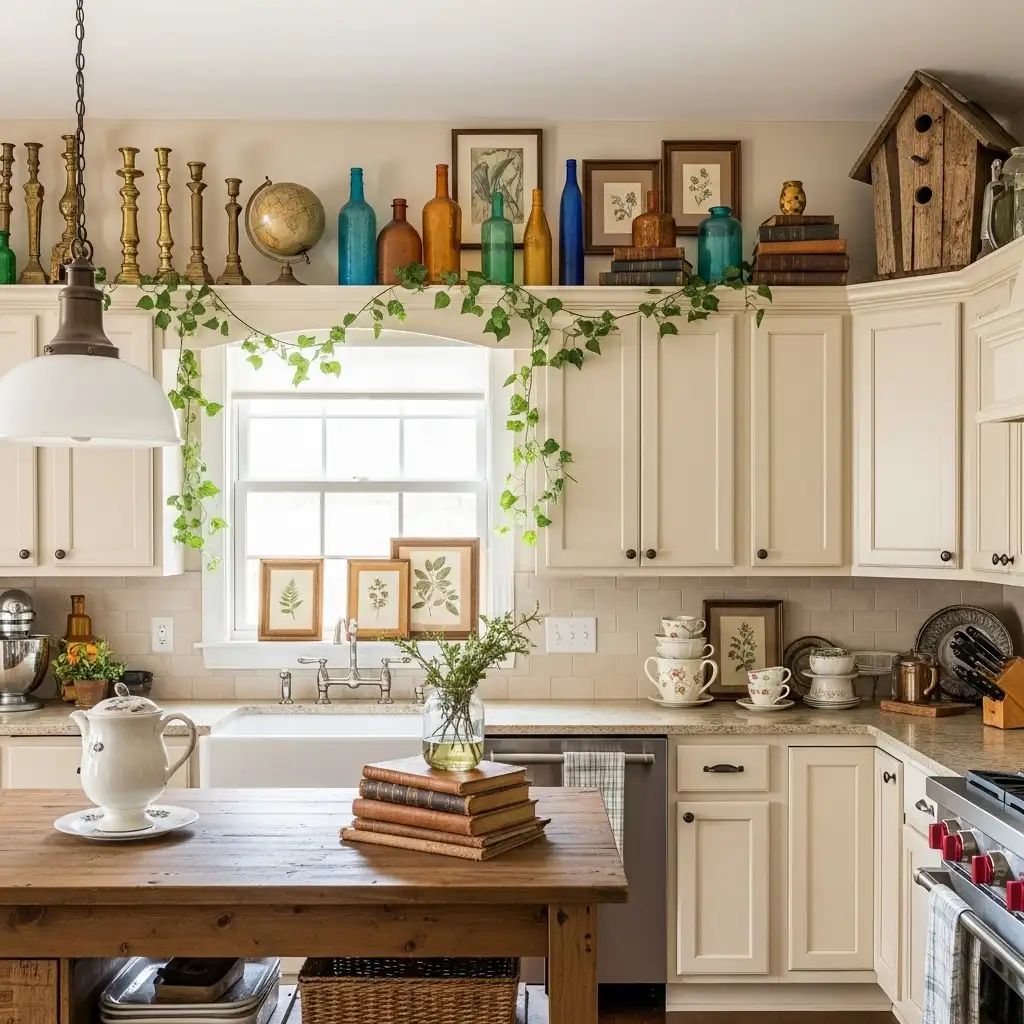
Before deciding anything, step back and actually look at the space above your cabinets. Not from directly underneath, but from across the room where you normally see your kitchen.
A small gap can look awkward very quickly, especially when it creates a strong horizontal line near the ceiling. A large gap can make cabinets feel like they stopped too early, which subtly lowers the perceived quality of the space.
A Simple Visual Test That Helps Most Kitchens
If you can clearly see the cabinet tops from across the room, you probably need a plan. Bare cabinet tops almost always collect dust and grease, especially if they are near the stove. Even in kitchens that are cleaned often, that surface becomes a maintenance problem over time.
When Decorating Above Cabinets Makes Sense
Decorating above cabinets works best when the gap is large enough for decor to breathe and when the kitchen already has strong materials that benefit from something softer above.
How Decorating Can Improve Height And Warmth
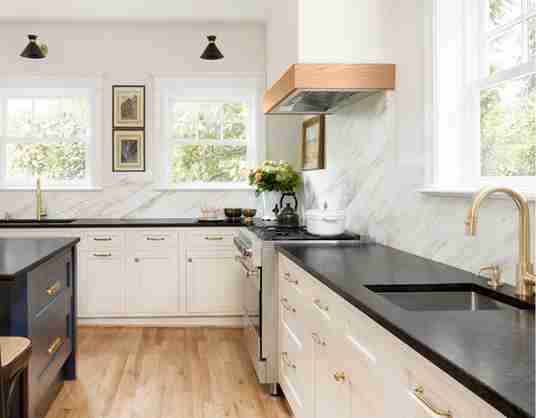
In kitchens with higher ceilings, leaving that space open allows the eye to travel upward instead of stopping abruptly at the cabinet line. This makes the kitchen feel taller, lighter, and less boxed in. It can also add warmth to newer kitchens that feel a little too sharp or sterile.
Why Decorating Works When Storage Is Not An Issue
Some kitchens already have plenty of cabinets and a pantry. In those cases, adding more storage above the cabinets often creates clutter rather than solving a real problem. Decor provides a finished look without paying for taller cabinetry or construction work.
Using Decor To Hide Imperfect Lines
Many ceilings are not perfectly straight, and many cabinet runs are not perfectly level. Closing the gap tightly to the ceiling can highlight those imperfections. Thoughtful decor can soften the lines and draw the eye away naturally.
How To Decorate Above Cabinets So It Looks Intentional
If you decide to decorate above your cabinets, the goal is not to fill space. The goal is to make the kitchen feel calm, balanced, and finished from across the room. When this area is styled well, you barely notice the individual items. You just notice that the kitchen feels put together.
The biggest mistake people make is treating this space like a shelf. It is not. It is a background layer, and it should read as quiet and cohesive rather than detailed and busy.
Choose One Clear Direction
Pick a single visual story and stick to it. This area works best when everything feels related, even if the pieces are different. Warm woven baskets, neutral ceramics, oversized cutting boards, or simple greenery all work well on their own.
Problems start when multiple themes compete. Mixing farmhouse signs, bright plants, colorful jars, and seasonal decor usually turns the space into clutter. From a distance, it stops reading as design and starts reading as storage.
Use Fewer Pieces With More Presence
Scale matters more than quantity here. Two or three larger items almost always look more intentional than five or six small ones. Larger pieces create visual anchors and keep the eye from bouncing around.
Tall baskets are especially useful because they add height, soften the line at the top of the cabinets, and can hide items you do not use often. Small objects, on the other hand, tend to disappear visually and create noise.
Repeat Colors And Materials Already In The Kitchen
One of the fastest ways to make the space feel designed is repetition. Look at what already exists in your kitchen and echo it above the cabinets.
If your hardware is matte black, repeat black accents sparingly up top. If your kitchen has warm wood tones, woven baskets or wooden boards will feel natural. Stone countertops pair well with ceramic or pottery pieces. Repeating materials helps the decor feel connected instead of random.
Vary Height In A Controlled Way
Everything being the same height feels flat, but too much variation feels messy. Aim for a gentle rise and fall rather than dramatic peaks and valleys.
A good approach is to anchor one taller piece and balance it with one or two medium height items nearby. Leave breathing room between groups so the space does not feel crowded.
Keep Function And Safety First
Decor should never interfere with how your kitchen works. Avoid blocking vents, lights, or access panels. Make sure everything is easy to remove for cleaning and does not create a fire or safety risk.
If an item is difficult to move, hard to clean around, or blocks something important, it does not belong there. Function always comes before aesthetics in this space.
When decorating above cabinets is done with restraint, it quietly elevates the entire kitchen. The space stops demanding attention and starts supporting the design instead, which is exactly what intentional decor should do.
When Closing The Space Above Cabinets Makes Sense
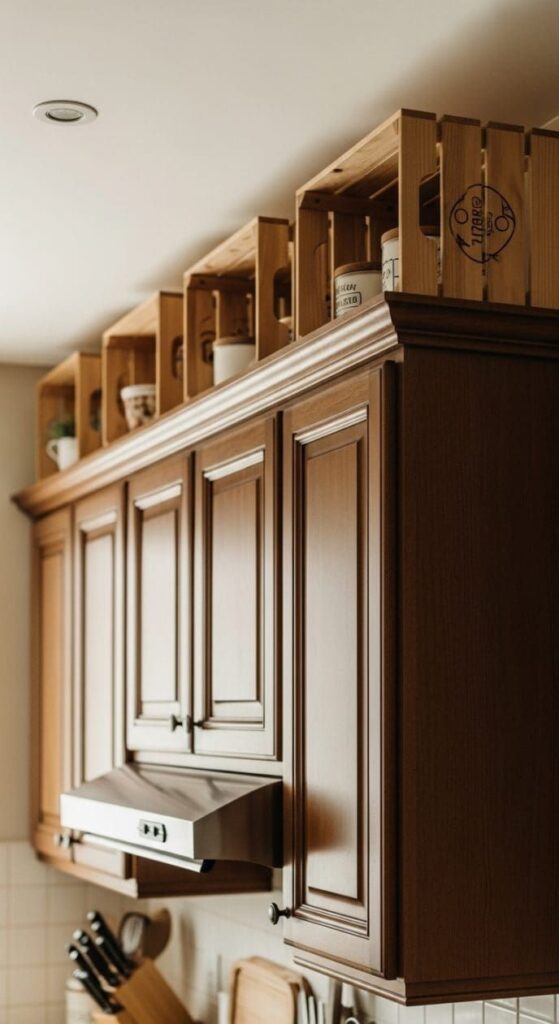
Closing the gap above your cabinets is often the right choice when your goal is a clean, modern, built in look that feels finished without ongoing styling. This approach reduces visual noise and simplifies maintenance, which is why many homeowners prefer it once they live with the results.
Why Closed Cabinets Feel More Finished
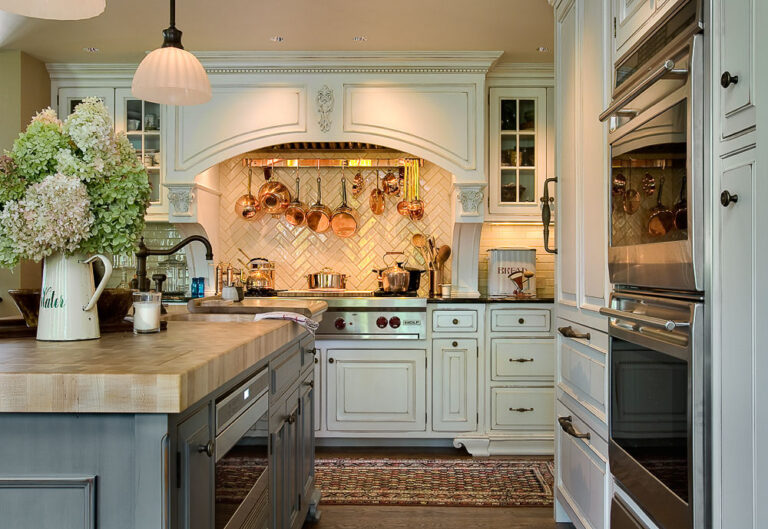
Cabinets that reach the ceiling, or are detailed to look like they do, immediately read as intentional. Even in modest kitchens, this creates a custom feel because the eye is not interrupted by an empty strip of space. The room looks calmer, taller, and more cohesive almost instantly.
The Storage Advantage Of Closing The Gap
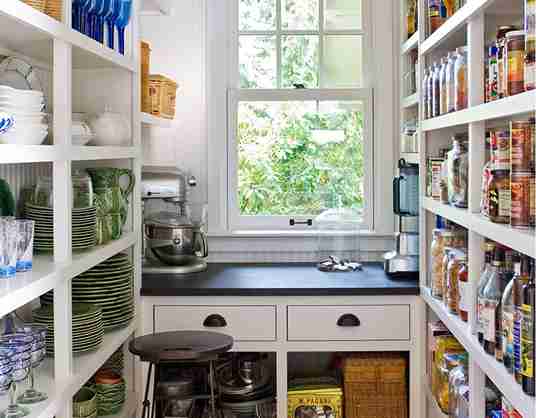
The space above cabinets is ideal for items you rarely use but still want to keep accessible. Think large serving platters, holiday dishes, oversized stockpots, or backup pantry items. Everything stays hidden behind doors, which keeps the kitchen looking tidy and reduces visual clutter.
Eliminating The Dust Shelf Problem
One of the most practical benefits of closing the gap is removing the dust and grease shelf entirely. Without an exposed surface, there is nothing to collect grime near the ceiling. For many homeowners, this single advantage is enough to justify the decision.
Potential Downsides Of Closing The Gap
While closing the space works well in many kitchens, it is not the best solution for every layout.
Heaviness In Small Or Low Ceiling Kitchens
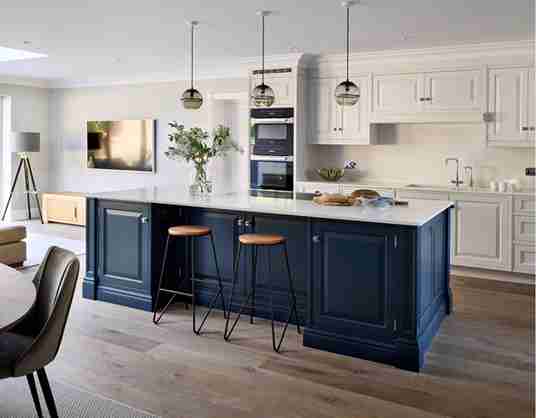
In very small kitchens or rooms with low ceilings, full height cabinets can feel visually heavy. This can usually be balanced with lighter cabinet colors, minimal hardware, and strong lighting, but it is an important consideration before committing.
Added Cost Considerations
Closing the gap often comes with added expense. Taller cabinets, stacked cabinets, crown molding, soffits, or filler panels all involve materials and labor. Even simpler solutions like trim or panels still add to the overall budget.
Losing An Open Feeling
Some kitchens benefit from the breathing room above the cabinets, especially when the ceiling is tall but the room itself is compact. Closing the space can make the kitchen feel more formal, which may not suit every style.
Ways To Close The Gap Without Replacing Cabinets
You do not always need new cabinetry to make the space above cabinets look finished. There are several effective options depending on the size of the gap and your budget.
Crown Molding
Crown molding is the most common solution and works best for smaller gaps. It visually connects the cabinets to the ceiling and creates a finished edge without major construction.
Soffits
A soffit boxes in the space above the cabinets and creates a clean, straight line. It can also hide wiring or ductwork, but it involves more construction and typically costs more than trim.
Stacked Cabinets
Stacked cabinets add a smaller cabinet on top of the main one, bringing everything to the ceiling while adding storage. This option looks high-end and works best in kitchens with taller ceilings.
Flat Filler Panels
For very small gaps, a flat panel painted to match the cabinet color can visually close the space. This is often the most cost-effective solution and still delivers a clean, intentional look.
When closing the space above cabinets is done thoughtfully, it simplifies the kitchen visually and functionally. The key is choosing the method that fits your ceiling height, layout, and budget so the result feels balanced rather than forced.
Using Cabinet Tops For Storage The Right Way
If you plan to store items above cabinets, keep it tidy and safe. Matching baskets hide contents and look intentional. Avoid heavy items unless you are comfortable lifting them safely. Upper storage should always be reserved for rarely used items.
A Simple Decision Guide
Choose to decorate when the gap is large, storage is sufficient, and you enjoy occasional styling and cleaning.
Choose to close the gap when you want a built-in look, dislike dust buildup, or need extra storage.
If you are unsure, closing the space visually with trim or crown molding is often the safest and most low-maintenance choice.
Lighting Tips That Improve Either Option
Decorated cabinet tops benefit from soft lighting above, especially in the evening. Closed cabinets benefit from strong under-cabinet lighting to prevent heaviness. Warm white lighting almost always feels best in kitchens.
Final Thoughts
The space above your cabinets should never look accidental.
Whether you decorate or close the gap, the goal is the same: make it intentional, balanced, and easy to live with. With the right approach, that overlooked strip of space can quietly elevate your entire kitchen instead of dragging it down.