Is There a Standard Size for a Kitchen Countertop? Let’s Find Out

If you are planning a kitchen remodel, one of the first questions that usually comes up is this:
Is there a standard size for a kitchen countertop?
The short answer is yes. Most kitchens follow standard countertop sizes because cabinets and appliances are also built in standard dimensions. These common measurements make installation easier, reduce costs, and help everything fit together properly.
But there are also times when custom sizing makes more sense.
Let’s break it down clearly so you understand what is standard, why it matters, and when you might want something different.
The Standard Height of a Kitchen Countertop
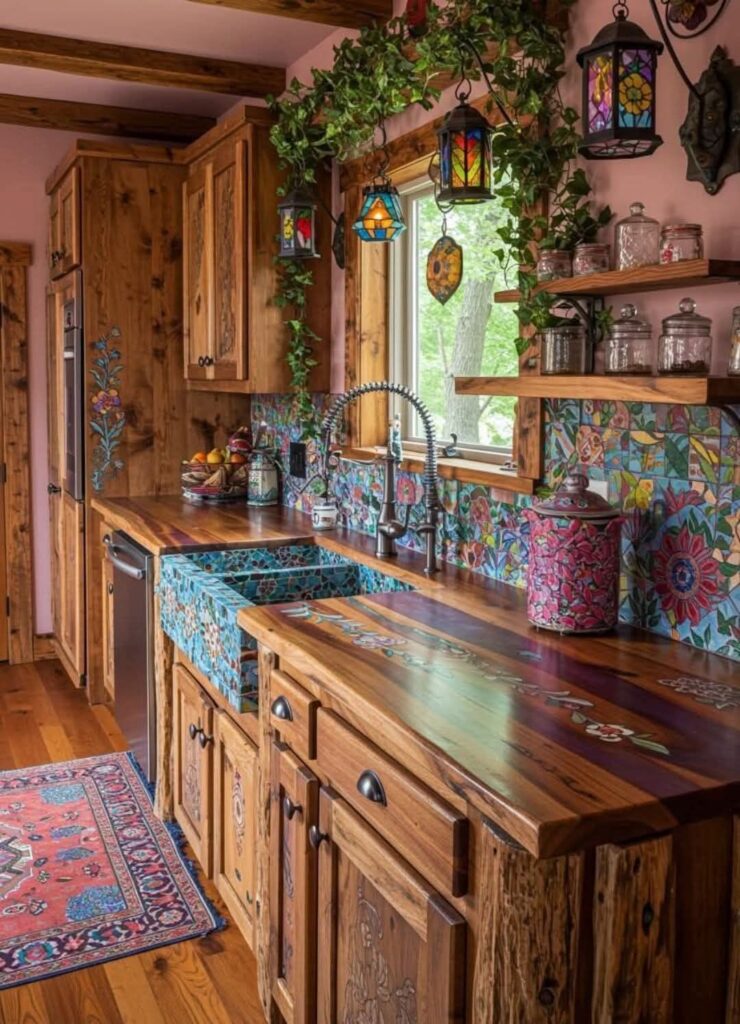
The standard height for a kitchen countertop is 36 inches from the floor.
This measurement includes:
- A 34.5-inch-tall base cabinet
- A countertop that is about 1.5 inches thick
When combined, they equal 36 inches.
This height works well for most adults. It allows you to prep food, chop vegetables, wash dishes, and cook without bending too much or lifting your arms too high. Over time, comfort matters. If the counter is too low, your back can hurt. If it is too high, your shoulders can feel strained.
That is why 36 inches became the standard. It fits the average person comfortably.
However, not everyone is the same height. Taller people sometimes prefer slightly higher counters, and shorter people may feel more comfortable with slightly lower ones. Custom kitchens can adjust for this.
The Standard Depth of a Kitchen Countertop
The typical depth of a kitchen countertop is 24 to 25.5 inches.
This depth lines up with standard base cabinets, which are usually 24 inches deep. The countertop extends slightly beyond the cabinet frame to create a small overhang at the front.
That overhang is usually about 1 to 1.5 inches. It helps protect cabinet doors from spills and gives the counter a finished look.
A 24-inch depth gives you enough space to:
- Place small appliances like a toaster or blender
- Prep food comfortably
- Install sinks and cooktops
It also keeps everything within reach. If a counter is too deep, it becomes harder to reach the back wall or clean properly.
Standard Countertop Length
There is no single “standard” length because kitchens vary in size. However, countertop materials are often sold in slabs or sections that are:
- 8 feet
- 10 feet
- 12 feet
Installers cut these slabs to fit your layout. Long stretches of countertop may need seams depending on the material and the size of the slab.
When planning length, what really matters is how much usable workspace you have between appliances. Designers often recommend having at least 12 to 15 inches of counter space next to a refrigerator and at least 15 inches on one side of a cooktop for safety and convenience.
Counter Height for Islands and Bars
Not all counters are the same height.
Standard Counter Height (Main Work Surface)
36 inches tall.
Bar Height
42 inches tall.
Bar-height counters are usually part of kitchen islands or breakfast bars. The extra height allows room for bar stools and gives a more casual dining space.
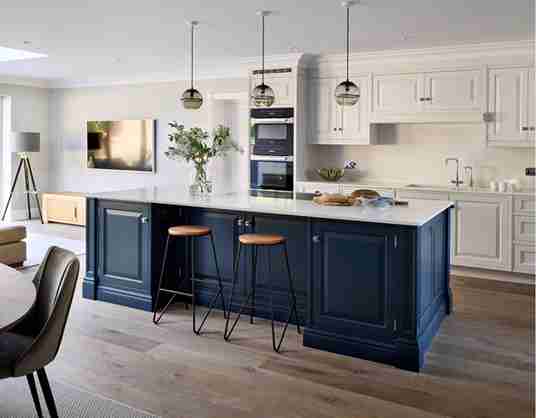
Some kitchens use a “two-level island” design, where the cooking surface is 36 inches high and the seating area is 42 inches high. This separates food prep from eating space.
If you plan to include seating, remember:
- Standard counter stools fit 36-inch counters
- Bar stools fit 42-inch counters
Choosing the wrong stool height can make seating uncomfortable.
Why Standard Sizes Matter
Standard countertop sizes exist for practical reasons.
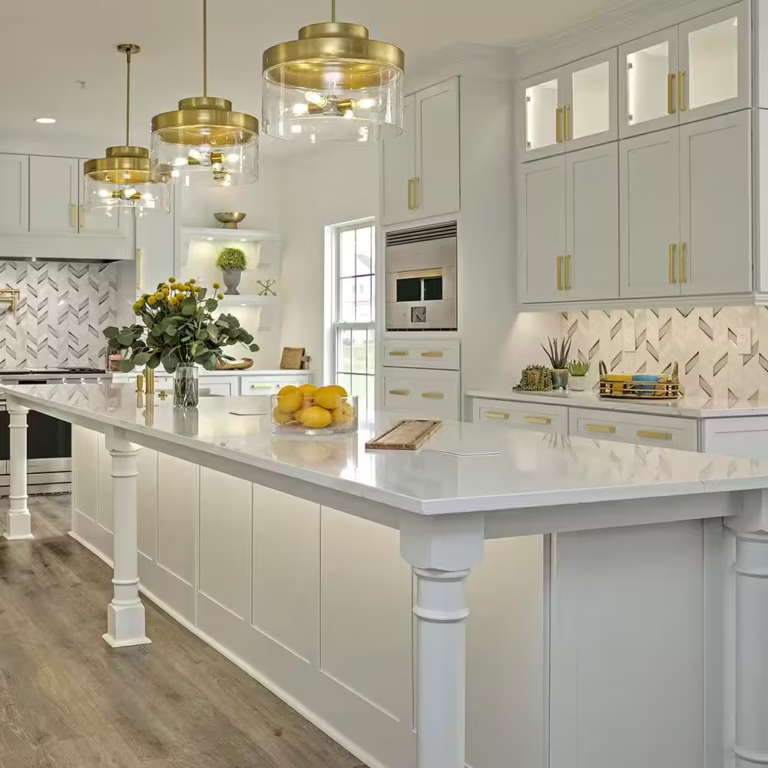
First, they match cabinet dimensions. Since base cabinets are manufactured at 34.5 inches tall and 24 inches deep, countertops are built to fit them perfectly.
Second, appliances are designed with these standards in mind. Dishwashers, ovens, and refrigerators are made to align with 36-inch counter heights. If you change the height too much, appliances may not fit properly.
Third, standard sizes are more affordable. Custom sizing increases material costs and installation time.
When Custom Countertop Sizes Make Sense
Even though 36 inches high and 24 inches deep are standard, there are situations where custom dimensions work better.
For Tall or Short Homeowners
If you are much taller than average, raising the counter by 1 or 2 inches can reduce back strain. For shorter homeowners, lowering it slightly can make prep work more comfortable.
For Specialized Cooking Areas
Some kitchens include:
- Lower baking stations for rolling dough
- Higher prep counters for chopping
- Extra-deep counters for heavy cooking use
For Unique Layouts
Older homes or custom kitchens sometimes have unusual wall angles or spacing that require non-standard sizes.
Custom counters allow you to adjust the depth or height to fit your specific space.
Countertop Thickness
Standard countertop thickness is usually:
- 1.5 inches for stone and quartz
- 1.25 inches for laminate
Thicker countertops can create a bold, modern look. Some luxury kitchens use 2-inch or thicker slabs for a dramatic effect.
However, thicker materials are heavier and more expensive. Cabinets must be strong enough to support them.
Choosing the Right Material
Size is only one part of the decision. Material affects durability, maintenance, and cost.
Quartz
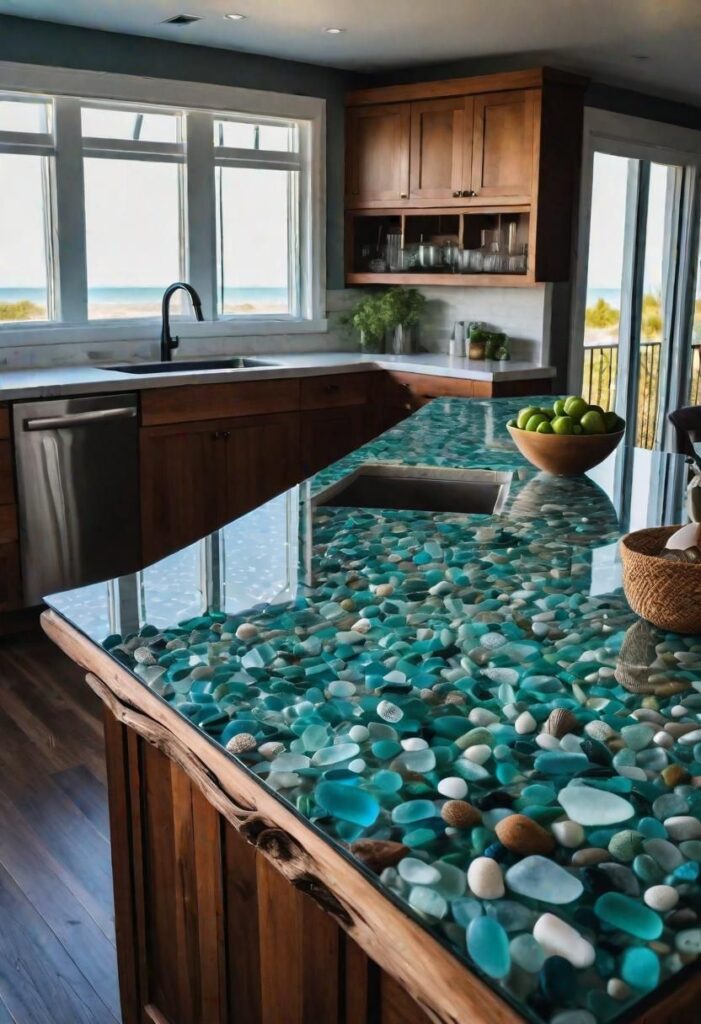
Quartz is an engineered stone. It is non-porous, meaning it resists stains and does not require sealing. It is durable and easy to maintain, but it can be expensive and sensitive to extreme heat.
Granite
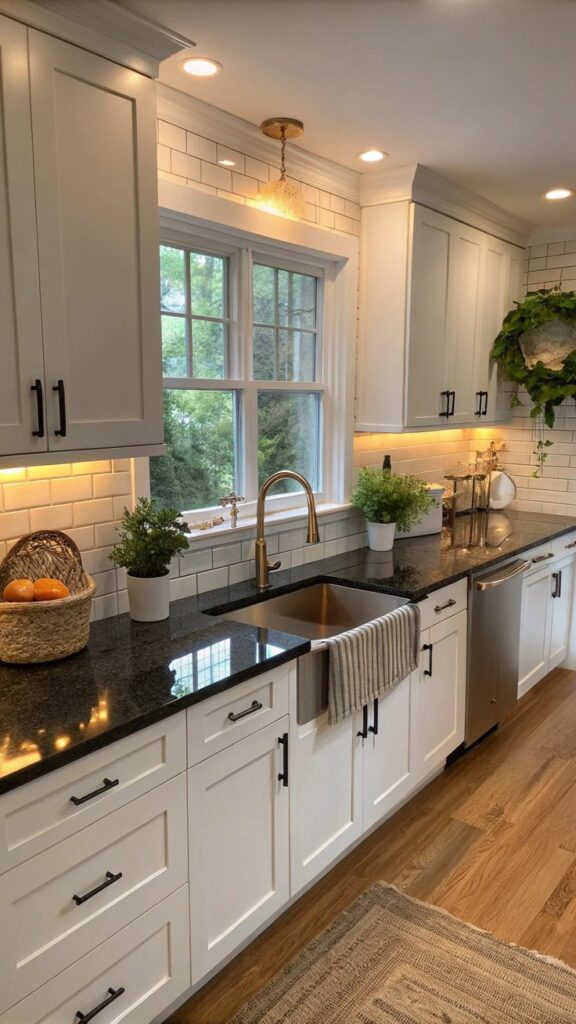
Granite is a natural stone. It is strong and heat-resistant, but it needs sealing to prevent stains.
Butcher Block
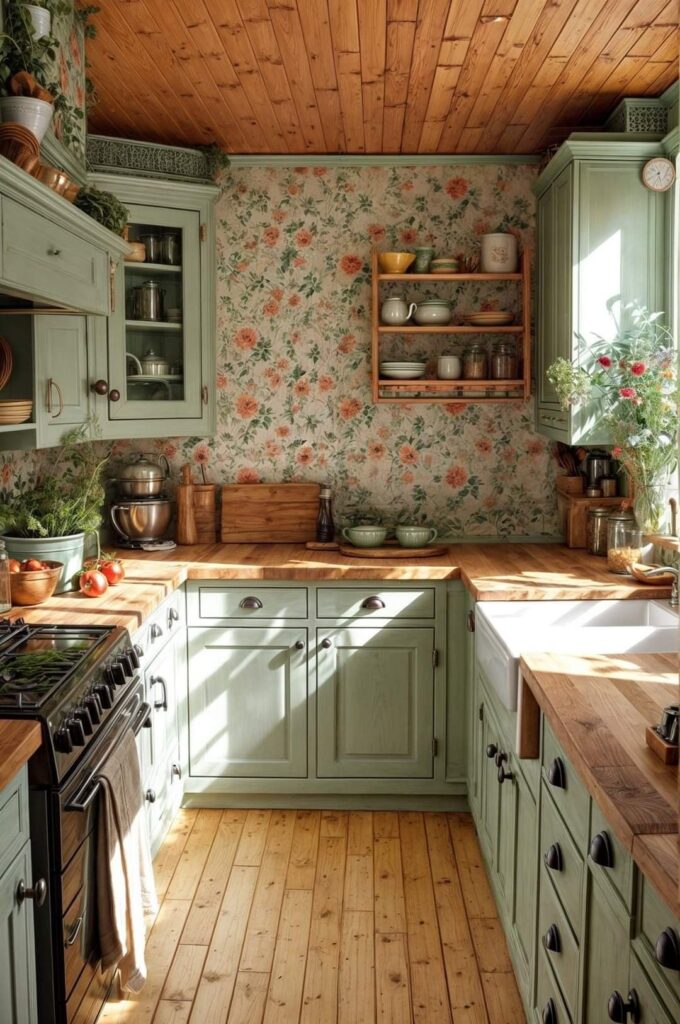
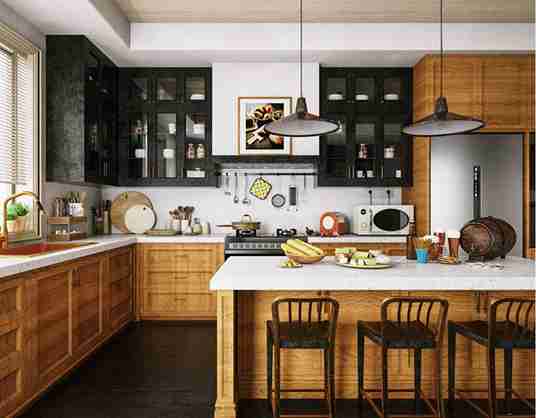
Wood countertops create a warm, natural feel. They are good for cutting and prep but require regular maintenance to prevent scratches and water damage.
Laminate
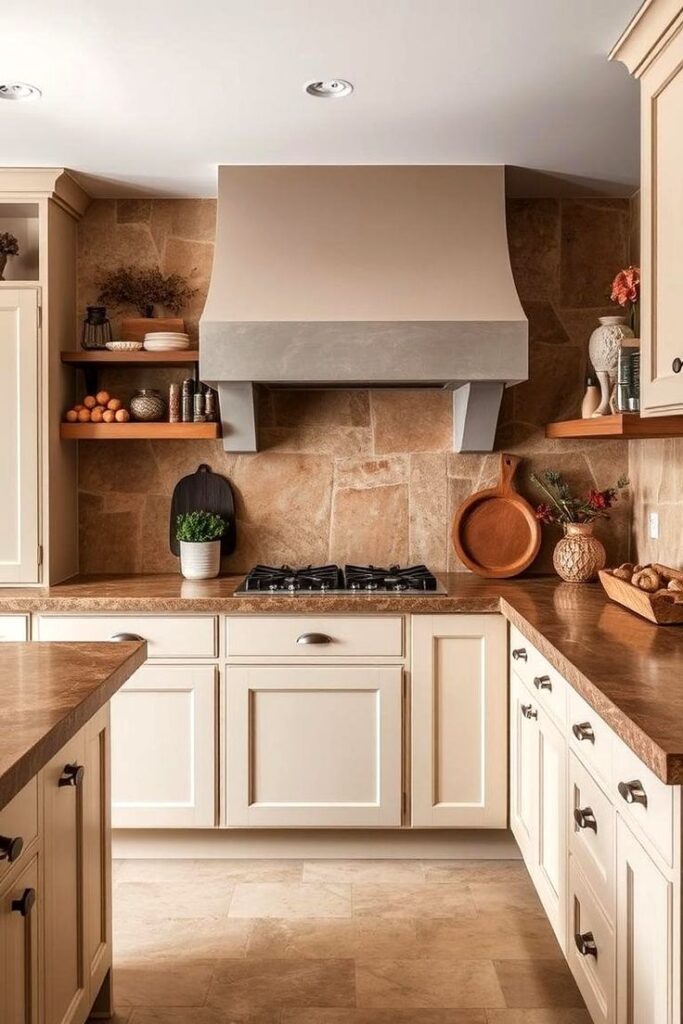
Laminate is affordable and lightweight. It comes in many styles but is less durable than stone.
When choosing material, consider how much cooking you do and how much maintenance you are willing to handle.
Clearance and Overhang
Countertops typically extend 1 to 1.5 inches beyond cabinet faces. This overhang:
- Protects cabinet doors
- Improves appearance
- Makes cleaning easier
For islands with seating, the overhang is larger. Seating areas often require 12 inches of overhang so people can sit comfortably without hitting their knees on cabinet doors.
Proper clearance between countertops and upper cabinets is also important. The standard distance between the counter surface and upper cabinets is about 18 inches. This gives enough room for small appliances and daily tasks.
Countertops and Kitchen Workflow
Countertop size affects how well your kitchen works.
Designers often follow the “work triangle” concept. This places the sink, stove, and refrigerator within comfortable walking distance of each other.
You also need enough landing space around each appliance. For example:
- Space beside the sink for drying dishes
- Space beside the stove for placing hot pans
- Space beside the fridge for unloading groceries
Without enough counter space in the right places, even a beautiful kitchen can feel frustrating to use.
Maintenance and Durability
Different countertop materials require different levels of care.
Quartz is low maintenance. Granite requires sealing. Wood needs regular oiling. Laminate must be protected from sharp objects and heat.
Durability also depends on how your kitchen is used. Busy households with children may need tougher materials. A kitchen used mostly for light cooking may allow for more delicate surfaces.
Choosing the right size and material together ensures the countertop lasts for years.
Frequently Asked Questions
What is the standard height for kitchen countertops?
The standard height is 36 inches from the floor.
What is the standard depth?
The typical depth is 24 to 25.5 inches.
Can countertops be customized?
Yes. Height, depth, thickness, and length can all be adjusted to fit your needs.
How far should a countertop extend past cabinets?
Usually 1 to 1.5 inches in the front. Seating areas may require a larger overhang.
Do all kitchens use the same measurements?
Most follow standard dimensions, but custom homes may vary.
Final Thoughts
Yes, there is a standard size for kitchen countertops. Most are 36 inches high and about 24 inches deep. These measurements work well because they align with cabinets, appliances, and average human comfort.
However, your kitchen does not have to follow the standard exactly. Custom sizing can improve comfort and function if your space or needs are different.
When planning your kitchen, focus on three things:
- Comfort
- Function
- Durability
If your countertop height feels natural, your depth allows easy reach, and your material fits your lifestyle, then you have chosen the right size.