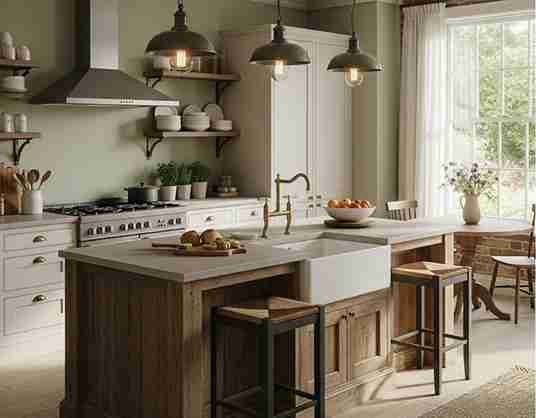
What Is a Fully Equipped Kitchen? A Complete Practical Breakdown

The term fully equipped kitchen gets used everywhere — apartment listings, vacation rentals, new home builds, even hotel descriptions. It sounds reassuring, but it is often vague.
A fully equipped kitchen is not about luxury. It is about functionality. It means the kitchen contains all the appliances, cookware, utensils, storage, and cleaning supplies required to prepare, cook, serve, and clean up full meals without needing to purchase additional essentials.
This guide explains exactly what that includes, what is optional, what is required, and how to evaluate whether a kitchen truly qualifies.
1. Core Appliances: The Non-Negotiables
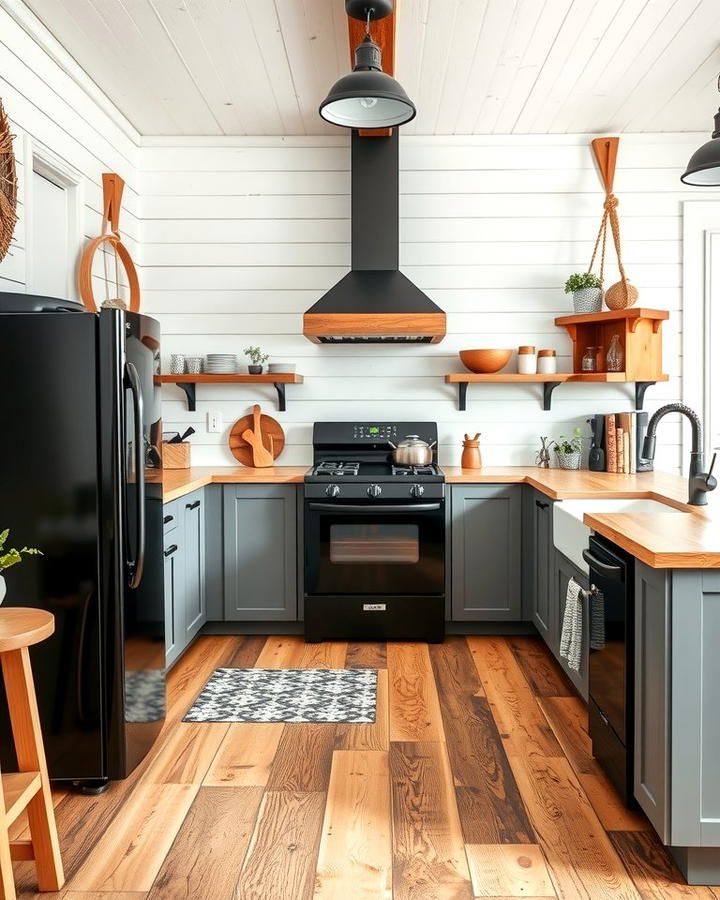
Without working major appliances, a kitchen cannot realistically be considered fully equipped. These are the foundational pieces that allow someone to store food safely and cook real meals on a daily basis. Everything else in a kitchen builds on these basics.
Refrigerator With Freezer
A full-size refrigerator is essential. It should be designed for regular household use, not occasional storage. At a minimum, it needs to include adjustable shelving so items of different heights can fit properly, crisper drawers for produce, door compartments for bottles and condiments, and a fully functioning freezer.
The freezer configuration itself is flexible. It can be top mounted, bottom mounted, or side by side. What matters is that the freezer provides usable space, maintains proper temperature, and can handle more than just a few ice trays.
This appliance matters because it directly affects food safety and daily routines. A proper refrigerator allows you to store perishables safely, keep leftovers without waste, preserve frozen foods, and plan meals over longer periods instead of shopping every day.
A mini fridge does not qualify as a replacement unless the space is clearly marketed as a kitchenette or studio setup with limited cooking expectations. In a standard kitchen, a full-size refrigerator with freezer is a requirement, not a bonus.
Cooktop Or Stove
A functional cooktop or stove is another non-negotiable element of a real kitchen. This is what allows actual cooking rather than simple reheating.
The minimum functional requirement is two burners, which allows basic meal preparation like boiling and sautéing at the same time. The standard expectation in most kitchens, however, is four burners, which provides flexibility for more complex cooking and multitasking.
Cooktops can be powered by gas, electric, or induction. Each has its own advantages, but from a usability standpoint, the fuel type matters less than reliability and safety. The appliance must heat consistently and allow proper temperature control.
A working cooktop makes it possible to sauté vegetables, boil pasta, fry eggs, simmer sauces, and cook a wide range of meals. Without it, cooking options become extremely limited, and the space functions more like a break room than a kitchen.
Together, a full-size refrigerator with freezer and a functional cooktop form the baseline of any fully equipped kitchen. If either is missing or compromised, the kitchen itself is incomplete, regardless of how nice the cabinets or finishes may be.
Oven
A truly fully equipped kitchen includes a proper oven. While some small spaces rely heavily on countertop appliances, an oven is still a core component of full kitchen functionality.
An oven supports essential cooking methods such as roasting vegetables and proteins, baking breads and desserts, broiling for high heat finishes, and batch cooking meals in advance. These functions are difficult or impossible to fully replace with smaller appliances.
A microwave does not qualify as an oven substitute. Microwaves are useful for reheating and basic cooking, but they cannot replicate dry heat baking, proper roasting, or broiling. Without an oven, the range of meals you can prepare is significantly reduced, and the kitchen becomes limiting rather than versatile.
In practical terms, the absence of an oven means fewer complete meals, less flexibility for meal planning, and heavier reliance on prepared or stovetop only foods.
Sink With Running Water
A working sink is fundamental to any kitchen, not optional. It must provide both hot and cold running water, drain properly without backups or leaks, and have adequate counter space nearby for practical use.
Food preparation depends on access to clean water for washing produce, filling pots, and basic cleaning as you cook. Sanitation also relies on a functional sink for washing hands, dishes, and surfaces. Without this, even the best appliances cannot be used safely or efficiently.
A sink that technically exists but lacks hot water, drains poorly, or has no usable counter space nearby does not meet the standard of a fully equipped kitchen.
Ventilation
While ventilation is not always listed explicitly, it is widely expected in a fully equipped kitchen. Cooking produces heat, steam, grease, and odors, all of which need a way to escape.
Proper ventilation may take the form of a range hood, an over the range microwave with a vent, or a wall mounted exhaust fan. The exact system can vary, but there must be a functional method for moving air out of the cooking area.
Ventilation plays a critical role in preventing grease buildup on surfaces, reducing lingering odors, and maintaining indoor air quality. Over time, kitchens without proper ventilation become harder to clean and less pleasant to use.
Together, an oven, a functional sink with running water, and adequate ventilation complete the core requirements of a fully equipped kitchen. Without these elements, the space may look like a kitchen, but it does not function like one in daily life.
2. Cookware: The Cooking Backbone
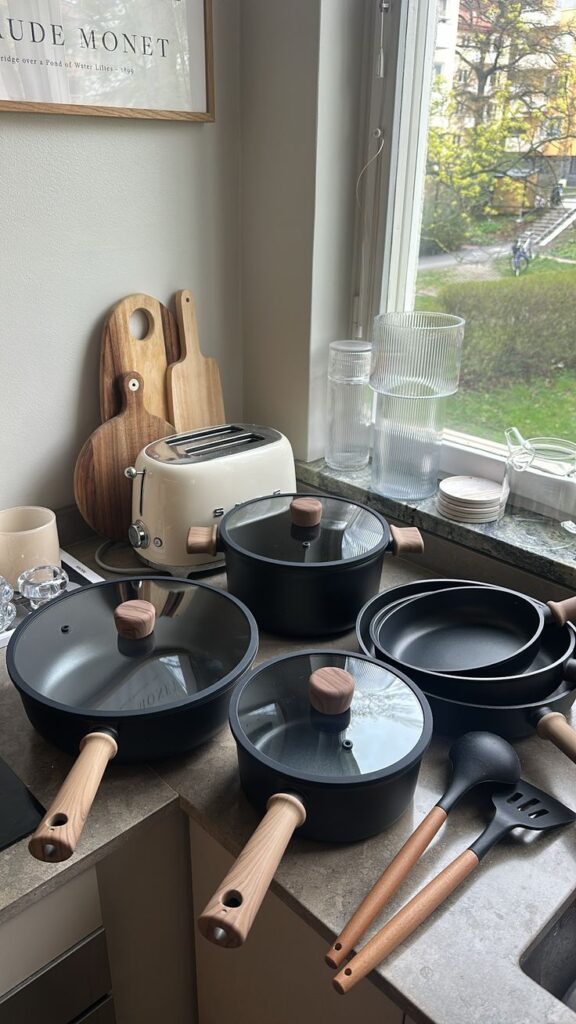
Appliances alone do not make a kitchen functional. Cookware is what determines what you can actually cook day to day. Even with a great stove and oven, the kitchen is limited if the right pots and pans are missing.
A fully equipped kitchen does not need every piece imaginable, but it does need a solid core set that covers basic cooking methods.
Skillet
A skillet is one of the most frequently used pieces in any kitchen.
It should be either nonstick or stainless steel, and ideally medium sized, roughly 8 to 12 inches in diameter. This size gives enough surface area without being awkward to handle.
A skillet is used for everyday cooking tasks like eggs, stir fry, sautéing vegetables, and browning meat. Without one, most stovetop cooking becomes inconvenient or impossible.
Saucepan
A medium saucepan with a lid is another essential.
This pan is used for boiling pasta, heating sauces, cooking grains like rice or quinoa, and reheating soups or leftovers. The lid matters, as it helps control heat, prevents splatter, and speeds up cooking.
Without a saucepan, even simple meals become more difficult to prepare efficiently.
Stockpot
A stockpot provides the capacity needed for larger meals.
It should be large enough to handle soups, stews, chili, and big batches of pasta. A lid is important for simmering and retaining heat.
While not used every day, a stockpot allows batch cooking and meal prep, which are key parts of a fully functional kitchen.
Baking Sheet Or Roasting Pan
At least one oven safe flat pan is required for a complete kitchen.
A baking sheet or roasting pan is used for roasting vegetables, baking cookies, and preparing oven meals like sheet pan dinners. Without oven safe cookware, the oven itself becomes underutilized, limiting the range of meals you can prepare.
Additional Valuable Cookware
Beyond the essentials, most fully equipped kitchens include a few extra pieces that expand cooking options and make meal preparation easier.
A Dutch oven adds versatility for slow cooking, braising, soups, and baking bread.
A casserole dish supports baked meals and one dish dinners.
A muffin tin allows for baking, portioned meals, and even savory egg dishes.
A pie dish expands baking options.
A colander is essential for draining pasta and washing produce.
The more diverse the cookware, the more flexible and complete the kitchen becomes. While not every item is mandatory, having a range of cookware allows you to cook comfortably instead of working around limitations.
3. Food Preparation Tools
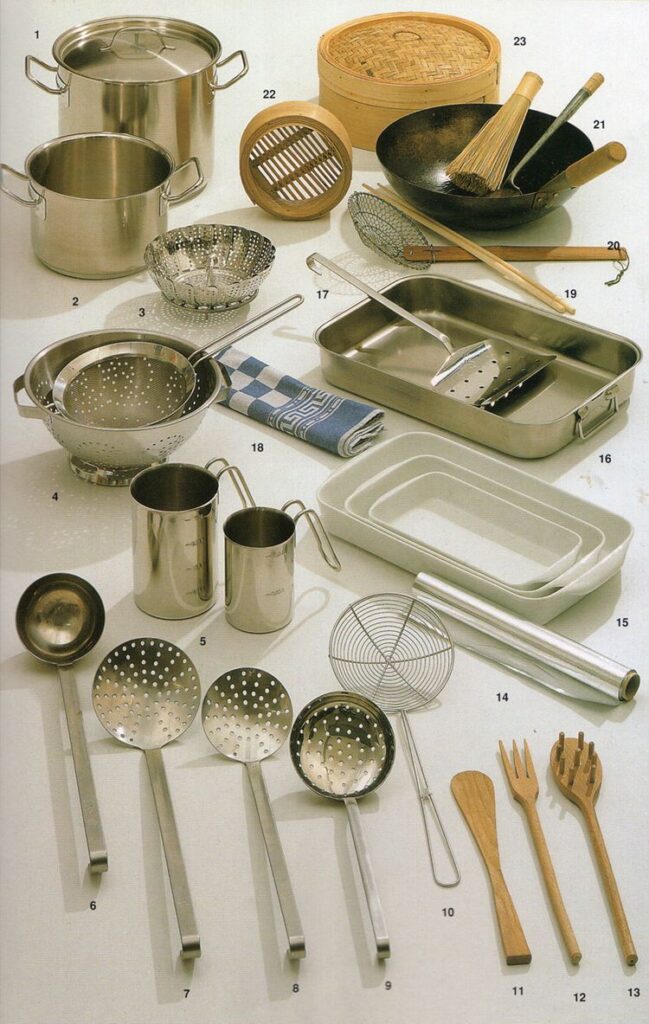
This is the category that separates a kitchen that technically works from one that actually feels good to cook in. You can have great appliances and cookware, but without the right prep tools, everything takes longer and feels more frustrating than it should.
A fully equipped kitchen needs a core set of tools that support safe, efficient food preparation from start to finish.
Knife Set
Good knives are non negotiable. At a minimum, a kitchen should include a chef’s knife and a paring knife.
A chef’s knife handles most tasks like chopping vegetables, slicing meat, and general prep work. A paring knife is essential for smaller jobs such as peeling, trimming, and detailed cutting.
A bread knife is optional but very helpful, especially if you regularly slice bread, tomatoes, or baked goods.
What matters most is that knives are sharp and usable. Dull knives are more dangerous than sharp ones because they require extra force and are more likely to slip. A small set of reliable knives is far better than a large set that never gets used.
Cutting Board
At least one medium or large cutting board is required for proper food prep.
Wood and plastic boards are the most practical choices. Wood is gentle on knives and feels sturdy, while plastic is easy to sanitize and lightweight.
Glass cutting boards are not ideal for regular use. They dull knives quickly and can be slippery, which makes prep less safe and less efficient.
Having enough surface area on the cutting board makes prep faster and keeps ingredients contained instead of spilling onto counters.
Cooking Utensils
Even simple cooking becomes inefficient without the right utensils.
A fully equipped kitchen should include a spatula, a wooden spoon, tongs, a ladle, and a whisk. Together, these cover most cooking tasks from stirring sauces to flipping food, serving soups, and mixing batters.
Without these basics, cooking often turns into improvising with the wrong tools, which slows things down and increases mess.
Measuring Tools
Measuring cups and measuring spoons are essential, especially for baking and recipe based cooking.
They ensure accuracy when measuring ingredients for sauces, baked goods, and seasonings. Even experienced cooks rely on them for consistency and repeatable results.
Without measuring tools, following recipes becomes guesswork, which can lead to uneven results and wasted ingredients.
Prep Accessories
A few small tools make a big difference in how smoothly a kitchen functions.
A can opener is essential for everyday pantry items.
A vegetable peeler speeds up prep and keeps cuts clean.
A grater allows for fresh cheese, citrus zest, and vegetables.
Mixing bowls are necessary for combining ingredients, marinating, and prep organization.
These accessories support the entire cooking process. Without them, meal preparation feels incomplete and unnecessarily difficult.
Together, these food preparation tools form the backbone of an efficient kitchen workflow. When they are present and in good condition, cooking feels straightforward and controlled instead of chaotic.
4. Dining And Serving Equipment
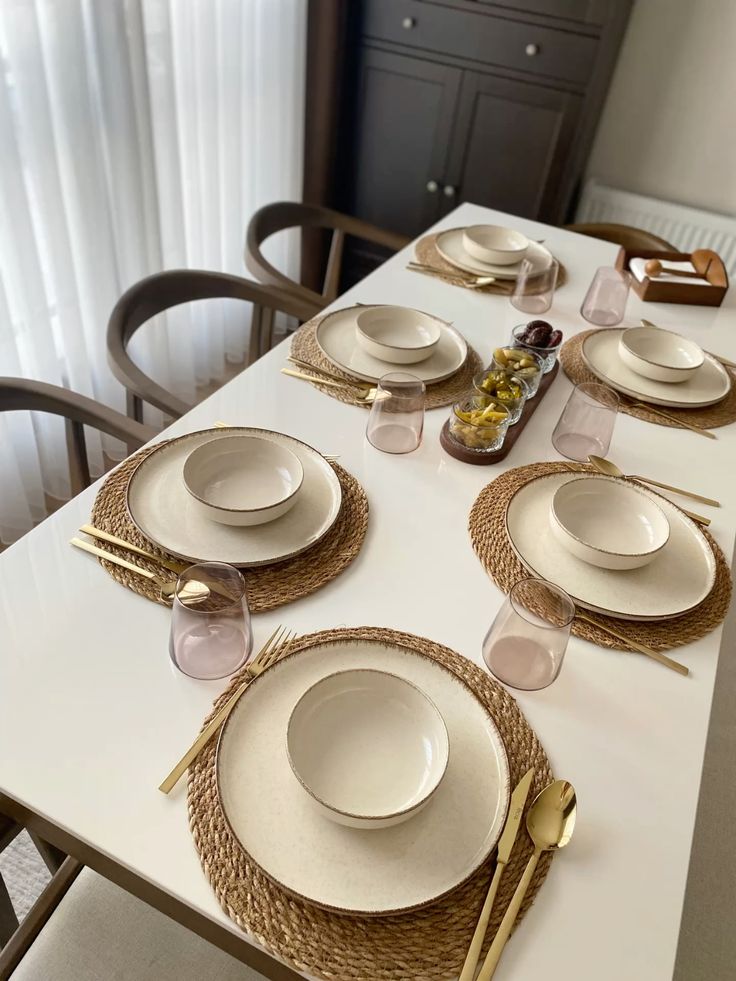
A fully equipped kitchen does not stop at cooking. It must also support eating, serving, and storing food in a practical way. Without the right dining and serving items, even a well stocked kitchen feels incomplete.
Minimum Dining Set Per Person
At a minimum, each person using the kitchen should have a complete place setting. This includes a dinner plate, a bowl, a drinking glass, a mug, a fork, a knife, and a spoon.
The quantity should always match the intended occupancy of the space. For example, a rental that sleeps four should include at least four of each item. Anything less forces constant washing and limits normal use, which quickly becomes frustrating.
Durability matters here as well. Dishes and glassware should be suitable for daily use, not decorative pieces that feel too fragile to touch.
Additional Serving Items That Improve Usability
Beyond individual place settings, a few serving and support items make a kitchen significantly more functional.
A serving bowl allows for salads, shared dishes, and family style meals.
A serving spoon makes it easier to portion food without improvising.
A trivet protects counters and tables from hot cookware.
Oven mitts are essential for safely handling hot pans and dishes.
Food storage containers help store leftovers properly and reduce food waste.
These items are often overlooked, but they play an important role in daily kitchen use. They support safe handling, easier serving, and better organization, which turns a basic kitchen into one that actually works well for real meals.
5. Cleaning Supplies

A fully equipped kitchen must support clean up as well as cooking. Without basic cleaning supplies, even a well stocked kitchen becomes inconvenient and difficult to maintain. Clean up capacity is essential for food safety, hygiene, and daily usability.
Minimum Cleaning Supplies
At a minimum, a functional kitchen should include dish soap for washing cookware and dishes, a sponge or scrub brush for removing food residue, and a dish towel for drying and wiping surfaces. A trash bin is also essential for managing food waste and packaging during meal preparation.
Without these basics, routine tasks like washing dishes or keeping counters clean become frustrating and inefficient.
Additional Cleaning Supplies That Improve Function
Many fully equipped kitchens also include a few extra items that make maintenance easier.
Trash liners help contain waste and make disposal quicker and more hygienic.
An all-purpose cleaner supports regular surface cleaning beyond dishes.
A broom or mop helps keep floors clean, especially in kitchens with high traffic or frequent cooking.
While not always required to define a kitchen as equipped, these supplies significantly improve day-to-day maintenance and reduce the effort needed to keep the space clean and usable.
Together, these cleaning essentials ensure the kitchen can be maintained properly instead of becoming cluttered or unsanitary after regular use.
6. Storage Infrastructure
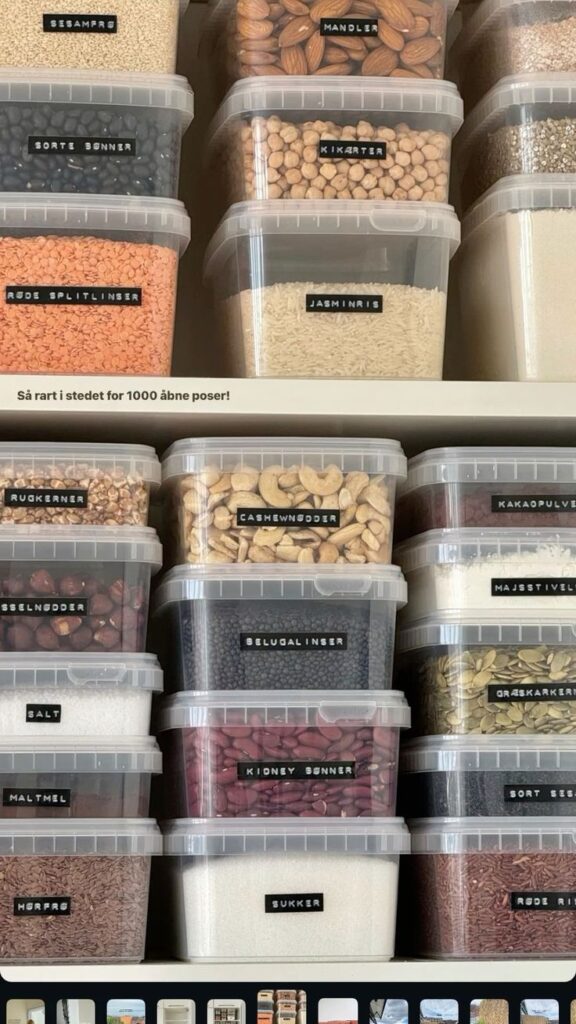
Equipment alone does not make a kitchen functional. Without proper storage, even the best appliances and tools become frustrating to use. A fully equipped kitchen must allow food, cookware, and utensils to be stored safely, logically, and accessibly.
At a minimum, there should be cabinets for dry goods such as pantry staples, canned food, and cooking supplies. These cabinets protect food from moisture and pests while keeping frequently used items within reach.
Drawer space for utensils is equally important. Cooking tools, cutlery, and prep items should have designated drawers so they are easy to find and do not clutter counters. When utensils are scattered or piled together, cooking slows down and feels chaotic.
A kitchen should also include a pantry or dedicated shelving. This does not need to be a walk in pantry, but there must be enough space to store dry goods in an organized way. Open shelving, closed cabinets, or a combination of both can work as long as items are not stacked unsafely or mixed randomly.
Inside the refrigerator, proper shelving is essential. Adjustable shelves and door storage allow food to be separated by type, reduce spoilage, and make it easier to see what is available. A refrigerator without usable internal organization quickly becomes inefficient.
Adequate freezer space is also part of the storage infrastructure. It should allow frozen foods to be stored flat or grouped instead of piled loosely. This supports long term meal planning and reduces food waste.
Overall, storage should allow clear separation between food types, cooking tools, and cleaning supplies. When storage is thoughtful and sufficient, the kitchen functions smoothly. When it is lacking, even simple tasks become unnecessarily difficult.
7. Small Appliances: Common But Not Mandatory
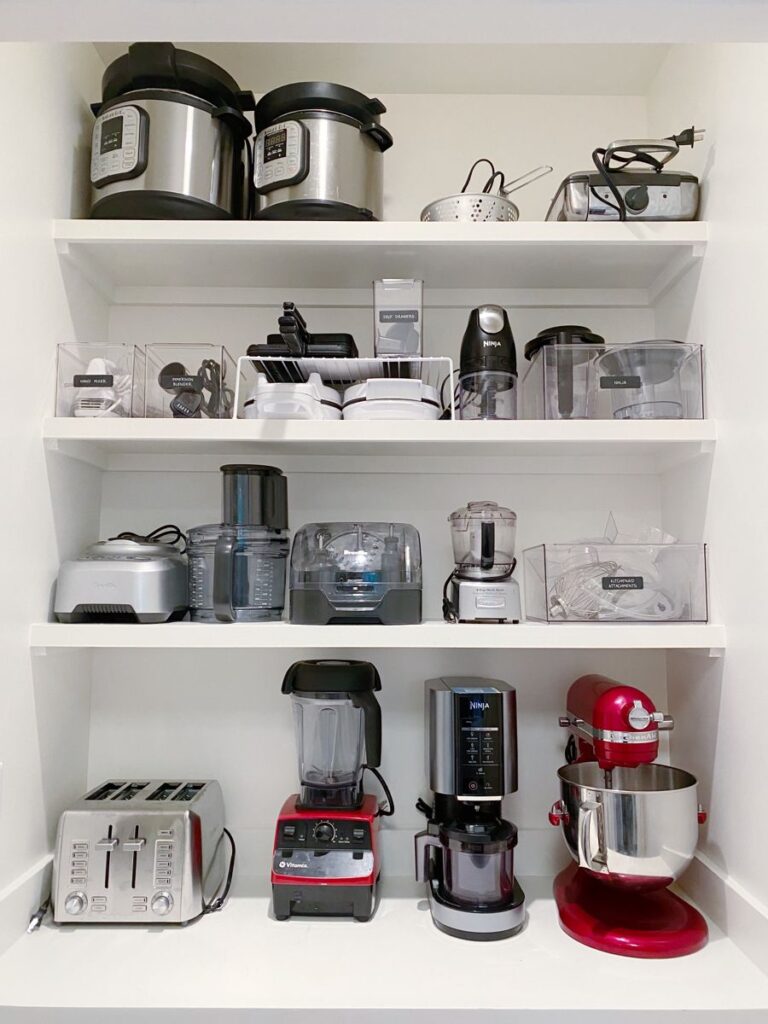
Small appliances add convenience, speed, and comfort to a kitchen, but they are not required for a kitchen to meet the baseline definition of fully equipped. That said, most real world kitchens include at least a few of these because they support daily routines.
A microwave is commonly included and is primarily used for reheating leftovers, defrosting frozen foods, and handling quick meals. While useful, it does not replace a stove or oven.
A coffee maker is standard in many homes and rentals. This may be a drip machine, pod based system, or an espresso maker. The specific type varies, but the presence of a coffee maker often reflects everyday usability rather than necessity.
An electric kettle is especially common in kitchens where tea, instant foods, or quick boiling is part of daily life. It offers faster boiling than a stovetop and is energy efficient.
A toaster supports basic breakfast and snack needs such as bread, bagels, and reheating certain baked items. It adds convenience but does not affect whether a kitchen can cook full meals.
A blender is helpful for smoothies, sauces, soups, and purees. While not essential, it expands food options and supports healthier meal preparation.
These appliances improve comfort and efficiency, but a kitchen without them can still be considered fully equipped as long as the core cooking, prep, and storage requirements are met.
8. Fully Equipped Kitchen vs Kitchenette
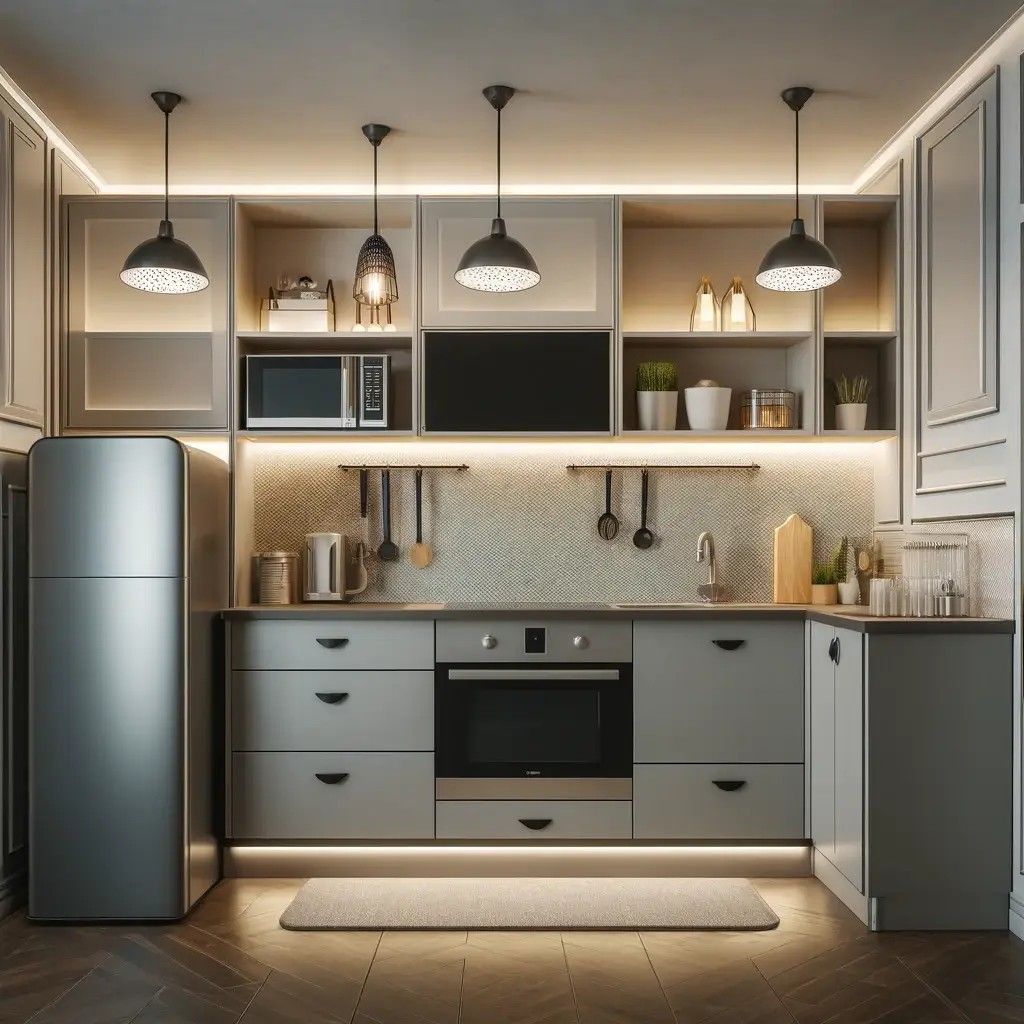
Understanding the difference between a fully equipped kitchen and a kitchenette helps prevent confusion, especially in rentals, listings, and expectations.
A fully equipped kitchen includes a full size refrigerator with freezer, a stove and oven, multiple cookware pieces, essential prep tools, and a complete dining setup. It is designed to support daily cooking, meal planning, and food storage without limitations.
A kitchenette, on the other hand, is designed for light use only. It usually includes a mini fridge, a microwave, and sometimes a hot plate. Cookware is minimal, prep space is limited, and storage is often sparse. Kitchenettes are intended for reheating food or preparing very simple meals, not for regular home cooking.
The key difference is function. A fully equipped kitchen supports full meal preparation on a daily basis. A kitchenette supports convenience, not complete cooking.
9. In Rental Listings
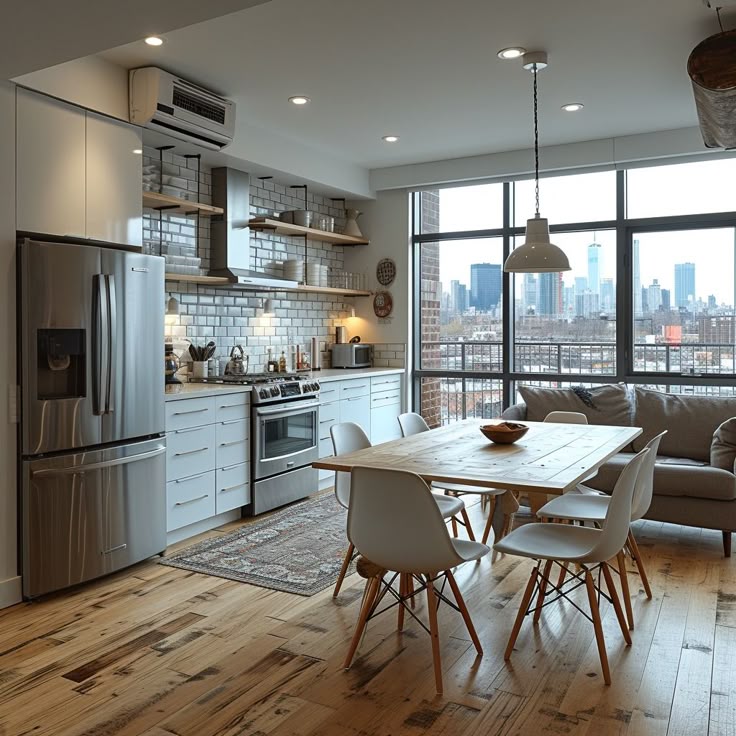
When evaluating a rental, the phrase fully equipped kitchen can mean very different things depending on the listing. It is important to look beyond the label and check for specific details.
Look for explicit mentions of key items such as pots and pans, an oven, a stove, a knife set, a coffee maker, and a dishwasher. Listings that clearly name these items are usually more reliable than those that use vague wording.
If the description is unclear, photos become critical. Review them carefully and do not assume anything is included unless you can see it or it is stated plainly.
Red flags in photos include only one small pan, no visible oven, very limited counter space, or an absence of basic prep tools. If these are missing, the kitchen may not actually be fully equipped, even if the listing says it is.
When in doubt, it is reasonable to ask the host or property manager directly for clarification. This prevents surprises and helps set accurate expectations before moving in or arrival.
10. In-Home Purchases Or Remodels
When designing or remodeling your own kitchen, being fully equipped is not just about buying appliances. It is about planning how the space will function day to day.
A well-designed kitchen accounts for proper appliance placement, ensuring that the refrigerator, stove, oven, and sink are positioned logically. It also includes adequate counter space so there is room to prep, cook, and serve without crowding.
Storage planning matters just as much. There should be a dedicated space for cookware, utensils, pantry items, and small appliances so counters stay usable. Dedicated prep areas reduce congestion and make cooking more efficient.
Lighting is another key factor. Proper task lighting over prep and cooking areas, combined with ambient lighting, ensures the kitchen is safe and comfortable to use.
Most fully equipped kitchens follow a functional layout that includes clear zones. A prep zone for chopping and assembling ingredients, a cooking zone for the stove and oven, a cleaning zone for the sink and dishwasher, and a storage zone for food and tools.
When layout and equipment work together, the kitchen feels intuitive instead of crowded. That balance is what truly defines a fully equipped kitchen in practice.
11. Practical Minimum Checklist
A kitchen can reasonably be called fully equipped when it includes the core elements needed to cook, eat, and clean without workarounds. This checklist represents the practical baseline, not luxury extras.
Appliances
A refrigerator with a working freezer for safe food storage
A stove or cooktop for everyday cooking
An oven for baking, roasting, and full meal preparation
A sink with running water for food prep and sanitation
Cookware
A skillet for sautéing, frying, and browning
A saucepan for boiling and sauces
A stockpot for soups and batch cooking
A baking sheet or roasting pan for oven use
Tools
A usable knife for food prep
A cutting board of adequate size
A spatula for cooking
Measuring cups and spoons for accuracy
Dining
Plates and bowls sized for regular meals
Silverware including forks, knives, and spoons
Drinking glasses and mugs
Cleaning
Dish soap for washing
A sponge or scrub brush
A trash bin for food waste
If any of these categories are missing, the kitchen may still function at a basic level, but usability drops quickly. The more gaps there are, the more the space feels limiting instead of supportive.
12. Why It Matters
A fully equipped kitchen affects far more than cooking. It shapes daily routines, costs, and overall quality of life.
From a cost control standpoint, it allows regular home cooking instead of relying on daily takeout or prepared meals. Over time, this can significantly reduce food expenses.
In terms of dietary control, having the ability to cook from scratch makes it easier to manage ingredients, accommodate dietary needs, and make healthier choices.
A functional kitchen also improves time efficiency. Proper equipment reduces extra trips to grocery stores, minimizes prep time, and streamlines clean up.
Finally, there is comfort and autonomy. A fully equipped kitchen gives people control over how and when they eat. It supports independence and makes a living space feel complete rather than temporary.
Together, these benefits explain why the definition of a fully equipped kitchen matters. It is not about having everything, but about having enough to live well day to day.
Frequently Asked Questions
What is required for an apartment to qualify as fully equipped?
An apartment qualifies as fully equipped when it includes a full size refrigerator with freezer, a cooktop or stove, an oven, a functional sink, basic cookware, essential utensils, plates and dining items, and basic cleaning tools. These elements allow normal meal preparation, eating, and clean up without workarounds.
Does a fully equipped kitchen require a dishwasher?
No. A dishwasher is common in many homes and rentals, but it is not mandatory. A kitchen without a dishwasher can still be fully equipped as long as there is a functional sink and basic cleaning supplies.
Is a microwave required?
No. A microwave is very common and convenient, but it is not required for a kitchen to be considered fully equipped. It does not replace a stove or oven.
Can a small kitchen be fully equipped?
Yes. Size does not determine whether a kitchen is fully equipped. A small kitchen can be fully functional if it includes the necessary appliances, tools, cookware, and storage.
Does fully equipped mean luxury?
No. Fully equipped means functional and complete, not high end or expensive. A kitchen can be simple and still meet the standard as long as it supports everyday cooking, eating, and cleaning.
Final Summary
A fully equipped kitchen is defined by capability, not decoration.
If you can:
- Store fresh food safely
- Prepare ingredients properly
- Cook multiple meal types
- Serve food comfortably
- Clean up efficiently
Then the kitchen qualifies.
Anything less is partial.