From a Small, Outdated Bathroom to a Modern Designed Space

The bathroom was the one room that almost stopped me from buying the apartment.
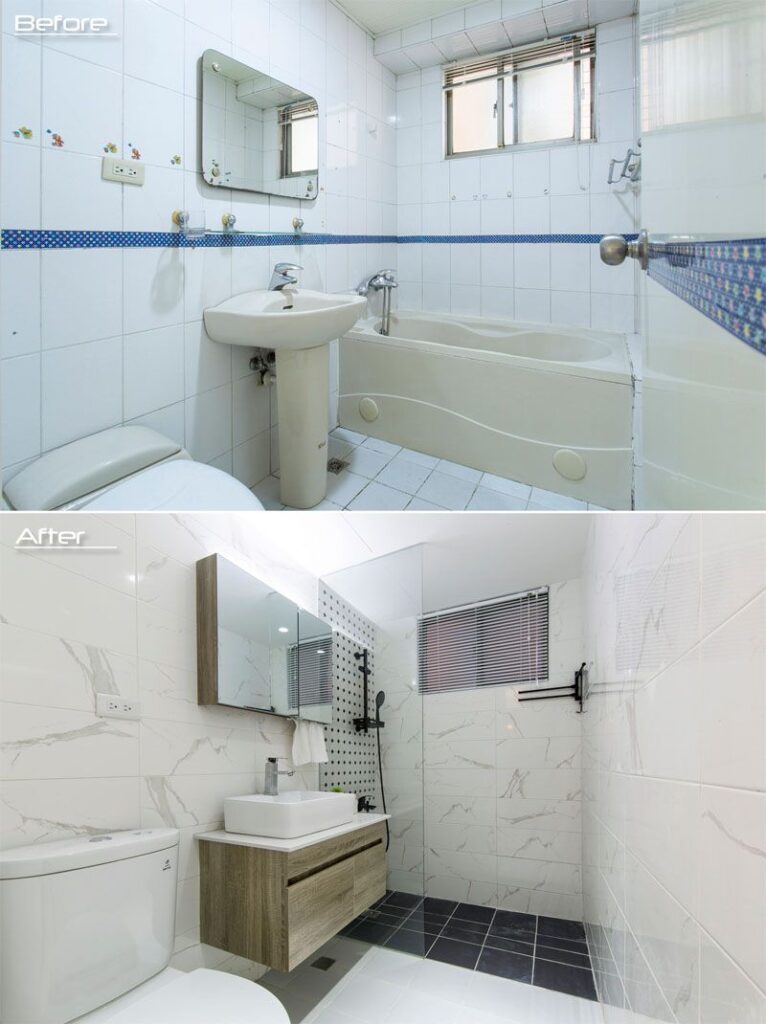
When I first walked in, it felt cramped, dark, and neglected. The finishes were old, the layout inefficient, and the overall space gave me a claustrophobic feeling.
I genuinely questioned whether I could live with it.
Then I reviewed the building plans and discovered something crucial. One of the walls was not load-bearing. That meant expansion was possible.
That changed everything.
This is the full story of how I transformed a tiny, outdated bathroom into a modern, cohesive space that now feels calm and functional.
1. The Bathroom Before Renovation
The original bathroom was:
- Very small
- Poorly organized
- Filled with outdated fixtures
- Visually heavy and dark
The furniture and finishes made the room feel even smaller than it actually was. There was no clear design direction. It felt purely functional and not thoughtfully planned.
At that stage, it was hard to imagine it becoming one of my favorite spaces in the apartment.
But I had already learned something during my renovation journey. Layout matters more than finishes.
And layout can often be changed.
2. Expanding the Space
The first major decision was to remove the wall and expand the bathroom by approximately 5 square feet.
Five square feet may not sound dramatic, but in a compact apartment bathroom, it is transformative.
That additional space allowed:
- Better shower placement
- Improved walking flow
- More comfortable sink positioning
- A cleaner overall layout
During demolition, the bathroom looked even worse than before. Exposed bricks, dust, debris, and uneven surfaces.
Renovation rarely looks impressive in the middle phase. It looks like chaos.
But once the wall was gone, the difference was immediately noticeable. The room could breathe.
3. Choosing the Tile Combination
With the new layout defined, I moved on to materials.
Consistency across the apartment was important to me. I had already used marble tiles in the bedroom and living room, so I decided to bring that elegance into the bathroom as well.
However, I did not want it to feel cold.
So I introduced three tile elements:
- Marble-effect tiles for part of the walls
- Wood-look tiles in the shower area
- Dark gray tiles for the rest of the floor
The wood-look tile under the shower added warmth and contrast. The dark gray flooring grounded the design and prevented it from feeling overly bright.
Using three materials requires balance. The key was keeping the color palette controlled so the bathroom did not feel busy.
In the end, the combination created depth without overwhelming the space.
4. Fixtures and Finishing Details
Details define a bathroom.
For the sink and shower fixtures, I chose matte black finishes. Against the marble and gray tiles, the black elements added modern contrast.
The toilet is wall-mounted, meaning it does not touch the floor. This choice has both aesthetic and practical benefits.
Visually, it makes the room feel larger. Practically, it makes cleaning easier.
Small decisions like this elevate a renovation from standard to refined.
5. The Final Result
What was once:
- Claustrophobic
- Dark
- Outdated
- Inefficient
Is now:
- Open
- Balanced
- Modern
- Thoughtfully designed
- Cohesive with the rest of the apartment
The additional square footage completely changed the experience of the room. The new tile combination added personality. The matte black fixtures provided a contemporary edge.
Most importantly, the bathroom no longer feels like a compromise. It feels intentional.
What I Learned From This Bathroom Renovation
If you are renovating a small bathroom, here are my key takeaways:
- Always check whether walls can be removed before giving up on a layout.
- Even a small increase in square footage can make a significant impact.
- Combine materials carefully but keep the color palette controlled.
- Wall-mounted fixtures help visually expand compact spaces.
- Focus on layout first and finishes second.
The transformation taught me that no space is hopeless if the structure allows change.
Final Thoughts
This bathroom almost made me walk away from the apartment.
Instead, it became proof that potential is often hidden behind poor design.
With thoughtful planning, structural adjustments, and cohesive material choices, even the smallest and most outdated bathroom can become a modern, functional space.
A house may be built with walls and beams, but a home is shaped by vision and persistence.
And this renovation reminded me of that.